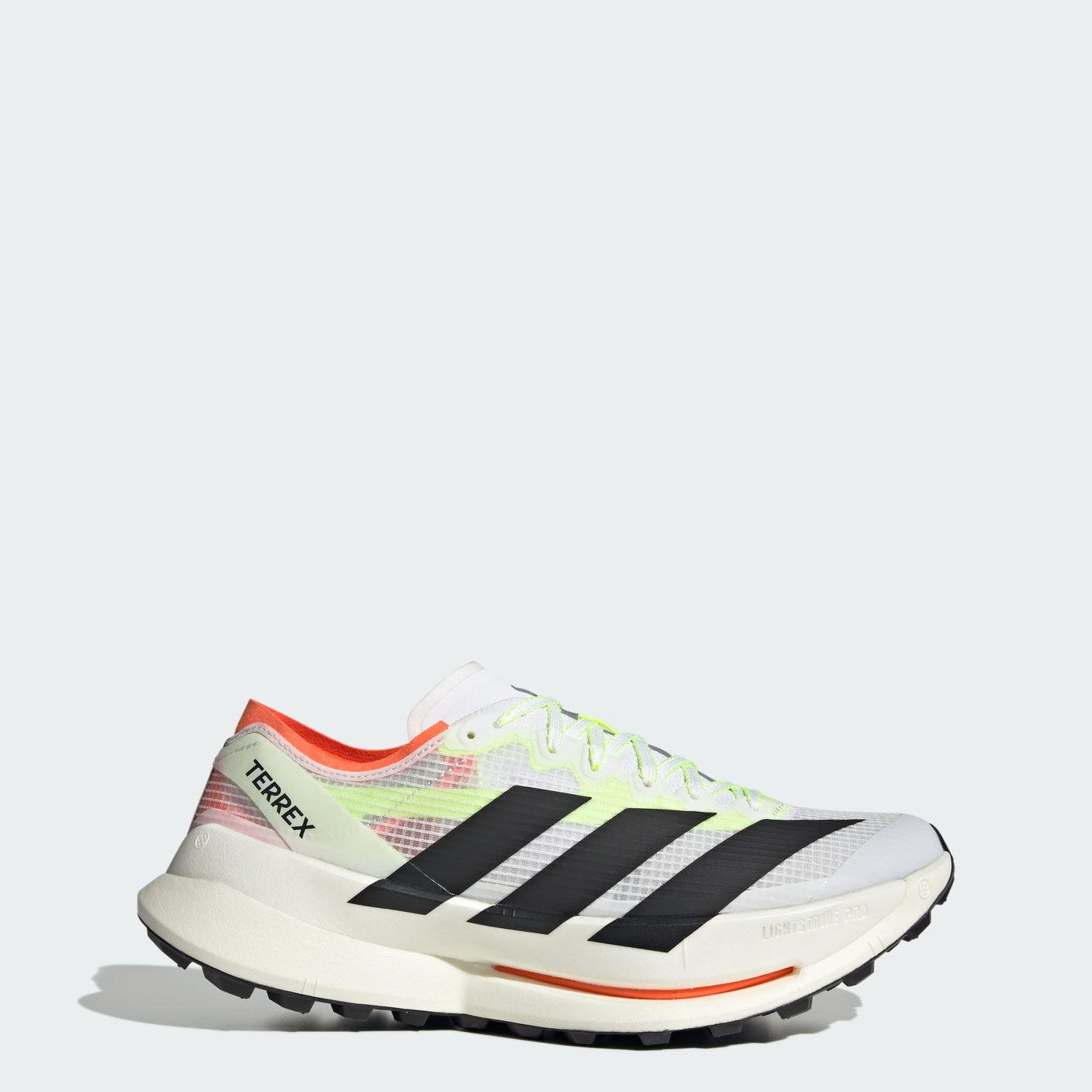
Adidas Terrex steps it up with the second Agravic Speed Ultra: carbon plate, Lightstrike Pro, Continental outsole. This is a no-compromise trail racing shoe, built to take on the Hoka Tecton X and the Nike ACG Ultrafly 2. Here is our coach's analysis.
Adidas Terrex Agravic Speed Ultra 2 Review: Carbon Plus More Foam
Adidas Terrex Agravic Speed Ultra 2: the super trail racer
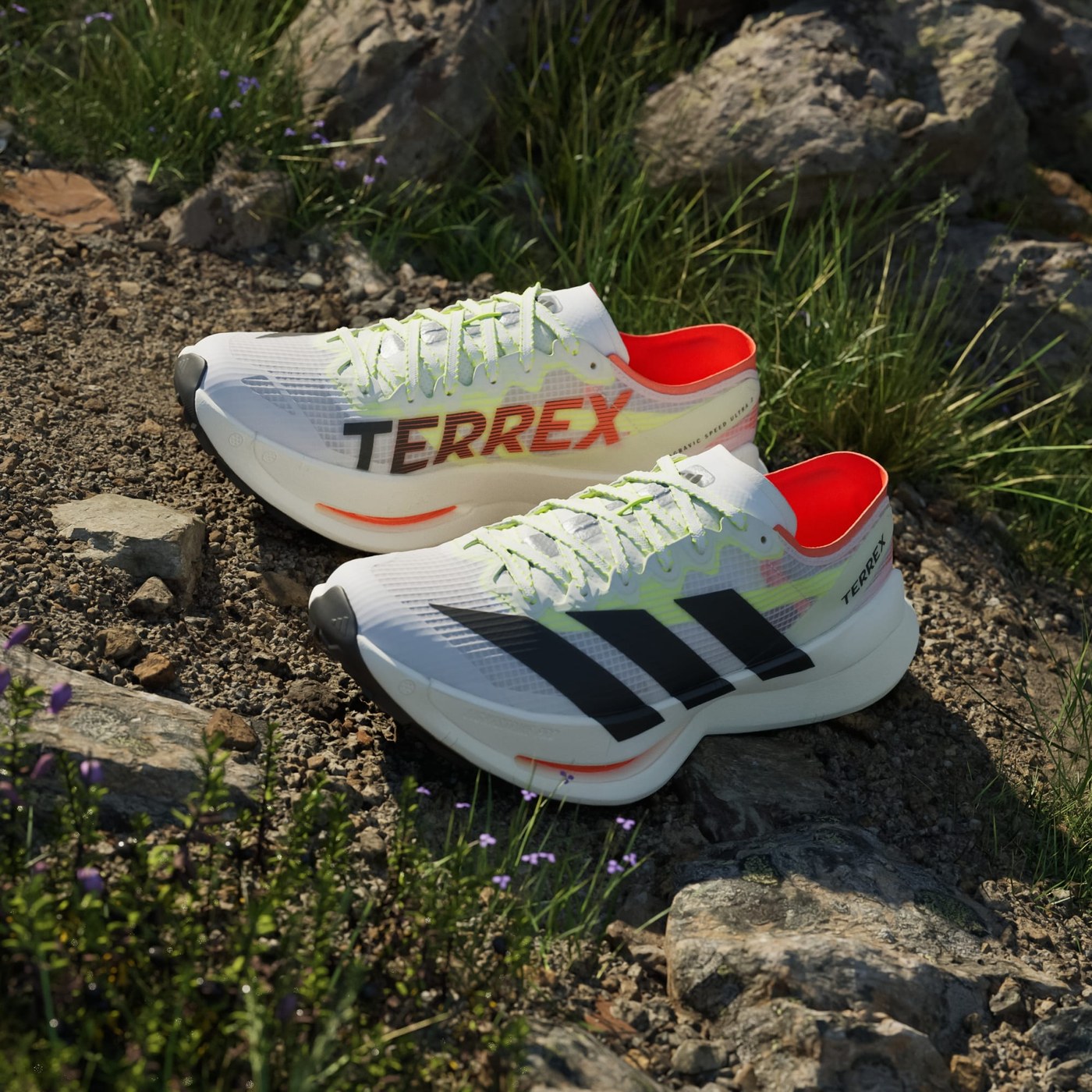
With the second version of the Agravic Speed Ultra, Adidas delivers its most polished answer yet in the super trail shoe category. The brief: pure performance over ultra distances. The geometry is aggressive, the Lightstrike Pro foam is the most responsive in the Adidas lineup, and the carbon plate is as structured as what you find in the best road super shoes.
As a coach, I see the Agravic Speed Ultra 2 as a pure racing shoe for experienced trail runners. It targets runners training for a long trail race (50 to 100 km) who want to shave every second they can on the runnable sections of the course.
RunMorph's advice: the Agravic Speed Ultra 2 is not a daily trainer. Save it for races and quality sessions. For your volume, go for a more durable, more protective shoe like the Saucony Peregrine 16 or the Hoka Speedgoat 7.
Objective specs
Here are the official Adidas figures and the measurements compiled by international testing labs:
- Drop: 6 mm
- Stack height: 33 mm forefoot / 39 mm heel (within the ITRA 40 mm limit)
- Weight: 280 g (size 42)
- Foam: Lightstrike Pro (PEBA, premium energy return)
- Plate: carbon Energy Rods (design carried over from the Adios Pro)
- Lugs: 4 mm, Continental Rubber outsole
- Upper: highly breathable mesh, minimalist construction
- Retail price: €240
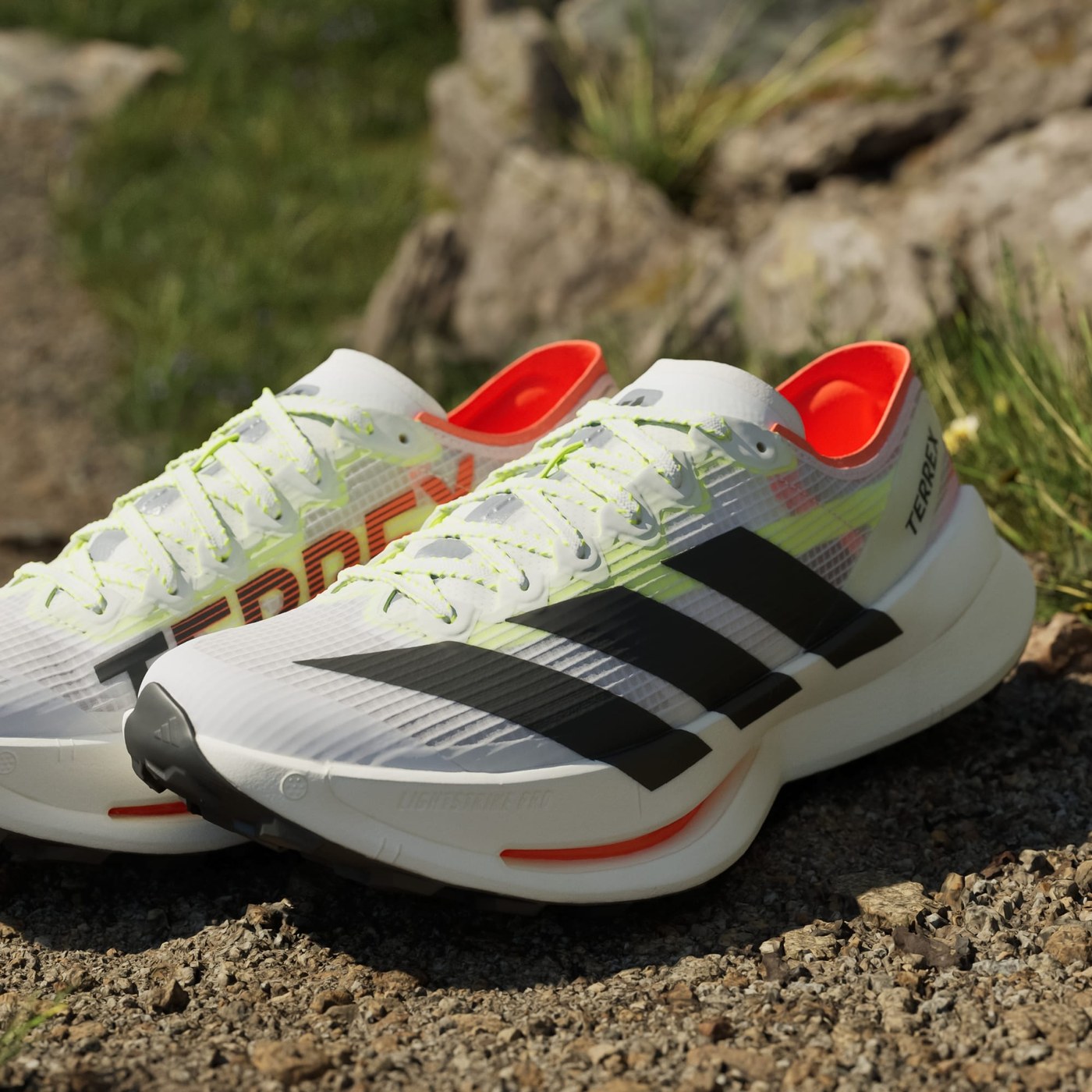
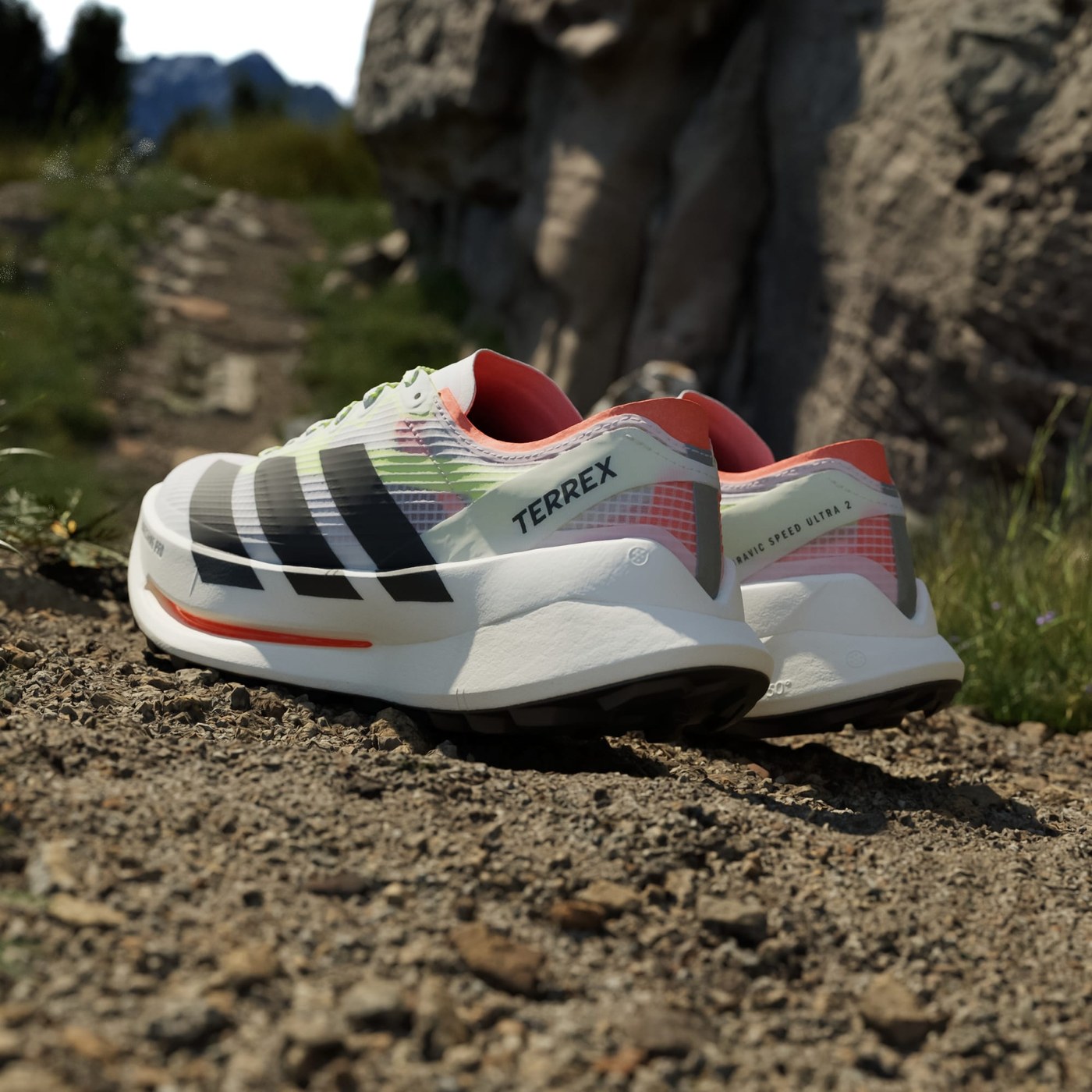
The 39 mm heel stack is one of the tallest in the category, just under the ITRA 40 mm limit for sanctioned trail races. The pronounced rocker geometry works together with the carbon plate to save your energy on the runnable sections.
© Adidas, official photo used for editorial purposes
Lightstrike Pro + carbon plate: the super trail formula
The headline innovation is bringing Lightstrike Pro foam (already proven on the Adios Pro Evo 3) into a trail shoe. According to international testing labs, this PEBA foam delivers 25 to 30% more energy return than a standard EVA foam.
The Energy Rods carbon plate is not a solid, continuous plate (as on some Hoka super trail shoes). It uses a branched design that adapts better to uneven terrain while keeping the propulsion. The result: a shoe that drives you forward on the climbs and spares your quads on the descents.
© Adidas, official photo used for editorial purposes
Continental Rubber grip: a real differentiator
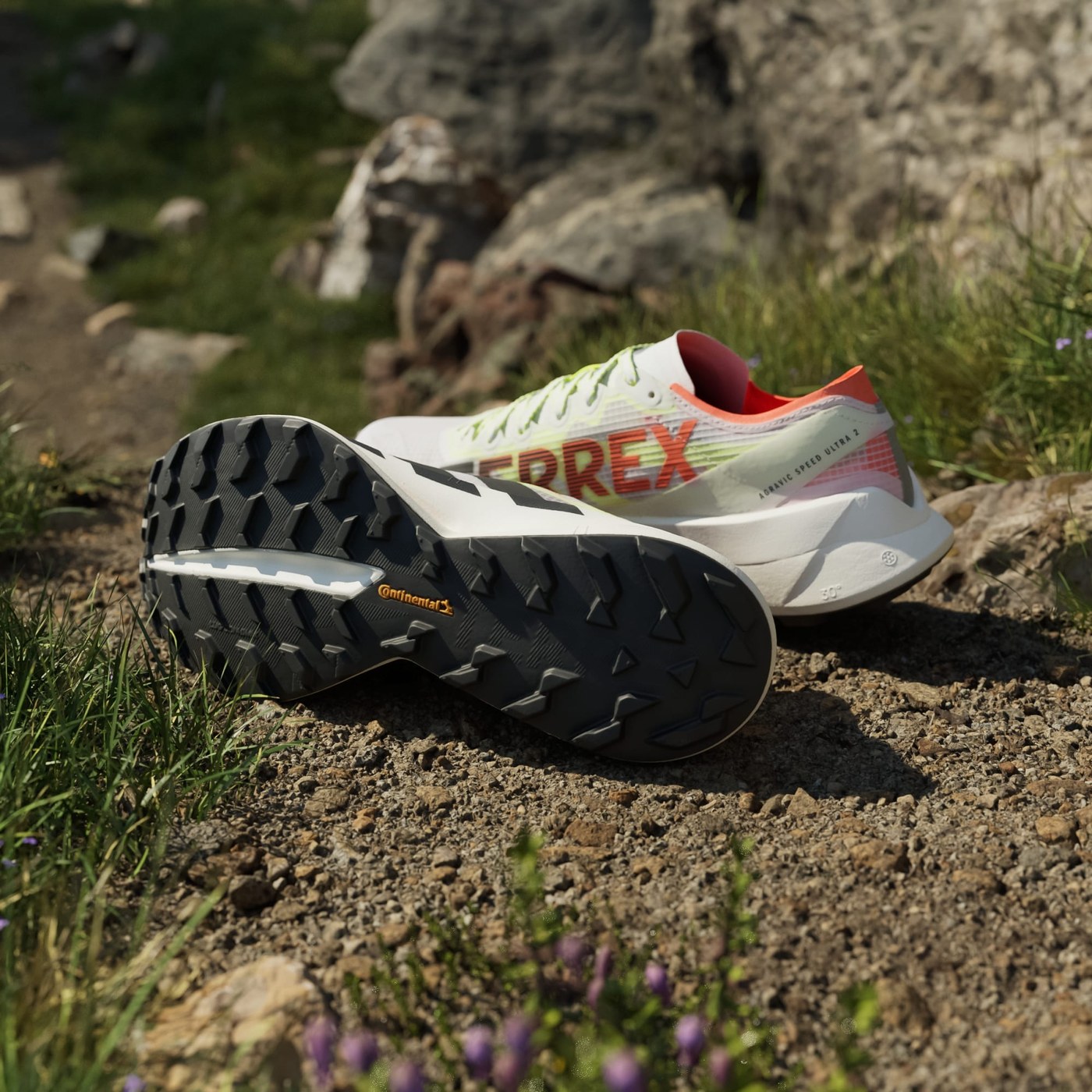
Adidas Terrex has always used its Continental Rubber compound, derived from car tire rubber. On the Agravic Speed Ultra 2, the 4 mm lugs strike an excellent balance between grip and durability. On dry or wet rock, it sits at the very top of the category, on par with the Vibram MEGAGRIP on the Peregrine 16.
The lug depth (4 mm) stays moderate, which favors performance on mixed, dry to moderately wet terrain over maximum traction in deep mud. On very technical, broken ground, it's still enough, but it won't beat a Salomon Speedcross 6 on that criterion alone.
Who is the Agravic Speed Ultra 2 for?
The experienced trail racer (target #1)
If you're training for a long trail race with a time goal (UTMB CCC, Trail des Templiers, Marathon du Mont-Blanc, etc.) and you already know how to handle carbon-plated shoes, the Agravic Speed Ultra 2 is the ideal weapon. Light and responsive, it feels like a race shoe through and through.
The Adidas runner used to the Adios Pro (target #2)
If you run on the road in the Adios Pro 4 or the Evo 3, switching to the Agravic Speed Ultra 2 will feel very natural. The Lightstrike Pro + Energy Rods feel is consistent with Adidas's premium road lineup.
The elite trail runner chasing marginal gains (target #3)
At the highest level, the Agravic Speed Ultra 2 goes head to head with the Hoka Tecton X 3 and the Nike Ultrafly. Adidas is targeting the segment where every second counts, with a product that technically matches the benchmarks.
Comparison: Agravic Speed Ultra 2 vs the competition
Here is how I rank the Agravic Speed Ultra 2 against the main super trail shoes on the market:
- vs Hoka Tecton X 3: the Tecton X is the long-standing benchmark in the category. The Agravic Speed Ultra 2 offers an even more responsive Lightstrike Pro foam, but with slightly better Continental grip on wet rock.
- vs Saucony Peregrine 16: the Peregrine is a versatile training + racing shoe. The Agravic Speed Ultra 2 is a pure racer, more expensive and more radical.
- vs Asics Fuji Lite 6: the Fuji Lite is a lightweight trail shoe with no plate, and much cheaper. The Agravic Speed Ultra 2 targets long-distance racing with its Energy Rods.
- vs La Sportiva Prodigio 2: the Prodigio leans more toward versatility on technical trails. The Agravic Speed Ultra 2 is built for pace on long, runnable courses.
© Adidas, official photo used for editorial purposes
How to fit it into your RunMorph training plan
Here is my concrete recommendation for using this shoe in your race prep:
- Long trail races (50 to 100 km) on mostly runnable courses: its home turf. The carbon plate and Lightstrike Pro make the difference over the distance.
- Race-specific sessions: 1 to 2 quality sessions per week to get used to the shoe before race day.
- Long run at race pace: to bridge your training toward your goal race format.
- Avoid: daily easy runs (durability limited to 400-500 km), very technical, broken trails (the carbon plate limits proprioception), runners new to super shoes.
If you're working toward a long trail race goal, add the Agravic Speed Ultra 2 to your RunMorph training plan in the last 6 to 8 weeks. Too early and you wear the shoe out for nothing. Too late and you haven't had time to dial in your stride on the carbon plate, which can lead to injuries (plantar fascia, soleus) in runners who aren't used to it.
© Adidas, official photo used for editorial purposes
RunMorph Coach verdict
The Agravic Speed Ultra 2 is a genuine success for Adidas Terrex. It clearly plays in the same league as the big super trail shoes (Tecton X 3, Ultrafly), with a distinctive edge in its Continental Rubber grip. The Lightstrike Pro foam brings a rare level of responsiveness on trail, and the Energy Rods design adapts better to uneven terrain than solid carbon plates.
At €240, it sits in the premium segment, but that's in line with super trail market standards. For a runner targeting a long trail race with a time goal, the investment is justified. For the average runner or for daily training, it's the wrong tool.
Key takeaways for your training
- Pure super trail racer: Lightstrike Pro + Energy Rods carbon plate
- 39 mm heel stack, within the ITRA 40 mm limit
- Continental Rubber grip: excellent on dry and wet rock
- Save it for races and quality sessions (durability 400-500 km)
- Break it in 6 to 8 weeks before race day to dial in your stride
- Premium price (€240), in line with the super trail segment