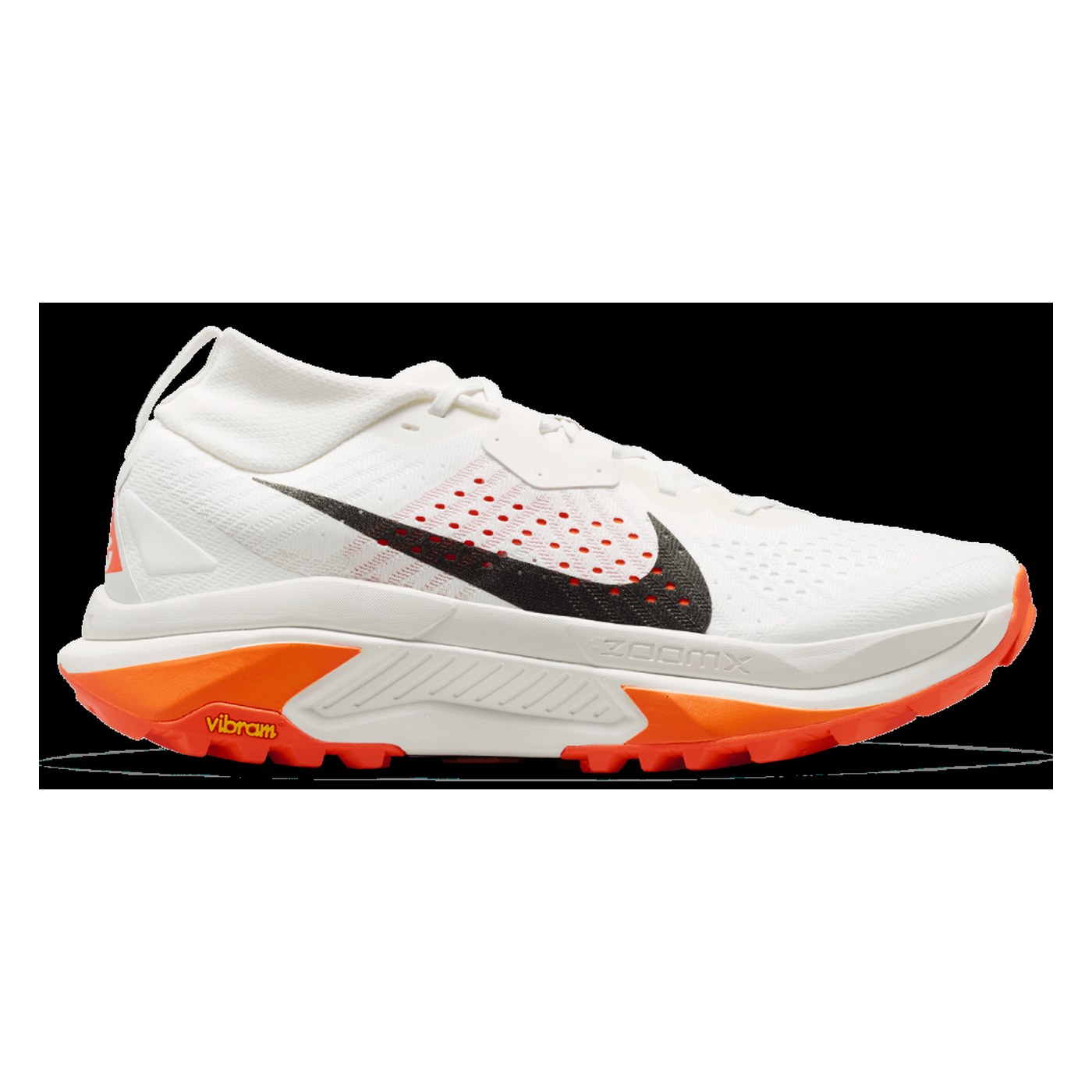
The Nike ACG Zegama Trail is one of the few trail shoes that manage to combine the bounce of a super-shoe foam, the grip of Vibram Megagrip and the long-haul comfort an ultra demands. At 169.99 euros, it sits in the high-comfort, do-it-all trail segment, up against rivals like the Hoka Speedgoat and the Saucony Peregrine. But at 338 grams and with no rock plate, who should actually buy it?
Nike ACG Zegama Trail Review: ZoomX and Megagrip for Ultras
8/10
The essentials in 3 sentences
The Nike ACG Zegama Trail stacks 38 mm of supercritical ZoomX and Cushlon 3.0 for ultramarathon comfort that is hard to match at this price. The Vibram Megagrip outsole grips reliably on every type of terrain, from dry rock to packed mud, even if the lugs stay moderate for truly muddy ground. At 338 grams it isn't the lightest, but that's a deliberate trade-off for runners who put protection and comfort first over long distances.
8
/ 10 · RunMorph overall score
Who is it for?Long-distance trail, ultra-trail, runners looking for protection and comfort on varied terrain.
Who should skip it?Light runners who prioritize speed, very muddy trails, or sharp rocky ground without a rock plate.
Nike ACG Zegama Trail: the trail Clifton, reimagined by Nike
When Nike decides to (re)launch a trail shoe under the ACG (All Conditions Gear) label, the ambition is clear: build a shoe that can take on any environment without compromising on comfort. The Nike ACG Zegama Trail isn't a radical design revolution. It's a controlled evolution of a formula that has already proven itself on American mountain trails. By stacking two complementary foams, ZoomX on top and Cushlon 3.0 underneath, Nike is going for the best of both worlds: the bounce of road super-shoes and the stability you need on uneven trails.
The shoe explicitly targets ultra trail runners and long-distance runners on technical terrain. It's not a racer, and it's not an extreme-mud shoe either: it's a versatile, comfortable trail shoe that keeps you confident over thousands of meters of elevation gain.
RunMorph's advice: If you regularly do long mountain runs between 25 and 100 km, the Nike ACG Zegama Trail deserves a serious look. For shorter, faster formats (under 25 km), look instead at the Saucony Peregrine 16 (lighter, more responsive) or the Hoka Speedgoat 7 (same comfort profile, with more aggressive lugs on soft ground). For a carbon-plated trail super-shoe, check out the Hoka Tecton X 3.
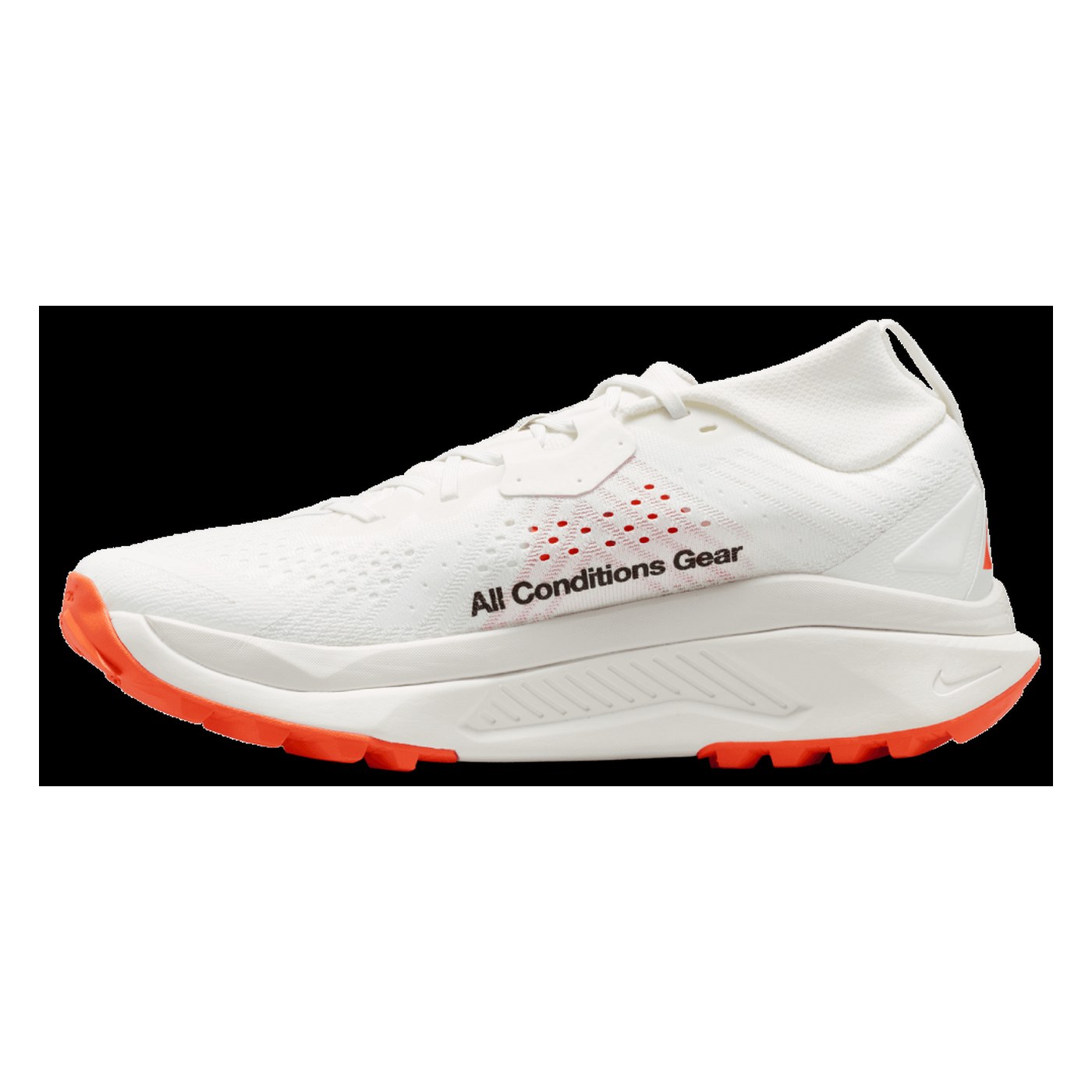
© Nike, official photo used for editorial purposes
Objective technical data
| Spec | Value |
|---|---|
| Brand | Nike |
| Model | ACG Zegama Trail |
| Colorway code | HV8113-103 (Summit White/Safety Orange) |
| Release | Late April 2026 |
| Type | Versatile trail, technical trail, ultra-trail |
| Drop | 4 mm |
| Stack height | 38 mm heel / 34 mm forefoot |
| Weight | 338 g (men's EU44) / ~295 g (women's) |
| Top foam | ZoomX (supercritical PEBA, ultralight, bouncy) |
| Bottom foam | Cushlon 3.0 (molded EVA, impact protection, stability) |
| Outsole | Vibram® Megagrip with Traction Lug |
| Upper | Breathable technical mesh |
| Ankle collar | Debris-blocking stretch fabric |
| Forefoot | Widened (more toe room) |
| Rock plate | No |
| MSRP | €169.99 |
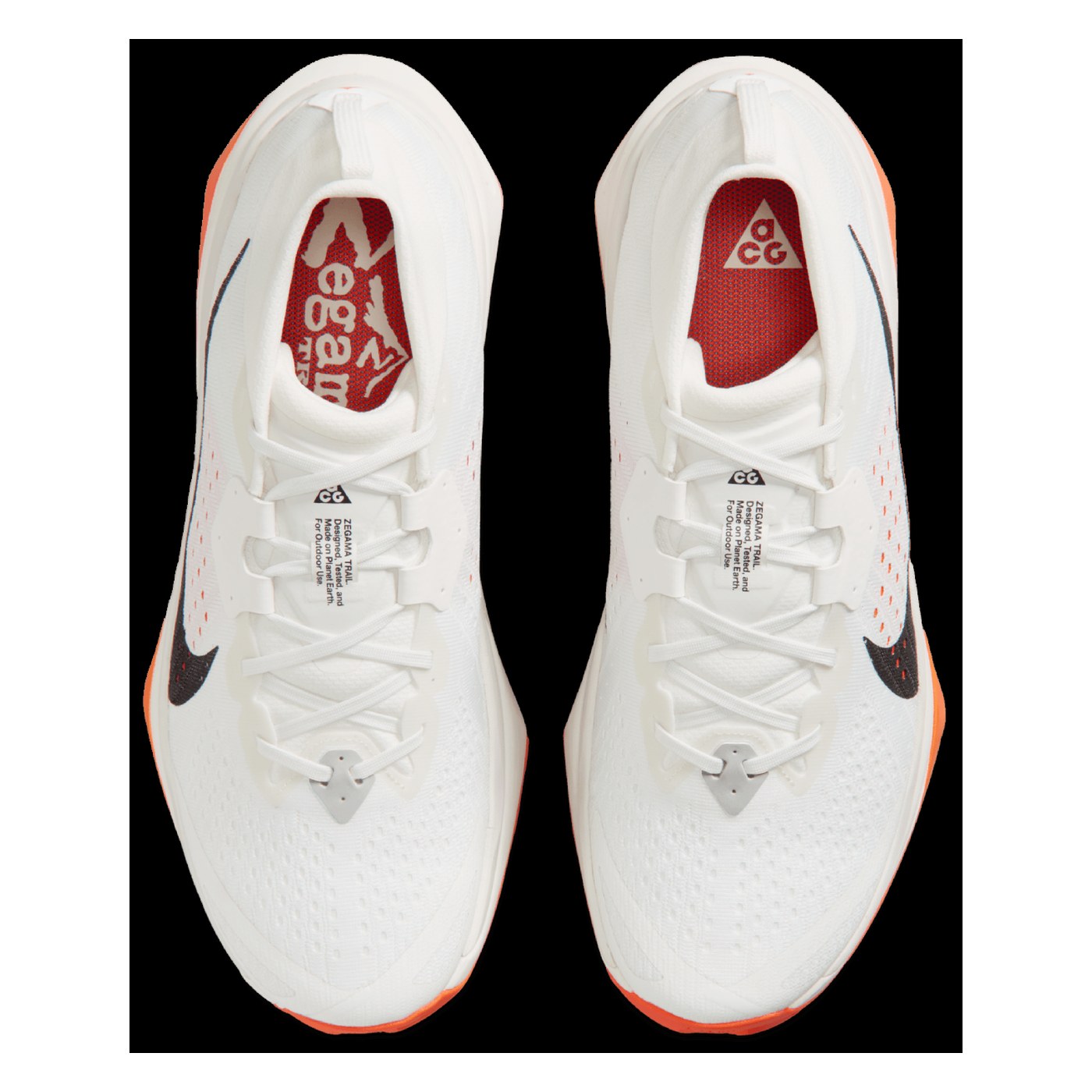
© Nike, official photo used for editorial purposes
Who is the Nike ACG Zegama Trail for?
The long-distance trail runner who wants protection
If you regularly cover 40 to 100 km in the mountains, on varied terrain mixing rocks, forest trails and mixed paths, the Nike ACG Zegama Trail is built for you. The 38 mm stack of ZoomX and Cushlon 3.0 soaks up fatigue over the hours, and the widened forefoot reduces compression during long efforts. Independent energy return measurements put ZoomX near the top of today's trail foams, just behind the specialized PEBA foams of carbon-plated super-shoes. Expect a pace between 5:30 and 7 min per km depending on the course profile.
The versatile runner on mixed terrain
Do you switch between packed forest roads, rocky singletrack and stretches of dirt road? The Vibram Megagrip on the Nike ACG Zegama Trail shines precisely on that versatility. Grip works as well on dry rock (where other rubbers slip) as on damp morning trails. The Traction Lug pattern spreads pressure smartly to hold grip on the trickiest surfaces. If your runs take you from forest to alpine pasture, it's a very strong candidate.
The bigger runner or the runner with wide feet
Nike specifically reworked the forefoot and toe box on this version to give more lateral space. If your toes usually get cramped on long descents, or if you have a naturally wide forefoot, this roomy upper is a real advantage over the long haul. Paired with 38 mm of cushioning, it delivers overall comfort that few trail shoes at this price can reach.
Cushioning, ride and grip: what the trail says
Pairing ZoomX (directly underfoot) with Cushlon 3.0 (a firmer structural layer underneath) isn't a new idea, but Nike has optimized it for trail in this version. ZoomX absorbs energy at impact and returns it at toe-off, which translates into a pleasant bounce even after several hours on your feet. Cushlon 3.0 acts as a filter between uneven ground and your foot: it damps micro-vibrations and keeps your stride feeling consistent even on technical sections.
On climbs, the Nike ACG Zegama Trail feels reassuring: the upper locks down well around the foot, and the stretch ankle collar follows your movement without creating pressure points. Descents are where the shoe really comes into its own, with cushioning that absorbs repeated impacts without losing precision. One caveat: the lack of a rock plate shows on very stony, sharp terrain, where pointed rocks can be felt all the way up to the forefoot. It's not a deal-breaker, but keep it in mind if your playground is dominated by moraines or rocky ridges.
On the Vibram Megagrip: grip is reliable and consistent on the vast majority of surfaces. On dry and wet rock, results are excellent. In deep, sticky mud, the outsole does worse than a specialized shoe with deep lugs, like an Inov-8 or the Hoka Speedgoat on greasy ground. For 90% of mixed trails in France (packed paths, rocky trails, wet grass), it's more than enough.
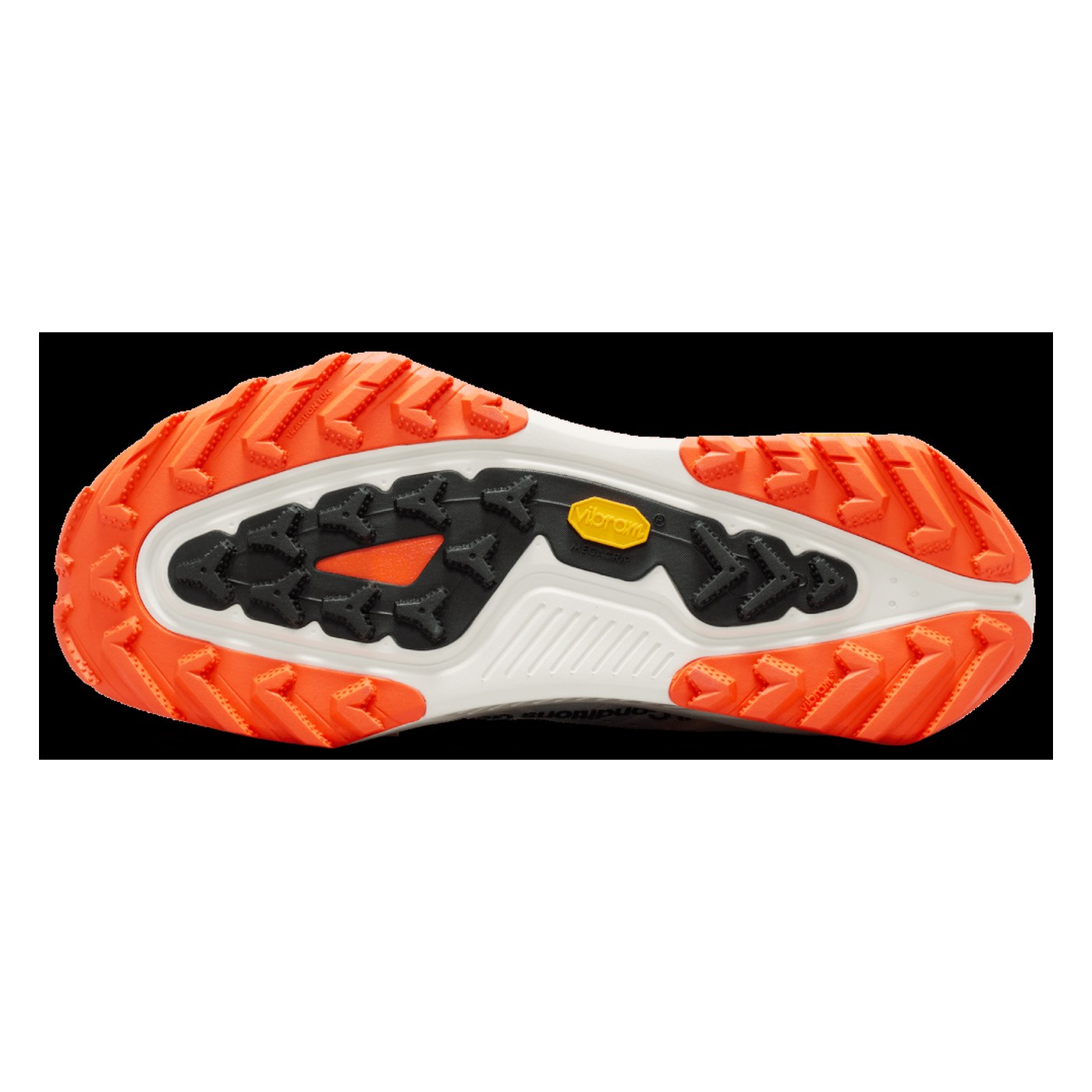
© Nike, official photo used for editorial purposes
Pros and cons
Pros
- Exceptional ZoomX cushioning for a trail shoe at this price
- Versatile, reliable Vibram Megagrip on dry and wet ground
- Widened forefoot: more comfort over long distances
- Very effective debris-blocking stretch ankle collar
- 4 colorways available, good availability in France from launch
Cons
- 338 g: among the heaviest in the versatile segment
- No rock plate for very rocky/sharp terrain
- Moderate lugs in deep, sticky mud
- €169.99 price slightly above some rivals
Nike ACG Zegama vs Hoka Speedgoat 7: head to head
The most natural comparison for the Nike ACG Zegama Trail is still the Hoka Speedgoat 7 (€165), the benchmark of the comfort trail segment for several generations. Here are the key differences:
| Criterion | Nike ACG Zegama Trail | Hoka Speedgoat 7 | Saucony Peregrine 16 |
|---|---|---|---|
| Price | €169.99 | €165 | €145 |
| Weight | 338 g | 288 g | 263 g |
| Drop | 4 mm | 4 mm | 4 mm |
| Stack height | 38/34 mm | 37/33 mm | 28/24 mm |
| Foam | ZoomX + Cushlon 3.0 | Supercritical EVA | PWRRUN PB |
| Outsole | Vibram Megagrip | Hoka proprietary (5 mm) | Vibram Megagrip (4 mm) |
| Rock plate | No | No | Yes (PowerTrac) |
| Target terrain | Versatile, ultra long distance | Mountains, mud, greasy ground | Technical trail, short to mid distance |
| RunMorph score | 8/10 | 8.5/10 | 8.5/10 |
The Hoka Speedgoat 7 is still better on muddy terrain thanks to its deep lugs and more aggressive grip, and it's 50 grams lighter. The Nike ACG Zegama wins on bounce (ZoomX vs EVA) and on the comfort of its widened forefoot over ultra-long distances. If you mostly run on varied terrain, from dry to wet, and want that signature Nike ZoomX bounce, the Zegama is the right choice. For muddy mountain terrain, go with the Speedgoat.
The Saucony Peregrine 16 plays in a different category: lighter, more responsive and with a rock plate, it's better suited to short and mid-length formats (10-50 km) on very technical terrain. The Nike ACG Zegama beats it at ultra distance thanks to its superior cushioning.
How to fit the Nike ACG Zegama Trail into your RunMorph training plan
The Nike ACG Zegama Trail is built to be your main shoe for long mountain runs. In a RunMorph trail or ultra plan, it naturally becomes your volume shoe: long runs of 3 to 7 hours on varied terrain, training weekends that stack up elevation gain, and long races from 50 to 100 km. For short intervals and intensity sessions, a lighter, more responsive shoe (like the Hoka Zinal 3) is a better fit.
For dedicated ultra plans (UTMB, Diagonale des Fous, 100 km), the Nike ACG Zegama Trail can be an excellent main race-day shoe if the course includes mixed, mostly dry sections. For races dominated by mud or snow, pick a shoe with more aggressive lugs. At RunMorph, ultra plans always build in a shoe rotation based on the intensity and type of session: get the full logic in the RunMorph trail training plans.
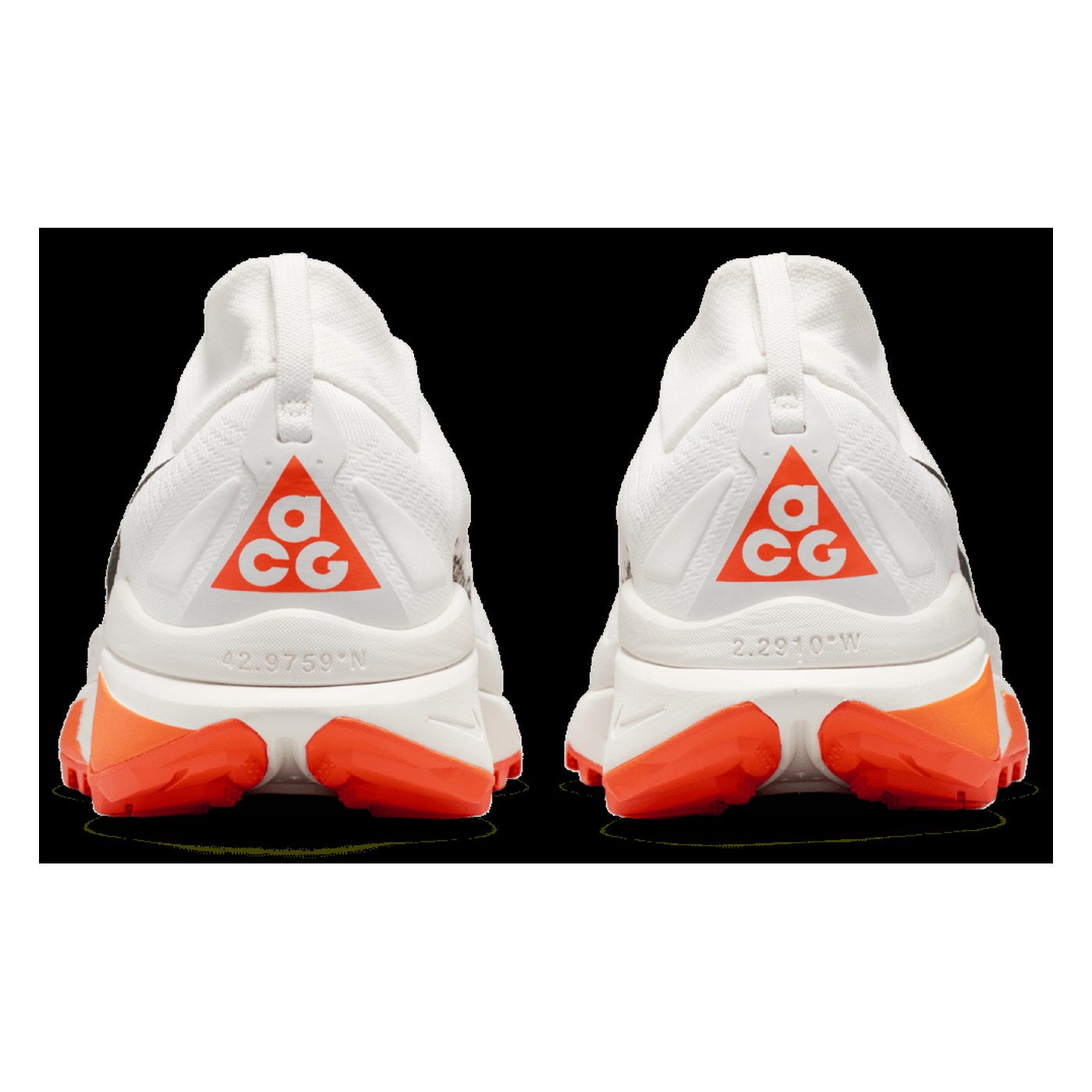
© Nike, official photo used for editorial purposes
The RunMorph Coach's verdict
The Nike ACG Zegama Trail is a solid, well-executed shoe that delivers on its promise of long-distance comfort on varied terrain. Having ZoomX directly underfoot makes a real difference compared with classic EVA rivals, and the Vibram Megagrip inspires confidence on every surface from dry to moderately wet. The 338 g weight is its main limitation for fast runners, but for the ultra trail runner who counts hours on their feet rather than kilometers per hour, it's a perfectly acceptable trade-off.
At RunMorph, the Nike ACG Zegama Trail stands out as a serious alternative to the Hoka Speedgoat 7 and the The North Face Offtrail Ultra in the long-distance comfort trail segment. It lacks a rock plate and truly aggressive lugs to reach 9/10, but it excels in its lane: a reliable, comfortable, bouncy tool for long mountain adventures. RunMorph score: 8/10.
Key takeaways for your training
- ZoomX + Cushlon 3.0: the combination delivers a bounce on trail that is still rare among trail shoes under 180 euros, and it holds up without noticeably breaking down after 5 hours of running.
- Versatile Vibram Megagrip: grip is consistent and reliable on dry rock, wet trails and packed paths, but it reaches its limits in deep, sticky mud.
- Widened forefoot and debris-blocking collar: two details that make all the difference over long distances, cutting down on irritation and keeping gravel out.
- No rock plate: keep this in mind if your terrain includes long crossings of moraines or very rocky ridges, where the Saucony Peregrine 16 or the Merrell MTL SpeedARC Peak will be better suited.
- 338 g, and proud of it: this isn't the shoe to set a PR over 20 km of fast trail, but to finish 100 km with your feet in good shape, it's often the best choice.