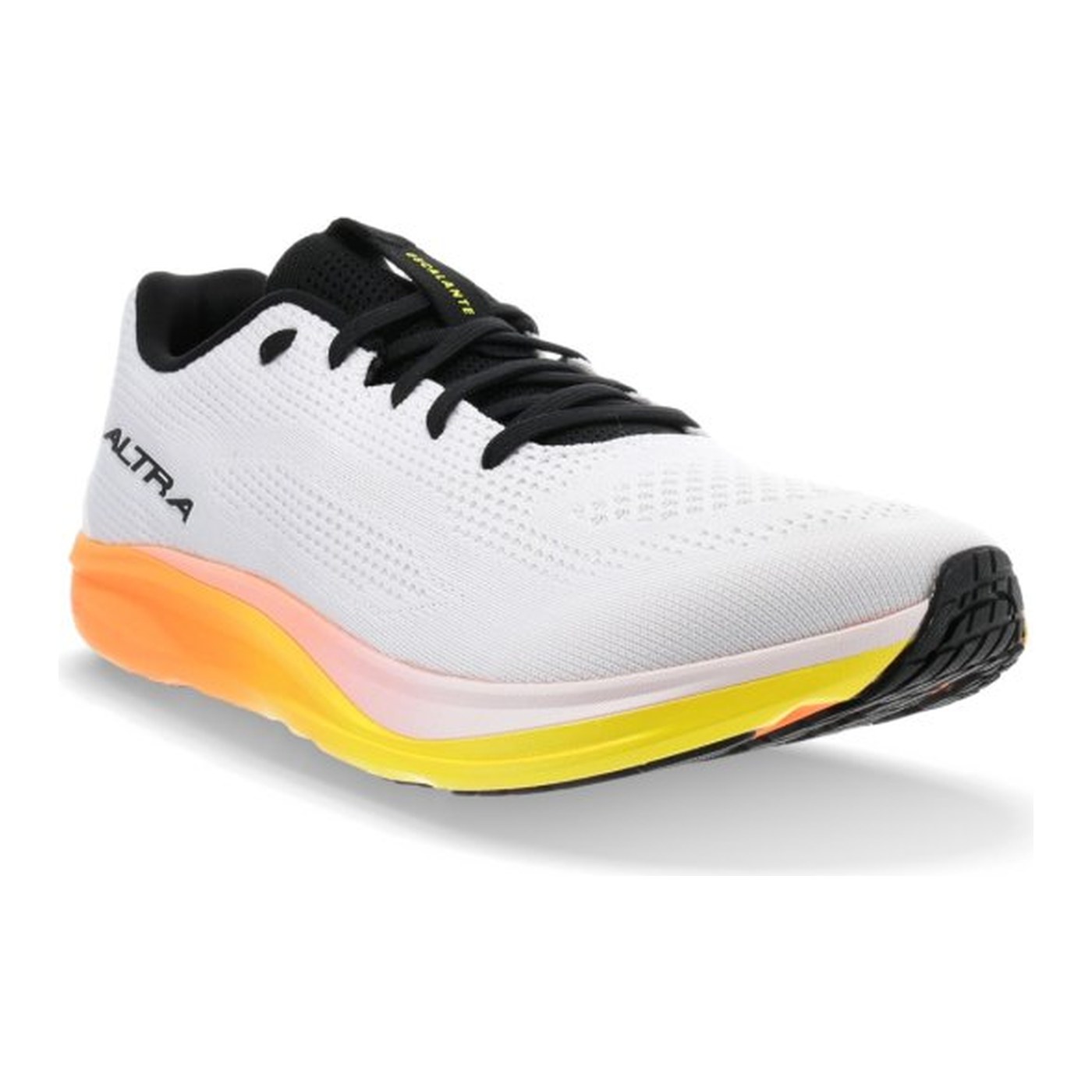
The Escalante is the lowest road shoe in Altra's lineup, the one you keep for feeling the road. Version 5 brings a livelier foam, a reworked knit upper and more rubber underfoot. Lab measurements confirm the gain in liveliness. They also confirm it has very little cushioning, and that matters.
© Altra, official photo used for editorial purposes
Altra Escalante 5: the zero drop shoe that's happy to stay low
The market is heading towards 40 mm midsoles. The Escalante 5 stays at a claimed 24 mm. Measurements show 25.9 mm at the heel and 23.7 mm at the forefoot, against an average heel of 35.6 mm across nearly 500 measured shoes. In short, you run almost 10 mm lower than in a typical daily trainer.
Altra released this version in summer 2026, so there are about five months of hindsight at the time of this review. The model has existed since 2017 and keeps the same recipe: zero drop, EGO foam, sock-like knit upper and the Original FootShape last, the brand's widest. The French price sits around €139, at Tonton Outdoor, i-Run or Alltricks.
So what really changes? Three things. The foam returns more energy. The upper breathes better and holds the heel better. And the rubber covers more of the outsole, at a thickness of 4.9 mm that explains a good part of the weight.
RunMorph's advice: if you've never run in zero drop, don't start with the Escalante 5. Go through a 4 or 5 mm drop shoe first, like the Saucony Kinvara 16, or the slightly thicker Altra Torin 9. The Escalante has to be earned.
Escalante 5 specs: claimed vs measured
| Spec | Claimed by Altra | Measured in the lab |
|---|
| Brand / model | Altra Escalante 5 |
| Release | Summer 2026 |
| Type | Road daily trainer, zero drop, low stack |
| Heel stack | 24 mm | 25.9 mm (25.3 mm for a second lab) |
| Forefoot stack | 24 mm | 23.7 mm |
| Drop | 0 mm | 2.2 mm (0.5 mm for the second lab) |
| Weight (men's) | 275 g | 269 g (265.6 g for the second lab) |
| Foam | Altra EGO |
| Plate | None |
| Forefoot width / toe box | Original FootShape | 99.1 mm / 80.8 mm (average: 95.2 / 73.2) |
| Rubber thickness | Not disclosed | 4.9 mm (average: 3.1 mm) |
| Use | Easy runs, short fast paces, walking |
| Price | €139 |
So zero drop isn't quite zero. One lab finds 2.2 mm, another 0.5 mm. The gap stays within manufacturing tolerances. For you, it changes almost nothing. The real point is heel height: 1.9 mm more than claimed, and 2.1 mm more than the Escalante 4.
© Altra, official photo used for editorial purposes
Who is the Escalante 5 for?
The midfoot striker who wants to feel the road
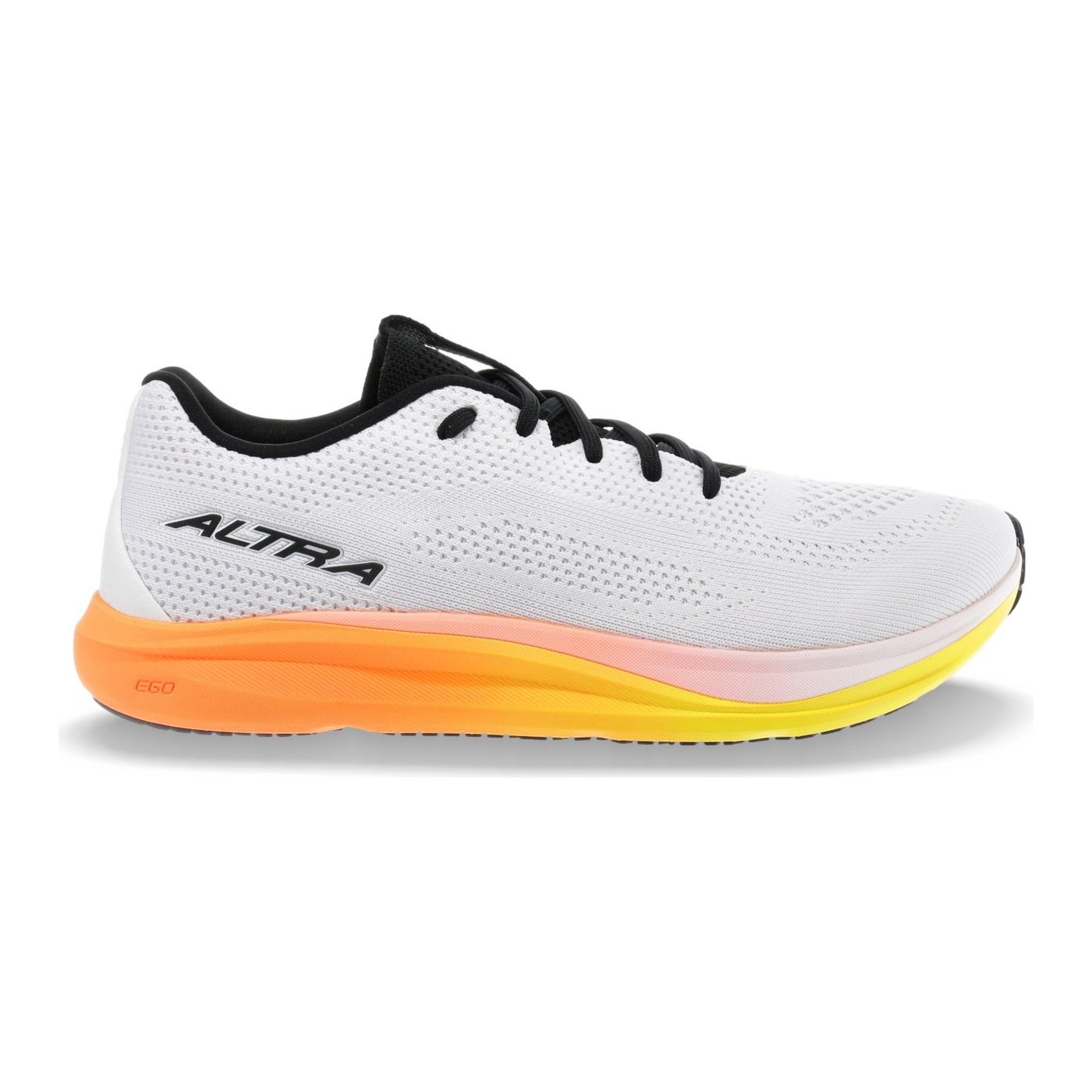
This is its natural target. The base measures 117.2 mm wide at the forefoot but only 81.2 mm at the heel. Altra designs that heel to stay out of the way, not to support you. If you land flat or on your forefoot, you get a stable, low platform.
Wide feet tired of pointy shoes
With a toe box measured at 80.8 mm against 73.2 on average, your toes spread freely. Interior height, 26.9 mm, is average. A wide, flat foot will be comfortable. A foot with a high instep much less so, more on that below.
The runner who mixes running and walking
Several testers also use it for walking, errands or the gym. The very flexible sole (10.1 N in the bend test, against 15.6 N on average) and the thick rubber suit that well.
On the road: what five real tests say
RunMorph has not run in the Escalante 5. This review cross-checks two lab reports and three long field tests published by American and British runners. No complete French test was available at the time of writing.
The first lab gives the shoe 85/100. It rates it very good for tempo (84/100), decent for daily running (77/100) and weak for racing (62/100). The second lab is harsher: 6.8/10 for daily training, 5.5/10 for long runs, 5/10 for half and full marathons.
The three field testers agree on the essentials. A New York runner, loyal to the series since version 3, uses it for short to medium easy runs and recovery. A British tester with narrow feet finds it easier to run in straight out of the box than version 4. The team of a Boston running store tested it on easy runs, on the track, on long runs and on trails.
All three give the same warning. Calves and Achilles tendons work harder. Build up gradually.
Responsiveness: lively for one lab, flat for the other
This is the main disagreement between sources. The first lab measures 64.2% energy return at the heel and 67.3% at the forefoot, against 61.5% on average. For them, it's the biggest step forward in the series. The second lab finds a forefoot that is "stiff but dead" and a shoe that doesn't make fast paces feel easy.
Who's right? Both, depending on your stride. The foam returns energy well, but it's very firm: 9.7/10 for firmness at both heel and forefoot according to the second lab. A light forefoot striker barely compresses the foam and benefits from its efficiency. A heavier runner or a heel striker lands on a hard sole, with no rocker to help the roll.
Field testers lean towards lively. The New York runner describes the foam as "discreetly bouncy". The Boston store used it on the track without complaint. For short intervals, it holds up. For a 40-minute threshold run, pick something else.
© Altra, official photo used for editorial purposes
Major flaw #1: cushioning that limits distance
101 SA at the heel, 90 SA at the forefoot. The market average is 132 SA at the heel. In short, the Escalante 5 filters out about a quarter less impact than an average shoe. The second lab gives it 4/10 for cushioning, with a 3.2 at the heel.
That's deliberate, and Altra doesn't hide it. But let's be clear: beyond an hour, most testers find it hard. The second lab describes a ride that becomes "punishing" over time. If you run 60 km a week, it can't be your only pair.
Major flaw #2: fragile heel padding
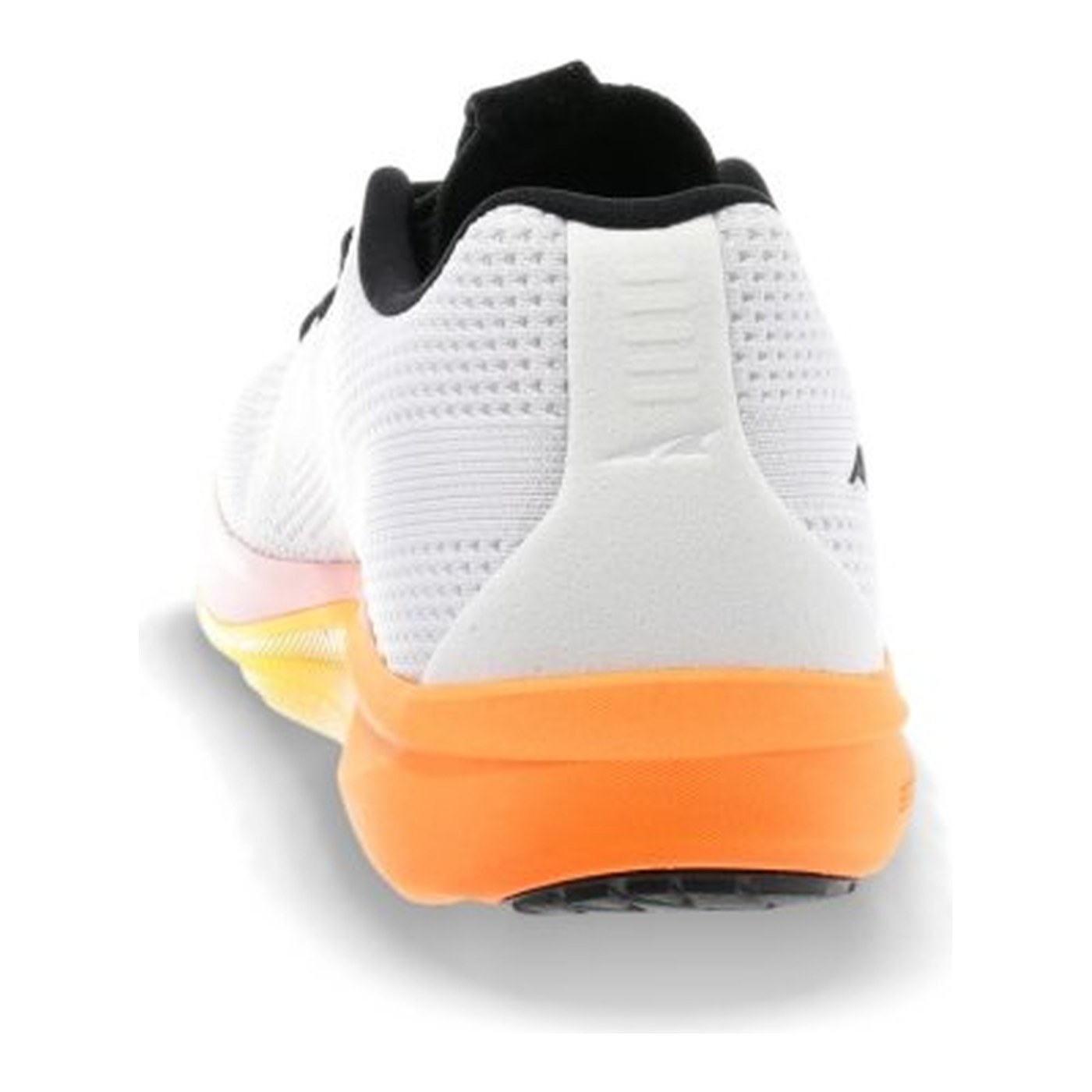
The upper holds up well. The toe box scores 4/5 in the wear test, against 2.6 on average. The heel padding scores 1/5, the worst possible rating. On a shoe that fans keep for hundreds of kilometres, that matters.
Another annoying detail: the laces come undone. The New York runner notes it and adds that it's a recurring Altra issue. A double knot fixes it.
Fit: wide, but closer to the foot than version 4
Here opinions differ, and your foot shape decides. The labs measure a wide shoe: 99.1 mm at the widest point, 80.8 mm at the toe box. Yet the British tester with narrow feet finds the Escalante 5 holds the foot much better than version 4, which felt like wearing "boats".
The New York runner, on the other hand, warns that the sock-like knit can squeeze a high-volume foot. Both are right. The width is there, but the knit upper presses down on top of the foot. Wide, flat foot: perfect. High instep: try before you buy.
On sizing, one lab says it runs slightly small, while testers stay with their usual Altra size. The British tester recommends half a size smaller than in Hoka or New Balance. Take your Altra size, or half a size up if you're coming from another brand and unsure.
© Altra, official photo used for editorial purposes
Grip, breathability and durability: what does a kilometre cost?
Grip on wet concrete is average: a friction coefficient of 0.47, against 0.53 on average. In winter rain, on cobbles or road markings, take corners carefully.
Breathability is good for a knit: 82 BR, against 75 on average, with 60% of moisture released after the test. For summer, it's a real strength.
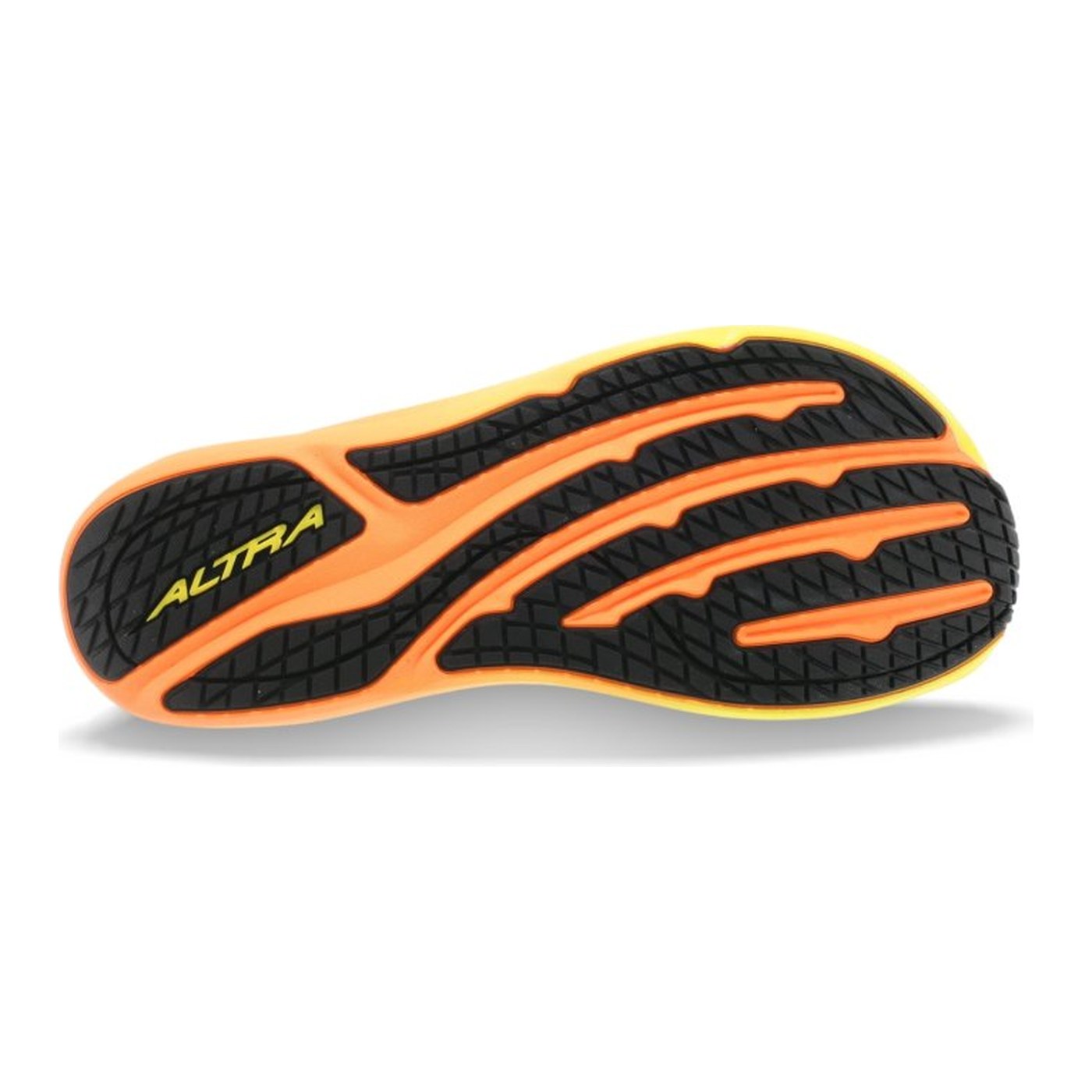
Outsole wear is reassuring. The abrasion test removes 0.9 mm of rubber, below the 1.1 mm average, from a starting thickness of 4.9 mm. Testers also report better build quality than version 4, whose seams and outsole sometimes gave out around 300 to 500 km.
Our estimate, to be taken as such: 700 to 900 km of lifespan, or €0.15 to €0.20 per kilometre at €139. That's cheaper per kilometre than the Torin 9 at €160.
Altra Escalante 5 vs Torin 9: the comparison
This is the question most Altra fans ask. Both are wide zero drop road shoes, €20 apart.
| Criterion | Escalante 5 | Torin 9 |
|---|
| Price | €139 | €160 |
| Measured weight | 269 g | 264 g |
| Measured heel stack | 25.9 mm | 25.8 mm |
| Energy return | 67.3% (forefoot) | 54.7% |
| Character | Firm, lively, very flexible | Softer, more stable, less lively |
| Best use | Short easy runs, fast paces | Easy runs from 45 min to 1h15 |
Measured stack heights are almost identical. The difference is the foam. The Escalante 5 returns clearly more energy, the Torin 9 cushions a little better. If you want liveliness, take the Escalante. If you want a pair for relaxed easy runs, the Torin stays more comfortable.
Escalante 5 against the competition
If zero drop scares you, the Saucony Kinvara 16 keeps the light, flexible spirit with a small drop. If you want a wide toe box with more cushioning, the Topo Athletic Specter 3 plays in another comfort league. And if you heel strike but want a low, bouncy shoe, the first lab recommends the Adidas Adizero Adios 9, better suited to heel strikers.
On trails, the direct cousin is the Altra Lone Peak 9+, with the same zero drop and a lugged outsole.
Escalante 5 pros and cons
Pros
- Toe box measured at 80.8 mm, among the widest on the market
- 67.3% energy return at the forefoot, a clear step up for the series
- Low, stable platform for midfoot strikers
- 4.9 mm thick outsole, low wear
- Breathable upper and tough toe box (4/5 for wear)
- €139, cheaper than most daily trainers
Cons
- Low cushioning: 101 SA at the heel against 132 on average
- Heel padding at 1/5 in the wear test
- 269 g, heavy for such a low shoe
- Average grip on wet surfaces
- Non-gusseted tongue, laces that come undone
- Narrow 81.2 mm heel, poorly suited to heel strikers
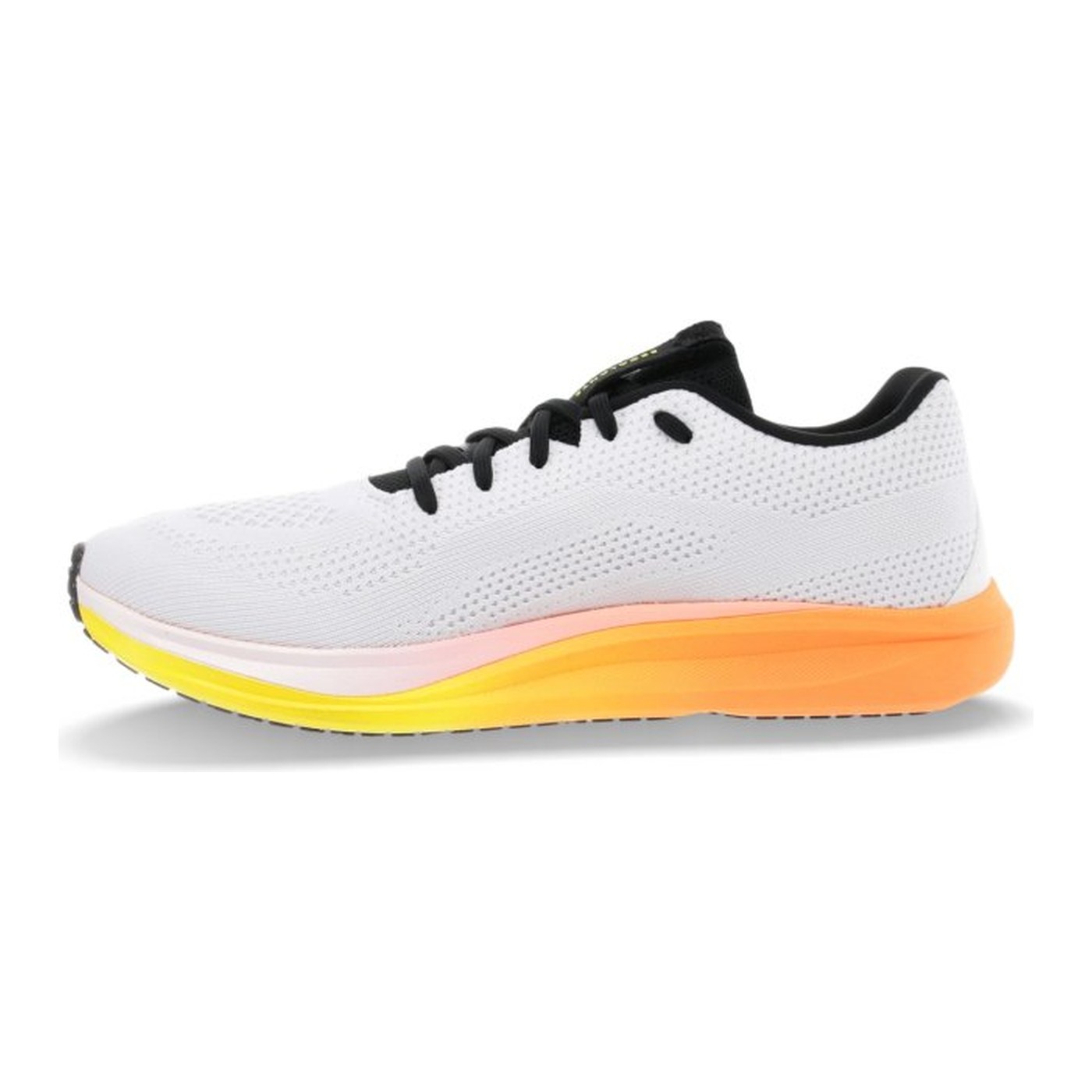
© Altra, official photo used for editorial purposes
How to fit the Escalante 5 into your RunMorph training plan
Don't make it the core of your plan in week one. Start with two runs of 20 to 30 minutes a week, alternating with your usual pair. Add 10 minutes a week if your calves don't complain.
Once you've adapted, it fits three types of sessions: 45-minute easy runs, short track intervals, and drills or strides. Keep a more cushioned shoe for the Sunday long run.
Training for a 10K and want to strengthen your feet without getting hurt? The RunMorph 10K plan adapts to your week and doses the short, fast sessions where the Escalante 5 shines.
RunMorph Coach's verdict
The Escalante 5 is the best Escalante yet. The foam finally returns energy, the upper holds the foot better, the outsole lasts longer. It remains a specialist's shoe.
Buy it if you already run in zero drop, land flat and rarely run more than an hour. Skip it if you heel strike or want a single pair for everything. In that case, the Torin 9 or the Kinvara 16 will serve you better.
RunMorph score: 8,5/10.