Apple released the Apple Watch SE 3 on 19 September 2025, at €269 for the 40 mm and €299 for the 44 mm. It is Apple's cheapest watch. It gets the S10 chip from the high-end models and finally adds an always-on display. But a sports watch is judged on three things: its GPS, its heart rate sensor and its battery. RunMorph cross-checked four published reviews to find out whether it is enough for a runner.
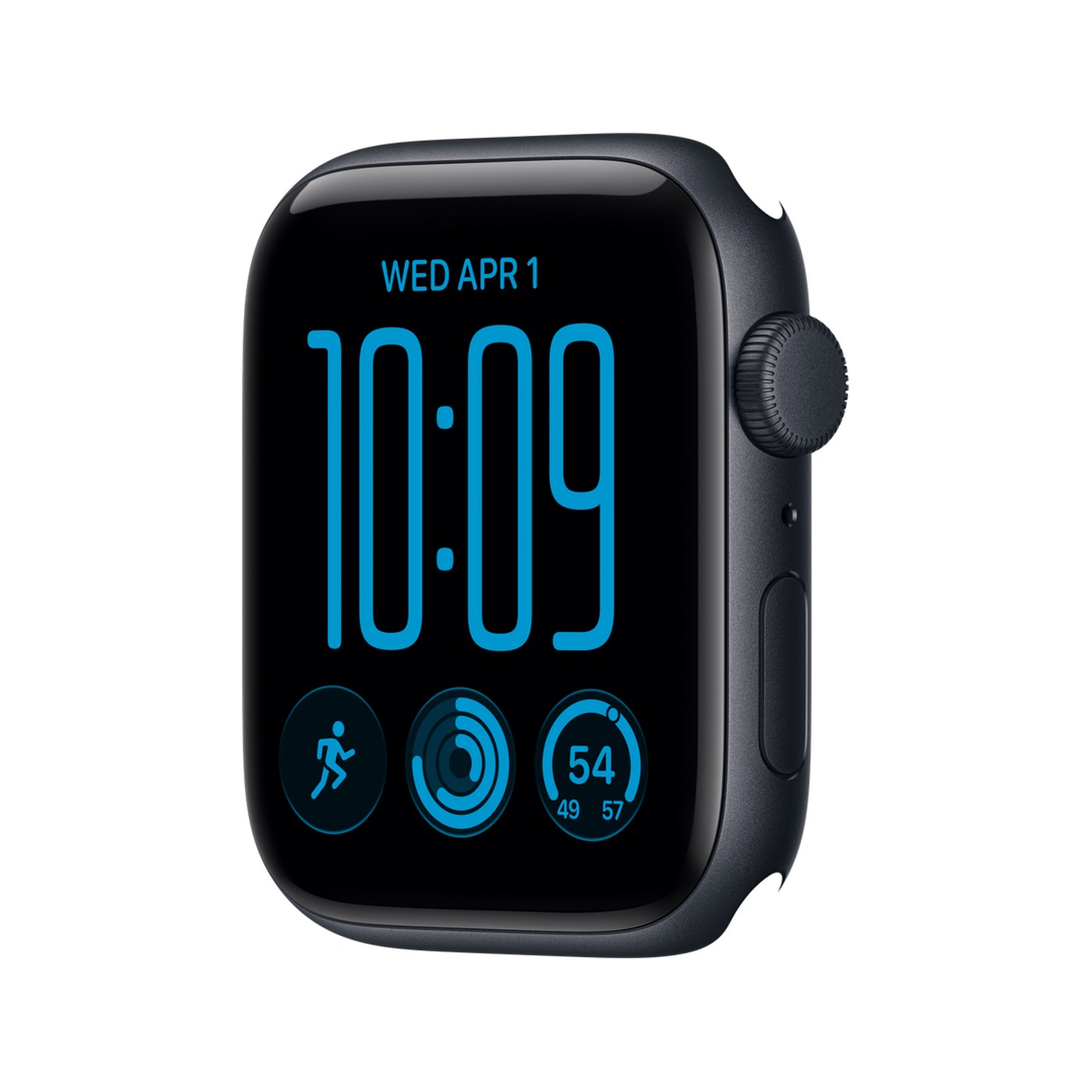
© Apple, official photo used for editorial purposes
Apple Watch SE 3: Apple's entry point, finally up to speed
For three years, the SE 2 lagged behind in awkward ways. An old chip, a screen that went dark when you lowered your wrist, no temperature sensor. The SE 3 catches up in one go. Same S10 chip as the Series 11 and the Ultra 3, an always-on display at 1,000 nits, a temperature sensor, and now 5G on cellular versions.
The price has not moved. On 20 November 2026, Apple still lists it at €269 for the 40 mm and €299 for the 44 mm (€319 and €349 with cellular). Retailers often sell it for less. WatchGeneration spotted it at €236 during Prime Day in June 2026.
It is 14 months old. It is no longer new, and that is good news: watchOS updates have had time to land, and reviews have had time to pile up. For a runner, the real question lies elsewhere. At this price, Garmin and COROS sell watches built for running first. So why pick an Apple?
RunMorph's advice: you have an iPhone and want one watch to run, pay and reply to your messages? The SE 3 is the best Apple buy for a runner. If you want a watch that lasts a week and a full marathon without charging, get a COROS Pace 4 for the same price, or a Forerunner 165. And if you have an Android phone, there is nothing to decide.
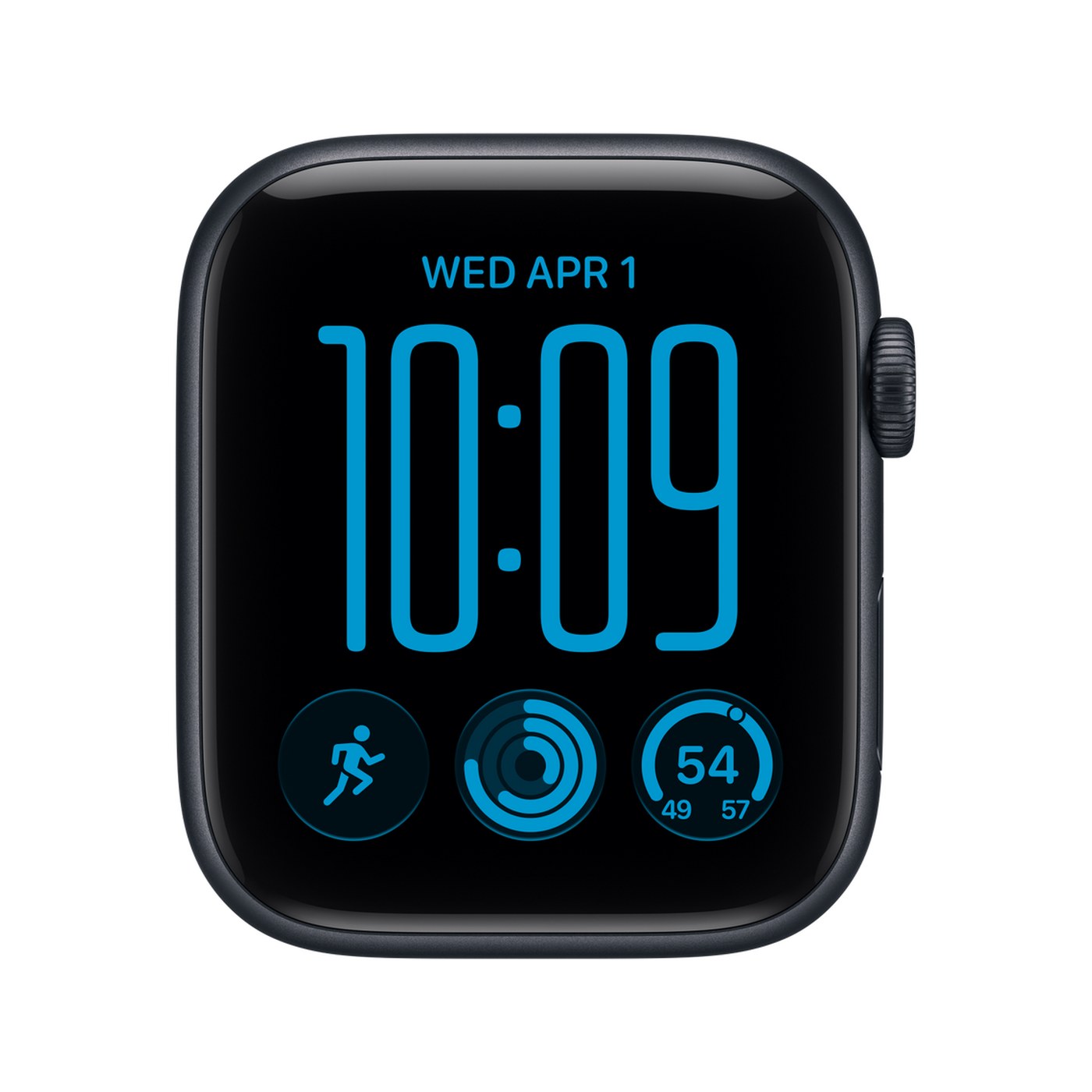
© Apple, official photo used for editorial purposes
Who is the Apple Watch SE 3 for?
The road runner aiming for a 10K or a half
This is its target. A one-hour to 90-minute run uses a reasonable share of the battery. GPS and heart rate are reliable enough to guide your training paces. And the Workout app shows the same running form metrics as €900 Apple Watches. Under 2 h of effort, the SE 3 will not hold you back.
The beginner who wants a watch "for everything"
Many runners do not buy a sports watch. They buy a watch, and they run with it. For them, the SE 3 ticks more boxes than an entry-level Garmin: Apple Pay, calls, messages, music, sleep tracking. The trade-off is a daily charge. If you don't mind putting it on its charger while you shower, this is the one.
Trail runners and marathoners: look elsewhere
Apple claims 7 h of outdoor running, at best. Start a 4 h 30 marathon with a half-full battery, and you finish blind. The single-frequency GPS also drops out sooner under trees. For trail, look at the Ultra 3 if you want to stay with Apple, or a Pace 4 if you care about your budget.
© Apple, official photo used for editorial purposes
GPS accuracy and heart rate sensor: good enough to train with
Start with the most telling number. A British tester ran 16,9 km with the SE 3 on one wrist and a multi-band Garmin as a reference. The SE 3 measured 16,96 km, the Garmin 16,91 km. Less than 50 m apart. To lock in an easy or threshold pace, that is more than enough.
The same tester immediately adds a caveat: the track is more "squiggly" than the Garmin's. A second English-speaking tester goes further. He describes clipped corners, a position sometimes in the middle of the road, and a signal that suffers under trees and on paths. His verdict fits in one line: good enough for training, not on par with the best.
So who is right? Both. It mostly depends on where you run. In open streets or along a riverside, the SE 3 matches pricier watches. In forest or between tall buildings, the single-frequency GPS shows its limits. Dual-frequency watches such as the Pace 4 or the Ultra 3 do better. None of the four reviews measured a gap on an athletics track.
The optical heart rate sensor is the bigger surprise. Over 90 minutes of running, the first British tester found an average heart rate almost identical to a Garmin HRM 600 chest strap. The second puts the gap on average and maximum heart rate at 1,24 % against his reference devices. For a €269 watch, that is very solid.
The flaw shows up in the detail. Both testers report occasional dropouts, with gaps in the graph. The first notes trouble with effort spikes in short intervals, and in cold or damp weather. Put simply, trust the wrist for a long run or an easy run. For 30/30s in the middle of winter, pair a Bluetooth chest strap.
Maps and navigation: handy, but tied to the iPhone
The SE 3 has no proper hiking maps like an outdoor watch. It uses Maps, Apple's app, with walking and running routes. You can download offline maps and follow a route created on the iPhone. The compass and always-on altimeter complete the package.
For a city run or a familiar loop, it is comfortable. To follow a GPX track in the mountains, you are better off with a specialised third-party app. But the battery question comes back fast: a map shown continuously drains the watch faster than a simple pace screen.
Training and recovery metrics
Here, the SE 3 matches the more expensive Apple Watches. A British tester reckons it offers almost every sports tool of the Series 11. Only snorkelling is missing. You get custom workouts with warm-up, work blocks and recovery, heart rate zones, training load, estimated VO2max and automatic track detection.
Running form metrics are complete: cadence, stride length, ground contact time, vertical oscillation and running power. Few watches under €300 show this much without an external sensor. What is missing is interpretation. Garmin tells you whether you are overreaching or ready for more. Apple mostly gives you numbers and leaves you to read them.
On the health side, the temperature sensor feeds cycle tracking and the Vitals app. Apple does list sleep apnoea notifications. One review published in French claims otherwise, but the official spec sheet and two other testers confirm it. There is no ECG or blood oxygen, though. For a runner, that is secondary.
One last point: the ecosystem. Strava and the major running apps install on the watch. And your data flows into the Health app, which most running apps can read.
Real-world battery life: the real weak spot
Apple claims 18 h. That figure assumes a day with a single 60-minute workout. In real life, three testers out of four tell the same story: a watch you charge every day.
The most precise scenario comes from a British tester using the 40 mm version. Always-on display, notifications on, a 30-minute GPS run: about 20 % left at bedtime. To track your sleep, you therefore need a 40 to 50 minute top-up during the day. An Australian tester sees about a 10 % drop overnight. The review published in French, more optimistic, talks about a full day including sleep.
For running, remember one number: 7 h of outdoor running with GPS and heart rate, based on Apple's own tests on prototypes. None of the reviews we read checked it. In practice, that covers a half marathon with no stress. A marathon, only if you start with a full battery. A 6-hour trail run, no.
Charging makes up for some of it. 45 minutes from 0 to 80 %, 15 minutes for 8 h of use. Remember to buy a 20 W charger, though: Apple does not include one. Low Power Mode stretches to 32 h, but switches off some background sensors.
© Apple, official photo used for editorial purposes
Apple Watch SE 3 vs Garmin Forerunner 165: the comparison
This is probably the duel on your mind in the shop. Two watches under €300, two philosophies.
| Criterion | Apple Watch SE 3 (44 mm) | Garmin Forerunner 165 |
|---|
| Price | €299 (€269 for 40 mm) | €249 |
| Display | Always-on OLED, 1,000 nits | 1,2-inch AMOLED |
| GPS battery life | 7 h (Apple) | 19 h (Garmin) |
| Charging | Every day | 11 days claimed in smartwatch mode |
| Fitness analysis | Training load, VO2max | Training Status, VO2max |
| Smart features | Apple Pay, calls, messages, apps | Notifications |
| Compatible phones | iPhone only | iPhone and Android |
For a pure runner, the Forerunner 165 wins. It costs less, lasts almost three times longer on GPS and reads your training load better. The SE 3 takes the lead as soon as the watch has to do more than running. If you spend more time answering messages than doing intervals, it makes more sense.
How it compares with the competition
The COROS Pace 4 costs €269, the same as the 40 mm SE 3. It claims 41 h of dual-frequency GPS and weighs 32 g. For pure training, it beats the SE 3 on every measurable point. It does not pay, take calls or run apps.
The Series 12 starts at €449, €180 more than the 40 mm SE 3. It adds ECG, blood oxygen and a 2,000-nit display. For running, the gain comes down to 3 h of extra claimed GPS time (10 h versus 7). The GPS is still single-frequency. For a runner, the price gap is hard to justify.
The Ultra 3, at €899, is the only Apple Watch built for trail and ultra. Dual-frequency GPS, 42 h of claimed battery life, a titanium case. It costs three times as much. If you run less than 2 h at a time, keep your money.
How to use it in your RunMorph training plan
The SE 3 is made for a RunMorph 10K plan or a first half marathon. Build your interval sessions in the Workout app, with warm-up, work blocks and recovery: the watch vibrates at every change. Set pace alerts on your target range for endurance runs.
Two habits to adopt. Charge it during your morning shower, so you start every day above 80 %. And for short VO2max sessions, pair a Bluetooth chest strap. Wrist heart rate is reliable at a steady effort, less so on sudden changes.
Just starting out, or aiming for your first 10K? The
RunMorph 10K plan organises your easy runs, intervals and recovery week after week. Your SE 3 only has to record. If you are starting from zero, begin with the
beginner plan.
The RunMorph coach's verdict
The Apple Watch SE 3 is a good running watch disguised as a smartwatch. GPS and heart rate are good enough to train seriously up to the half marathon. The running form metrics are those of the high-end models. And at €269, it costs less than any other Apple Watch.
Its problem is the battery. A charge every day, 7 h of running at most: that rules out trail, ultra and slow marathons. The single-frequency GPS will also let you down now and then in the woods.
Buy it if you have an iPhone, run less than two hours at a time and want one watch for everything. If running comes first, get a COROS Pace 4 for the same price. You get almost six times more GPS battery life.
RunMorph score: 7,0/10