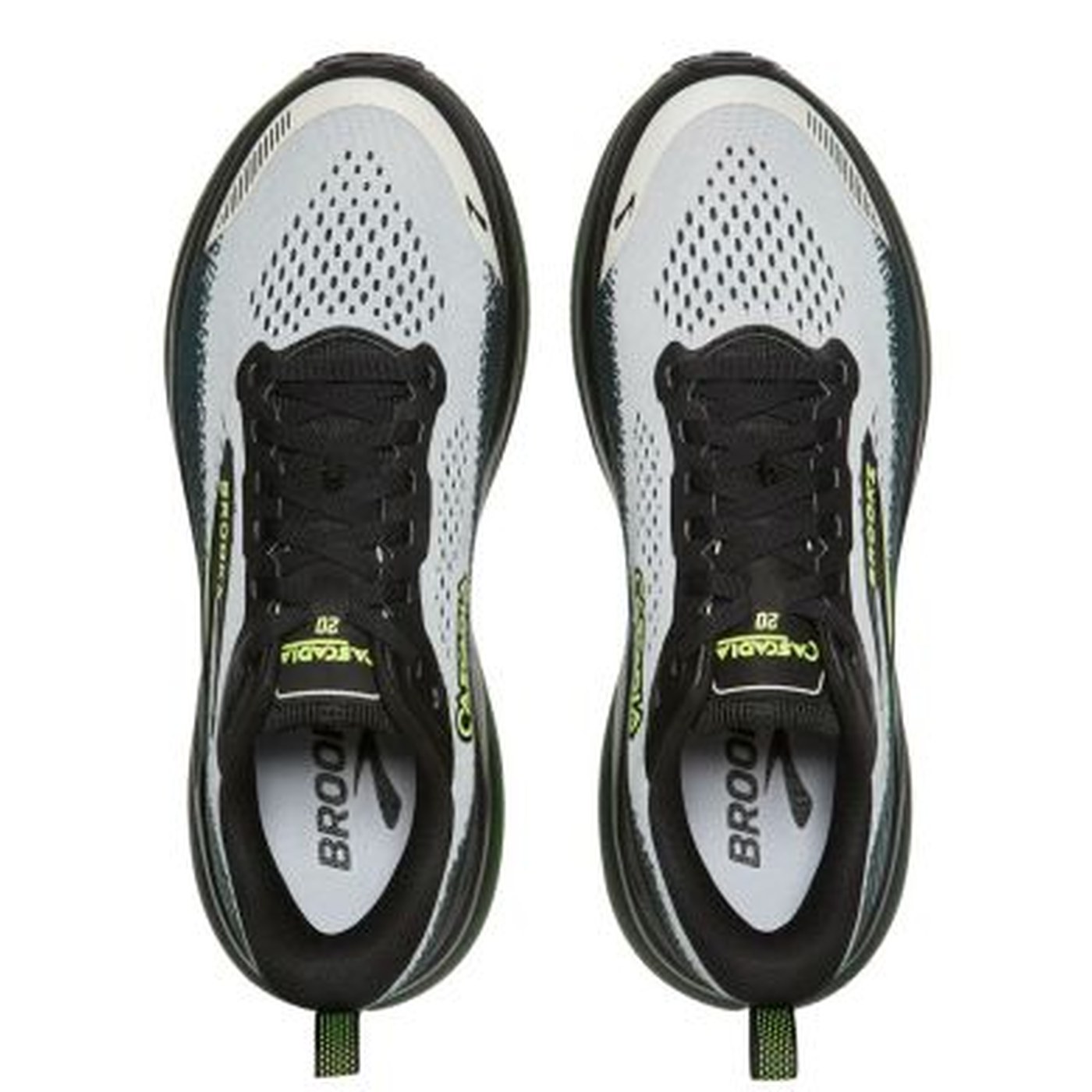
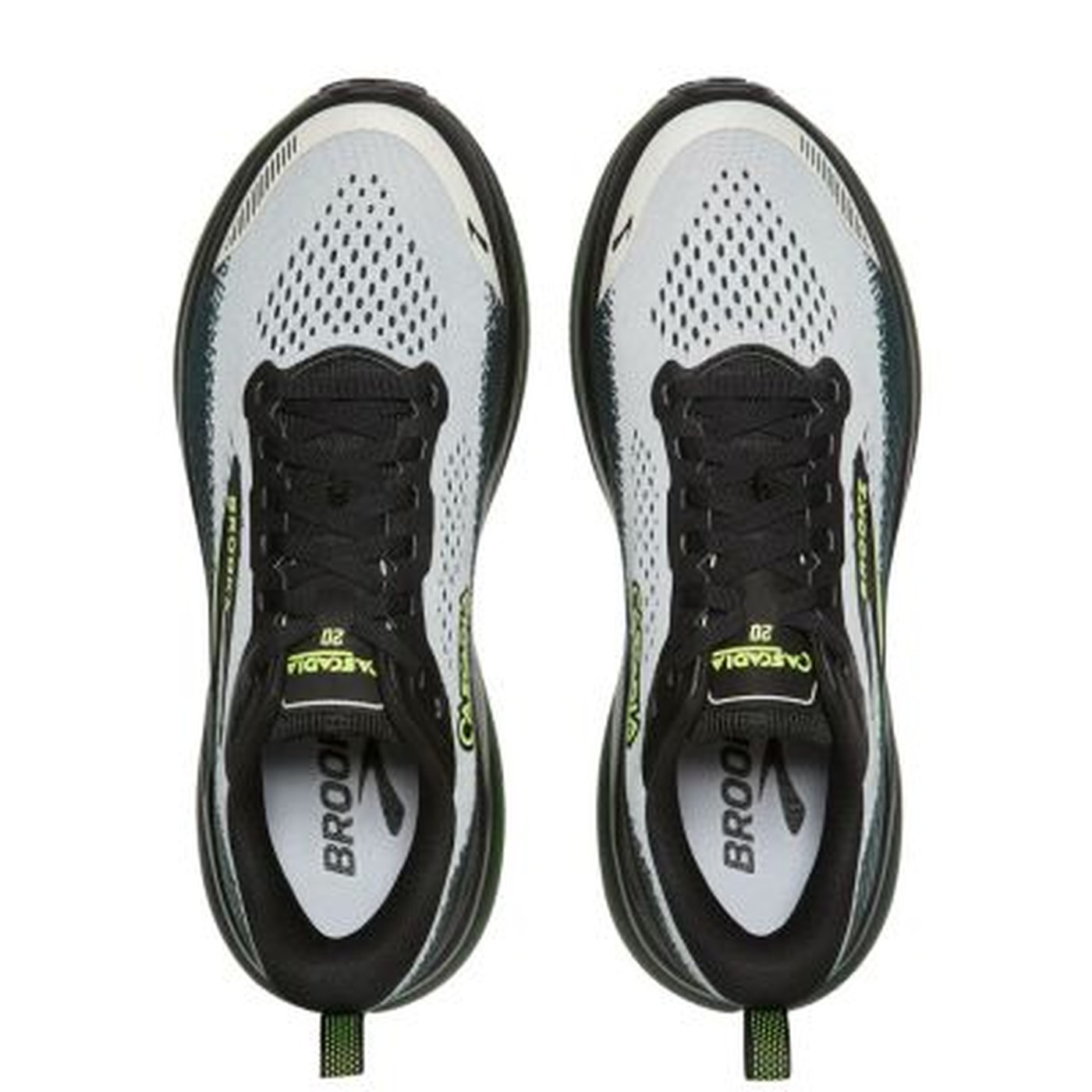
The Brooks Cascadia 20 marks a turning point in the line's history: for the first time, the mainstream version gets a Vibram Megagrip outsole, until now reserved for the Cascadia Elite. Add nitrogen-infused DNA Flash v2 foam and 4 mm of extra stack, and this twentieth generation becomes the most polished Cascadia ever made. At €160, it targets versatile trail runners who want the grip of a technical shoe without giving up comfort over long distances.
Brooks Cascadia 20 Review: The Full RunMorph Breakdown
8.5/10
The essentials in 3 sentences
The Cascadia 20 gets Vibram Megagrip for the first time on the standard model, and it transforms how the shoe behaves on wet, technical terrain. The extra DNA Flash v2 foam adds protection without making the shoe noticeably heavier. At €160, it remains Brooks's benchmark affordable trail shoe for anything from 15 km to ultra.
8.5
/ 10 · RunMorph overall score
Who is it for?Versatile trail runners going from 15 km to ultra, runners who want security on wet or technical terrain, Cascadia fans who were waiting for Vibram.
Who should skip it?Runners looking for a shoe under 270 g, trail runners focused purely on speed, anyone who only runs on dry, hard-packed ground.
Brooks Cascadia 20: the twentieth generation finally gets the Vibram it deserved
RunMorph Coach's tip: if you already run in the Brooks Cascadia Elite, you know how well Vibram Megagrip grips. The standard Cascadia 20 gives you 90% of that traction for €40 less, with more stack for long distances. If you want a lighter alternative, the Hoka Speedgoat 7 stays competitive in this category.
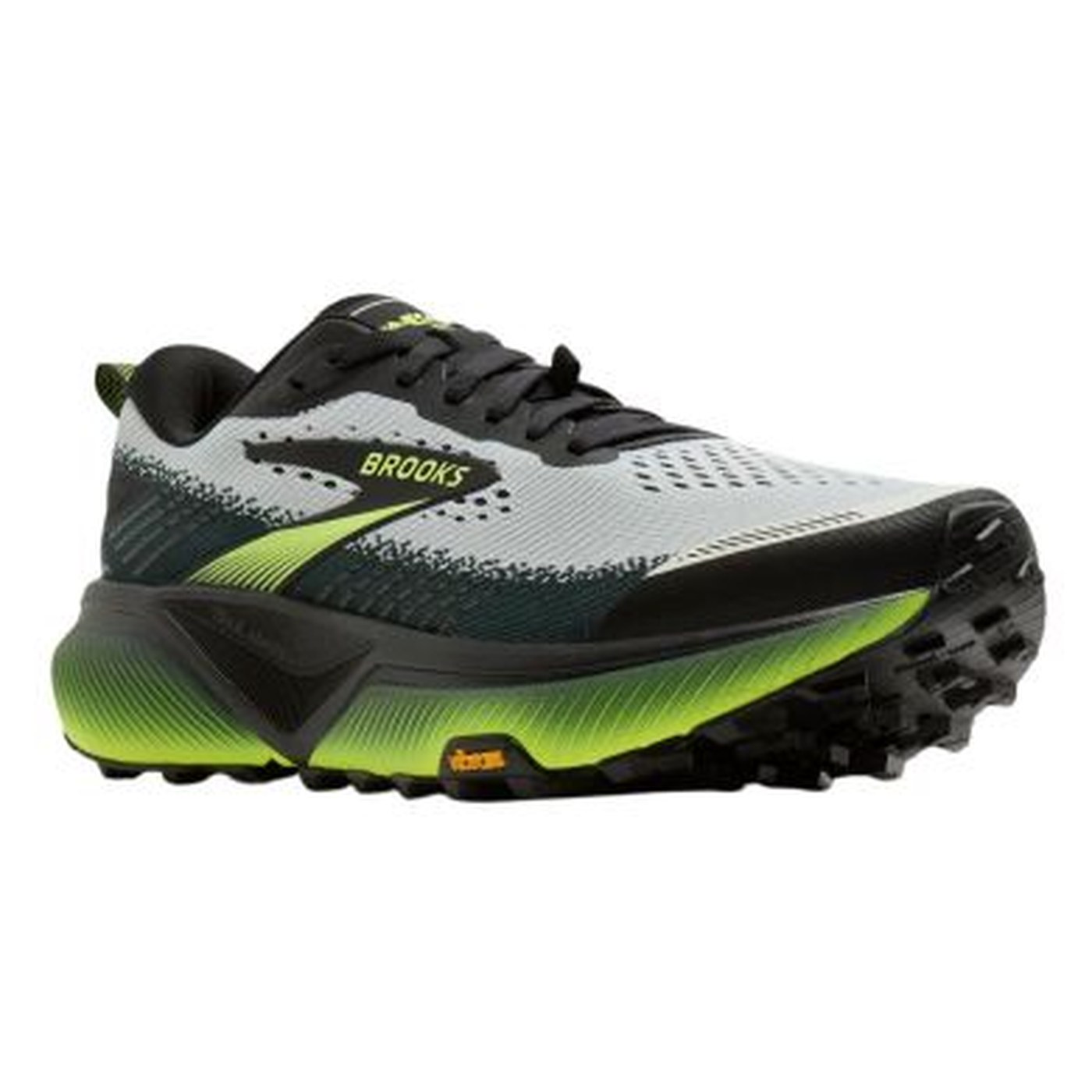
Objective technical data
| Spec | Value |
|---|---|
| Brand | Brooks |
| Model | Cascadia 20 |
| France release | July 2026 |
| Type | Versatile trail |
| Drop | 6 mm |
| Heel / forefoot stack | 38 mm / 32 mm |
| Men's weight (size 42) | 306 g |
| Women's weight (size 38) | 275 g |
| Foam | DNA Flash v2 (nitrogen-infused supercritical EVA) |
| Plate | TrailAdapt (thermoplastic, not carbon) |
| Outsole | Vibram Megagrip, 4 mm lugs, Traction Lug |
| Upper | Breathable Air Mesh, 3D overlays in abrasion zones |
| Target distance | 10 km, half marathon, marathon, ultra |
| Price | €160 |
Who is the Cascadia 20 for?
The versatile long-distance trail runner
The Cascadia has always been the shoe for runners who want one reliable answer for any terrain and any distance. Version 20 doubles down on that: with 38 mm of heel stack and Vibram Megagrip, it soaks up impacts on long runs and gives you reassuring grip on technical sections. The typical user is the regular trail runner who mixes fire roads, wet paths and rocky stretches over 2 to 4 runs a week.
The runner preparing an ultra or a mountain marathon
The Cascadia has always been a fixture at the big ultras. Generation 20 improves protection over long distances thanks to 4 extra mm of DNA Flash v2. For races over 50 km, where foot fatigue is a key factor, the Vibram plus more protective foam combination is a strong argument. Vibram's proven durability outlasts proprietary compounds over 700 to 1000 km of use.
The road runner moving to trail
The Cascadia 20 is also a top-tier way into trail running. Reassuring Vibram grip on wet ground and a €160 price make it a rational choice for road runners starting trail without taking risks. The Air Mesh upper is structured enough to guide your foot without stifling your stride.
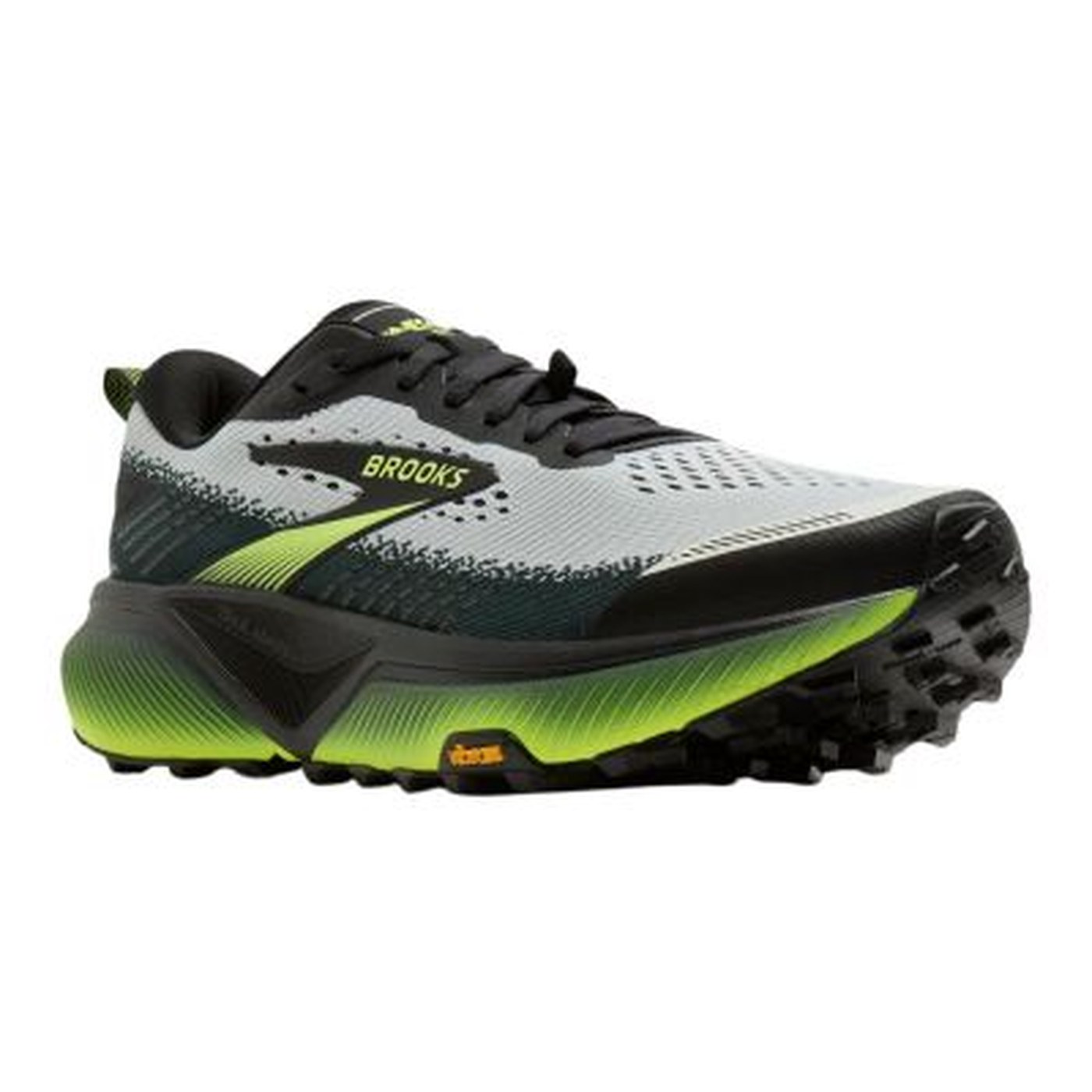
Vibram Megagrip outsole: what really changes from the Cascadia 19
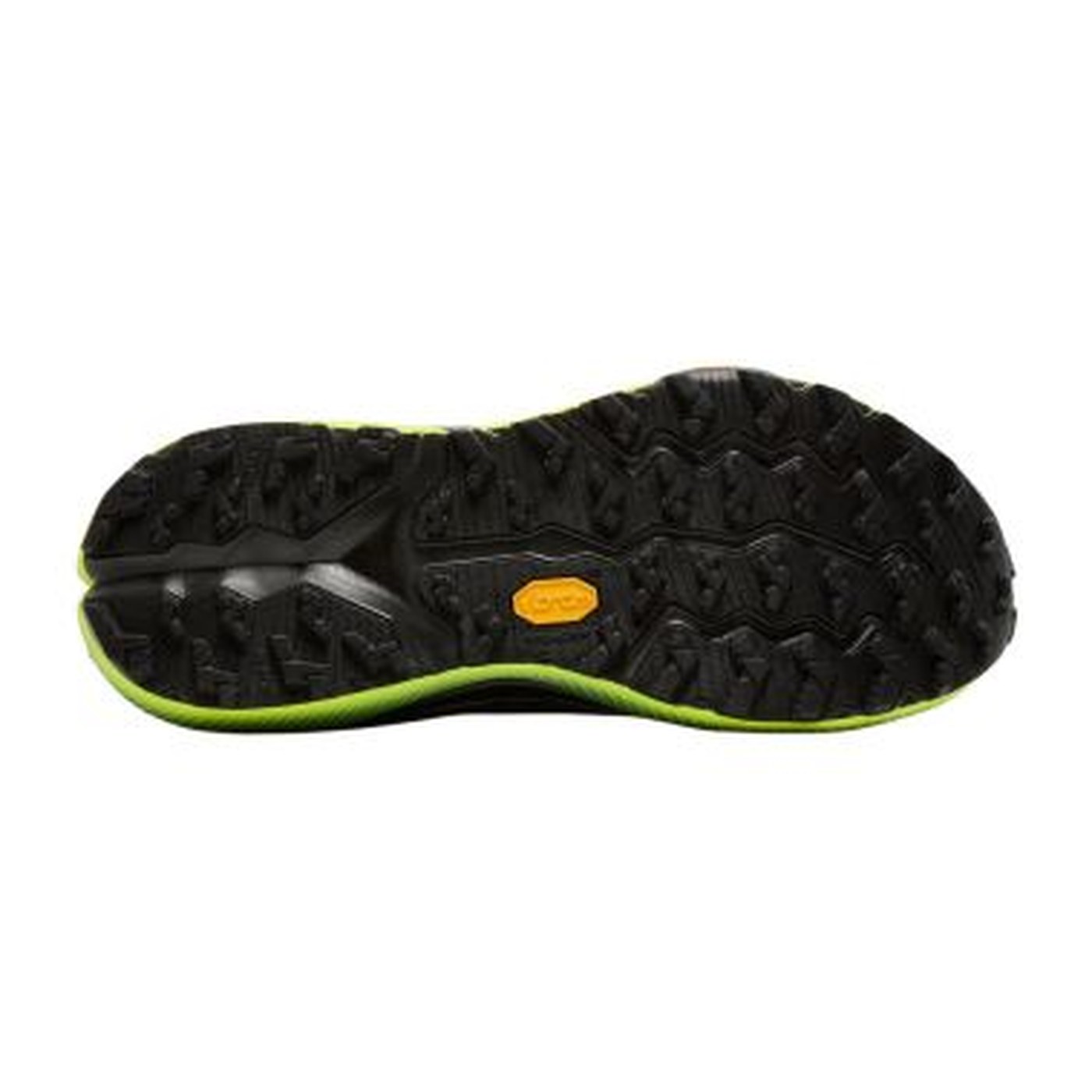
This is the headline change of this generation. The Cascadia 19 used the proprietary TrailTack compound, fine on dry ground but with room to improve on wet terrain or slick rock. The Cascadia 20 switches to Vibram Megagrip, the same compound you find on the Brooks Cascadia Elite, the Altra Lone Peak 9+ and the Salomon Genesis.
Vibram Megagrip has two distinctive qualities recognized across the industry: grip on wet rock that clearly beats most proprietary compounds, and greater durability. The 4 mm lugs with Traction Lug technology, adaptive lugs that flex with the angle of the terrain, bite hard into loose dirt, roots and mud-to-stone transitions. On dry, hard-packed ground, the difference from the previous generation is less noticeable. On wet or technical sections, the upgrade is significant.
The 4 mm depth is a well-judged compromise. Go shallower (2 to 3 mm) and grip in mud falls short; go deeper (5 to 6 mm, as on the Hoka Speedgoat 7) and you gain grip but lose comfort on hard trails. 4 mm is the sweet spot for an all-around shoe.
DNA Flash v2 and TrailAdapt: cushioning that protects without giving anything away
DNA Flash v2 foam infuses nitrogen into a supercritical EVA matrix, which increases microcell density and improves energy return while reducing gradual packing out. Compared with the Cascadia 19, version 20 adds 4 mm of stack, bringing it to 38 mm at the heel and 32 mm at the forefoot. That extra cushioning is especially welcome on long, rocky descents, where repeated forefoot impacts become a major source of fatigue after 40 km.
TrailAdapt technology, a thermoplastic plate paired with the foam, improves torsional rigidity and helps the sole adapt to uneven terrain without your foot collapsing sideways. This is not a performance-oriented carbon plate. It is a passive stabilization system that works well on varied terrain.
Cascadia 20 vs Cascadia 19 and Cascadia Elite: the comparison
| Criterion | Cascadia 19 | Cascadia 20 | Cascadia Elite |
|---|---|---|---|
| Outsole | TrailTack | Vibram Megagrip | Vibram Megagrip |
| Foam | DNA Flash v1 | DNA Flash v2 | PEBA (super shoe) |
| Heel stack | 34 mm | 38 mm | 40 mm |
| Men's weight (size 42) | 304 g | 306 g | ~270 g |
| Price | €150 | €160 | €200 |
The jump from 19 to 20 is substantial and targeted. Brooks fixed the two main weaknesses of the standard line: grip on wet ground (solved by Vibram) and long-distance protection (improved by the higher stack). The extra 2 g is negligible. The €10 increase covers the cost of the Vibram compound.
Cascadia 20 vs the trail competition
| Model | Weight | Outsole | Stack | Price |
|---|---|---|---|---|
| Brooks Cascadia 20 | 306 g | Vibram Megagrip | 38/32 | €160 |
| Hoka Speedgoat 7 | ~275 g | Vibram Megagrip | 38/33 | €160 |
| Salomon Genesis | ~285 g | Contagrip MA | 35/29 | €150 |
| NNormal Tomir 2 | ~288 g | Vibram Megagrip | 35/27 | €170 |
| Saucony Peregrine 16 | ~280 g | PWRTRAC PEBA | 32/28 | €140 |
The Cascadia 20 is not the lightest, but it is the only one that combines Vibram Megagrip, more than 36 mm of heel stack and a €160 price tag. The Speedgoat 7 is lighter at the same price, with slightly different behavior (higher forefoot stack). Choosing between the two comes down to fit: the Cascadia wraps the foot more, while the Speedgoat is narrower through the midfoot.
How to fit the Cascadia 20 into your RunMorph training plan
The Cascadia 20 is a versatile trail shoe, not a lightweight racing shoe. In a structured trail training plan, it belongs on long runs of 3 h or more, course recon outings and wet-weather sessions where grip matters more than low weight. It is not the first shoe to grab for hill intervals or a short trail race where every gram counts.
If you are preparing an ultra, the Cascadia 20 works as your main training and racing pair. In regulated events, it can be your race shoe, alternating with a lighter option for fast technical sections. Check out RunMorph training plans to build a shoe rotation into your preparation, alternating a versatile trail shoe with a road shoe for speed sessions.
RunMorph Coach's verdict
The Brooks Cascadia 20 is the best generation of the line to date. Switching to Vibram Megagrip fixes the only long-standing flaw of the standard Cascadia and puts it level with the best versatile trail shoes on the market for grip. The higher DNA Flash v2 stack improves comfort over long distances. The extra 2 g and the €10 increase over the Cascadia 19 are entirely acceptable trade-offs given the improvements.
If you regularly run mixed trails on wet ground and you are not looking for a minimum-weight racing shoe, the Cascadia 20 fully earns its place in your rotation. Score: 8.5/10.
Key takeaways for your training
- Vibram Megagrip for the first time: the most anticipated upgrade in the line, effective on wet rock and loose dirt.
- DNA Flash v2: +4 mm of stack: more protection on long descents and on runs over 3 h.
- 306 g, not a racer: a long-distance training shoe and ultra racing shoe, not built for pure speed.
- 6 mm drop confirmed: works with the vast majority of trail strides and makes for a natural transition from the road.
- €160, justified: Vibram shows in the higher estimated durability compared with the TrailTack of previous generations.