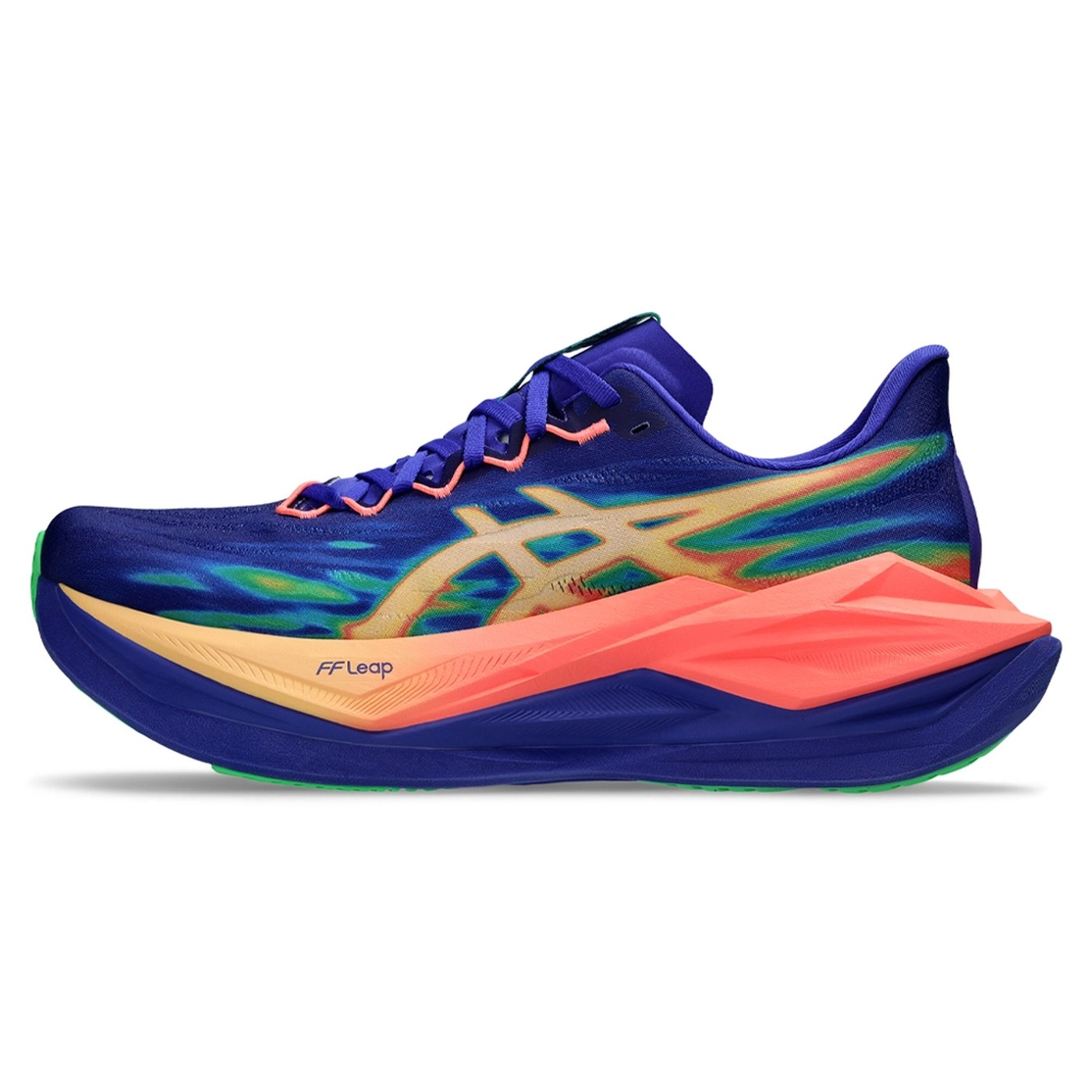
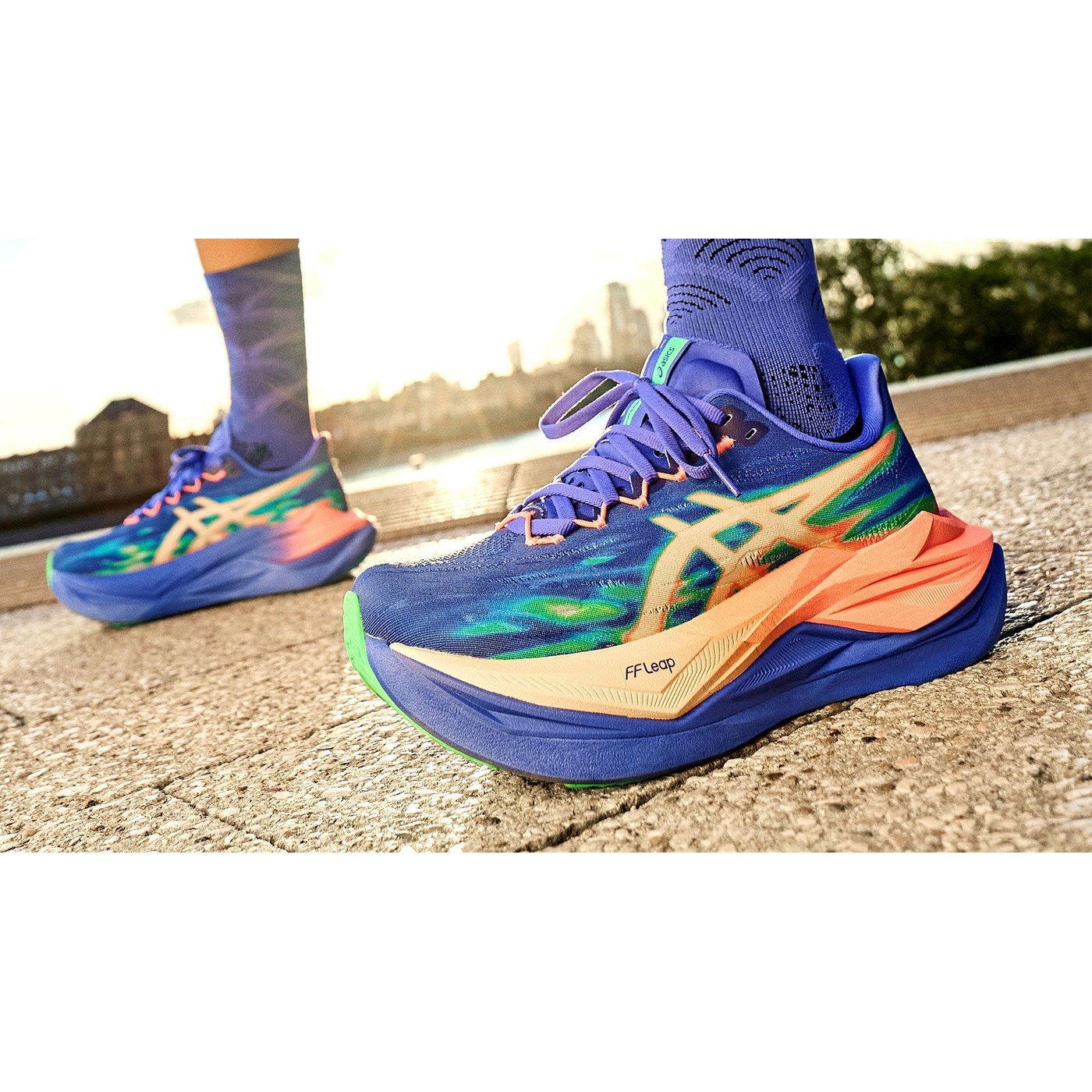
Released on February 28, 2026, the Asics Superblast 3 follows a shoe many runners considered the best super trainer on the market. This 3rd version bets on the new FF Leap foam (an A-TPU that's lighter and bouncier than the FF Turbo+ in the 2), a stack height raised to 46.5 mm and a weight kept down to 239 g. Still no carbon plate: Asics sticks to its DNA. We explain who it's really built for.
Asics Superblast 3 Review: The Super Trainer That Rivals Carbon
9/10
Asics Superblast 3: the super trainer benchmark for 2026?
The Superblast 2 made almost every "best super trainer" list in 2025. That gave Asics the luxury of a blank page and the pressure not to break the formula. Mission accomplished: the Superblast 3 keeps the spirit (max cushioning, plate-free pop, versatility) while getting lighter and bouncier thanks to the new FF Leap foam.
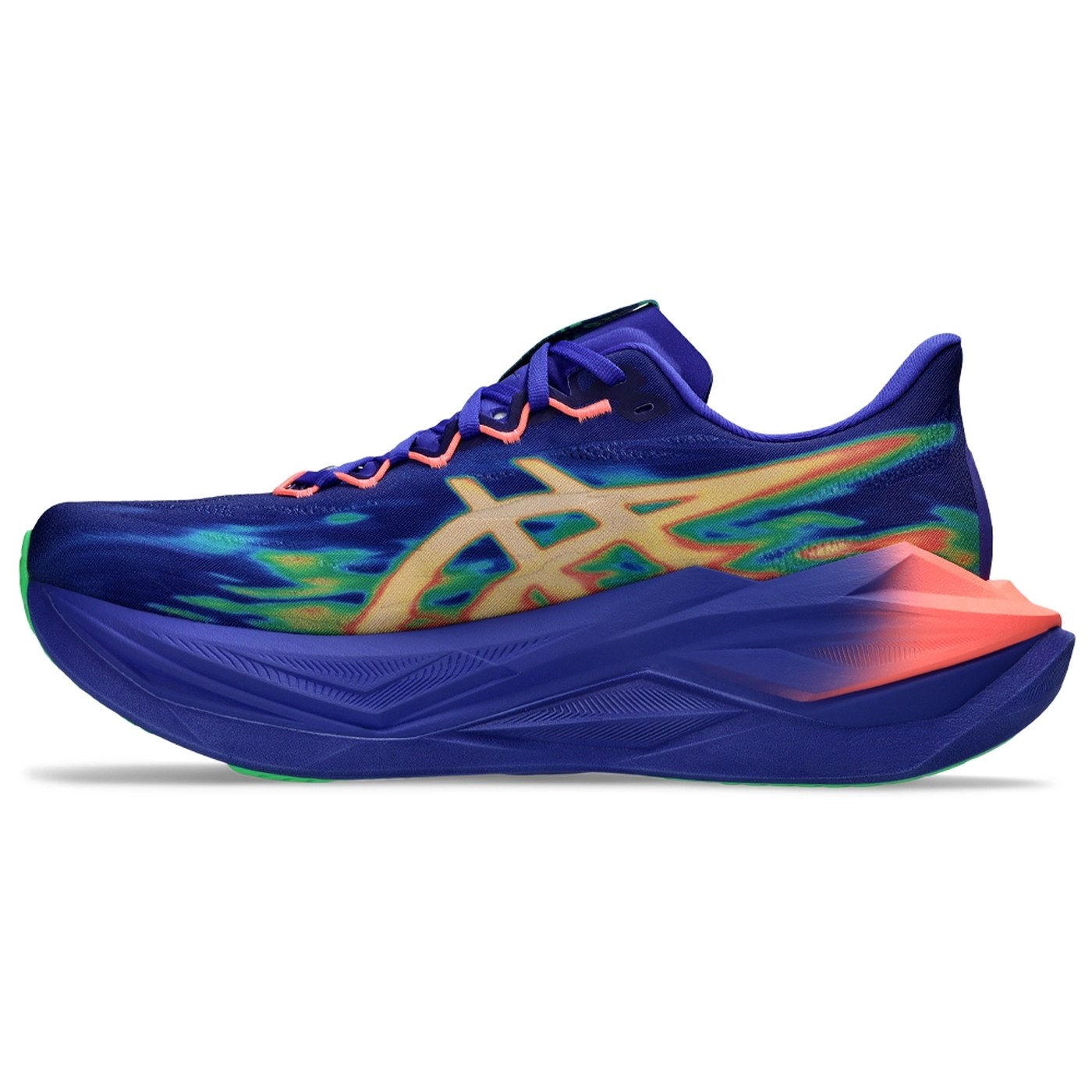
FF Leap is an A-TPU (Asics thermoplastic polyurethane) that replaces the FF Turbo+ used in the 2. Asics claims 33% less weight and 13% more energy return for the same volume of foam. In practice, the 3 weighs 239 g with a 46.5 mm heel stack, versus 250 g for 45.5 mm on the 2. The cushioning-to-weight ratio is now truly exceptional.
RunMorph tip: the Superblast 3 has no carbon plate, and that's deliberate. Asics put all its eggs in the foam-plus-geometry basket to preserve a natural stride. If you want the propulsive feel of a plate, go for the Hoka Skyward X 2 or jump straight to a race-day super shoe like the Metaspeed Sky Tokyo.
© Asics, official photo used for editorial purposes
Objective technical data
| Brand | Asics |
| Model | Superblast 3 |
| Official release | February 28, 2026 (stores) / March 1, 2026 (online) |
| Type | Road super trainer, max cushioning without a plate |
| Drop | 8 mm |
| Heel / forefoot stack height | 46.5 mm / 38.5 mm |
| Weight (men's EU 42) | 239 g |
| Foam | FF Leap (supercritical A-TPU) |
| Carbon plate | No (dynamic rocker) |
| Upper | Lightweight technical mesh, reinforced lateral support |
| World Athletics compliance | No (46.5 mm > 40 mm limit) |
| Recommended distance | Easy runs to marathon |
| Retail price | €200 |
Three takeaways. First, the Superblast 3 shares World Athletics non-compliance with the Adidas Hyperboost Edge: 46.5 mm exceeds the 40 mm limit. You can train in it without a second thought, but you can't use it for a ratified record.
Second, 239 g for 46.5 mm of foam is a real feat. For comparison, the Hyperboost Edge weighs 255 g for 45 mm. Asics did remarkable density work with FF Leap.
Third, and this is its signature: no carbon plate. That's what fundamentally sets the Superblast 3 apart from the Hoka Skyward X 2: you keep a natural stride, without a plate forcing the toe-off.
Who is the Superblast 3 for?
The marathoner who wants one high-performance training shoe
You run 60 to 100 km a week over a 12 to 16 week build. You want a shoe that can eat up long runs at goal pace without wrecking your legs. The Superblast 3 does exactly that: protection on long runs, pop on race-pace blocks, and you can even use it for a light tempo.
The runner who wants a simpler rotation
You don't want three training pairs plus a racer. With the Superblast 3, you cover 90% of the training spectrum (from easy runs to tempo) and keep a true carbon super shoe (Metaspeed Sky Tokyo, Vaporfly 4) for race day.
The runner who doesn't like the feel of a plate
Some runners find a carbon plate too forced, too stiff, even uncomfortable. The Superblast 3 gives you the performance of a supercritical foam without the "guided" feel of a plate. You keep a natural stride, and you decide how much push you put in.
© Asics, official photo used for editorial purposes
Comfort and step-in feel
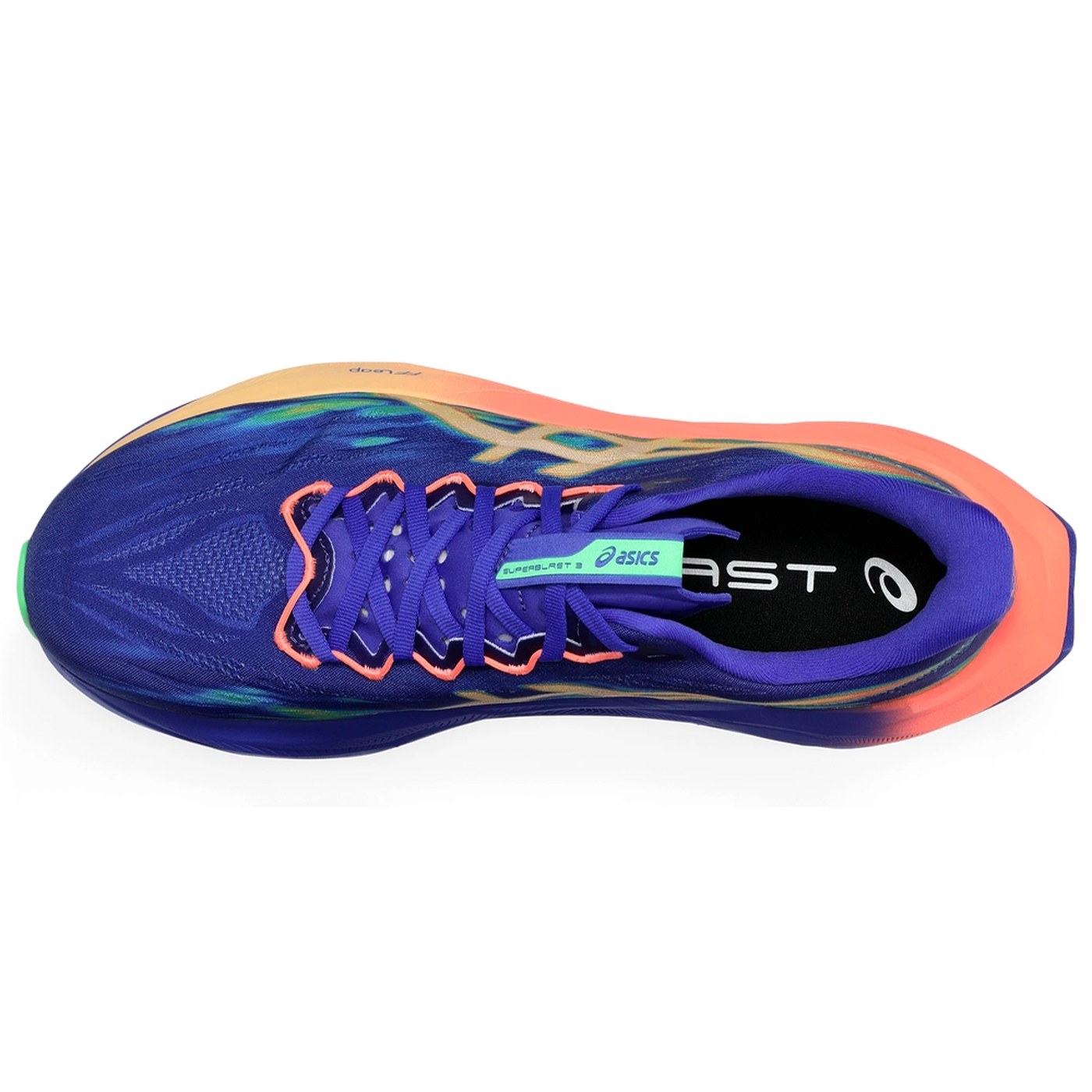
The technical mesh upper breathes better than the one on the 2, with lateral support reworked to lock the foot onto the rocker more securely. The fit runs on the narrow side, true to Asics form: if you have wide feet, go up half a size.
The tongue is partially gusseted and well padded. The heel counter stays structured without being too rigid. Step-in feel is instantly premium: the foam feels dense and slightly firm, but the energy return kicks in from the very first strides. It's a different sensation from the soft but static feel of a Gel-Nimbus 28.
On the run
At easy pace (5:00 to 6:00 / km), the Superblast 3 already makes you want to speed up. The rocker is pronounced, and the FF Leap foam compresses and gives energy straight back. It's a shoe that pulls you along without asking for extra effort.
At threshold pace (4:00 to 4:30 / km), it's in its element. FF Leap loads fully with every stride, the energy return is obvious, and stability stays excellent even at a sustained effort. It's probably the best shoe in the segment for marathon-pace blocks.
At fast tempo pace (3:30 / km and quicker), the shoe starts to feel a bit heavy, and the high stack can feel unstable on tight turns. For short intervals (400 m, 1,000 m), switch to a light shoe like the Magic Speed 5.
Outsole and grip
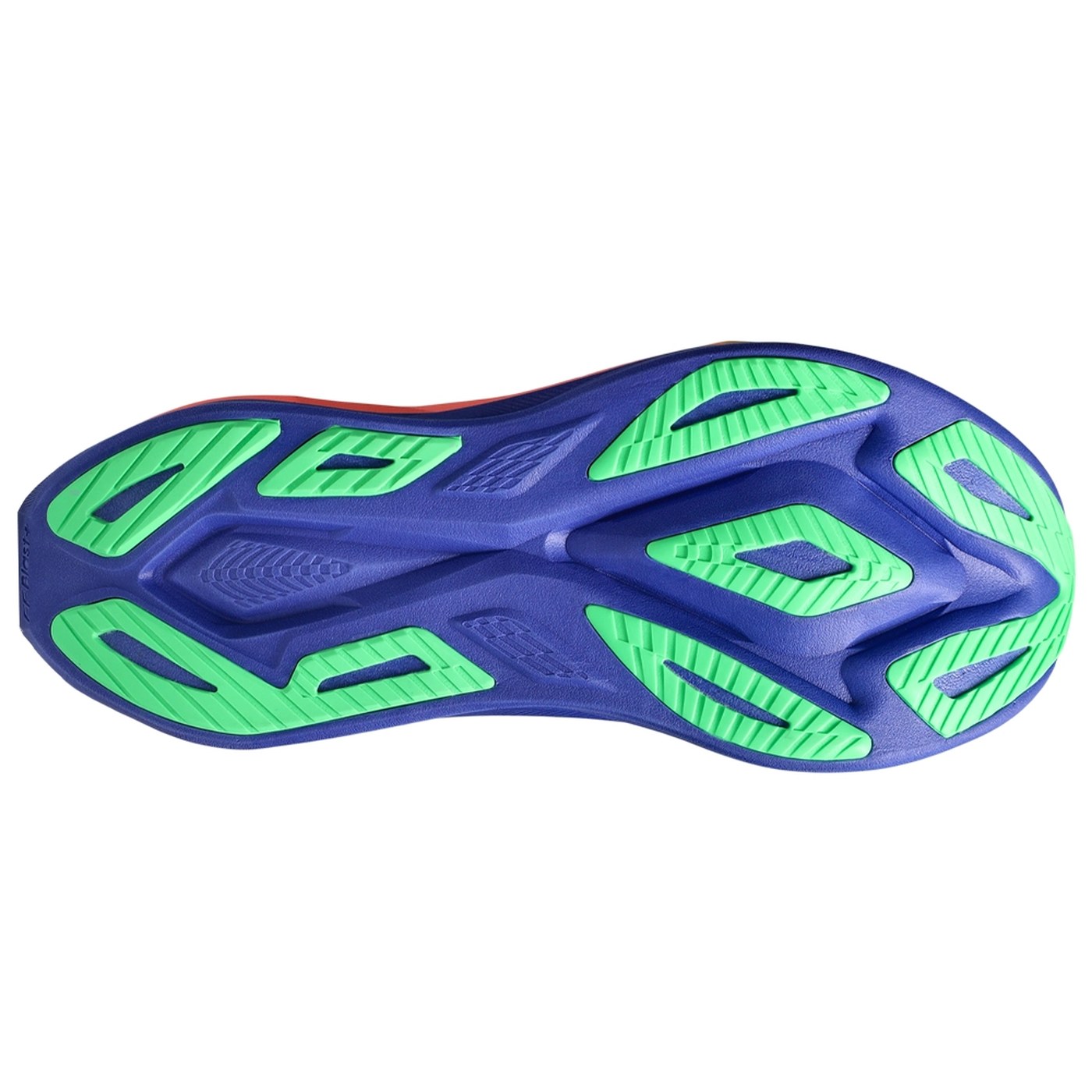
The outsole uses dense rubber in high-wear zones (lateral heel, medial forefoot) and exposed foam everywhere else. Same philosophy as the Superblast 2: weight savings at the cost of a little durability.
Grip on dry roads is total; in the wet it's decent. Independent lab tests rank the Superblast 3's traction among the best in its category (close to the Superblast 2, which was already excellent). Expect 600 to 800 km of lifespan depending on your stride and surfaces.
© Asics, official photo used for editorial purposes
How it stacks up against the competition
The super trainer segment got crowded in 2026. Here's how the Superblast 3 compares with the benchmarks:
Adidas Hyperboost Edge (€200, 255 g, 6 mm drop, 45/39 stack): the most direct rival. Similar price, same plate-free philosophy. The Superblast 3 is lighter (-18 g), slightly taller (+1.5 mm) and bouncier. The Hyperboost Edge is more stable and more protective. Pick based on your stride and preferences.
Hoka Skyward X 2 (€225, 312 g, 5 mm drop, 48/43 stack): carbon plated. Taller and heavier, but with a very pronounced propulsive feel. The Superblast 3 is more versatile across varied paces and 75 g lighter.
Hoka Mach 7 (€160, 248 g, 5 mm drop, 35/30 stack): a faster, lower super trainer. The Mach 7 is snappier at threshold and tempo; the Superblast 3 protects better on long runs.
Adidas Adizero EVO SL (€150, 220 g, 6 mm drop, 39/33 stack): a more affordable super trainer with less stack. The EVO SL is more versatile for tempo work; the Superblast 3 leans toward easy aerobic miles and long runs.
Head-to-head verdict: the Superblast 3 is probably the best super trainer of 2026 for the serious marathoner who wants one anchor training shoe. Not the lightest, not the snappiest, but the most balanced.
How to fit the Superblast 3 into your RunMorph training plan
As a coach, here's where I'd put the Superblast 3 in the rotation of a runner training for a marathon:
Easy aerobic runs: yes. Protection is ample, and the rocker spares your calves on recovery runs.
Long run (90 minutes to 3 hours): yes, it's perfect. FF Leap keeps its bounce to the very end and stability stays exemplary.
Marathon-pace blocks: excellent. Plate-free propulsion makes these blocks feel more natural than in a super shoe, ideal for dialing in your goal pace.
Tempo and threshold (4:00 to 4:30 / km): yes, no reservations. It's actually one of the Superblast 3's best uses.
Short intervals (400 m, 1,000 m, VO₂max work): no. It's too tall for those paces; grab a lighter shoe.
Racing: doable up to the half marathon, not recommended if you're chasing a marathon time (and not legal for records). For race day, keep a true carbon super shoe.
To build your rotation around an anchor shoe like this one, take a look at the RunMorph training plans.
© Asics, official photo used for editorial purposes
RunMorph Coach's verdict
At its 2026 launch, the Asics Superblast 3 is one of the most refined super trainers on the market. Asics managed to improve on an already excellent shoe: lighter and bouncier, while keeping the plate-free philosophy that defines it. It's the shoe we recommend to a serious marathoner who wants one premium training pair.
At €200, the price is in line with its direct rivals (Hyperboost Edge at €200, Skyward X 2 at €225). Value for money is excellent given the lifespan (600 to 800 km) and the versatility: 80% of your sessions can be done in it.
RunMorph score: 9/10. It loses a point for World Athletics non-compliance and half a point for a fit that's a bit narrow for wide feet.
Key takeaways for your training
- Signature super trainer: the Superblast 3 is built for marathoners who want an anchor shoe covering 80% of their training.
- FF Leap A-TPU foam: 33% lighter and 13% bouncier than the FF Turbo+ in the 2.
- No carbon plate: a deliberate choice for a natural stride; the rocker handles the pop.
- Not World Athletics approved: for training and unofficial races only.
- Rare versatility: easy runs, long runs, marathon pace, tempo. The Superblast 3 does it all, except short intervals and record attempts on race day.