Hoka Mach 7 Review: Hoka's Lighter, Livelier Daily Trainer
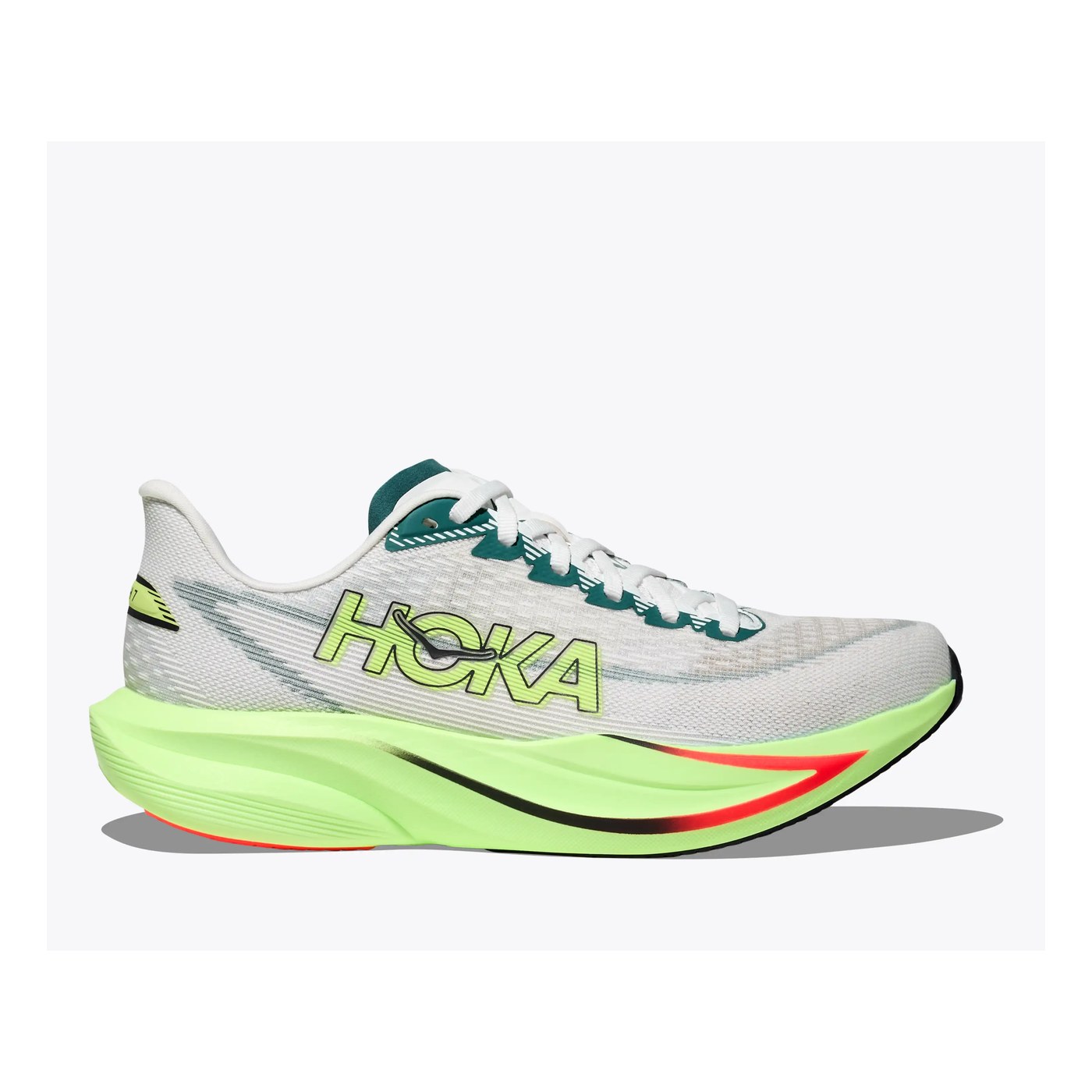
The Mach 7: the shoe that does it all, no fuss.
Looking for one pair to cover 80% of your runs? A shoe that can string together an easy run, a long run at moderate pace and even short intervals without flinching? The Hoka Mach 7 was built for exactly that. It doesn't reinvent anything, since its big sister the Mach 6 had already laid the groundwork, but it refines the winning formula with a new, more breathable upper and better grip on wet surfaces.
What you get: a versatile super trainer, light enough to feel snappy, cushioned enough to soak up the mileage and lively enough to handle faster sessions. Let's see in detail whether it really deserves a spot in your lineup.
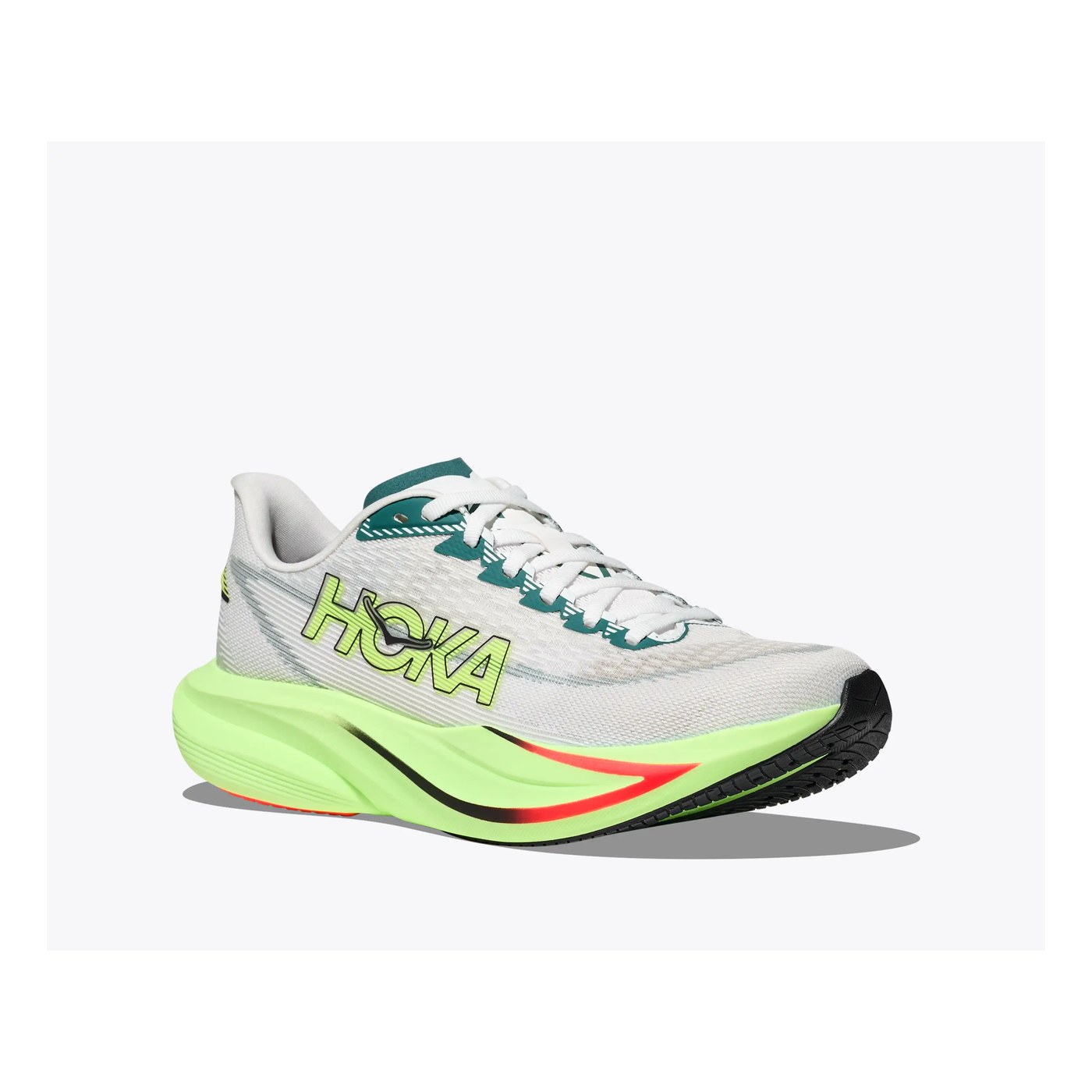
Hoka Mach 7 specs
| Brand | Hoka |
| Model | Mach 7 |
| Release date | February 15, 2026 |
| Intended use | Road, versatile super trainer (easy runs, tempo, intervals) |
| Drop | 5 mm |
| Stack height (forefoot / heel) | 32 mm / 37 mm |
| Weight (men's size 42) | 237 g |
| Foam | Supercritical EVA (CO₂ injection) |
| Carbon plate | No |
| Upper | Creel jacquard mesh, more breathable than on the Mach 6 |
| Recommended distance | 5 km to marathon |
| Suggested retail price | €160 |
| RunMorph score | 8.8 / 10 |
The Mach 7: the Swiss Army knife of your training plan
Why is the Mach 7 a serious contender for the one shoe that covers 70-80% of your runs? Three technical reasons:
- Generous supercritical foam: CO₂-injected EVA produces a lighter, livelier foam than standard EVA. You get decent energy return without paying for a carbon plate or putting up with the fragility of a premium PEBA. The ideal compromise for daily use.
- A low drop (5 mm) that tips you forward: with this drop, your foot lands more naturally on the midfoot, which spares your joints and encourages an efficient stride. If you're coming from a shoe with a 10 mm drop, give your calves 1-2 weeks to adapt.
- Low weight for a super trainer: 237 g is below average for a shoe in this category. You feel the difference at pace: the Mach 7 doesn't drag when you pick it up.
RunMorph's advice: the Mach 7 is what we call a super trainer, meaning a shoe snappy enough for faster sessions but comfortable enough for long runs. If you only have one pair in your closet and you run 30-50 km a week, it's probably the best compromise on the market right now.
Who is the Hoka Mach 7 for?
Here's our coaching take, profile by profile.
Verdict: the Mach 7 is made for the intermediate runner who wants a shoe that can do it all. For a complete beginner, the 5 mm drop can catch the calves off guard, so we recommend starting with a higher-drop shoe (the Nike Pegasus 42, with its 10 mm drop, is a gentler way to get started).
On fit, the Mach 7 stays true to Hoka's DNA: the forefoot runs on the narrow side. If you have wide feet or usually wear a "Wide" width, look at other super trainers like the Asics Superblast 3.
Under the hood: the tech in detail
Supercritical foam: lightness and liveliness
Supercritical EVA is made by injecting CO₂ into the foam during manufacturing. The gas expands and creates finer, more uniform cells than standard EVA. The result: a lighter foam for the same volume, and higher energy return. It's the same technology you'll find in the best super trainers on the market.
On the Mach 7, this foam is firm enough to stay precise at pace, yet never uncomfortable over long distances. You don't get the "marshmallow" feel of max-cushion models: you feel the ground, you feel the transition, you feel the push-off. That's exactly what you want from a fast training shoe.
A reworked upper: lighter and more breathable
The main change from the Mach 6 is the upper. Hoka replaced the old mesh with a thinner, more breathable creel jacquard. In practice, your foot sweats less, lateral lockdown stays excellent and the overall weight of the shoe drops slightly. It's the natural evolution of a best seller: you don't touch the winning formula, you fine-tune the details.
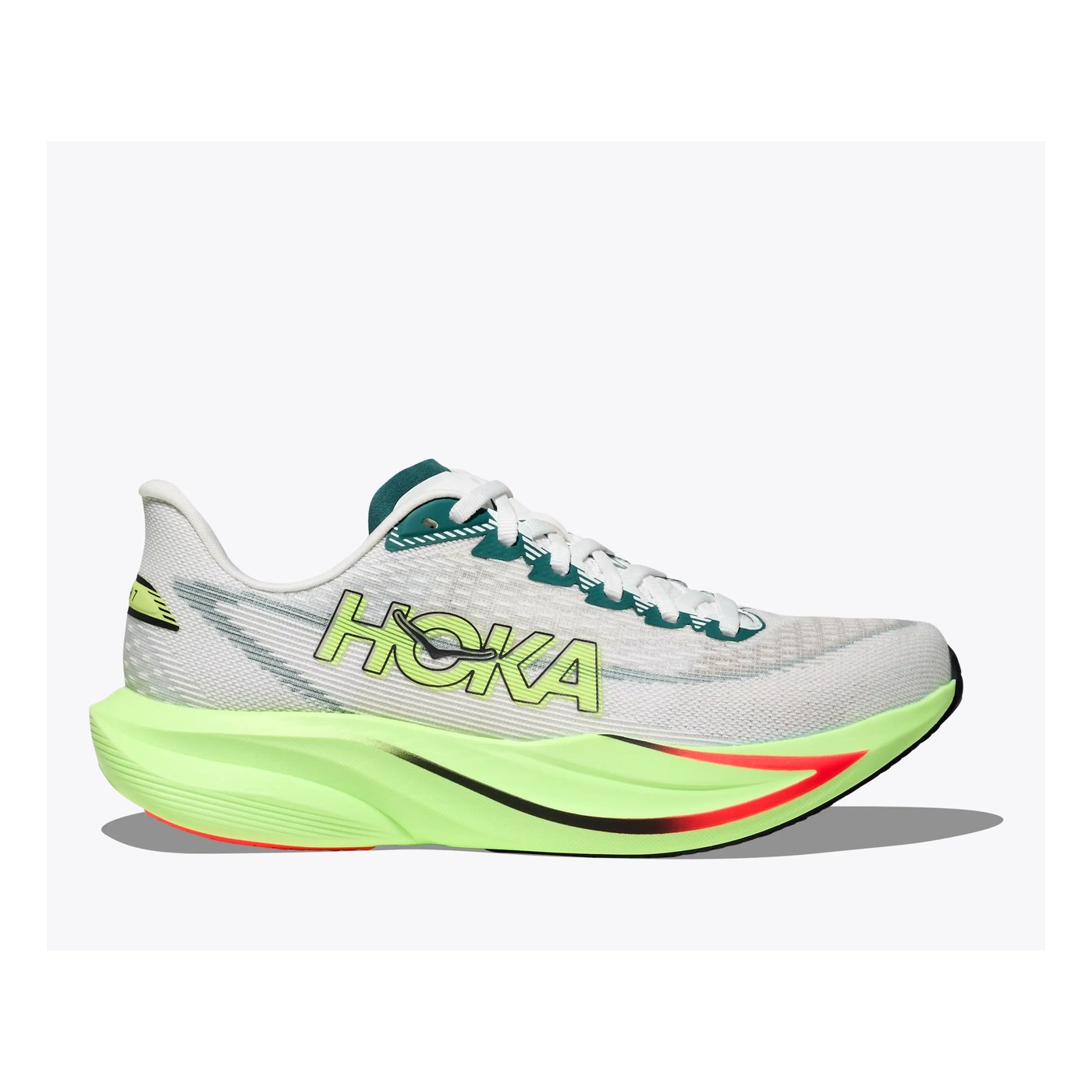
Outsole: better grip on wet surfaces
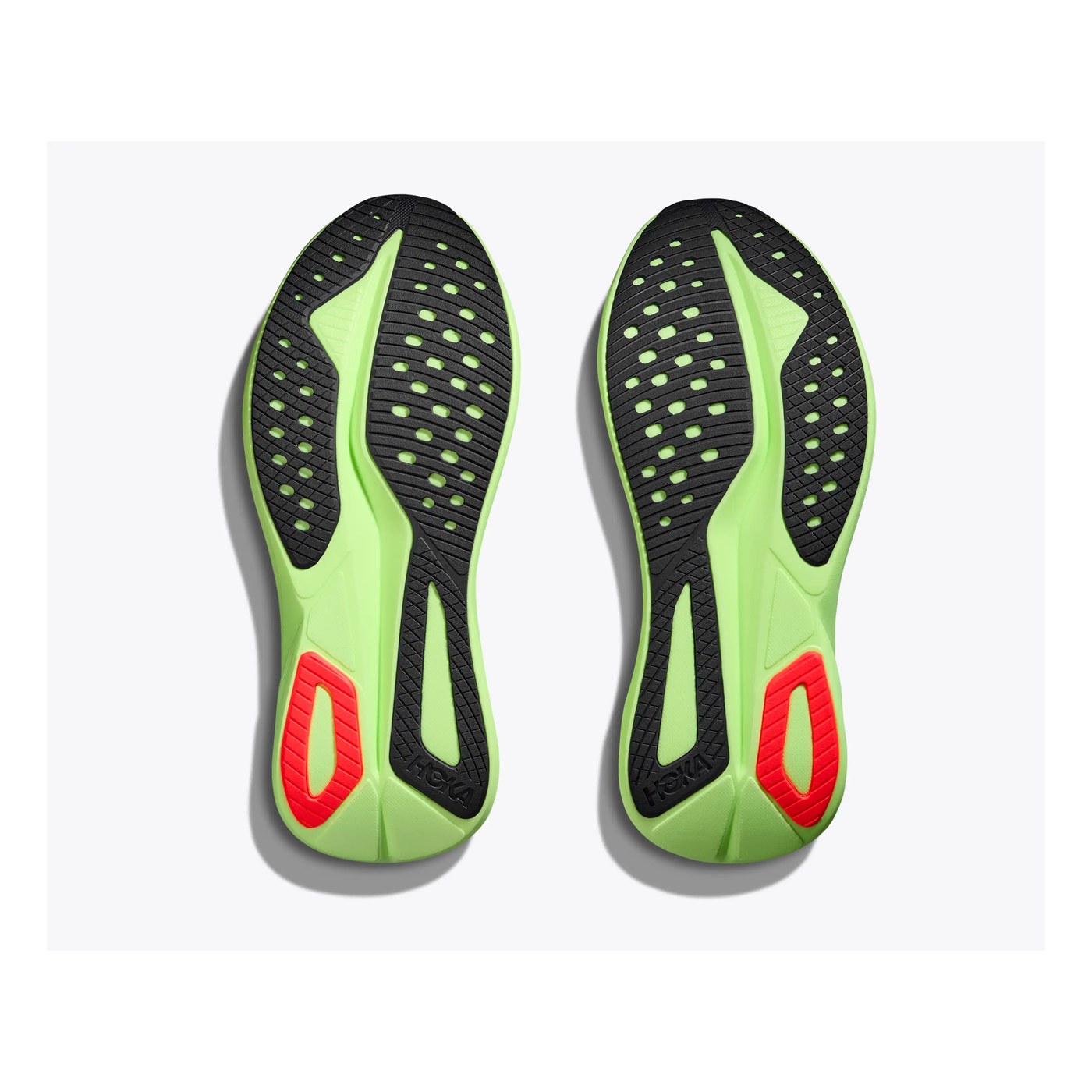
The other real change is the outsole. Hoka added a new rubber compound in the forefoot that grips better on wet ground. This came up again and again in feedback on the Mach 6: grip wasn't its strong suit in the rain. On the Mach 7, the problem is largely fixed. On dry asphalt, grip is very good. On wet surfaces, it becomes decent without reaching the top of the category.
Geometry and stride: the Hoka rocker
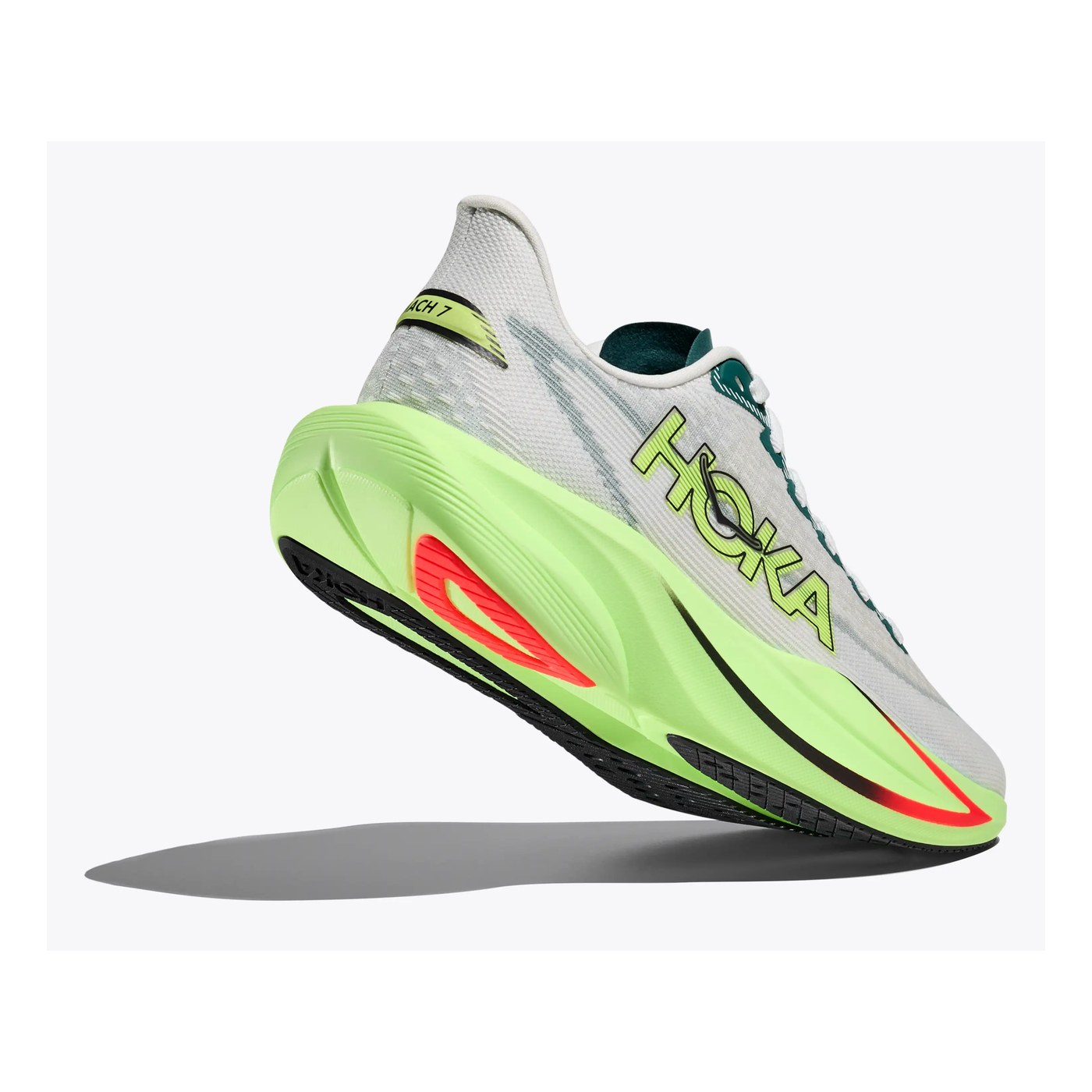
The Mach 7 keeps the pronounced rocker that defines the Hoka lineup. This curved geometry guides your stride forward, which reduces the effort needed to push off. At easy pace, it's nothing spectacular: the shoe simply disappears. At tempo pace and faster, the rocker comes into its own: you accelerate more easily and hold your cadence with less effort.
What French reviewers say
Wanarun points out that the Mach 7 remains one of the benchmarks in the super trainer segment, with exemplary versatility and solid value for money. The review describes the update over the Mach 6 as incremental rather than revolutionary.
Lepape-Info highlights the lightness and breathability of the new upper, along with the improved grip in wet conditions. The verdict is clear: if you're looking for one shoe for your training plan, the Mach 7 is in the top four.
Running Lab confirms the Mach 7's benchmark status in the segment, praising the quality of the supercritical foam and the well-tuned rocker. Value for money is rated excellent at €160.
Our RunMorph coaching take. The consensus holds no surprises: Hoka didn't want to break a formula that works. The update is minor but well targeted (upper + grip). If you already own the Mach 6 and it works for you, keep it until it wears out. If you're torn between the two, get the Mach 7: the more breathable upper and the new rubber are worth the price difference.
Quick comparison
Mach 7 vs Adidas Adizero EVO SL. A direct rival in the super trainer category. The EVO SL is snappier and more geared toward faster sessions, with its full-length Lightstrike Pro foam. The Mach 7 is more versatile and more comfortable over long distances. Verdict: EVO SL if quality sessions come first, Mach 7 if you want a do-it-all shoe.
Mach 7 vs Asics Superblast 3. A close fight between two benchmark super trainers. The Superblast 3 has an even livelier FF Turbo Plus foam and more generous volume. The Mach 7 is lighter and more direct. Verdict: Superblast 3 if you love a pronounced bounce, Mach 7 if you like precision and low weight.
Mach 7 vs Adidas Hyperboost Edge. Two different philosophies. The Hyperboost Edge bets on comfort and shock absorption with its classic Boost foam. The Mach 7 is livelier and more precise at pace. Verdict: Hyperboost Edge for comfort, Mach 7 for training performance.
Fitting the Mach 7 into your training strategy
The Mach 7 shines as the main shoe for a runner who doesn't want to pile up pairs. Here's how to use it wisely:
- As your only shoe: if you run less than 50 km a week and don't have an ambitious time goal, the Mach 7 can handle it all: easy runs, long runs, intervals, half marathon pace. It's the simplest setup.
- As your training workhorse: in a 2-shoe rotation, the Mach 7 takes the faster sessions and tempo runs. Keep a more cushioned shoe like the Nike Pegasus 42 or the Asics Gel-Nimbus 28 for recovery runs and protective long runs.
- For short races: over 5 km and 10 km, the Mach 7 works perfectly well, especially if you're not chasing every last second. To set a PR, go for a carbon-plated shoe like the Nike Vaporfly 4 or the Hoka Cielo X1 3.0.
RunMorph's advice: many runners buy a carbon shoe too early, before they have the weekly mileage or the mechanics to justify the investment. The Mach 7 is exactly the shoe that lets you improve steadily without breaking the bank. It's all you need to shave minutes off your 10 km or half marathon, without the constraints of a super shoe.
RunMorph Coach verdict
As a coach, I recommend the Hoka Mach 7 to my intermediate runners more often than any other shoe. Why? Because it ticks every box of the modern daily trainer: light without being fragile, lively without being pushy, comfortable without being mushy. It adapts to your pace instead of forcing its own on you.
The step from the Mach 6 to the Mach 7 is minor but well thought out. Mach 6 users won't feel a revolution, but they'll appreciate the cooler feel of the new upper and the better grip in wet weather. That's exactly what you expect from a mature update.
The only real drawback: the forefoot fit stays narrow, true to Hoka's DNA. If you have wide feet, try it on in store before buying, or look at the Superblast 3, which offers more volume.
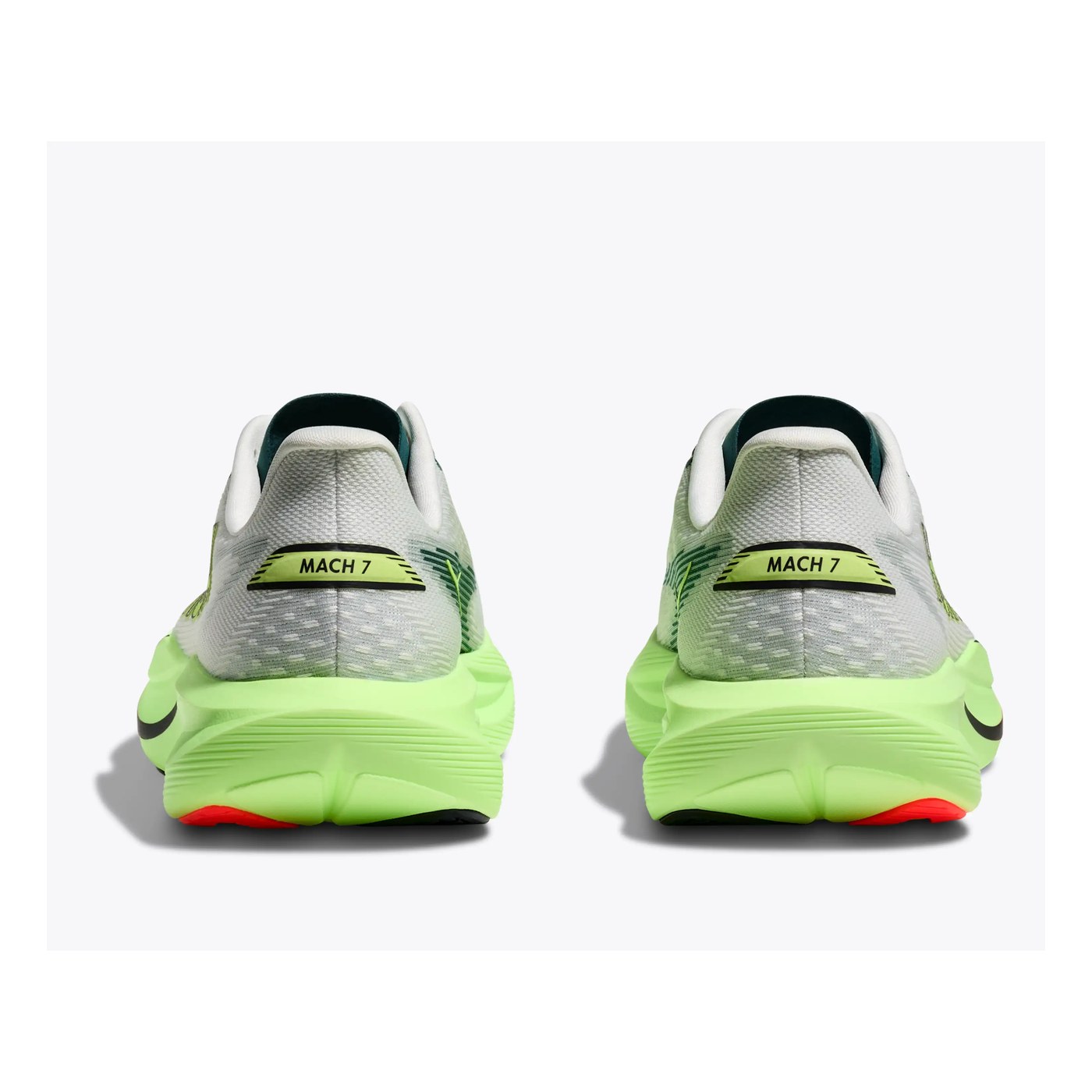
RunMorph score: 8.8 / 10. At €160, it's one of the best values in the super trainer segment. Buy it if you want a do-it-all shoe that never lets you down. Look elsewhere if you want either maximum comfort (Bondi, Nimbus) or maximum performance (Vaporfly, Adios Pro).
Key takeaways for your training
- Versatile super trainer: the Mach 7 is designed for 70-80% of your runs (easy runs, long runs, tempo, intervals).
- Supercritical EVA foam: light, lively, durable. Good energy return without a carbon plate.
- 5 mm drop: encourages a midfoot strike. Allow 1-2 weeks to adapt if you're coming from a 10 mm shoe.
- 237 g in size 42: below the segment average, snappy at pace.
- Changes vs Mach 6: more breathable upper (creel jacquard) and better grip on wet surfaces.
- Narrow fit: true to Hoka's DNA, it can catch wide feet off guard.
- Excellent value for money: €160, one of the best deals in the segment.
Frequently asked questions
Is the Hoka Mach 7 good for beginners?
With caveats. The 5 mm drop is unusually low and can catch your calves off guard if you're coming from a traditional shoe (10-12 mm drop). If you're just starting to run, we recommend a higher-drop shoe like the Nike Pegasus 42 instead. You can move to the Mach 7 later, after a few months of running.
How many kilometers does the Mach 7 last?
Expect 600 to 800 km before a noticeable loss of performance. Supercritical foam is less durable than standard EVA, but it's more than enough for the way a super trainer gets used.
Does the Mach 7 run large or small?
Length is true to size, but the forefoot stays narrow (a Hoka trait). If you're unsure or have wide feet, go up half a size or look at competing models with more generous volume.
What's the difference between the Mach 7 and the Mach 6?
Three major changes: a new creel jacquard upper (more breathable and slightly lighter), a new forefoot rubber for better grip on wet surfaces, and small finishing tweaks. The foam, drop, stack height and weight stay virtually identical. It's an incremental update rather than a redesign.
Is the Mach 7 a good marathon shoe?
Yes, especially for a marathon run for fun or a first marathon where the goal is "just finish". For an ambitious time goal, a carbon-plated shoe like the Nike Vaporfly 4 or the Alphafly 3 will be more effective. But the Mach 7 remains one of the non-carbon shoes best suited to the distance.
Recommended reading
- Nike Pegasus 42: the full RunMorph review
- Nike Vaporfly 4: the full RunMorph review
- 10 km training plan: the complete guide
- Puma Deviate Pure Nitro: the full RunMorph review