Released in November 2022, the COROS Apex 2 Pro is no longer new. Yet four years later, it remains one of the outdoor watches most often recommended by the French specialist press. Titanium case, sapphire crystal, 75 hours of GPS battery life and free worldwide maps: on paper, it still holds its own against far newer models. At RunMorph, we wanted to understand why this watch keeps showing up in every comparison test, even though COROS has released two generations since (the APEX 4, which we have already reviewed). Here is our verdict after going through its spec sheet, its often-criticized transflective display and where its price sits today.
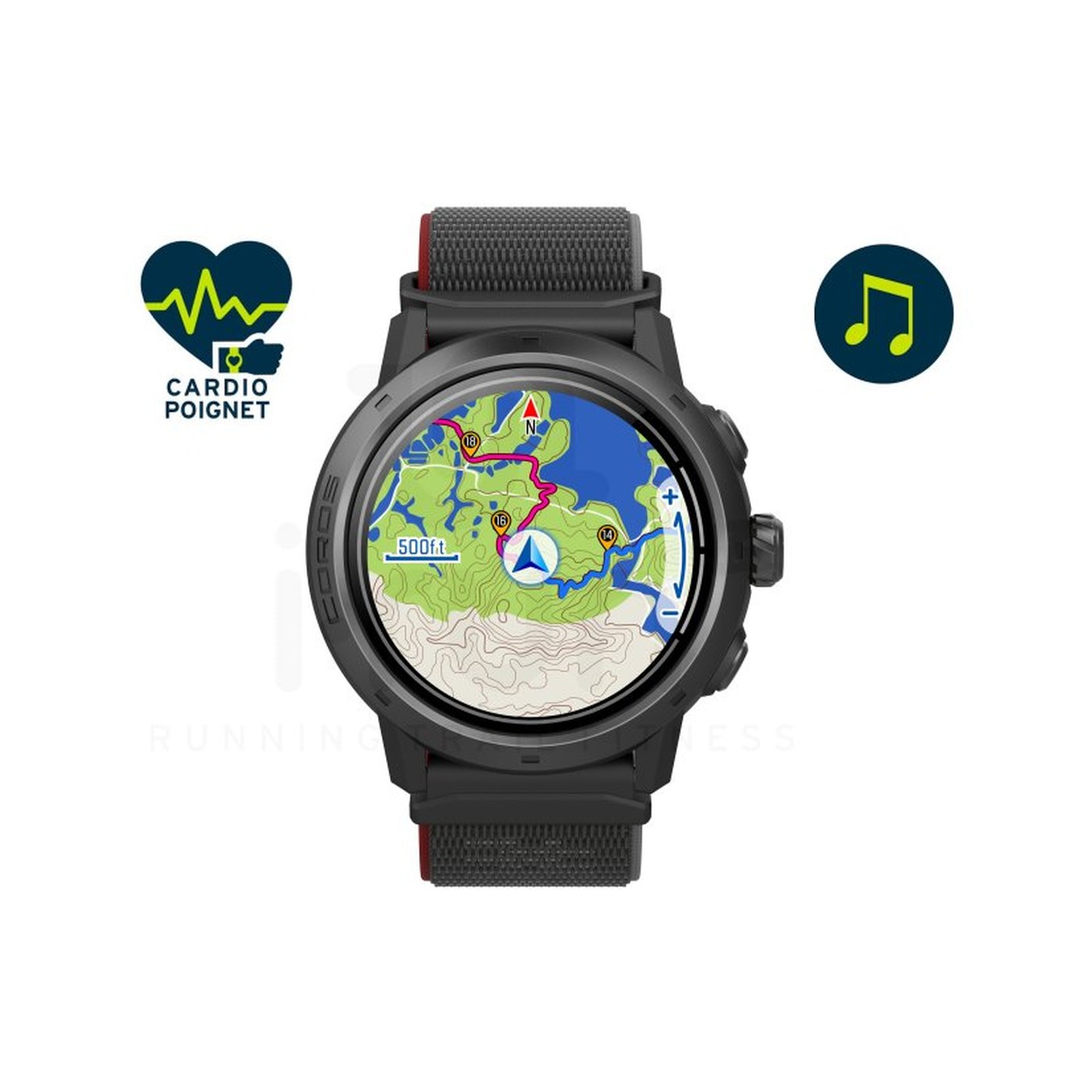
© COROS, official photo used for editorial purposes
COROS Apex 2 Pro: the outdoor watch that refuses to retire
In 2022, COROS was still a supporting player behind Garmin and Suunto in the premium outdoor segment. The Apex 2 Pro changed that: a grade 5 titanium case with PVD coating, scratch-resistant sapphire crystal, an all-constellation GNSS chip with dual-frequency, and above all battery life that crushed everything else at that price. Four years later, the brand has released the APEX 4 and the Vertix 2S, two newer and pricier models. But the Apex 2 Pro never really left store shelves or French comparison tests: its price has dropped (from 579 euros at launch to around 449 to 499 euros today) while its core strengths, battery life and toughness, have not aged a day. That kind of commercial longevity is rare among GPS watches, and it deserves a closer look.
The "Pro" name is earned: compared with the standard Apex 2, the Pro version adds dual-frequency GPS, a slightly larger display (1.3 inches vs 1.2) and longer GPS battery life. That is the version RunMorph put under the microscope, in the black and red finish with a nylon strap.
All-constellation GNSS: what does it change on the trail?
The big difference between the standard Apex 2 and the Pro fits in one sentence: dual-frequency. In plain terms, the watch picks up the L1 and L5 satellite signals simultaneously, which cuts down on multipath errors in dense forest, under cliffs or between buildings. Out on the trail, that means much cleaner GPX tracks on woodland runs, an area where the original Apex generation clearly struggled.
The other advantage, less visible but just as decisive for mountain use, is the free offline world maps that come with the watch. No subscription, no download limit: every user gets the Landscape and Topo maps for whatever area they want through the app, at no extra cost. That choice stands in sharp contrast to strategies some competitors have adopted since, where full mapping is reserved for the most expensive models or even locked behind a subscription.
The logical tradeoff: the memory-in-pixel display (transflective LCD) of the Apex 2 Pro shows only 64 colors at 260x260 pixels. The map reads well in full sun, less well in a dark forest or at dusk unless you turn on the backlight. That is the deliberate compromise of the whole Apex line against the AMOLED displays of the APEX 4 or the Vertix 2S, which are much easier to read but also far more power-hungry.
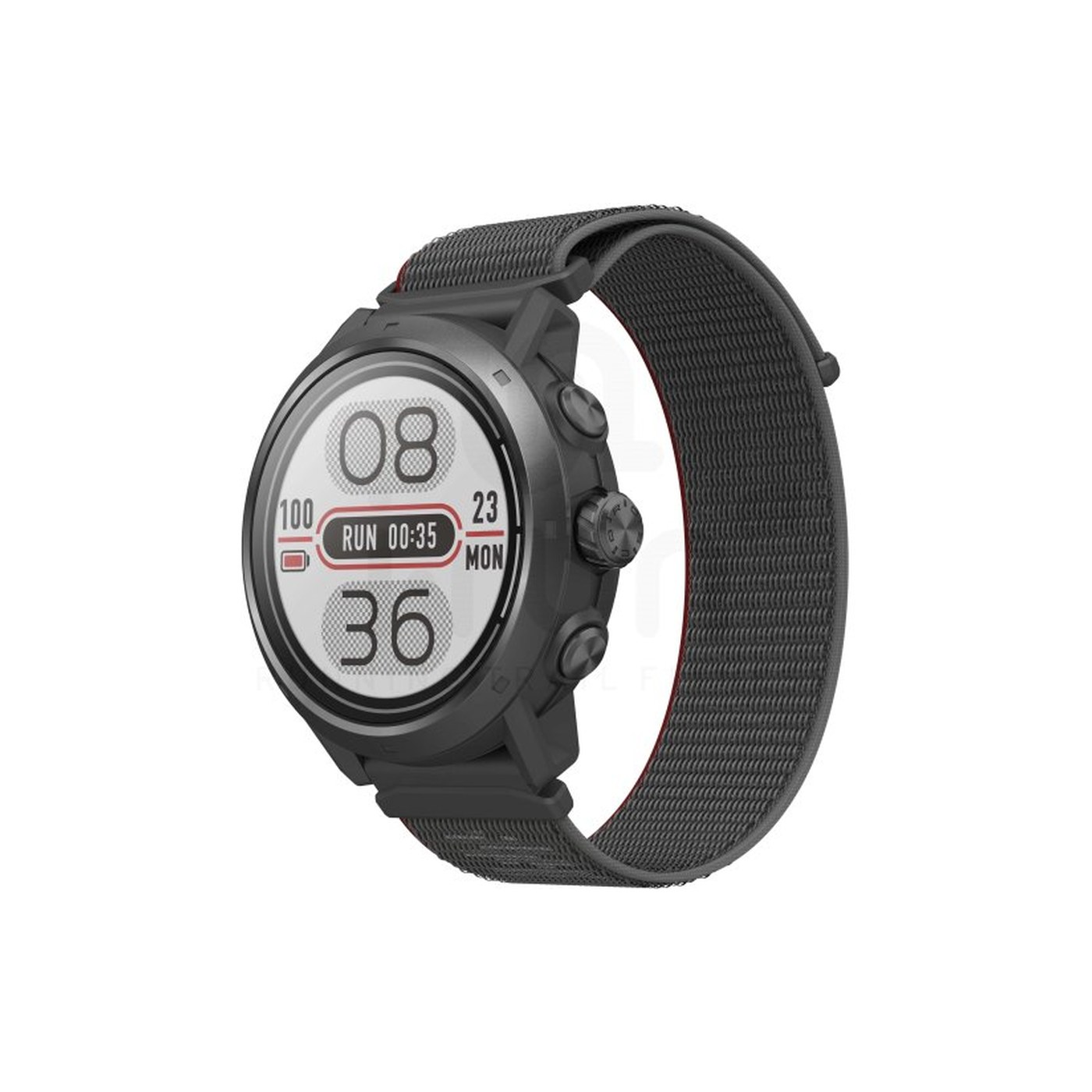
© COROS, official photo used for editorial purposes
Field test: from easy runs to a three-day hike
On 8 to 25 km runs over rolling trails, at 5:30 to 7:00/km depending on the elevation gain, tracking accuracy stays very solid. You get occasional drift in very dense forest, but nothing that undermines the overall reliability of distance and real-time pace. The new-generation optical heart rate sensor handles steady efforts well, with a short lag during the first 30 seconds of an interval: typical behavior for wrist-based optical sensors, whatever the brand.
Battery life is where the Apex 2 Pro still impresses today: a 4-hour run in all-constellation GPS mode uses only a small share of the battery, and GPS+QZSS mode makes a multi-day trip without recharging realistic if you turn off dual-frequency. For a weekend of hiking or an ultralight race with no way to recharge along the route, that carries a lot of weight against AMOLED watches that need charging daily, or close to it, under heavy GPS use.
RunMorph tip: if your goal is a race longer than 6 hours or a multi-day trek, turn off dual-frequency GPS from the start and save it for technical sections (canyons, dense forest, tight switchback trails). You'll gain several hours of battery life without losing reliability over most of the route. The same approach works on the Garmin Enduro 3 or the Suunto Vertical 2, which offer the same kind of tradeoff between accuracy and battery life.
COROS Apex 2 Pro vs APEX 4: which one should you buy?
Three years separate the two watches, and their prices have converged to the point of overlapping today. Here is what actually changes between them.
| Criterion | APEX 2 Pro | APEX 4 (46 mm) |
|---|
| Display | 1.3" transflective LCD, 64 colors | AMOLED, much brighter and easier to read |
| GPS battery life | 75 h (single-frequency) | 65 h in dual-frequency out of the box |
| GNSS | Dual-frequency available but cuts battery life to 26 h | Native dual-frequency, more efficient |
| Materials | Grade 5 titanium, sapphire | Titanium, sapphire |
| Current price | 449 to 499 euros | 449 euros (42 mm) to 499 euros (46 mm) |
| RunMorph's take: the edge | Best raw battery life in single-frequency use | Better readability and a better accuracy/battery balance |
At a near-identical price today, the APEX 4 is objectively the more rational choice for a new purchase in 2026: more readable display, more efficient dual-frequency, newer technology. The Apex 2 Pro still makes real sense secondhand or at an aggressive discount, where its price gap with the APEX 4 becomes significant again, and for runners who put raw battery life ahead of screen readability.
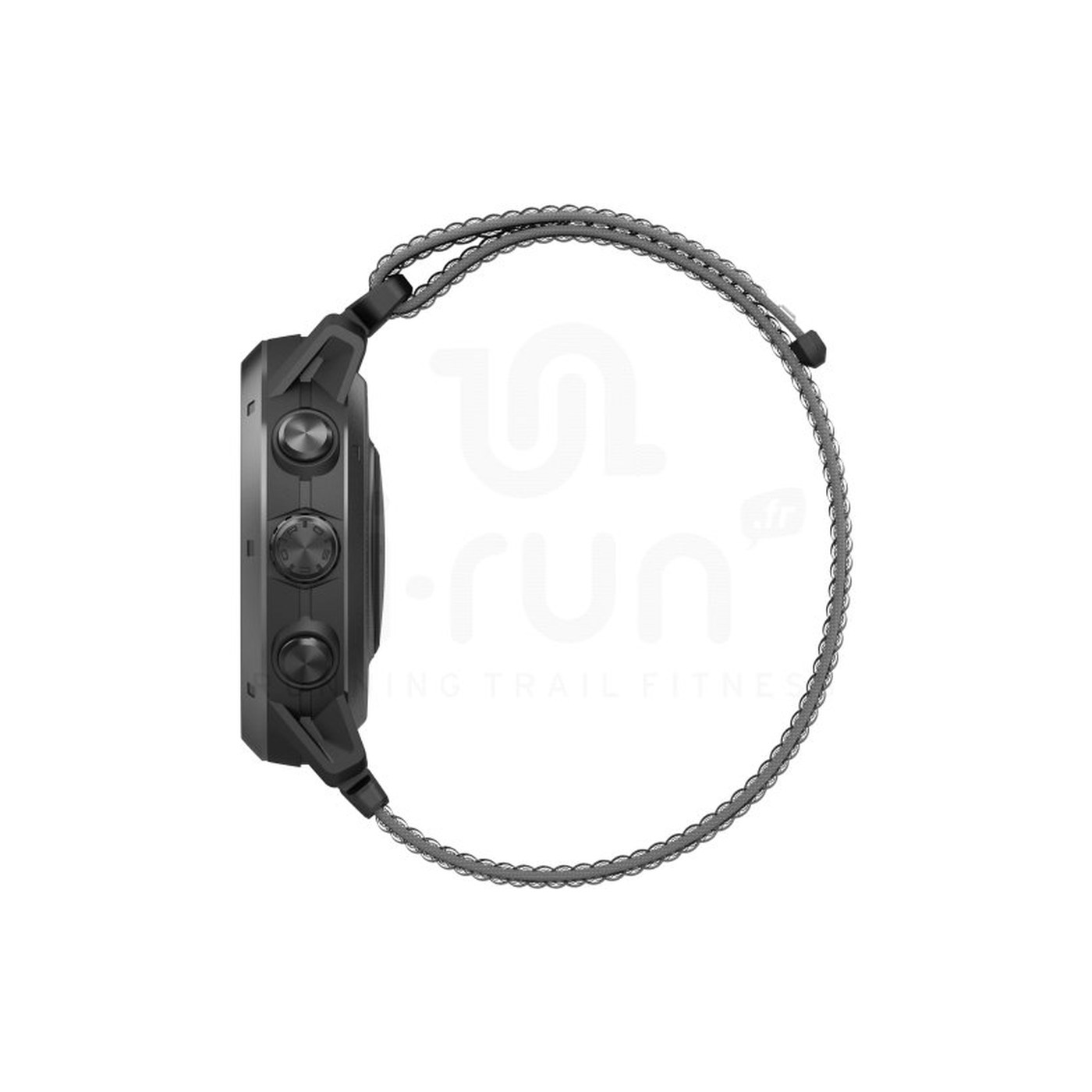
© COROS, official photo used for editorial purposes
Our field verdict: who is it for, and what kind of training?
The Apex 2 Pro is aimed first at trail runners who build their season around volume and battery life rather than screen aesthetics: ultra preparation, demanding treks, or simply runners who hate charging their watch every two days. Regular hikers who alternate day outings with multi-day trips will also find it a reliable partner, with maps that never cost an extra cent.
Whether you're preparing for an ultra-trail or stacking up weekend long runs, the battery life of the Apex 2 Pro fits perfectly with a training block built on duration rather than pure intensity. Pair it with a RunMorph training plan tailored to your trail or marathon goal to structure your load and recovery weeks without worrying about a dead battery in the middle of a long run.
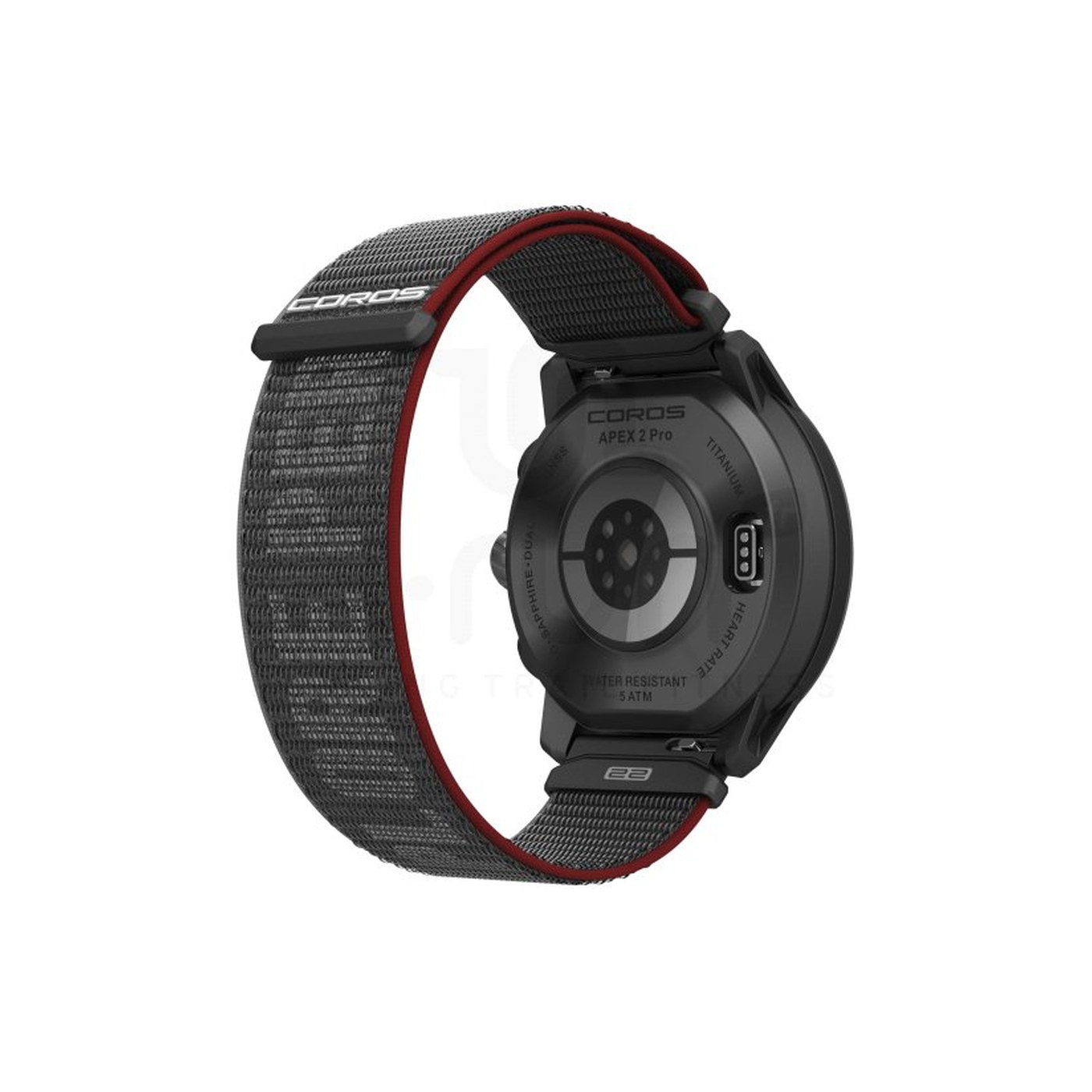
© COROS, official photo used for editorial purposes
RunMorph Coach's verdict
Four years after launch, the COROS Apex 2 Pro remains a coherent, honest outdoor watch. It doesn't try to compete with the AMOLED displays of newer models, but it fully embraces its role as a battery-life tool for the mountains and long-format trail running. Its value for money has improved significantly since launch, to the point that it holds up against much younger rivals. It loses points on screen readability and software ecosystem, but it remains a defensible choice if battery life matters more to you than anything else.
8/10: a safe bet in the premium outdoor segment, as long as you accept a display from another generation.