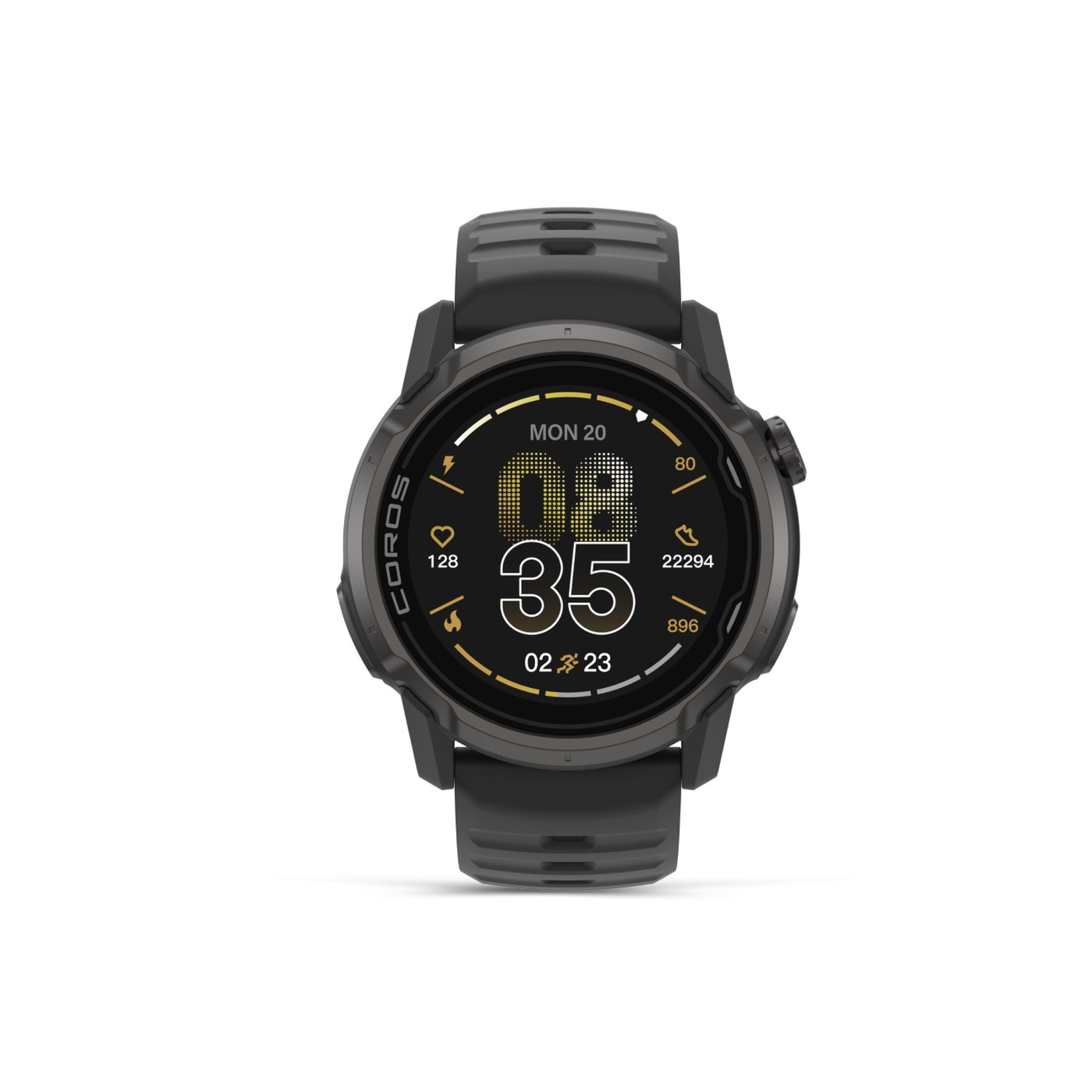
With a Grade 5 titanium case, sapphire glass and 65 hours of multi-band GPS battery life, the COROS APEX 4 46 mm marks the brand's return to the premium "transflective" trail segment, where sunlight readability and battery life on long runs matter more than AMOLED looks. Launched on October 15, 2025 at €499.99, it targets ultra-trail runners and mountaineers who want a tough, slim companion built for big traverses without recharging.
COROS APEX 4 Review: 65 h Multi-Band GPS for Ultra-Trail
8.5/10
COROS APEX 4 46 mm: the transflective trail watch that bets on battery life and ruggedness
The COROS APEX 4 replaces the popular APEX 2 Pro with a very clear spec sheet: it keeps the transflective MIP (Memory-In-Pixel) display that stays readable in full sun, switches to a Grade 5 titanium case with reinforced lugs, protects the screen with sapphire and steps up multi-band GPS battery life. The positioning is clear. The APEX 4 isn't trying to compete with AMOLED watches like the COROS Pace Pro or the Garmin Forerunner 970. It's built for ultra and mountain runners who want a slim, light watch that can get through UTMB without battery anxiety.
RunMorph's advice: if you're torn between the COROS Pace Pro and the COROS APEX 4, ask yourself one simple question. Do you mostly run on flat terrain or roads and want a flattering screen with topo maps and decent battery life? Go for the AMOLED Pace Pro. Do you mostly run in the mountains, on long to very long outings, and need sunlight readability plus several days of GPS battery life? The APEX 4 is still the right answer, and the titanium and sapphire justify the price gap.
© COROS, official photo used for editorial purposes
Technical specifications
| Brand | COROS |
| Model | APEX 4 (46 mm) |
| Official release | October 15, 2025 |
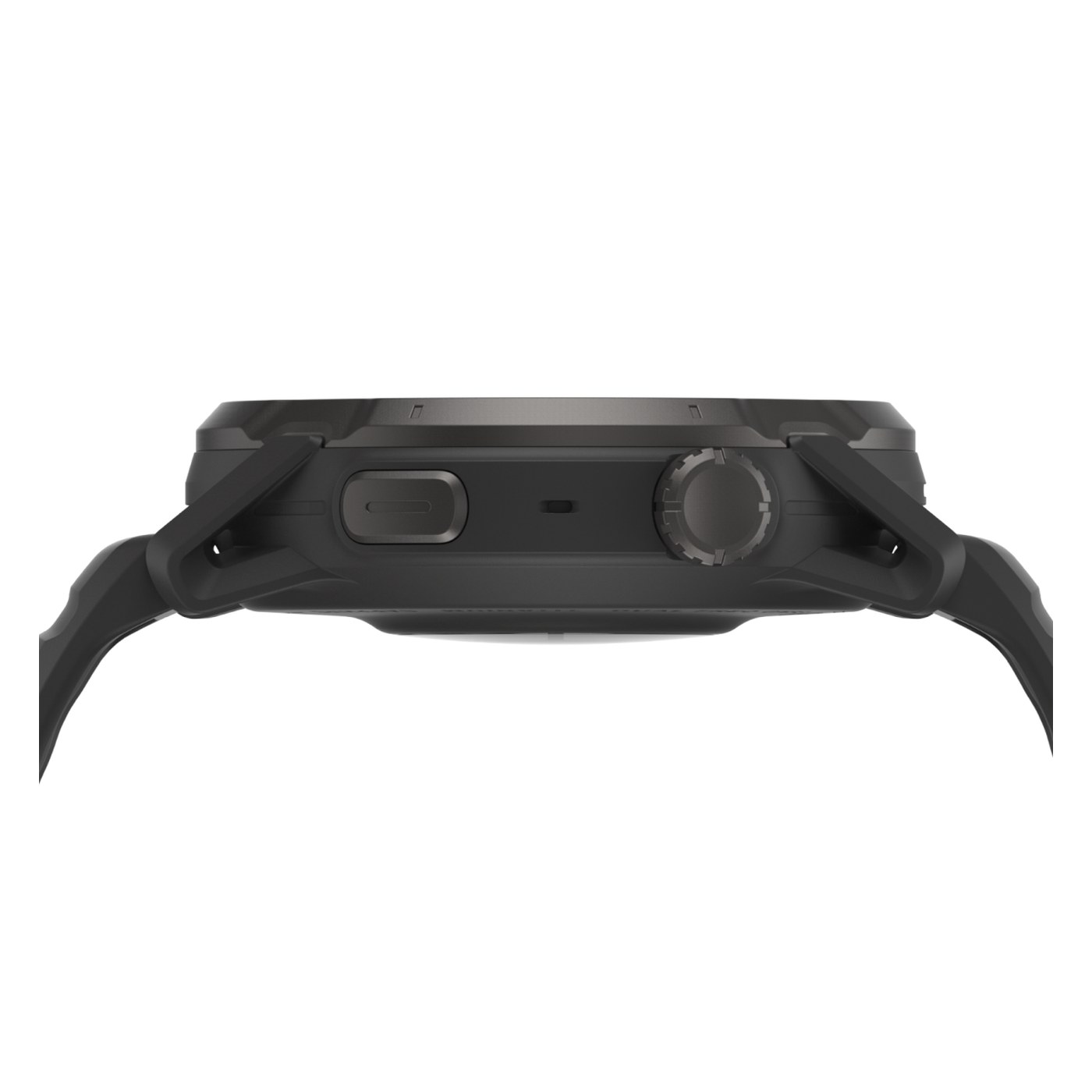
| Case | Grade 5 titanium with reinforced titanium lugs |
| Glass | Sapphire |
| Diameter | 46 mm (42 mm version available) |
| Weight | About 52 g (titanium, without strap) |
| Display | 1.3-inch color transflective MIP, touchscreen |
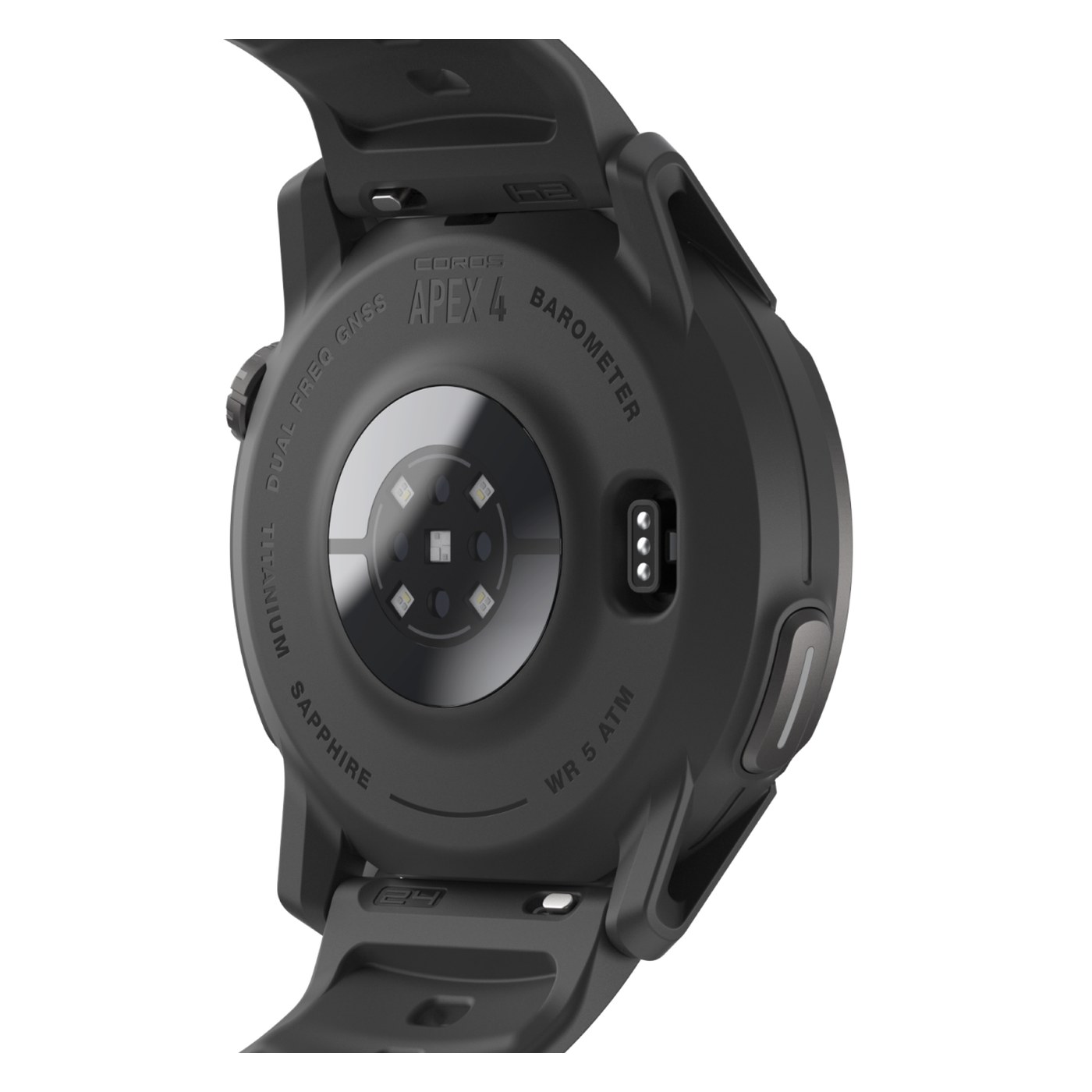
| GNSS | Dual-frequency multi-band L1+L5 (GPS, GLONASS, Galileo, BeiDou, QZSS) |
| Sensors | Next-generation optical heart rate sensor, SpO2, dual-range barometric altimeter, accelerometer, gyroscope, 3D compass, thermometer, microphone, speaker |
| Mapping | Free global offline topographic maps, landscape maps with street names, turn-by-turn navigation, ClimbTracker |
| Smartwatch battery life | 24 days with sleep tracking and continuous heart rate |
| GPS battery life | 65 h All Systems, 53 h Precision All Systems, 41 h Dual Frequency, 16 h with music |
| Music storage | Local MP3 (no Spotify or Deezer) |
| Contactless payment | No |
| Water resistance | 5 ATM (50 m) |
| Charging | USB-C, full charge in under 2 h |
| Official price (France) | €499.99 (46 mm) / €449.99 (42 mm) |
Who is the COROS APEX 4 for?
The committed trail runner targeting ultras and long mountain days
This is the most obvious audience. 65 hours in All Systems GPS mode is enough to run UTMB from start to finish without a single recharge, or to link three days of alpine trekking with plenty of margin. The Grade 5 titanium and sapphire combo shrugs off pole scrapes, knocks on rocks and pack abrasion. The transflective MIP display stays perfectly readable in full sun, on snow or topping out on a pass in bright light, exactly where AMOLED screens force you to hunt for the right angle. For mountain runners, it's the most rational compromise on the market.
The experienced runner who wants a slim, discreet watch for everyday wear
The APEX 4 46 mm weighs about 52 g without the strap. That's very restrained for a multi-band titanium watch with mapping. The perforated silicone band on the Black model breathes well under effort and stays comfortable 24/7. If you find the Garmin Enduro or fenix 8 too bulky on your wrist, the APEX 4 keeps the toughness without the "bunker" feel. A good option if you wear your watch all the time, sleep with it and want clean sleep and HRV tracking.
The runner already loyal to the COROS EvoLab ecosystem
Software remains one of COROS's big strengths. Training Load, Recovery Timer, Race Predictor, adaptive marathon and trail training plans, muscle and cardio load tracking: it's all built in, with no subscription and no ads. If you already use a COROS Pace 4 or a COROS Pace Pro, moving to the APEX 4 is seamless: your data carries over naturally and you keep your full training history.
© COROS, official photo used for editorial purposes
GPS accuracy and heart rate sensor
Dual-frequency L1+L5 multi-band GPS is still the accuracy benchmark in 2026. Under dense tree cover, in urban canyons or in deep valleys, dual frequency locks onto direct signals and rejects reflected ones: the track no longer "whips" around, and cumulative distances stay reliable even on twisty singletrack. The most demanding independent test published on the APEX 4 confirms what French reviewers had already seen on the Pace Pro: COROS holds its own against the best Garmin and Suunto watches here, with a clear edge over standard single-band mode.
The next-generation optical heart rate sensor, with 5 LEDs and 4 photodiodes, delivers a clear gain on intensity changes (cold starts into intervals, surges on climbs). At slow to moderate steady effort, deviations from a chest strap stay within the usual optical margin (one to three beats). On short, explosive intervals, it drops out less than previous COROS generations, without matching a real chest strap. On threshold or tempo sessions, the readings hold up perfectly.
Mapping and navigation
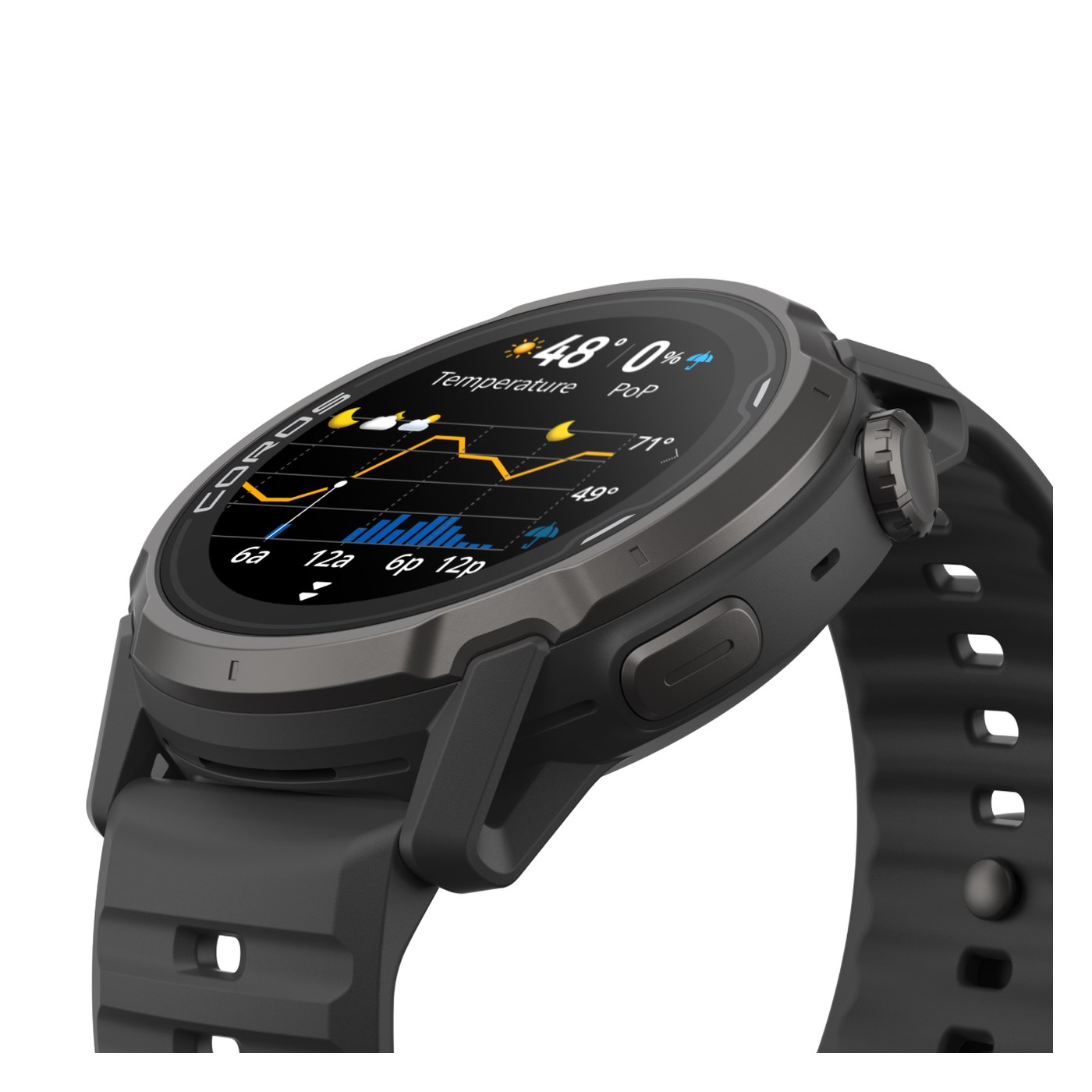
This is the big upgrade over the APEX 2 Pro. The APEX 4 now carries free global offline topographic maps, landscape maps with street and trail names, and full turn-by-turn navigation. On a route prepared as a GPX file, the watch shows the line and directions, warns you about forks and flags when you go off course. ClimbTracker, a signature COROS feature since the spring 2026 update, automatically detects the climbs on your route and shows in real time the remaining gradient percentage, the elevation gain already covered and a projected time. On mountain trails, it's a real tactical asset.
On-watch routing isn't as smooth as on a high-end Garmin: you plan your route in the COROS app, sync it, and that's it. No live rerouting like Google Maps. For most trail runners heading out on a planned route, that's enough. If you want to improvise a way back mid-run, the experience is more limited than on the Forerunner 970 or the Suunto Race 2.
Training and recovery metrics
EvoLab, the COROS software suite, is still one of the most complete on the market and remains free, with no subscription. Acute and chronic Training Load, adaptive Recovery Timer, Race Predictor from 5 km to 100 miles, personalized marathon and trail plans, daily sleep and HRV tracking, fitness score, lactate threshold calculation from a dedicated session. COROS's strength is offering metrics that are simple to read and mean the same thing from one watch to the next. If you already know the ecosystem through the Pace 4, the experience is identical, just more complete. The microphone and speaker now let you take calls, reply with pre-recorded voice messages and record voice notes mid-run, which is a game changer over long distances.
© COROS, official photo used for editorial purposes
Real-world battery life
In the field, the claimed figures hold up. In daily use with 24/7 wear, sleep tracking, continuous heart rate, notifications and a daily run of about an hour, battery life lands around 18 to 22 days depending on music use. In All Systems GPS mode (the recommended mode for most trail outings), the claimed 65 hours are reached in normal conditions. In Precision Dual Frequency mode (recommended in complex environments), drain stays under control at around 1.5% per hour, or roughly 40 to 42 hours of real use.
In practice, for a 46-hour UTMB, the watch has plenty in reserve even in continuous dual-frequency mode. For a four-day self-supported trek, All Systems mode is enough and leaves some margin. If you run daily and log ten hours of GPS a week, you'll recharge every six to seven days. The trail-expedition promise is delivered.
How it stacks up against the competition
Three watches go head-to-head with it in the premium trail segment in 2026:
- Garmin Forerunner 970 (€749): the 1.4-inch AMOLED display is more flattering, and the preloaded TopoActive Europe maps and Garmin Coach suite go further for road running and triathlon. But multi-band GPS battery life falls to 21 hours, three times less than the APEX 4. For ultras, the 970 needs a power bank during the race.
- Suunto Race 2 (€599): the AMOLED Titanium Trail offers an interesting compromise with 55 hours of multi-band GPS and 100 m water resistance. Global offline maps are free, as with COROS, and Heatmaps are a real plus. The APEX 4 keeps the edge on pure battery life and perceived ruggedness; the Race 2 wins on indoor readability and SuuntoPlus.
- Garmin Enduro 3: the other transflective ultra-trail benchmark (MIP + solar), with comparable or even better battery life. But the 51 mm case is massive, the price tops €950 and the software ecosystem requires a Garmin Connect+ subscription to unlock the full set of advanced features. If you don't want that subscription, the APEX 4 is a more compact alternative, true to COROS's "no subscription" philosophy.
Comparative verdict: the COROS APEX 4 remains the most polished transflective trail watch for anyone who wants maximum battery life, titanium toughness and subscription-free software, for under €500. It doesn't replace an AMOLED watch if indoor readability matters to you, but it crushes the competition on its home turf.
How to fit it into your RunMorph training plan
The COROS APEX 4 slots naturally into a long-distance trail or ultra build. Offline maps let you scout full routes ahead of time, ClimbTracker structures your pacing strategy on climbs, and the EvoLab suite sizes your recovery between sessions with Training Load and Recovery Timer. If you're targeting an 80 to 160 km race, the RunMorph plan + APEX 4 combo works very well: you import sessions from the plan, the watch guides your intensity and pace, and EvoLab manages your cumulative load.
To get started, check out the RunMorph training plans: the Long Trail plan, with progressively hillier long runs, fits the watch's philosophy perfectly. The APEX 4 really comes into its own once your weekly long run goes past 4 hours, when battery life and sunlight readability become operational criteria, not just marketing.
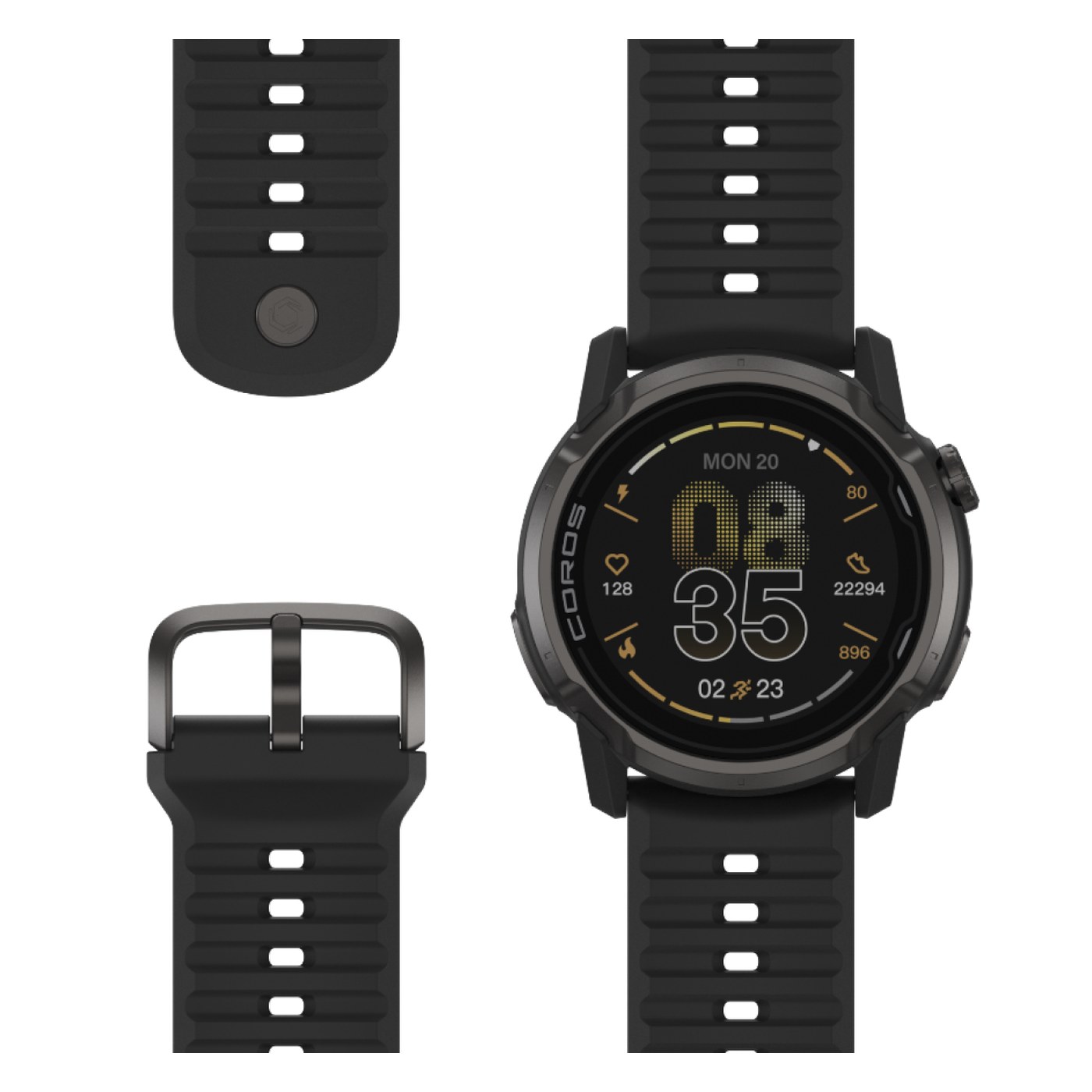
© COROS, official photo used for editorial purposes
The RunMorph verdict
The COROS APEX 4 46 mm is the most coherent watch in the premium transflective trail segment in 2026. Everything that matters for ultras and long mountain days is there: Grade 5 titanium, sapphire, accurate and long-lasting dual-frequency multi-band GPS, free global offline maps, ClimbTracker, the subscription-free EvoLab suite, microphone and speaker. With 65 hours of All Systems GPS, it's a natural pick for 24 to 48-hour ultras without recharging. The €499.99 price is high, but it's still a sensible investment next to the Forerunner 970 or Enduro 3, which cost more and run out sooner.
The accepted trade-offs: no contactless payment, no Spotify or Deezer (local MP3 music only), no free rerouting on the watch, and a MIP display you need to like for its transflective look rather than AMOLED depth. If any of these is a deal-breaker, check out the Pace Pro or the Suunto Race 2. Otherwise, the APEX 4 is well worth the money.
RunMorph score: 9/10
Key takeaways for your training
- Ultra-ready battery life: 65 h of All Systems multi-band GPS is the right size for 24 to 48-hour races without a power bank or a recharge at aid stations.
- Sunlight readability: the transflective MIP display remains the right choice as soon as you run in the mountains or in harsh light (snow, desert, sea), where AMOLED makes you hunt for the angle.
- ClimbTracker on race day: learn to rely on it during recon and in the race to dial in your pacing on climbs. It's one of the most useful tactical tools on the market.
- Built-in muscle load: EvoLab combines acute and chronic Training Load with Recovery Timer. Don't skip the daily check when you plan your hilly runs.
- Offline maps are a must: download the area before every outing. The APEX 4 doesn't download in the background without Wi-Fi, and losing the map mid-race is a real handicap.