In 2022, Garmin made a simple call with the Forerunner 255: don't break anything. The 245 had sold by the hundreds of thousands, so the 255 kept the formula and added multi-band GPS, without ever going near AMOLED or mapping. Four years later, while the Forerunner lineup keeps moving upmarket and up in price with the 265 and then the 965, the 255 is still on sale, still recommended in French buying guides, and still hard to beat on GPS accuracy for the money. We put it through its paces to find out why.
© Garmin, official photo used for editorial purposes
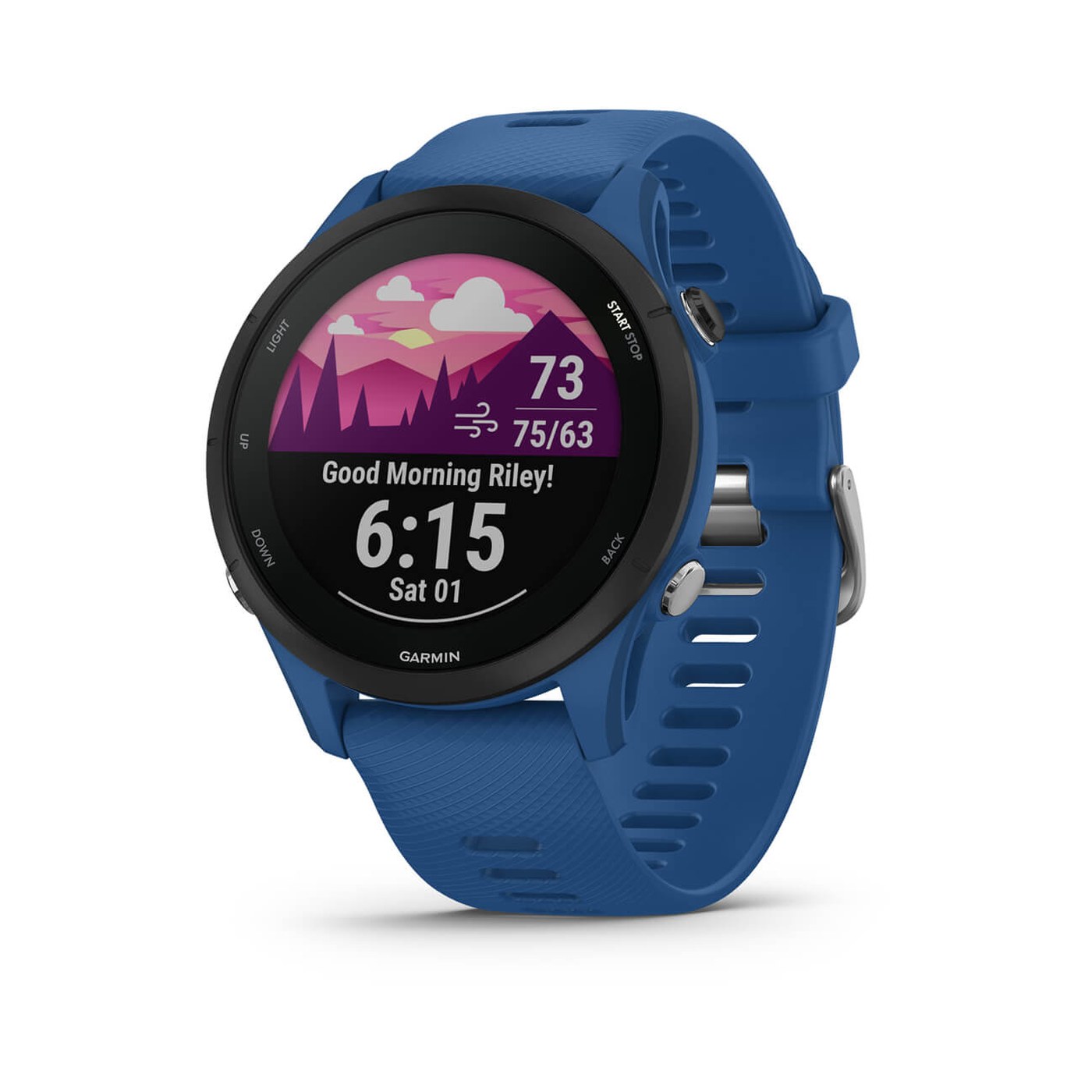
Garmin Forerunner 255: the MIP best-seller Garmin never really replaced
Garmin's strategy for the Forerunner lineup has become clearer in recent years: AMOLED at the top (Forerunner 265, 570, 970), transflective MIP at entry level and in the mid-range. The Forerunner 255 has held that second slot since June 2022, and it's hanging on against all odds: no version 2 announced, no removal from the catalog, just regular price cuts that make it a better deal every year against pricier new watches with the same features. That's an anomaly in a market that usually pushes nonstop upgrades.
The marketing logic is easy to guess. The 245 was a massive commercial hit, so the 255 kept its bones (same buttons, same case shape, same EvoLab and Garmin Coach software suite) and added the only new feature that really mattered at the time: multi-band GPS. At RunMorph, we see a welcome side effect of this minimalist approach for today's buyer: a watch whose price hasn't exploded over the years, unlike the Forerunner 965 or the fenix 8.
RunMorph tip: if your budget tops out at €300 and you never run without GPS coverage (so never in canyons or very dense forest), the Forerunner 255 easily holds its own against a newer Forerunner 170, which offers fewer training metrics.
Forerunner 255 specs: what hasn't changed and what still matters
| Brand | Garmin |
| Model | Forerunner 255 (46 mm, Tidal Blue colorway) |
| Release | June 2022 |
| Case size | 46 x 46 x 12.9 mm (also available in 41 mm, 255S) |
| Weight | 49 g (silicone strap) |
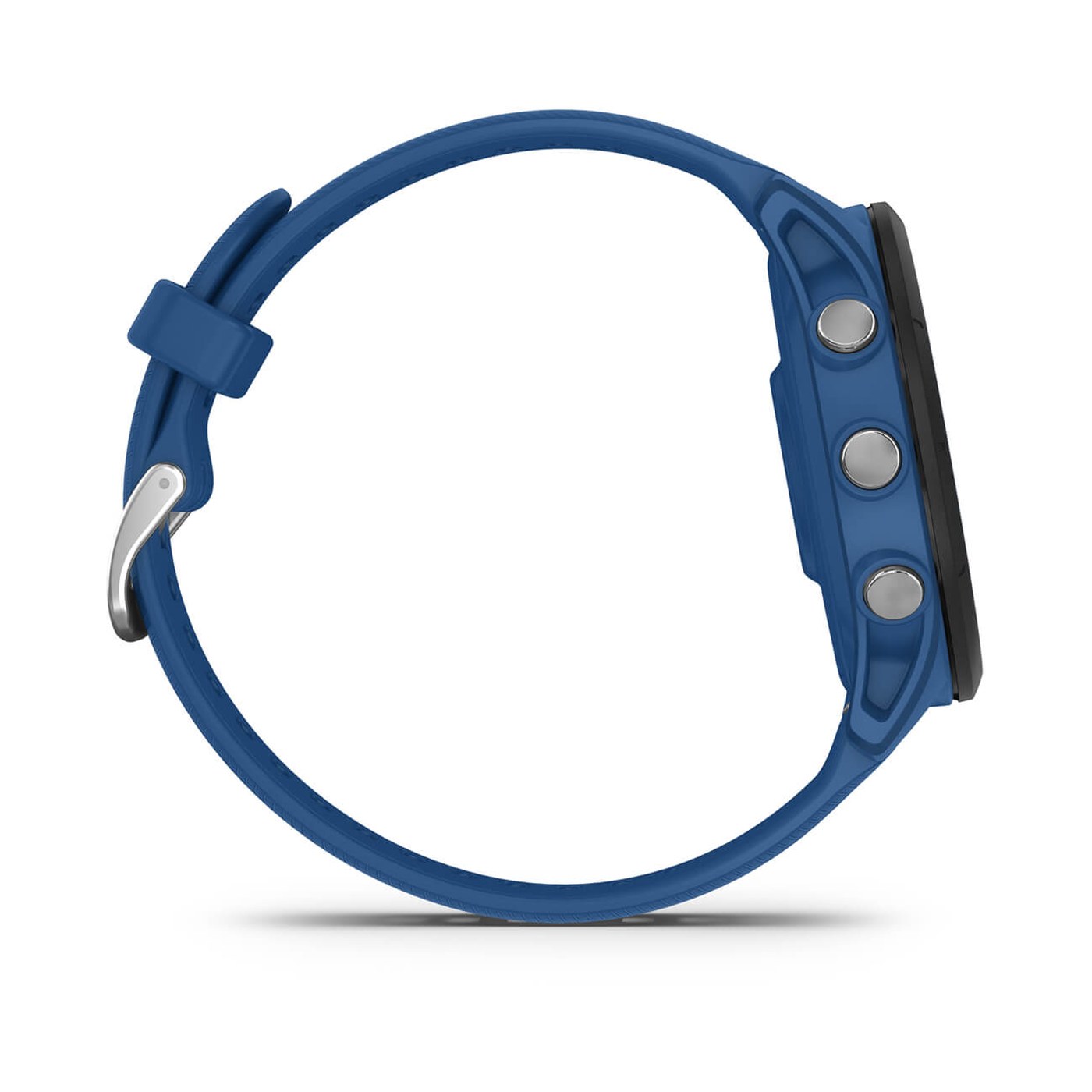
| Display | Transflective color MIP, 1.3 inch, 260 x 260 px, non-touch |
| Lens | Corning Gorilla Glass 3 |
| Battery life | 14 days in smartwatch mode / 30 h standard GPS / about 16 h multi-band GPS with all systems |
| GNSS | Multi-GNSS, dual-frequency multi-band GPS (Airoha chip) |
| Sensors | Elevate Gen 4, Pulse Ox 2.0, barometric altimeter, compass, accelerometer, thermometer |
| Mapping | No (breadcrumb trail, GPX routes, PacePro) |
| Sport profiles | 30+ including triathlon with automatic transitions |
| Music storage | Not on the standard version (available in the Music version) |
| Contactless payments | Garmin Pay |
| Water resistance | 5 ATM |
| Smartphone connectivity | Bluetooth, ANT+, Garmin Connect |
| Price | €349.99 at launch (standard version), around €249 to €269 in mid-2026 |
© Garmin, official photo used for editorial purposes
Multi-band GPS and Elevate Gen 4 heart rate sensor: how good are they in 2026?
This was the only technical feature separating the 255 from the 245 at launch, and it still holds up four years later. Multi-band GPS (dual-frequency L1+L5) taps several satellite systems and several radio frequencies at once, which cuts track errors in tough environments: narrow streets, dense forest, urban canyons. Independent measurements of this model over the years agree on one point: its tracks rank among the cleanest ever recorded by a watch in this price range, including in dense parts of New York and under forest cover, with accuracy nearly identical to the classic all-systems mode.
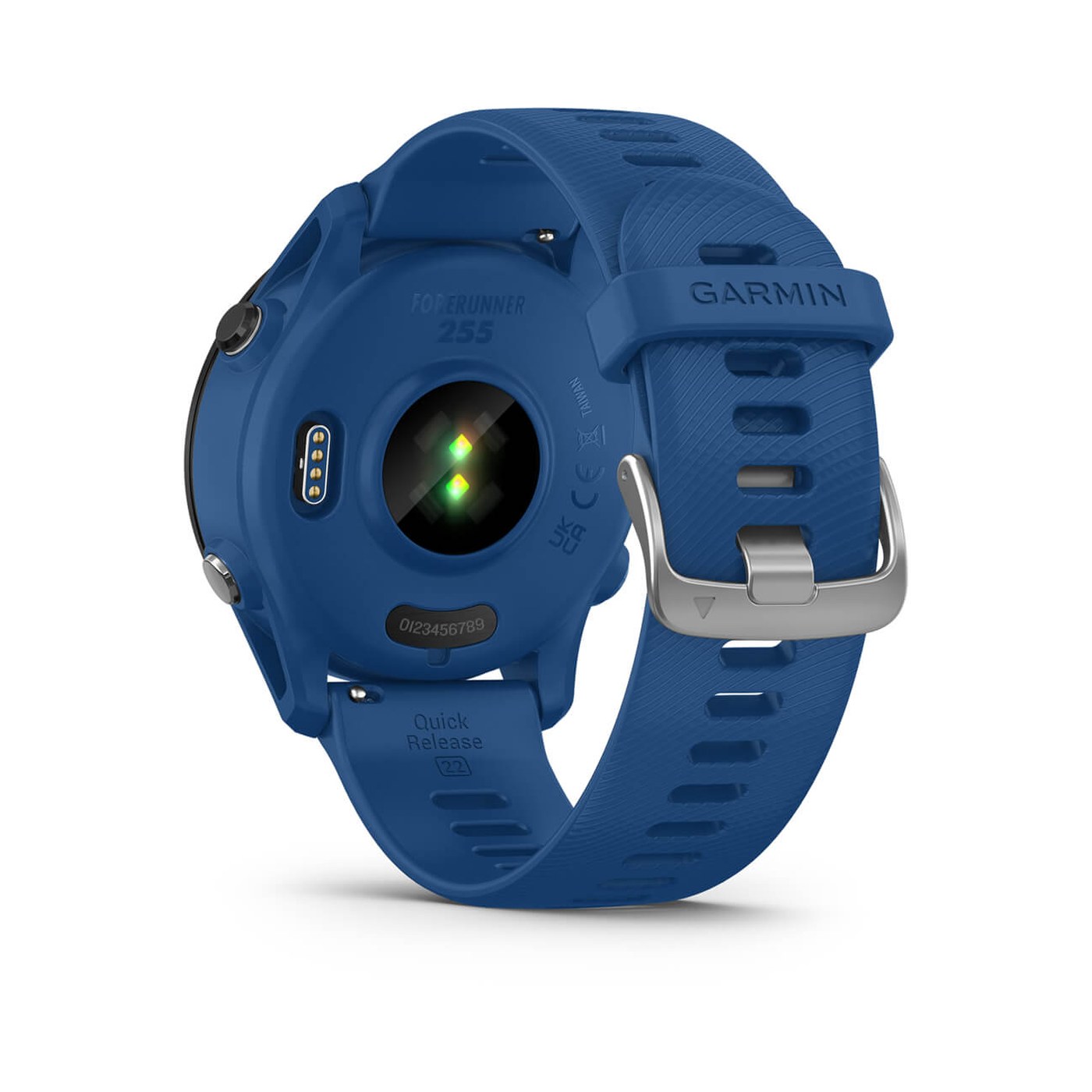
On the heart rate side, the Elevate Gen 4 optical sensor reacts much better than previous generations to sudden changes of pace (intervals, hills). A French field test run over several weeks reports minimal gaps against an HRM-Pro chest strap during progressive efforts. That makes the derived metrics (VO2 max, training load, HRV status) usable without investing in an external sensor. Pulse Ox 2.0 rounds out the package with blood oxygen readings, handy on runs at altitude.
Mapping: the real gap in the Forerunner 255
Let's be blunt: the Forerunner 255 has no mapping. No topo base map, no hillshading, nothing. You get a breadcrumb trail that leads you back to your starting point, plus the option to load a GPX course and follow a track you've already recorded, with PacePro adjusting your pacing strategy to the course's elevation profile. For road runners, or trail runners who know their trails, that's enough. For anyone exploring unfamiliar areas with no cell signal, it's a real gap compared with a Forerunner 965 or a fenix 8, both of which come with full TopoActive maps.
Field test: from recovery runs to track intervals, 4 weeks of use
Over four weeks of use, at paces ranging from 6:30/km on recovery runs down to 3:50/km on 400 m track repeats, the Forerunner 255 delivers on its main promise: it never loses the track, even under tree cover. At 49 g, you forget it's on your wrist within the first few minutes of a run, a point every available French review agrees on.
On battery life, the manufacturer's figures need context. Garmin claims 30 hours in GPS mode, a decent number on paper, but it applies to single-frequency GPS, not the multi-band mode you'll actually use to get maximum accuracy. A benchmark independent measurement puts real-world battery life in all-systems, multi-band mode at around 16 hours, and it plummets to 6 hours 30 minutes if you add onboard music (on the Music version). In practice, for a marathon at maximum accuracy settings, you fall well short of the advertised 30 hours: count on roughly fifteen comfortably usable hours before you have to choose between accuracy and battery. Few product pages mention this, and independent field tests confirm it every time.
Several French reviews also agree on the strap: the keeper on the silicone strap tends to slide around during use, a minor but recurring flaw flagged independently by several testers. The MIP display, on the other hand, wins unanimous praise outdoors (perfectly readable in direct sunlight), at the cost of a far less flattering look than AMOLED indoors or at night. For swimming, the minimum pool length supported in pool mode is 14 meters, a real constraint for triathletes who train in small pools.
RunMorph tip: set your watch to single-frequency GPS for runs longer than 4 hours (long trail runs, ultras), and save full multi-band mode for shorter sessions where you need maximum accuracy on specific target paces, for example when you're following a RunMorph training plan.
© Garmin, official photo used for editorial purposes
Training and recovery metrics
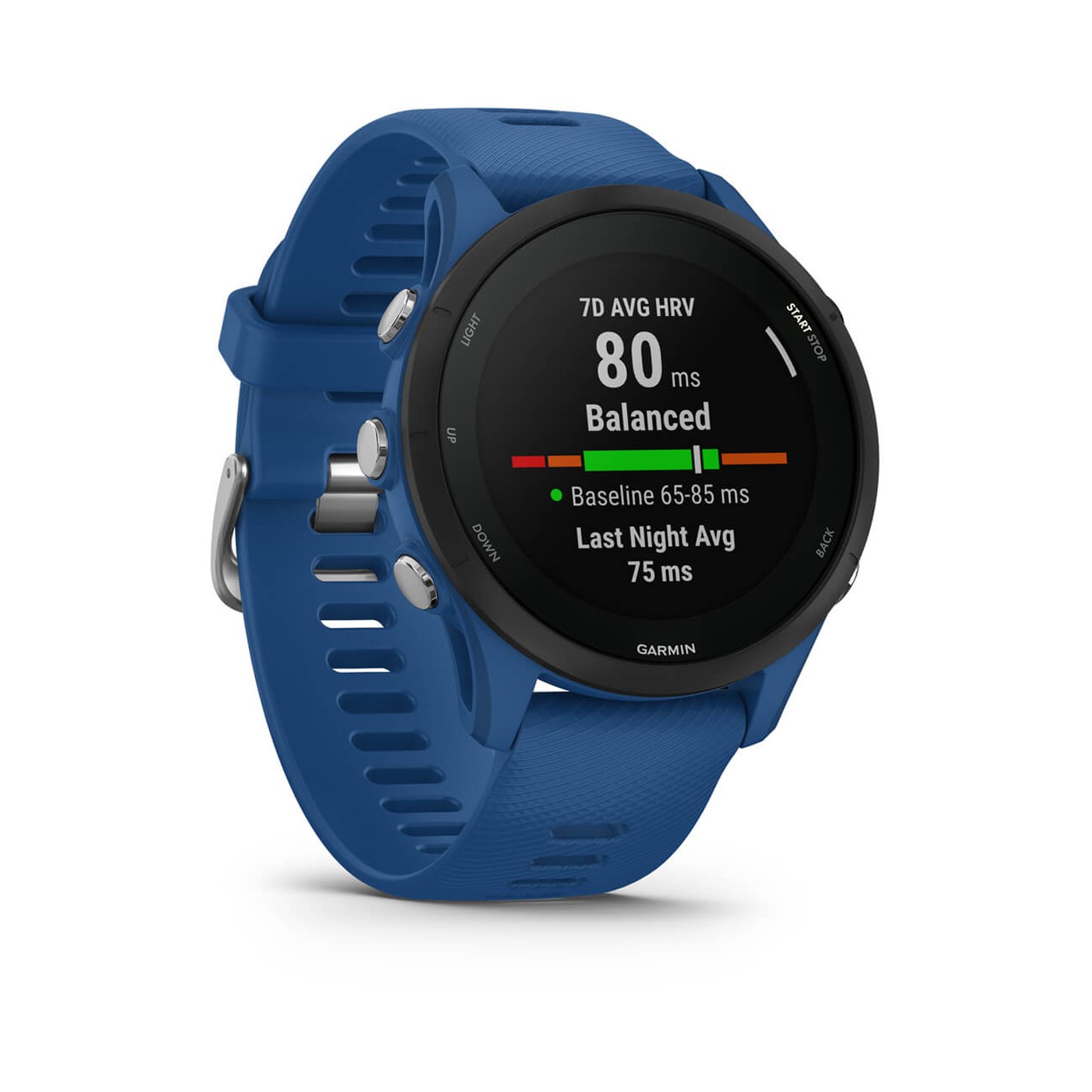
The EvoLab software suite remains one of the 255's strengths: VO2 max, HRV status (heart rate variability), Fitness Age 2.0, Race Predictor Trend, Body Battery, stress, sleep and respiration tracking, and a Morning Report every day. Garmin Coach offers free adaptive training plans and more than 1400 animated exercises. There's one real gap, though, confirmed by independent reviews: no Training Readiness (the daily readiness score that combines sleep, HRV and recent load), which is reserved for newer models with the Elevate Gen 5 sensor. You still get a solid picture of your load and recovery, just without Garmin's most advanced daily summary.
Garmin Forerunner 255 vs Forerunner 265: head to head
The question keeps coming up in the comments: why pay more for the Forerunner 265 when the 255 does almost the same thing? The honest answer: the real technical gap is smaller than the price gap. The switch to AMOLED improves indoor readability and viewing comfort, but adds nothing to GPS accuracy or training metrics. Only the AMOLED model gets a touchscreen and a bit more snap in everyday use outside of training.
| Criterion | Forerunner 255 | Forerunner 265 |
|---|
| Display | Transflective MIP, non-touch | Touchscreen AMOLED, brighter |
| Multi-band GPS battery life | ~16 h | ~13 h (AMOLED draws more power) |
| GPS accuracy | Identical | Identical |
| Training metrics | Identical (EvoLab) | Identical + Training Readiness |
| Price in mid-2026 | ~€249 to €269 | From €449 |
Against the Coros Pace 4 (€269, AMOLED, 32 g), the Forerunner 255 loses on weight and screen quality but keeps the edge of the Garmin Connect ecosystem, which offers more for long-term analysis than the Coros EvoLab app. Against the Polar Pacer Pro, it comes down to multi-band GPS accuracy, where Garmin keeps a lead measured by several independent reviews, since the Polar sticks to single-frequency GPS.
What we liked
- Multi-band GPS accuracy among the best in its price range, confirmed by several independent measurements
- Reliable Elevate Gen 4 heart rate sensor, with minimal gaps against a chest strap
- 49 g on the wrist, you forget it's there within minutes
- MIP display very easy to read in direct sunlight
- Complete EvoLab suite (VO2 max, HRV, Race Predictor, Garmin Coach)
- Very competitive mid-2026 price against newer AMOLED watches
What we liked less
- No mapping at all, just a breadcrumb trail and GPX
- Real multi-band battery life (~16 h) far below the 30 h claimed in standard mode
- No onboard music on the standard version
- No Training Readiness, reserved for newer models
- Strap keeper slides around during use, a recurring flaw reported by several testers
- Minimum pool length in pool mode limited to 14 m
Our field verdict: who is it for?
The regular road runner (30 to 60 km/week)
Yes, without hesitation. You get accurate multi-band GPS, complete training metrics and a price that has dropped a lot since 2022.
The trail runner who navigates their own routes
With reservations. With no mapping, you have to prepare your GPX tracks ahead of time. On familiar or marked terrain, it works very well. For true exploration, go for a Forerunner 965 or a fenix 8.
The amateur triathlete
Yes. Multisport mode with automatic transitions and pool/open-water swim profiles cover the essentials, even if the 14 m minimum pool length may be a problem for some clubs.
Training with the Forerunner 255
Whether you're getting ready for a 10K, a half marathon or your first long runs toward a marathon, its accurate multi-band GPS is a perfect match for the target paces in a
RunMorph training plan. HRV and Body Battery tracking help you manage your heavy weeks without overtaxing your recovery.
© Garmin, official photo used for editorial purposes
The RunMorph Coach's verdict
The Garmin Forerunner 255 is no longer new, and that's exactly what makes it worth recommending: four years of hindsight and price cuts, and its core data point, GPS accuracy, hasn't aged a day. It doesn't play in the same league as an outdoor mapping watch, and it doesn't try to. Its goal is to deliver, on a controlled budget, the accuracy and training metrics a serious runner needs. The real criticisms, no mapping and multi-band battery life overstated by the 30-hour marketing figure, are well known and documented by independent reviews. They aren't enough to tip the verdict: at under €270 in mid-2026, it remains one of the best accuracy-for-the-price deals in Garmin's catalog.
8/10: a safe bet that's aging gracefully, held back only by the lack of mapping and multi-band battery life that falls short of the claims.