Decathlon has just released a new GPS running watch, the RACE 500, with no fanfare: no press release, no review unit sent out in advance, just a product page online with two customer reviews posted last week. Its pitch fits in one line: dual-frequency GPS, usually reserved for watches above €250, for €139.99. RunMorph went through the spec sheet in detail and checked the announced numbers against watches already tested on the site, while waiting for the first field reports from outside the brand.
© Decathlon, official photo used for editorial purposes
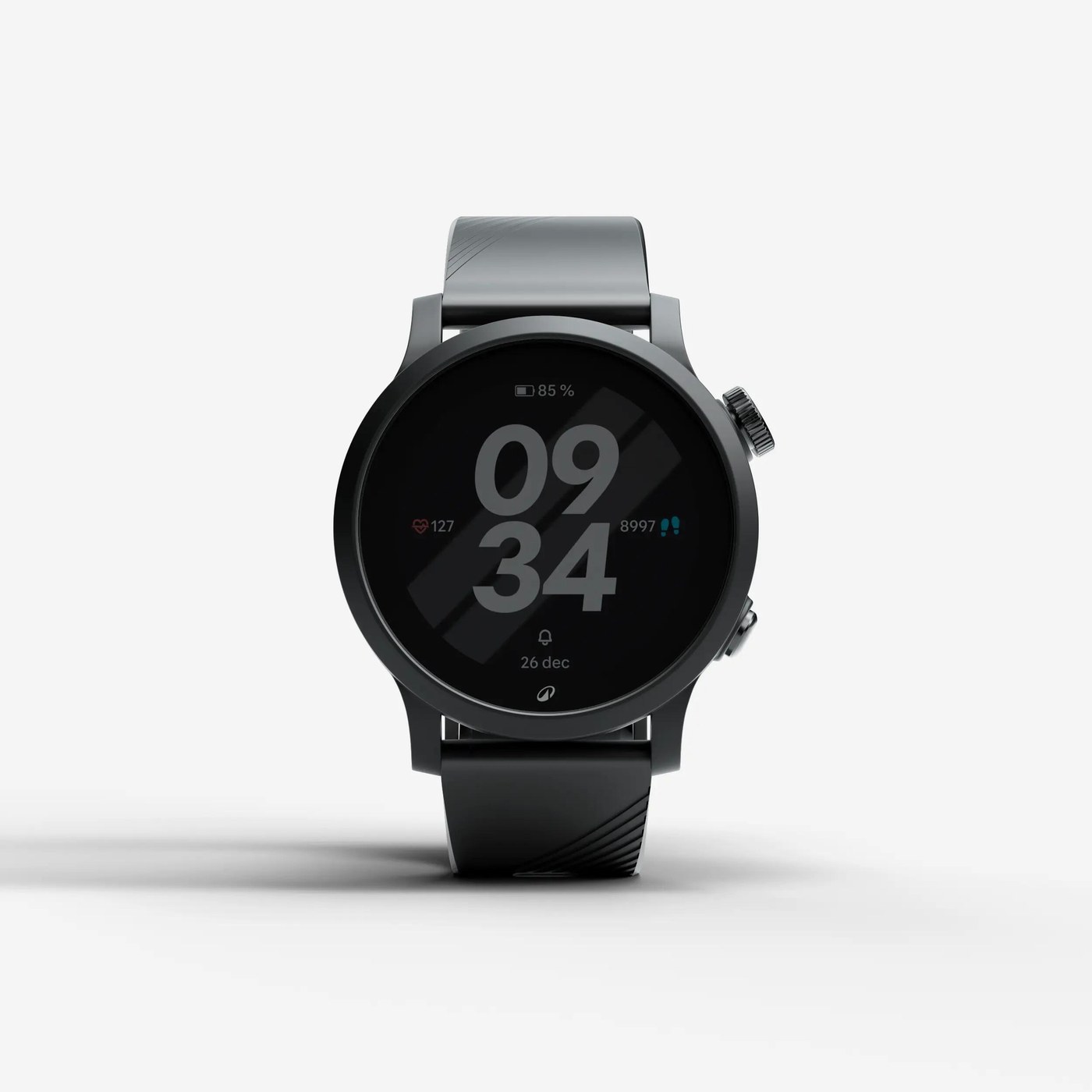
Decathlon RACE 500: the brand retires Kiprun and bets on dual-frequency at €140
Until now, Decathlon's entry-level GPS watch carried a different name: Kiprun. The GPS 500 and the GPS 900 by Coros, co-developed with the Taiwanese brand, held that segment for three years before quietly disappearing from the current 2026 catalog. The RACE 500 no longer carries the Kiprun label: it sits directly under the Decathlon brand, in a RACE range that already exists in cycling and kayaking. The name change comes with a change of pitch. Where the GPS 900 bet on battery life and outdoor ruggedness for €249, the RACE 500 bets on signal precision at half the price: dual-frequency GPS, a technology that reduces track loss in cities and under forest canopy, for €139.99. At Coros, Garmin or Suunto, this same technology sits in watches priced at €270 or more. Decathlon is bringing it to a price bracket where it simply didn't exist before.
RunMorph's advice: before comparing the RACE 500 to a €250 watch, put it up against the Garmin Forerunner 55 instead, its real price competitor. The GPS technology gap between the two is what should settle your choice.
RACE 500 spec sheet
| Spec | Decathlon RACE 500 |
|---|
| Brand | Decathlon |
| Model | RACE 500 |
| Release | October 2026 |
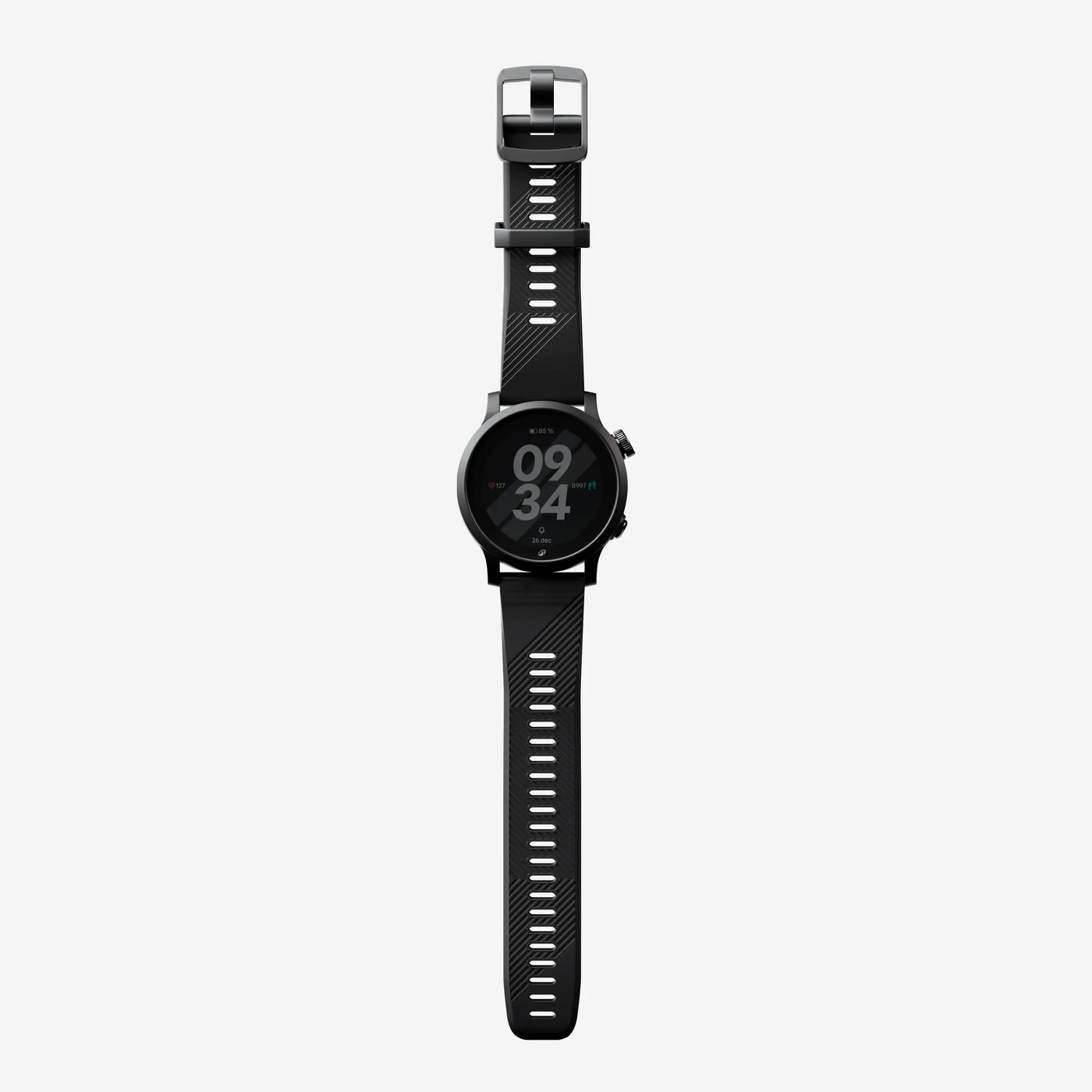
| Case diameter | 44 mm |
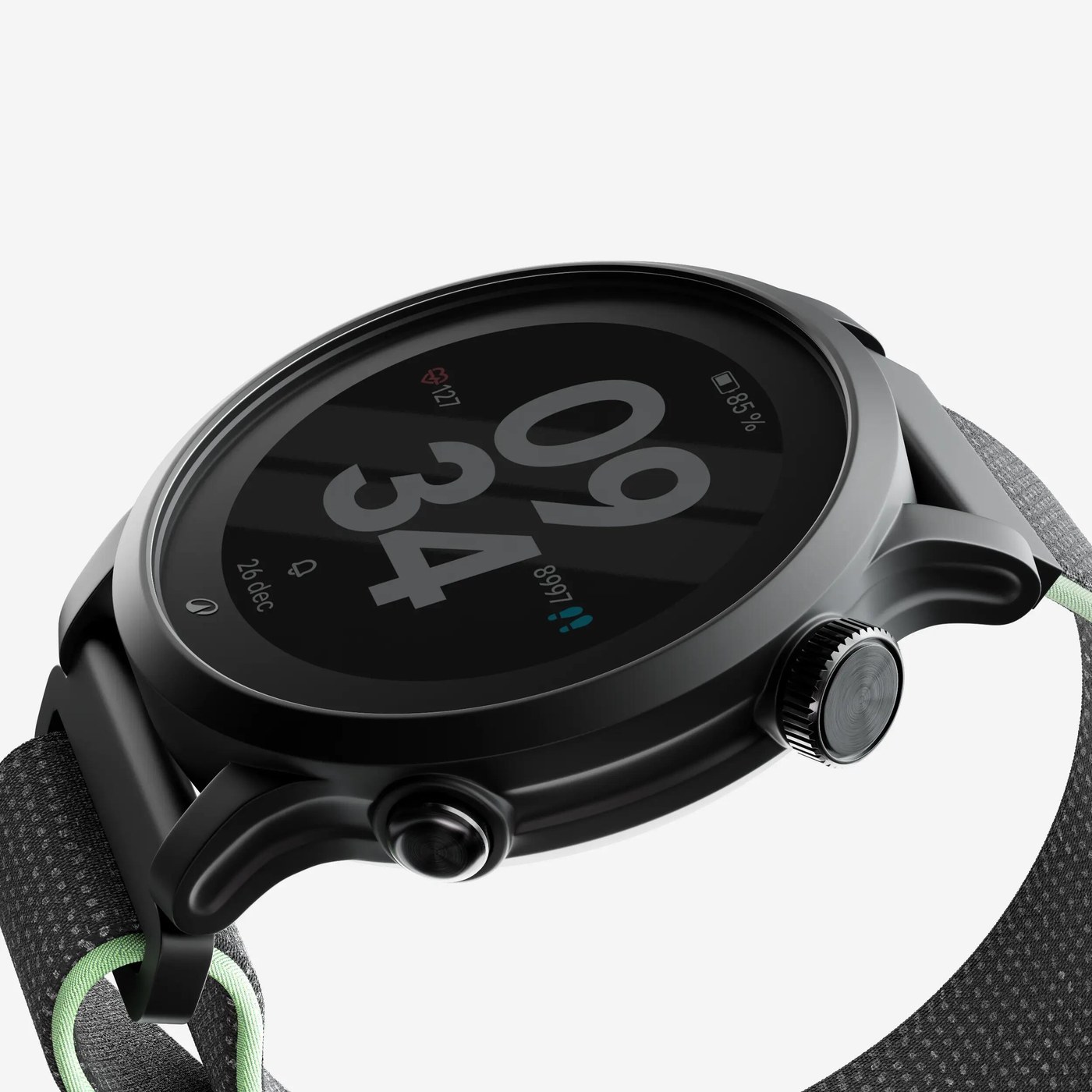
| Weight | 36 g (nylon band) or 45 g (silicone band) |
| Band | 22 mm, interchangeable with standard third-party bands |
| Display | Transflective MIP, Gorilla glass, non-touch |
| GNSS | Multi-GNSS dual-frequency (exact bands not detailed by Decathlon) |
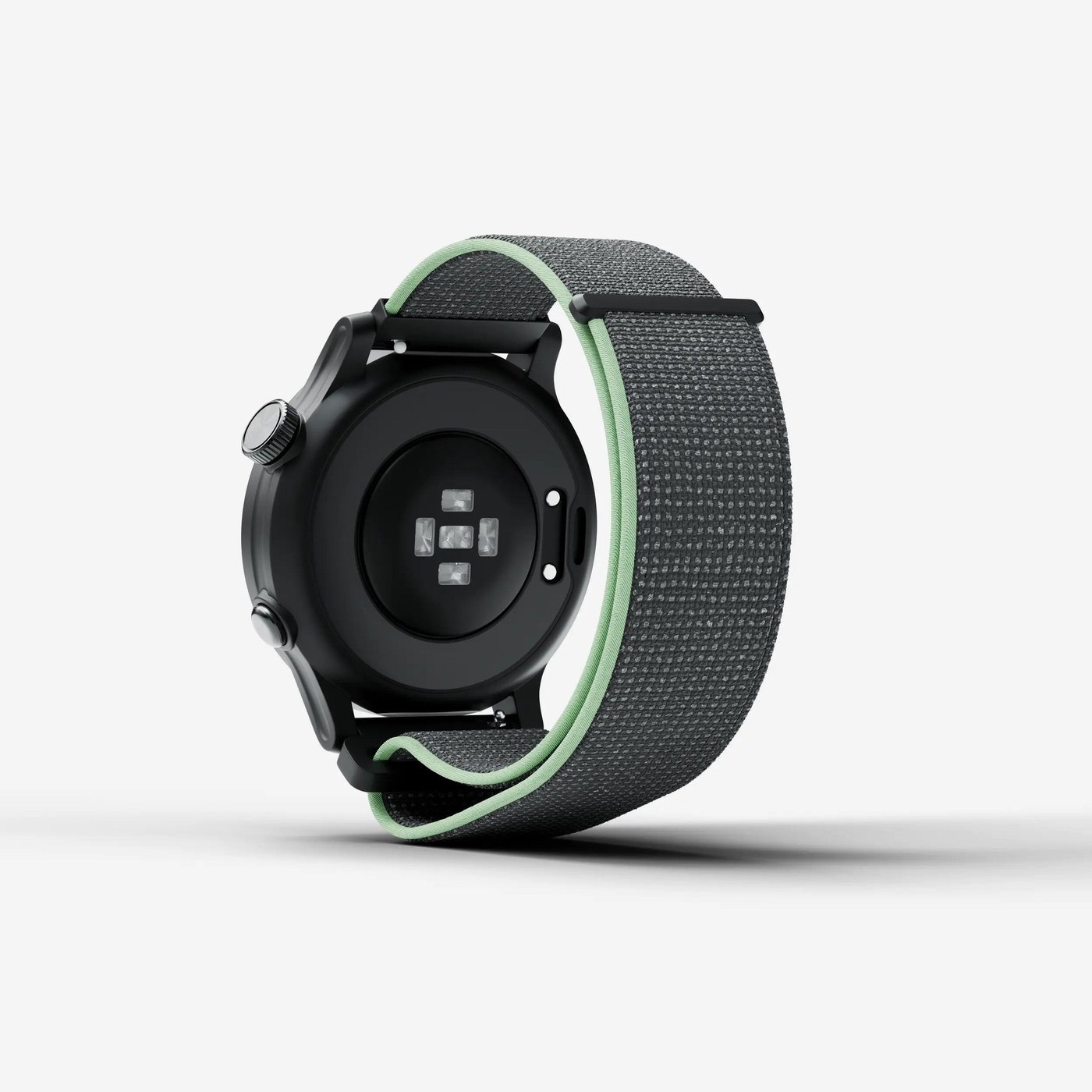
| Heart rate | Wrist-based optical |
| Altimeter | Present (barometric or GPS-based, not specified by the brand) |
| Mapping | None |
| Music | No storage, no audio controls mentioned |
| Connected features | Notifications, phone calls and voice commands via smartphone over Bluetooth |
| Water resistance | 5 ATM |
| Battery life | 14 days in watch mode, 20 hours with GPS active |
| Charging | USB |
| Materials | ABS shell (90%) and electronic components (10%), silicone and stainless steel band |
| Warranty | 2 years |
| Price | €139.99 |
© Decathlon, official photo used for editorial purposes
What Decathlon claims, and what still needs field verification
The RACE 500 came out just a few days ago. No French or English-language outlet has yet had time to measure it under real conditions, or to check the claimed dual-frequency GPS precision or heart-rate sensor reliability over several weeks. The only data available at this stage are two verified customer reviews published on the Decathlon listing, and the brand's own official spec sheet. This article flags every time a data point comes from one of these two sources, rather than presenting marketing claims as measured facts.
Dual-frequency GPS: the only watch under €150 on the market to have it
Dual-frequency GPS picks up two satellite signal bands instead of one (L1 and L5 for most manufacturers), which reduces signal bounce off buildings and under tree cover. In plain terms: a better track in cities and forests, where a single-frequency watch tends to cut corners. Decathlon doesn't disclose exactly which bands the RACE 500 captures, which is a shame for a brand making this its main selling point. The fact remains that this technology, in RunMorph's catalog, sits in the Coros Pace 4 at €269 or the Garmin Forerunner 265 above €350. Neither the Garmin Forerunner 55 at €159 nor the Amazfit Active Max at €169.90 have it. On this one criterion alone, the RACE 500 fills a genuine gap in the market, provided the claimed precision holds up once the watch reaches independent testers.
GPS precision and heart-rate sensor: what the very first users are saying
Two verified customer reviews appear on the Decathlon listing at the time of writing, posted a week ago. Théo praises a watch that's "complete for someone who wants to train," with precision he judges good and a supplied fabric band he calls "super comfortable." Ludovic, meanwhile, describes multisport use: tested in running, cycling and swimming, he describes a GPS track that's "very reliable, whatever the sport," with battery life measured between eight and ten days at five to six hours of active GPS per week, well above the 20 hours of continuous GPS the brand claims for that split usage.
Those two testimonials remain what they are: one-off, non-reproducible reports, and far too few to form a consensus. Neither review mentions heart-rate accuracy during interval work, usually the weak point on watches in this price range from competing brands. The older Kiprun GPS 900 by Coros, for its part, was measured by several testers with heart-rate deviations of up to 14 beats per minute during hard efforts. Nothing indicates whether the RACE 500 does better or worse: the absence of data on this specific point is itself a piece of information, and RunMorph will update this article as soon as third-party measurements exist.
What's missing to compete with mapping-capable watches
The RACE 500 has no mapping, no music storage, no contactless payment and no touchscreen. Against an Amazfit Active Max at €169.90, which offers an AMOLED screen and basic mapping for thirty euros more, the choice comes down to one simple question: a more precise GPS signal, or a more readable screen with an on-screen map. At RunMorph, for a runner who trains mostly in the city or on marked routes, dual-frequency GPS weighs more heavily in the decision than mapping, whose usefulness stays limited outside trail running. For a trail runner navigating unmarked terrain, though, having no map at all is a dealbreaker, whatever the GPS signal quality.
Battery life also deserves to be called out as a genuine weak point. Twenty hours of continuous GPS is less than the Forerunner 55 (also 20 hours, so a tie), noticeably less than the Coros Pace 4 (41 hours), and even less than the older Kiprun GPS 900, which claimed 35 hours in GPS-only mode. For a marathon runner aiming for over four hours with a safety margin, the RACE 500 means charging the night before and watching the battery gauge during the race, a calculation that watches with longer battery life spare you.
© Decathlon, official photo used for editorial purposes
RACE 500 vs Garmin Forerunner 55: the entry-level match-up
| Spec | Decathlon RACE 500 | Garmin Forerunner 55 |
|---|
| Price | €139.99 | €159 |
| Weight | 36 g (nylon) | 37 g |
| GNSS | Dual-frequency | Single-frequency |
| GPS battery life | 20 h | 20 h |
| Optical HR | Not independently measured | Rated disappointing by RunMorph |
| Ecosystem | Decathlon app | Garmin Connect, the most complete on the market |
The simple read: at nearly identical battery life and weight, the RACE 500 costs twenty euros less and adds dual-frequency GPS, a real technical edge on paper. The Forerunner 55 keeps the Garmin Connect ecosystem on its side, more mature and better documented, and a brand with a proven multi-year software track record. For a first purchase with no training history to migrate, the RACE 500 wins out on paper. For a runner already invested in the Garmin app, the twenty-euro gap doesn't justify switching ecosystems.
RACE 500 vs Coros Pace 4: what the price gap really buys you
| Spec | Decathlon RACE 500 | Coros Pace 4 |
|---|
| Price | €139.99 | €269 |
| Weight | 36 g | 32 g |
| Display | MIP | 1.2-inch AMOLED |
| GNSS | Dual-frequency (details undisclosed) | L1+L5, documented dual-frequency |
| GPS battery life | 20 h | 41 h |
| Heart rate | Optical, not measured | 5-LED, tested and rated 8.5/10 by RunMorph |
A hundred and thirty euros separate the two watches. For that price, the Pace 4 nearly doubles GPS battery life, moves to AMOLED, and brings a heart-rate sensor already validated by a full RunMorph test. On paper, the RACE 500 has only one argument in its favor: potentially similar GPS bands for half the price. Until independent measurements confirm that real-world precision is comparable between the two, that argument stays a hypothesis rather than a certainty. The choice comes down to available budget as much as appetite for risk: the Pace 4 for a proven safe bet, the RACE 500 for a half-price wager on a technology still unproven at Decathlon.
Pros and cons
Pros
Dual-frequency GPS at €139.99, an unprecedented price for this technology. Very contained weight (36 g in nylon). Full connected features for this range (calls, voice commands). 2-year warranty and 365-day free returns at Decathlon. Compatible with third-party 22 mm bands.
Cons
GPS battery life capped at 20 hours, a limit on very long outings. No mapping, no music storage. GPS precision and heart-rate reliability not yet verified by third-party testing. Only two customer reviews at the time of writing.
© Decathlon, official photo used for editorial purposes
RunMorph's field take: who should buy it?
The RACE 500 targets the runner who wants to move up from a bottom-tier watch without crossing the €200 mark. It suits someone who runs mostly in the city or on familiar routes, where a better GPS signal matters more than an on-screen map. It also suits a runner already drawn to the "session planning" feature: someone who structures training around precise intervals rather than running by feel. For preparing a 10K with timed interval sessions, the RACE 500 has more than enough to deliver.
RunMorph's advice: the RACE 500 is well suited to a structured 10K build built around intervals. Pair it with the RunMorph 10K program to turn its session-planning features into real, progressive training weeks.
RunMorph verdict
The RACE 500 earns 7.4/10. The score rewards a clear proposition and a genuine gap filled in the French market: dual-frequency GPS under €150, where nobody else goes. It doesn't score higher because part of this promise remains, for now, a claim rather than a measurement: no outside outlet has yet confirmed the real GPS precision or heart-rate sensor reliability, and the 20-hour battery life forces compromises on long outings. A reasonable buy for anyone willing to accept that uncertainty in exchange for substantial savings; a purchase worth delaying a few weeks for anyone who'd rather wait for the first field reviews from outside Decathlon.
Key takeaways for your training
- €139.99: the lowest price on the market for a dual-frequency GPS watch, roughly half the price of a Coros Pace 4.
- 36 grams with the nylon band, one of the lightest GPS watches in its price category.
- 20 hours of continuous GPS battery life, worth planning around for any outing over three hours.
- Zero mapping: a dealbreaker for unmarked trail running.
- Two customer reviews only at the time of writing: a product still too new for a definitive long-term verdict.

© Decathlon, official photo used for editorial purposes