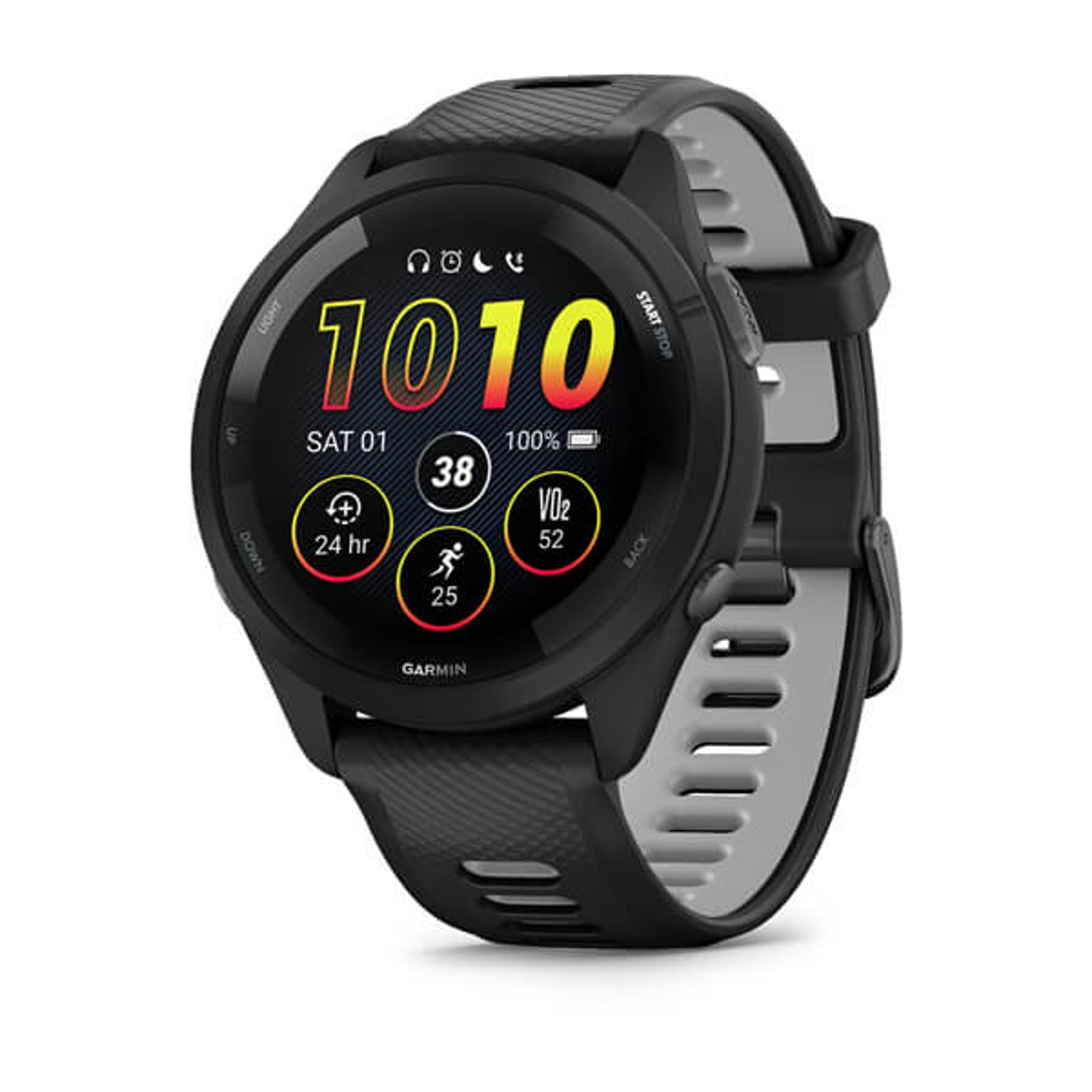
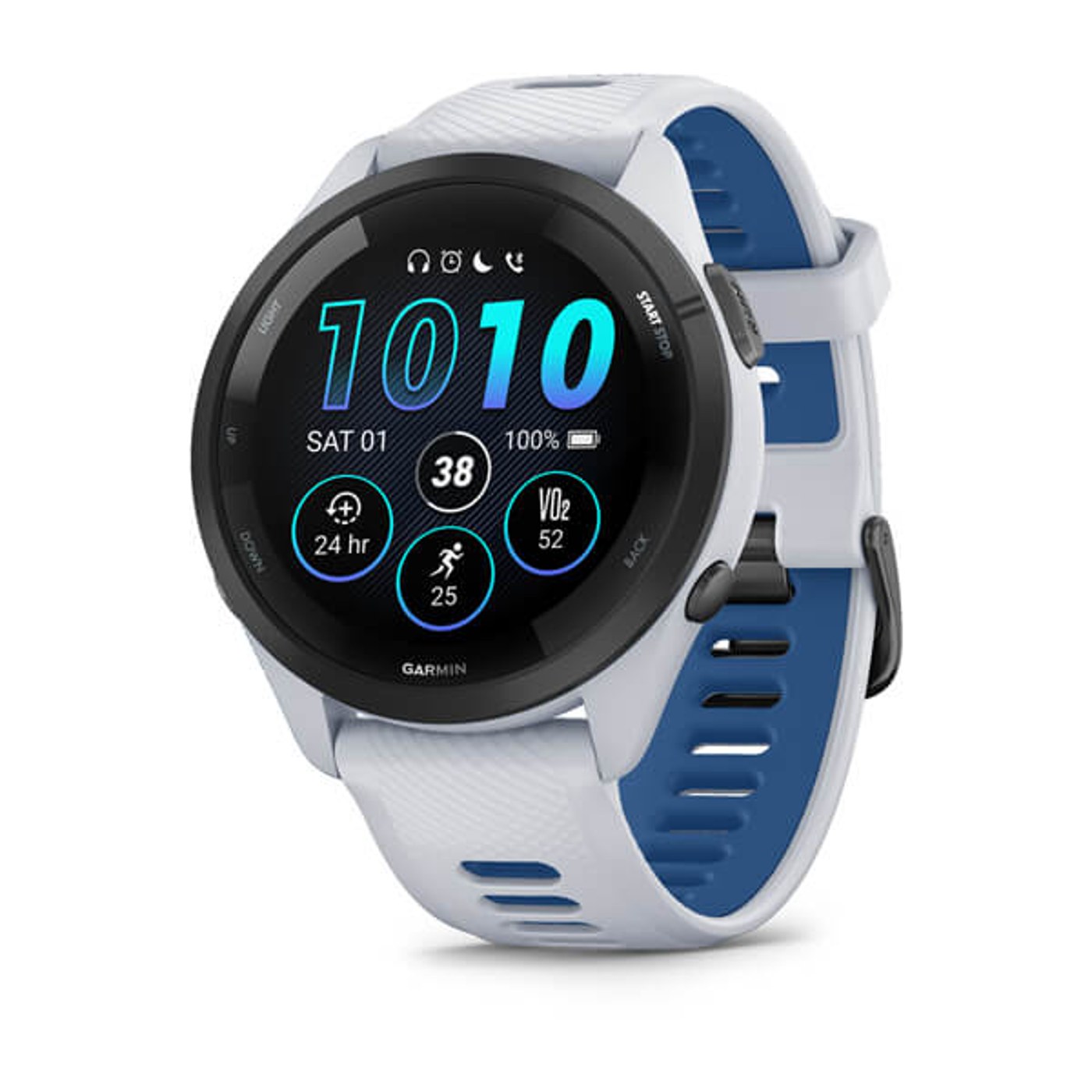
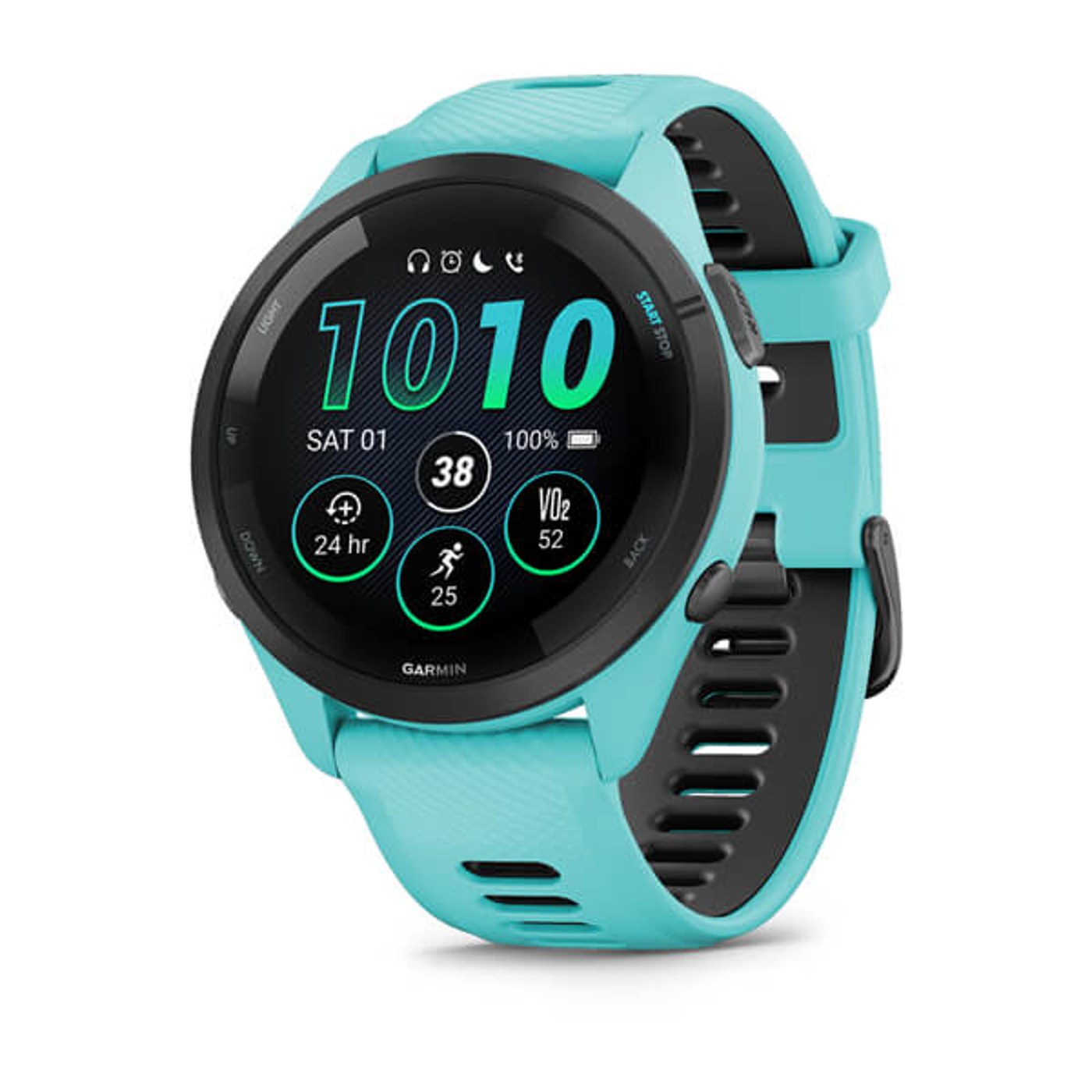
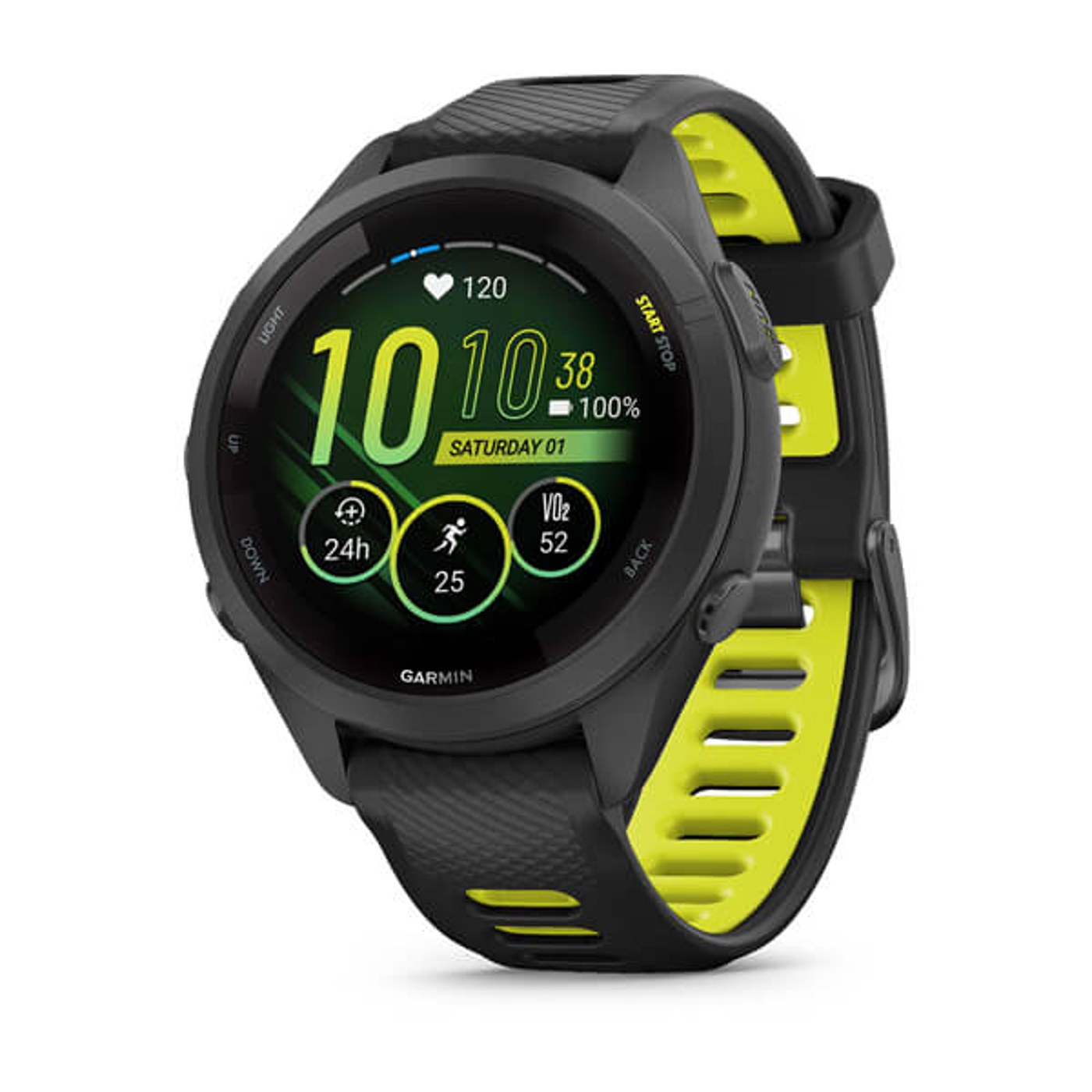
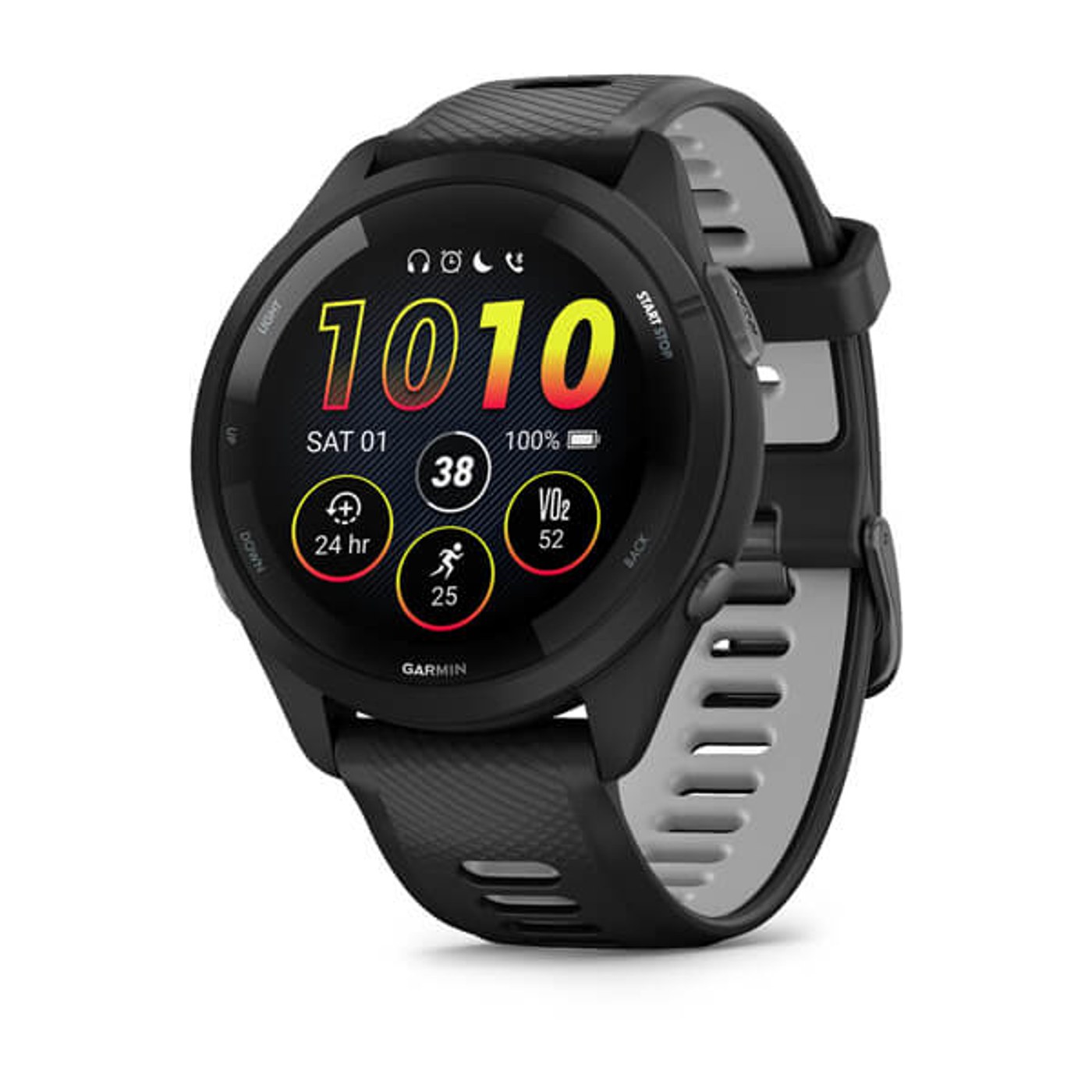
Launched in March 2023, the Garmin Forerunner 265 brought the AMOLED display to Garmin's mid-range lineup. For many runners, this is the watch that finally checks every box: GPS accuracy, serious battery life, built-in coaching and a readable interface. After several months of real-world testing, here is our verdict.
Design and build
The Forerunner 265 uses a 46 mm reinforced polymer case and weighs 47 g with its silicone band. Gorilla Glass 3 protects a 1.3" AMOLED touchscreen with a resolution of 416 x 416 pixels. Readability in direct sunlight is excellent, far better than the old transflective MIP displays. Brightness peaks at 1,000 nits.
The case is water-rated to 5 ATM (50 m). The standard 22 mm Quick Release band swaps in a second, so you can switch between a sport band for training and a leather band for everyday wear. MIL-STD-810 certification guarantees solid resistance to shocks, vibration and extreme temperatures.
GPS and accuracy
The Forerunner 265's multi-GNSS module supports dual-frequency L1/L5, also called All Systems mode. In practice, satellite lock is almost instant (under 10 seconds in most conditions) and the GPS track is clean, even in dense forest or in urban canyons between tall buildings.
Real-time pace readings are steady, without the erratic swings you see on entry-level watches. The UltraTrack power-saving mode (one fix per minute) is available for very long outings, with a slight loss of accuracy on tight turns. For track intervals, distance measurement is reliable from the first marker on a known track.
Battery life
Garmin claims 13 days in smartwatch mode and 20 hours in standard GPS mode. In real-world use, with daily runs of 60 to 90 minutes in standard GPS, you easily get 8 to 9 days between charges. In high-accuracy GPS mode (dual-frequency), GPS battery life drops to 8 hours: enough for a half marathon, not for an ultra.
Charging is fast: 15 minutes on the proprietary USB-C cable gets you back about 15% of battery. A full hour of charging takes it to 100%. Compared with the Coros Pace 4 (41 h in standard GPS), the Forerunner 265 falls behind here, but it's still more than enough for most runners.
Coaching features
This is where the Garmin Connect ecosystem makes the difference. The Forerunner 265 includes Training Status, which analyzes your training load over 4 weeks and tells you whether you're progressing, maintaining or overreaching. Every morning, Daily Suggested Workouts offers a session matched to your recovery, measured in part through HRV (heart rate variability).
Garmin Coach lets you follow structured training plans for the 5 km, 10 km, half marathon or marathon, with dynamic adjustments based on your actual performances. Race Predictor estimates your race times over different distances from your estimated VO2max. PacePro builds a pacing strategy for a target race, segment by segment.
Verdict
In 2026, the Garmin Forerunner 265 is still a benchmark for runners who want a complete, reliable and versatile GPS running watch for €250 to €320. It offers the best coaching ecosystem on the market (Training Status, Garmin Coach, Daily Suggested Workouts) in a light case with a polished AMOLED display. Its GPS battery life is less impressive than the Coros Pace 4, but it makes up for it with richer analytics. For the newest Garmin features, look at the Forerunner 570. For excellent value for money on the previous-generation model, the 265 is hard to beat.
Recommended reviews: Coros Pace 4, Garmin Fenix 8, Suunto Race 2, Polar Vantage V3