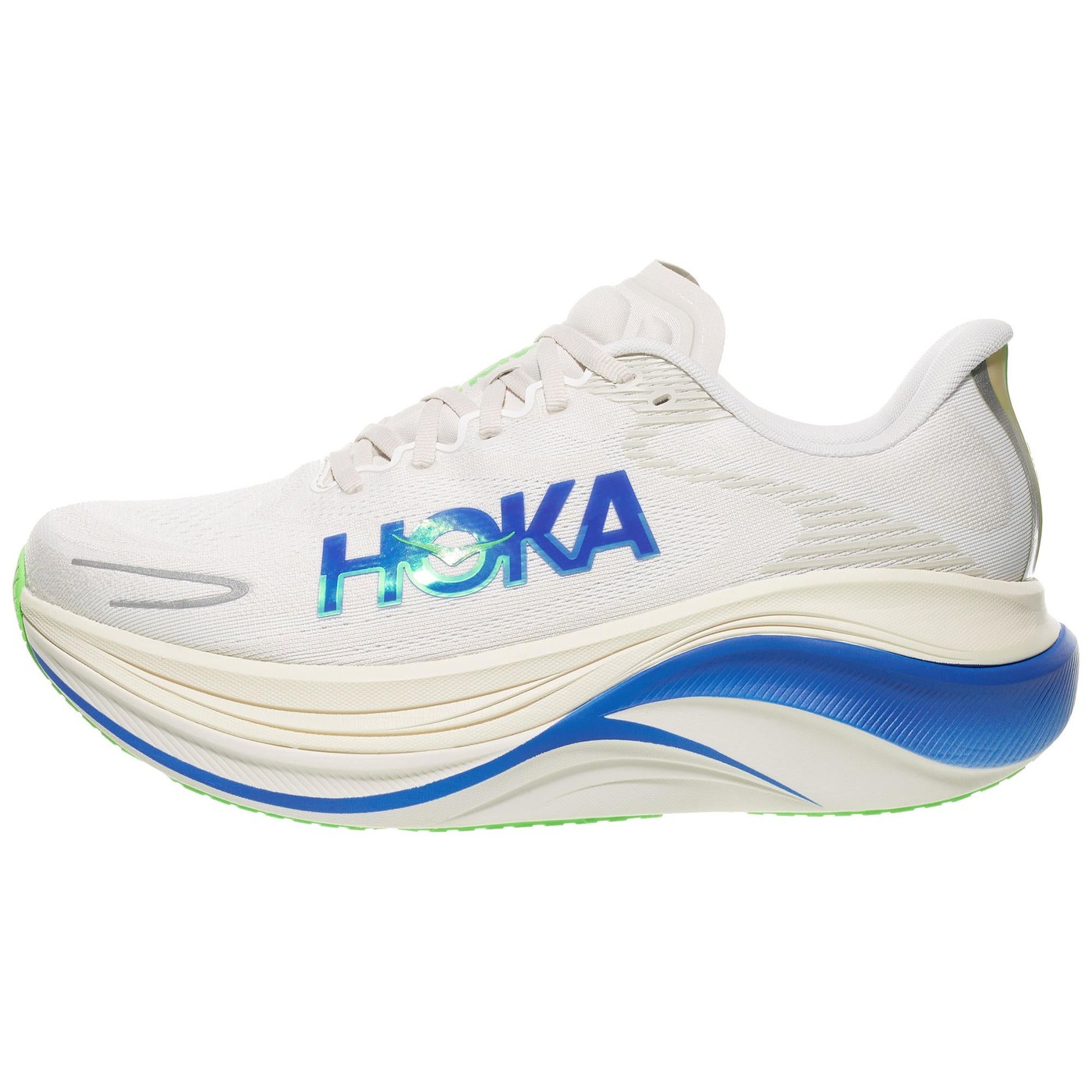
The Hoka Skyward X 2 lands on May 15, 2026. The French-born brand has fixed every flaw of the original Skyward X: lower weight, stack height down 2 mm, J-Frame stability, a refined convex carbon plate. The promise hasn't changed: the softest max-cushion super trainer on the market. Price: 225 USD in the US, ~€225 in France. As a RunMorph coach, I see a far more mature product than the v1, but one that's still expensive for its segment.
Hoka Skyward X 2 Review: A Max-Cushion Carbon Super Trainer
Hoka fixes the Skyward X and finally makes it worth recommending
The first Skyward X (2024) was a bold crush: Hoka dared to build an ultra-high platform shoe (50 mm of stack height) with a carbon plate, in a category nobody had seen yet. The result was spectacular but flawed: too heavy (320 g), unstable in corners, prohibitively priced. The Skyward X 2 answers every one of those criticisms.
This new version is positioned as a carbon-plated super trainer, halfway between the Hoka Mach 7 (a lighter daily trainer) and the Hoka Cielo X1 3.0 (a race-day super shoe). Released on May 15, 2026 at 225 USD in the US, it's available in France via Hoka.com and i-Run from mid-May.
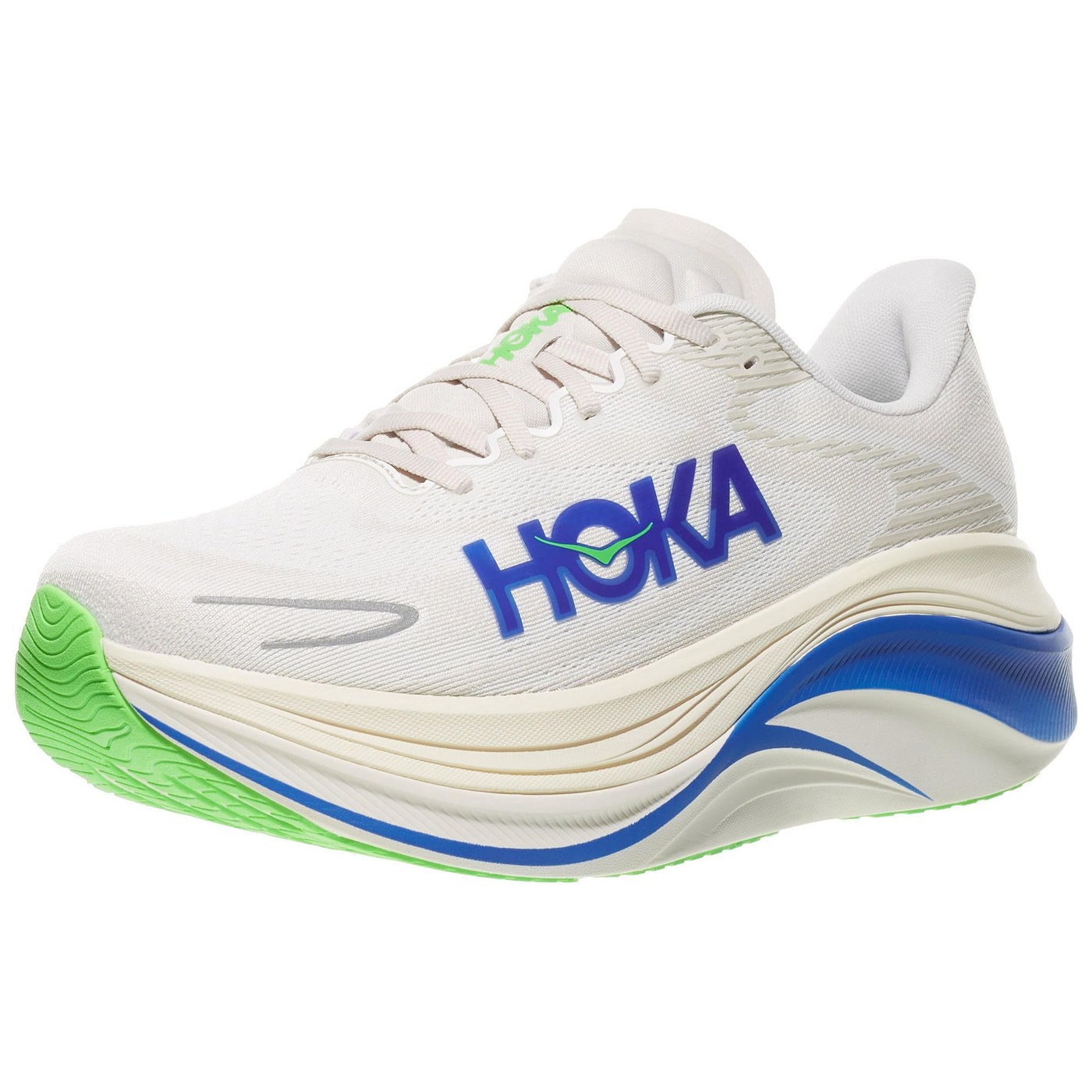
© Hoka, official photo used for editorial purposes
RunMorph's advice
If you want maximum comfort on your long training runs and can spend €225, the Skyward X 2 is the softest shoe on the market. For pure racing, the Hoka Cielo X1 3.0 is still the smarter pick: lighter and more responsive. For a premium daily trainer at a reasonable price, the Hoka Mach 7 at €160 remains unbeatable. The Skyward X 2 targets a very specific use: a super trainer for heavier runners, or for recovery on long quality runs.
Objective technical specs
| Brand | Hoka |
| Model | Skyward X 2 |
| Release date | May 15, 2026 |
| Type | Road, carbon-plated max-cushion super trainer |
| Drop | 5 mm |
| Stack height heel / forefoot | 48 mm / 43 mm |
| Weight | 312 g (men's, US size 10) |
| Foam | PEBA (top) + supercritical EVA (bottom) |
| Plate | Convex H-shaped carbon, leaf-spring style |
| Stability | J-Frame anti-pronation |
| Widths | Standard + Wide |
| Recommended distance | 10 km to marathon (training) |
| Official price | €225 (estimate), 225 USD in the US |
Heads-up: with 48 mm of stack height at the heel, the Skyward X 2 exceeds the 40 mm limit World Athletics sets for official road races. That means you can't log an official marathon or half marathon time in this shoe. For unstructured training, tempo runs or long runs, it's not a problem.
The 5 mm drop is in line with modern long-distance standards. The J-Frame is a Hoka innovation that stops excessive inward rolling (pronation) without artificially correcting your stride. That's key for a heavier runner, or for a tired runner at the end of a long run.
Who is this shoe for?
The heavy or powerful runner (75 to 100 kg)
This is its core target. With 48 mm of stack height and the J-Frame, the Skyward X 2 absorbs the impact of a solid build like no other shoe. It feels like a couch that launches you forward: your joints don't ache after a 90-minute long run, and the carbon plate helps you hold an efficient cadence even as fatigue sets in.
The experienced marathoner looking for a quality recovery shoe
If you hit a hard threshold session on Tuesday and want to do your Sunday long run in a shoe that saves your legs, the Skyward X 2 is unbeatable. The PEBA foam soaks up vibration, and the carbon plate carries you along without asking for effort. You finish your long run fresher than in an Asics Superblast 3 or a Saucony Triumph 23.
The runner who loves that "max-cushion" feel
Hoka has plenty of fans who love over-the-top cushioning. The Skyward X 2 is the most extreme expression of that philosophy. If you're coming off an Asics Gel-Nimbus 28 and want even more plushness, this is the logical next shoe. Plan for an adjustment period: 48 mm of stack height is tall, and the inertia in corners takes some getting used to.
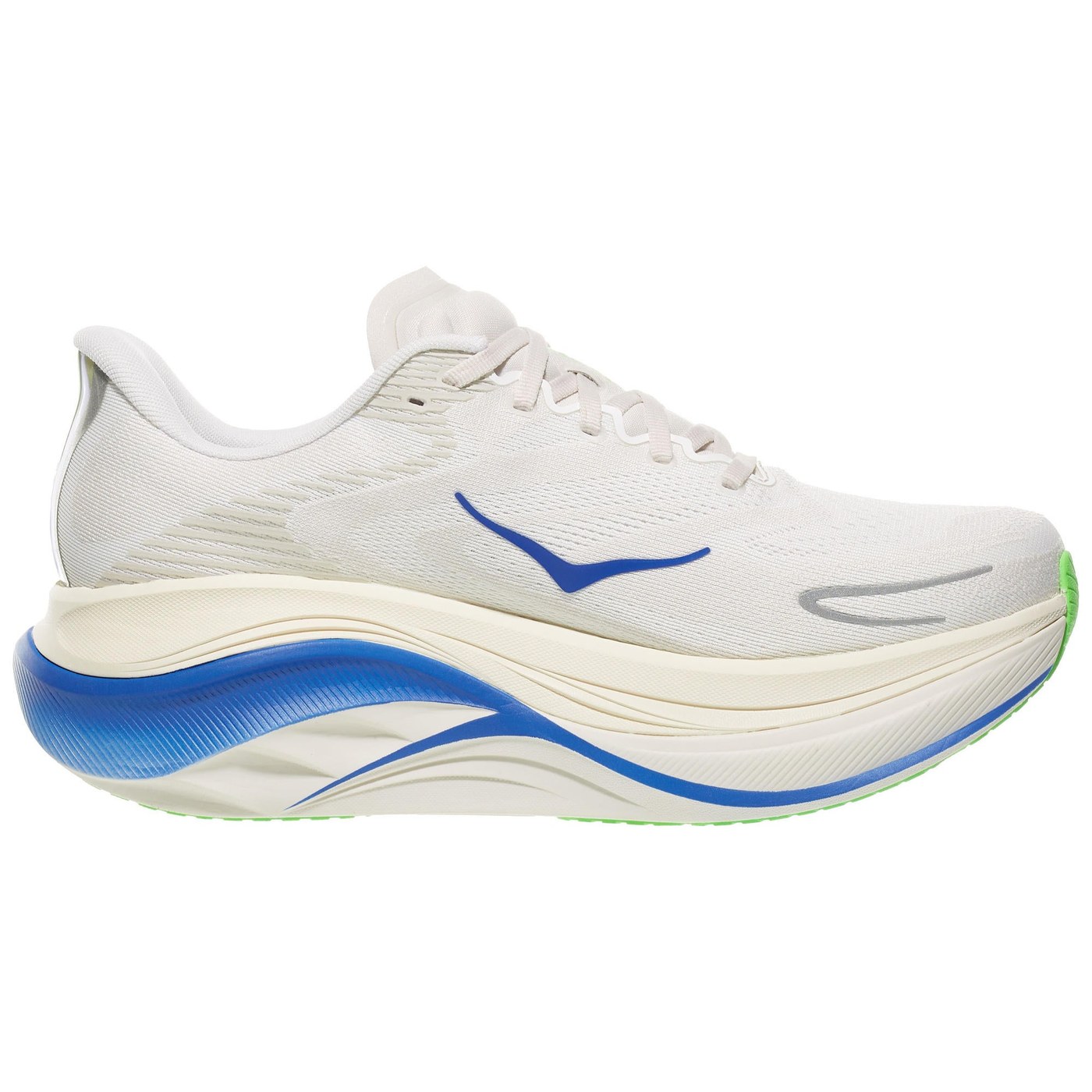
© Hoka, official photo used for editorial purposes
On the run: what you'll feel
First steps: an immediate sense of height and softness. The Skyward X 2 carries you like a dense cloud. The PEBA top layer bounces, the convex carbon plate flexes and springs back with every footstrike (it works like a leaf spring), and the supercritical EVA bottom layer keeps the whole package stable. The feel is unique: neither the firmness of a true super shoe nor the mushiness of a classic max-cushion daily trainer.
At an easy run pace (5:30/km to 6:30/km), the shoe is a bit slow to respond, like every carbon-plated model. You can tell the plate needs a minimum cadence to come alive. At that pace, you might prefer the lighter, more affordable Hoka Clifton 10.
At marathon pace (4:00/km to 5:00/km), the Skyward X 2 finds its rhythm. The plate works, the foam bounces, the J-Frame keeps you stable. You can run 90 to 120 minutes without discomfort, which is exactly what you want from a super trainer. You still feel the 312 g, though: you won't be setting PRs in it, but that's not the point.
On a fast tempo run (3:30/km to 4:00/km), you can feel the plate revving hard while the shoe's mass holds back performance. For that kind of session, look instead at the Hoka Cielo X1 3.0 (213 g) or the Asics Metaspeed Sky Tokyo.
How it stacks up against direct rivals
Vs Asics Superblast 3 (€200, 240 g, 8 mm drop): the Superblast 3 is lighter, more responsive and more versatile, with no carbon plate but an outstanding FF Leap foam. For most runners, it's the better everyday choice. The Skyward X 2 only makes sense for heavier runners or those specifically looking for maximum protection.
Vs Saucony Triumph 23 (€170, 290 g, 10 mm drop): the Triumph 23 is a premium max-cushion daily trainer with no carbon plate, for €55 less. For pure recovery runs, it can be enough. The Skyward X 2 adds carbon-plate propulsion and J-Frame stability, which you feel on runs beyond 90 minutes.
Vs New Balance Fresh Foam X 1080v15 (€165, 285 g, 6 mm drop): the 1080v15 is the other benchmark in the max-cushion daily segment, also without a plate. It's a very close match on overall feel: the Skyward X 2 wins on propulsion, the 1080v15 on price.
Vs Asics Gel-Nimbus 28 (€190, 295 g, 8 mm drop): the Nimbus 28 is probably the closest rival in terms of philosophy. The Skyward X 2 adds the carbon plate (but not the Asics J-Frame) and costs €35 more. It comes down to personal feel.
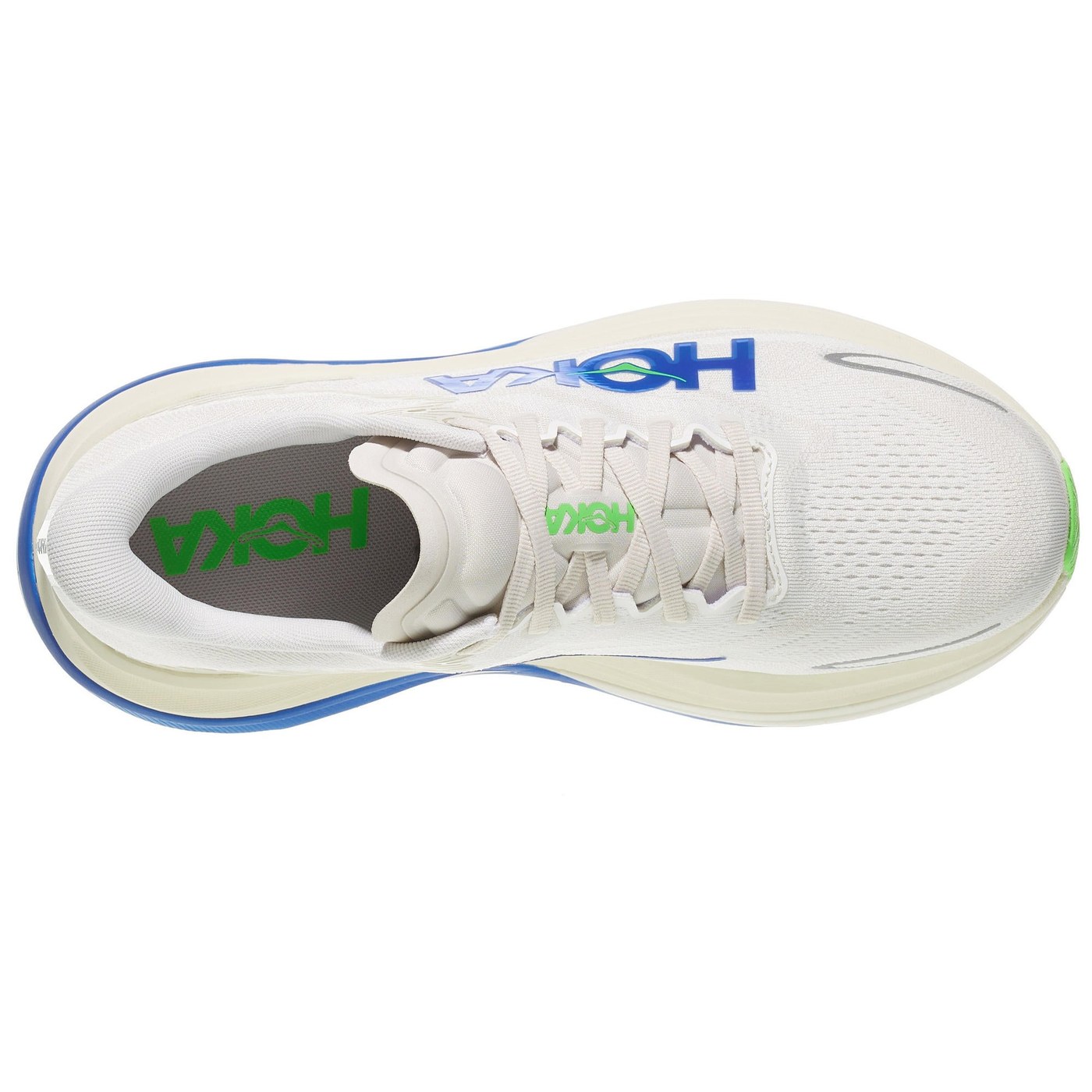
© Hoka, official photo used for editorial purposes
How to fit it into your RunMorph training plan
The Skyward X 2 is a shoe for long, quality training, never for racing. Here's how I use it when programming RunMorph plans:
Long run (75 to 180 minutes) at easy to moderate pace. This is the shoe's main use. You build your aerobic base or your ability to go the distance without piling up joint impact. It's especially relevant in marathon training, on long runs beyond 25 km.
Quality recovery tempo run (45 to 60 minutes). Moderate tempo pace (between 4:30/km and 5:00/km for a sub-3:30 runner) over 8 to 12 km. The plate carries you without you having to push, which makes it ideal for active recovery after a hard session.
Post-race easy runs. The day after a marathon or half marathon race, the Skyward X 2 is perfect for 30 to 45 minutes of relaxed easy running. Your legs are tired, and the shoe makes up for it.
What I do not recommend at all in this shoe: official road races (48 mm stack height > 40 mm limit), short intervals (the mass penalizes quick changes of pace), sub-3:00 marathon racing (go lighter), and light runners who don't need that much protection.
The RunMorph coach's verdict
The Hoka Skyward X 2 is a real success compared with the v1. Hoka listened to feedback and fixed the flaws one by one: lower weight, lower stack height, more stability. The result is coherent: it's now the most polished max-cushion super trainer on the market. The technology is unique (convex H-shaped plate, J-Frame), and so is the feel.
My two reservations: the €225 price is still high for a shoe you can't race in (it isn't World Athletics compliant), and its 312 g weigh it down as soon as you pick up the pace. For a heavier runner or an experienced marathoner looking for a quality recovery super trainer, it's an excellent buy. For most runners, the Asics Superblast 3 or the Hoka Mach 7 will be more versatile.
Key takeaways for your training
- Carbon-plated max-cushion super trainer: 312 g, 5 mm drop, 48/43 stack height, PEBA + supercritical EVA foam, convex H-shaped carbon plate, J-Frame stability, Wide version available, €225.
- Who it's for: heavier runners (75-100 kg), experienced marathoners doing quality recovery, Hoka max-cushion fans.
- Strengths: comfort unmatched on the market, a one-of-a-kind convex leaf-spring plate, J-Frame anti-pronation, Wide version for wide feet.
- Limitations: not World Athletics compliant (48 mm stack height), heavy (312 g), expensive (€225), not suited to short intervals or pure racing.
- Matching RunMorph plans: marathon training (long run), recovery after quality sessions, post-race.
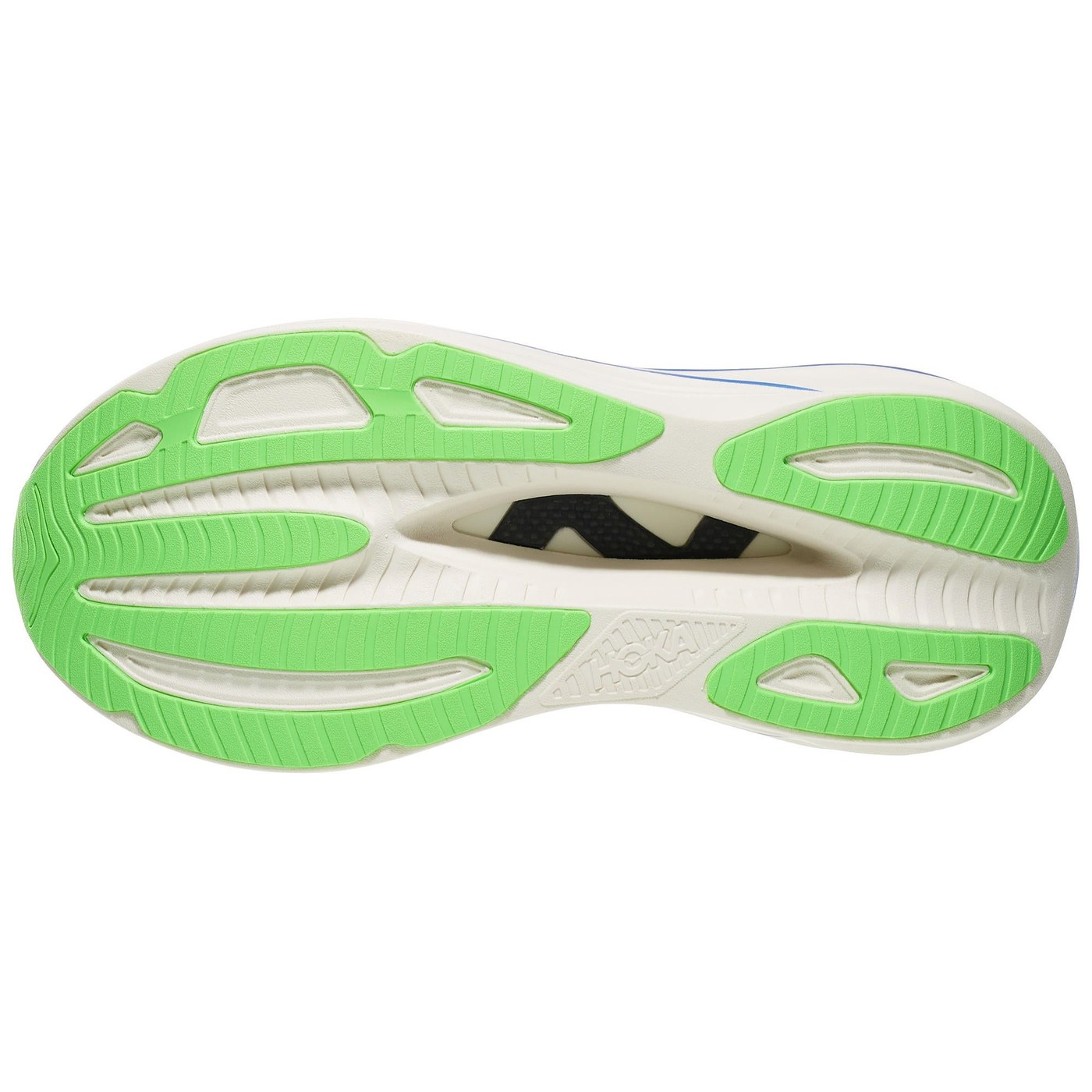
© Hoka, official photo used for editorial purposes