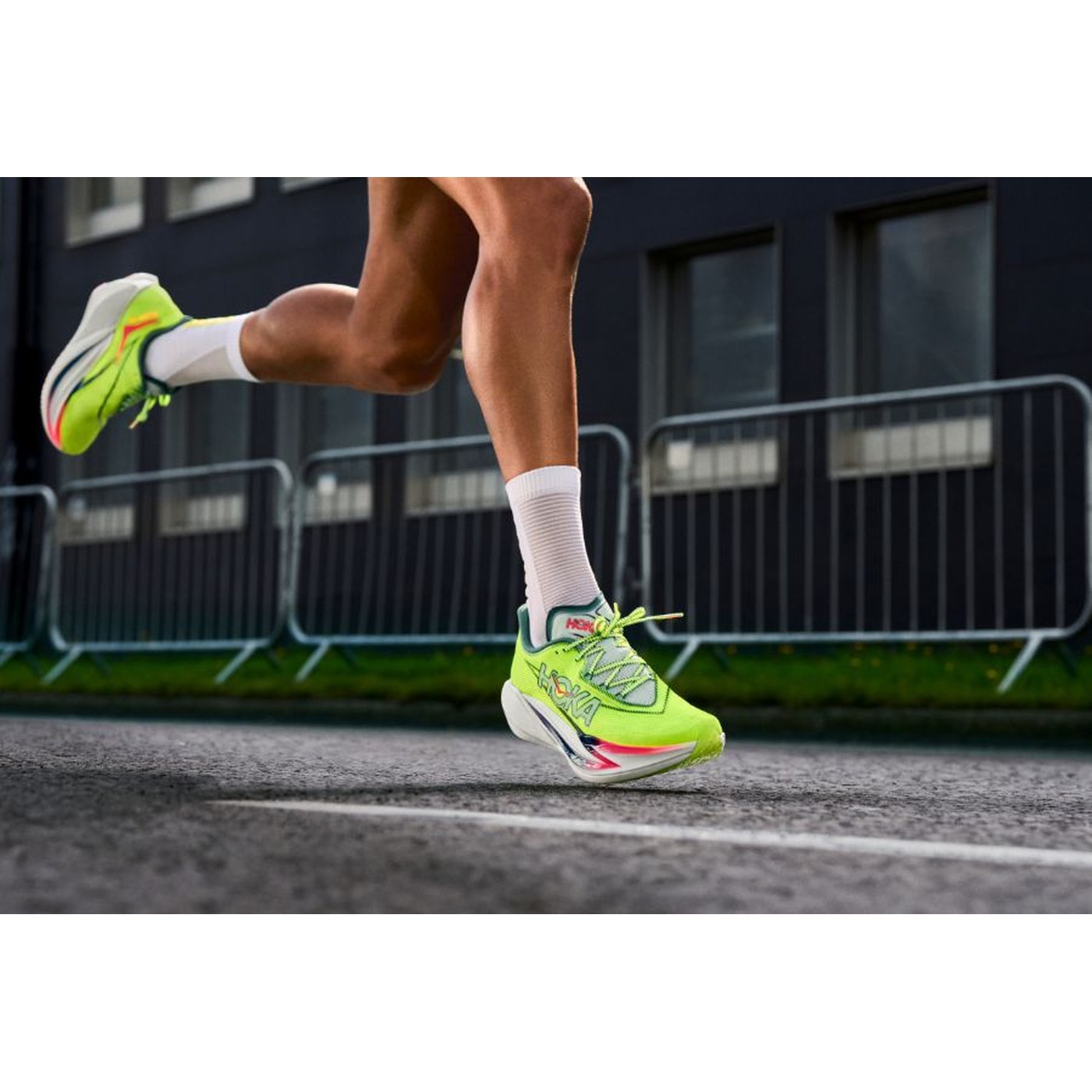
Released in late January 2026, the Hoka Cielo X1 3.0 marks a real step forward for Hoka: 213 g on the scale (an all-time record for a Hoka racing shoe), a dual-layer PEBA foam and a refined wing-arch carbon plate. At €275, it sits at the very top of Hoka's performance pyramid. We explain who it's really built for and, above all, whether it can take on the Nike Vaporfly 4 and the Adios Pro Evo 3.
Hoka Cielo X1 3.0 Review: A Super Shoe Built for Marathon PRs
9/10
Hoka Cielo X1 3.0: the carbon shoe that finally makes weight
The first two versions of the Cielo X were praised for their exceptional comfort but criticized for their excessive weight (260 to 280 g). For the 3.0, Hoka went back to the drawing board: new geometry, new carbon plate, new PEBA foam and, above all, an obsessive focus on lightness. The result: 213 g, or 30 to 40 g less than the 2.0. That's a generational leap.
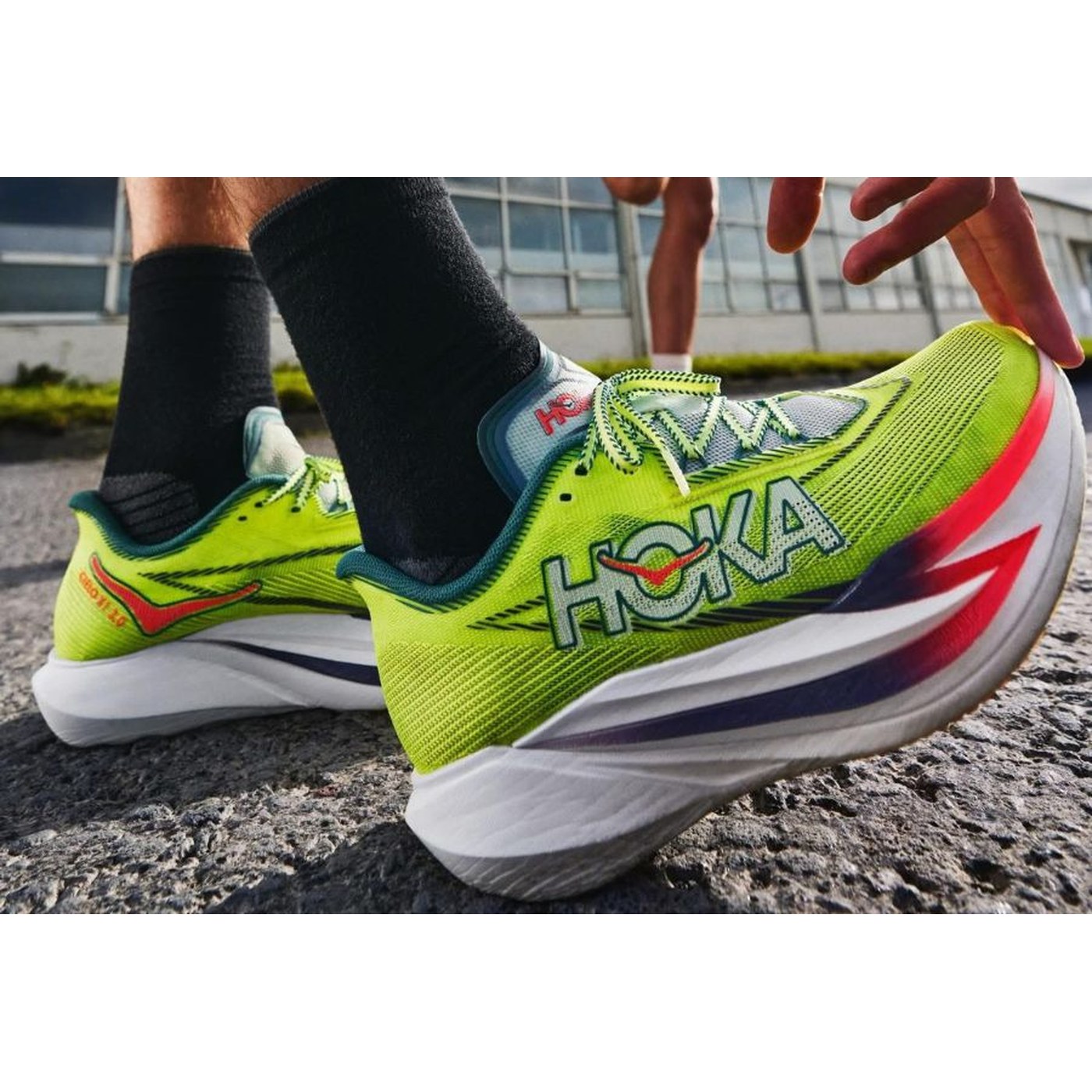
The new "wing-arch" carbon plate is thinner and sits between two layers of PEBA foam (Hoka's most responsive version). This floating-plate architecture delivers a smoother propulsive feel than a traditional carbon plate, without sacrificing energy return.
RunMorph's advice: the Cielo X1 3.0 is now a genuine rival to the Vaporfly and the Adios Pro. But it keeps its Hoka DNA: a touch softer, a touch more stable, a touch more welcoming. If you're torn between Hoka and the competition in this segment, the Cielo X1 3.0 is probably the most forgiving choice for an amateur runner chasing a half marathon or marathon time.
© Hoka, official photo used for editorial purposes
Objective technical data
| Brand | Hoka |
| Model | Cielo X1 3.0 |
| Official release | Late January 2026 |
| Type | Road racing, carbon plate |
| Drop | 7 mm |
| Heel / forefoot stack height | 38 mm / 31 mm |
| Weight (EU 42) | 213 g |
| Foam | Dual-layer PEBA |
| Carbon plate | Yes (wing-arch, full-length) |
| Upper | Ultralight racing mesh |
| World Athletics compliant | Yes (38 mm, under the 40 mm limit) |
| Recommended distance | 10 km to marathon |
| MSRP | €275 |
Three points deserve a closer look. First, the Cielo X1 3.0 sits right at the World Athletics 40 mm limit. That means you can race it in sanctioned events, including to chase a record or a qualifying time.
Second, 213 g for 38 mm of dual-layer PEBA + carbon plate is an excellent ratio. Hoka finally joins the club of truly light super shoes, after two generations that ran a bit heavy. For comparison: Nike Vaporfly 4 at 196 g, Brooks Hyperion Elite 5 at 196 g.
Third, the "wing-arch" plate is a Hoka innovation. Instead of being flat or spoon-shaped, it follows a three-dimensional curve inspired by glider wings. The goal: more progressive propulsion, less aggressive than a traditional carbon plate.
Who is the Cielo X1 3.0 for?
The amateur marathoner aiming for 2:45 to 3:30
You're training for a marathon with an ambitious but realistic time goal. You run 60 to 100 km a week and you've mastered your goal pace. The Cielo X1 3.0 is exactly the shoe you need on race day: light enough not to weigh you down, soft enough to finish without pain, and the carbon plate gives you 1 to 2% better running economy.
The runner who wants a forgiving carbon plate
The carbon plates in the Vaporfly and the Adios Pro can feel unstable for runners with a less polished stride. With its "wing-arch" plate and dual layers of PEBA foam, the Cielo X1 3.0 absorbs stride flaws better. It's a super shoe that's easier to handle technically.
The heavier runner who wants a super shoe
If you weigh more than 75 kg, most carbon super shoes pack down quickly and lose their efficiency. With 38 mm of dual-layer PEBA, the Cielo X1 3.0 holds up better over time, and its slightly wider base improves stability.
© Hoka, official photo used for editorial purposes
Comfort and step-in feel
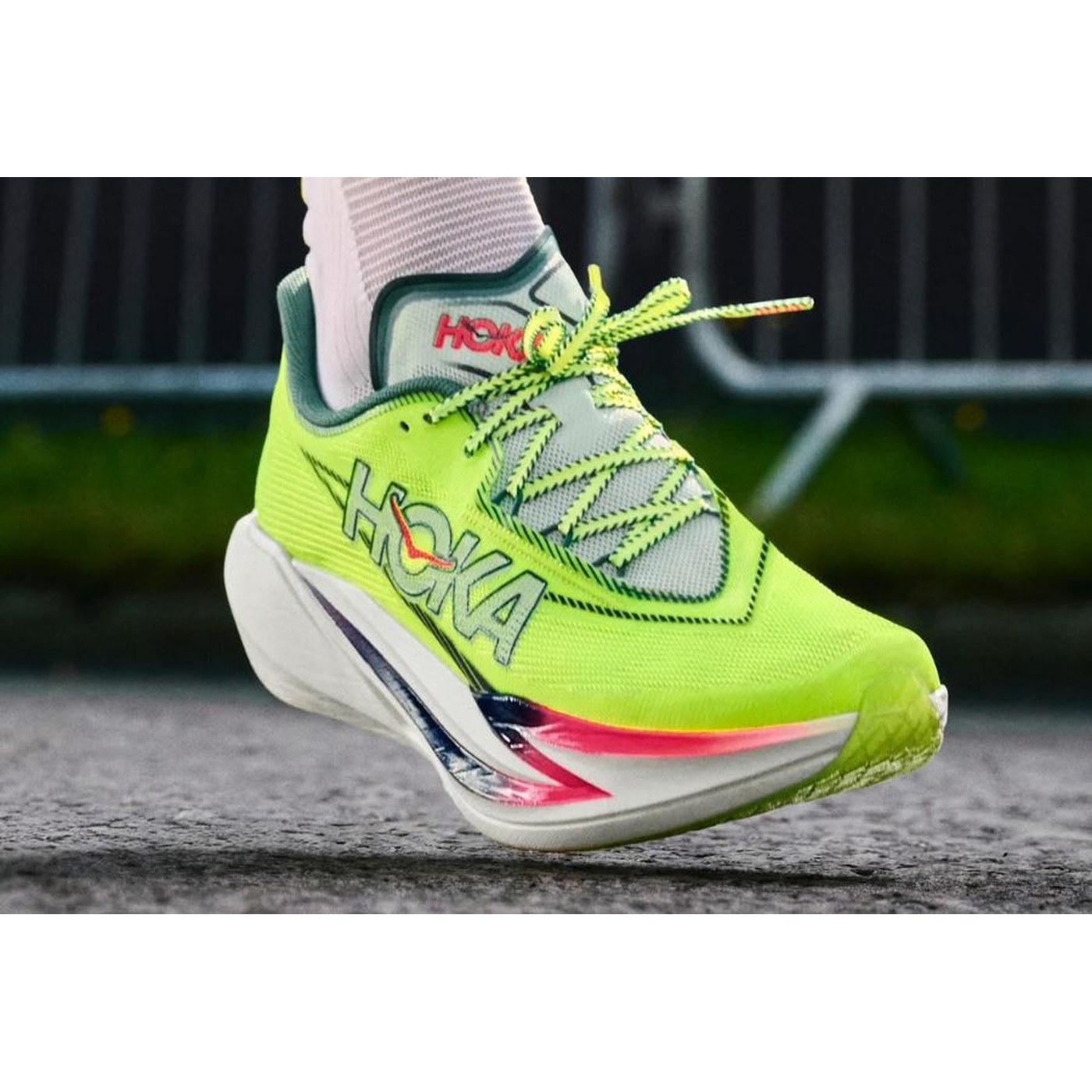
The racing mesh upper is ultra-breathable and minimalist, but Hoka has sweated the details: the heel counter is more padded than on the Cielo X1 1.0 and 2.0, the tongue is light but well positioned, and lateral hold is excellent thanks to the foam that wraps up the sides.
The fit is normal volume to slightly narrow: if you have wide feet, go up half a size. The heel is well locked in, which matters on a shoe this tall (40 mm). On step-in, it feels instantly softer than a Vaporfly and more contained than a Skyward X 2.
On the run
At tempo pace (4:00 to 4:30/km), the Cielo X1 3.0 already shows what it's made of. The PEBA foam responds, and the "wing-arch" plate loads progressively and returns energy without forcing the issue. You feel the propulsion without feeling the stiffness.
At marathon pace (3:30 to 4:00/km), it's in its element. The sense of flow is remarkable: you reel off the kilometers with no apparent effort, and the PEBA foam keeps its bounce right to the end. That's exactly what you want from a super shoe over 42 km.
At 10K pace (3:00 to 3:30/km), it stays competitive even if it isn't the most explosive shoe in the segment. The Adios Pro Evo 3 or the Metaspeed Edge Tokyo will be marginally faster at those paces, but also less forgiving.
At easy pace: no. You'll wear the shoe out for nothing, and the foam doesn't load enough.
Outsole and grip
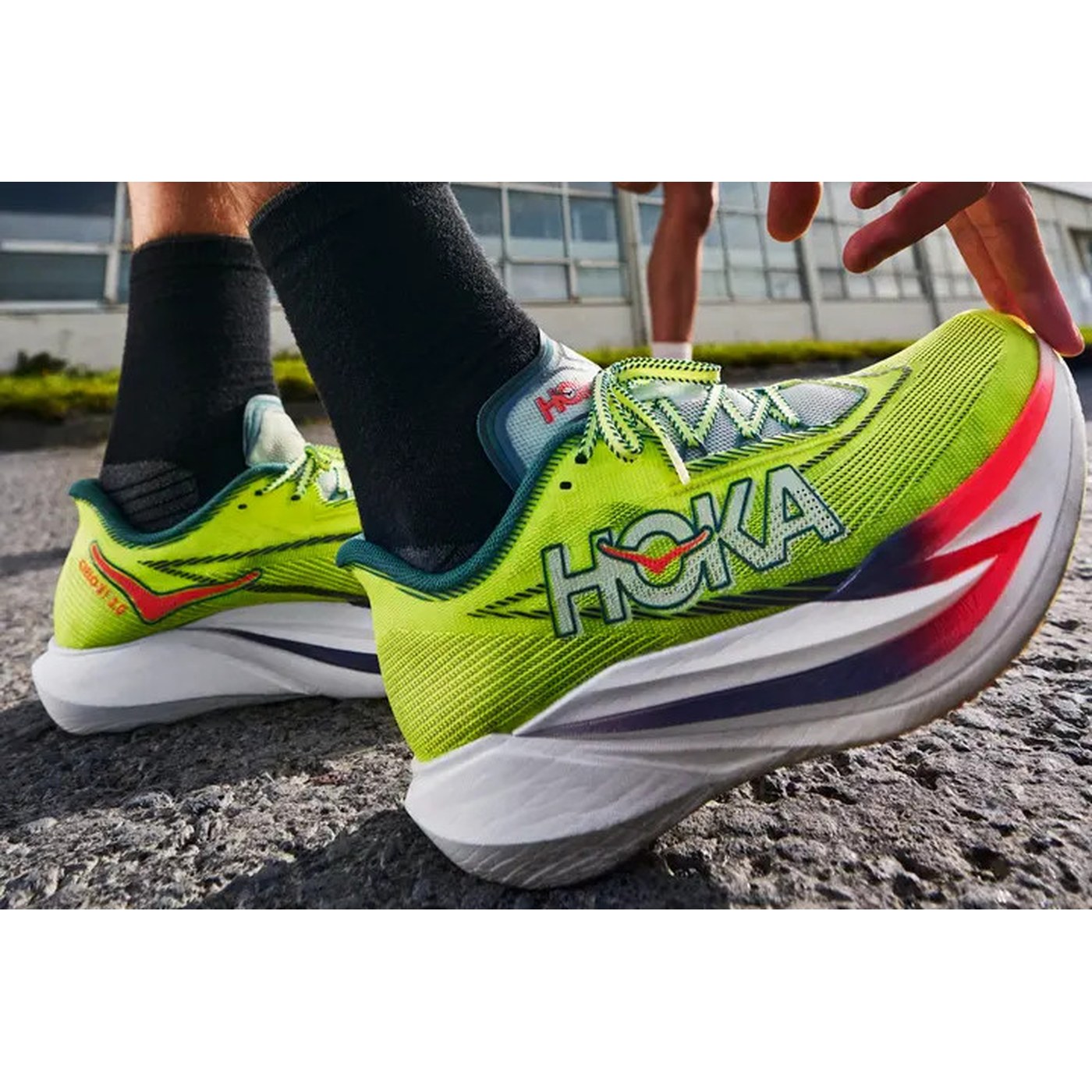
The outsole uses dense rubber in the wear zones (medial forefoot, outer heel) and exposed foam everywhere else. It's the classic super shoe compromise, trading durability for weight.
Grip is total in the dry and decent in the wet. Expect 250 to 350 km of useful life, or 3 to 4 marathon races + a few goal-pace sessions. That's average for carbon super shoes, maybe a little better than the Vaporfly 4 thanks to the 40 mm of stack, which takes longer to pack down.
© Hoka, official photo used for editorial purposes
How it stacks up against the competition
The Cielo X1 3.0 steps into the big leagues: elite carbon super shoes. Here's where it stands:
Nike Vaporfly 4 (€280, 196 g, 8 mm drop, 40/32 stack): the ultimate benchmark. Lighter and more explosive, but also less forgiving. The Cielo X1 3.0 is a hair heavier, softer and easier to handle technically.
Brooks Hyperion Elite 5 (€275, 196 g, 6 mm drop, 39/33 stack): a DNA Gold PEBA super shoe. The two play in the same price and weight class. The Cielo X1 3.0 is slightly lower (38 vs 39 mm) and offers a more forgiving "wing-arch" plate. The Hyperion Elite 5 is livelier at fast paces.
Saucony Endorphin Pro 5 (€290): also PEBA with a carbon plate. The Cielo X1 3.0 has a slightly higher drop (7 vs 6 mm) and a more rockered geometry.
Adidas Adios Pro Evo 3 (€500, 97 g, 6 mm drop, 39/33 stack): the elite projectile. The Cielo X1 3.0 is 116 g heavier (almost 2x) but also more durable, more forgiving and €225 cheaper.
Comparison verdict: the Cielo X1 3.0 is probably the best accessible super shoe of 2026 for amateur runners aiming for between 3 hours and 3:45 in the marathon. Not the fastest, but the most forgiving.
How to fit the Cielo X1 3.0 into your RunMorph training plan
As a coach, here's how I'd slot the Cielo X1 3.0 into the rotation of a sub-3:30 marathoner:
Easy runs and aerobic base: no. Too fragile, and it gives you no benefit at these paces. Keep an Asics Gel-Nimbus 28 or a Brooks Ghost 18 for those sessions.
Long run (90 minutes or more): no. The Superblast 3 or the Hyperboost Edge will be cheaper to run in and just as effective.
Marathon-pace blocks: yes, 2 to 3 sessions in the cycle to get used to the feel and dial in your goal pace.
Tempo and threshold: no. Switch to a Superblast 3 or a Mach 7.
Racing: yes, this is exactly what it exists for. Half marathon, marathon and even a comfortable 10K. It's your race-day pair.
To build your rotation around a carbon super shoe, take a look at the RunMorph training plans: they build in the right periodization and shoe rotation.
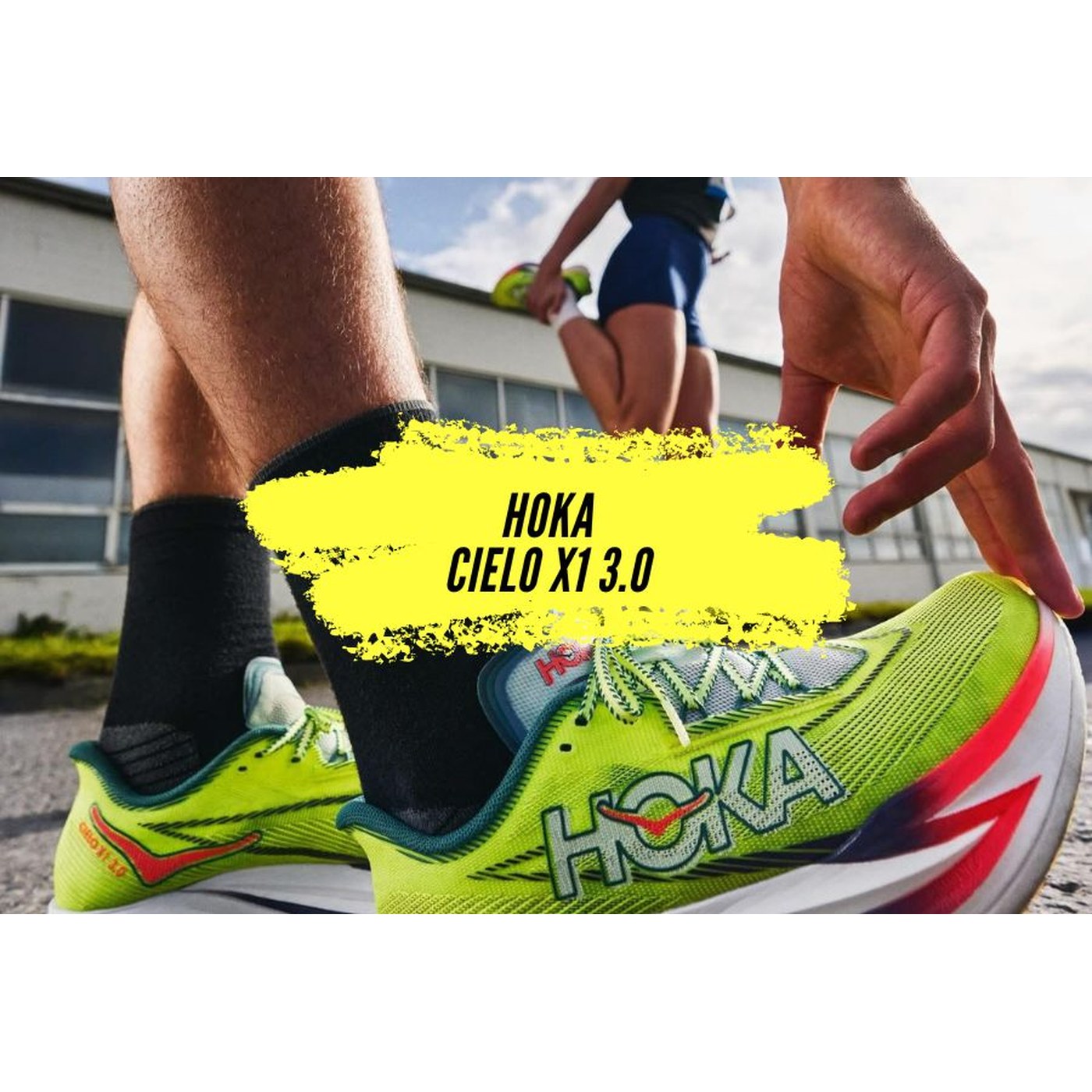
© Hoka, official photo used for editorial purposes
RunMorph Coach verdict
In 2026, the Hoka Cielo X1 3.0 is one of the best carbon super shoes on the market. Hoka has finally solved the weight problem that held back previous versions, without sacrificing the comfort that defines its DNA. The new "wing-arch" plate is a genuine innovation: it delivers a smoother, more forgiving propulsive feel than a traditional plate.
At €275, it sits at the upper end of the segment, in line with the Vaporfly 4, the Hyperion Elite 5 and the Endorphin Pro 5. The price-to-lifespan ratio adds up: expect 250 to 350 km, or 3 to 4 marathons. For a serious runner, the investment is easily justified.
RunMorph score: 9/10. It loses a point on weight (still 17 g more than the Vaporfly 4) and half a point on price.
Key takeaways for your training
- Forgiving carbon super shoe: the Cielo X1 3.0 is technically accessible, ideal for discovering the segment without risking injury.
- 213 g, a Hoka record: a generational leap over the 2.0 (260 g) that finally makes the Cielo X competitive on weight.
- Wing-arch carbon plate: a three-dimensional geometry that delivers more progressive, less aggressive propulsion.
- World Athletics approved: you can wear it to chase a record or an official qualifying time.
- Reserved for racing and goal-pace blocks: it's not a daily trainer, so keep a dedicated workhorse for your volume.