September 17, 2026Maurten Drink Mix 320: 80 g of carbs per bottle, the unfiltered review
8.6/10
80 g of carbs in 500 ml of water, zero nausea reported across 100 km trials. The Maurten Drink Mix 320 delivers on a promise that looked impossible ten years ago: drinking your race fuel. The trade-off: a demanding mixing protocol, soft water that is practically mandatory and €3.65 per sachet. Here is the full review, backed by measurements and long-distance feedback.
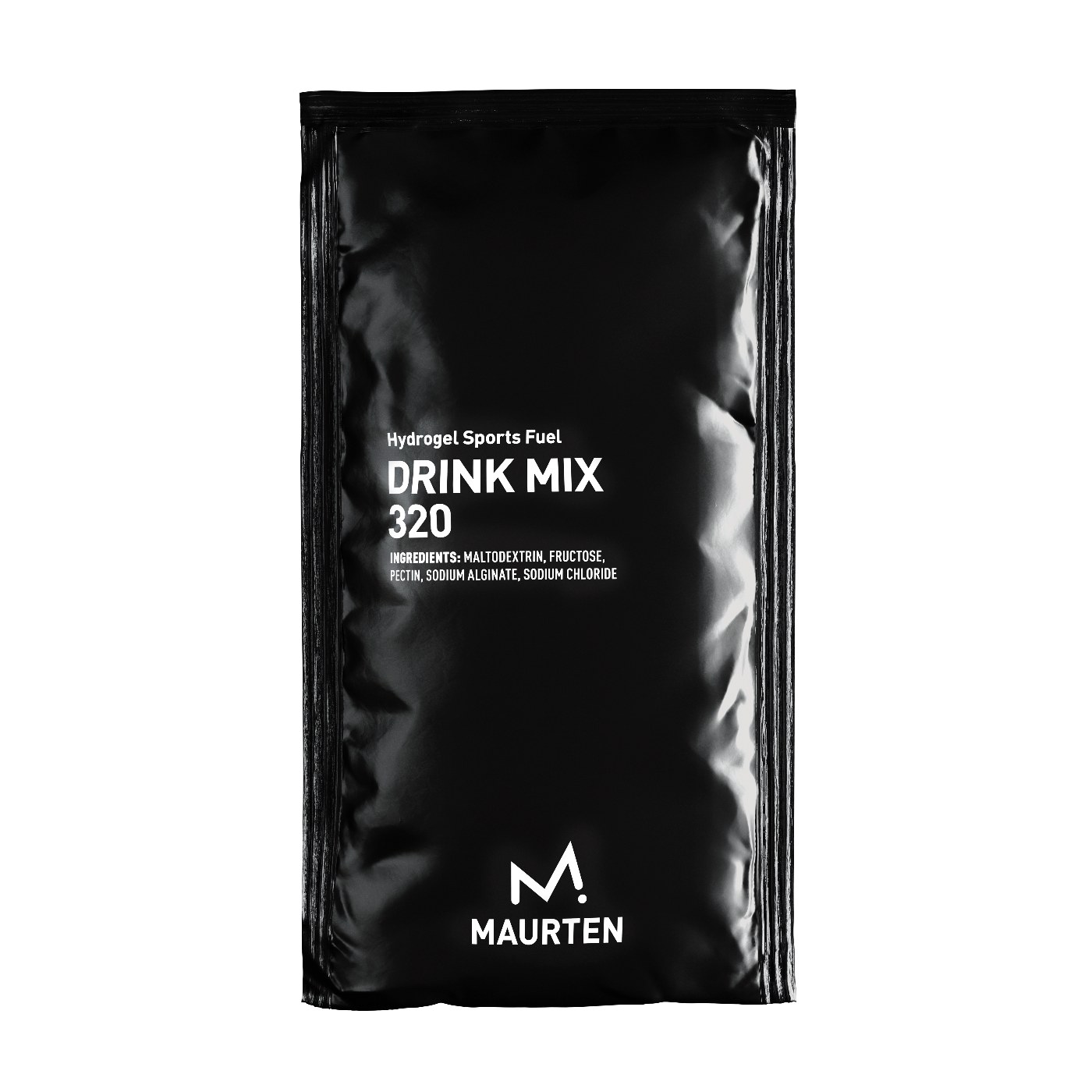
© Maurten, official photo used for editorial purposes
The essentials in 3 sentences
The Drink Mix 320 is the most concentrated sports drink on the market: 80 g of carbs (maltodextrin/fructose ratio 1:0.8) and around 250 mg of sodium in a 500 ml bottle, with hydrogel technology that ships the mix straight through to the gut. Out on the trails, digestibility is its trophy: long-distance testers report zero stomach issues over 10 to 20 hour efforts, exactly where classic gels end up turning your stomach. In return, mixing it is a protocol: exactly 500 ml, low-calcium water, drink it the same day.
8.6
/ 10 · RunMorph overall score
Who is it for?Marathoners and ultra trail runners targeting 60 to 90 g of carbs per hour, sensitive stomachs, bottle-based fueling strategies.
Who should skip it?Runners who only head out with a gel belt, tight budgets, long races without controlled water at the aid stations.
Maurten Drink Mix 320: the hydrogel drink that made gels vanish from elite racing
Maurten built its reputation on a simple idea: wrap carbs in a hydrogel so your stomach lets them through without a fight. The Drink Mix 320 is the ultimate weapon of that idea: 80 g of carbs per bottle, where a classic isotonic drink tops out at 30-40 g. Alongside it in the Swedish range: the Gel 160 (40 g in gel form) and the Solid 160 (solid bar), plus the Gel Mix 480 if you want to combine. The Drink Mix 320 is the one that forms the backbone of ultra fueling strategies: one sachet per hour, nothing else weighing on your stomach.
The version tested here is the revised formula, with sodium bicarbonate that keeps the pH close to neutral (protecting tooth enamel, a detail that matters over 100 km) and improved dissolution that now handles water with up to 80 mg of calcium per litre, against a 40 mg maximum on the previous generation.
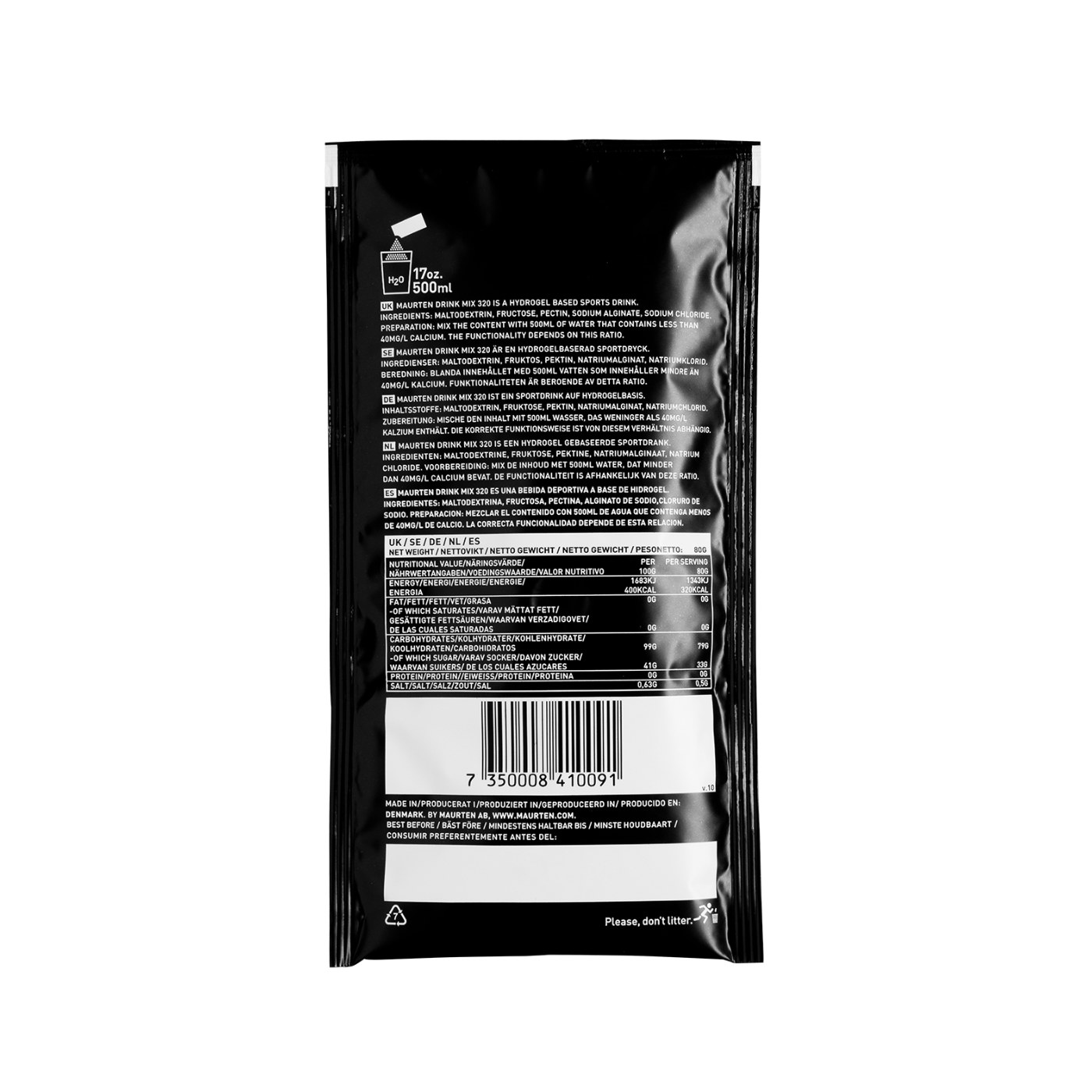
© Maurten, official photo used for editorial purposes
Maurten Drink Mix 320: the objective technical data
| Feature | Data |
|---|
| Type | Powdered energy drink, hydrogel technology |
| Format | Single 83 g sachet to mix into 500 ml of water |
| Carbs per sachet | 80 g claimed, 79 g on the European label |
| Carb ratio | Maltodextrin / fructose 1:0.8 |
| Energy | 320 kcal per sachet |
| Sodium | around 250 mg (0.5 g of salt) per sachet |
| Ingredients | Maltodextrin, fructose, pectin, sodium alginate, sodium chloride, sodium bicarbonate |
| Flavourings and preservatives | None |
| Mixing water | under 40 mg of calcium/L (up to 80 mg/L tolerated on the revised formula) |
| Mixed drink shelf life | Drink it the same day |
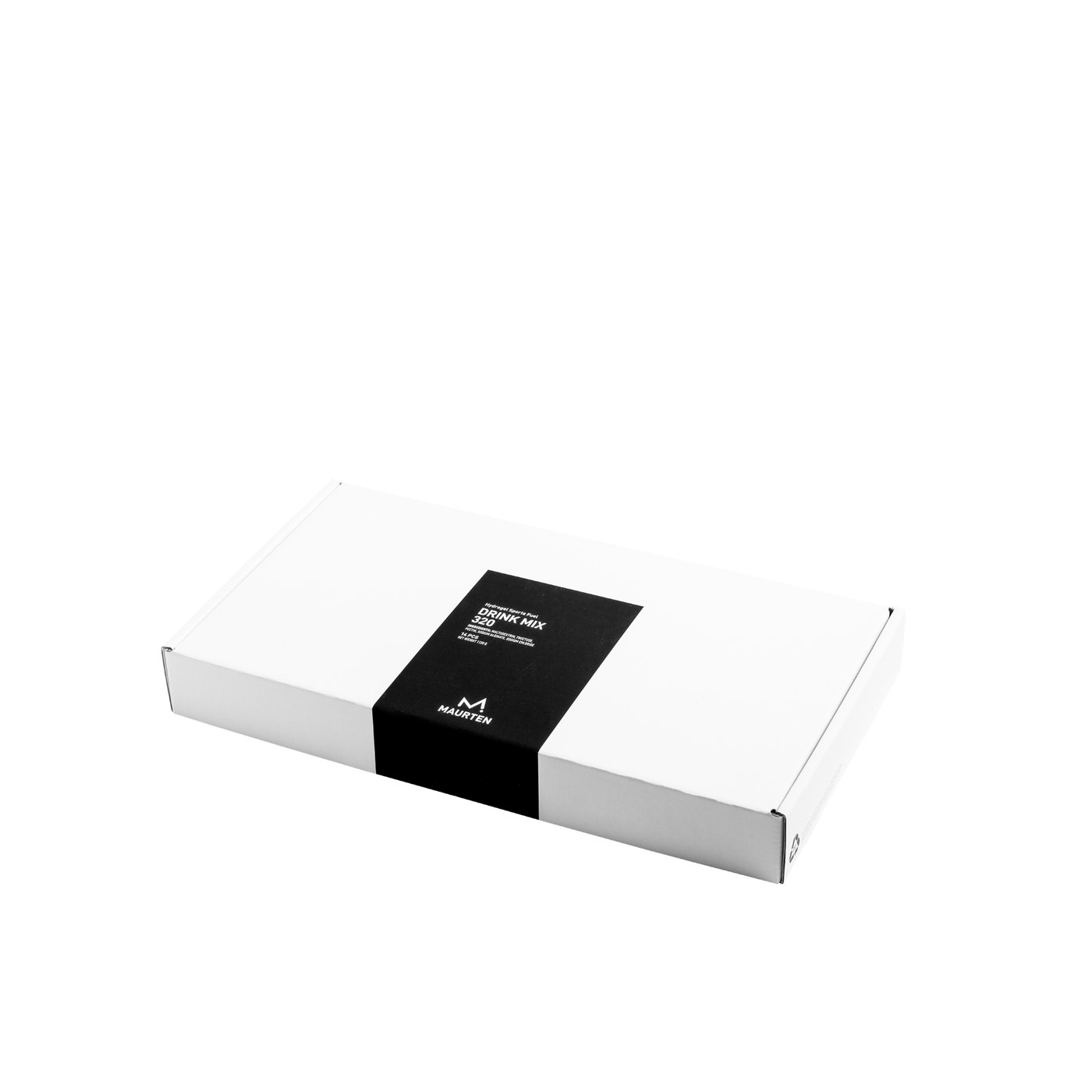
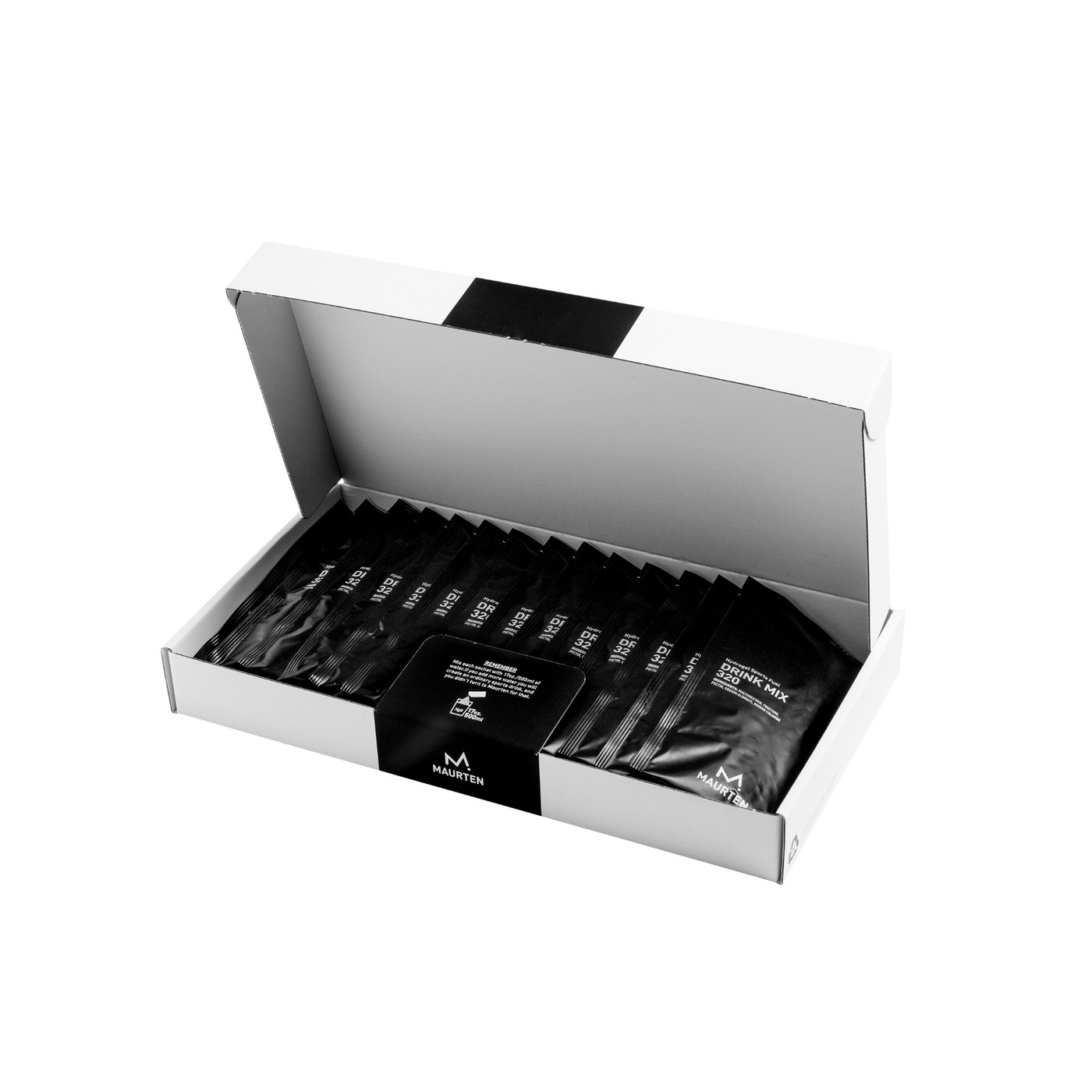
| Street price, September 2026 | €3.65 per sachet, around €47 for a box of 14 |
Claims vs label: what holds up, what demands discipline
Three measured points are worth a closer look. First, the 80 g figure: the European label shows 79 g of carbs per 83 g of powder, a minimal and openly acknowledged marketing gap. Second, digestibility: that is the hydrogel promise, and long-distance trials back it up, but only if you follow the protocol to the millilitre. Finally, water: most French tap water exceeds 40 mg of calcium per litre, and that is the most common trap with this product.
| Data point | Claim | Measured reality |
|---|
| Carbs per sachet | 80 g | 79 g on the EU label, a negligible gap |
| Digestive tolerance | Zero stomach issues | Confirmed over trials of 100 km and more, if the ratio is respected |
| Mixing | In any water | Soft water required, otherwise the hydrogel does not form properly |
| Shelf life | not specified | Same day, no exceptions: the mix degrades |
How the hydrogel really works in your stomach
The mechanism is well known: pectin (apple fibre) and sodium alginate (from brown seaweed) form a mesh structure on contact with stomach acid. This microscopic gel encapsulates the carbs, which pass through the stomach without drawing in water or causing heaviness, then get released in the gut to be absorbed. The measurable result: your body tolerates up to 90 g of carbs per hour with this system, against 60 g in practice with a classic drink. That is what makes one sachet per hour a realistic target on an ultra, where classic gels end up saturating your gut.
Taste is the second argument. No flavouring at all: a light maltodextrin sweetness, almost neutral. Over 8 hours of effort, that is the difference between still drinking and ditching your bottle because you are sick of it.
© Maurten, official photo used for editorial purposes
The field test: 100 km without nausea, provided you prepare seriously
At RunMorph, we cross-check long-duration trials before calling it. The verdict is unanimous: over 100 km races and outings beyond 6 hours, testers report digestive tolerance with no equal, with a total absence of nausea even late in the race, exactly where stacked gels fail. The pace of one sachet per hour (80 g of carbs, 320 kcal) covers almost the entire energy need of an ultra, topped up with some solid food if needed. For the marathon, a Drink Mix protocol lets you swap gels for regular sips, which keeps blood sugar more stable.
The downside is logistics: the mix has to be prepared, prepared properly (30 to 60 seconds of shaking), and drunk within the day. An opened sachet or a bottle mixed the night before loses effectiveness and texture. And if the water is hard, the drink gets thicker and more temperamental.
RunMorph's advice: if your stomach handles gels and you run without a bottle, the Maurten Gel 160 covers the same strategy in a more compact format. For a comparison across the whole category, our guide to the best energy gels of 2026 gives you the full ranking.
© Maurten, official photo used for editorial purposes
Flaw #1: the water, the ratio, the clock
The Drink Mix 320 is the most demanding nutrition product on the market to prepare. Three documented constraints: exactly 500 ml (a 100 ml deviation changes the texture and the gastric emptying rate), low-calcium water (most French tap water exceeds the 40 mg/L threshold of the old formula, the revised one tolerates 80 mg/L), and same-day consumption. On race day, that means mixing your bottles when you wake up, checking the water at your aid stations, and throwing out whatever is left. On a marathon where the aid stations hand out bottled mineral water, your choice of water becomes a race variable.
Flaw #2: the price per gram of carbs
At €3.65 per sachet for 79 g of carbs, the Drink Mix 320 costs around 4.6 cents per gram of carbs. A competing 90 g gel at €3.50 comes in at 3.9 cents, and entry-level gels at €1.83 for 30 g drop below 3.5 cents. Over 100 km at one sachet per hour, your nutrition bill reaches €25 to €35, against €15 with a mixed strategy. That is the price of digestive tolerance: you pay so you do not have to stop.
Drink Mix 320 vs Maurten Gel 160: drink it or swallow it?
| Criterion | Drink Mix 320 | Gel 160 |
|---|
| Carbs per unit | 79-80 g | 40 g |
| Hydration included | Yes, 500 ml of water | No, bring water separately |
| Format | Sachet to mix + bottle | Ready-to-use gel |
| Price per unit | €3.65 | around €3 |
| Race-day practicality | Demanding | Maximum |
The decision rule is simple: if you run with a bottle or a hydration pack, the Drink Mix 320 kills two birds with one stone (energy + water) and costs less than 2 equivalent gels. If you run light without a bottle, gels remain unbeatable for practicality.
Drink Mix 320 vs SiS Beta Fuel vs Precision PF 90: liquid carbs and gels compared
| Criterion | Maurten Drink Mix 320 | SiS Beta Fuel Gel | Precision PF 90 Gel |
|---|
| Carbs per unit | 79-80 g (500 ml drink) | 40 g (gel) | 90 g (gel) |
| Sodium per unit | around 250 mg | low | low |
| Taste | Neutral | Distinctly sweet | Mildly neutral |
| Long-distance tolerance | Excellent (hydrogel) | Very good | Very good |
| Price per unit | €3.65 | around €2.80 | around €3.50 |
The short version: the SiS Beta Fuel remains the best cost-to-tolerance ratio in a gel, the Precision PF 90 is the densest in gel form (90 g), and the Drink Mix 320 is the only one combining 80 g of carbs and 500 ml of hydration in a single unit. On an ultra with a hydration pack, it is the benchmark. On a light road marathon, gels win.
Pros and cons
| Pros | Cons |
|---|
| 80 g of carbs and 320 kcal in a single 500 ml bottle | Demanding mixing: exactly 500 ml, soft water required |
| Hydrogel digestibility: zero nausea reported over 100 km | Must be drunk the same day, no mixing the night before |
| Neutral taste, never cloying even after 10 hours | 4.6 cents per gram of carbs, among the most expensive |
| Bicarbonate and neutral pH: easy on tooth enamel | Useless without a bottle or hydration pack |
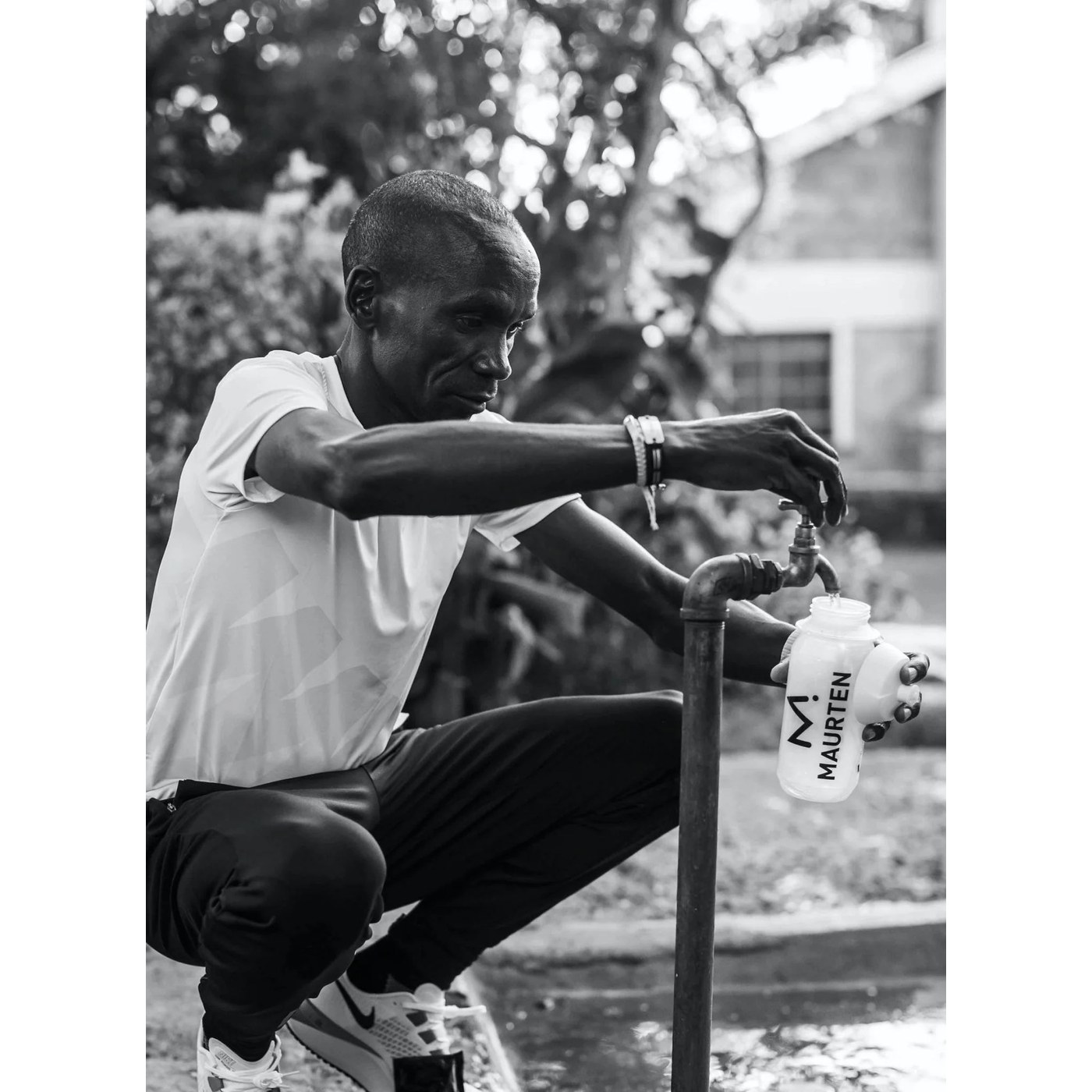
© Maurten, official photo used for editorial purposes
Our field verdict: who is it for?
The marathoner who wants a simpler strategy
One 500 ml bottle per hour of racing covers 80 g of carbs and your hydration. For a 3:30 to 4:30 marathon, two sachets are enough, and blood sugar stays more stable than with concentrated gels. It is the most elegant marathon strategy there is.
The ultra trail runner with a fragile stomach
This is the original target: over 80, 100, 170 km, the Drink Mix 320 is the product that silenced the rule "you finish an ultra feeling nauseous". If your limiter is your gut, this is the first product to test before you change your plan.
The runner who optimises to the gram
60 to 90 g of carbs per hour is the 2026 standard at the top level. The Drink Mix 320 is the most reliable tool to hit that number without doing the maths. Build your long runs around that pace and your RunMorph training plan will tell you where to place each refuel.
The RunMorph Coach verdict
8.6/10. The score is weighted according to what the product is built for: digestibility and carb delivery come first (30 % and 25 %), taste, format and price in support (15 % each). That gives 8.6: the absolute benchmark of liquid ultra nutrition, held back by the one thing science cannot fix, logistics (soft water, exact ratio, same day), and by a price per gram among the highest on the market.
Key takeaways for your training
- 79-80 g of carbs and 320 kcal per 83 g sachet, mixed into 500 ml.
- Maltodextrin/fructose ratio of 1:0.8: up to 90 g absorbed per hour.
- Zero stomach issues reported across 100 km trials, if the protocol is respected.
- Low-calcium water mandatory: under 40 mg/L on the old formula, 80 mg/L on the revised one.
- €3.65 per sachet: around €25 to €35 of nutrition over 100 km at one bottle per hour.
- Drink it the same day, never mix it the night before.
Maurten Drink Mix 320 FAQ
Can you mix it with French mineral water?
Yes, if it is soft: aim for under 80 mg of calcium per litre on the revised formula (under 40 mg/L on the old one). Mountain waters like Volvic work, the hard tap water in Paris does not: the hydrogel forms poorly and the drink thickens.
How many sachets for a marathon?
One sachet per hour: two for a 3:30 to 4:30 marathon, three if you are out there longer. Each sachet covers 80 g of carbs and 500 ml of hydration.
Drink Mix 320 or Gel 160?
The Drink Mix covers energy and water in the same bottle, the Gel 160 (40 g) needs a flask of plain water alongside it. If you carry a bottle, the Drink Mix wins. If you run without one, take the gel.
Can you mix the bottle the night before?
No. The hydrogel structure breaks down within a few hours: mix it in the morning, shake for 30 to 60 seconds, drink it within the day.