At New Balance, the carbon plate used to be reserved for race-day shoes. The FuelCell SuperComp Trainer v3 changes that: same tech, same foam, but built to soak up your weekly mileage rather than just the 26.2 miles of race day. Here is what its 261 g are actually worth.
New Balance FuelCell SuperComp Trainer v3 Review: 261 g and a Forked Plate Close New Balance's Real Catalog Gap
7.4/10
The gist in 3 sentences
The SuperComp Trainer v3 slots the carbon plate and FuelCell foam from New Balance's racing line into a 261 g training shoe built for threshold work and long runs. The fairly narrow fit suits most feet but trips up wide ones, confirmed by several separate testers. At 250 euros, it is the priciest and heaviest shoe in its category, but also the most cushioned.
7,4
/ 10 · RunMorph overall score
Who it is forMarathoners who want a daily dose of carbon-plated feel without wearing out their race shoes.
Who it is not forWide feet or sensitive toes on long runs, and tight budgets.
New Balance FuelCell SuperComp Trainer v3: the trainer that borrows everything from racing
The SuperComp Trainer holds a unique spot in the New Balance lineup. The Boston brand built its carbon range around two poles: the SC Elite, kept for race day, and the SC Rebel, lighter but plateless. Between the two sat a missing piece: a training shoe able to absorb four to five runs a week using the same materials as the record-chasing shoe.
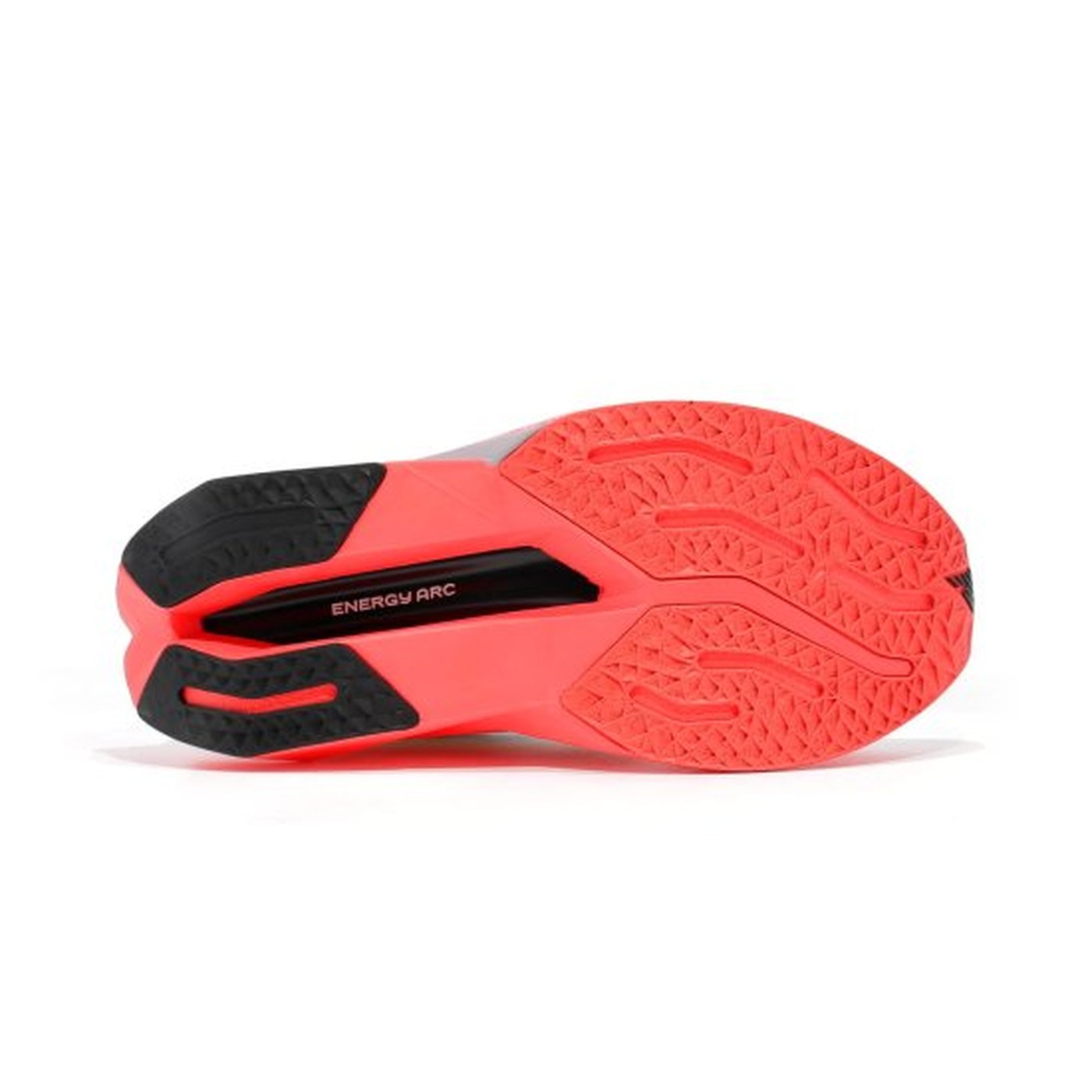
That is the v3's whole pitch. PEBA-enriched FuelCell foam, a forked carbon plate set inside a cutout in the midsole (the tech New Balance calls Energy Arc), a heat-bonded FantomFit upper: on paper, this shoe looks like an SC Elite pumped up with an extra ten millimetres of foam. In practice, the real gap sits in stiffness and price.
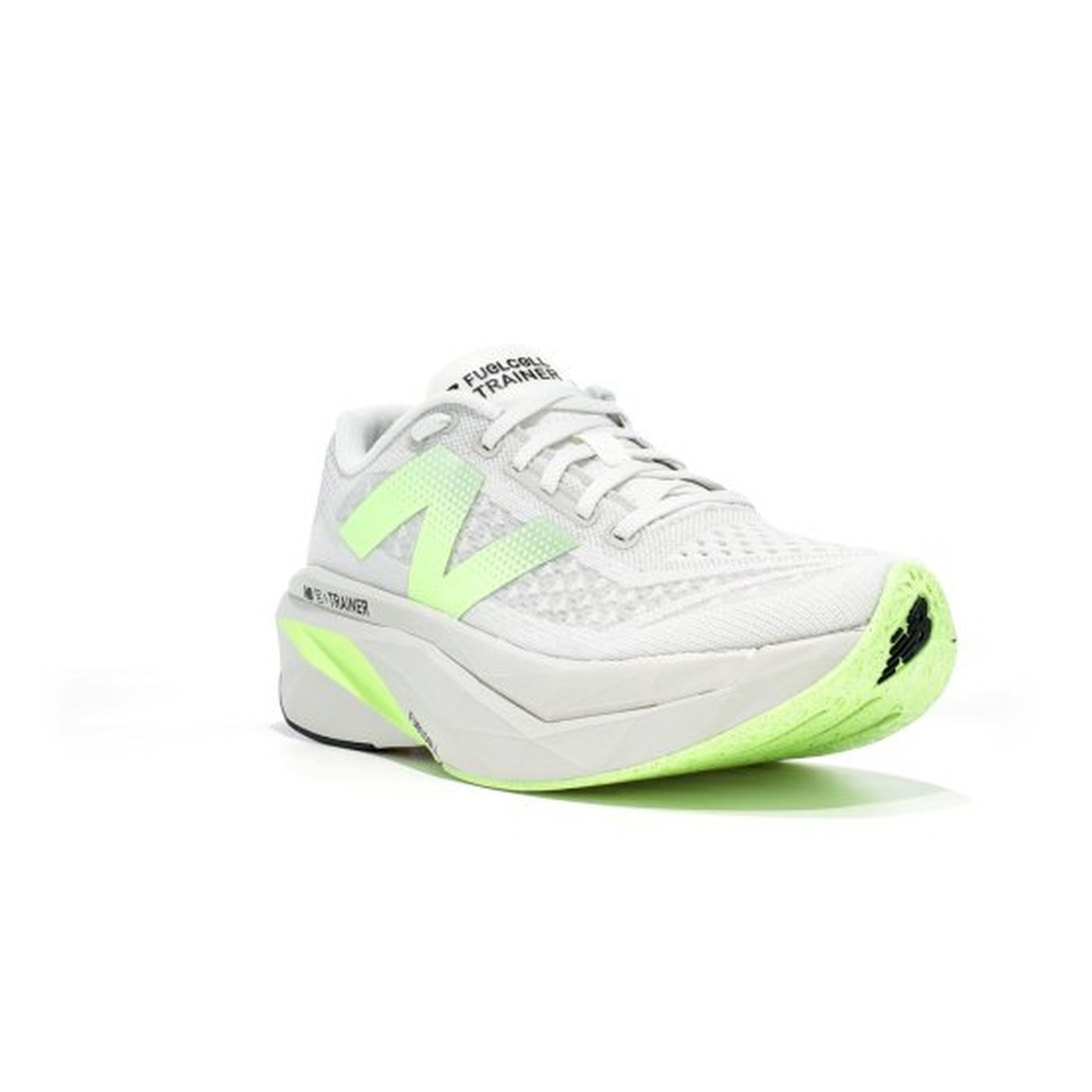
© New Balance, official photo used for editorial purposes
RunMorph's advice: already running in a New Balance SC Elite v6 on race day? The SuperComp Trainer v3 shares its feel without wearing it out early, and fills exactly that gap in your rotation. On a tighter budget, the FuelCell Rebel v5 gets you close to the same pop for 90 euros less, minus the carbon plate.
Objective technical data
| Spec | Value |
|---|---|
| Brand | New Balance |
| Model | FuelCell SuperComp Trainer v3 |
| Availability | On sale since summer 2024, still in the lineup in 2026 |
| Type | Carbon-plated super trainer, fast training and long runs |
| Drop | 6 mm |
| Stack (heel / forefoot) | 40 mm / 34 mm |
| Weight | 261 g in a men's size 9.5, around 258 g per one retailer |
| Foam | FuelCell, a nitrogen-infused PEBA and EVA blend |
| Plate | Carbon, forked shape, Energy Arc technology |
| Upper | Heat-bonded FantomFit technical mesh, thin tongue |
| Outsole | Rubber at forefoot and heel, central cutout for the plate |
| Width | Standard only |
| Recommended distance | Threshold, long intervals, long runs up to marathon |
| Price in France | 250 euros (seen between 175 and 190 euros at some retailers) |
Who is the SuperComp Trainer v3 for?
Marathoners who want a daily dose of carbon-plated feel
French retailer i-Run pitches it bluntly as a shoe built specifically for marathon preparation, aimed at runners training more than four times a week. A French tester at Runpack, who ran 150 km of Valencia marathon prep in the shoe, backs that up: the pop is there from the first steps, even at moderate paces around 4:00/km.
Runners who want a taste of carbon without sacrificing a race shoe
American testers at Doctors of Running describe the SuperComp Trainer v3 as a training version of the SC Elite v4. One of them even ranks it among his favourite shoes of the year for long runs and moderate sessions. The reason is simple: it delivers race-shoe sensations without you having to save your actual race pair.
Runners who live for threshold work and long intervals
The plate's stiffness shows up as soon as the pace picks up. A tester at Fleet Feet, an American specialty-run shop chain, describes a strong pop right as the foot leaves the ground. He finds it useful on 1,000 to 3,000 metre repeats and threshold runs. Nobody, though, recommends it for an actual race day: it stays heavier and more cushioned than a true competition shoe.
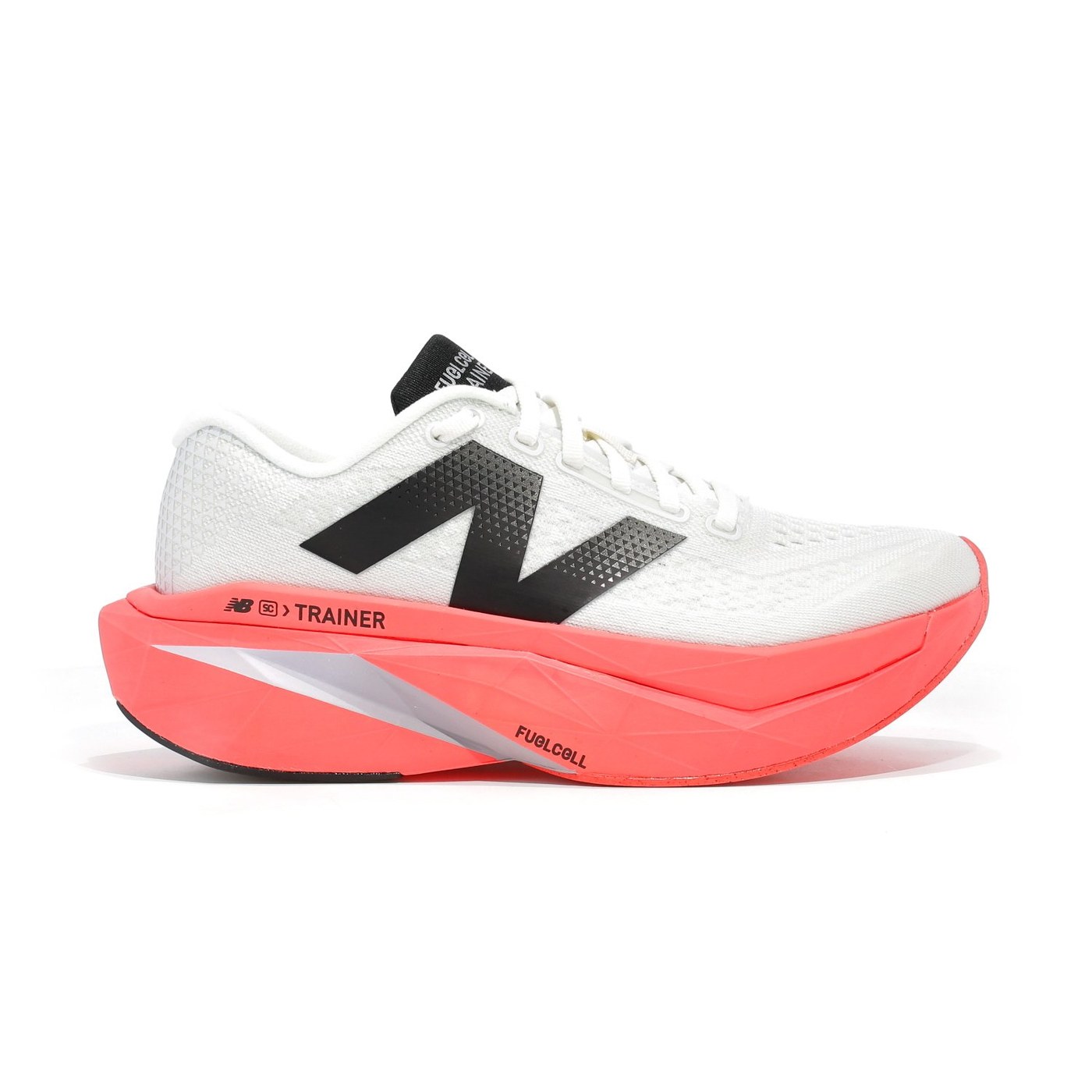
© New Balance, official photo used for editorial purposes
On the road: what runners who actually wore it say
Four separate sources agree on the essentials: the FuelCell cushioning absorbs well, and the plate snaps back hard at toe-off. The Runpack tester rates it 10/10 for pop and 9/10 for cushioning after his 150 km test block. On the American side, a tester at Doctors of Running describes a midsole that is compliant without feeling mushy, and another at Fleet Feet calls it bouncy and fun to run in.
Where opinions genuinely split is firmness at easy pace. The Runpack tester notes some stiffness on longer efforts. A tester at Doctors of Running, lighter and more sensitive-footed, goes further: she finds the shoe too stiff for easy runs. A tester at Fleet Feet, on the other hand, says he enjoys the ride at easy pace and recommends it for long runs and recovery days. The likely explanation is body weight and personal sensitivity to a firm midsole rather than an actual flaw in the shoe. Heavier runners, or those used to firm foams, find nothing to complain about. Lighter runners feel it as harder underfoot.
Same pattern with the fit. Three separate American testers, two of them at Fleet Feet, call it true to size with just enough room for the toes. But at Doctors of Running, one tester documents pain in both big toenails after several runs, which she traces to a narrow toe box. She now caps her runs in the shoe at under 13 km. The French Runpack tester confirms a fairly narrow fit and advises wide-footed runners to try it in store first. The agreement is clear for standard to narrow feet. The warning is just as clear for wide feet or sensitive big toes.
Strengths
- Deep cushioning (40 mm at the heel) without losing responsiveness
- Carbon plate that snaps back hard on threshold work and long intervals
- Heel hold rated solid across the board
- Wet-road traction praised by one American tester
- Durability rated fair to good in the tests available so far
Weaknesses
- Narrow fit that does not suit wide feet
- Firmness at easy pace splits opinion depending on the runner's build
- 261 g, heavier than most direct rivals
- 250 euros, the highest price in its category
- Central outsole channel that can trap small gravel
© New Balance, official photo used for editorial purposes
SuperComp Trainer v3 vs Endorphin Speed 6 vs Deviate Nitro 4: the comparison
In the plated-trainer segment, the New Balance is neither the lightest nor the cheapest. It packs a more generous stack and a lower drop than its two direct rivals already tested by RunMorph.
| Model | Weight | Stack (heel/forefoot) | Drop | Price |
|---|---|---|---|---|
| New Balance SuperComp Trainer v3 | 261 g | 40 / 34 mm | 6 mm | 250 € |
| Puma Deviate Nitro 4 | 242 g | 38 / 30 mm | 8 mm | 170 € |
| Saucony Endorphin Speed 6 | around 232 g | 38 / 30 mm (estimated) | 8 mm | 175-180 $ list price |
In short, the New Balance carries 20 to 30 extra grams over its two rivals and costs 70 to 80 euros more. It earns that through a thicker stack and a lower drop, two settings that favour long runs over short, sharp bursts. The Deviate Nitro 4 remains the most accessible of the three for a first taste of carbon in training.
How to fit it into your RunMorph training plan
At RunMorph, the SuperComp Trainer v3 earns its spot on the sessions flagged as threshold and long runs with fast finishes in your marathon plan. Save it for weeks where volume stays under control: its firmness lifts easy pace more than a classic EVA foam, so it is not the best pick for a true recovery jog. If your rotation already splits a daily trainer and a race shoe, this one fills the gap between them rather than replacing either.
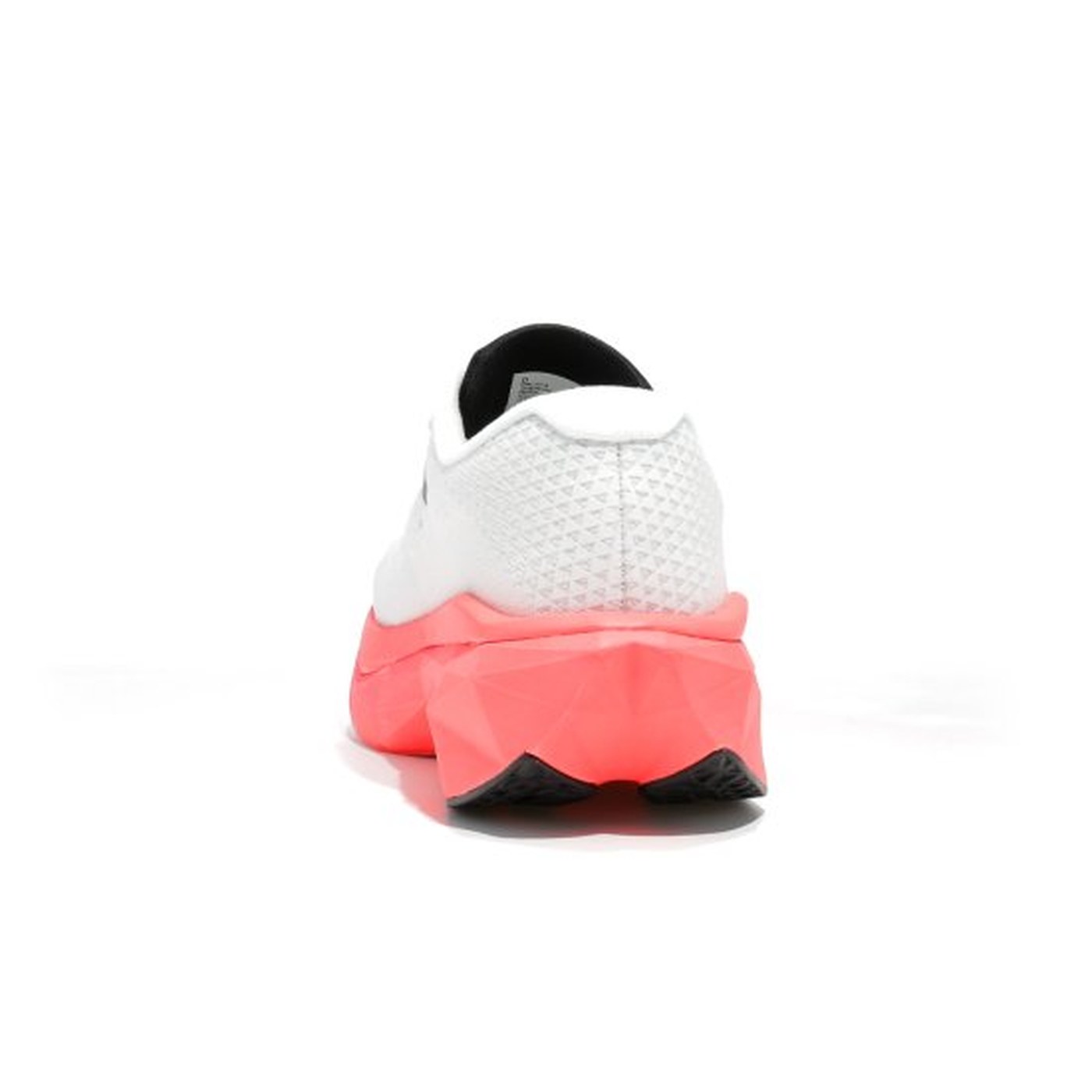
© New Balance, official photo used for editorial purposes
RunMorph Coach's verdict
The SuperComp Trainer v3 delivers on its promise: the plate and foam of a race shoe in a shape built to last a full training week. 7.4/10. The pop and cushioning alone justify trying it if you are training for a marathon and want to vary your sensations without buying extra race shoes. The narrow fit, though, rules out wide feet straight away, and the price sits among the highest in its category. If your foot runs standard to narrow and your budget allows it, this is a justified buy. If not, the Deviate Nitro 4 does the same job for 80 euros less.
What to remember for your training
- 261 g, 6 mm drop, 40/34 mm stack: the most cushioned of the carbon-plated trainers RunMorph has tested.
- Try it in store if you have wide feet: the narrow fit is confirmed by several separate testers.
- Save it for threshold work, long intervals and long runs, not a pure recovery jog.
- At 250 euros, weigh it against the Deviate Nitro 4 (170 euros) if your budget is tight.
- Check the central outsole channel regularly: it can trap small gravel on the run.