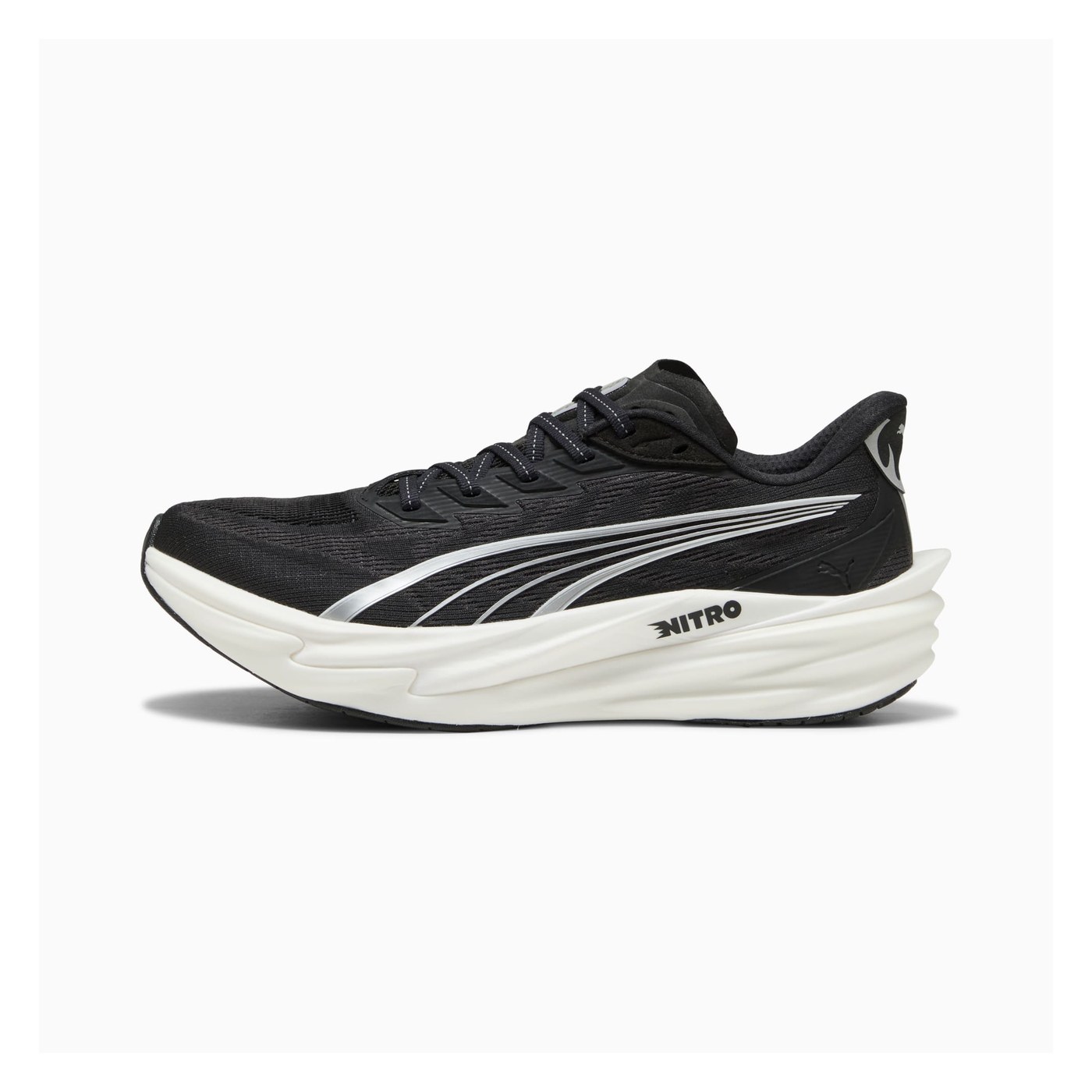
The Deviate NITRO 4 marks a turning point for Puma: for the first time, the brand puts a dual-density midsole, with a layer of PEBA-based NITROFOAM, into its tempo shoe line. The result is a shoe that claims to rival the best affordable carbon shoes on the market at €170. At RunMorph, we put it through its paces on the road, from short intervals to long runs, to see if it delivers.
Puma Deviate NITRO 4 Review: An Affordable Carbon Tempo Shoe
8.5/10
The essentials in 3 sentences
The Deviate NITRO 4 gets a dual-layer midsole, with PEBA above the carbon PWRPLATE and nitrogen-infused foam below, which gives it far more bounce than its predecessor and fully justifies the jump to generation 4. At 242 g and €170, it stands out as the most complete alternative to super trainers sold for €200 to €240. At RunMorph, we slot it into your tempo sessions, your half marathons and your marathons up to a 4:00 finish.
8.5
/ 10 · RunMorph overall score
Who is it for?Runners racing anything from 10 km to the marathon who want a real carbon tempo shoe without spending €240.
Who should skip it?Trail runners, beginners looking for a comfortable daily trainer, or elite runners focused solely on race day.
Puma Deviate NITRO 4: why this generation changes the game
The Deviate NITRO has always held an interesting spot in Puma's lineup: not a super shoe reserved for podiums, but not an unambitious daily trainer either. With version 3, the brand had already won runners over with its NITROFOAM and carbon PWRPLATE combination. Version 4 takes a decisive step forward with a dual-layer midsole. The bottom layer is still standard nitrogen-infused foam for base cushioning, while a PEBA top layer caps the stack to amplify energy return at footstrike.
This design choice brings the Deviate NITRO 4 closer to what the Asics Magic Speed 5 and the Adidas Adizero Boston 13 offer in the affordable plated tempo category. What sets it apart from the Puma Fast-R Nitro Elite 3 (€300, PWRPLATE extended to the toe, race-only) is its hybrid training-and-racing role. That's where Puma plays it smart: the Deviate NITRO 4 targets runners who train seriously and also want to wear it for their distance races.
RunMorph's advice: if you're looking for the Puma shoe that handles both your quality workouts and your races up to the marathon, the Deviate NITRO 4 is the right choice. If you're chasing a PR over 10 km or the half, check out the Fast-R Nitro Elite 3.
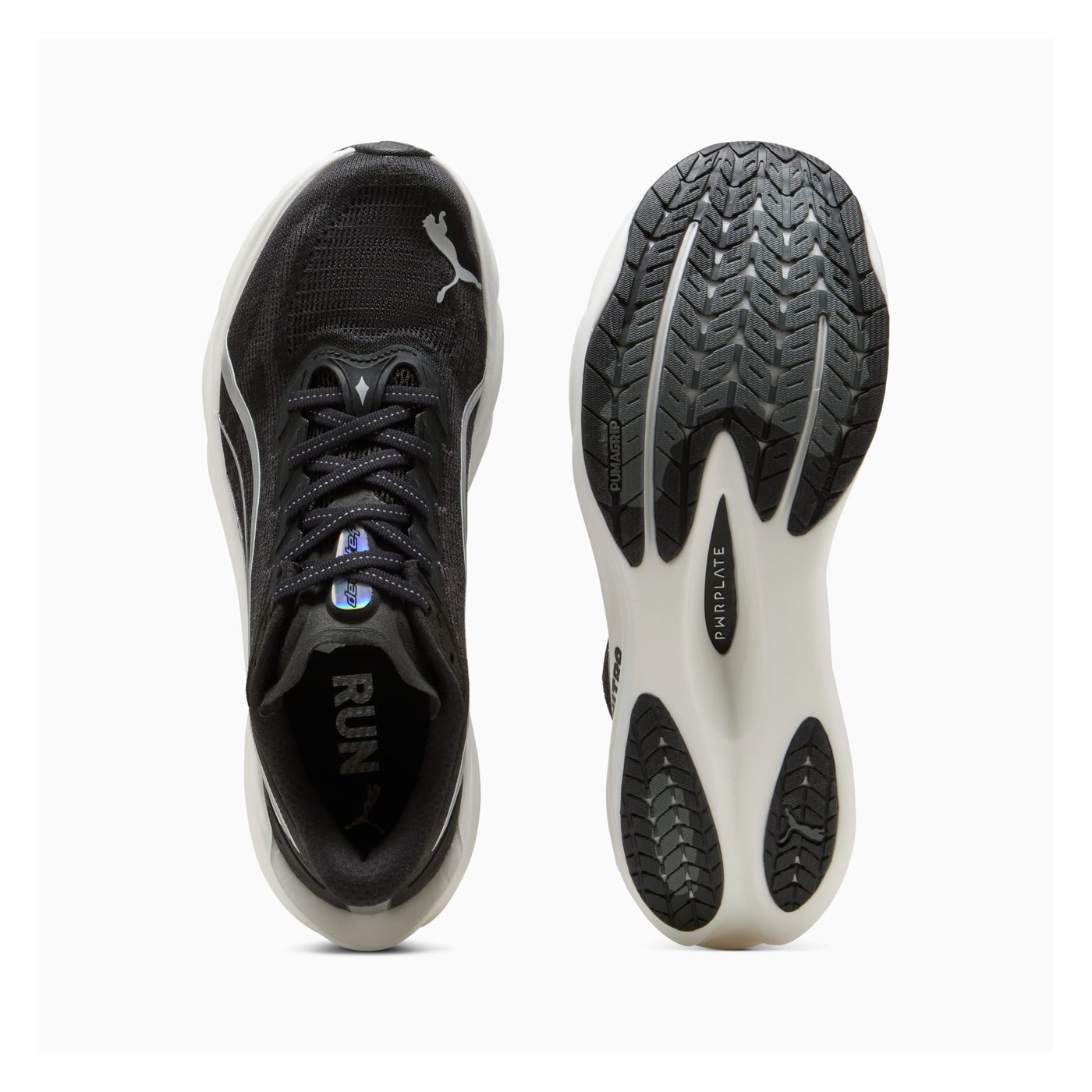
Puma Deviate NITRO 4: PWRTAPE mesh upper and dual-layer NITROFOAM midsole. © Puma, official photo used for editorial purposes.
Puma Deviate NITRO 4 specs
| Feature | Value |
|---|---|
| Brand / Model | Puma Deviate NITRO 4 |
| Release | January 2026 |
| Use | Road (tempo, half marathon, marathon) |
| Drop | 8 mm |
| Stack height (heel / forefoot) | 38 mm / 30 mm |
| Weight (men's EU 42) | 242 g |
| Weight (women's) | 223 g |
| Foam | Dual-density NITROFOAM (PEBA + nitrogen-infused foam) |
| Plate | Carbon PWRPLATE |
| Outsole | PUMAGRIP |
| Upper | Structured PWRTAPE mesh |
| Estimated lifespan | 700 to 800 km |
| MSRP | €170 |
NITROFOAM PEBA technology: what really changes from version 3
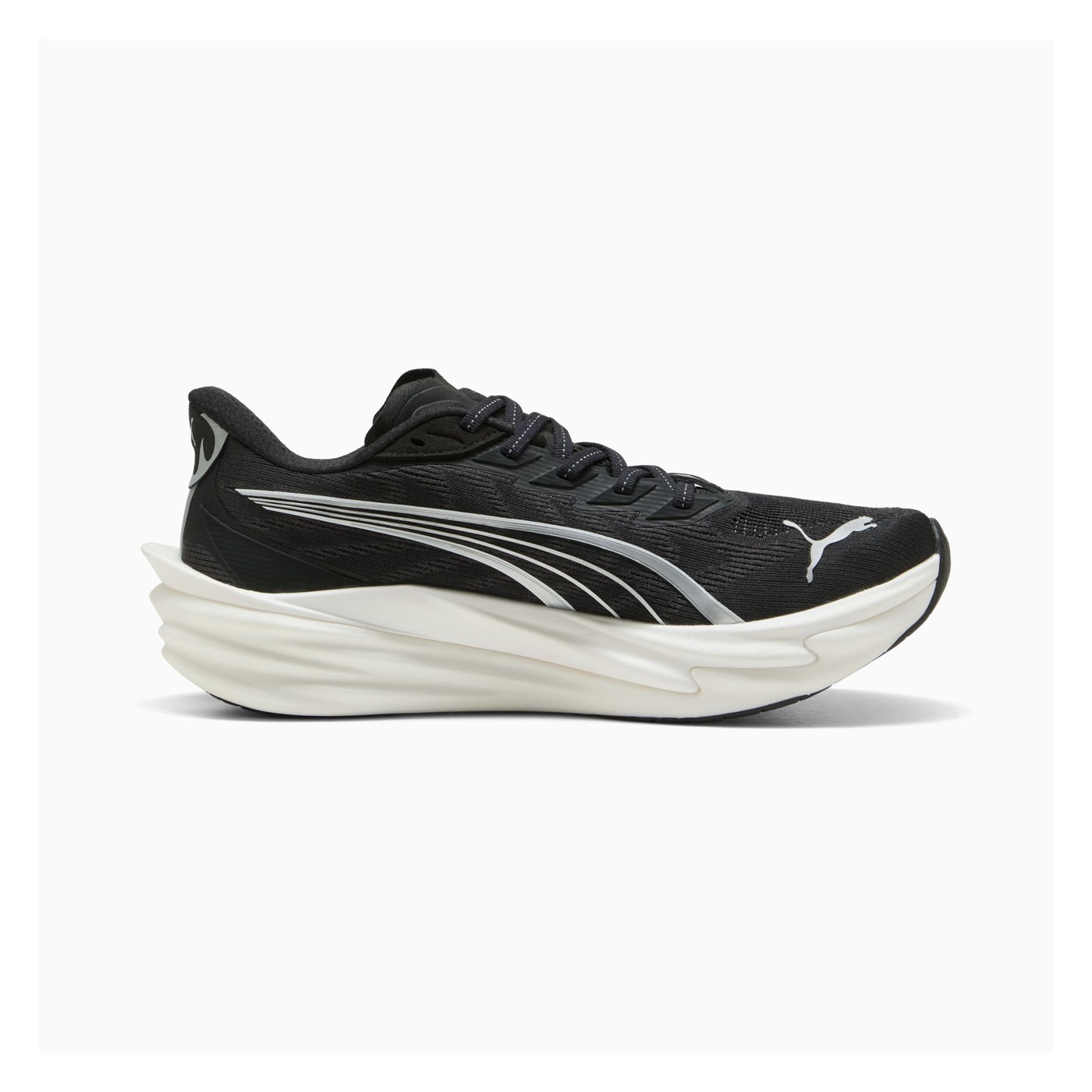
The PWRTAPE upper on the Deviate NITRO 4 delivers a structured hold without excessive stiffness. © Puma, official photo used for editorial purposes.
The Deviate NITRO 3 already relied on a high-performing nitrogen-infused foam (NITROFOAM). Generation 4 keeps that base but adds a PEBA (polyether block amide) layer right under the foot. PEBA is the thermoplastic polymer behind today's best foams (ZoomX at Nike, LightStrike Pro at Adidas, PWRRUN HG at Saucony). At equal density, it returns more energy and ages better than classic EVA or standard nitrogen-infused foam.
The carbon PWRPLATE gets a slight geometry update. Its forefoot curve is more aggressive, which speeds up the transition and cuts ground contact time at fast paces (around 4:30/km and faster). The PUMAGRIP outsole offers decent grip on dry roads but falls a little short on wet asphalt (more on that in the field test).
The PWRTAPE upper uses heat-welded reinforcement strips instead of stitched overlays. That saves weight and cuts down on potential friction points. Lateral hold is good without feeling tight: medium to slightly wide feet will feel at home, while very wide feet should go up half a size.
Field test: intervals, tempo pace and long runs
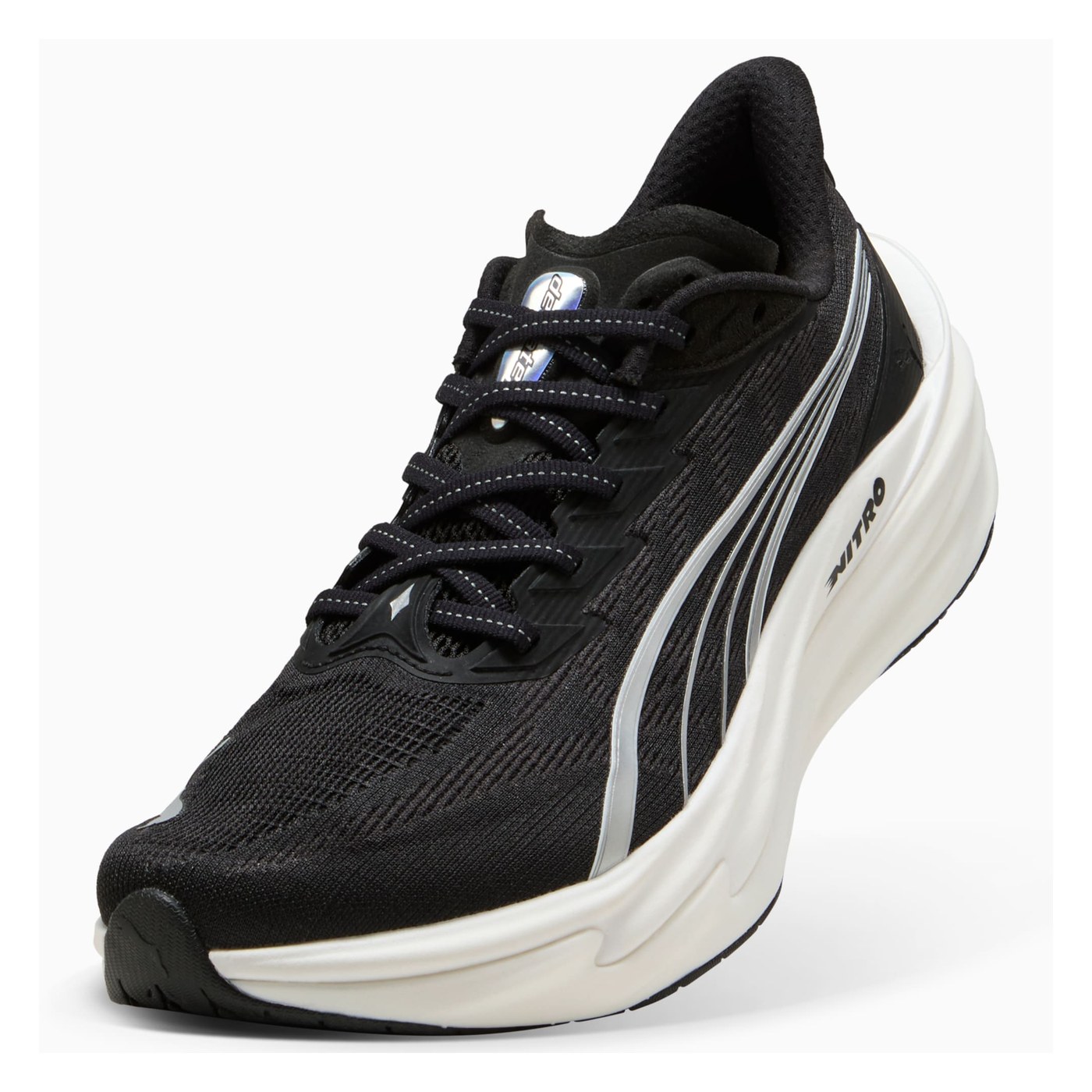
The NITRO logo on the off-white midsole signals the dual-density midsole of generation 4. © Puma, official photo used for editorial purposes.
At RunMorph, we tested the Deviate NITRO 4 over six weeks, with two to three sessions per week. We ran three types of workouts: short intervals (6 x 1000 m at 10 km pace), tempo sessions (20 to 40 min at half marathon pace) and long runs (15 to 22 km at conversational pace).
On short intervals, the shoe is genuinely effective. You feel the bounce of the PEBA layer within the first 200 m of each 1000 m rep: your foot springs off higher and faster than in version 3. The PWRPLATE clearly guides the transition without muting the ride. At 4:10/km, the Deviate NITRO 4 is in its element. No mushy feeling, even after 4 or 5 reps.
At tempo pace, the moderate cushioning feels reassuring without numbing the ground feel. At 4:40-4:50/km, the shoe rolls through nicely thanks to the rocker curve and the carbon plate. You can hold half marathon pace for 40 min without the midsole going soft, which was a minor weakness of version 3 over longer efforts.
On long runs, the cushioning is still there, but this isn't a max-cushion shoe. Beyond 18-20 km at an easy pace, runners used to plush shoes (like the Hoka Mach 7 or the Brooks Ghost 18) may notice a slight firmness. For long runs at or slightly below marathon pace, though, the Deviate NITRO 4 stays very comfortable.
Weak point: on wet asphalt, the PUMAGRIP grips less than you'd expect from a €170 shoe. Hard braking or tight corners on damp roads call for a bit more care than with a Vibram or Continental outsole.
Deviate NITRO 4 vs. the competition: head-to-head
| Model | Price | Weight | Stack height | Drop | Technology |
|---|---|---|---|---|---|
| Puma Deviate NITRO 4 | €170 | 242 g | 38/30 | 8 mm | PEBA + nitrogen-infused foam + carbon |
| Asics Magic Speed 5 | €190 | 209 g | 37/29 | 8 mm | FF Blast+ Eco + carbon |
| Adidas Adizero Boston 13 | €140 | 221 g | 40/32 | 8 mm | LIGHTSTRIKE PRO + Energyrods |
| Saucony Endorphin Speed 5 | €190 | 235 g | 38/30 | 8 mm | PWRRUN PB + nylon plate |
| Hoka Mach 7 | €160 | 240 g | 40/32 | 5 mm | Supercritical EVA, no plate |
Against the Asics Magic Speed 5, the Deviate NITRO 4 is a bit heavier (242 g vs. 209 g) but offers more cushioning for marathon distances and long runs. The Magic Speed 5 stays livelier over 10 km and the half for lighter runners. The Adidas Boston 13 costs less (€140) and brings a competitive multi-Energyrods setup, but it feels firmer underfoot. The Saucony Endorphin Speed 5 costs more (€190) and skips carbon (nylon plate), but its PWRRUN PB delivers excellent bounce. The Hoka Mach 7, with no plate, leans more toward comfortable daily training than pure tempo work.
Pros and cons
Pros
- Very responsive dual-density midsole (PEBA + nitrogen-infused foam) at tempo paces
- Well-integrated carbon PWRPLATE, smooth transition
- Comfortable cushioning on long runs at marathon pace
- Light, seamless PWRTAPE upper with a secure hold
- Excellent value for money at €170
- Genuine versatility for both training and racing
Cons
- 242 g: heavier than the Asics Magic Speed 5 (209 g)
- PUMAGRIP falls short on wet asphalt
- Not ideal for very wide feet (unless you go up half a size)
- Estimated lifespan of 700-800 km (average)
- Black colorway can be harder to see at night
Who is the Puma Deviate NITRO 4 for?
The Deviate NITRO 4 fits three specific runner profiles.
The serious tempo runner (10 km to marathon). If you train regularly with quality sessions (intervals, threshold runs, tempo runs) and want a carbon-plated shoe that works for both training and racing, the Deviate NITRO 4 is your best choice at €170. It handles several sessions a week without breaking down.
The 3:30-4:00 marathoner. At that pace, you need a balanced mix of cushioning and bounce over 42 km. The Deviate NITRO 4 delivers both without asking you to spend €240 or more on a pure racing super shoe.
The runner who wants one shoe for everything. Between its relatively low weight (242 g), its PEBA bounce and its versatile cushioning, the Deviate NITRO 4 works as well for intervals as it does for long runs (up to the marathon).
Want to build the Deviate NITRO 4 into a real training structure?
Discover RunMorph plans built around your level and your goals
Discover RunMorph plans built around your level and your goals
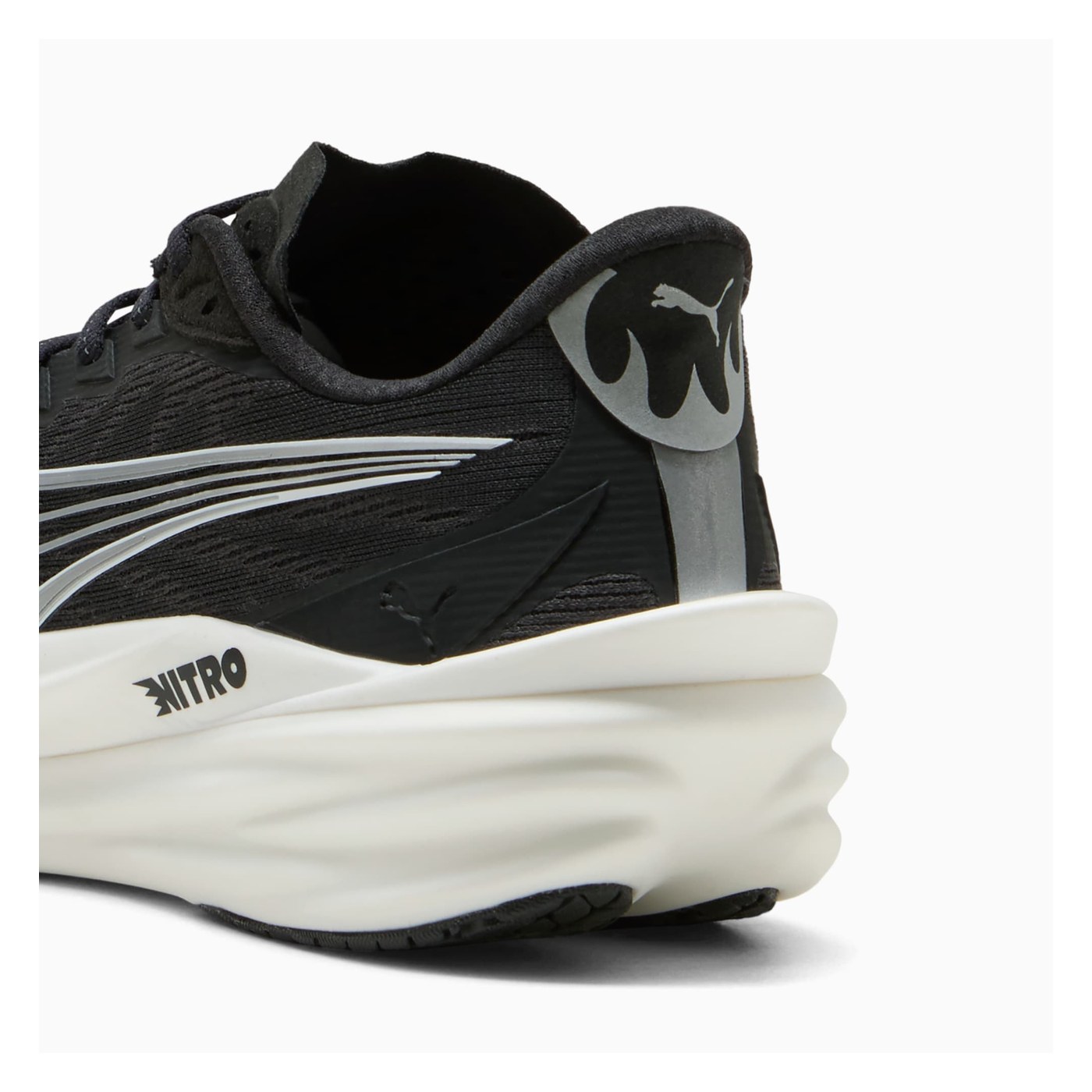
The rear heel of the Deviate NITRO 4: Achilles tendon support and clearly visible NITRO branding. © Puma, official photo used for editorial purposes.
The RunMorph Coach's verdict
The Deviate NITRO 4 does exactly what it promises: it brings the responsiveness of PEBA foam and the propulsion of a carbon plate to an affordable €170 package. It isn't the lightest shoe in its category (the Asics Magic Speed 5 is 33 g lighter, but costs €20 more), but it's the most versatile for runners who don't want to juggle multiple pairs. The only drawback is the PUMAGRIP on wet surfaces, something to keep in mind if you often train in damp weather. Otherwise, it's a very good 2026 buy in its price range. Score: 8.5/10.
Key takeaways for your training
- The PEBA layer comes alive from 4:30/km: faster than that, you're in the foam's ideal activation window, and the bounce is noticeable and motivating.
- Training and racing versatility up to the marathon: you can use it for your Tuesday intervals and your Sunday marathon without switching pairs.
- Stick to your true size: the PWRTAPE upper is snug, with no extra room. If you have wide feet, go up half a size.
- Take care on wet surfaces: the PUMAGRIP isn't the grippiest outsole on damp asphalt. Adjust your pace accordingly.
- Budget 800 km over 8 to 12 months: if you run 3 times a week in the Deviate NITRO 4, plan your replacement around that volume to preserve the PEBA's properties.