Nike had let the Zoom Fly fade away for two years. It's back with a reworked carbon plate, two different foams between heel and forefoot, and a clear ambition: to replace both your tempo trainer and part of your super shoe rotation. At €169,99, that's a bet worth examining closely.
Nike Zoom Fly 6: The Full Review
8.8/10
The gist in 3 sentences
The Zoom Fly 6 pairs a full-length carbon FlyPlate with ZoomX foam in the forefoot and an enriched ReactX SR-02 layer at the heel, for a noticeably livelier ride than the previous generation. Its mesh upper runs tight through the forefoot, a point nearly every independent test flags. On threshold sessions and marathons run at a controlled pace, it holds its own against far pricier shoes, while taking on far more mileage than a true race-day super shoe.
8,8
/ 10 · RunMorph overall score
Who's it for?Runners who want one carbon shoe to cover threshold work, marathons and big quality sessions.
Who should skip it?Wide-forefoot runners, and anyone chasing rock-solid stability late in a run.
Nike Zoom Fly 6: the daily trainer that edges into super shoe territory
At Nike, the Zoom Fly has held a distinct spot since 2017: cheaper than a Vaporfly, less race-focused, but already built around a carbon plate. The line went quiet between 2022 and 2024, squeezed internally by the Pegasus Plus and the Streakfly 2. The sixth generation relaunches the segment head-on, aimed at a specific runner: someone who refuses to pay €250 for a shoe reserved for race day and wants instead a training tool that can absorb volume while still delivering race-day sensations on quality days.
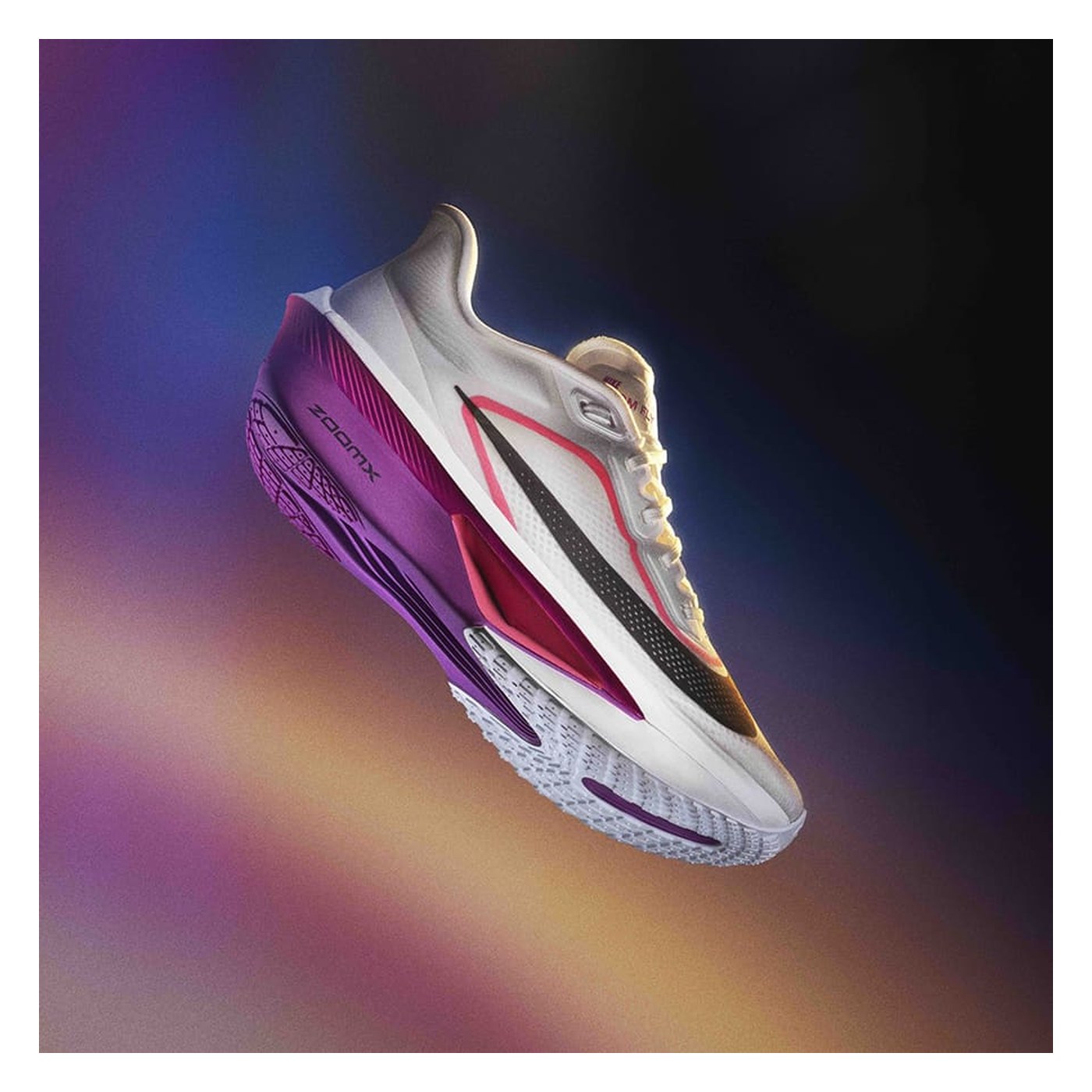
© Nike, official photo used for editorial purposes
RunMorph's advice: if your rotation already pairs a Nike Pegasus 42 with a Nike Vaporfly 4, the Zoom Fly 6 can slot in between the two and soak up every threshold session, so your Vaporfly stays reserved for training days.
Objective technical data
| Spec | Nike Zoom Fly 6 |
|---|---|
| Brand | Nike |
| Model | Zoom Fly 6 |
| Release | November 2024, available in France |
| Type | Road, carbon-plated tempo daily trainer |
| Drop | 8 mm claimed (9,6 mm measured in independent lab testing) |
| Stack (heel / forefoot) | 42 mm / 34 mm claimed (39,7 mm / 30,1 mm measured in independent lab testing) |
| Weight | 248 g in the lab's test size (up to 265 g in a size 44 per a French field report) |
| Foam | ZoomX in the forefoot, enriched ReactX SR-02 layer at the heel |
| Carbon plate | Yes, full-length FlyPlate |
| Outsole | Rubber, with reinforced wear zones at heel and forefoot |
| Upper | Breathable technical mesh, stiff heel counter |
| Recommended distance | Threshold work through marathon |
| Price | €169,99 |
One technical detail stands out: with a heel measured at close to 40 mm, the Zoom Fly 6 brushes up against the 40 mm limit World Athletics sets for elite competition. An amateur runner will never be checked on this, but the figure gives a sense of just how much cushioning is packed into a shoe priced under €200.
Who is the Zoom Fly 6 for?
The marathoner who wants to merge training and race-pace work
For marathon plans built around long runs with goal-pace segments, the Zoom Fly 6 reproduces much of a super shoe's feel without the price tag or the burned-through lifespan after just a few weeks.
The runner who wants a single carbon shoe in the closet
Tight budget or a two-pair rotation: the Zoom Fly 6 covers steady-state runs, long intervals and half-marathon pace, where a Vaporfly or an Alphafly would stay confined to race day.
The runner chasing responsiveness without sacrificing lifespan
The ZoomX and SR-02 combo is built for exactly that trade-off, even if several independent sources note a slight loss of bounce after around a hundred kilometres.
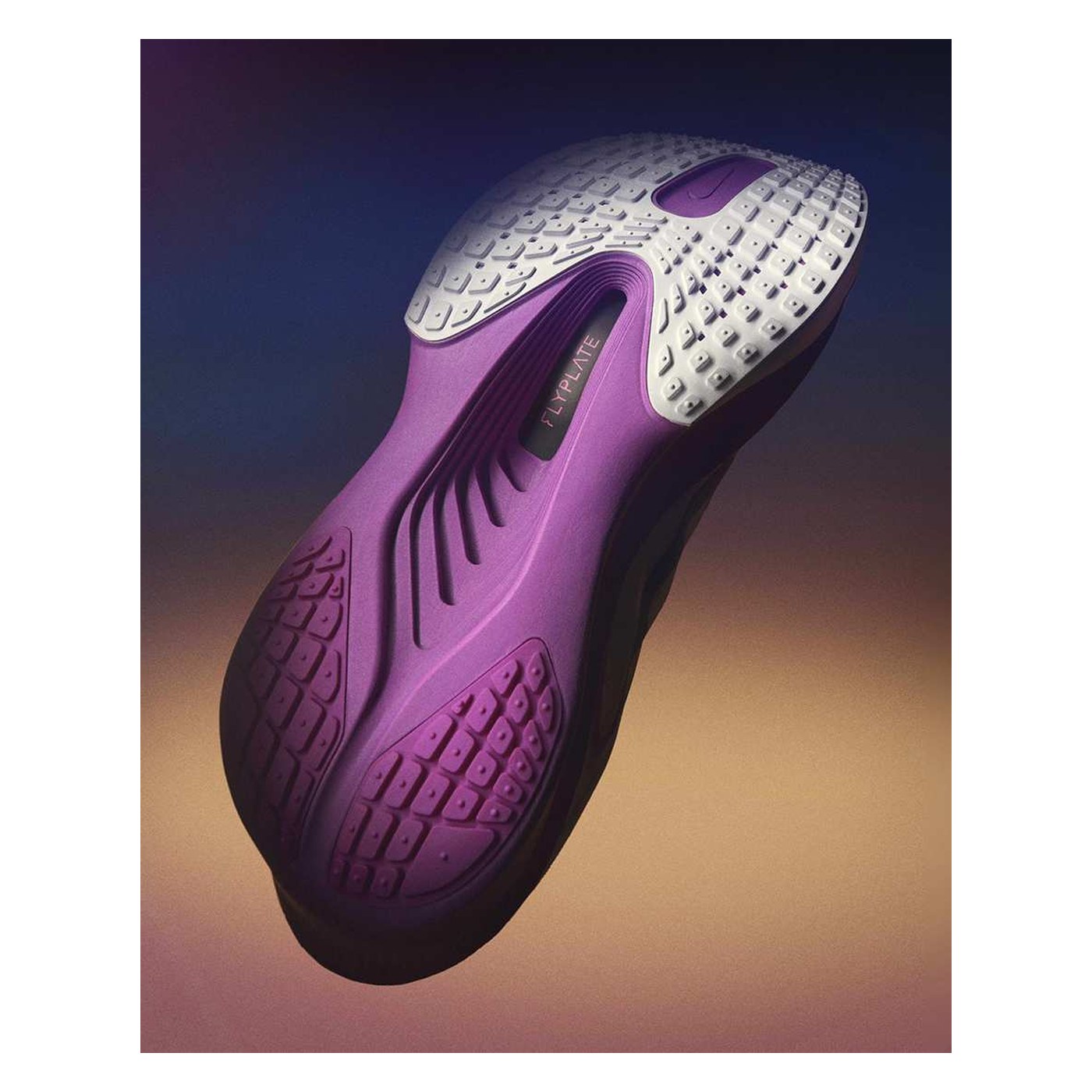
© Nike, official photo used for editorial purposes
On the road: cushioning, responsiveness and grip
Independent lab measurements put heel shock absorption at 144 SA, well above the average for shoes tested under this protocol (131 SA), confirming a generous cushioning setup built more to absorb volume than to isolate each individual footstrike. Energy return, measured at 67% in the forefoot and 61% at the heel, places the Zoom Fly 6 near the top of carbon-plated training shoes, a notch below true super shoes but well ahead of a standard daily trainer.
Independent testers converge on one point: the upper runs noticeably tight through the toes. A measured width of 72,6 mm at the big toe, against an average close to 73 mm across shoes tested under the same protocol, confirms a narrower-than-usual fit. Several testers recommend sizing up half a size for wider feet, an adjustment RunMorph also had to make during testing.
On stability, opinions diverge more. One independent measurement puts the stability score at 64 out of 100, an average level that shows up mostly late in long runs for heel strikers whose form loosens up as fatigue sets in. By contrast, testers who run more midfoot or forefoot report no particular issue, even through pace changes. The outsole grip, meanwhile, earns near-unanimous praise: the rubber holds just as well on wet roads as on dry asphalt, a point confirmed by a French test carried out over several weeks of rainy sessions.
On durability, the numbers should be read with caution given how little time has passed since a shoe released less than a year ago. One field estimate puts the limit at up to 700 kilometres before significant outsole wear, well beyond the 300 to 400 kilometres a pure super shoe usually manages. A French test nuances that estimate, flagging a noticeable loss of pep as early as the hundredth run, without the shoe ever becoming uncomfortable or unsafe to run in.
Nike Zoom Fly 6 vs Nike Vaporfly 4: the comparison
Both shoes share the same brand and the same FlyPlate carbon plate, but they're built for opposite jobs. The Nike Vaporfly 4 remains the record-chasing shoe, lighter and pricier, built for a handful of races a year. The Zoom Fly 6, by contrast, takes on a daily-use role, able to absorb volume while staying credible on race day for a half marathon or a marathon run without chasing an all-out personal best.
| Criterion | Nike Zoom Fly 6 | Nike Vaporfly 4 |
|---|---|---|
| Main use | Tempo training, threshold, marathon | Racing, personal best |
| Weight | 248 g (lab measured) | About 200 g |
| Estimated lifespan | Up to 700 km | 300 to 400 km |
| Price | €169,99 | €250 |
| Fit | Narrow in the forefoot | Narrow, more forgiving |
Up against the competition
In the segment of carbon-plated training shoes priced under €200, the Zoom Fly 6 goes head-to-head with the Saucony Endorphin Speed 5, softer underfoot and better suited to a midfoot stride, as well as the Puma Deviate Nitro 4, cheaper but with a firmer ride. Among the generalist brands, the Adidas Adizero Boston 13 remains the segment's benchmark for versatility and a roomier fit, a strong argument against the Nike's narrower toe box.
Against these three direct rivals, the Zoom Fly 6 stands out through its higher measured energy return and an outsole grip several independent testers rate as superior, two advantages that matter on threshold sessions run in the rain. The weak point stays consistent across sources: forefoot width, noticeably tighter than both the Saucony and the Adidas.
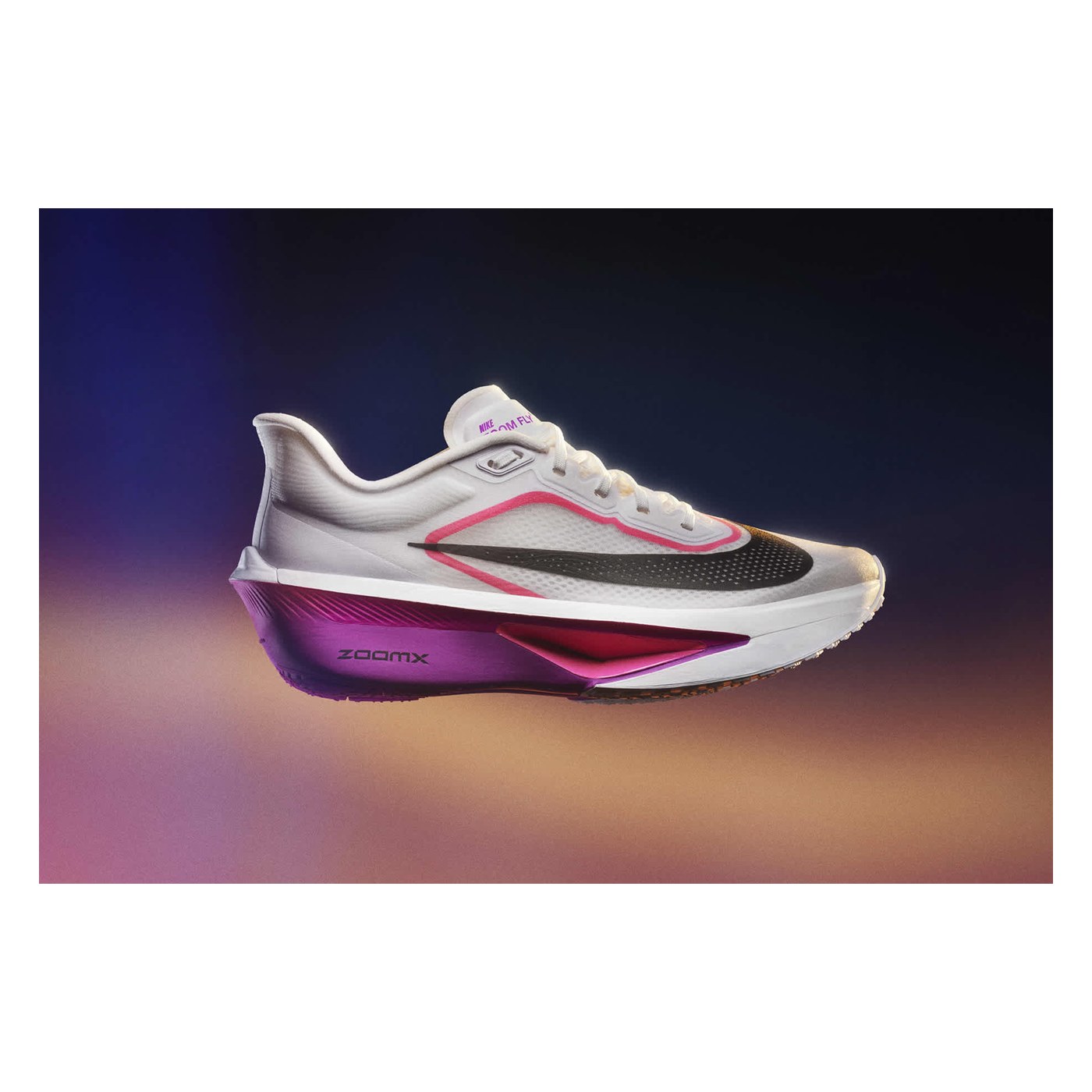
© Nike, official photo used for editorial purposes
How to work the Zoom Fly 6 into your RunMorph training plan
In a RunMorph marathon plan, the Zoom Fly 6 naturally fits goal-pace runs and long threshold blocks, where a super shoe would wear out too fast and clash with a high weekly volume. Keep a more stable pair for recovery runs, and save a Vaporfly or an Alphafly for race day if your goal is a strict personal-best time.
RunMorph Coach's verdict
The Zoom Fly 6 pulls off a tough balancing act: race-day sensations in a shoe built to last. At RunMorph, what stands out most is its ability to replace both a lively daily trainer and part of a carbon shoe rotation, at a price that stays reasonable given what it delivers. The narrow forefoot fit, though, means trying it a half size up before buying, and wide feet will want to look elsewhere. 8,8/10
Key takeaways for your training
- One shoe, two jobs: threshold work, long intervals and marathons run without chasing an outright record.
- Try a half size up: the upper runs noticeably tight through the forefoot for nearly every tester.
- Plan for solid mileage: up to 700 km claimed, but a loss of pep already noticeable around 100 km.
- Keep a stable pair on hand: the average stability score shows late in long runs for heel strikers.
- Save the true super shoe for race day: the Zoom Fly 6 prepares you for racing, it doesn't replace it for a strict time goal.