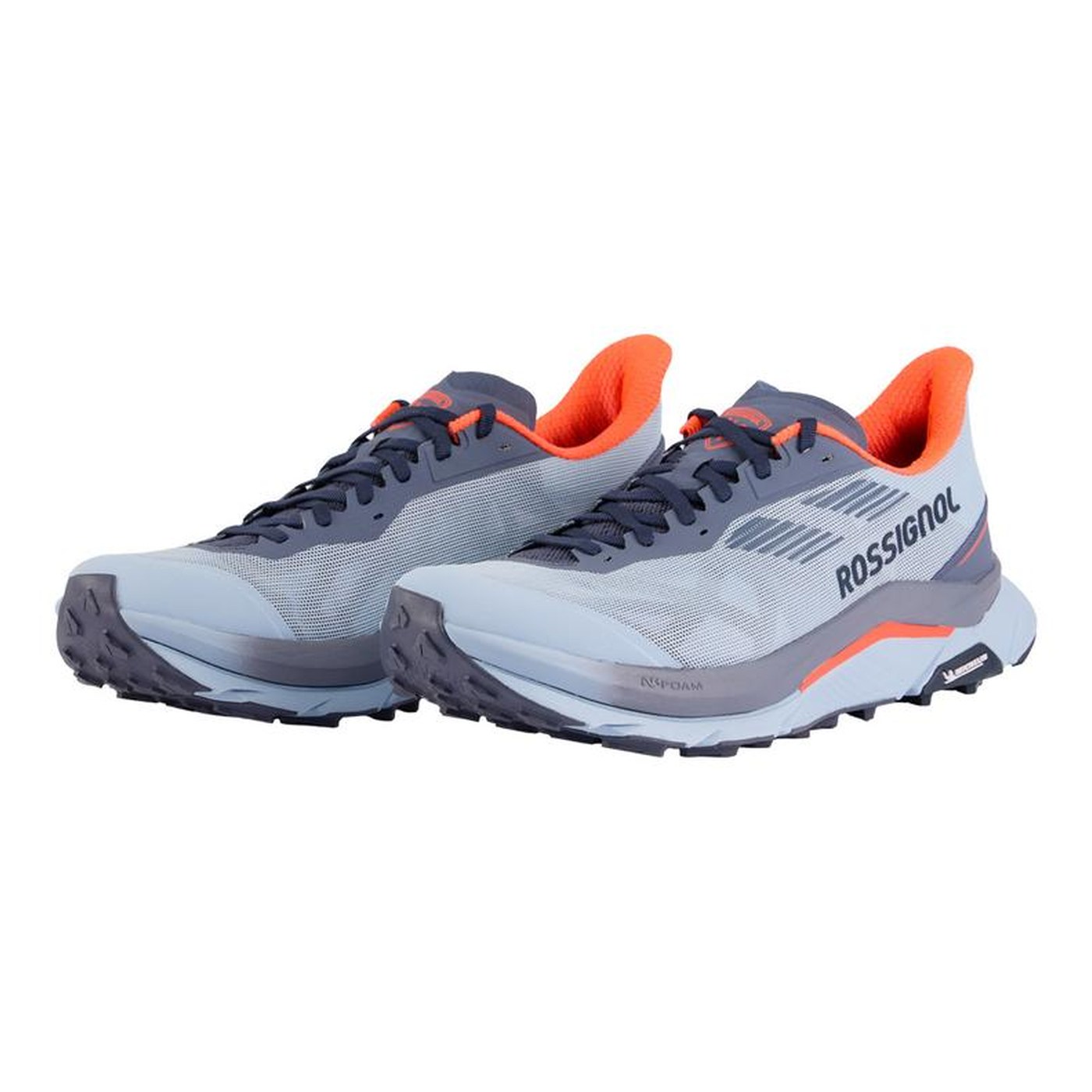
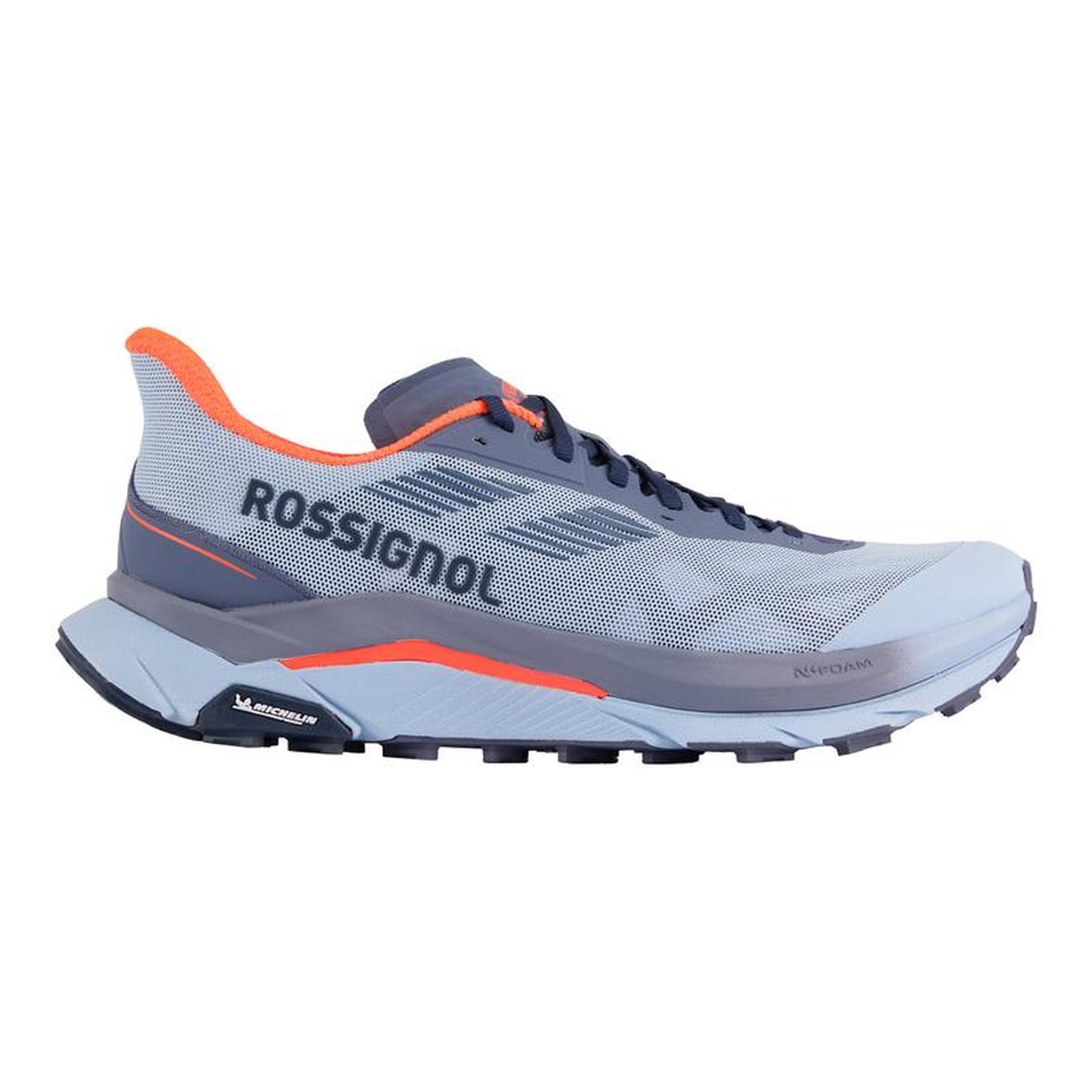
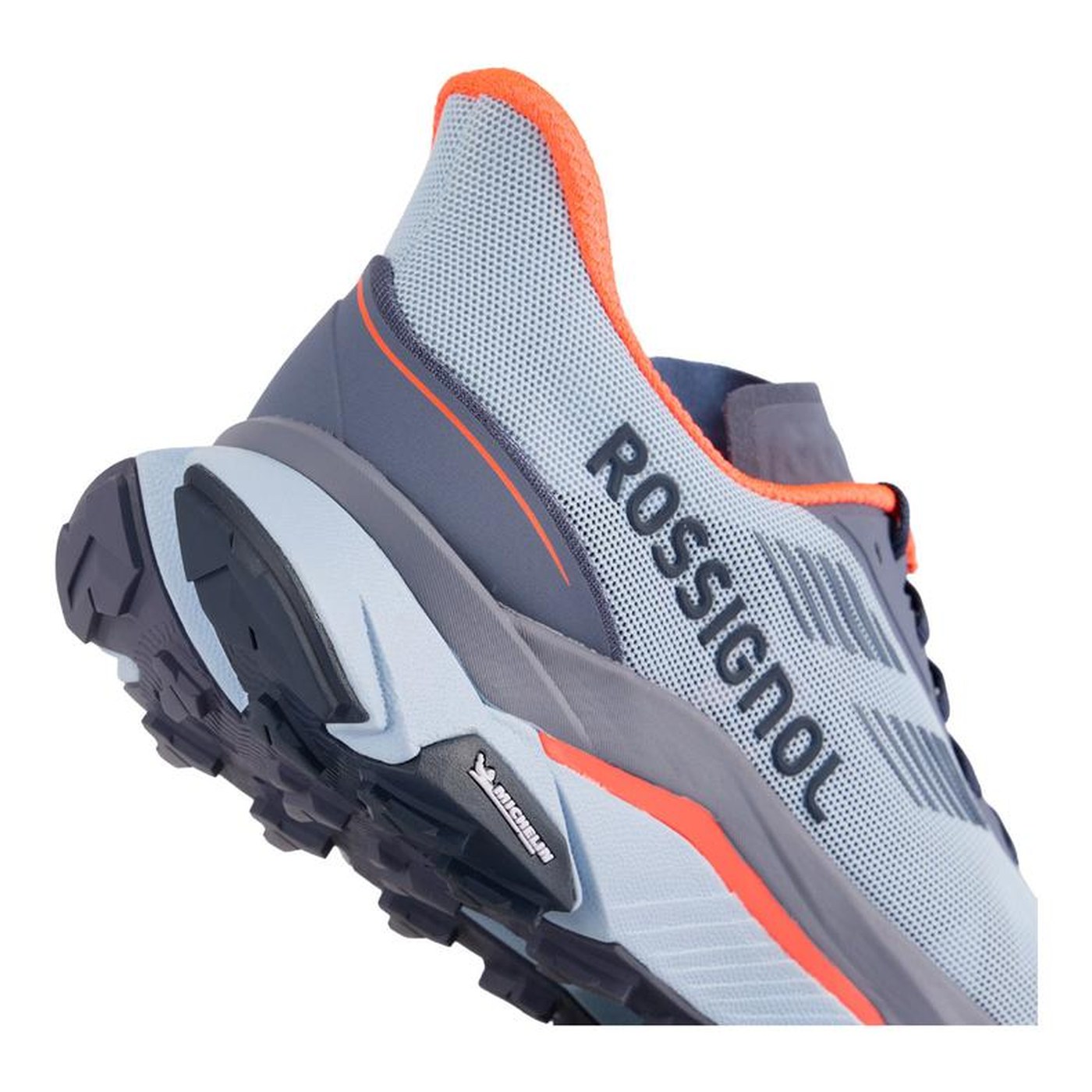
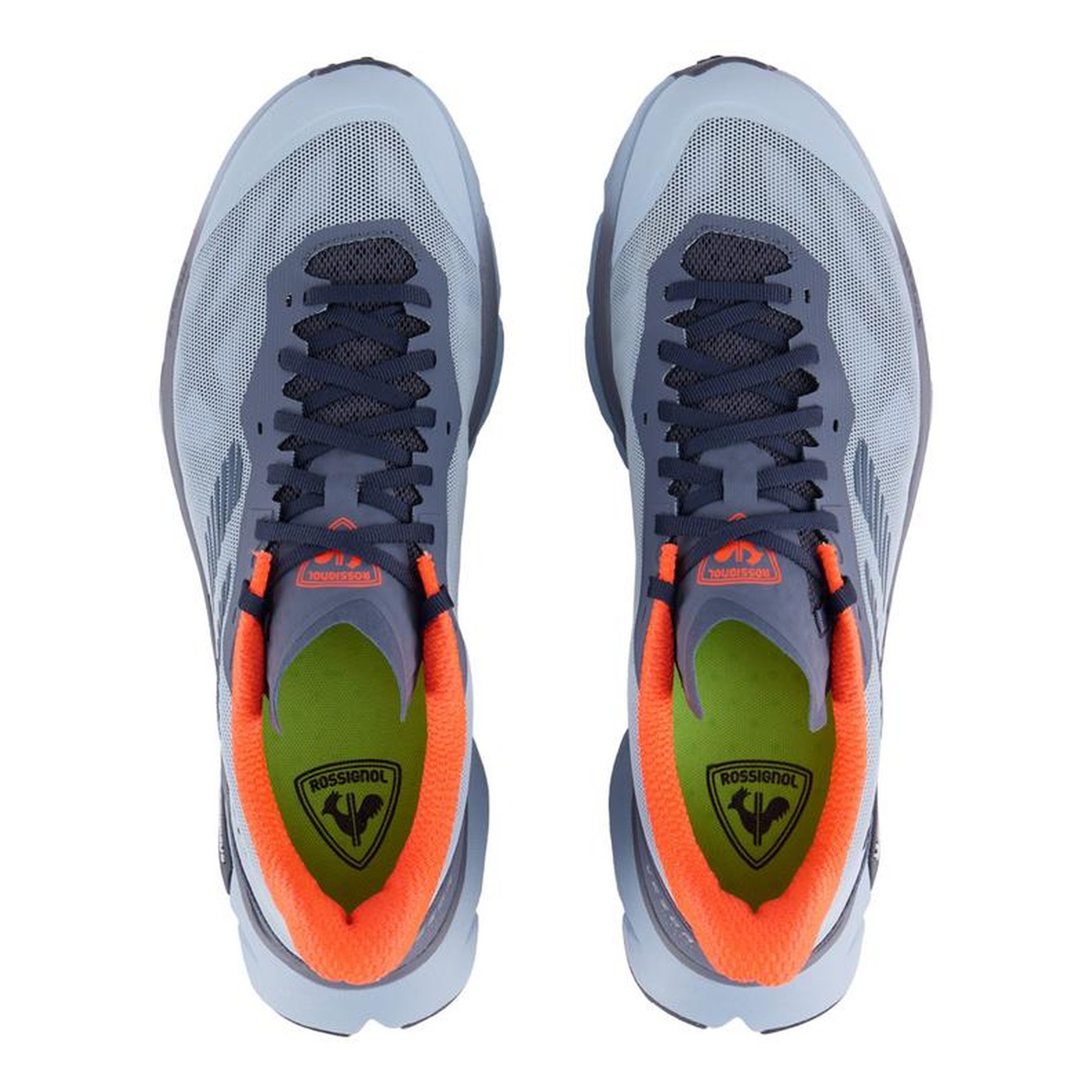
✓Responsiveness praised by all three tests read, thanks to the N+Foam and Diapason+ plate combo
✓Good grip on dry rock and firm ground
✓282 g, a weight in line with the lightweight technical trail segment
✗Narrow fit, incompatible with an orthotic insole according to one tester
Rossignol spent a century making skis before taking on trail running. Unveiled at UTMB in August 2024 and launched in spring 2025, the Vezor is the brand's first trail shoe, built for technical singletrack rather than the road. Three French tests put it through its paces over several months: here is what they found, without the marketing gloss.
The Vezor marks Rossignol's entry into technical trail running, after three years of development and a launch at UTMB. Its N+Foam midsole and Diapason+ plate give it a bounce that three French tests praise, but a narrow fit and grip that reviewers rate unevenly on wet ground narrow its playing field. At 180 euros, often discounted well below that at some retailers, it is a solid technical trail shoe as long as you have a narrow foot and stay away from mud.
7.1
/ 10 · RunMorph overall score
Cushioning
7.5 / 10
Responsiveness
8.5 / 10
Grip
6.5 / 10
Fit
6 / 10
Value
6.5 / 10
Who it is forNarrow to standard feet, rocky dry trails over 50 to 70 km, runners who like to feel the terrain underfoot.
Who should skip itWide feet, regular training in rain or mud, ultras beyond 70 km.
Rossignol and trail running: a diversification under watch
Rossignol has been making skis since 1907. Trail running is a recent bet. The brand unveiled the Vezor in Chamonix during UTMB week in 2024, after announcing three years of prior research. The launch happened alongside a second pair, the Vercors, already reviewed on RunMorph and built more for long distances.
A ski maker taking on trail running is no sure thing. Salomon pulled it off by leaning on decades of mountain footwear experience. Rossignol starts out with a strong brand image among skiers, but no running pedigree. The Vezor has to win on its own merits, not on a reputation already earned in running. At RunMorph, three French tests of this exact model were read in full to check whether the bet pays off.
Vezor tech specs
Brand
Rossignol
Model
Vezor
Release
Unveiled August 2024, launched spring 2025
Type
Technical trail, short to medium races
Drop
6 mm
Heel / forefoot stack (men's)
29 to 30 mm / 23 to 24 mm depending on the source (two French tests give slightly different figures)
Heel / forefoot stack (women's)
28 mm / 22 mm
Weight (men's)
282 g, a figure confirmed by all three tests read
Weight (women's)
231 g
Foam
N+Foam (nitrogen-infused) top layer, standard EVA bottom layer
Plate
Diapason+, a non-carbon composite insert, slightly curved
N+Foam and the Diapason+ plate: what changes underfoot?
The midsole stacks two foams of different densities. On top, the nitrogen-infused N+Foam targets bounce. Below it, a more standard EVA handles the cushioning base and protection. Between the two sits the Diapason+ plate, which is not carbon: it is a slightly curved composite insert that adds torsional stability and takes the edge off sharp rocks. It does not, however, have the propulsive stiffness of a carbon racing plate.
The concrete result, according to all three tests read: a bounce testers describe as responsive from the first steps, useful on rolling terrain and short surges. The pure cushioning, that said, is built for short to medium efforts. Past a certain duration, or on tarmac, the feel gets firmer, which matches the positioning Rossignol itself claims: the brand does not pitch the Vezor as a long-distance shoe.
On the trail: what the cross-checked reviews say
Three French tests were read in full for this article. Outside ran the Vezor for six months before publishing its review in March 2025. Le Comparatif du Trail published its own in April 2025, and Outzer did so as part of a private test programme in July 2026.
Outside describes a secure fit, with the foot staying locked in place, and grip it rates as good on dry, wet, muddy and even frozen ground. Le Comparatif du Trail strongly qualifies that last point: good grip on dry rock and smooth wet rock, but noticeably weaker on mud and greasy wet ground. It also notes slight side-to-side instability at the heel and a tendency to roll underfoot on technical terrain. Outzer only tested on dry, rocky ground, with no verdict on mud.
Why such a gap on grip? Outside's test ran six months, winter included, with runs on frozen or damp ground that was not necessarily alpine-trail mud. Le Comparatif du Trail appears to have specifically sought out greasy mud, terrain where the Michelin rubber's 4 mm lugs show their limits against more aggressive patterns like Vibram Megagrip. At RunMorph, the reading is simple: on rock and hard ground, the grip holds up. Once the terrain turns greasy, expect more slipping than with deeper lugs.
The fit draws the opposite kind of agreement: narrow across all three testers. Outzer could not even fit an orthotic insole, even after removing the stock one. The thin, non-stretch tongue needs careful lacing adjustment, a point confirmed by two of the three sources. On durability, Outzer flags early marking visible on the midsole foam before 200 km, a signal worth watching rather than a final verdict, since the tester himself says more mileage is needed.
Rossignol Vezor vs Rossignol Vercors: which one to pick?
Both pairs launched on the same day at Rossignol, but they target different uses. The Vercors, already reviewed on RunMorph, is aimed at long distances with its PEBA-based E+Foam and 32 mm of heel stack. The Vezor stays lighter and more technical, built for shorter efforts on rough terrain.
Criterion
Vezor
Vercors
Weight
282 g
290 g
Heel stack
29 to 30 mm
32 mm
Foam
N+Foam + EVA
E+Foam (PEBA)
Recommended use
50 to 70 km, technical terrain
Beyond 60 km, ultra
Official price
180 euros
160 euros
For a short, technical format where agility matters most, the Vezor remains the right pick in the range. For an ultra, look instead at the Rossignol Vercors, whose PEBA foam and taller stack are built for the long haul.
Rossignol Vezor vs Salomon S/Lab Pulsar 4: the comparison
The Salomon S/Lab Pulsar 4, already reviewed on RunMorph, belongs to the same family of lightweight technical trail shoes. Both share a 6 mm drop and a short-to-intermediate race focus, but their philosophy differs.
Criterion
Rossignol Vezor
Salomon S/Lab Pulsar 4
Weight
282 g
250 g claimed (247 g measured)
Drop
6 mm
6 mm claimed (7.1 mm measured)
Grip
Good on dry ground, uneven on mud depending on the source
All-Terrain Contagrip lugs, 3.5 mm
Official price
180 euros
220 euros
The simple read: the Pulsar 4 is lighter on paper and comes from a brand with a long history in technical trail running. It costs 40 euros more, though, and its responsiveness disappointed in lab measurements. The Salomon S/Lab Pulsar 4 suits runners who put stability first. The Vezor, for its part, bets on a punchier bounce at a lower price, at the cost of a fit that demands more careful adjustment.
Pros and cons
Pros
Responsiveness praised by all three tests read, thanks to the N+Foam and Diapason+ plate combo
Good grip on dry rock and firm ground
282 g, a weight in line with the lightweight technical trail segment
Removable sockliner for adjusting cushioning
Effective forefoot protection against rocks, thanks to the TPU reinforcement
Cons
Narrow fit, incompatible with an orthotic insole according to one tester
Grip that splits opinion on mud and greasy wet ground
Thin, non-stretch tongue that needs careful lace adjustment
Early midsole foam marking noted before 200 km by one tester
Limited cushioning beyond short to medium race formats
How to fit the Vezor into your RunMorph training plan
The Vezor earns its place on the short to medium technical outings of a trail build-up: surges on rolling singletrack, rocky sections, short climbs where agility matters more than cushioning. It is not, however, the pair to take on a multi-hour long run in the rain, nor on an ultra beyond 70 km.
To structure your technical sessions and move toward your goal, the RunMorph trail training plan schedules the right sessions at the right time. Working your footing on rough terrain, building toward a 50 to 70 km race: each phase has its place.
One last word of caution: if your runs are often rainy or muddy, look elsewhere. A pair with deeper lugs like the Salomon Speedcross 6 will do a better job on that specific terrain.
RunMorph Coach verdict
The Vezor delivers on a precise playing field: dry rocky trails, short to medium formats, narrow-footed runners who like to feel the terrain underfoot. The N+Foam and Diapason+ plate combo works, and all three tests read agree on that point. But the shoe runs into two clear limits: a fit that rules out wide feet from the start, and grip that loses reliability once the terrain turns greasy.
For a first trail shoe from Rossignol, the result is honourable. It is not yet an outright reference in the category, and the full price of 180 euros, often cut in sales, raises questions about the brand's long-term strategy in this segment. RunMorph score: 7.1/10.
Key takeaways for your training
282 g: a weight within the norm for lightweight technical trail shoes, confirmed by all three French tests read for this article.
6 mm drop for 29 to 30 mm of heel stack depending on the source, a gap worth knowing before buying online without trying it on.
Check the grip on mud: reliable on dry rock, shakier on greasy ground according to one French test, worth remembering if your runs are rainy.
Narrow fit: plan a fitting, or go up half a size if you have wide feet.
180 euros, but regularly found around 130 euros at some retailers: check for sales before paying full price.