April 1, 2026Rossignol Vercors Review: Rossignol's First Trail Shoe Goes PEBA
8.2/10
This is the first trail running shoe to carry the Rossignol name. A French brand with deep roots in skiing and the mountains is stepping into one of the most crowded segments out there. On paper, the Vercors ticks every box of a genuine ultra shoe: 290 g, 6 mm drop, E+Foam midsole, Diapazon Shield X-LT protective plate, Duragrip Ultra outsole with 4 mm lugs, €160. As a coach, I was curious to see it: could Rossignol shake up a field dominated by Hoka, Salomon and La Sportiva? Here's the detailed verdict.
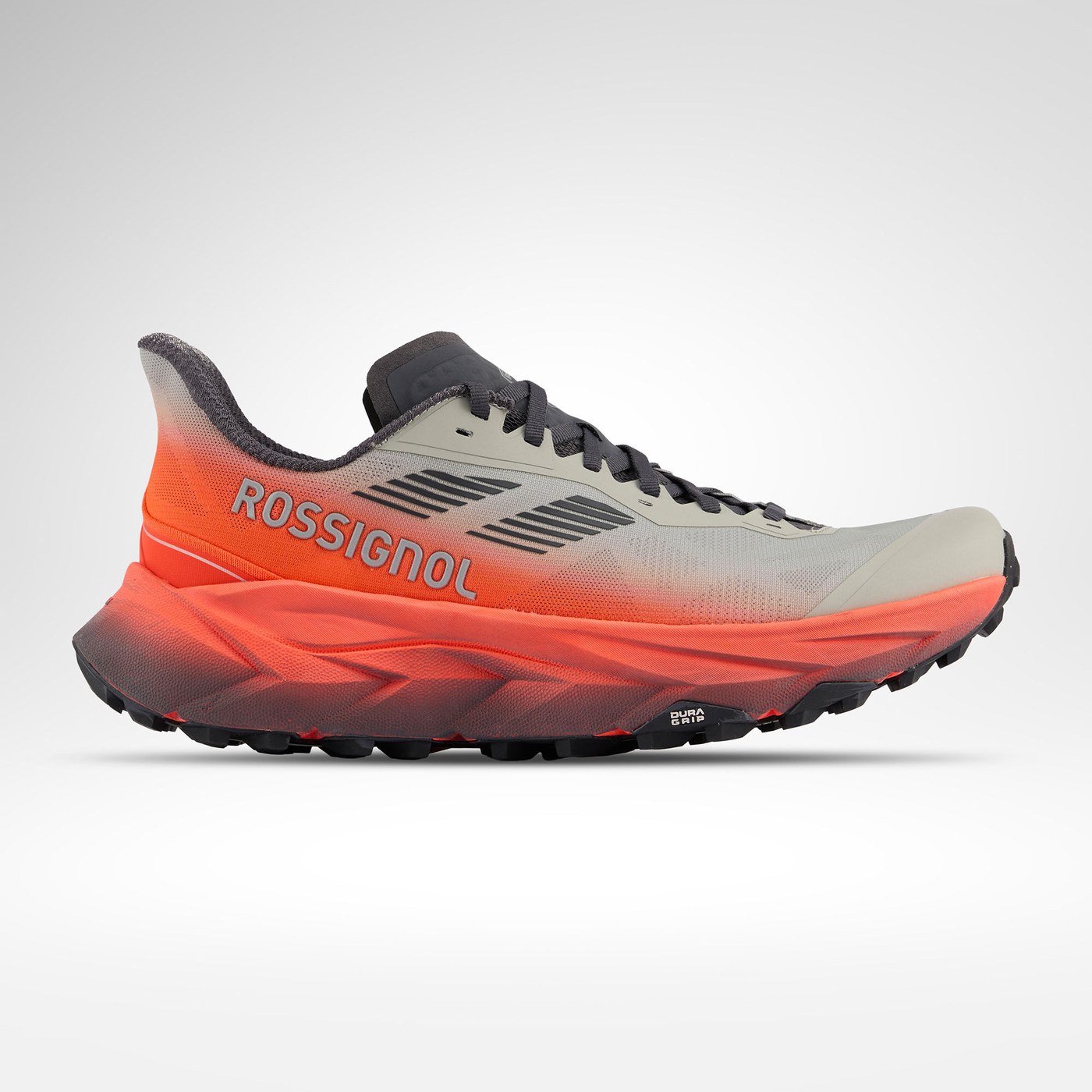
© Rossignol, official photo used for editorial purposes
Rossignol Vercors: the first trail running shoe from the French Alpine brand
Rossignol is no newcomer to the mountains. Founded in 1907 in Voiron, the brand with the tricolor rooster has been equipping skiers for more than a century and already dipped a toe into approach shoes with the Vezor. With the Vercors, it takes the full step: this is a real trail running shoe, designed to eat up long distances.
The positioning is clear. Rossignol is going after ultra-trail runners, the ones looking for a balance of cushioning, protection, grip and durability. The name is no accident: the Vercors, a limestone massif in the French Pre-Alps, is exactly the kind of terrain this shoe was built for. Technical trails, gravel, roots, sustained climbing, long and very long runs.
Priced at €160, the Vercors sits below the premium benchmarks of the segment (Hoka Speedgoat 7 at €175, La Sportiva Prodigio 2 at €170, Salomon Ultra Glide 4 at €150) while staying above Decathlon's entry price (Kiprun Kipsummit Max at €139.99).
RunMorph tip: before you fall for the Vercors, ask yourself what terrain you really run on. If 80% of your runs are on flat ground or smooth trails, the Vercors is overkill. If you're training for a mountain race of 50 km or more, or you stack up long technical runs, this is exactly the kind of shoe you need.
Objective specs
| Brand | Rossignol |
| Model | Vercors |
| Year | 2026 (spring) |
| Type | Long-distance trail, ultra |
| Drop | 6 mm |
| Heel stack height | 32 mm |
| Weight (size 42) | 290 g |
| Foam | E+Foam (PEBA compound) |
| Plate / protection | Diapazon Shield X-LT (full-length protective insert) |
| Outsole | Duragrip Ultra, 4 mm lugs |
| Upper | Breathable, stretchy Jacquard mesh |
| Recommended distance | Long runs, ultra (60 km and up) |
| Official price | €160 |
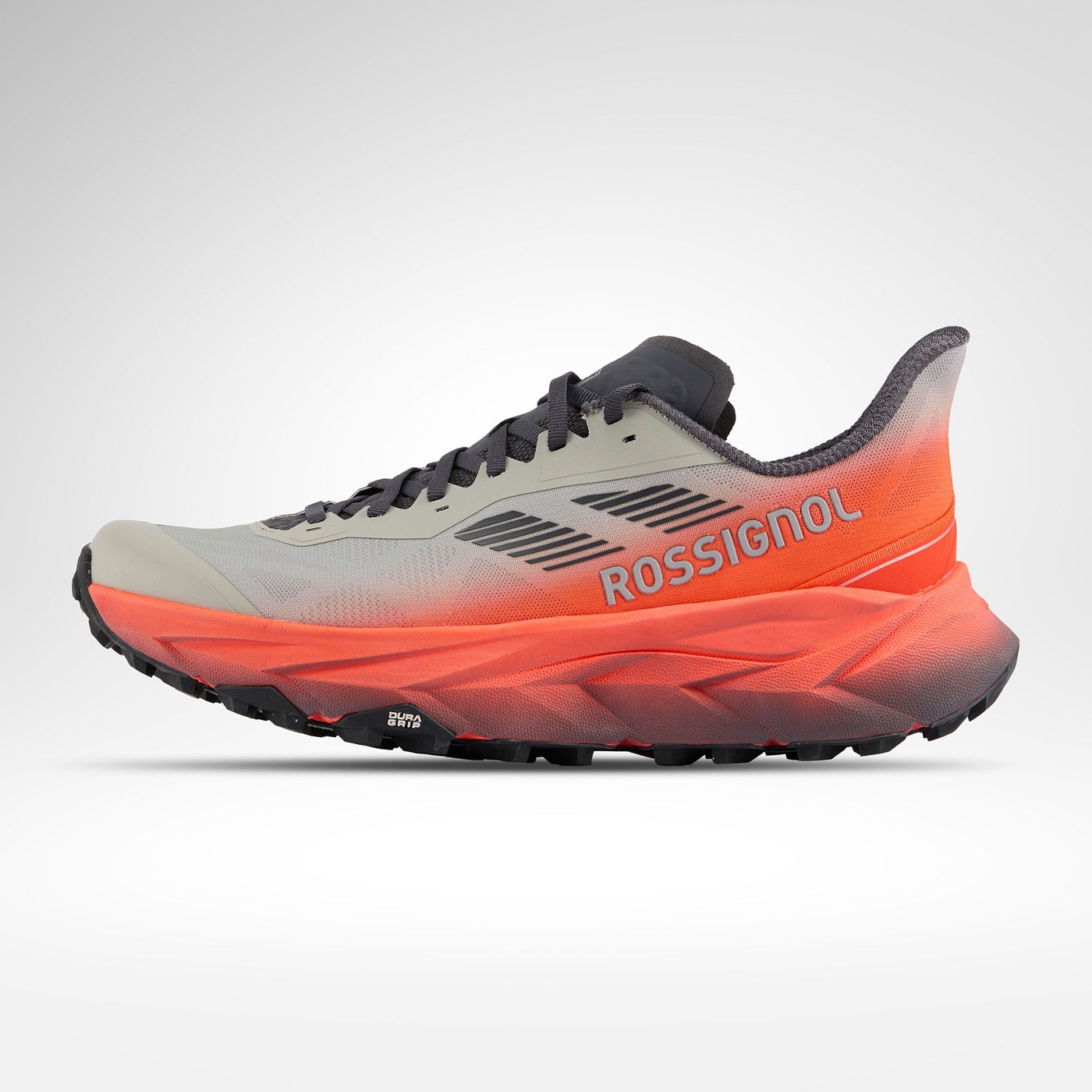
© Rossignol, official photo used for editorial purposes
The verdict in 30 seconds
The Vercors is a solid, versatile, durable trail running shoe that bets on stability and protection rather than an explosive ride. Three strengths stand out as soon as you run in it. A stable, reassuring chassis thanks to the volume of foam and the protective insert. Very convincing grip on mixed terrain (mud, wet limestone, roots). And durability that looks set to beat the segment average, thanks to the Duragrip Ultra compound.
Two weaknesses to flag. First, the weight: 290 g in a size 42 is at the upper end of the modern ultra-trail segment, where rivals drop to 270 g (Hoka Mafate Speed 5) or even 226 g (Inov-8 TrailFly Pro). Second, the cushioning, which favors firmness over plush softness: if you want the cocoon-like comfort of a Hoka Challenger 7 or an Asics Trabuco Max 5, the Vercors isn't it.
Who I recommend it to: runners training for a 50 to 100 km mountain ultra who want a stable, secure stride that can handle fatigue after 5 or 6 hours on their feet. Who I'd steer away: trail beginners (the Vercors doesn't forgive hesitation on its aggressive lugs), racers chasing the lowest possible weight (look at the Brooks Cascadia Elite or the Hoka Tecton X 3), and road runners who want a hybrid shoe (you'll do better with the Salomon GRVL Concept).
Who is this shoe for?
👟 You're new to trail and looking for your first pair → With reservations. The Vercors is cut for runners who are already comfortable on technical trails. The 4 mm lugs bite hard and demand some care with foot placement.
👟 You run 30 to 60 km a week on smooth to moderately technical trails → Yes. It's an excellent trail daily trainer that can handle your weekend long runs and your midweek hill sessions.
👟 You're training for a 50 km, 80 km or 100 km mountain ultra → Yes, no reservations. This is the Vercors' main target: protection, stability, durability, grip. Four solid pillars to get you to the finish.
👟 You weigh more than 80 kg → Yes. The volume of foam and the stable chassis handle heavier runners well, unlike the more minimalist models in the segment.
👟 You want a fast trail shoe for short races (20 km to 40 km) → No. Too heavy for that job. Look at the Saucony Peregrine 16 or the Asics Fuji Lite 6 instead.
👟 You ran in road shoes and want to switch to trail → With reservations. The 6 mm drop will take a few runs to get used to if you're coming from a 10 mm road shoe like the Brooks Ghost 18 or the Saucony Triumph 23.
Comfort and fit
The upper is made of breathable, stretchy Jacquard mesh. In practice, the shoe adapts as your foot naturally swells after several hours of running, with no pressure points on the toes. That's a crucial detail in an ultra: a runner whose foot swells by 3 to 5% after 6 hours of racing will appreciate a soft upper. The fit is medium volume, roomy enough up front without being sloppy.
The tongue has just the right amount of padding, and the heel counter is firm without overdoing it. The inner sleeve keeps the foot locked in on off-camber terrain. In short, Rossignol has done serious work on comfort, and it shows the fit know-how the brand brings from skiing.
Cushioning and ride
E+Foam is Rossignol's in-house foam, built on a PEBA compound. Energy return is decent but not explosive. The ride feels close to a Salomon S/Lab Genesis: firm, lively, grounded. It's a far cry from the spongy foam of a Hoka Bondi 9.
The Diapazon Shield X-LT is a full-length protective insert sitting between the foam and the outsole. Its job: stiffen the shoe to shield your foot from sharp rocks and roots, without delivering the propulsion of a forked carbon plate like the one in the Brooks Cascadia Elite or the Hoka Tecton X 3. So don't expect the Vercors to behave like a trail super shoe: that's not in its DNA.
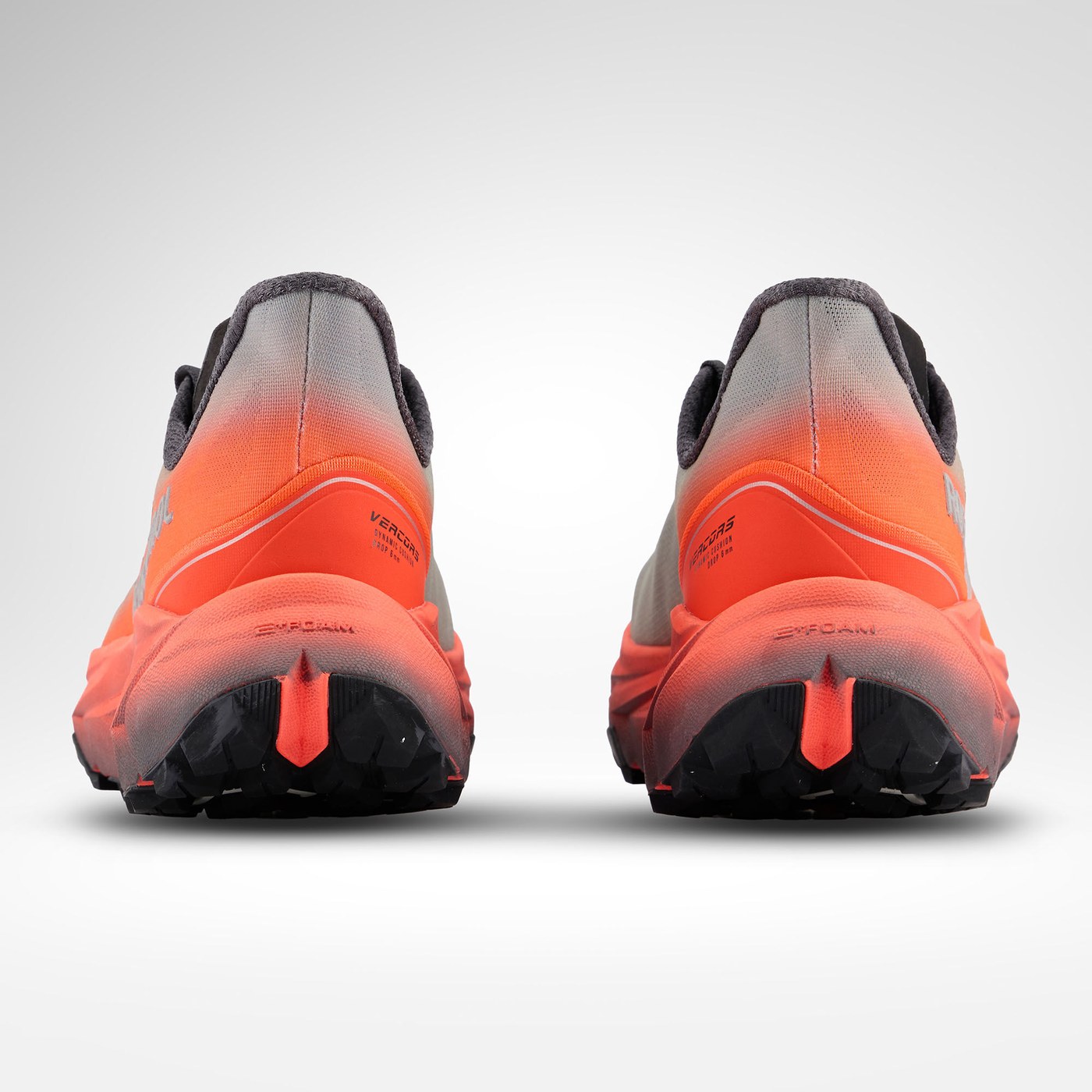
© Rossignol, official photo used for editorial purposes
Stability and support
This is where the Vercors shines. The wide chassis, the broad base, the heel counter, the inner sleeve and the classic lacing all work together and inspire confidence from the first kilometers. On off-camber trails, wet roots and technical descents, your foot stays locked in and you can push with confidence. That's exactly what you want from an ultra shoe: zero hesitation when your foot lands.
Outsole and grip
The Duragrip Ultra rubber with 4 mm lugs is one of the Vercors' strong points. On mixed terrain, the grip is positive: on dry and wet limestone (typical of the Vercors and the Jura), on mud, on roots, on gravelly trails. The tread pattern is multidirectional, with chevron lugs up front for propulsion and pyramid lugs at the back for braking on descents.
Independent lab measurements confirm a medium rubber hardness, neither too hard (durability at the expense of grip) nor too soft (grip at the expense of longevity). It's a well-judged compromise. According to the consensus of international testers, the outsole should last between 700 and 1000 km, which puts the Vercors in the upper half of the segment.
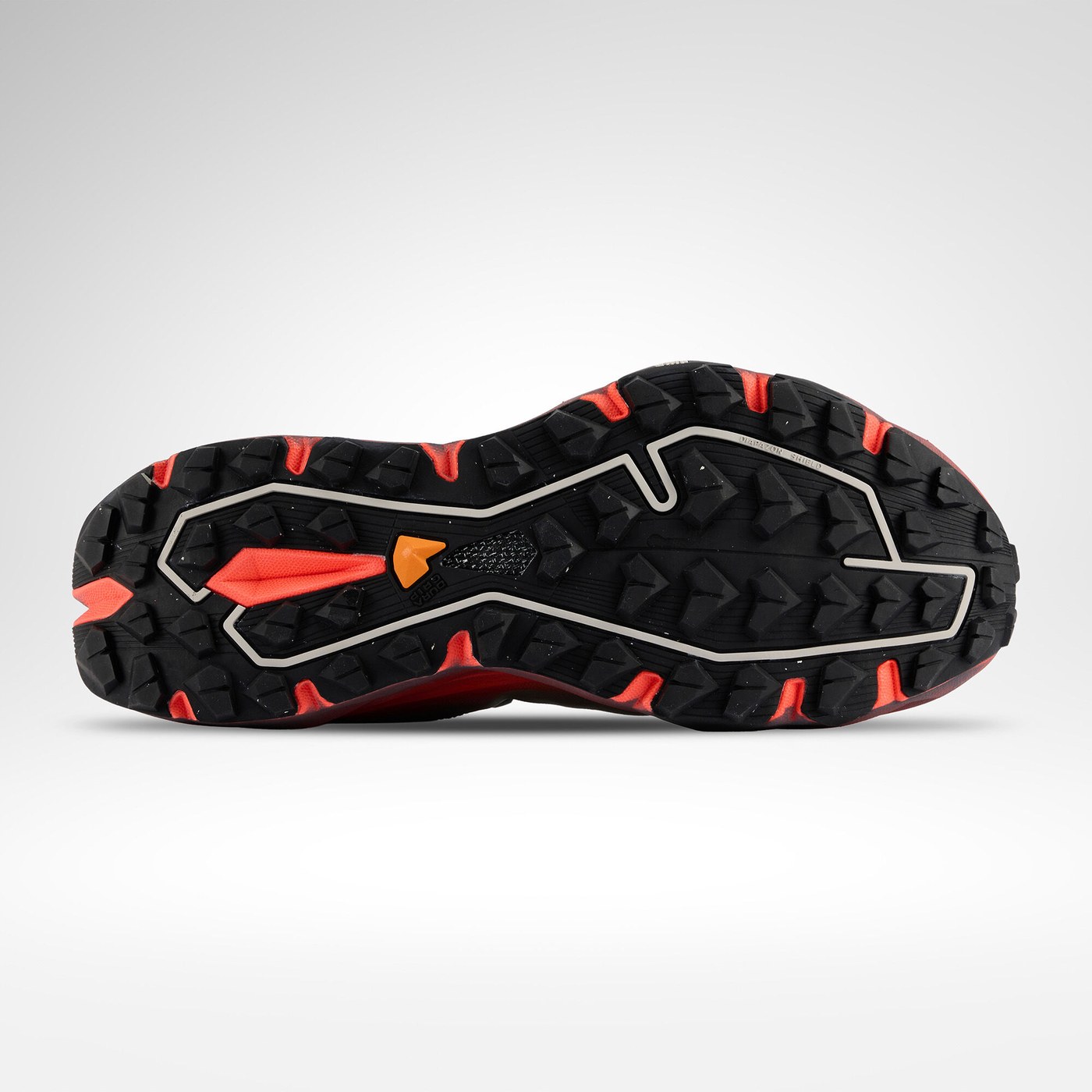
© Rossignol, official photo used for editorial purposes
Performance by pace
On easy runs (5:30 to 6:00 per km on moderate trails), the Vercors is comfortable, but nothing more. The firm E+Foam gives a grounded, almost planted stride. That's reassuring at the start of a long run, less pleasant on recovery days.
At trail marathon pace (5:00 to 5:30 per km), the shoe finds its rhythm. The balance between cushioning and responsiveness is decent, and the Diapazon Shield X-LT insert gives a real sense of protection.
At fast pace or in races (under 5:00 per km), the Vercors hits its limits. It's too heavy and too firm up front to compete with true racing shoes. For that, go for a Saucony Peregrine 16 or a Brooks Cascadia Elite.
Durability
This is one of the key selling points Rossignol puts forward. The Duragrip Ultra outsole, the E+Foam midsole, the reinforced Jacquard upper and the Diapazon Shield X-LT insert form a package built to last. Early feedback from runners points to a useful lifespan of 700 to 1000 km, which is very good for a trail shoe. That's more than the average Salomon Speedcross 6 (around 600 km in the mountains) and on par with the Hoka Speedgoat 7.
How it stacks up against the competition
Vs Hoka Speedgoat 7 (€175, 290 g): same weight, but the Speedgoat 7 goes for more generous cushioning (38 mm stack height) and a highly regarded Vibram Megagrip outsole. The Vercors stands out with a more stable chassis (less rolling on off-camber sections) and a friendlier price. A technical draw: it comes down to the feel you prefer.
Vs Salomon Ultra Glide 4 (€150, 280 g): the Salomon is lighter and softer thanks to its OptiFoam, but offers less protection on very technical terrain. The Vercors takes over as soon as you hit demanding mountain trails, while the Salomon stays unbeatable on long, smooth trails.
Vs La Sportiva Prodigio 2 (€170, 270 g): the Prodigio 2 is lighter and livelier thanks to its Nitro Cellular foam and TPU plate. On technical high-altitude ultras, La Sportiva keeps the edge. On more runnable ultras, the Vercors offers more comfort.
Vs Kiprun Kipsummit Max (€139.99, 268 g): the Decathlon shoe is lighter, better value, and comes with a Vibram Megagrip Litebase outsole. The Rossignol counters with a more premium finish and a sturdier chassis. If budget is your top priority, the Kipsummit Max remains unbeatable. If you want maximum durability and a more upscale look, the Vercors is worth the extra money.
How to fit the Vercors into your RunMorph training plan
The Vercors is made for long runs and ultra training. Here's where I'd put it in your plan:
When training for a long trail race (50 to 100 km), it's your main pair. Use it for weekend long runs (2:30 to 4 hours on trails), for specific mountain runs with elevation gain, and for ultra-specific blocks (back-to-back Saturday and Sunday).
When training for a short trail race (20 to 40 km), keep it as your second pair for endurance runs and easy recovery runs. For fast sessions, grab a Saucony Peregrine 16 or an Asics Fuji Lite 6.
Our recommendation: pair the Vercors with the RunMorph Trail plan with an ultra goal. Progressive long runs, mountain blocks and terrain-specific work are exactly what this shoe was designed for.
👉 Discover RunMorph's personalized training plans
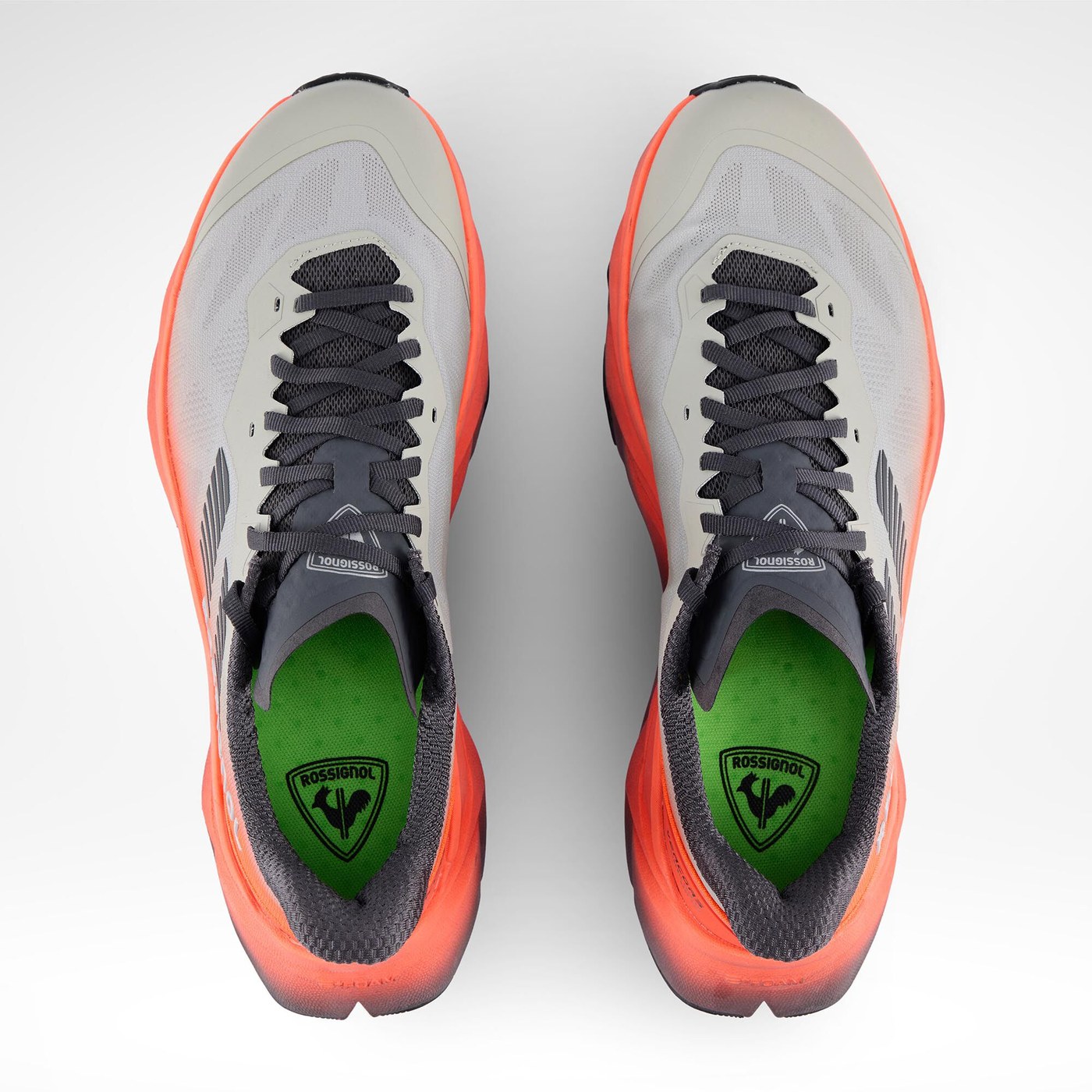
© Rossignol, official photo used for editorial purposes
The RunMorph coach's verdict
As a coach, I'm impressed by how coherent Rossignol's project is. The Vercors doesn't try to do everything: it's a true ultra-trail shoe, built for long distances in the mountains. The chassis is stable, the grip convincing, the durability there. For a first trail running shoe, it's a measured, realistic success.
The main drawback remains the weight (290 g), which limits it on short, fast distances, along with the average energy return of the E+Foam, which won't match the liveliest supercritical foams. But 80 km into a mountain race, after 10 hours on your feet, it's not explosive bounce that saves you, it's stability and protection. The Vercors ticks both boxes without hesitation.
RunMorph score: 8.2/10. An excellent first trail shoe for Rossignol, promising for what comes next, and a real contender at €160 against the Hoka Speedgoat 7 and the Salomon Ultra Glide 4. Bonus points for buying French: it's rare enough to deserve a mention.
Key takeaways for your training
- Ideal use: 50 to 100 km mountain ultras, long runs of 2:30 to 4 hours.
- Stability first: the shoe's real strength. Wide chassis, firm heel counter, Diapazon Shield X-LT insert.
- Convincing grip: 4 mm Duragrip Ultra lugs, solid performance on wet limestone, mud and roots.
- Not a fast racing shoe: 290 g and firm cushioning, so forget it for races under 40 km.
- Durability: 700 to 1000 km according to the international consensus of testers, in the upper half of the segment.
- Buying French: Rossignol is a heritage brand from the Alps (Voiron, 1907). A point in its favor if that matters to you.
FAQ
Is the Rossignol Vercors good for trail beginners?
With reservations. The 6 mm drop and 4 mm lugs demand some ease on technical trails. For your first trail shoe, look at an Asics Fuji Lite 6 or a Hoka Challenger 7 instead, which are more versatile road-to-trail options.
How many kilometers does the Rossignol Vercors last?
The international consensus among testers and runners who have used the Vercors puts its useful lifespan between 700 and 1000 km, depending on the terrain. Pure mountain use (rocky trails, off-camber sections) pulls that figure down, while more mixed use pushes it up.
Does the Rossignol Vercors run large or small?
True to size. Go with your usual running shoe size. The fit is medium volume, neither too roomy nor too snug up front. If you're between two sizes, pick the smaller one: the Jacquard upper adapts well to foot swelling during an ultra.
What's the difference between the Rossignol Vercors and the Rossignol Vezor?
The Vezor is an approach shoe and a fast trail running shoe (smooth trails, short to medium distances). The Vercors is an ultra-trail shoe designed for long distances in the mountains. More generous stack height, more foam, better durability.
Can the Rossignol Vercors handle a 100 km mountain race?
Yes, that's exactly what it's for. The stable chassis, the Diapazon Shield X-LT protective insert, the Duragrip Ultra outsole and an upper that adapts to foot swelling are all designed for long efforts. It goes head to head with the Hoka Speedgoat 7 and the La Sportiva Prodigio 2 in this segment.