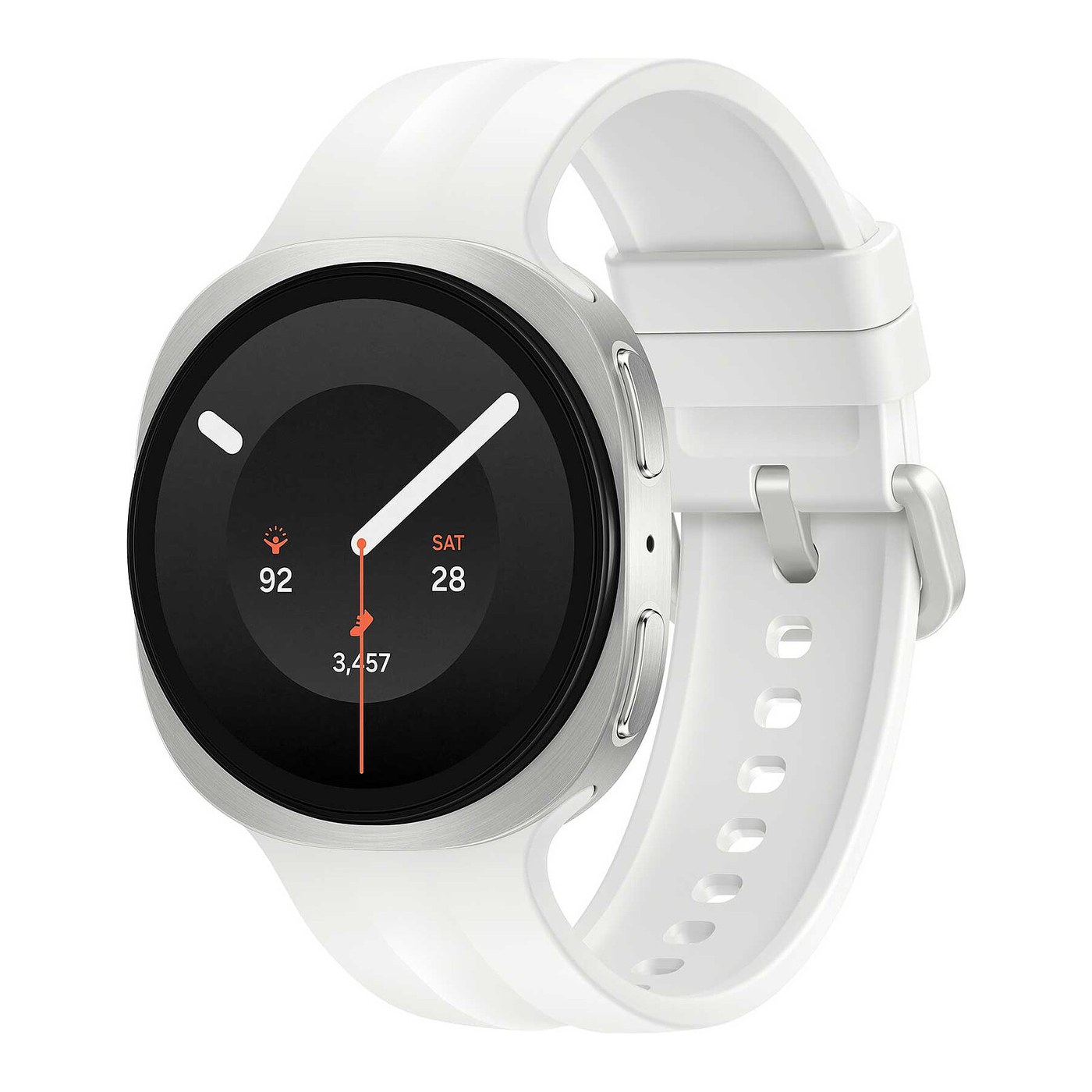
Samsung unveiled the Galaxy Watch 9 on 22 July 2026 and put it on sale in France on 7 August, at €409 for the 40 mm and €439 for the 44 mm. New Snapdragon chip, 3,000-nit screen, dual-frequency GPS. On paper, it's the sportiest Galaxy Watch outside the Ultra. RunMorph cross-checked four published reviews to find out what it's really worth when you run.
© Samsung, official photo used for editorial purposes
Samsung Galaxy Watch 9: the smartwatch that wants to run
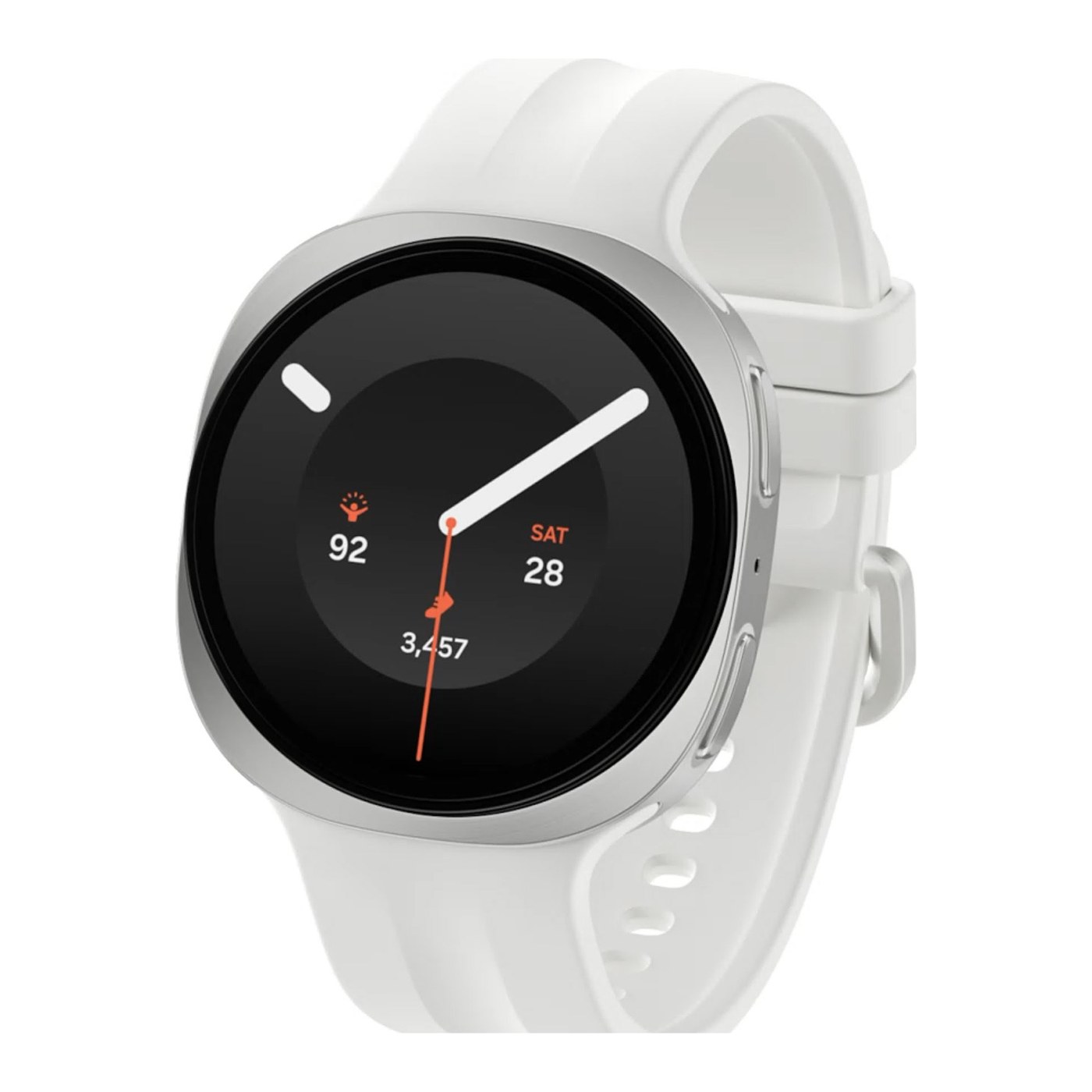
The Galaxy Watch 8 ran on Samsung's own Exynos chip. The Watch 9 moves to Qualcomm, with the Snapdragon Wear Elite. The result: a much faster watch, a screen that reaches 3,000 nits and GPS that picks up both the L1 and L5 bands. Samsung also grew the 40 mm battery by 20 %, to 390 mAh. The 44 mm sticks with 445 mAh.
For sport, Samsung pushes its Running Coach, a fitness index, a daily cardio load and a morning energy score. Gemini answers by voice when you raise your wrist. All of this looks a lot like the Pixel Watch 5, which also landed this summer on Wear OS.
It's four months old. Long enough for the first in-depth reviews to come out, not long enough to judge wear. And one question comes up in every review: the battery.
RunMorph's advice: you have a Samsung phone and you run three times a week, never longer than 1 h 30? The Galaxy Watch 9 will measure your runs, and measure them well. If you want a watch that lasts the week, get a Forerunner 165 for half the price. If you want Samsung for the trails, look at the Galaxy Watch Ultra 2.
© Samsung, official photo used for editorial purposes
Who is the Galaxy Watch 9 for?
The road runner, from 5K to half marathon
This is its comfort zone. The dual-frequency GPS measures accurately, the screen stays readable in full sun, and a one-hour run doesn't bring the battery to its knees. If your sessions last between 30 minutes and 1 h 30, the Watch 9 won't hold you back on measurement. It will hold you back on charging.
The runner who wants one watch for everything
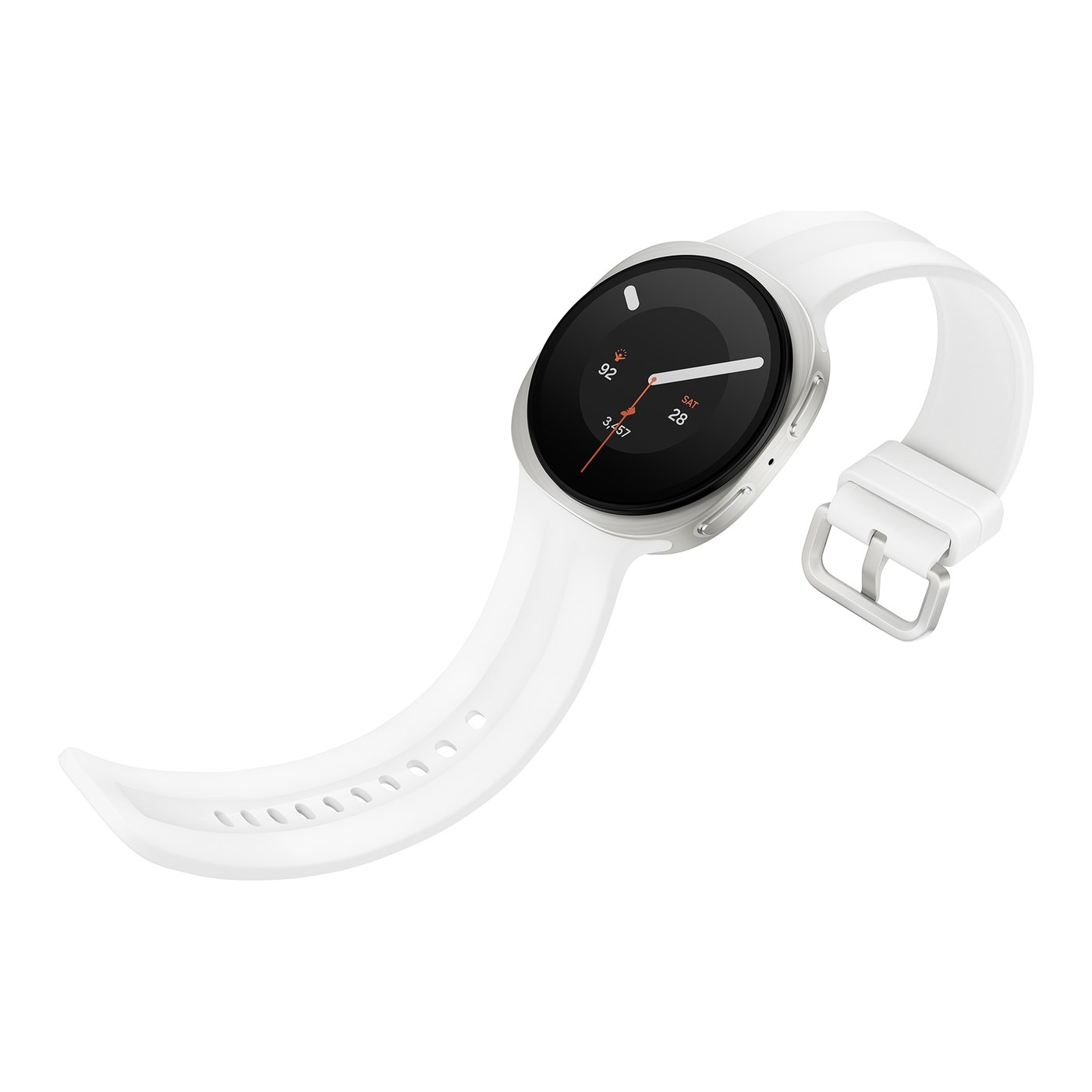
Payments, calls, messages, Gemini, sleep tracking, music: the Watch 9 is first and foremost an excellent smartwatch. Two reviewers rank it among the most comfortable watches on the market, at 30 to 34 g and 8,6 mm thick. For this profile, the question is simple. Are you OK putting it on the charger every day?
Trail runners and marathoners: wrong choice
With no offline topo maps and a battery that lasts a day, it has no business on a long trail run. For a 4-hour marathon, no review guarantees it will make it, and nobody has published a battery drain figure per hour of GPS. For the mountains, the Galaxy Watch Ultra 2 exists for exactly that.
© Samsung, official photo used for editorial purposes
GPS accuracy and heart rate sensor
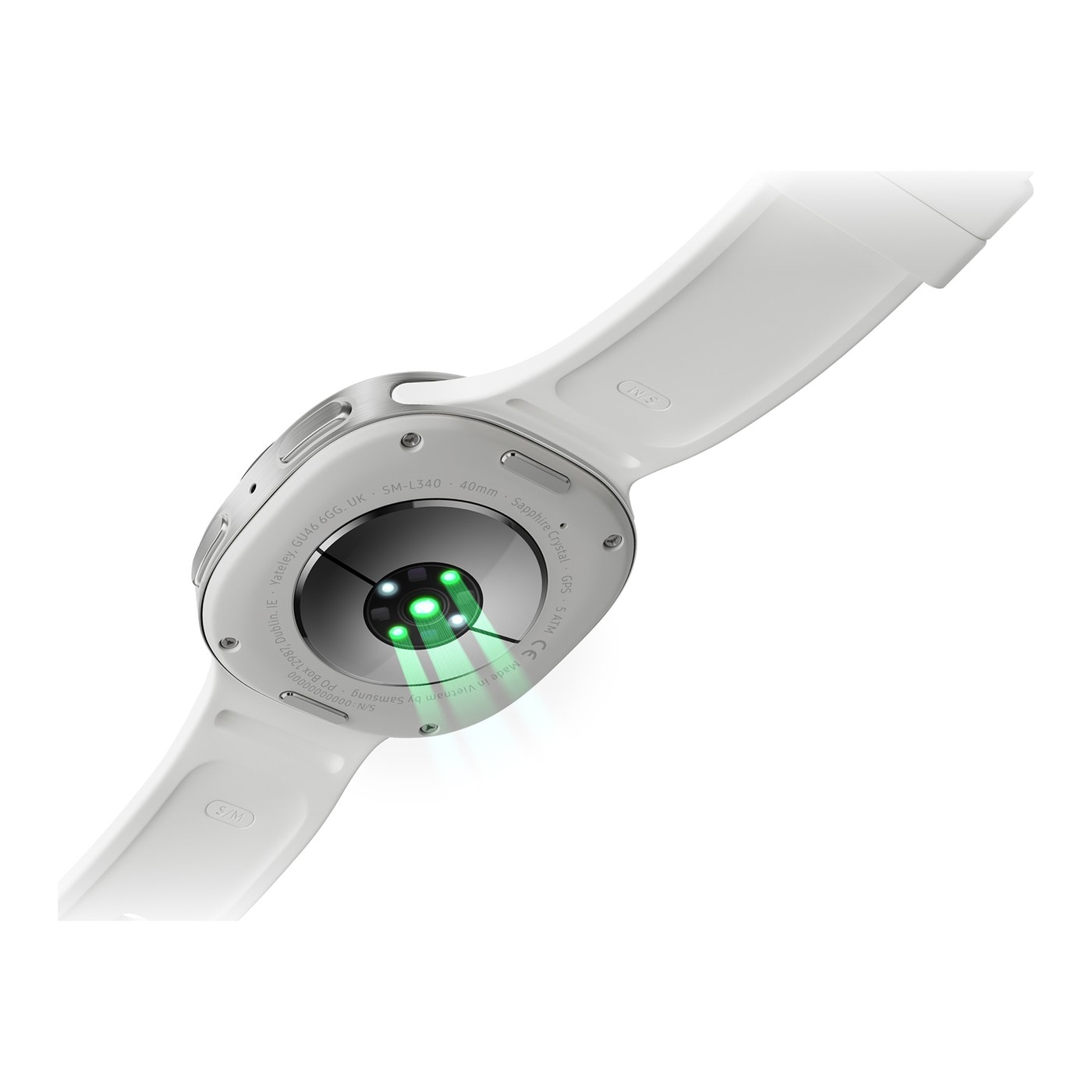
Start with the clearest number. A reviewer ran an official 5 km course, measured at 5,06 km, with three watches on his wrists. The Galaxy Watch 9 showed 5,07 km. The Pixel Watch 5 logged 5,13 km, and a Garmin paired to a phone 5,29 km. About seven metres off over 5 km. In short, you can set your paces by it.
The track backs this up. The same reviewer describes a clean line, including at the turnaround, where the Garmin wandered onto the grass. A German lab compared the Watch 9 with a Garmin Venu 2 on a bike route: very accurate overall, with small, occasional errors on both watches. A French review run over three weeks reaches the same conclusion, without figures. None of the reviews took it into dense forest or between tall buildings, where dual-frequency usually makes the difference.
Heart rate is more mixed. Against a Polar H10 chest strap, that lab found an average gap of 4,3 bpm under effort, or 1,5 %, and identical readings at rest. A second German reviewer measured a 2 to 4 bpm gap against a chest strap, but bigger, brief gaps during sprints.
On the comparative 5K, it gets worse. The Watch 9 took almost 4 minutes to bring the heart rate up, then stayed above the other two watches for more than 10 minutes. It all depends on the type of effort. On an easy run or a long run, the wrist is enough. On short intervals or a race start, the sensor reacts too late. For those sessions, pair a Bluetooth chest strap.
Mapping and navigation: Google Maps, not an outdoor watch
The Watch 9 has no built-in topo maps. You go through Google Maps or Komoot, installed on the watch. For a run in town or a loop planned on Komoot, it works. You can also export your sessions as GPX when you start the activity manually.
To follow a route in the mountains with no signal, forget it. A map on screen the whole time also drains a battery that's already tight. A trail runner will be better served by a watch built for that, even an entry-level one.
Training and recovery metrics
Samsung has worked hard on the pitch. Fitness index, heart health, daily cardio load, energy score, a vitality score built on five sleep indicators. The watch even estimates your sweat loss after a run, a figure reviewers find useful.
The Running Coach disappoints. The French review tried it in beta: the watch underestimated the reviewer's level and offered a four-week plan he could finish in two days. The energy score is judged very approximate, with high values after a bad night. And the daily cardio load only counts recorded sessions: a 20,000-step day can weigh less than a 10-minute jog.
Automatic workout detection splits opinion. One lab saw a run recognised after about 10 minutes. The French review logged some walks and missed others. The habit to keep: start your sessions manually. Auto-pause at traffic lights, on the other hand, works well.
Sleep tracking separates time in bed from actual sleep well. It misses a few night-time wake-ups. For a runner, that's enough to spot a tired week. It doesn't replace the load analysis of a Garmin, which tells you plainly whether you're improving or overdoing it.
Real battery life: the sore point
Samsung claims 30 h for the 40 mm and 40 h for the 44 mm. All four reviews tell a shorter story.
The French review, with almost daily workouts, sleep tracking and notifications, lasted about a day. Sometimes less, with two sessions. By turning off raise-to-wake and limiting notifications, it reached two days. An American reviewer goes further: the watch doesn't last more than a day, even with always-on display off.
The German lab's measurements fill in the picture. From 6 am to 9 pm, always-on display and health sensors active, the 44 mm Watch 9 loses 40 to 50 %. Over 24 h with sleep, 60 to 70 %. A second German review puts battery life at a day and a half with moderate use, with about 25 % lost overnight. The lab even notes slightly worse battery life than the Watch 8 in 44 mm.
Charging doesn't help. About 1 h 30 from 0 to 100 % at 10 W, when an Apple Watch reaches 80 % in 45 minutes. None of the reviews measured drain per hour of GPS. Under 1 h 30 of running, no reviewer reports the watch dying. Beyond that, you're running without a safety net.
© Samsung, official photo used for editorial purposes
Galaxy Watch 9 vs Pixel Watch 5: the comparison
Two Wear OS watches released the same summer, at the same price. It's the face-off every Android runner has in mind.
| Criterion | Galaxy Watch 9 | Pixel Watch 5 |
|---|
| Launch price | €409 (40 mm), €439 (44 mm) | €419 (41 mm), €449 (45 mm) |
| Screen | Super AMOLED, 3,000 nits | AMOLED LTPO, 3,000 nits |
| GPS | Dual-frequency L1 and L5 | Dual-frequency with server-side correction |
| Distance on an official 5K | 5,07 km | 5,13 km |
| Claimed battery life | 30 h or 40 h | 30 h or 40 h |
| Locked features | ECG, blood pressure and sleep apnea with a Samsung phone | Google ecosystem, Gemini |
On GPS, the Watch 9 wins the only published head-to-head. Yet the reviewer who compared them prefers the Pixel Watch 5 day to day, because of the Samsung's heart rate. The right choice mostly depends on your phone. With a Samsung, the Watch 9 unlocks all its health features. With another Android phone, the Pixel makes more sense.
How it stacks up against the competition
The Garmin Forerunner 165 sells for around €209. It claims 19 h of GPS and 11 days in smartwatch mode. Its GPS is single-frequency, but its training load analysis is far more useful than Samsung's. For a pure runner, it's the best buy.
The COROS Pace 4 costs €269, weighs 32 g and claims 41 h of dual-frequency GPS. It has no payments and no voice assistant. If you're training for a marathon, it's the safer bet.
The Galaxy Watch Ultra 2, launched at €749, keeps the Samsung ecosystem and adds a trail mode, 10 ATM and 3,5 to 4 days of battery with moderate use. It nearly doubles the price to fix the Watch 9's only real flaw.
On iPhone, the equivalent is the Apple Watch SE 3, at €269, with the same daily charging constraint.
How to fit it into your RunMorph training plan
The Watch 9 is a good match for a RunMorph 10K plan. Sessions stay under 1 h 30, and the GPS is accurate enough to hold your easy and threshold paces. Build your interval sessions in Samsung Health with warm-up, blocks and recovery, and let the watch vibrate at each transition.
Three habits. Always start your session manually, without relying on auto-detection. Pair a chest strap for short VO2max intervals, because the wrist reacts too slowly. And charge the watch over breakfast, so you head out every day with a full battery.
Training for a 10K or your first half? The
RunMorph 10K plan organises your easy runs, intervals and recovery week after week. Your Galaxy Watch 9 just has to measure. If you're starting from scratch, begin with the
beginner plan.
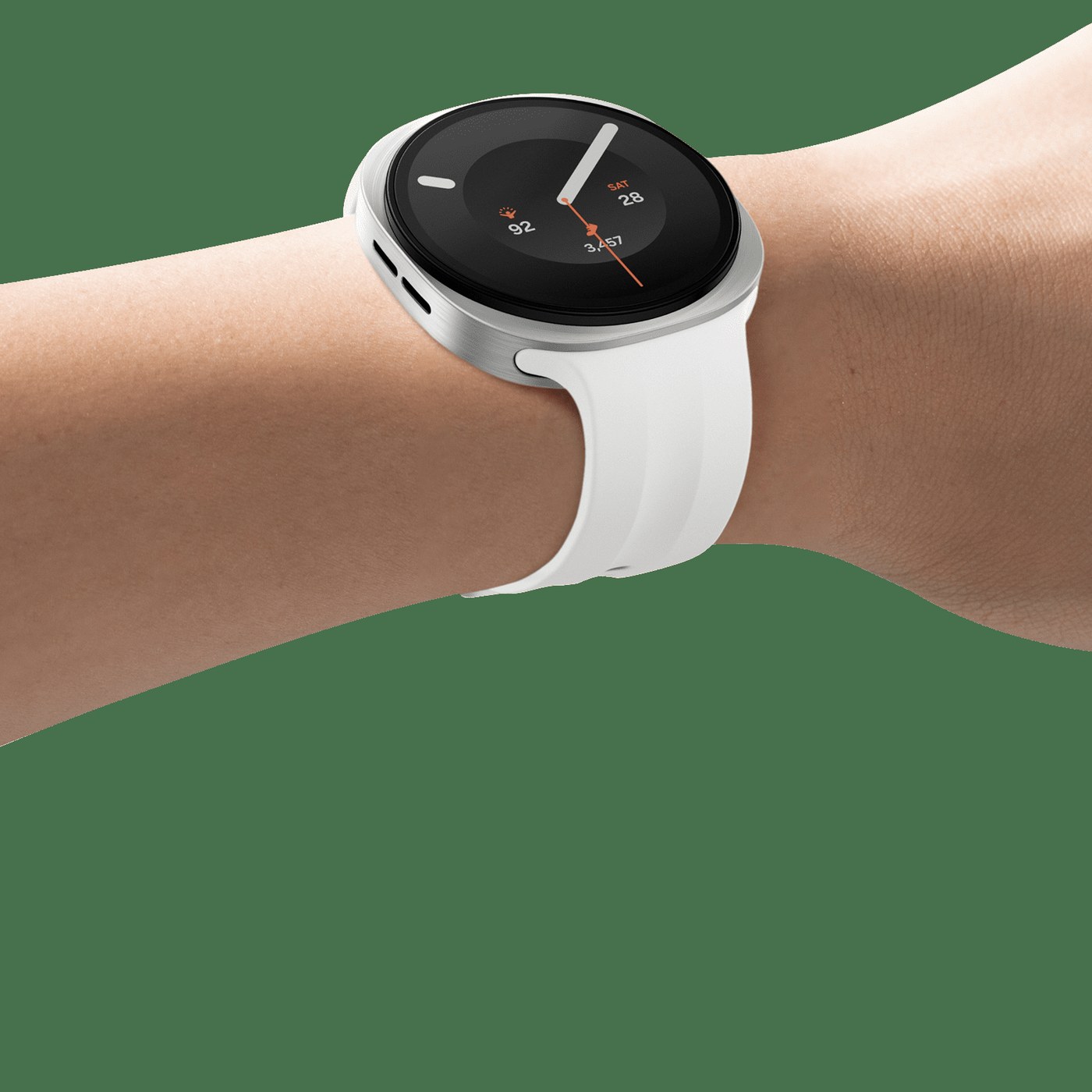
© Samsung, official photo used for editorial purposes
The RunMorph Coach's verdict
The Galaxy Watch 9 measures well. Its GPS beat a Pixel Watch 5 and a Garmin on an official 5K. Its heart rate holds up at steady effort. And it's one of the most pleasant watches to wear right now.
But a running watch has to last. One day of battery, 1 h 30 to recharge and heart rate that's slow on pace changes: for a runner, these flaws weigh more than the new screen or Gemini. The Running Coach isn't yet at the level of a real plan.
Buy it if you have a Samsung phone, run less than 1 h 30 at a time and want one watch for everything. If running comes first, get a Forerunner 165 or a COROS Pace 4. You pay less and you charge once a week.
RunMorph score: 6,5/10