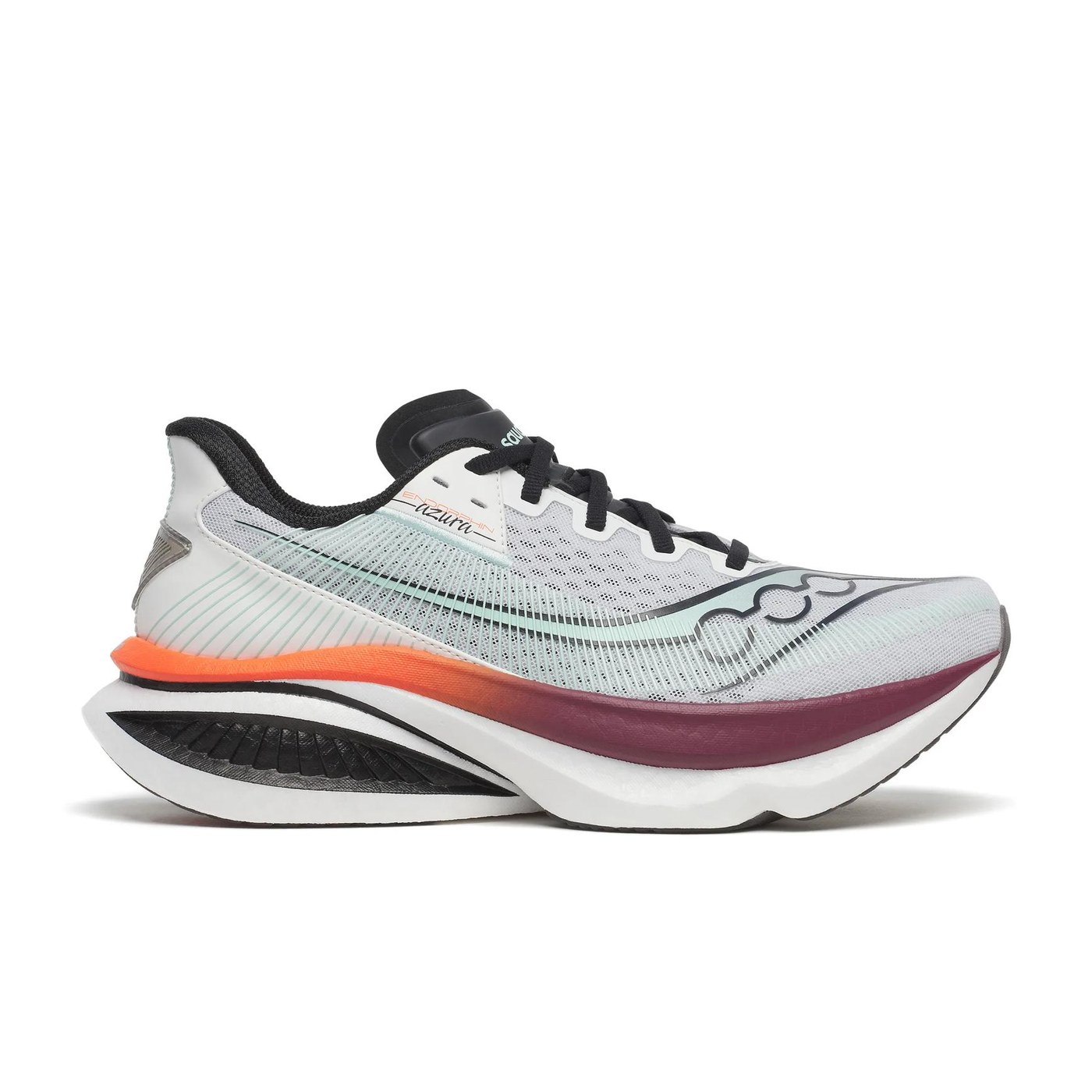
Back in 1988, Saucony already sold an Azura: a colorful, affordable running shoe typical of its era. Thirty-eight years later, the name returns on a shoe with nothing entry-level about it. A direct descendant of the Endorphin family, it borrows the foam and geometry of the brand's carbon models, then makes a radical call: it drops the plate. On paper, that's a risky bet in a saturated fast daily trainer market. On the road, it finds a real spot between the Endorphin Speed 5, too race-focused, and the Ride 19, too tame for your good days.
© Saucony, official photo used for editorial purposes
Saucony opens up its carbon-shoe tech by pulling the plate
The Endorphin family built Saucony's modern reputation on three pillars: PWRRUN PB foam, SpeedRoll geometry and, depending on the model, a nylon or carbon plate. With the Endorphin Azura, launched on February 1, 2026, the brand tries something unusual. It keeps the line's DNA while cutting its most expensive and most divisive component, the plate. The result speaks to a wider audience than interval specialists alone.
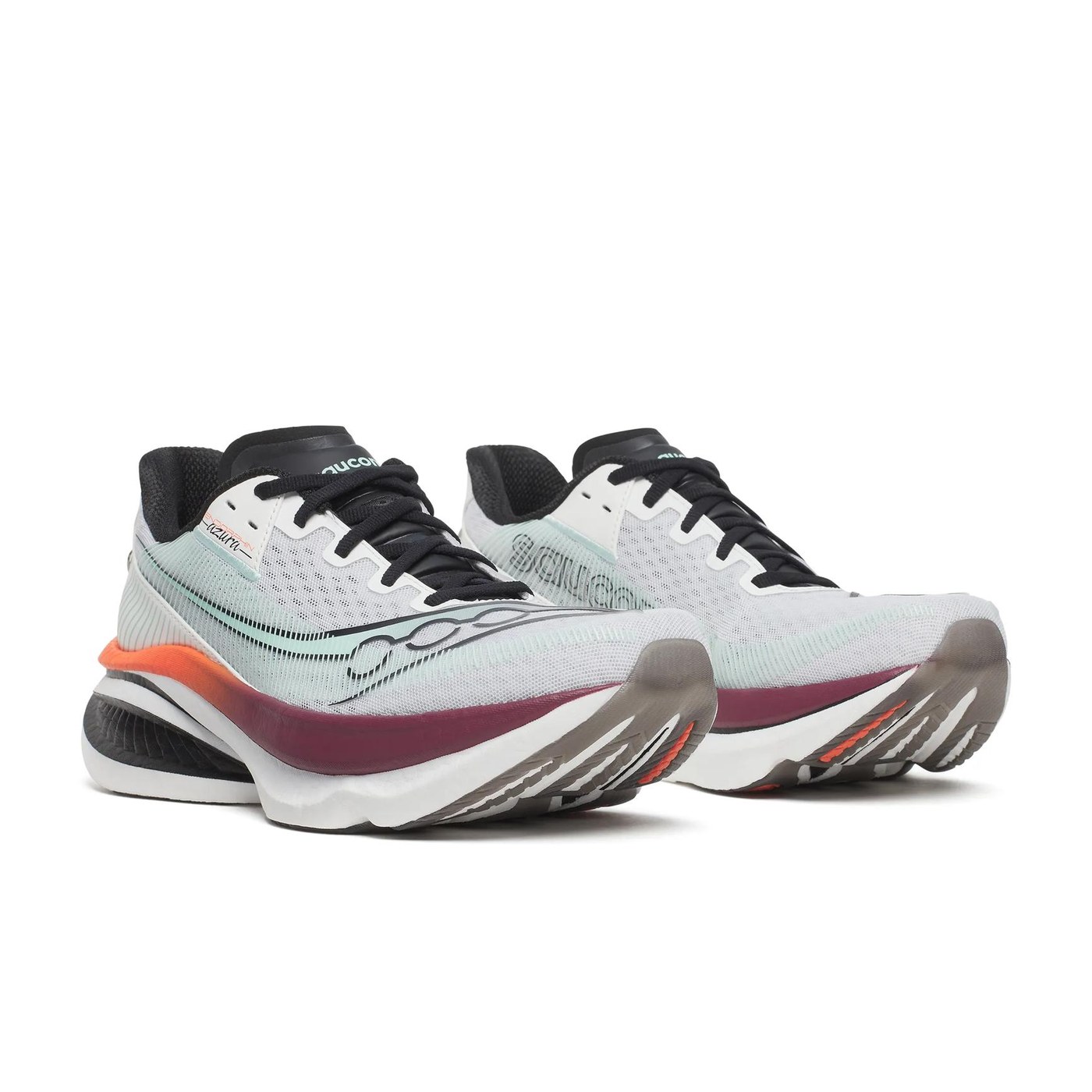
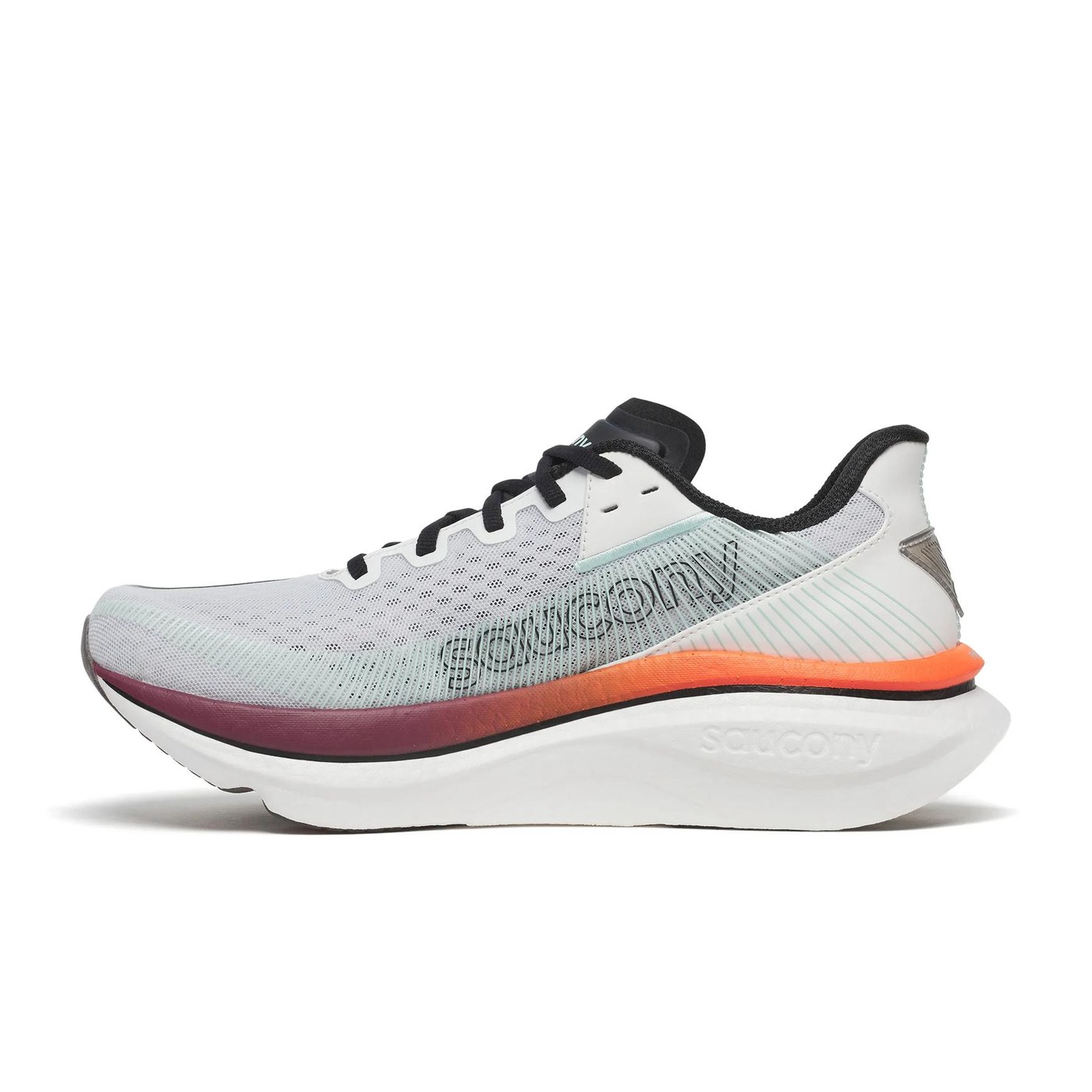
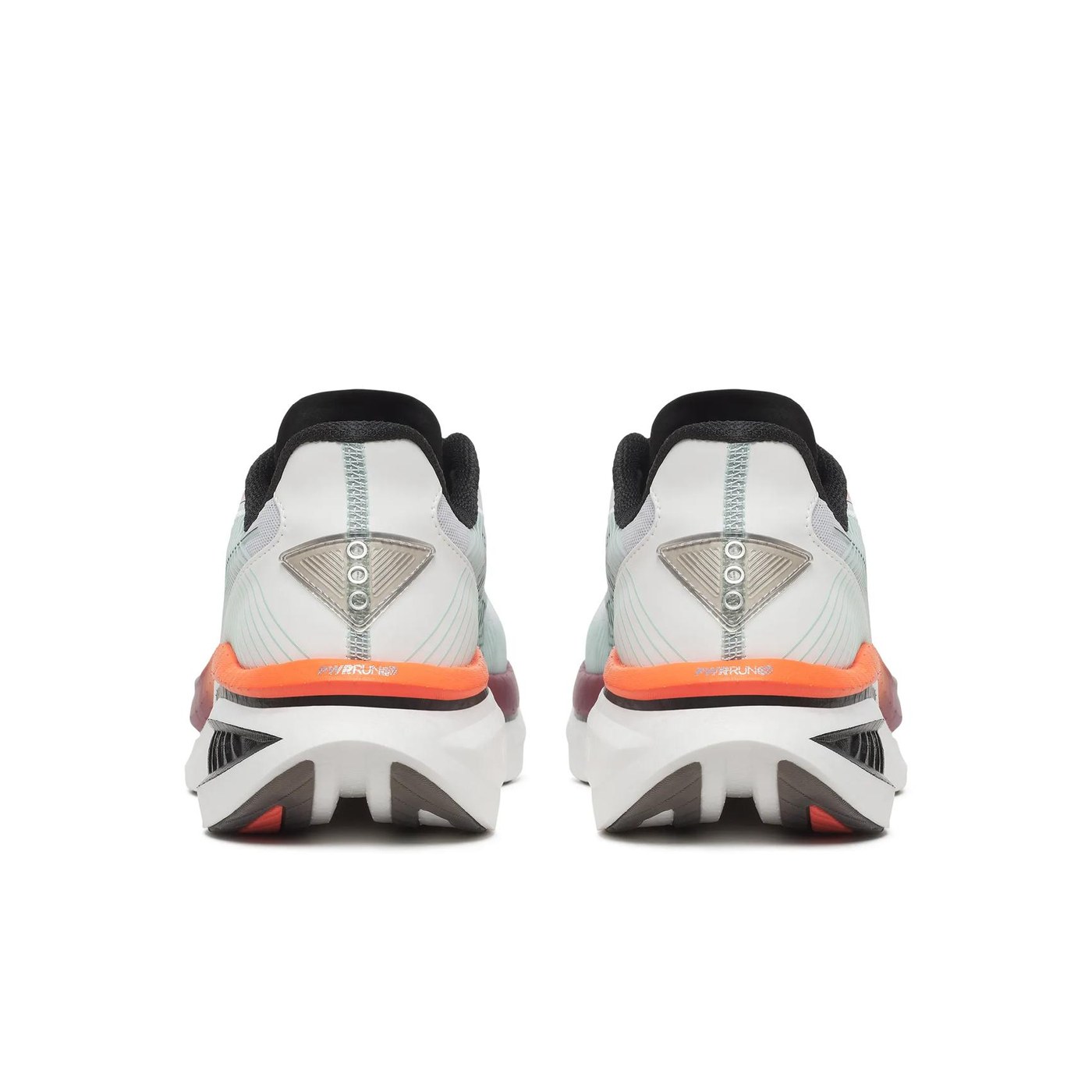
The name is no accident. By reviving a 1988 model, Saucony plays the retro card on the design, with a finely striped mesh upper and a vintage-style heel, while owning a very 2026 spec sheet. One caveat up front: a 240 g daily trainer is not a pure 5 km shoe, and skipping the plate mechanically caps the efficiency gain compared with the Endorphin Speed 5 or Pro 5 already in the lineup.
Endorphin Azura specs: what sets it apart in the lineup
| Feature | Details |
|---|
| Brand | Saucony |
| Model | Endorphin Azura |
| Release | February 1, 2026 |
| Type | Road, fast daily trainer |
| Drop | 8 mm |
| Stack height forefoot / heel | 32 mm / 40 mm |
| Weight (men's reference size) | 240 g |
| Carbon plate | No |
| Foam | PWRRUN (midsole) + PWRRUN+ (insole) |
| Geometry | SpeedRoll (rocker inherited from the Endorphin line) |
| Stability | CenterPath (medial guidance without excess stiffness) |
| Outsole | XT-900 rubber |
| Recommended distance | 5 km to marathon for all-round use |
| Official price | 160 euros (from 124 euros at some retailers in mid-2026) |
© Saucony, official photo used for editorial purposes
PWRRUN and SpeedRoll without a plate: what changes underfoot?
Without a plate, the foam and geometry have to create the rolling sensation on their own. The combo of a PWRRUN midsole and a PWRRUN+ insole delivers generous cushioning and a softer response than the plated Endorphins, which can feel firm over the first few kilometers. The SpeedRoll rocker, already proven on the Speed 5 and Pro 5, takes over much of the propulsion work the plate handles elsewhere.
CenterPath deserves an explanation. It isn't a stability device in the classic sense but a sole geometry that resists excessive medial motion without locking you into a rigid guide. In practice, the shoe stays neutral and smooth, with just enough guidance to reassure you on long strides late in a run.
Field test: from easy runs to hard tempo
We tested the Endorphin Azura at paces from 6 min/km on recovery runs down to 4 min/km on tempo segments, with a 25 km long run included in the protocol. At slow paces, the PWRRUN+ cushioning soaks up impact well without feeling mushy or unstable. Once the pace climbs to around 4 min 30/km, the SpeedRoll rocker takes over and gives you a stride that rolls, though without the outright pop of a carbon plate.
On the long run, comfort holds up to the very end. The mesh upper breathes well even in hot weather, and the padded tongue prevents any pressure point on the instep. The XT-900 outsole grips properly on wet asphalt, though it's built for the road, not mixed surfaces.
RunMorph's tip: if you want one shoe that covers easy runs and quality sessions without a carbon plate, the Endorphin Azura fills a real gap between the Saucony Ride 19 and the Saucony Endorphin Speed 5.
© Saucony, official photo used for editorial purposes
Saucony Endorphin Azura vs Endorphin Speed 5: head to head
Both shoes share the same tech lineage but serve different needs. The Speed 5 keeps its nylon plate for better race-day efficiency, while the Azura bets on versatility and a more accessible price.
| Criteria | Saucony Endorphin Azura | Saucony Endorphin Speed 5 |
|---|
| Plate | None | Nylon |
| Weight | 240 g | 235 g |
| Stack height heel / forefoot | 40 / 32 mm | About 36 / 28 mm |
| Main use | Easy runs to tempo, versatility | Tempo to short and middle-distance racing |
| Price | 160 euros | About 180 euros |
Outside Saucony, the Azura also takes on the Asics Novablast 6 and the Hoka Mach 7, two other lively plateless daily trainers. It offers more stack height than both rivals, at the cost of slightly more weight.
What we liked
- More generous PWRRUN cushioning than the plated Endorphins
- Genuine versatility from easy runs to tempo
- Comfortable, breathable mesh upper
- Reasonable price for tech from the carbon line
What we liked less
- No plate, so less explosive than the Speed 5 on race day
- Long-term durability of the PWRRUN foam needs watching
- XT-900 outsole built for the road only
© Saucony, official photo used for editorial purposes
Our take from the road: who is the Endorphin Azura for?
The Azura is a particularly good fit if you're training for a half marathon or marathon on moderate mileage and want one shoe for most of your build, from base easy runs to threshold sessions. It's also a smart pick if you already own a carbon racer and want a daily trainer with more pop than your usual training shoes.
RunMorph business tip: to build your training weeks around one versatile shoe like the Endorphin Azura, lean on a
RunMorph training plan tailored to your marathon, half marathon or 10 km goal.
On the other hand, if pure race performance is all you're after, the Endorphin Speed 5 or Endorphin Pro 5 will serve you better, since the plate makes a real difference in efficiency.
RunMorph Coach verdict
The Saucony Endorphin Azura pulls off its bet: part of the Endorphin feel without the price or stiffness of a carbon plate. It doesn't replace a true racing shoe, but it smartly fills the space between classic daily trainers and the brand's super shoes. 8/10, a score that rewards rare versatility at this price.