For years, wearing a chest strap came with an annoying ritual: open a drawer, hunt for a CR2032 battery, and curse when the sensor dies halfway through your intervals. Wahoo wants to end that with the TRACKR Heart Rate, its first fully rechargeable strap, which now replaces the old TICKR and TICKR X in the brand's lineup. Here's our verdict after several weeks of road runs, trail runs and indoor trainer sessions.

© Wahoo, official photo used for editorial purposes
Wahoo moves on from coin cell batteries
For a long time, the chest strap market was split into two camps: coin cell models, practically indestructible but a hassle to maintain, and a handful of rechargeable attempts seen as less reliable. Wahoo long bet on the CR2032 battery with its TICKR and TICKR X, two straps cyclists loved for their record battery life (over 500 hours) and, on the X, advanced running metrics. The TRACKR Heart Rate changes course. It drops the coin cell, the onboard memory and the built-in accelerometer in favor of a rechargeable lithium-ion battery and a thinner, lighter ECG sensor, built to last without ever sending you to a drawer for a spare battery.
That choice has consequences. By simplifying the electronics, Wahoo gains comfort (39 grams versus 60 for the Polar H10 and 52 for the Garmin HRM-Pro Plus) but loses features some runners want, like standalone recording without a smartphone. The durability pitch is real: no more battery door, a fully sealed sensor. But 89.99 euros for a product that, on paper, does strictly less than a Garmin HRM 600 deserves a closer look, and this review breaks it down point by point.
TRACKR Heart Rate specs: a rechargeable strap that keeps things simple
| Feature | Value |
|---|
| Brand | Wahoo |
| Model | TRACKR Heart Rate |
| Type | Single-channel ECG chest strap |
| Weight | 39 g (strap + module) |
| Battery | Rechargeable lithium-ion, USB via magnetic cable |
| Battery life | Over 100 hours of activity |
| Connectivity | ANT+ and Bluetooth Smart (up to 3 simultaneous connections) |
| Data measured | Heart rate, heart rate variability (HRV) |
| Onboard memory | None (requires a watch, phone or bike computer) |
| Water resistance | IPX7 (rain, sweat; not suitable for swimming) |
| Chest size | Up to 127 cm (optional XL strap available) |
| Compatible apps | Strava, Peloton, Zwift, Nike Run Club, Adidas Running, Wahoo ecosystem |
| Official price | €89.99 |
© Wahoo, official photo used for editorial purposes
Rechargeable tech: what actually changes?
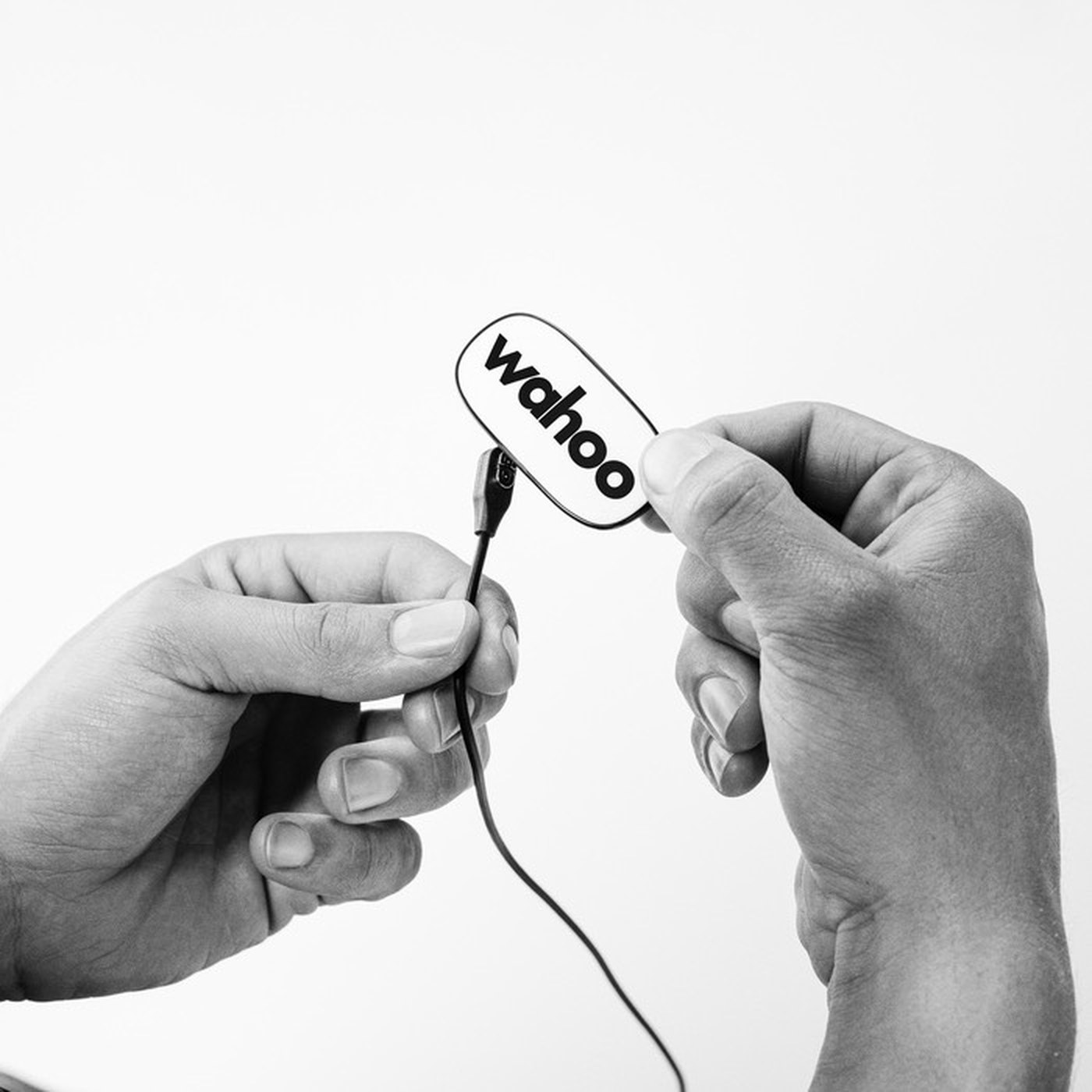
The TRACKR module charges through a proprietary magnetic connector, the same system used by Shokz OpenRun bone conduction earbuds. A full charge delivers about 100 hours of activity, enough to cover several weeks of training for a runner who trains 5 to 6 times a week. An LED on the edge of the module shows the charge level: flashing red below 25%, orange between 25 and 50%, flashing green above 50%, solid green when fully charged.
Going rechargeable comes at a functional cost. The TRACKR no longer has an accelerometer or a data buffer: unlike the Garmin HRM 600 or the old TICKR X, it can't record a session unless it's paired with a watch, a bike computer or the mobile app. It doesn't measure cadence, ground contact time or vertical oscillation, metrics reserved for high-end sensors from Garmin and Coros. Bottom line: the TRACKR does one job, measuring heart rate and HRV, but it does it with an ECG sensor and full connectivity (ANT+ and up to three simultaneous Bluetooth channels), enough to pair a watch, a bike computer and an indoor training app at the same time.
© Wahoo, official photo used for editorial purposes
Field test: from easy runs to intervals, on the road and indoors
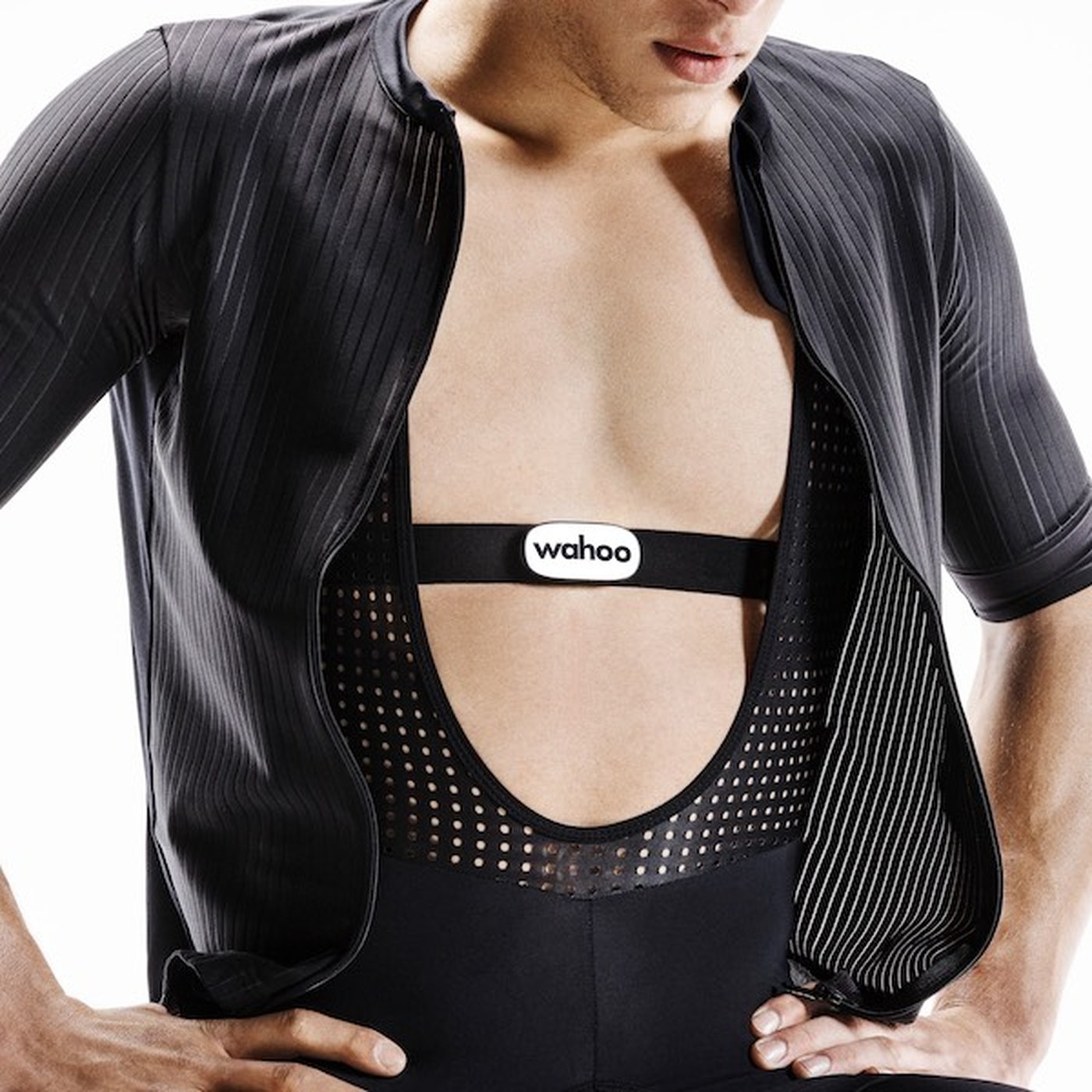
We wore the TRACKR on everything from easy runs at 5:30/km to short intervals at 3:45/km, plus indoor trainer sessions and a long bike ride. First takeaway: the comfort really is a cut above. The thin, soft fabric strap leaves almost no marks, even on runs longer than an hour and a half, and the 39 gram module disappears far faster than a Polar H10 or a Garmin HRM-Pro Plus.
On accuracy, raw heart rate is excellent. During fast pace changes (fartlek, short hill repeats), the gap against a reference strap stayed under 2 to 3 beats per minute, which you won't notice in practice. Heart rate variability (HRV) is less clean: occasional artifacts show up more often than on high-end sensors. That doesn't compromise everyday use, but it limits the precision of the most advanced recovery analysis.
RunMorph tip: the TRACKR is an excellent partner for a watch without reliable optical wrist heart rate, like many outdoor watches in cold conditions. If you want detailed resting HRV analysis to manage your training load, the Polar H10 remains the more precise benchmark.

© Wahoo, official photo used for editorial purposes
Wahoo TRACKR vs Polar H10: which one to choose
Runners torn between these two similarly priced straps ask this question all the time. The Polar H10 is still the gold standard for HRV accuracy, validated by independent scientific studies, with coin cell battery life beyond 400 hours. The TRACKR bets on comfort and on never buying a battery again, at the cost of more modest onboard electronics.
| Criterion | Wahoo TRACKR Heart Rate | Polar H10 |
|---|
| Weight | 39 g | 60 g |
| Battery | Rechargeable, 100 h+ | Coin cell, 400 h |
| Heart rate accuracy | Excellent | Excellent (benchmark) |
| HRV accuracy | Good, some artifacts | Scientific benchmark |
| Onboard memory | No | Yes (standalone training mode) |
| Swimming | Not recommended (IPX7) | Yes (water resistant to 30 m) |
| Official price | €89.99 | Around €90 |
The verdict mostly depends on how you'll use it. For a runner or cyclist who doesn't swim and wants the least noticeable strap for everyday training, the TRACKR wins on comfort. For a triathlete, or anyone who wants to dig into resting HRV every morning, the Polar H10 keeps the technical edge. The Garmin HRM 600 sits between the two, with onboard memory and the full Garmin Connect ecosystem.
Wahoo TRACKR Heart Rate pros and cons
Pros
Rechargeable strap, no more coin cells to buy. The lightest and most comfortable on the market at 39 grams. Excellent heart rate accuracy across all types of effort. Three simultaneous Bluetooth connections plus ANT+, highly versatile. Works with almost every training app.
Cons
No onboard memory: you can't record a session without a paired device. No advanced running metrics (cadence, vertical oscillation). IPX7 water resistance isn't enough for swimming. HRV less clean than the benchmark Polar H10. Priced like the best straps on the market for fewer features on paper.

© Wahoo, official photo used for editorial purposes
Our take: who is it for, and which RunMorph training does it suit?
The TRACKR Heart Rate is built first and foremost for the versatile runner or cyclist who wants dependable heart rate zones on a structured plan, without ever worrying about a dead battery on the morning of a key session. It fits perfectly into training load management by heart rate zones, whether you're preparing for a marathon, following a half marathon plan or running a focused block of intervals.
Whether you're training for a marathon or a half, or just want dependable heart rate zones in training, check out the
RunMorph training plans that use exactly this heart rate data to set the intensity of every session.
The RunMorph Coach's verdict
The Wahoo TRACKR Heart Rate delivers on its promise: a comfortable, accurate chest strap that's done with coin cell batteries for good. It doesn't try to compete with high-end sensors on advanced metrics, and that deliberate choice is exactly what makes it appealing if you want a simple, durable tool. Price is the most debatable point: at 89.99 euros, it costs as much as a Polar H10 while doing strictly less on paper.
RunMorph verdict: 8/10. A very good choice for boosting the heart rate accuracy of a watch or bike computer every day, as long as you accept its limits (no swimming, no standalone recording).