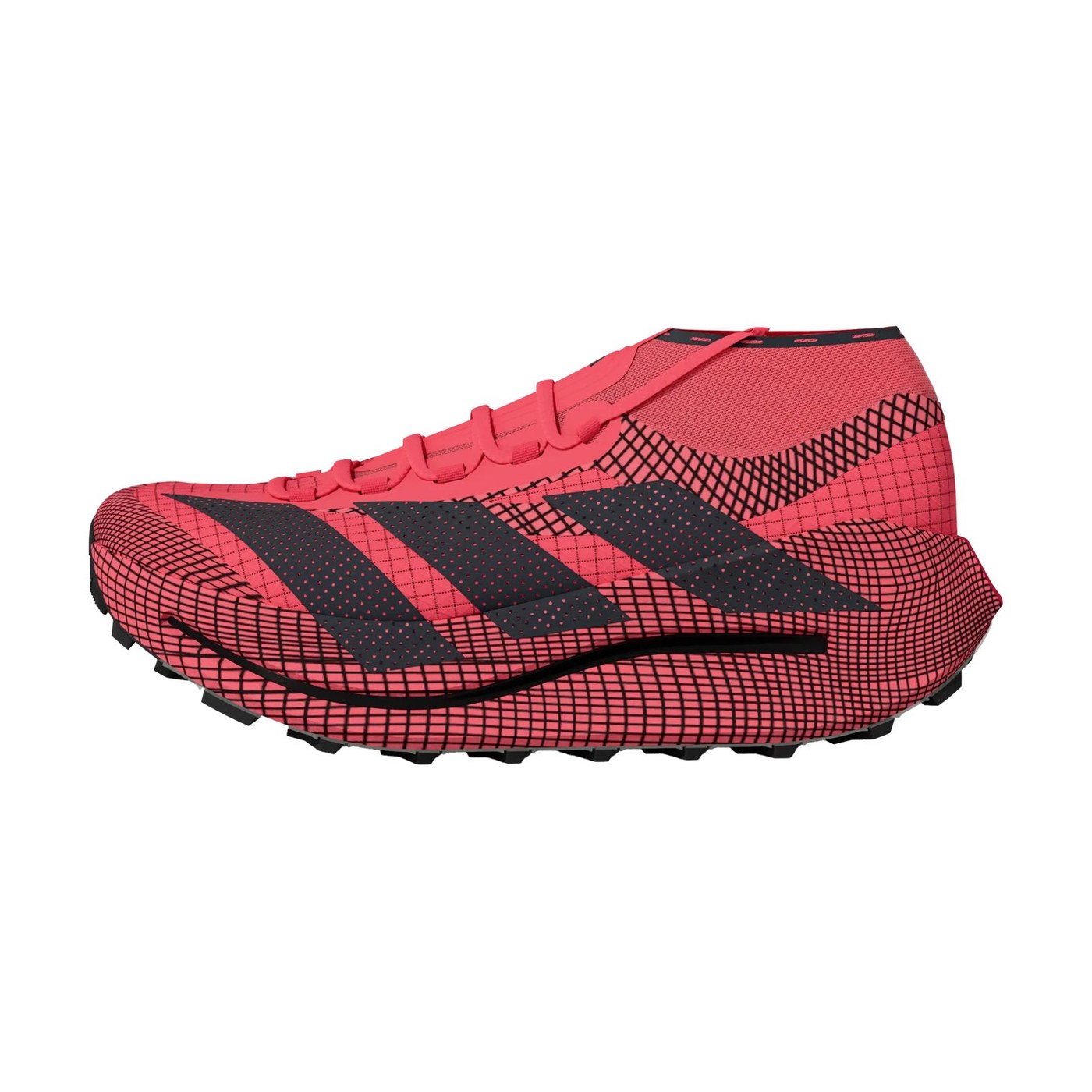
Five hundred euros for a pair of trail shoes. Adidas owns it. The Terrex Agravic Speed Ultra Evo is now the most expensive trail running shoe ever sold in France, and the brand treats that as a selling point, not an embarrassment. At RunMorph, the question isn't whether it's worth that much in the abstract. It's which runner, on which terrain, that price actually makes sense for, and who should clearly look elsewhere.
© Adidas, official photo used for editorial purposes
A deliberate strategy: bringing the marathon blade to the trail
Adidas built its road lineup around a simple idea: sell a record-chasing shoe, the Adizero Adios Pro Evo 3, then push the technology down the range. The Terrex Agravic Speed Ultra Evo applies the same logic to trail. It borrows the double Energyrim architecture designed for the road: two carbon-loaded strips that run along the edge of the midsole up to the toe. Adidas now puts that architecture on ground that is never flat or predictable.
The bet is risky on paper. A road doesn't move under your foot. A trail does. Thirteen athletes from Adidas's international team, including ultra runner Ruth Croft, worked on development, and the shoe made its debut around UTMB in late August 2026. Since then, it has shipped through a deliberately narrow distribution channel. Few pairs, few retailers, a price that already filters out most buyers.
Already on the RunMorph catalog, the Agravic Speed Ultra 2 held the top of Adidas's carbon trail range. The Evo doesn't replace it. It sits above it, on a niche segment Adidas openly owns.
Agravic Speed Ultra Evo tech specs
© Adidas, official photo used for editorial purposes
| Spec | Value |
|---|
| Brand | Adidas |
| Model | Terrex Agravic Speed Ultra Evo |
| Release | August 24, 2026 (limited quantities) |
| Use | Fast trail racing, smooth to moderately technical ground, 50 to 100 km |
| Drop | 6 mm |
| Stack | 39 mm heel, 33 mm forefoot |
| Announced weight | 250 g (standard size) |
| Measured weight | 254 g to 266 g depending on the size tested, across two separate measurements |
| Foam | Molded Lightstrike Pro (TPEE), dual layer |
| Chassis | Double carbon EnergyRim, no rod or full-length plate |
| Outsole | Continental rubber, speed-oriented lugs |
| Upper | Woven Trailock mesh, integrated gaiter, Sawtooth lacing |
| Price | 500 € |
The weight shows a small gap between the claim and the ground. 250 g promised, 254 g measured by a German tester in UK 8,5, up to 266 g for a US tester in US 10,5. Nothing alarming, six to sixteen grams depending on size, but a reminder that a spec sheet is an average, not an individual promise.
The double EnergyRim: why this Adidas has no plate or carbon rod
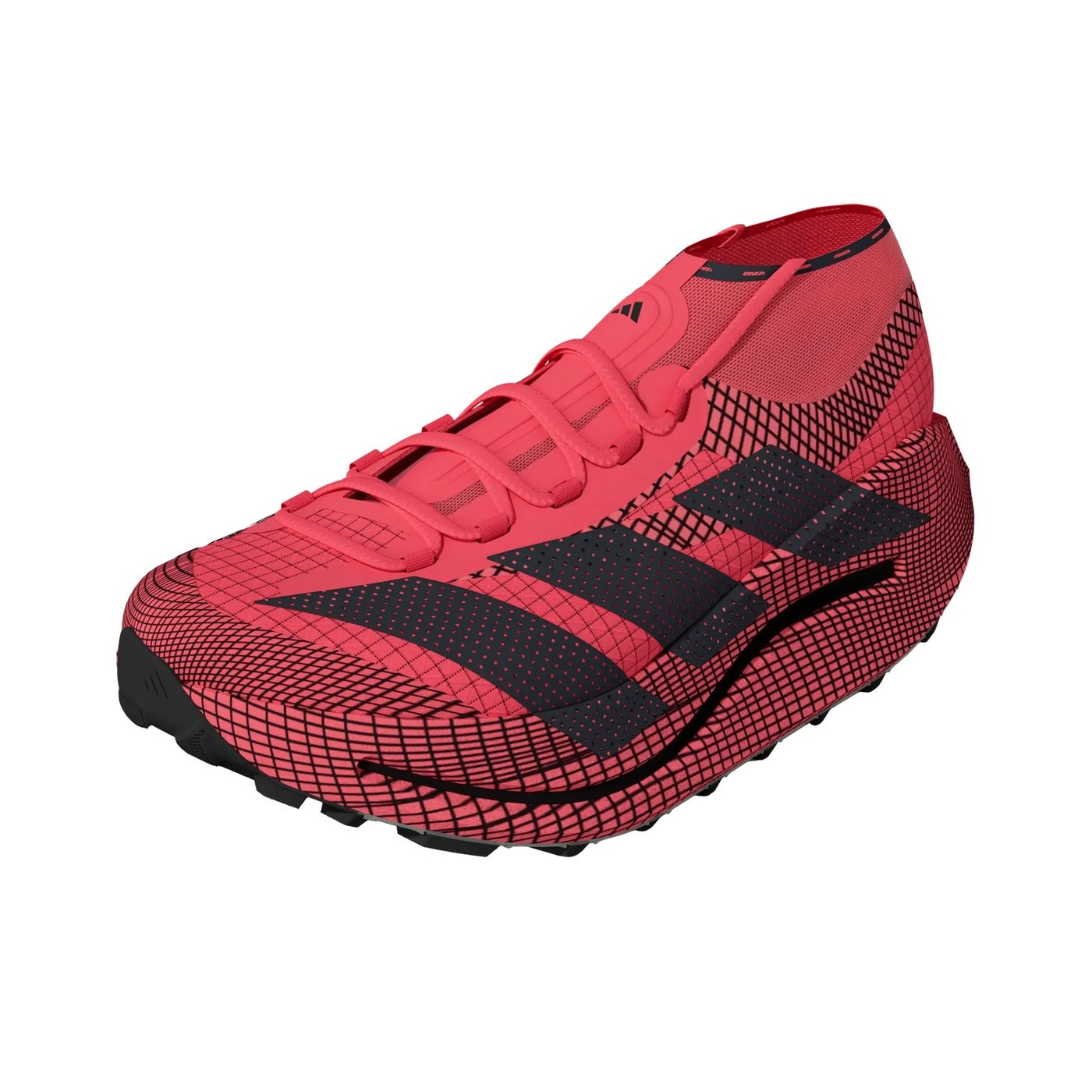
This is the real technical change in this version. Earlier generations of the Speed Ultra line relied on carbon rods embedded in the foam. The Evo drops them. Instead, two carbon-loaded elements run separately along the lateral and medial edges of the midsole, down to the tip of the shoe, never meeting in the middle. Adidas claims 15% more functional deformation underfoot and 10% more energy return than the Speed Ultra 2.
On paper, the idea answers a real problem with full-length plates on trail: their uniform stiffness copes badly with ground that changes with every stride. By splitting the two edges, Adidas hopes for a chassis that adapts sideways to camber while keeping the forward propulsion of a plate. Early reports back up part of that bet. One real weakness shows up later in this piece: a rim that extends under the little toe, on the outside edge, can also turn into a rigid bar. It then concentrates pressure in the wrong spot through a sharp turn.
Fit: lacing that marks the toes on some feet
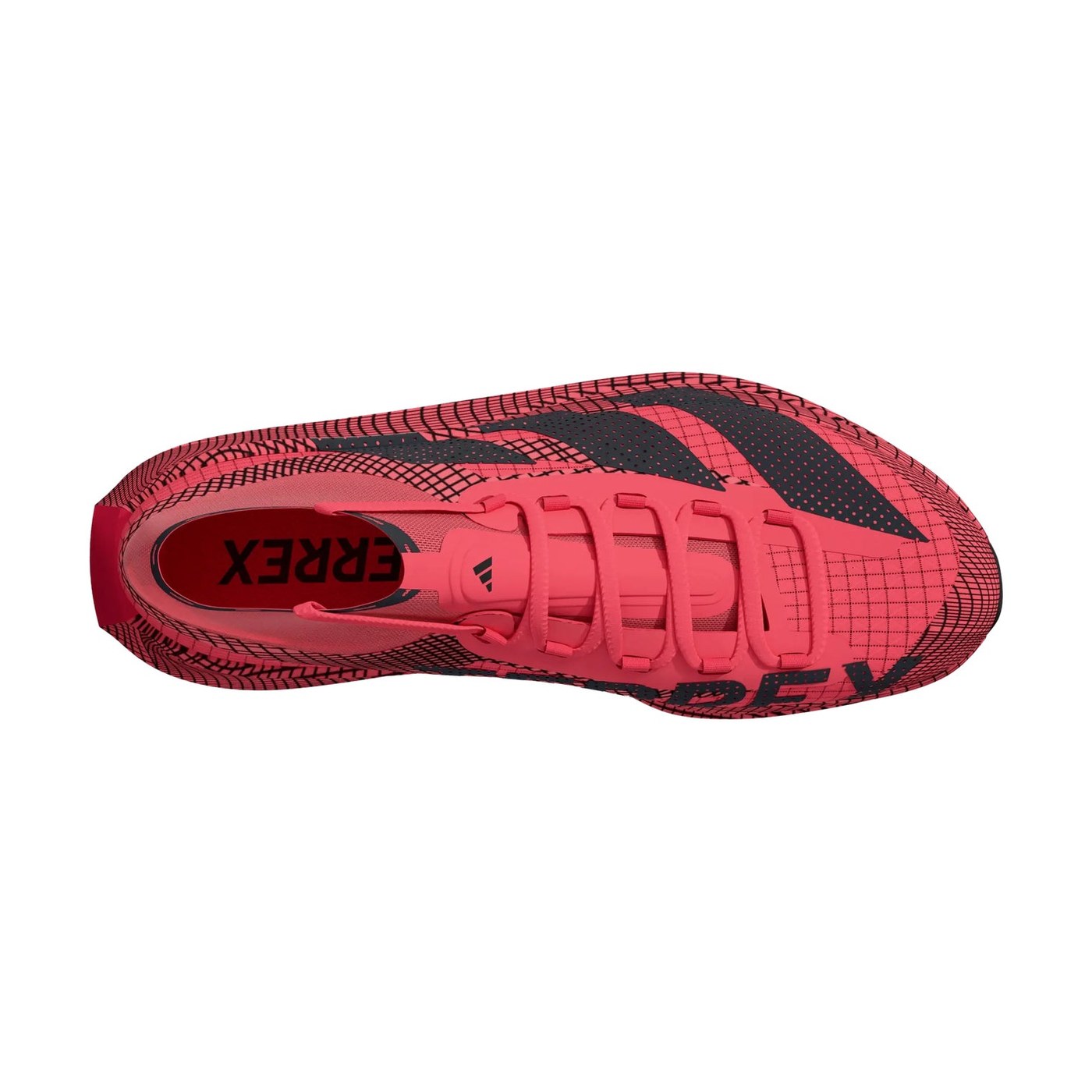
The woven Trailock mesh upper, with one-way stretch, locks the midfoot without squeezing the front of the foot. The integrated gaiter, in a latex-like material, closes well around the ankle and keeps out trail debris. Two separate reports praise a performance fit that never feels stifling, with decent heel hold despite the lack of a rigid classic heel counter.
One concrete friction point still comes up in a real-world test. The welds at the base of the lacing chain mark the tops of both big toes, a feeling the tester involved compares to a cheese grater, even with anti-chafe balm. The shoe therefore warns off its own buyers with bunions or high-volume feet, who risk early discomfort over long distances.
© Adidas, official photo used for editorial purposes
RunMorph's advice: before putting down 500 euros, compare your own foot volume against what the field reports describe. If you've already had forefoot pressure points on an Agravic Speed Ultra 2, this Evo probably won't fix it.
The field test: reports that flatly disagree on stability
This is the clearest point about this shoe, and at RunMorph we'd rather say so than smooth it over. A two-tester field test, with both runners on the same pair across separate outings, lands on two almost opposite readings. The first tester calls it maybe the fastest trail shoe ever built for racing, describing a midsole that feels soft and snappy at once. He flags one precise reservation. The lateral rim, too present under the little toe, creates a sharp pressure point through tight turns or on shifting ground. Heel hold, for him, stays just decent.
The second opinion, on the same pair and the same model, goes much further with its reservation. On any ground that's even slightly uneven or unmaintained, the shoe is judged too unstable. The tester reports her ankles rolling on nearly every landing outside the smoothest sections. She says she chose to walk some technical descents rather than risk a sprain.
A separate German report, published in early October 2026 on a different pair, leans toward a third reading. The wider platform compared with the Speed Ultra 2, combined with the two split rims, would give noticeable stability despite the thick stack. What explains the gap? Likely stride and build. A clean, even footstrike makes the most of the pronounced rocker. A less steady footstrike, or a less locked-in ankle, is exposed more to the lateral rim's weak spot. At RunMorph, this disagreement weighs directly on the stability score above. It stays middling, and clearly not a given for every runner.
Major flaw: stability that no one agrees on
Beyond the disagreement between testers, one precise geometric detail explains the harshest criticism. The lateral rim of the sole extends under the fifth toe rather than stopping at the big toe. That extension makes the outer edge of the sole stiff exactly where the foot needs flexibility to absorb a sideways landing. The concrete result: through a tight turn, over a root or a loose rock, pressure concentrates on the outer edge of the foot instead of spreading out. A runner with a clean, even footstrike compensates without thinking about it. A runner whose stride shifts late in a run, through fatigue, feels it more.
Major flaw: a gaiter that doesn't go the distance
© Adidas, official photo used for editorial purposes
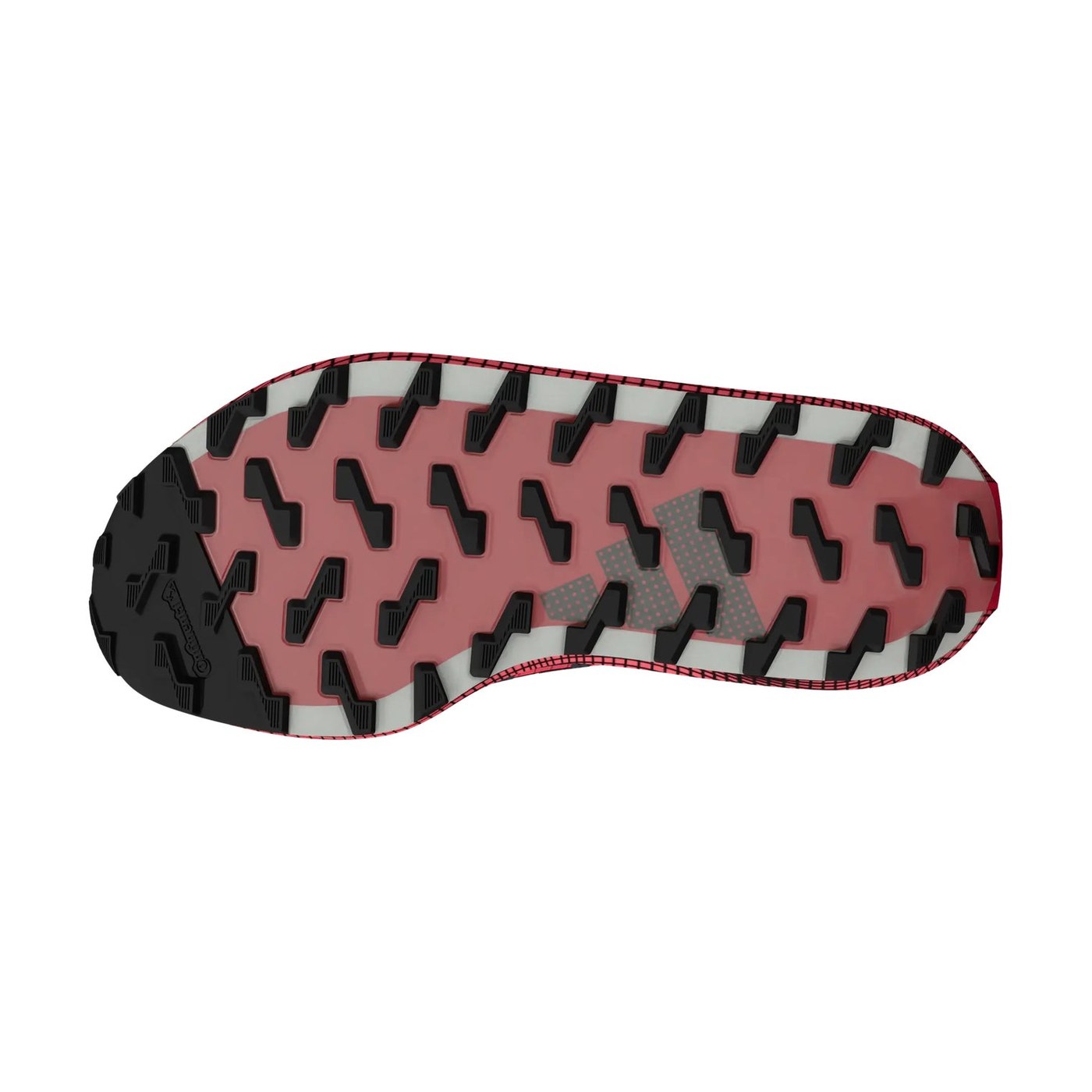
The second weak point concerns durability, and it shows up across several separate test grounds. The integrated gaiter, in a latex-like material, closes the ankle and blocks debris. Between mile 65 and mile 75 of use, it tore on both shoes of the same pair in real-world testing. A separate German report, on a different pair, points instead to fast midsole wear from repeated rock contact. Its conclusion is blunt: this isn't a shoe built to run a thousand kilometers in. The outsole, though, holds up better: no notable wear reported at 75 miles by one tester, and a still-fresh feel after a 50 km altitude ultra for another. The weak point sits less in the rubber, then, than in the gaiter and, depending on the ground, in foam exposed to rock.
Agravic Speed Ultra Evo vs Agravic Speed Ultra 2: the comparison
| Criterion | Speed Ultra 2 | Speed Ultra Evo |
|---|
| Chassis | Carbon rods (EnergyRods) | Double EnergyRim, no rod |
| Announced weight | Heavier | 250 g, about 5% less |
| Energy return | Range benchmark | +10% claimed by Adidas |
| Price | Significantly lower | 500 € |
| Positioning | All-round, training and racing | Pure racing, smooth terrain |
The simple read: if you already own an Agravic Speed Ultra 2 and it works for you, nothing in the current reports justifies upgrading to the Evo for training. The price gap is too wide for a responsiveness gain that only benefits a narrow set of race profiles.
Agravic Speed Ultra Evo vs the direct competition
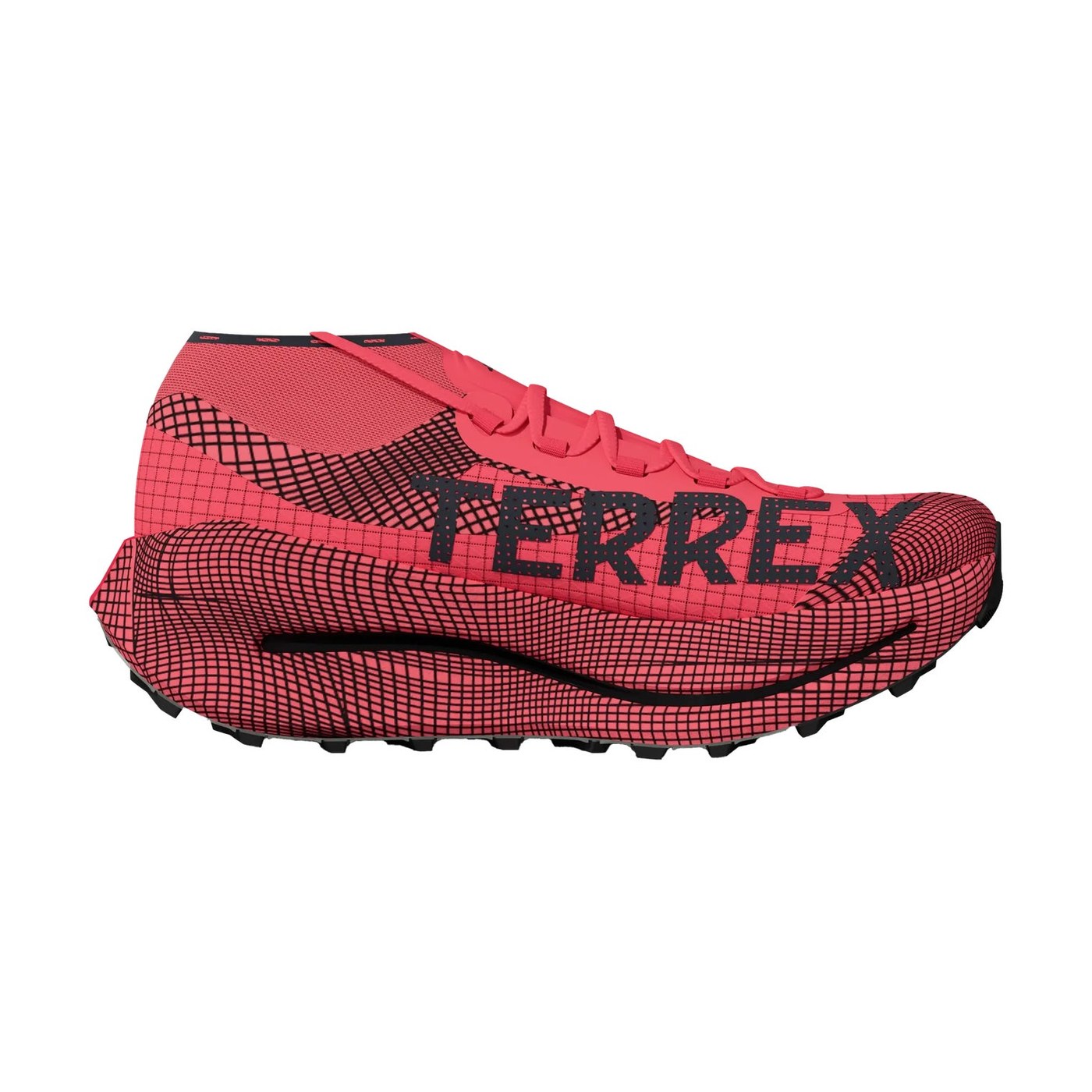
© Adidas, official photo used for editorial purposes
The simple read, once more. One tester put it bluntly in her own write-up: other trail super-shoes at 220 to 230 euros offer a comparable speed edge, with more stability on top. The Hoka Tecton X 3 and the Salomon S/Lab Pulsar 4 cost less than half the price and don't give up stability to the same degree. At RunMorph, the 270 to 280 euro gap only makes sense if the Evo's pure speed matters more to you than everything else.
Our field verdict: who, and for which race?
This Adidas isn't trying to please everyone. It targets a specific runner: fast, with an even stride, racing smooth to moderately technical trails over 50 to 100 km, who doesn't need reassurance on every landing. For that profile, the reports agree on a real speed gain. For a runner with an unstable foot, a fragile ankle, or simply looking for an all-round training shoe, the same reports point toward a different pick from the catalog.
RunMorph's training tip: if you're training for a fast race on a smooth trail, a low-technical-climb ultra, or an 80 km forest-track event, our
RunMorph trail training plans help you build the volume and pace that actually justify this kind of shoe, instead of buying it without a plan behind it.
RunMorph Coach's verdict
The Terrex Agravic Speed Ultra Evo delivers on part of its promise. The double EnergyRim pushes hard, the weight stays in check despite a generous stack, and the fit wins over most reports. But a trail shoe that splits two testers at the same outlet on something as central as stability can't claim the top of the scale. A gaiter element that fails before 100 km confirms that ceiling, whatever the price tag says. 6,8/10. A good niche product, not a universal reference, and certainly not a purchase that justifies itself on price alone.