On built a whole marketing empire on the cloud: the bounce, the lightness, the propulsion of the Cloudmonster and the Cloudboom. With the Cloudsurfer Trail 2, the Swiss brand makes a smaller bet that carries just as much risk: convincing you that the same pair can eat up Monday's asphalt and Sunday's rocky path, without ever truly excelling on either surface. The result raises as many questions as it wins fans.
© On, official photo used for editorial purposes
On extends its cloud empire to the road-to-trail hybrid
Since its early days, On has built its reputation on one specific territory: the road, with the famous Clouds behind the success of the Cloudmonster and the Cloudsurfer. For a long time, the Swiss brand approached trail from the top end, through technical super shoes like the Cloudultra Pro and the Cloudultra 3, built for ultras and rugged terrain. The Cloudsurfer Trail occupies a completely different space: the runner who doesn't really do trail running, but sometimes leaves the beaten path without ever chasing performance in the mountains.
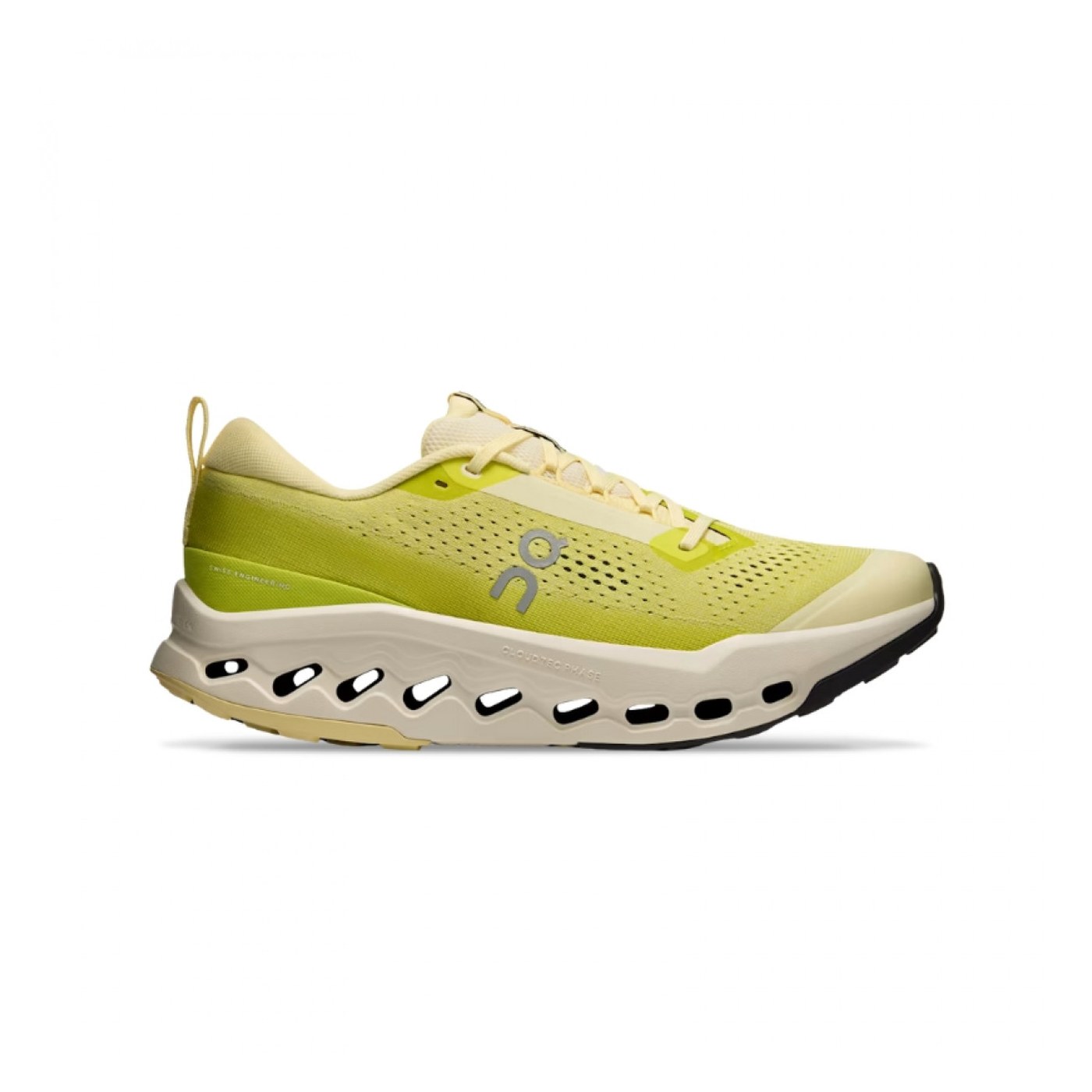
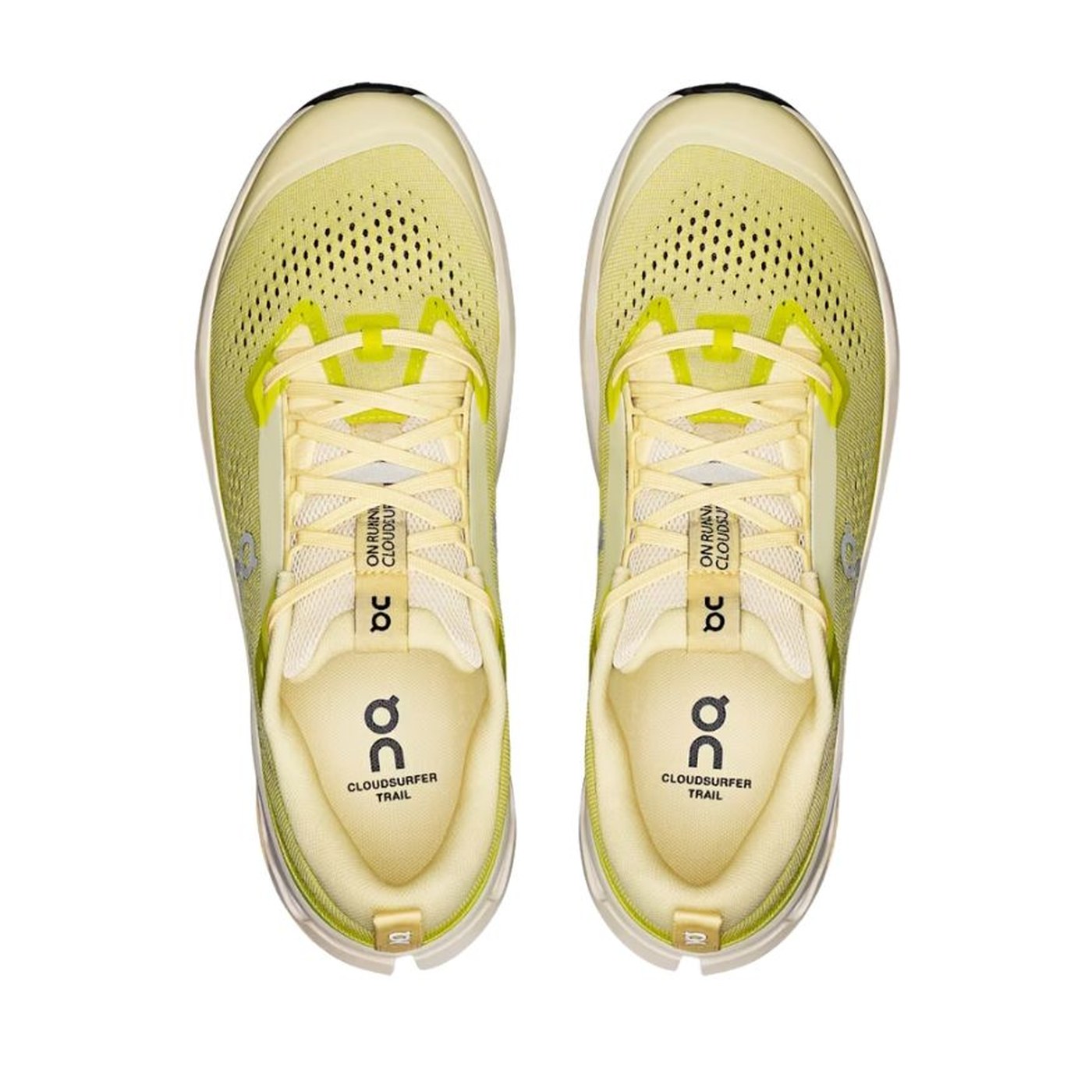
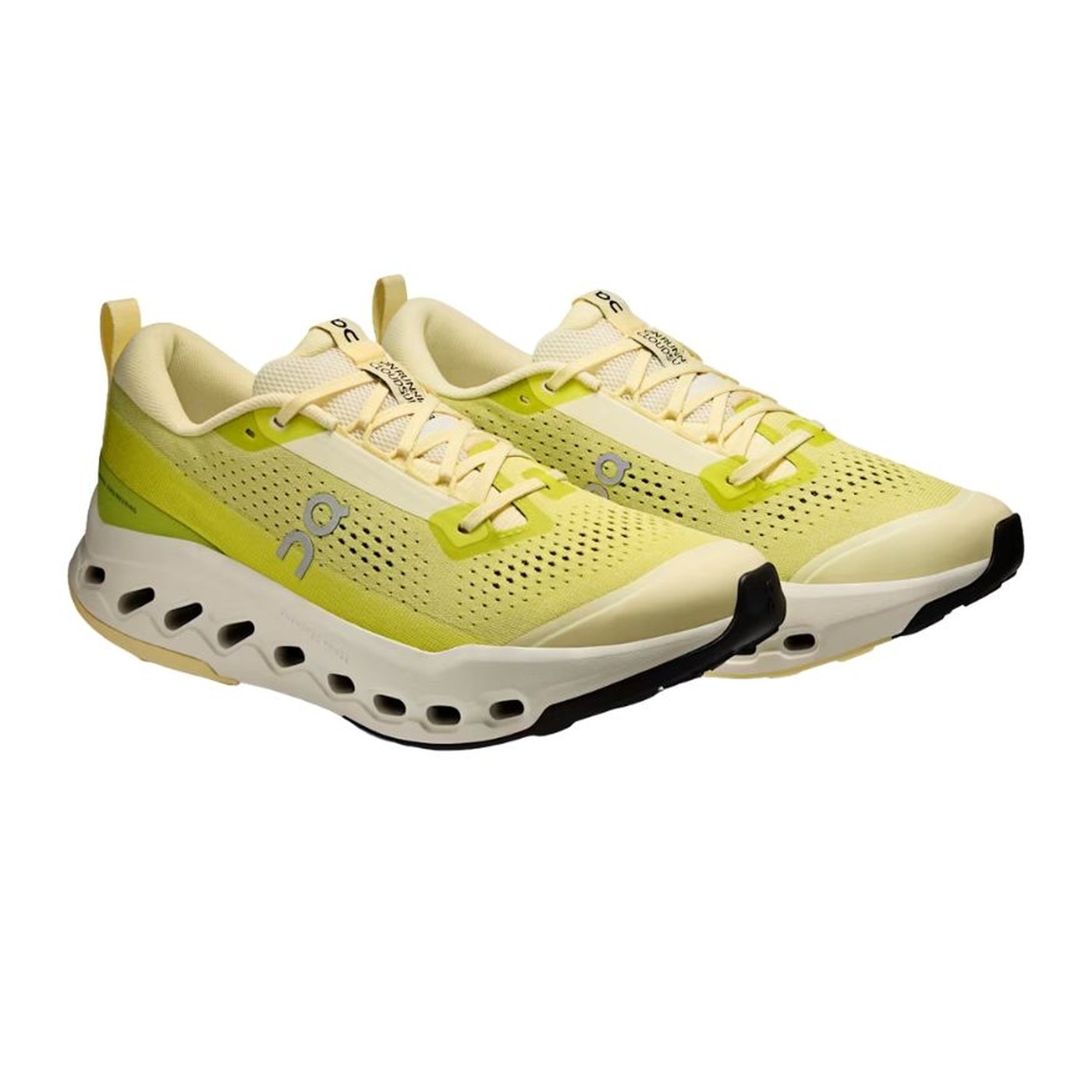
Released in late 2025, the Cloudsurfer Trail 2 takes the DNA of the road Cloudsurfer 2 and fits it with a grippier Mission Grip outsole and a reinforced upper. The first version found its audience, but it also drew criticism for upper lockdown and stability on mildly technical terrain. At RunMorph, we found that the V2 fixes part of these flaws without ever trying to become a true trail shoe: it remains, and owns it, a hybrid designed for the city and its outskirts.
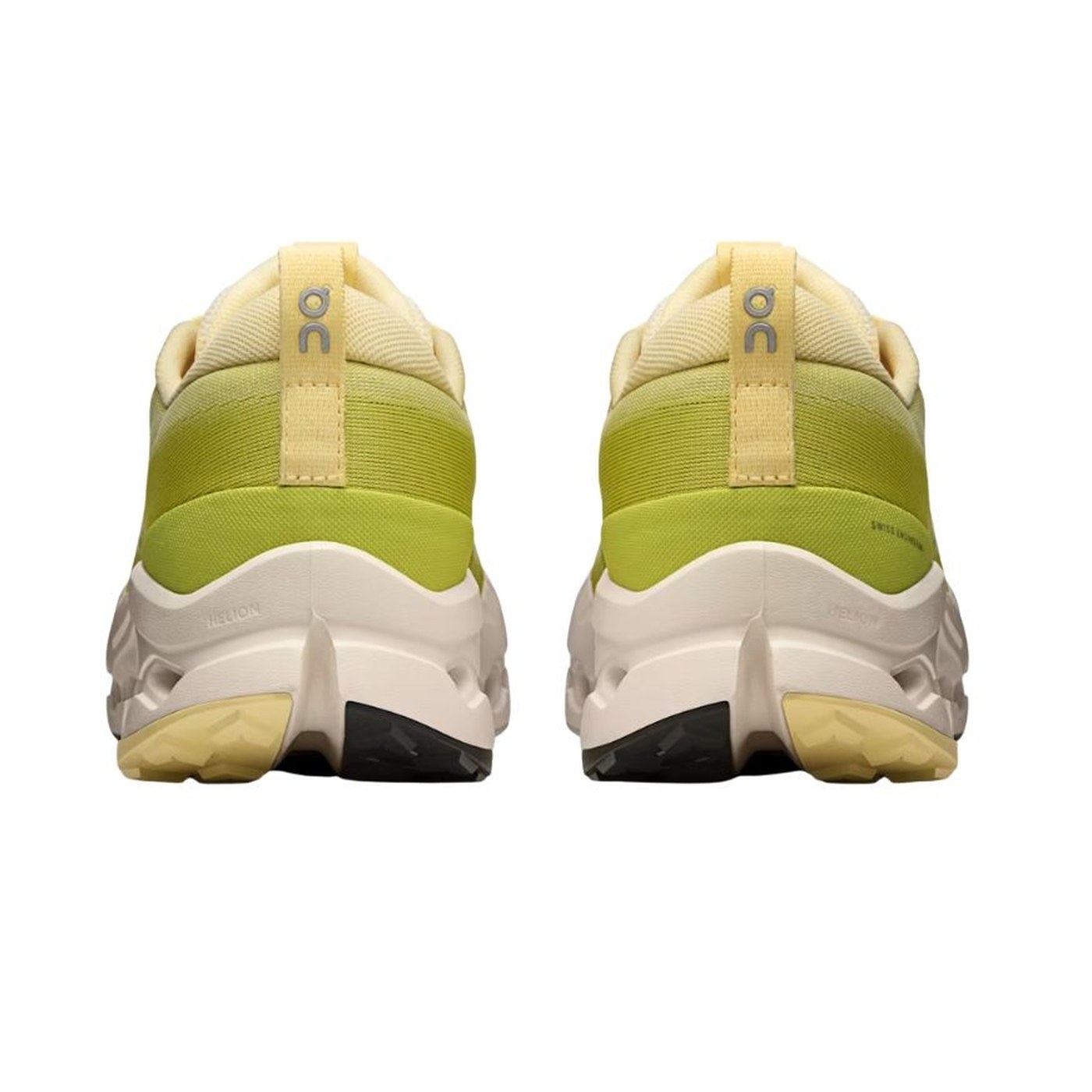
The biggest change is the foam: classic EVA is out, replaced by a new generation of Helion that is denser and firmer. That choice tempers On's usual marketing promise of endless softness. Here, the firmness is deliberate to gain responsiveness, even if it costs some of the plush feel that made the first version so appealing.
Cloudsurfer Trail 2 specs: what really changes
| Brand | On |
| Model | Cloudsurfer Trail 2 |
| Release | Late 2025 |
| Type | Road-to-trail hybrid, smooth terrain |
| Drop | 8 mm (vs. 7 mm on the V1) |
| Stack height (forefoot / heel) | 26 mm / 34 mm (vs. 30 / 37 mm on the V1) |
| Weight | 287 g (men's) / 230 g (women's) |
| Foam | Next-generation Helion (EVA-free), denser and firmer |
| Midsole technology | CloudTec Phase, forward-angled Clouds |
| Outsole | Mission Grip, 3 mm chevron lugs |
| Carbon plate | No |
| Upper | Thick, ventilated single-layer mesh, woven reinforcements at the rear |
| Recommended terrain | Asphalt, gravel roads, non-technical trails |
| Recommended distance | Short to mid-long runs, up to about 25 km |
| Official price | 170 euros |
The number that best sums up this V2 is the 3 mm cut in stack height (34 mm at the heel vs. 37 mm before), offset by a drop increase from 7 to 8 mm. On set out to bring you closer to the ground while keeping support at the heel, a trade-off you feel from the very first run.
Helion foam and Mission Grip: what changes underfoot?
The new Helion formula drops EVA for a denser compound, which makes it both firmer and more responsive than the foam in the first Cloudsurfer Trail. Paired with CloudTec Phase technology, whose Clouds now angle forward as on the Cloudultra line, this foam promotes a more natural forward roll through your stride. In practice, the shoe encourages a midfoot strike at a brisk pace while staying forgiving for a heel strike at slow paces.
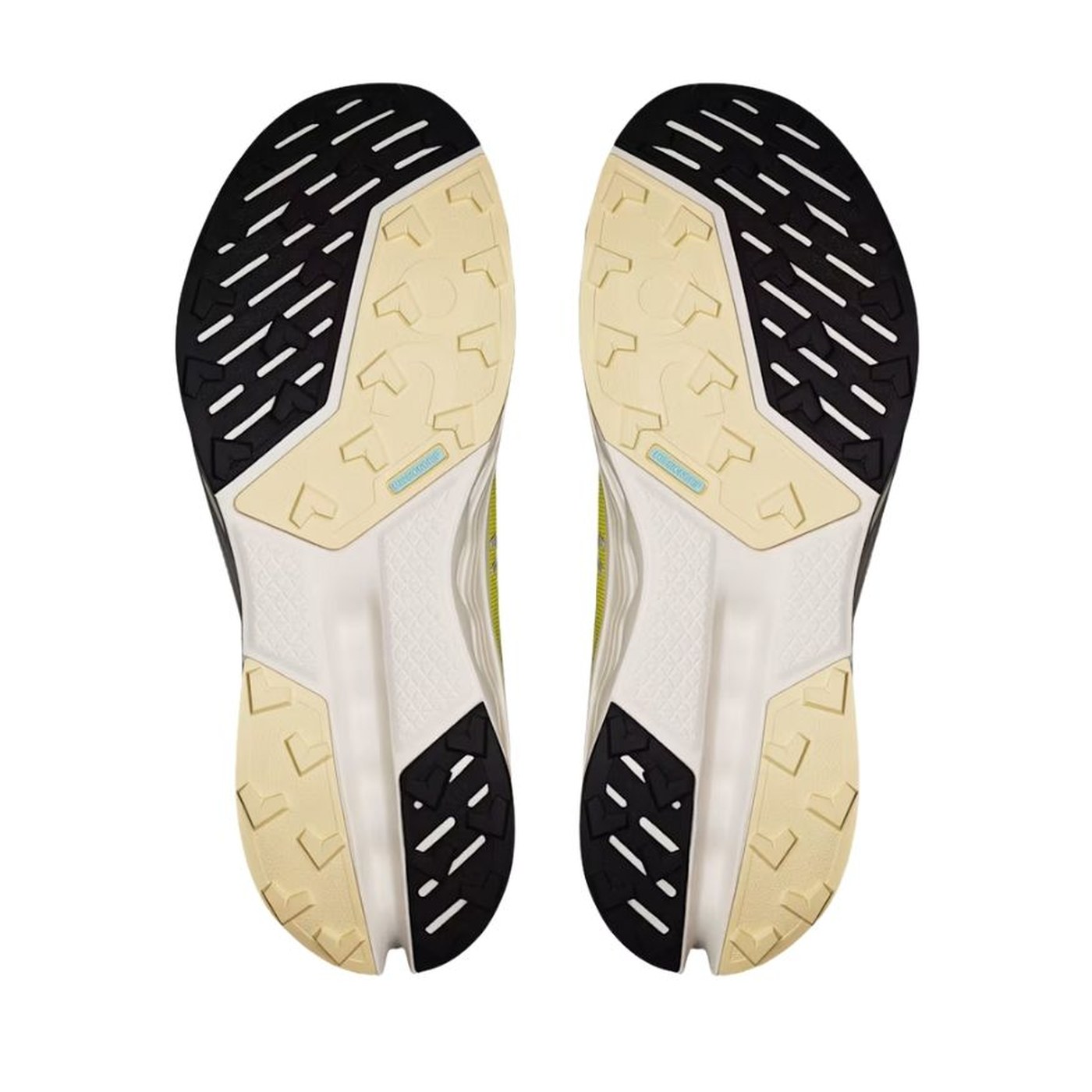
On the outside, the Mission Grip compound, shared by every On trail model, gets 3 mm chevron lugs designed to be more aggressive than on the V1. Two wide smooth strips remain in the middle and at the rear of the outsole. They add flexibility and smooth out transitions on asphalt, but they mechanically limit grip as soon as the ground turns loose, muddy or rocky. That's the real trade-off of this shoe: the same outsole pattern that makes it pleasant in town penalizes it on a waterlogged trail.
© On, official photo used for editorial purposes
RunMorph's tip: the Cloudsurfer Trail 2 has more in common with a Merrell Morphlite or a Mount to Coast H1 than with a true technical trail shoe. If your goal is an ultra-trail with serious elevation gain and rocky sections, you're better off with a Hoka Speedgoat 7 or a Salomon Speedcross 6.
The field test: from bike path to packed forest trail
Out on the trails, the firmer foam of the Cloudsurfer Trail 2 shows from the very first strides at a moderate pace, between 4:45 and 6:15 per kilometer. The shoe handles heel landings well on aerobic base runs, thanks to the large amount of foam concentrated at the rear of the midsole. It also lets you pick up the pace a little more decisively than the first version once you push toward tempo pace.
On gravel roads and wide, smooth singletrack, the ride stays very pleasant: the Clouds filter out ground irregularities well and provide a baseline of stability, enough for mid-weight and even slightly heavier runners. But as soon as the trail deteriorates (roots, wet rocks or waterlogged ground), the limits of the Mission Grip outsole and its smooth strips show. Grip becomes unpredictable, and lateral stability, while improved over the V1, still falls short on steep off-camber sections.
On the road, the transition stays smooth from forefoot to heel, with none of the jarring impact typical of overly stiff trail outsoles. It's a real strength if you alternate urban easy runs with outings on packed paths at the edge of town.
Cloudsurfer Trail 2 vs Merrell Morphlite: the comparison to pick your hybrid
In the still-small road-to-trail hybrid segment, the most relevant comparison is the Merrell Morphlite, the category's other flagship at a much more affordable price.
| Criterion | On Cloudsurfer Trail 2 | Merrell Morphlite |
|---|
| Price | 170 euros | 110 euros (often cheaper on sale) |
| Weight | 287 g | 225-240 g |
| Drop | 8 mm | 6.5 mm |
| Cushioning | More generous, firm Helion foam | Lighter, soft FloatPro foam |
| Grip | Limited on loose or muddy terrain | Mixed-terrain outsole, a bit more versatile |
| Positioning | Comfort and volume, mid-weight to heavier runners | Lightness and price, lighter runners |
The Cloudsurfer Trail 2 bets on comfort and heel hold, even if that means weighing more and costing more. The Morphlite stays lighter and much cheaper, but with more modest cushioning over long distances. Neither one replaces a true technical trail shoe.
© On, official photo used for editorial purposes
Our take from the field: who is it for, and which RunMorph training?
The city runner who mixes road and Sunday trails
This is the ideal profile. Weekdays on asphalt, weekend runs on a packed forest path or a dirt bike path: the Cloudsurfer Trail 2 handles the switch without you needing to own two separate pairs.
The high-mileage runner who puts comfort first
Mid-weight to slightly heavier runners who favor long runs at a moderate pace will get the most out of the generous cushioning and heel hold. It's an endurance shoe, not a speed shoe.
The technical trail runner looking for grip
Skip it. As soon as the terrain throws roots, steep off-camber sections or mud at you, the limits of the Mission Grip outsole and its smooth zones show up fast. This simply isn't this pair's playground.
To fit the Cloudsurfer Trail 2 into a build that mixes long road runs with occasional forays onto trails, pair it with a RunMorph training plan focused on volume and aerobic base, ahead of a 10K or half marathon build on mixed terrain. Explore RunMorph training plans tailored to your goal and your terrain.
The RunMorph Coach's verdict
The On Cloudsurfer Trail 2 makes a specific promise and owns it all the way: one pair for the road and easy trails, without ever trying to become a true trail shoe. The next-generation Helion foam brings a real gain in responsiveness over the first version, and its comfort makes it an excellent high-mileage companion for long runs and extended urban easy runs that spill onto dirt paths.
But the compromise comes at a cost: grip that quickly shows its limits once the terrain deteriorates, and a price of 170 euros that stays high for a shoe that, in practice, lives overwhelmingly on the road and smooth gravel. 7.5/10: a good product, honest about its positioning, but clearly niche if you want real trail versatility.
Key takeaways for your training
- A committed hybrid: perfect for mixing road and packed paths, not for technical trail.
- Firmer foam: the new Helion gains responsiveness but loses some of the V1's plushness.
- Limited grip: avoid it on mud, rocks or root-covered ground.
- High-mileage comfort: ideal for long runs at a moderate pace, less so for intervals.
- Price in context: 170 euros official, but often found under 120 euros on sale.
© On, official photo used for editorial purposes
© On, official photo used for editorial purposes