For two years, the Genesis was one of the most versatile trail shoes in Salomon's lineup, the one we recommended to almost everyone because we couldn't find a real flaw. The Genesis 2 lands on August 1, 2026 with a simple goal: keep that balance and add responsiveness. At RunMorph, we studied the spec sheet and the first press impressions closely ahead of the official launch to bring you this preview.
Salomon Genesis 2 Review: The Versatile Trail Shoe Gets Livelier
8/10
The essentials in 3 sentences
The Salomon Genesis 2 builds on an already strong base with a more responsive optiFOAM foam, an activeCHASSIS now integrated into the midsole and a Kevlar-reinforced Matryx upper. It targets the same runners as the V1: trail runners who want one pair for training, long runs and racing on technical terrain. At €150, it sits below the S/LAB models while inheriting some of their technology.
8
/ 10 · RunMorph early score (pre-release preview)
Who is it for?Versatile trail runners looking for a single pair for training and racing on varied, technical terrain.
Who should skip it?Runners after an ultralight, pure racing shoe, or who prefer maximalist, max-cushion-style cushioning.
Salomon Genesis 2: Salomon's all-rounder gets a makeover
Since its launch, the Genesis has held a special place in Salomon's lineup: not a pure ultra shoe like the S/LAB Genesis, not a lightweight trail racer, but a middle ground built for most trail runners. At RunMorph, we've followed the first-generation Salomon Genesis since it came out and kept good memories of it, apart from a foam that felt a bit flat on runnable sections.
The Genesis 2 promises to fix exactly that. Salomon brought in its new optiFOAM foam, already seen on other lines from the brand, and reworked the activeCHASSIS so it's built directly into the midsole instead of being added on as a separate piece. On paper, this should improve transitions and responsiveness without sacrificing the stability the model is known for.
RunMorph's advice: if you're torn between the Genesis 2 and the S/LAB Genesis, ask yourself one simple question: do you want a shoe to keep improving over time, or one built for pure race performance? The first answers the everyday question, the second answers the stopwatch.
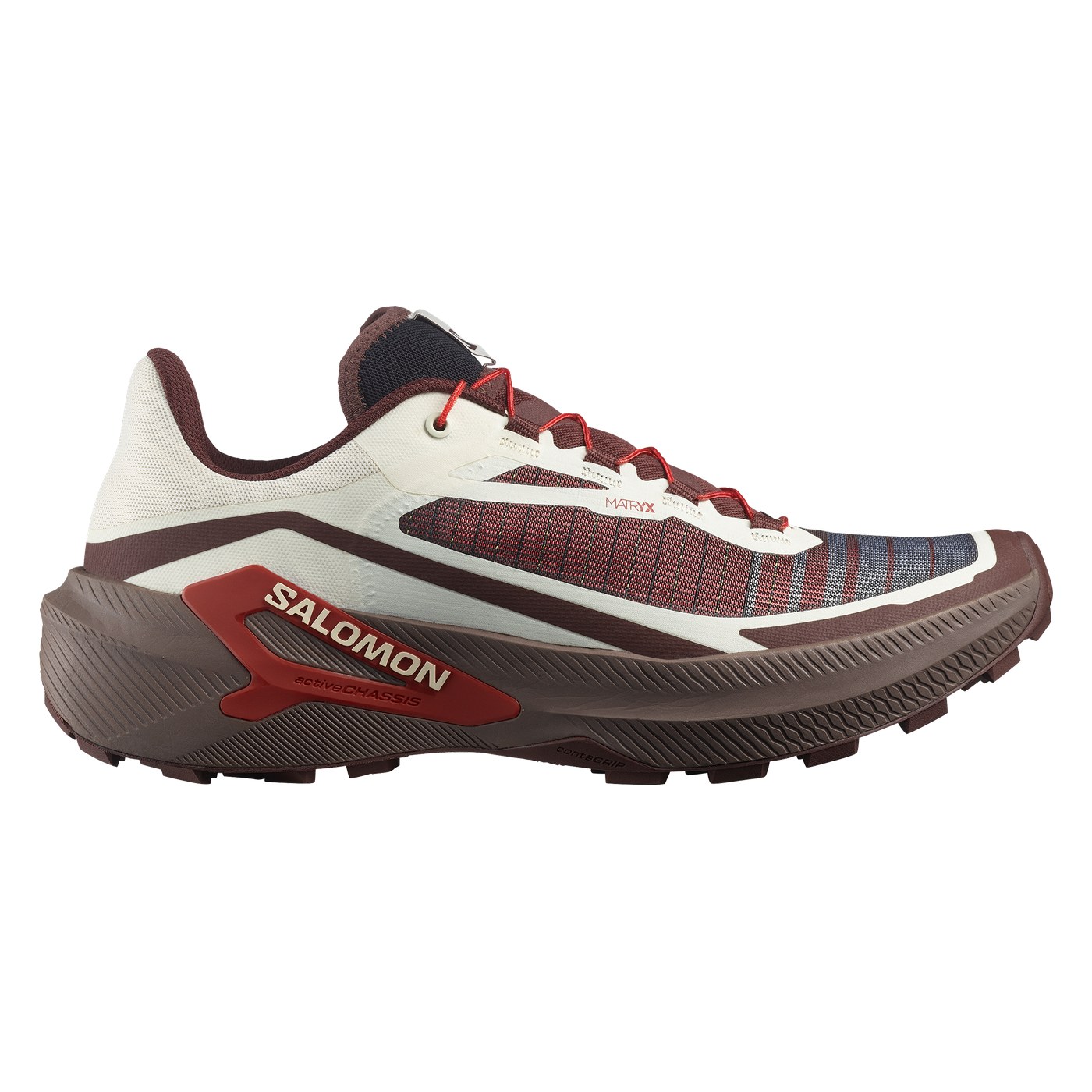
© Salomon, official photo used for editorial purposes
Objective technical data
| Spec | Value |
|---|---|
| Brand | Salomon |
| Model | Genesis 2 |
| Official release | August 1, 2026 |
| Type | Versatile trail shoe, rocky and technical terrain |
| Drop | 8 mm |
| Stack height (heel / forefoot) | 33.5 mm / 25.5 mm |
| Weight | 281 g (single shoe, standard size) |
| Foam | optiFOAM (high-performance EVA) |
| Chassis | activeCHASSIS integrated into the midsole |
| Outsole | All-Terrain contaGRIP, 4 mm lugs |
| Upper | Matryx (Kevlar fibers), endoFit construction |
| Lacing | quickLACE (quick lacing) |
| Price | €150 |
Who is the Salomon Genesis 2 for?
The trail runner who wants one pair for everything
This is the core runner Salomon is targeting. If you only want to own one trail shoe that can handle Sunday long runs, hill intervals and a technical race on the weekend, the Genesis 2 ticks every box on paper.
The runner moving up to ultra-trail
With its 8 mm drop and protective cushioning, the Genesis 2 builds confidence over long distances. It's aimed at runners preparing for their first long-distance event who need a forgiving shoe rather than a radical one.
The technical trail runner who wants reliable grip
The new All-Terrain contaGRIP outsole with 4 mm lugs is explicitly designed for wet, muddy and rocky terrain. That matters if you run in the mid-mountains or in changing conditions.
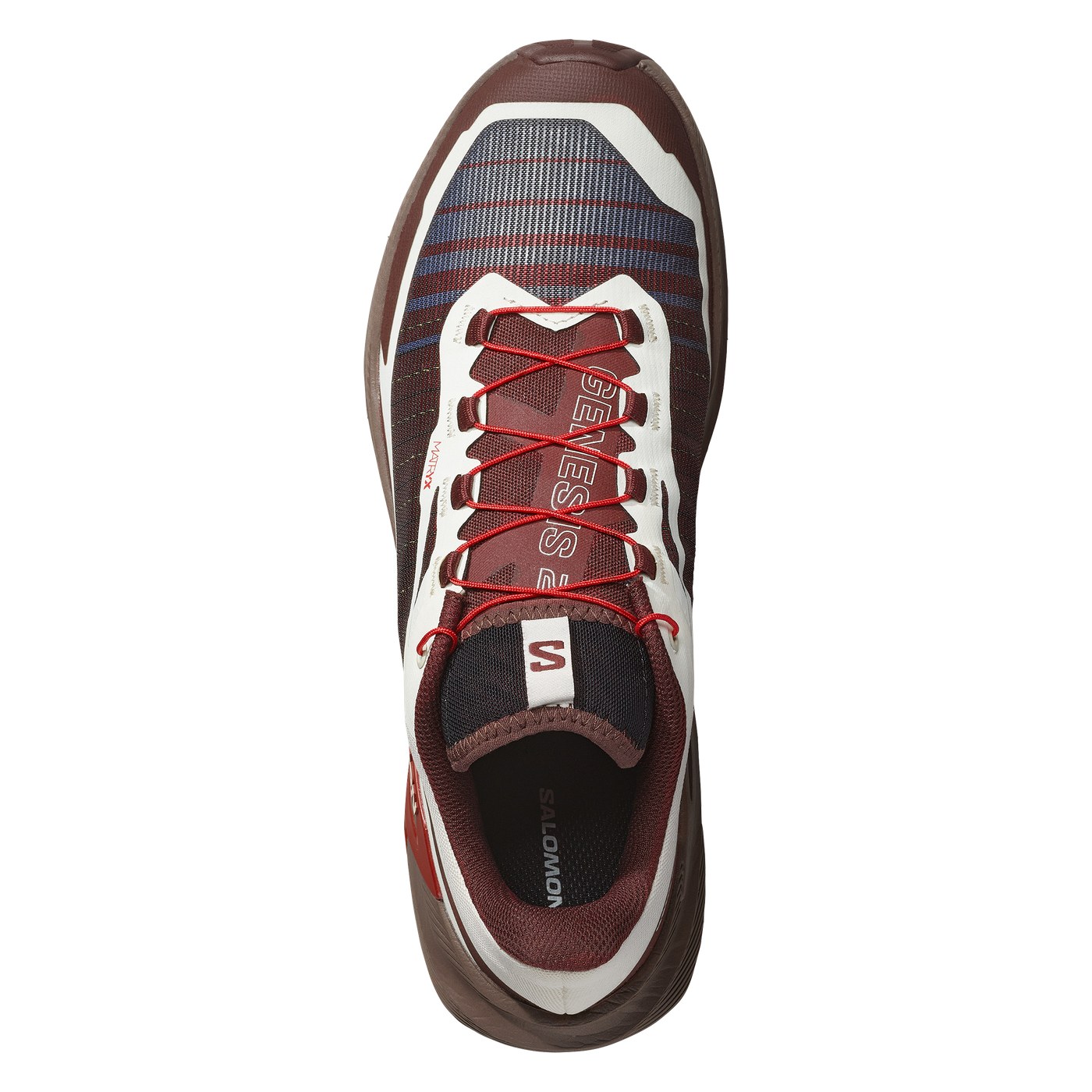
© Salomon, official photo used for editorial purposes
Cushioning, responsiveness and grip: what version 2 changes
On paper, the optiFOAM foam aims for better energy return than the EVA in the first Genesis while keeping protective cushioning suited to long runs. Early hands-on impressions from the international press, which RunMorph reviewed internally without naming them, describe a shoe with a livelier ground feel than the V1, without tipping into the snappy feel of a short-distance trail racer.
Integrating the activeCHASSIS into the midsole also changes how the shoe guides your foot. On the first generation, the chassis was more visible and stiffer in torsion. The integrated version promises a smoother transition from heel strike to toe-off, a key point for endurance on rolling terrain.
On grip, the switch to a reworked All-Terrain contaGRIP outsole with 4 mm lugs aims to improve traction on wet and muddy ground, one of the areas sometimes flagged as needing work on the first Genesis in poor conditions.
Salomon Genesis 2 vs Salomon Genesis: the comparison
| Criterion | Salomon Genesis (V1) | Salomon Genesis 2 |
|---|---|---|
| Foam | Standard EVA | optiFOAM, more responsive |
| Chassis | Add-on activeCHASSIS | activeCHASSIS integrated into the midsole |
| Outsole | Standard Contagrip | All-Terrain contaGRIP, 4 mm lugs |
| Upper | First-generation Matryx | Kevlar-reinforced Matryx |
| Drop | 8 mm | 8 mm |
| Weight | about 277 g | 281 g |
| Price | €150 | €150 |
On paper, the Genesis 2 doesn't overhaul the formula, it refines it: same positioning, same price, more modern execution. It also stands apart from the Hoka Speedgoat 7, which leans toward maximalist cushioning, and the Saucony Peregrine 16, built for more runnable terrain and a lower budget.
Pros and cons
Pros
- Proven versatility across the Genesis line
- New, more responsive optiFOAM foam
- Improved grip on wet and technical terrain
- Durable, breathable Matryx upper
- Reasonable price compared with the S/LAB models
Cons
- Not yet tested in real conditions by RunMorph (preview)
- Less generous cushioning than a max-cushion model
- Slightly heavier than the V1
- Limited availability at launch
How it compares with the competition
In the segment of versatile trail shoes under €160, the Genesis 2 goes up against several models RunMorph has already reviewed. The Adidas Terrex Agravic Speed Ultra 2 is more clearly geared toward ultra distances, while the NNormal Tomir 2 bets on extreme grip at the expense of comfort on runnable sections. The Hoka Tecton X 3, pricier and more technical with its dual plates, targets racers rather than the everyday use the Genesis 2 is built for.
Against the Mount to Coast H1, a durability-focused road-to-trail hybrid, the Genesis 2 stays more clearly oriented toward technical trails. Salomon's positioning holds together: stay the versatile benchmark of the mid-range segment without trying to compete with pure racing models.
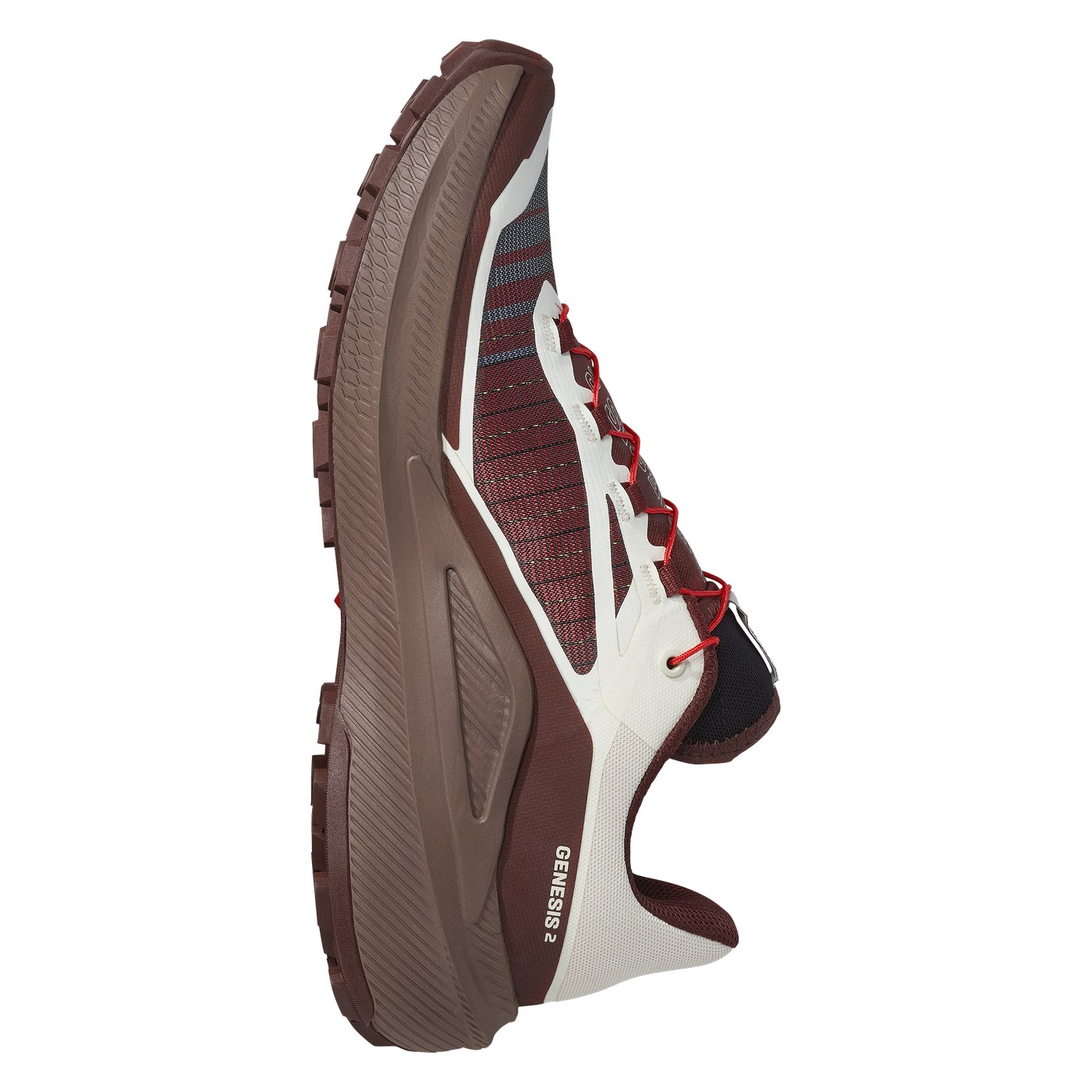
© Salomon, official photo used for editorial purposes
How to fit the Salomon Genesis 2 into your RunMorph training plan
On a trail or ultra-trail RunMorph training plan, the Genesis 2 is built to become your go-to long run shoe. Its protective cushioning and stability make it a natural pick for weekend runs of 90 minutes or more, when muscle fatigue makes grip and foot hold decisive. For hill sessions or technical intervals, pair it with a lighter shoe if your RunMorph plan includes dedicated uphill speed blocks. During comeback or taper weeks before a race, its versatility lets you cut down the number of pairs you need while respecting the plan's gradual progression.
The RunMorph Coach verdict
The Salomon Genesis 2 doesn't reinvent the formula that made its predecessor a success, it modernizes it intelligently. optiFOAM, the integrated activeCHASSIS and the new contaGRIP outsole form a coherent trio that boosts responsiveness without sacrificing the versatility that remains the model's true signature. This preview is based on the official spec sheet and the first hands-on impressions shared ahead of the August 1, 2026 launch: RunMorph will update this article with a full on-trail review as soon as a pair is available for testing. As it stands, the Genesis 2 earns an early 8/10, with real expectations that the responsiveness gain Salomon promises will be confirmed.
Key takeaways for your training
- One pair, many uses: the Genesis 2 covers training, long runs and racing on varied terrain.
- optiFOAM: a new foam billed as more responsive than the EVA in the first Genesis.
- Integrated activeCHASSIS: redesigned guidance for a smoother transition on uneven terrain.
- Improved grip: 4 mm lugs and an All-Terrain contaGRIP outsole for wet, technical ground.
- Release on August 1, 2026: at €150, it sits below the S/LAB models while inheriting some of their technology.