All reviews: nutrition
November 15, 2026

SiS GO Isotonic Energy Gel: 22 g of carbs without water, the no-filter review

7/10
SiS GO Isotonic Energy Gel: 22 g of carbs without water, the no-filter review

The first isotonic gel on the market is more than 25 years old and still sells by the box of 30. SiS promises a gel you can swallow without water and that goes down without a fuss. Real-world tests back it up on digestion. But 22 g of carbs per sachet, in 2026, is not much. Not much at all.

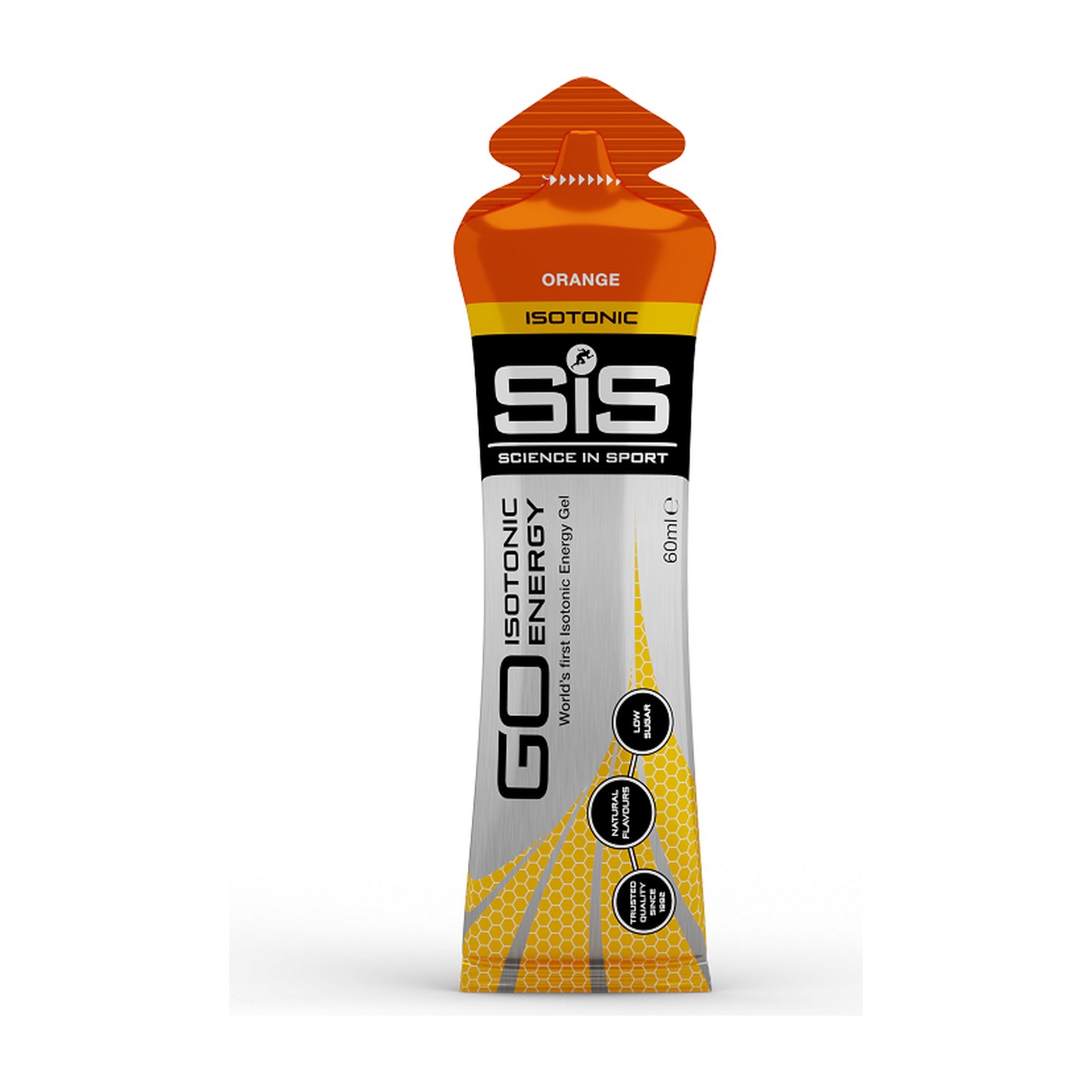
SiS GO Isotonic Energy Gel sachet, orange flavour, 60 ml

© SiS, official photo used for editorial purposes

The essentials in 3 sentences

The SiS GO Isotonic is a very fluid 60 ml gel, made with maltodextrin only, that delivers 22 g of carbs and goes down without water. Most testers praise how easy it is to digest, even at high intensity, while its taste and texture split buyers. Its weak spot comes down to two numbers: you need three sachets to reach 60 g of carbs per hour, and each one holds just 4 mg of sodium.

7,0
/ 10 · Overall RunMorph score
Taste
6,5 / 10
Digestibility
8,5 / 10
Carb intake
5 / 10
Format
6,5 / 10
Value for money
7,5 / 10
Who is it for?The runner with a sensitive stomach training for a 10K, a half marathon or runs under two hours, who wants a gel that goes down without a drink.
Who should skip it?The marathoner aiming for 60 to 90 g of carbs per hour, or the trail runner racing for hours in the heat with no salty drink on hand.

SiS GO Isotonic: the gel that created the category, measured against 2026 standards

Science in Sport, a British brand founded in 1992, claims the world's first isotonic gel. The idea dates back to the early 2000s: a gel diluted enough that you don't need a sip of water after it. Back then, it was a breakthrough. Rival gels were thick, sweet, and called for a bottle.

Things have changed. Current guidelines for a marathon sit around 60 to 90 g of carbs per hour. Brands now compete on concentration: 40 g in the SiS Beta Fuel, the brand's younger sibling, or in the Decathlon Gel 1:0.8. The GO Isotonic hasn't moved. It's still at 22 g.

So the question behind this review is simple. Does a gel built for the stomach, not for quantity, still earn a place in your pocket? Short version: yes, but only for shorter efforts or as a top-up.

RunMorph's advice: keep the GO Isotonic for races under two hours, or for the moments when your stomach has had enough. For a marathon, build your plan around a 40 g gel like the Decathlon Gel 1:0.8 and slip one or two GO Isotonic in for the closing stretch, when nothing else goes down. If budget allows and your gut is unpredictable, the Maurten Gel 100 is the other gentle option.

Objective technical data

SpecSiS GO Isotonic Energy Gel
Volume60 ml (about 68 g including the sachet)
Carbs22 g per sachet, i.e. 36 g per 100 g
Of which sugars0.6 g
Carb sourceCorn maltodextrin only (no fructose)
Energy87 kcal (368 kJ)
Salt0.01 g, i.e. about 4 mg of sodium
AdditivesGellan and xanthan gum, citric acid, preservatives (sodium benzoate, potassium sorbate), sweetener (acesulfame K)
DietVegan, gluten-free according to the brand
FlavoursOrange, lemon and lime, apple, blackcurrant, tropical, pineapple, pink grapefruit, fruit salad
VariantsGO + Caffeine (75 mg), GO Energy + Electrolyte (118 mg of sodium)
Price€2.49 list price, often around €1.60 at French retailers

The number that matters is the carb-to-volume ratio. 22 g in 60 ml. Put simply, a gel twice as diluted as the concentrated 40 g gels in the same volume.

Isotonic: what does it change in your stomach?

An isotonic gel has a concentration close to that of your body fluids. Your stomach empties it faster, without pulling water into the gut to dilute it. That mechanism is what explains the "no need to drink" claim.

A concentrated gel does the opposite. It lands very sweet in the stomach, which has to dilute it before letting it through. If you don't drink, it sits there. And that's where bloating and gut cramps start.

The flip side is mechanical. To stay isotonic, SiS adds a lot of water. You end up carrying 40 g of water per sachet. Three gels means a little over 200 g in your belt for 66 g of carbs.

Another limit, less obvious. Maltodextrin alone goes through a single intestinal transporter, which saturates at around 60 g of carbs per hour. Dual-source gels (glucose plus fructose) go higher. So the GO Isotonic is capped by its formula, not just by its volume.

The real-world test: what the actual reviews say

Let's start with a limit we own. RunMorph's research turned up no detailed, recent French review dedicated to the GO Isotonic. The product is old, well known, and the French running press has left it aside. The material therefore comes from three reviews published abroad, a range overview, and several dozen customer reviews read at European cycling and running retailers.

On digestion, testers agree. One cycling test went two hours of effort without a drop of water, gels included. Result: a calm stomach. An American runner who "hates 99% of gels" used it on runs of more than 40 km. Zero gut issues. In customer reviews, one line keeps coming back: "it's the only gel I can tolerate".

Texture is more divisive. For that runner, it's a half-set jelly, neither liquid nor sticky. One buyer, on the contrary, compares it to "thick porridge in a pouch". Honestly, it depends on what you're used to: coming from a very thick gel, you'll find it light; if you drink liquid gels, it'll feel gelled.

Taste remains the weakest point. Citrus flavours generally go down well, with a tangy edge that feels refreshing. Apple gets slammed: the flavour comes across as artificial, even worse once the sachet has warmed against your body. Two buyers also find the whole range too acidic.

Several testers point to the same packaging flaw. The tab is hard to tear with your teeth, the sachet corners poke the inside of your mouth, and the torn-off piece often ends up in your hand. A small flaw, but it matters at kilometre 30.

Then there's the energy effect. One cycling tester describes a quick lift that fades shortly before the next gel. Makes sense: 22 g covers roughly twenty to thirty minutes of hard effort. A British review gives the product 8/10 and docks a point for that low carb load.
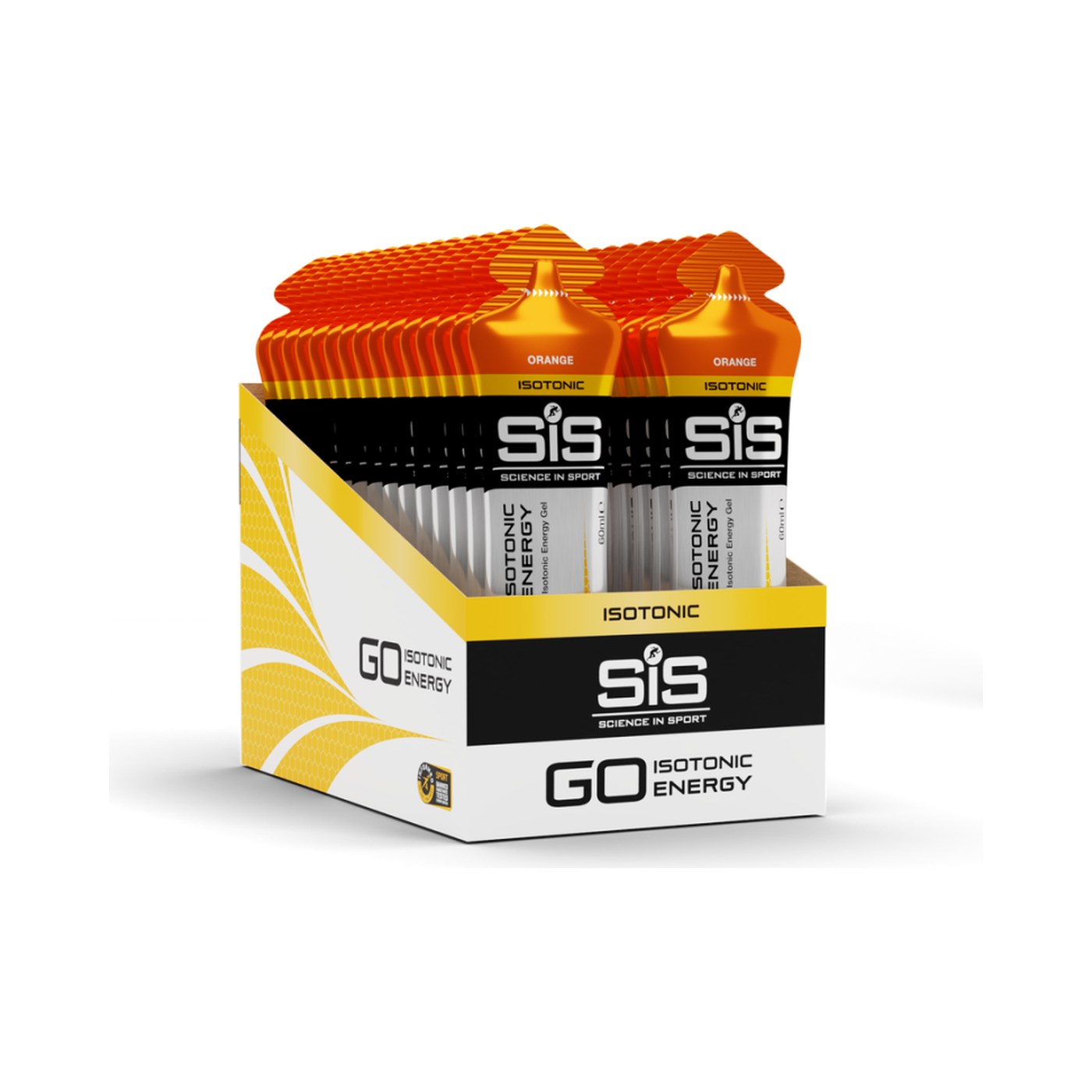
Box of 30 SiS GO Isotonic Energy gels, orange flavour

© SiS, official photo used for editorial purposes
22 g per sachet: the uncomfortable maths at 60 g per hour

Take a marathon run in 3:30. You start fuelling after half an hour, then aim for 60 g per hour. You need about 180 g of carbs.

With the GO Isotonic, that's eight sachets. That's 480 ml of gel and nearly 550 g to carry. With a 40 g gel, five sachets are enough.

The real problem isn't the weight. It's the logistics: one sachet every twenty minutes, torn open on the move, at 12 km/h. Few runners keep that rhythm without skipping one. And at 90 g per hour, the target for runners who have trained their gut, you'd need more than four sachets an hour. That's no longer realistic.

4 mg of sodium: don't count on it for your electrolytes

0.01 g of salt per sachet. That's about 4 mg of sodium. For comparison, the GU Roctane provides 125 mg.

In hot weather, common guidelines sit around 300 to 600 mg of sodium per hour, depending on how much you sweat. The GO Isotonic covers none of that. You need a salty drink, tablets, or the GO Energy + Electrolyte version (118 mg per sachet).

On a 10K in November, it's a non-issue. On a four-hour trail race in July, it becomes one.

Head-to-head with the competition: SiS GO Isotonic vs Maurten Gel 100 vs High5 Energy Gel

CriterionSiS GO IsotonicMaurten Gel 100High5 Energy Gel
Carbs per sachet22 g25 g20 to 23 g
SourceMaltodextrin onlyGlucose and fructose (hydrogel)Maltodextrin and fructose
Water neededNoNoNo
SodiumAbout 4 mgAbout 20 mgLow
Typical unit price€1.60 to €2.49€3.70€1 to €1.25
Cost per gram of carbs€0.07 to €0.11€0.15about €0.05
RunMorph score7,0/108,4/106,9/10

The takeaway is simple. All three gels play in the same category: few carbs, easy digestion, no water needed. The Maurten costs almost twice as much, but brings two carb sources and the best digestive reputation on the market. The High5 does almost the same job as the SiS for less money, with a sweeter taste.

If you want carb volume, none of the three is the right answer. Look instead at the SiS Beta Fuel (40 g) or the Precision PF 30 Gel (30 g).

Pros and cons

What works

  • Easy to digest, even after two hours without drinking according to one cycling test.
  • Goes down in one go, even when you're out of breath, thanks to its fluid texture.
  • Very low in sugar (0.6 g), so rarely sickly.
  • Wide choice of flavours, plus caffeine and electrolyte versions.
  • Often sold for around €1.60 in France.

What doesn't

  • Only 22 g of carbs: three sachets for 60 g per hour.
  • About 4 mg of sodium, not enough in hot weather.
  • Maltodextrin only, so absorption tops out around 60 g per hour.
  • Apple flavour seen as artificial, texture that divides.
  • Sachet hard to open with your teeth, sharp corners.

Who is it for?

The 10K and half marathon runner

Over an hour and a half to two hours of racing, one or two sachets are enough. No need to aim for 60 g per hour, and its easy digestion lowers the risk of a toilet stop.

The runner with a sensitive stomach

If thick gels upset your gut, the GO Isotonic is one of the first ones to try. Start with a citrus flavour, in training.

The marathoner in the final stretch

After 30 km, many runners can no longer stomach concentrated gels. Slipping one or two GO Isotonic into your belt for the last hour remains a solid strategy.

How to fit it into your RunMorph training plan

You test a gel in training, never on race day. Use your long runs to check your tolerance, then your race-pace sessions to dial in the timing.

Training for a half marathon? The RunMorph half marathon plan places your long runs and goal-pace blocks at the right time. That's where you test one sachet every thirty to forty minutes, so you show up on race day with a strategy you've already validated.

RunMorph Coach's verdict

The GO Isotonic hasn't aged on what it promises. It goes down well, quickly, and doesn't need water. On that point, the real-world reviews all say the same thing.

But SiS designed it for an era when 40 g of carbs per hour was enough. With 22 g per sachet and almost no sodium, it can't carry a marathon or a long trail race on its own. Overall score: 7/10. Digestion and price weigh heavily in that score, carb intake drags it down.

Buy it if you run under two hours or if your stomach rejects thick gels. Skip it if you're aiming for 60 g per hour: the Decathlon Gel 1:0.8 delivers 40 g for the same list price.

Key takeaways for your training

  • Count 22 g per sachet: you need three to reach 60 g of carbs per hour.
  • No need to drink to get it down, but drink anyway if you're running in the heat.
  • Add salt on the side: one sachet holds only about 4 mg of sodium.
  • Avoid apple to start with, go for orange or lemon and lime.
  • Nick the top of the sachet before the start so you can open it without stopping.

Find another review