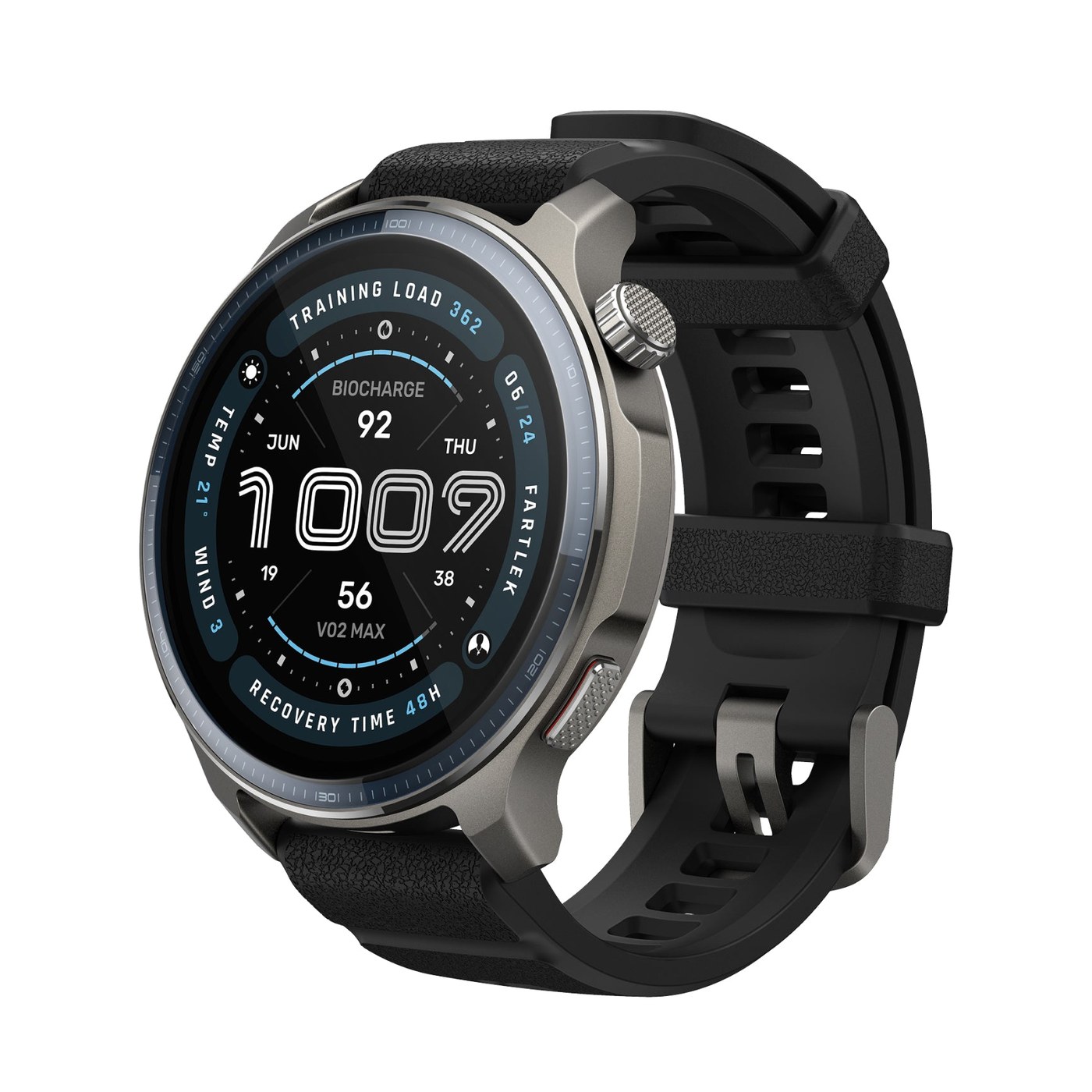
At 299.90 euros, the Amazfit Balance 2 packs a feature list that would put 400-euro watches to shame: L1+L5 dual-frequency GPS, offline maps with topo maps included, sapphire glass, MIL-STD-810H certification and a 1.5-inch Always-On AMOLED display. On paper, the pitch is unbeatable. On the track, can Zepp OS 5 keep up? That's what this RunMorph review sets out to untangle.
Amazfit Balance 2: a premium GPS watch at a sensible price
For years, Amazfit was seen as the brand that made watches "almost as good" for half the price. With the Balance 2, released on June 24, 2025, the Chinese manufacturer moves up a level: for the first time in this price range, you get offline maps, dual-frequency GPS and sapphire glass together, in a 43-gram case, for 299.90 euros. That's a big deal. At Garmin, you need to spend at least 549 euros on the Forerunner 570 to get maps. At COROS, the COROS Pace Pro at 349 euros offers a similar package, but without sapphire.
RunMorph's advice
If you're coming from a Garmin without maps, like the Forerunner 265, the Balance 2 is the most affordable way into offline navigation. If you already own a COROS Pace Pro or a Suunto Run, the case for switching is weaker, unless the price-to-features ratio really speaks to you.
Who is the Balance 2 for?
The Balance 2 isn't trying to please everyone. It targets a specific profile: the serious runner who spends sensibly and wants navigation and training tools without paying 400 euros or more.
The road runner branching out into trail
If you mainly run on the road but you're hitting more and more trails or getting out into nature, the Balance 2's offline maps are a real game changer. You can import a GPX track, see your position on a proper topographic map and never get lost again on an exploratory run. Dual-frequency GPS guarantees an accurate track even in hilly or wooded areas. This is exactly the runner the Balance 2 is built for.
The beginner to intermediate triathlete
With 160 sport profiles including swimming, cycling and running, the Balance 2 covers a triathlete's needs up to Olympic distance. It lacks the advanced automatic transitions of Garmin's dedicated triathlon watches, but it has enough features to prepare for and track a full season. Load tracking and BioCharge help you manage intense training blocks.
The outdoor multisport athlete up to 120 km
For long ultra-trails, 12 hours of dual-frequency GPS is tight if the race lasts more than 10 hours. You can switch to standard GPS (L1 only, 20 real-world hours) to gain margin, or to power-saving mode for very long outings. MIL-STD-810H certification and 10 ATM water resistance make it a tough watch for harsh environments. For runs of 30 to 120 km, the battery-accuracy trade-off is fair.
GPS accuracy and heart rate sensor
The Balance 2's L1+L5 dual-frequency GPS delivers convincing results. In open terrain, on the track or on the edge of town, the track is clean and the distance matches a Garmin or COROS watch of the same generation. On 10 to 21 km routes through dense forest, alternating between shade and open sky, we saw a slight drift of around 1-2% on total distance, which is normal for this price category.
Real-time pace is stable on long, steady efforts, between 5:00/km and 4:00/km. On short reps of 400 m down to 200 m, the watch lags about 5 seconds behind reality. That's no problem for heart rate zone training, but if you run very short reps against the clock, use lap distance on the track and don't trust instant pace.
The BioTracker 5.0 optical wrist sensor is decent for endurance work. On zone 2 to 3 runs (paces from 5:30 to 4:45/km), readings line up with a reference chest strap, with gaps generally under 3 bpm. During hard intervals, the sensor takes 15 to 20 seconds to reflect heart rate peaks. For heart-rate-based training plans, the watch is usable without major reservations. For precise field tests such as a maximal aerobic speed test, a dedicated chest strap is still the better choice, like the Polar H10.
The watch's VO2max estimate is consistent with values from field tests. After two weeks of regular wear, the estimate settles and climbs logically as your fitness improves.
Offline maps and navigation
This is the Balance 2's knockout argument at this price. The offline maps are true topographic maps, with zoom levels, contour lines, marked trails and forest roads. Topo maps of mainland France are available directly from the Zepp app at no extra cost. Rendering on the 1.5-inch AMOLED display is easy to read: colors are vivid, icons are easy to recognize and the level of detail suits running and trail running.
You import GPX tracks from the Zepp smartphone app in a few seconds. Once loaded, the track appears on the map with remaining distance, cumulative elevation gain and auto-centering on your position. Route following is reliable, with an audible and haptic alert if you stray more than 50 meters from the planned course.
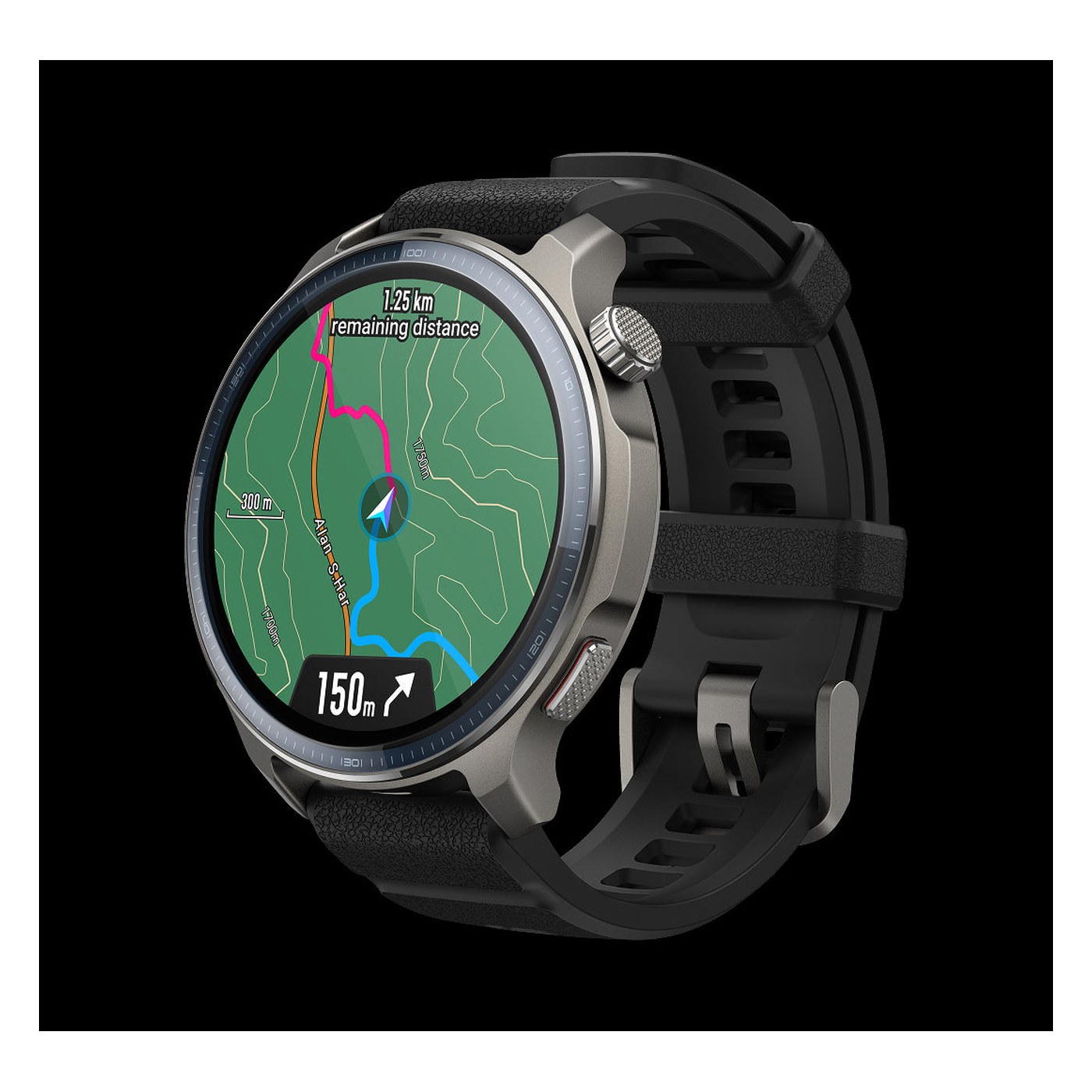
The limits are real but predictable for this price range: the map refreshes slightly less smoothly when zooming than on a Garmin fenix 8, and the on-wrist navigation interface still lacks the depth of Garmin's menus. You can't plan routes directly on the watch: everything goes through the smartphone. These constraints are acceptable when you remember we're talking about a 299.90-euro watch with maps included.
Training and recovery metrics
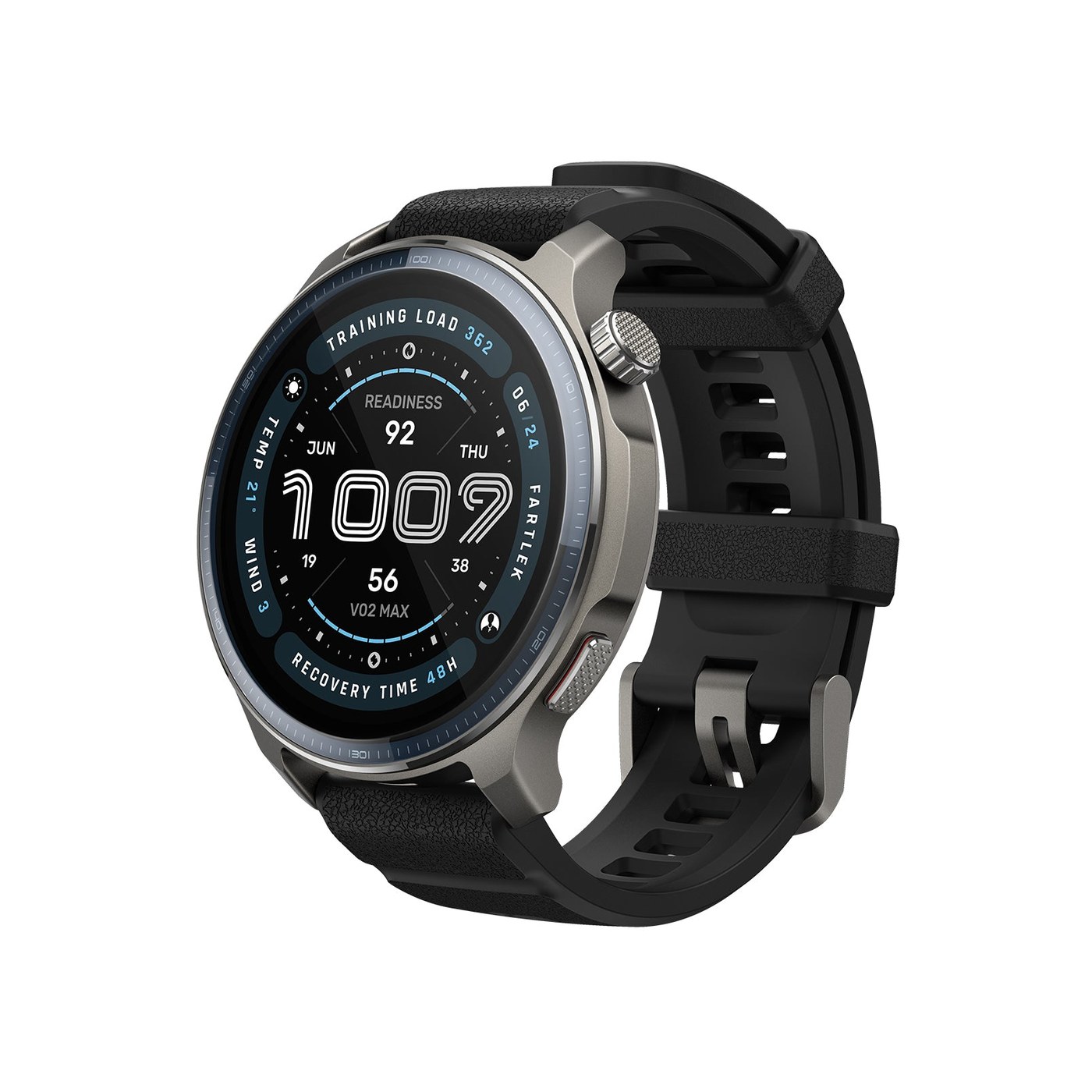
Zepp OS 5 brings a much richer metrics platform than previous generations. BioCharge is the headline metric: it combines resting heart rate, heart rate variability (HRV), sleep quality, physical activity and physiological stress into a score from 0 to 100. It's the functional equivalent of Garmin's Body Battery, and you can read it at a glance. In practice, BioCharge drops consistently after a long run or a short night, and climbs back after a rest day and a good night's sleep.
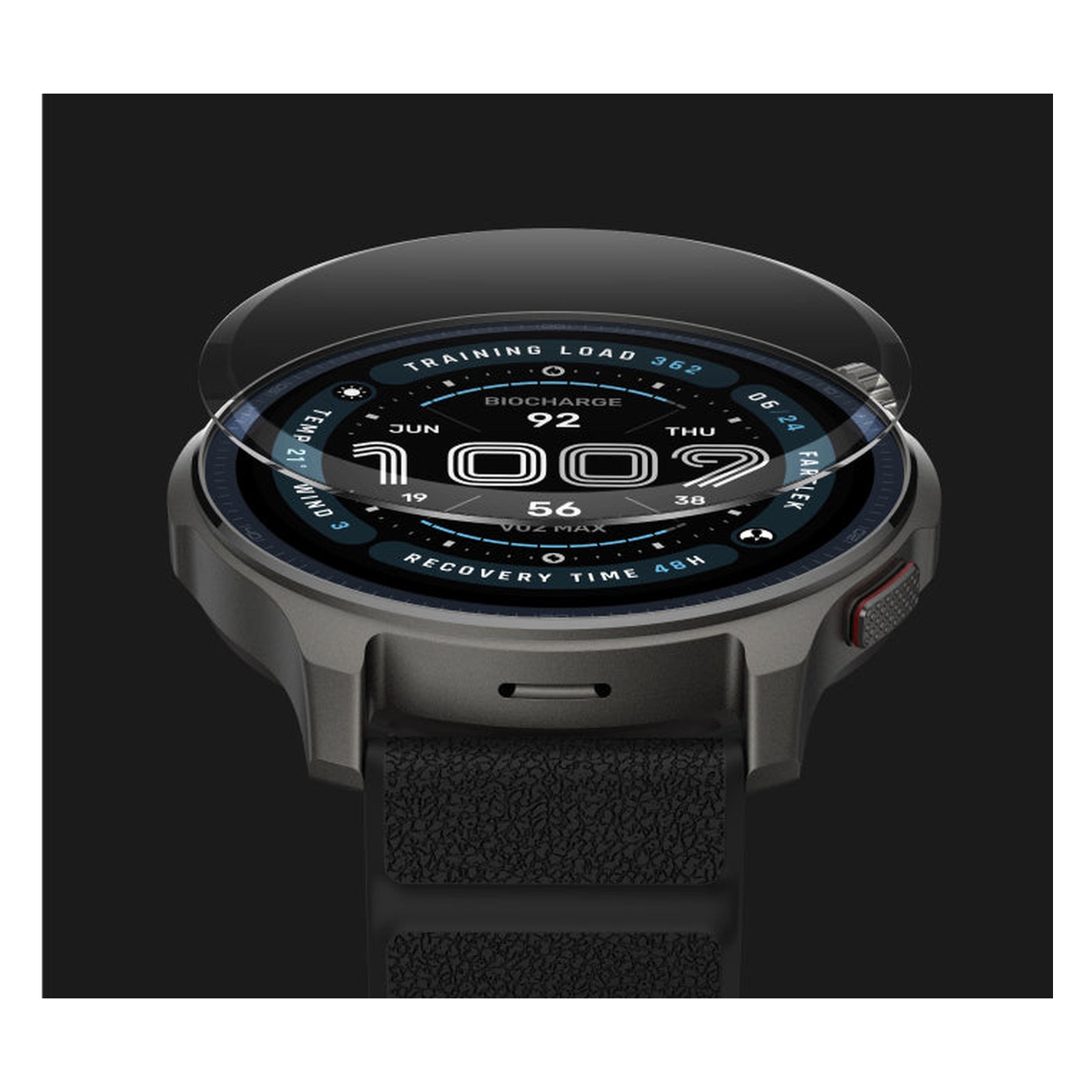
Training Load and Recovery Time show your cumulative training load over 7 days and the estimated time until you're back at 100%. The Readiness Score rolls all of this into one actionable number every morning. During testing, these metrics matched how we actually felt over 3 weeks of half-marathon preparation.
Sleep tracking (Zepp Sleep) is detailed, with light, deep and REM stages plus a nightly score. The skin temperature sensor can flag a possible fever or physiological disruption. The missing ECG, however, counts against it if you care about this heart health indicator, which watches like the Polar Vantage V3 or the Garmin Forerunner 970 offer.
Real-world battery life
In smartwatch mode without GPS, Amazfit's claimed 14 days are achievable with moderate use of notifications and Always-On. In real-world testing with Always-On enabled and continuous heart rate tracking, we got 10-11 days, which is still very comfortable.
With L1+L5 dual-frequency GPS (the mode we recommend for maximum accuracy on trails), real-world battery life is around 11 hours 30 minutes to 12 hours. That's enough for a half marathon, a slow marathon or a trail race up to about 80-90 km depending on pace. For a longer event, switch to standard GPS (L1 only, 20 real-world hours). A full charge from 0% takes about 70 minutes with the supplied magnetic charger.
Amazfit Balance 2 vs the competition: head-to-head
| Watch |
Price |
Dual-freq GPS |
Offline maps |
Sapphire |
GPS battery life |
| Amazfit Balance 2 |
299.90 euros |
Yes |
Yes (incl.) |
Yes |
20 h std / 12 h dual |
| COROS Pace Pro |
349 euros |
Yes |
Yes (incl.) |
No |
35 h std / 25 h dual |
| Garmin Forerunner 265 |
349 euros |
Yes |
No |
No |
20 h std / 13 h dual |
| Suunto Race 2 |
449 euros |
Yes |
Yes (incl.) |
Yes |
55 h std / 28 h dual |
Against the COROS Pace Pro, the Balance 2 is 49 euros cheaper and has the sapphire the Pace Pro lacks, but it gives ground on dual-frequency battery life (12 h vs 25 h) and ecosystem maturity. COROS is known for regular software updates and a well-built app. If multiband battery life is your top priority for ultras, the Pace Pro takes the lead.
The Garmin Forerunner 265 has the best GPS in its class and an unmatched Garmin Connect ecosystem, but no maps. At 349 euros, it costs 49 euros more than the Balance 2 for fewer mapping features. If you run only on the road and navigation doesn't interest you, the 265 remains the safest choice thanks to Garmin's long track record for reliability.
The Suunto Race 2 at 449 euros outclasses the Balance 2 on dual-frequency battery life and Suunto's map quality, but it costs 149 euros more. The Balance 2 is the logical answer if you want the same core features for far less money.
How to fit the Balance 2 into your RunMorph training plan
The Balance 2's BioCharge and Readiness Score slot naturally into RunMorph training cycles. The basic rule is simple: if your BioCharge is below 50 in the morning, swap your planned hard session for an easy run or active recovery. If your Readiness is above 80, that's your signal to push your quality session.
To plan long runs with navigation, import your GPX tracks from Komoot or Strava straight into Zepp. The Balance 2 then shows the elevation profile and guides you from your wrist. Combine this with the RunMorph training plans to get both the structure of your week and the tools to execute it intelligently out on the trail.
The 7-day cumulative Training Load lets you plan recovery weeks ahead: when the indicator moves into "high productive" or "overloaded", that's the signal to cut volume before your next key session. This kind of real-time guidance is exactly what RunMorph plans build into their periodization logic.
RunMorph coach's verdict
The Amazfit Balance 2 pulls off something hard: a genuine premium package (offline maps, dual-frequency GPS, sapphire, Always-On AMOLED) without crossing the 300-euro mark. The result is a serious, tough watch with usable training metrics and reliable navigation in the field.
The trade-offs are known: Zepp OS 5 still falls short of Garmin Connect's depth for long-term history and detailed analysis, and 12 hours of dual-frequency GPS limits very long outings in high-accuracy mode. But at this price, with this level of equipment, the Balance 2 is an honest offer that's hard to ignore if you don't want to choose between features and budget.
RunMorph score: 8/10