Asics Metaspeed Edge Tokyo Review: Built for Cadence Runners
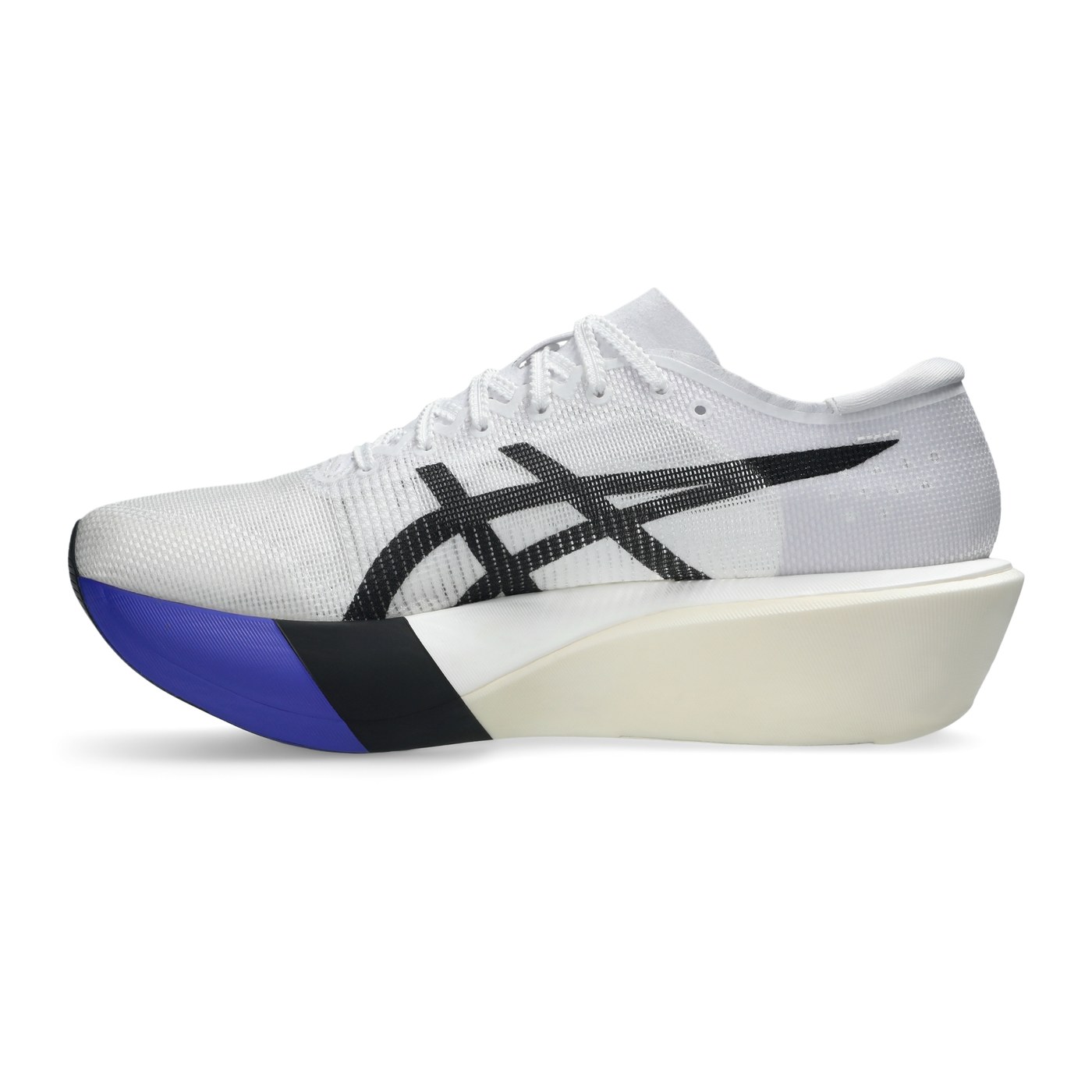
The Metaspeed Edge Tokyo: a super shoe built for your high-cadence stride.
Asics is the only brand offering two distinct super shoes split by stride type. If you run with a high cadence (180+ steps per minute), with short, snappy footstrikes and minimal ground contact, the Metaspeed Sky Tokyo isn't for you. The Edge Tokyo is. Its carbon plate and geometry are tuned to transfer energy on every short ground contact, not to amplify a long push-off.
Released in 2025 for the World Athletics Championships in Tokyo, the Edge Tokyo gets the same upgrades as its Sky sibling: the new FF Leap foam, a lighter build and a reworked plate. But its internal setup is very different. Let's see whether it deserves a spot in your lineup as a cadence runner.
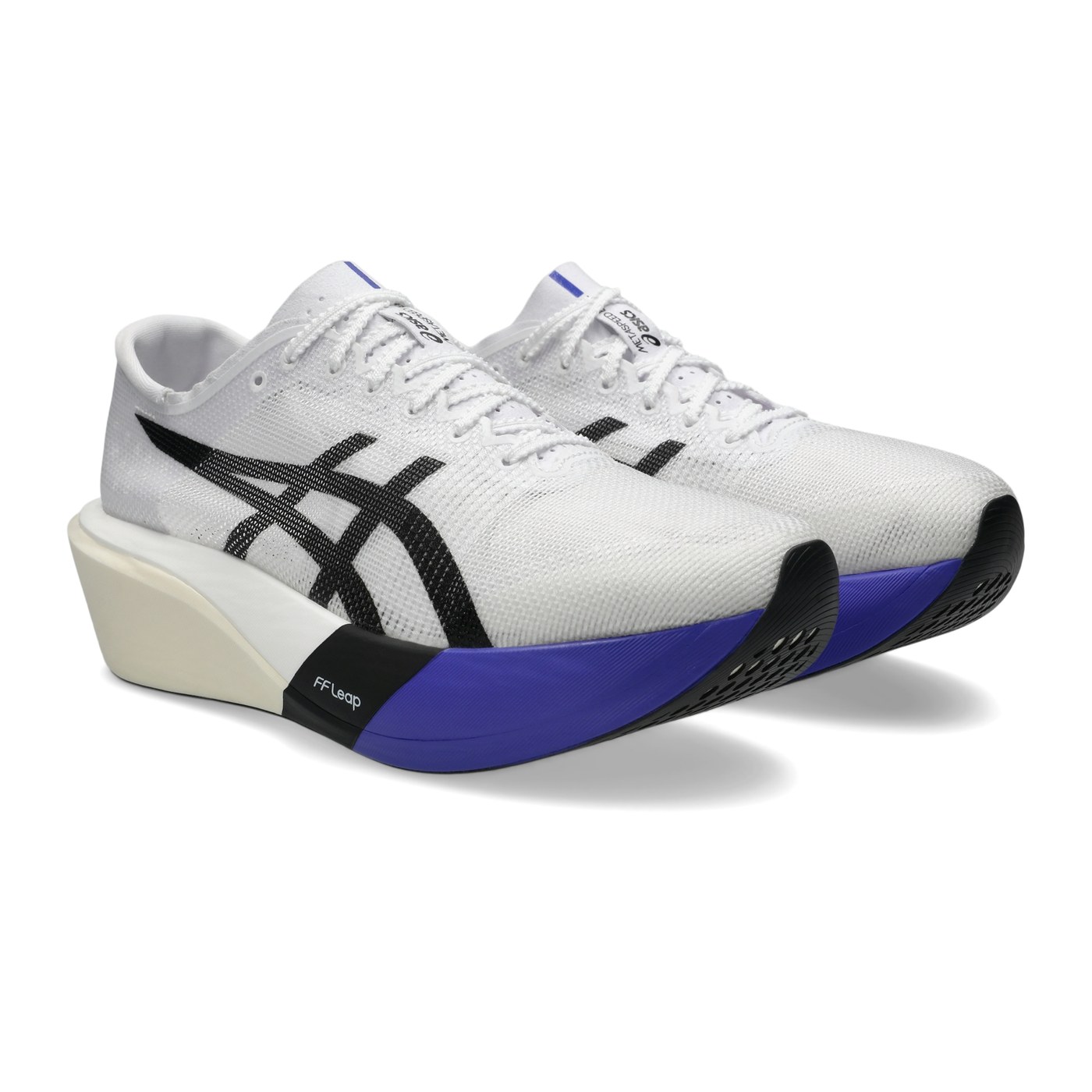
Asics Metaspeed Edge Tokyo specs
| Brand | Asics |
| Model | Metaspeed Edge Tokyo |
| Release date | June 15, 2025 |
| Use | Road, elite carbon-plated racing, cadence-driven stride |
| Drop | 5 mm |
| Stack height (forefoot / heel) | 34.5 mm / 39.5 mm |
| Weight (men's size 42) | 175 g |
| Foam | FF Leap (top) + FF Turbo+ (bottom), the reverse of the Sky's setup |
| Carbon plate | Yes, placed above the FF Turbo+ foam (the reverse of the Sky) |
| Upper | Motion Wrap 2.0, ultra-thin, narrow toe box (70 mm) |
| Recommended distance | 10 km to marathon (cadence-driven stride) |
| MSRP | €270 |
| RunMorph score | 9.2 / 10 |
The Edge Tokyo: for runners who favor cadence over stride length
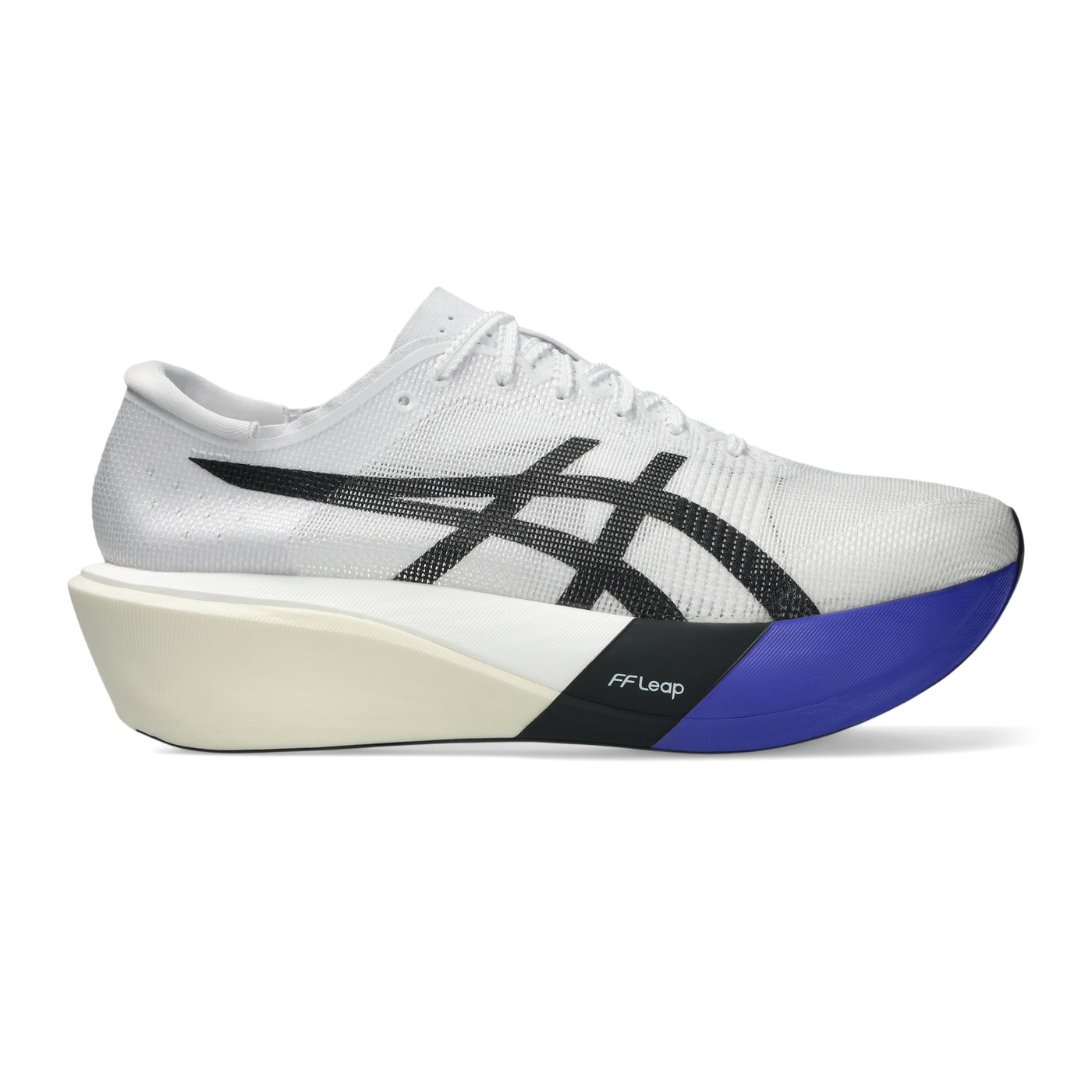
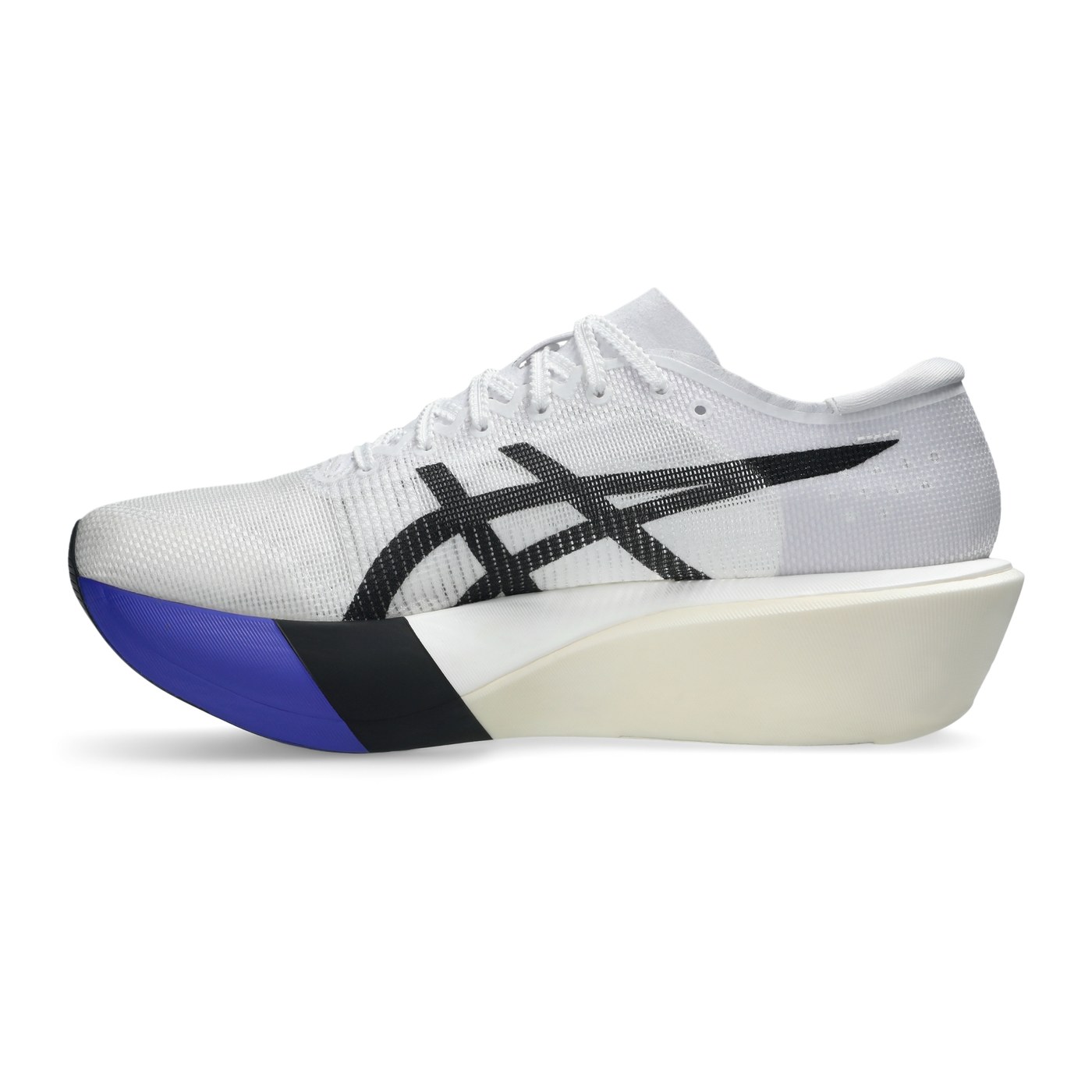
What sets the Edge Tokyo apart is its internal setup. Where the Sky puts the carbon plate under the FF Turbo+ foam (with FF Leap further down), the Edge flips it: plate above the FF Turbo+, and FF Leap on top of that, right under your foot.
Why the difference? Because cadence changes the mechanics of every footstrike. Here's what defines the Edge:
- A plate closer to the foot: on a short ground contact, energy gets transferred faster. The plate acts as a stiff lever that returns impact energy instantly, without the compression lag of a thick layer of foam underneath.
- FF Leap on top: Asics' new PEBA foam is bouncier and delivers instant cushioning on impact. For a cadence runner piling up ground contacts, that's a major comfort gain.
- FF Turbo+ at the bottom: a firmer foam that brings stability and durability. The ideal compromise to keep the shoe from going flat over 42 km.
RunMorph tip: before you buy an Edge, check your cadence over your last 5 workouts at half marathon or marathon pace. At 185+ steps/minute, this is your shoe. Under 175, go for the Sky Tokyo. In between, go by feel: if you "bounce" off each footstrike (cadence runner), pick the Edge; if you "roll" through a long push-off (stride runner), pick the Sky.
Who is the Asics Metaspeed Edge Tokyo for?
Here's our coaching take, profile by profile.
Verdict: the Edge Tokyo is the Sky's counterpart for elite cadence runners. If you're unsure about your stride or fall between the two profiles, look at the Saucony Endorphin Pro 5 instead, which doesn't demand that level of specialization. For a confirmed elite cadence runner, though, the Edge is probably the best super shoe on the market today for that profile.
Under the hood: the technical details
FF Leap (top) + FF Turbo+ (bottom): the inverted architecture
The Sky puts FF Turbo+ next to the foot (firmer) and FF Leap below it (softer). The Edge does the opposite: FF Leap next to the foot, FF Turbo+ underneath. That inversion changes the whole feel.
Every time you land in the Edge, your foot meets the bouncy FF Leap foam first. You get instant cushioning and quick energy return. The FF Turbo+ underneath adds stability and keeps the shoe from collapsing. For a cadence runner landing ~200 times per kilometer, that quick, precise feel is crucial.
Inverted "spoon-shaped" carbon plate: a lever for cadence
The Edge's carbon plate sits above the FF Turbo+ foam (beneath the FF Leap). This setup lets the plate react faster on every footstrike: there's no soft foam to compress before the energy gets transferred.
For a cadence runner, that's exactly what you want. For a stride runner, though, a plate this close to the foot can feel "harsh" and clash with their biomechanics. That's why Asics makes two models: to optimize performance for each stride type, not to sell you the same shoe twice.
Geometry: flatter, with less rocker
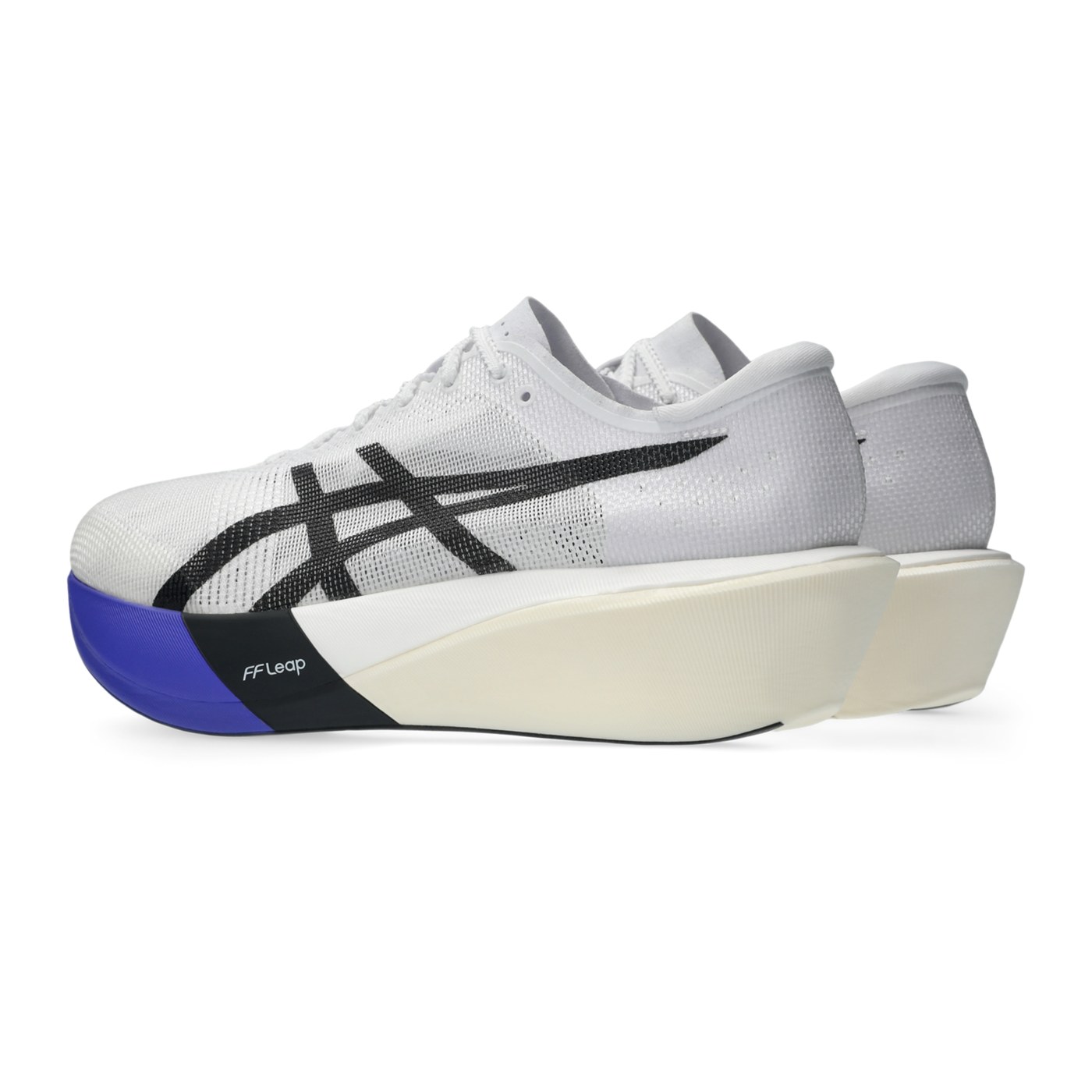
The Edge's geometry is slightly less curved than the Sky's. For a stride runner, the Sky's pronounced rocker helps you "roll" through each step. For a cadence runner, that same rocker can interfere with a fast turnover, so the Edge goes with a flatter geometry that lets your stride run free.
In practice, you feel less of the "running machine" effect that defines the Sky. The Edge is a more discreet precision tool that amplifies your natural stride instead of guiding it.
What French reviewers say
Wanarun ranks the Edge Tokyo among the most precise super shoes for cadence runners, with fast energy return and better stability than the Sky. Their review still flags the narrow toe box as the main drawback, something to weigh against the shape of your foot.
Lepape-Info praises the FF Leap + FF Turbo+ combination and the shoe's low weight. The verdict is clear: for an elite cadence runner, it's probably the best choice in the super shoe segment right now.
Running Lab confirms the model's premium positioning and stresses how well it fits Asics' philosophy of differentiating by stride type. Value for money is judged fair given the ultra-premium segment and the level of specialization.
Our RunMorph coaching take. The consensus is clear: with the Edge Tokyo, Asics doubles down on its specialization strategy. For the elite cadence runner, it's an exceptional precision tool. For other profiles, the Edge makes less sense than the Sky or more versatile competitors.
Quick comparison
Edge Tokyo vs Asics Metaspeed Sky Tokyo. A sibling matchup. Edge for cadence runners (180+ steps/min), Sky for stride runners (long stride). The Edge's plate sits above the FF Turbo+, the Sky's sits below it. Verdict: choose based on your measured stride, not your gut feeling.
Edge Tokyo vs Nike Vaporfly 4. Two super shoes for cadence runners, but the Vaporfly 4 is sharper and leans more toward 5K to half marathon. The Edge Tokyo protects you better over the marathon thanks to its generous stack height. Verdict: Vaporfly for short to middle distances, Edge Tokyo for elite cadence runners at the marathon.
Edge Tokyo vs Saucony Endorphin Pro 5. The Pro 5 is more affordable (€220), more stable and more forgiving of your stride. The Edge Tokyo is faster but more demanding and more expensive. Verdict: Pro 5 if you're new to super shoes, Edge Tokyo if you're a confirmed elite cadence runner.
Fitting the Edge Tokyo into your training strategy
A €270 super shoe isn't something you wear for just anything. Here's our game plan:
- Your daily base: keep a durable daily trainer like the Nike Pegasus 42 or the Hoka Clifton 10. They soak up your weekly mileage without wearing down your race pair.
- Your fast sessions: for tempo runs and intervals, use a lively super trainer like the Hoka Mach 7, the Asics Superblast 3 or the Adidas Adizero EVO SL. You get the fast feel without burning through your Edge Tokyo.
- Your 2-3 key sessions in the Edge Tokyo: in the 4 weeks before your race, schedule 2-3 goal-pace sessions in your Edge to get used to the shoe and lock in your cadence. An Edge Tokyo lasts a solid 200-300 km of hard running, so save it for races and calibration sessions.
RunMorph tip: plenty of runners pick their super shoe on feel or hype, without considering their stride. That's a shame: Asics has done the differentiation work for you. An Edge Tokyo on a stride runner will feel odd and deliver limited performance gains. Measure your cadence on Strava or with your GPS watch over 3-4 race-pace sessions before you decide.
The RunMorph coach's verdict
As a coach, I recommend the Asics Metaspeed Edge Tokyo to my ambitious elite cadence runners. For this exact profile, sub-3 marathon or sub-1:25 half with a cadence above 185 steps/minute, it's probably the best super shoe on the market today.
The jump from the Edge Paris to the Tokyo brings the same upgrades as the Sky: new FF Leap foam, less weight, a reworked plate. Asics shows steady R&D and a consistent strategy of specializing by stride type, something no one else does in the super shoe segment.
The only real drawback: the target audience is very narrow. Like the Sky, the Edge has a narrow toe box that can become a problem late in a marathon. And its premium price (€270) limits it to serious runners who can get the most out of it. For 90% of amateur runners, an Endorphin Pro 5 at €220 is the smarter pick.
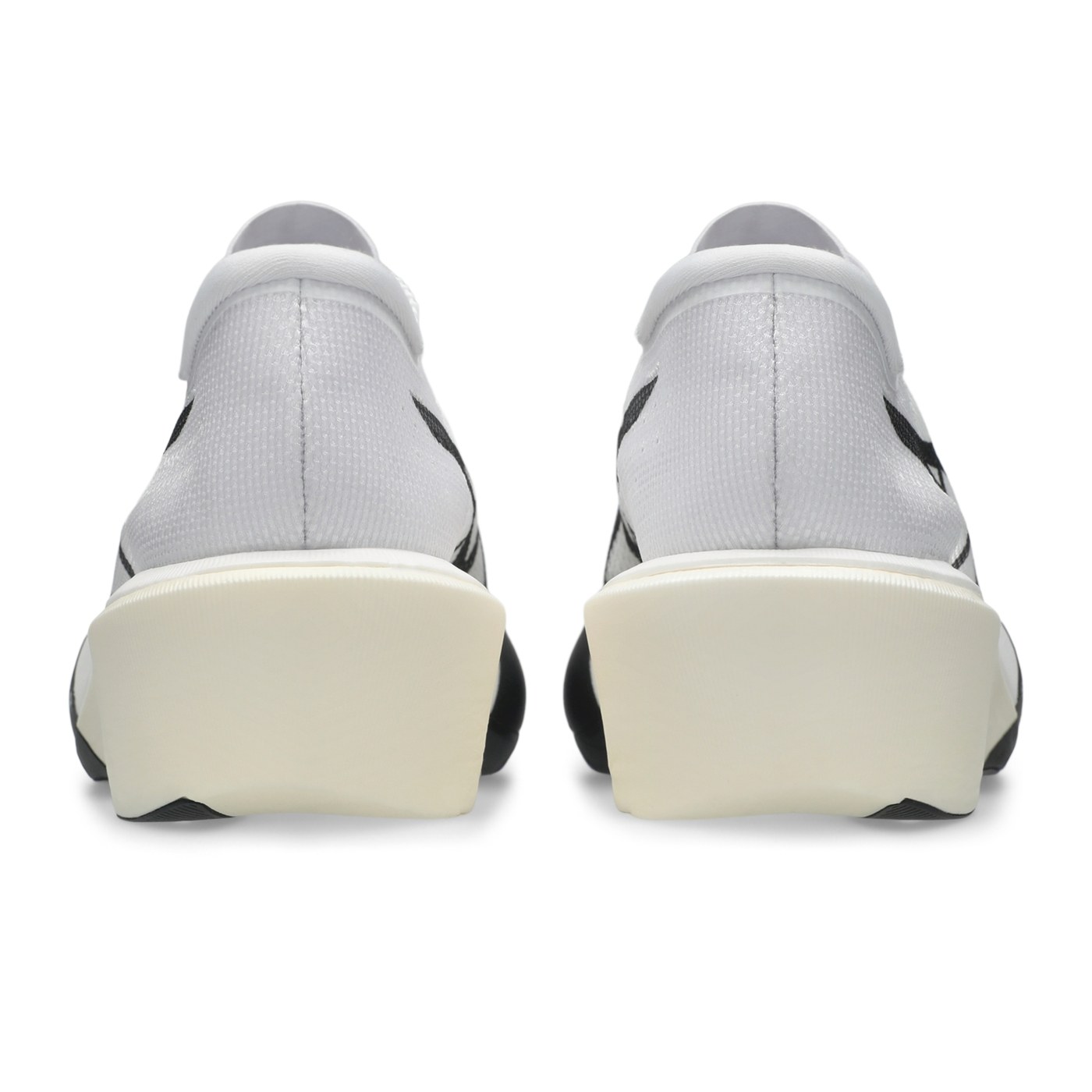
RunMorph score: 9.2 / 10. At €270, it's an elite super shoe at an elite price. Buy it if you're an ambitious cadence runner who wants the best for your profile. Look elsewhere if you're unsure about your stride or want more versatility.
Key takeaways for your next race
- A super shoe built for a high-cadence stride: high cadence (180+ steps/min), short ground contacts, midfoot strike. If that's not you, get the Sky.
- Inverted FF Leap + FF Turbo+ combo: bouncy foam next to the foot, stable foam underneath. A unique setup in the segment.
- Carbon plate above the FF Turbo+: fast energy transfer on every short ground contact, ideal for high cadence.
- 175 g in size 42: light and well suited to a cadence runner's many footstrikes.
- 5 mm drop: encourages a midfoot/forefoot strike, consistent with a high-cadence stride.
- Narrow toe box: 70 mm wide. Avoid it if you have wide feet or tend to get numb feet during a marathon.
- 200-300 km lifespan: save it for races and key calibration sessions.
Frequently asked questions
Is the Asics Metaspeed Edge Tokyo good for beginners?
No. Like any carbon-plated super shoe, it demands a well-developed stride and solid weekly mileage (50 km/week minimum). To get started with super shoes, go for the Saucony Endorphin Pro 5 instead, which is more forgiving and cheaper.
How do I know if I'm a cadence runner or a stride runner?
Measure your cadence on Strava or with your GPS watch over 3-4 sessions at half marathon or marathon pace. Above 185 steps/minute, you're probably a cadence runner: get the Edge. Below 175, you're more of a stride runner: get the Sky. In between, both models work, but Asics recommends the Sky by default.
How durable is the Edge Tokyo?
Expect 200 to 300 km of hard running. That's average for the carbon-PEBA super shoe segment. For an amateur running 1-2 marathons a year, that adds up to 1-2 full racing seasons if you rotate it with a daily trainer.
Does the Edge Tokyo run large or small?
Length is true to size, but the fit stays very narrow in the forefoot (70 mm). If you're unsure or have wide feet, go up half a size, especially for the marathon. If the narrow fit is a deal-breaker, look at the Endorphin Pro 5 or the Adios Pro Evo 3.
What's the difference between the Edge Tokyo and the Edge Paris?
Three major changes: new FF Leap foam on top (instead of a single foam), a few grams saved, and a reworked carbon plate. Weight, stack height and drop stay close. If you loved the Edge Paris, you'll love the Tokyo even more, but the Edge Paris remains an excellent option on sale.