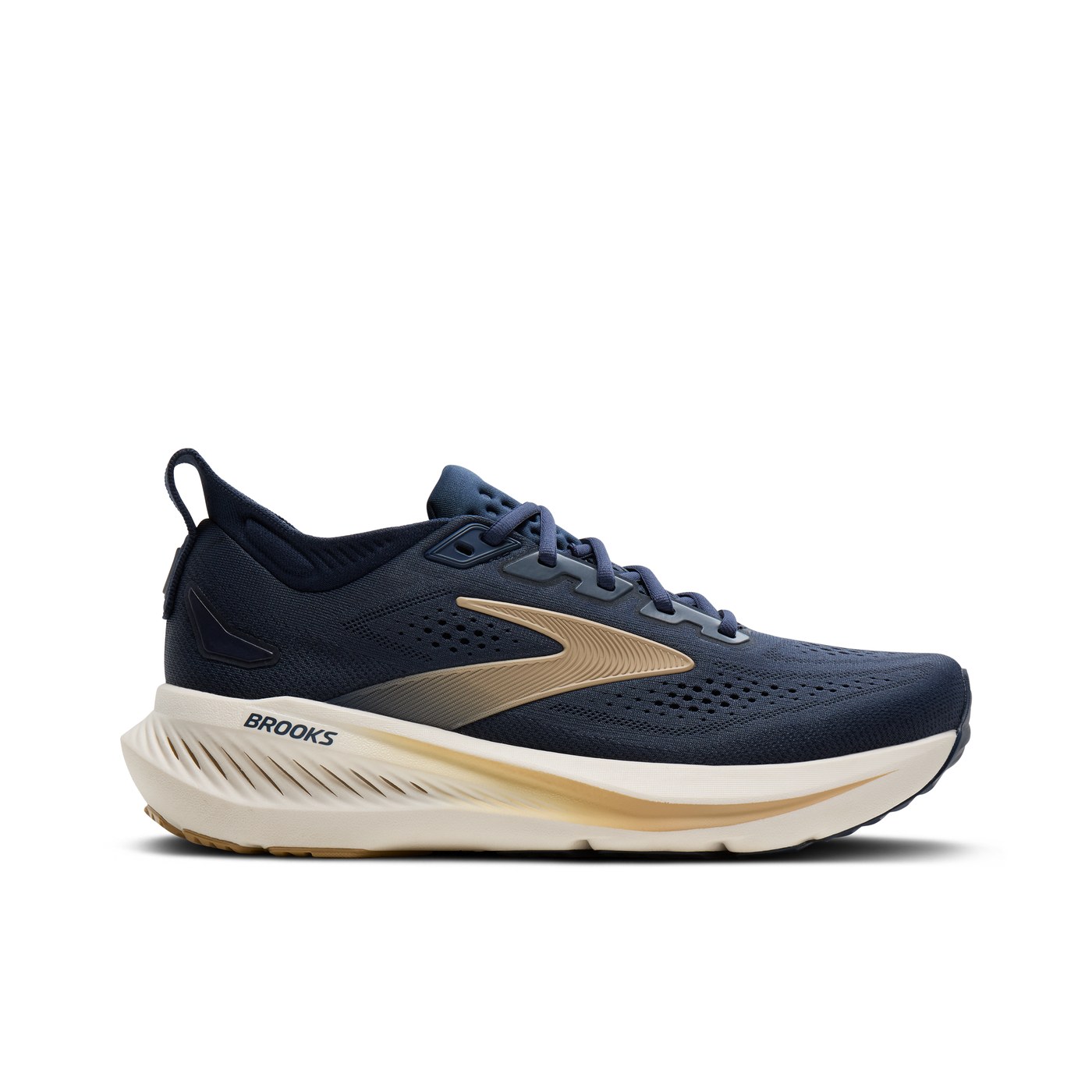
Released in France on January 2, 2026, the Brooks Glycerin 23 marks a turning point for the Seattle brand. DNA Loft v3 is gone, replaced by the new nitrogen-infused DNA Tuned foam built with cells in two sizes. The drop goes from 10 to 8 mm and the forefoot gains 2 mm of stack height. We put it through its paces to find out what this premium daily trainer really changes in your stride, and whether your €180 is money well spent.
Brooks Glycerin 23 Review: DNA Tuned Foam and an 8 mm Drop
8/10
Brooks Glycerin 23: the max-cushion daily trainer that reshuffles the deck at Brooks
The Glycerin has ruled the comfort end of the Brooks lineup for 23 versions. You know the tune: plush foam, a protected stride, solid durability. Except this V23, launched on January 2, 2026 at i-Run, Alltricks and Decathlon, gets far more than a fresh coat of paint. Brooks changed everything under the upper: new foam, new drop, new stack height, new insole. This isn't an update. It's a repositioning.
As a RunMorph coach, I see runners pile up shoes with no logic at all. Three carbon racers, two trail shoes, zero high-cushion daily trainers. The result: an overloaded Achilles tendon, sore calves, and no way to string together two proper easy runs. The Glycerin won't set your 10 km PR. It's the shoe that gets you to race day in one piece. And that's often what's missing from a rotation.
RunMorph tip: if you run more than 40 km a week, you need at least one pure recovery shoe. The Glycerin 23 fills that role better than many €130 daily trainers. Think of it as a partner to your Nike Vaporfly 4 or your Saucony Endorphin Pro 5, not as a rival.
© Brooks, official photo used for editorial purposes
Objective specs
| Brand | Brooks |
| Model | Glycerin 23 |
| Official release in France | January 2, 2026 |
| Type | Premium max-cushion daily trainer, neutral, road |
| Drop | 8 mm (vs. 10 mm on the V22) |
| Heel / forefoot stack height | 38 mm / 30 mm (forefoot +2 mm vs. V22) |
| Weight (men's EU 42) | 300 g |
| Weight (women's EU 39) | 269 g |
| Foam | DNA Tuned (nitrogen-infused, dual cell density) |
| Carbon plate | No |
| Insole | Anatomical Ortholite |
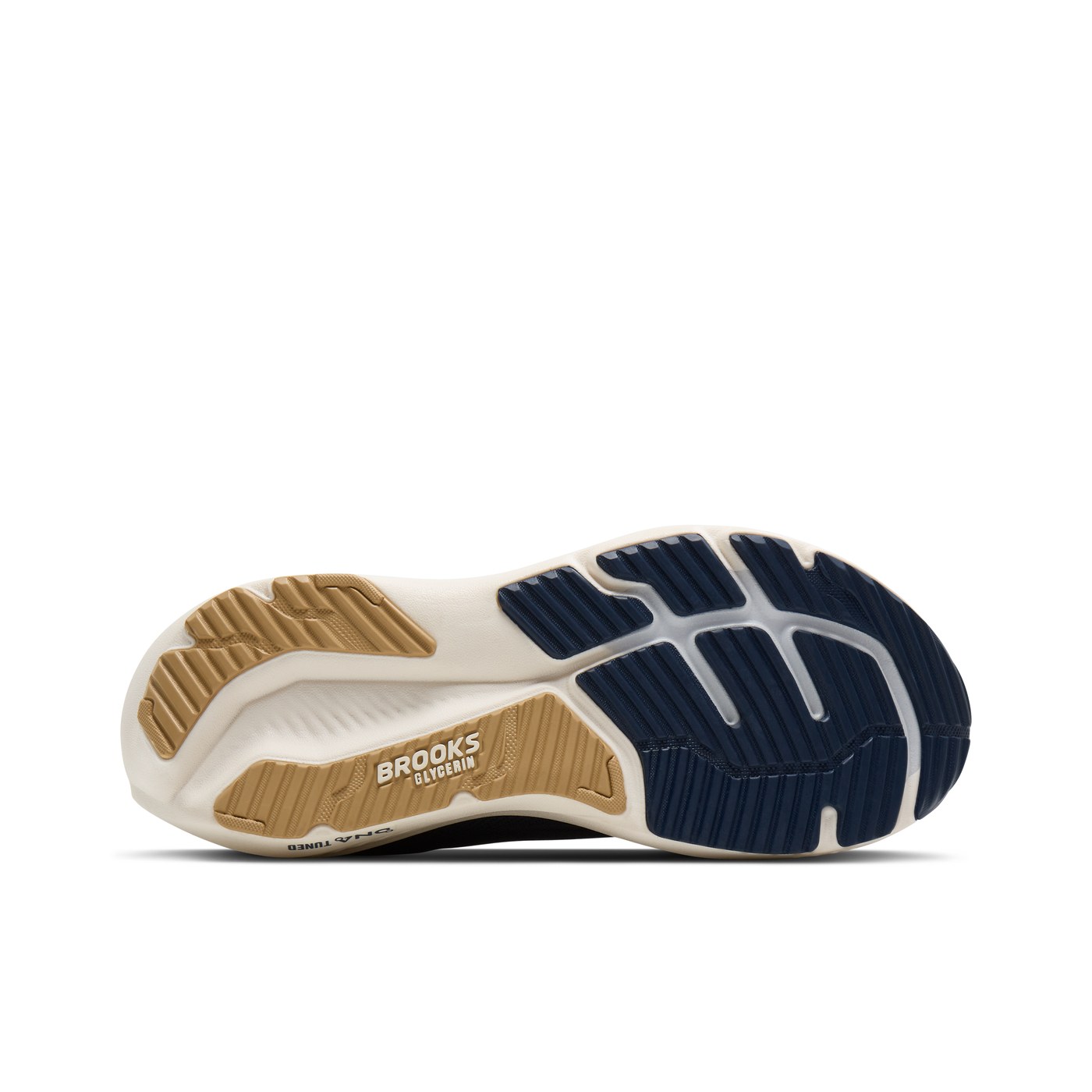
| Outsole | RoadTack (Brooks nitrogen-infused rubber) |
| Upper | New engineered knit, softer than the V22 mesh |
| Widths | Medium (D), Wide (2E), Extra Wide (4E) |
| Target distance | 5 km to marathon, recovery, long runs |
| Official price in France | €180 (€144 to €180 in practice, depending on the retailer) |
What exactly is DNA Tuned, and why does it change everything?
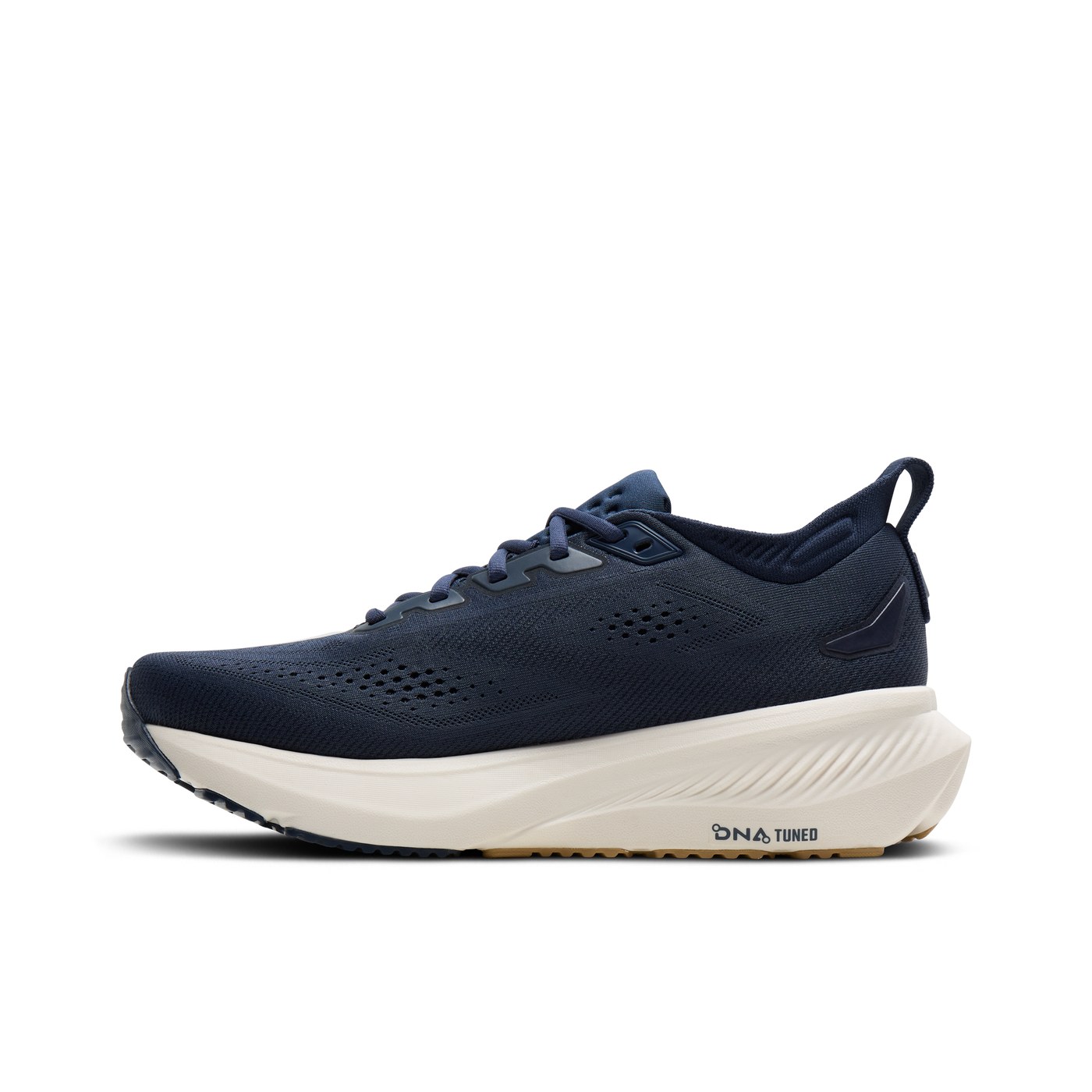
The heart of the V23 is the foam. Brooks drops DNA Loft v3, the foam behind the V22's success, and replaces it with DNA Tuned. Simple on paper, tough to pull off: one foam, two cell sizes. Large cells in the heel absorb impact and give you a soft landing. Small cells in the forefoot put energy return back into your toe-off. Nitrogen infused into the matrix makes it lighter and bouncier than standard EVA.
On the road, the difference is clear. The V22 cushioned through sheer mass, without much character. The V23 has two personalities on a single midsole: you feel the generous heel the moment you land, then the forefoot sends back a snappier push. It's not the electric bounce of a Saucony Triumph 23 with its pure-PEBA PWRRUN PB, but it's livelier than your average comfort foam. Independent lab measurements confirm a 5% gain in energy return over the V22, which you mostly feel on long runs past 20 km, when fatigue sets in.
The drop change from 10 to 8 mm is the other big signal. Brooks brings the Glycerin in line with the premium daily trainer trend and asks your calves to work a little harder. That's not trivial: if you're coming from the V22 or an 8 mm Asics Gel-Nimbus 28, you won't notice the transition. If you've spent years in 10 mm Glycerins, plan two or three adaptation runs to avoid extra strain on your Achilles tendon.
Who is the Glycerin 23 for?
The runner who racks up easy kilometers
40 to 80 km a week, a long run on Sunday, conversational pace 80% of the time. That's exactly the profile Brooks is going after. The Glycerin 23 gives you cushioning you can feel, but that doesn't bottom out over time. You can wear it three times a week without premature wear thanks to the RoadTack outsole and its nitrogen-infused rubber. Step-in comfort is immediate, mostly thanks to the new engineered knit upper, which removes almost every pressure point over the instep.
The runner coming back from injury
Achilles tendinitis in remission, a past stress fracture, a bout of plantar fasciitis behind you: the Glycerin 23 is one of the very few shoes I recommend without hesitation for this delicate phase. The 38 mm stack height absorbs impact without a harsh rebound, the generous forefoot protects your metatarsal heads, and stability stays decent despite the height. If you need a little more medial control, the Glycerin GTS 23 adds GuideRails technology without weighing down the main foam.
The marathoner in a race build
You're aiming for your first 42.195 km or trying to break 3:30. Either way, your training plan includes two fast sessions and three to four easy runs a week. Save your carbon shoes for threshold blocks and race day. For the 70% of relaxed easy running, the Glycerin 23 keeps your legs fresh enough to handle the weekly load without cracking. That role as the pivot shoe of your training is what justifies its premium price.
© Brooks, official photo used for editorial purposes
Comfort, ride and grip: what the V23 does better than the V22
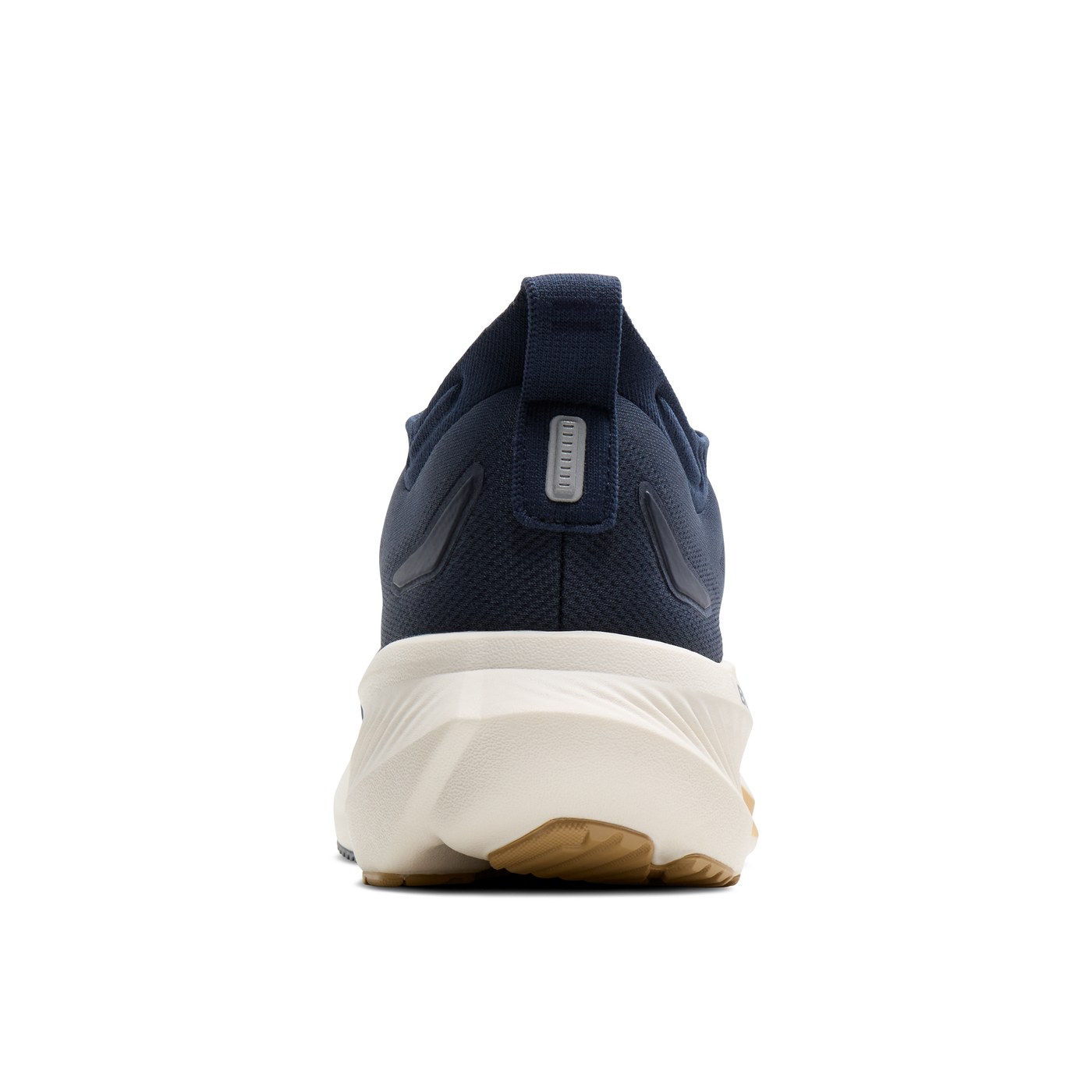
The first step-in already tells you what Brooks was going for. The engineered knit upper is one of the most welcoming on the market at this price. No rubbing seams, a pre-shaped instep, a thick but not overdone tongue. The heel area, on the other hand, bothers some runners: the tongue isn't gusseted, and on narrow feet it can slide slightly to the side. It's the typical flaw of a premium shoe that puts comfort ahead of a precise fit.
On dry pavement, the ride feels plush without being clumsy. The V22 sometimes lacked snap when you picked up to marathon pace. The V23 responds better as soon as you drop below 5:00/km, thanks to the small forefoot cells that compress faster. You won't break your 10 km PR in the Glycerin 23, but you can fit in an active-recovery fartlek without feeling like you're dragging a slab of foam.
On wet roads, grip is very solid for a lightweight nitrogen-infused rubber. Brooks widened the rubber coverage in the forefoot compared with the V22, and you notice it in tight turns and on wet road markings. The tread pattern sheds water well, and you don't get that skating feeling you sometimes find on rival premium daily trainers.
Breathability, however, is a notch below the V22. The knit is denser and more protective in winter, but in summer you'll feel the heat build as soon as temperatures pass 25 °C. If you run in the south or you're building for a fall marathon with big volume in July and August, keep that in mind. For cool-season racing, on the other hand, it's an advantage.
How it stacks up against the competition
The premium max-cushion daily trainer segment is one of the most contested on the market in 2026. The Glycerin 23 faces strong benchmarks, each with its own philosophy.
- Hoka Bondi 9: 297 g, 5 mm drop, 43/38 mm stack height in supercritical EVA foam. More cushioned, with a more aggressive rocker, but less versatile when you want to pick up the pace. The logical choice if you want as much foam as possible, no questions asked.
- Asics Gel-Nimbus 28: 295 g, 8 mm drop, FF Blast Plus Eco foam with visible PureGEL in the heel. A more structured feel, the same drop as the V23, a similar price. The direct rival: choosing between lively Brooks cushioning and enveloping Asics cushioning often comes down to your feet.
- New Balance Fresh Foam X 1080v15: 285 g, 6 mm drop, 38/32 mm stack height in Fresh Foam X PERFORM. Lighter underfoot, an even lower drop, and an ultra-breathable Hypoknit upper. The better pick if you want an airy knit and moderate weight.
- Saucony Triumph 23: 283 g, 10 mm drop, 100% PEBA PWRRUN PB, 37/27 mm stack height. The only one here with pure PEBA foam, so the snappiest at fast paces. Pick it if you want your daily trainer and tempo shoe rolled into one pair.
The Glycerin 23's positioning is clear: it targets runners who want the most enveloping comfort possible without completely giving up pop when they surge. Not the softest, not the liveliest, but probably the best balanced of the four for 80% easy running.
How to fit the Glycerin 23 into your RunMorph training plan
In a typical RunMorph cycle, the Glycerin 23 is your pivot shoe. It handles your recovery runs the day after a hard session, your Sunday long run, and your two or three relaxed easy runs during the week. That's about 70% of your weekly volume.
For a marathoner targeting sub-3:45, here's a simple rotation: Glycerin 23 for easy runs and the long run, Brooks Hyperion Elite 5 or Saucony Endorphin Pro 5 for key sessions and race day, Asics Magic Speed 5 or a super trainer like the Asics Superblast 3 for long intervals at goal pace. This three-pair rotation covers everything you need over a 12-week cycle and limits the mechanical fatigue on each model.
For a more modest 10 km runner, the Glycerin 23 can cover 90% of your mileage, backed up by a single snappier tempo shoe. If you're starting a new RunMorph plan, browse the options on our training plans page to match your load progression to the lifespan of your pair (about 700 to 900 km for the Glycerin 23, based on aggregated field reports).
© Brooks, official photo used for editorial purposes
The RunMorph coach's verdict
The Brooks Glycerin 23 is an editorial success more than a technical revolution. Brooks stuck to its core identity (the premium comfort daily trainer) while injecting just enough innovation (DNA Tuned, 8 mm drop, new knit) to stay relevant in an ultra-competitive segment. It doesn't stand out in any single area. It's good everywhere. That's exactly what you want from a shoe that has to absorb 70% of your weekly volume.
Two limits to know about: breathability falls short of the V22 in summer, and the non-gusseted tongue can slide on narrow feet. Beyond that, the dual-cell cushioning delivers on its promises, the RoadTack outsole provides decent grip in all conditions, and durability looks solid. At €180 list price, it's expensive but in line with the Bondi 9 and the Nimbus 28. Deals start around €144 at specialist French retailers, which makes the purchase a lot easier to justify.
Final score: 8/10. The Glycerin 23 won't make you faster on its own, but it will help you absorb a demanding training plan with no surprises and no sloppy strides. That's exactly the job it's asked to do, and it gets it done with the reliability that has built Brooks' reputation for twenty-three years.
Key takeaways for your training
- Versatile premium daily trainer: the Glycerin 23 handles 70% of your weekly volume without breaking down or wearing you out.
- New DNA Tuned foam: nitrogen-infused dual-cell design, snappier in the forefoot than the V22, softer in the heel.
- 8 mm drop vs. 10 mm on the V22: an easy transition if you're coming from an 8 mm shoe, otherwise allow two or three adaptation runs.
- 38/30 mm stack height: maximum Achilles tendon protection during recovery, ideal after an injury.
- Recommended rotation: Glycerin 23 for easy runs, carbon on race day, a super trainer or plated tempo shoe for key sessions.