Two independent labs measured a different drop on the Brooks Revel 9, 8.6 mm for one, 8.9 mm for the other, against the 8 mm Brooks advertises. The two measurements agree on one point: the shoe has become noticeably stiffer than the Revel 8.
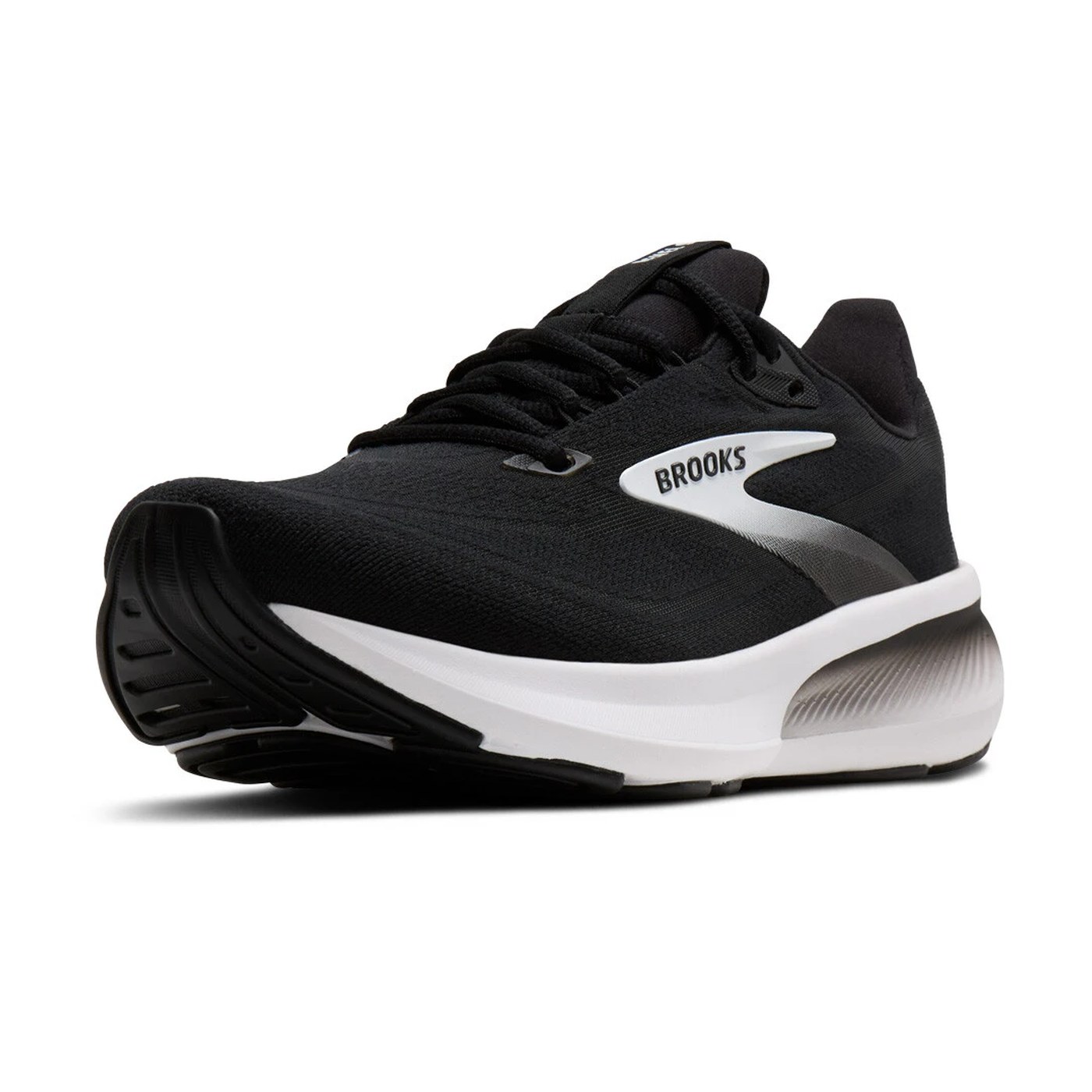
© Brooks, official photo used for editorial purposes
Brooks Revel 9: Brooks' entry-level daily trainer repeats its formula without refreshing it
The Revel has held the same spot in the Brooks lineup for years: the entry-point shoe, designed to attract a runner who has never yet invested in a pair dedicated to running. Against the Ghost 18, the brand's premium daily, and the stability-focused Adrenaline GTS 24, the Revel 9 leans on a single argument, price, at around 90 to 100 euros against 150 euros for a new Brooks Ghost 18. Brooks doesn't change the recipe that made the Revel 8 a success: same DNA Loft v2 foam, same general-purpose positioning, a simple tweak to the upper and outsole. The result measured in the lab is more nuanced than the marketing sheet suggests.
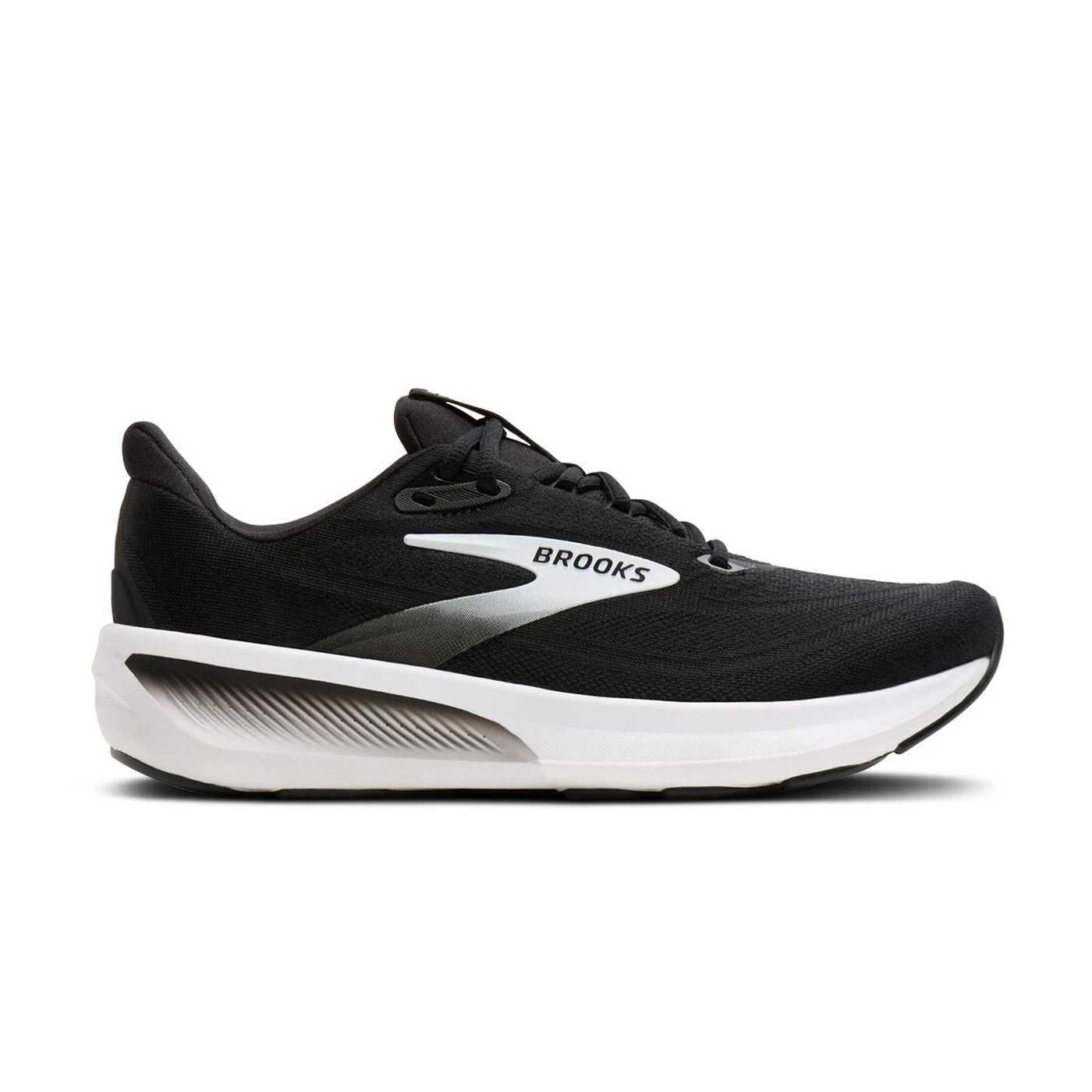
© Brooks, official photo used for editorial purposes
RunMorph's advice: the Revel 9 suits a runner who is starting out, not a runner who is progressing. If you're stringing together weeks above 30 km or targeting a timed 10K, look instead at the Brooks Ghost 18 or the Asics Gel-Cumulus 28, better equipped for volume.
Revel 9 spec sheet: what Brooks advertises against what was measured
Two independent lab measurements agree on the essentials, with some notable gaps from the official Brooks spec sheet.
| Spec | Brooks claims | Independently measured |
|---|
| Weight (US men's 9) | 269 g | 264 g (average of 2 lab measurements, 2% under the claim) |
| Drop | 8 mm | 8.6 to 8.9 mm depending on the source, a gap of 0.6 to 0.9 mm |
| Heel stack | 32 mm | 32.7 to 33.8 mm |
| Forefoot stack | 24 mm | 24.1 to 24.9 mm |
| Foam | DNA Loft v2 (same as Revel 8) | Confirmed, no formula change |
| France price | €100 recommended | €90 to €100 depending on retailer (i-Run, Brooks.com) |
| Widths available | Standard and wide | Confirmed across both measurements |
Weight is the one figure where the brand stayed conservative, the shoe weighing on average 2% less than advertised. On drop, though, both independent labs exceed the official claim, with a gap reaching up to 0.9 mm. A single number wouldn't change the stride, but the fact that two separate measurements point the same way, toward a real drop closer to 8.5-9 mm than the advertised 8 mm, confirms the gap isn't a measurement fluke.
DNA Loft v2: the foam that hasn't changed since the Revel 8
Brooks doesn't reformulate the Revel 9's midsole. The DNA Loft v2 already present on the Revel 8 stays the base of the cushioning, a compression-molded EVA foam, less technical than the DNA Tuned found on the Glycerin or the nitrogen-infused foam on the Ghost Max. Measured energy return in the lab sits at 60.6% at the forefoot, in line with the budget segment average (61.4%), but drops to 50.2% at the heel, well below average. A second independent measurement confirms this forefoot-to-heel gap and ranks the shoe's overall energy return in the low zone of its database. In short, the foam cushions correctly on impact but gives almost nothing back at the heel, which translates into a flatter rather than more dynamic stride feel as the pace picks up.
The fit: a toebox lower than the market average
Two independent measurements agree on this specific point, rare enough to flag: the toebox height sits below the market average, one putting it at 24.7 mm against a 27.0 mm average (2.3 mm less), the other describing it as 3.1 mm low against a size reference. For a runner with high toes or who wears thick socks in winter, that gap can be enough to make the usual size uncomfortable within the first few kilometers. Width isn't an issue: internal length is rated true to size (a score of 9.5 out of 10 on this criterion from one of the two labs) and wide versions exist in the Brooks lineup.
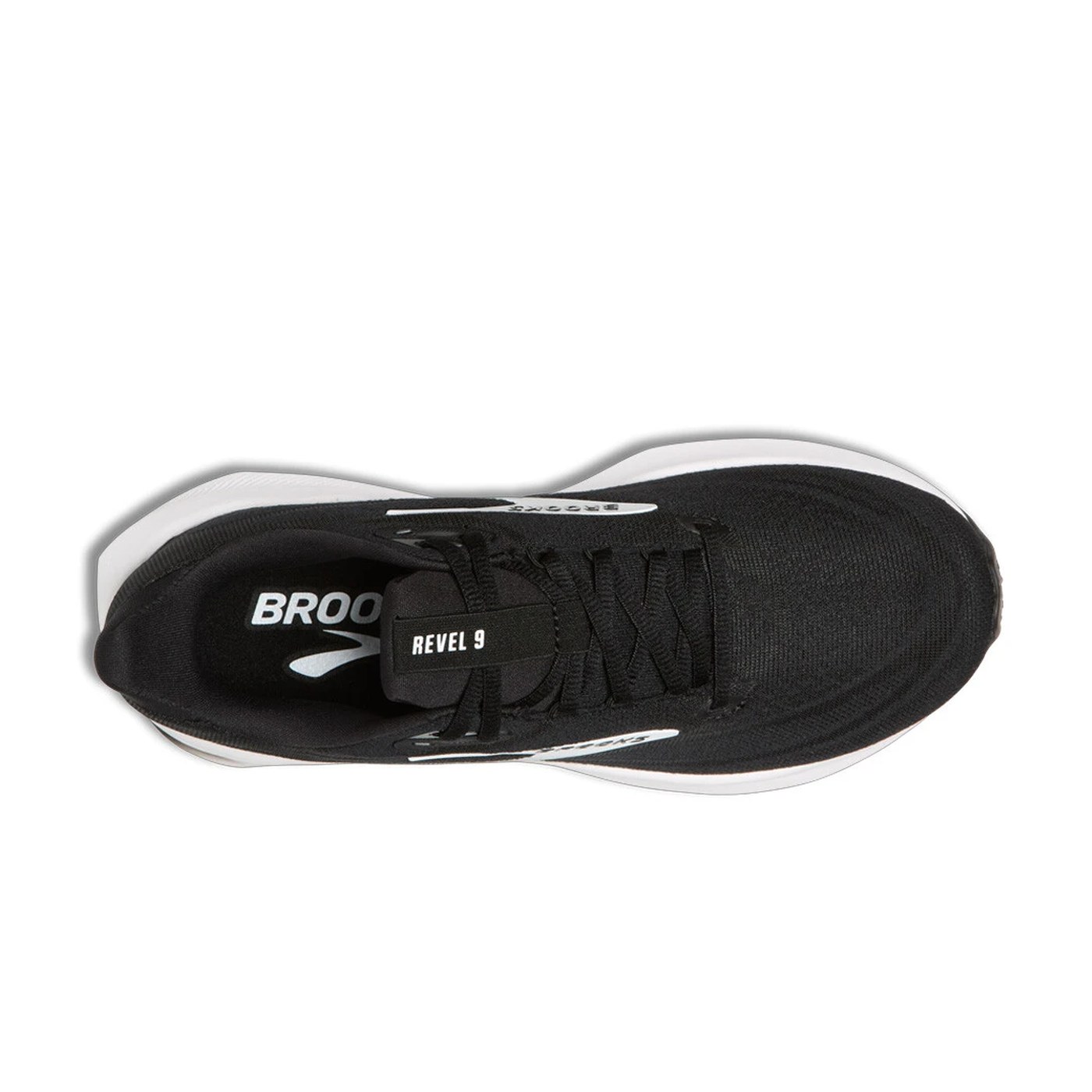
© Brooks, official photo used for editorial purposes
On the road: easy runs and getting started, nothing more
Independent measurements agree on the Revel 9's calling: the daily-use sub-score comes out at 86 out of 100 in one database and 7.2 out of 10 in the other, the shoe's two best scores across every category. Conversely, the long-run sub-score (6.2 out of 10), the half/marathon sub-score (5.0 out of 10), and the fast-running sub-score (34 out of 100 in the other database) all collapse. The field-test consensus is clear: the Revel 9 handles an easy-to-moderate-pace run well, but falls off as soon as distance or pace increases.
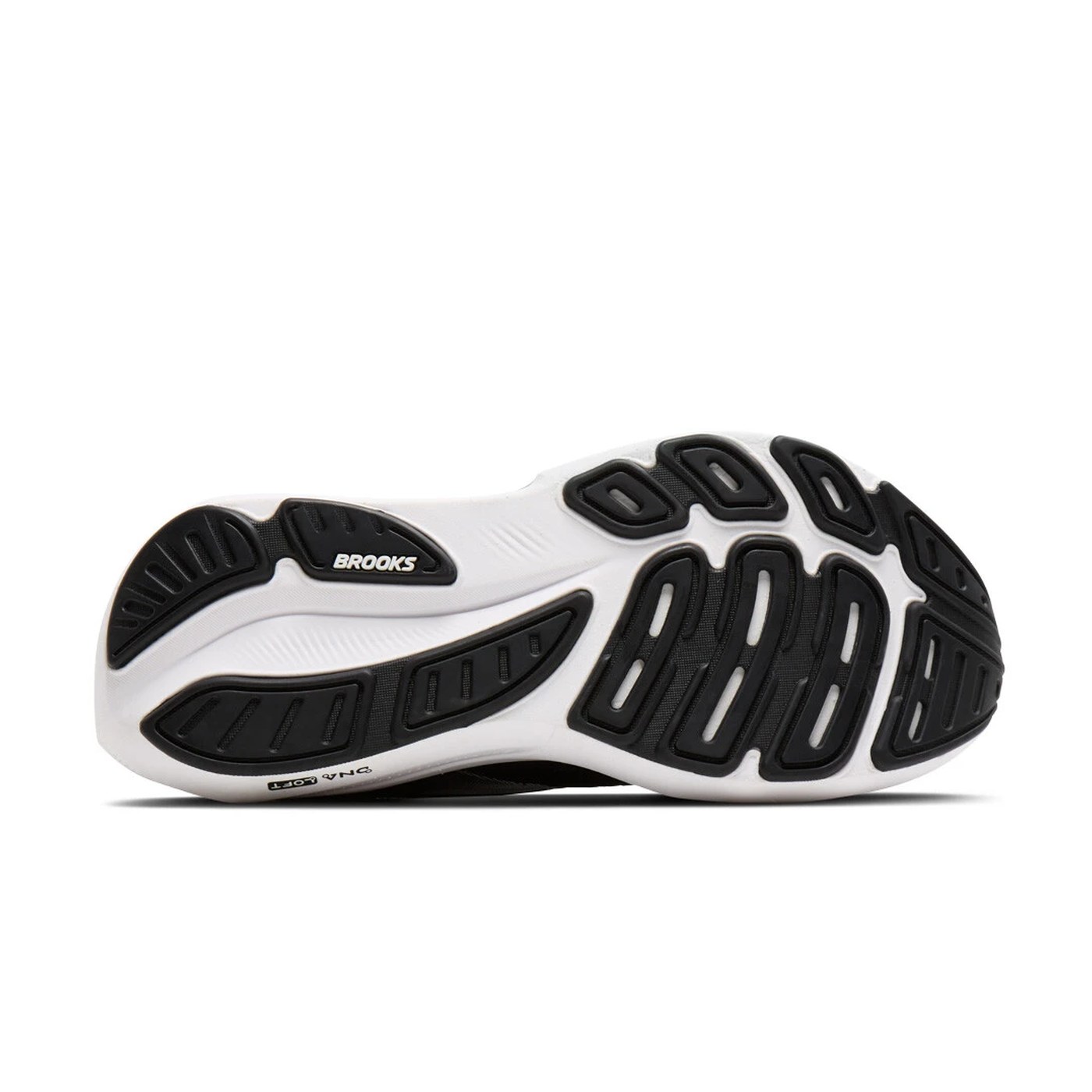
On stability, the two sources also align, with scores of 84 out of 100 and 8.3 out of 10. The wide platform (116 mm at the forefoot, above the segment average) explains this very planted foot-strike feel, which makes it a good choice for a runner still short on experience. Outsole traction also improves markedly over the previous version, going from 0.57 to 0.65 on the measurement scale used (market average: 0.53), a gain confirmed across both generations tested by the same lab.
Major flaw: a 35% stiffness increase over the Revel 8
This is the most concrete change between the two generations, and it's invisible on the Brooks product page. Measured torsional stiffness goes from 11.0 Nm on the Revel 8 to 14.8 Nm on the Revel 9, a 35% increase. Longitudinal flex at 30 degrees follows the same trend, from 13.1 N to 15.3 N, 17% more. In practice, the sole bends less readily underfoot, which supports the stability Brooks is going for but hurts the toe-off flexibility feel, especially for a lighter runner or a narrow foot that doesn't need this extra support. One of the two independent sources describes a sole that tires the legs quickly over extended use, a feeling consistent with the measured stiffness increase.
Revel 9 vs Revel 8: is it worth upgrading?
| Criterion | Revel 8 | Revel 9 |
|---|
| Measured weight | ~244-259 g | ~264 g (+2 to +8% depending on source) |
| Torsional stiffness | 11.0 Nm | 14.8 Nm (+35%) |
| 30° flex | 13.1 N | 15.3 N (+17%) |
| Forefoot traction | 0.57 | 0.65 (+14%) |
| Launch price | $100 | $100 (unchanged) |
A runner who found the Revel 8 slippery on wet ground gains from upgrading, traction genuinely improves from one generation to the next. A runner who liked the Revel 8's flexibility specifically risks being disappointed, the Revel 9 goes the other way with a noticeably stiffer sole, for an identical price.
Revel 9 vs Kiprun Cushion 500 and Hoka Rincon 5: the budget comparison
| Model | Price | Drop | Weight | Positioning |
|---|
| Brooks Revel 9 | €90-100 | 8 mm (8.6-8.9 measured) | ~264 g | Stability, beginner |
| Kiprun Cushion 500 | from €25 | 8 mm | ~250 g | Rock-bottom price, occasional use |
| Hoka Rincon 5 | ~€115 | 5 mm | ~210 g | Lightweight, maximalist cushioning |
In short, the Kiprun Cushion 500 remains unbeatable on raw price and suits very occasional use, the Hoka Rincon 5 is lighter and more cushioned but costs more, and the Revel 9 sits between the two with its own edge, measured stability clearly above both others (84 out of 100), which makes it the logical choice for a foot that needs guidance rather than a foot chasing lightness at any cost.
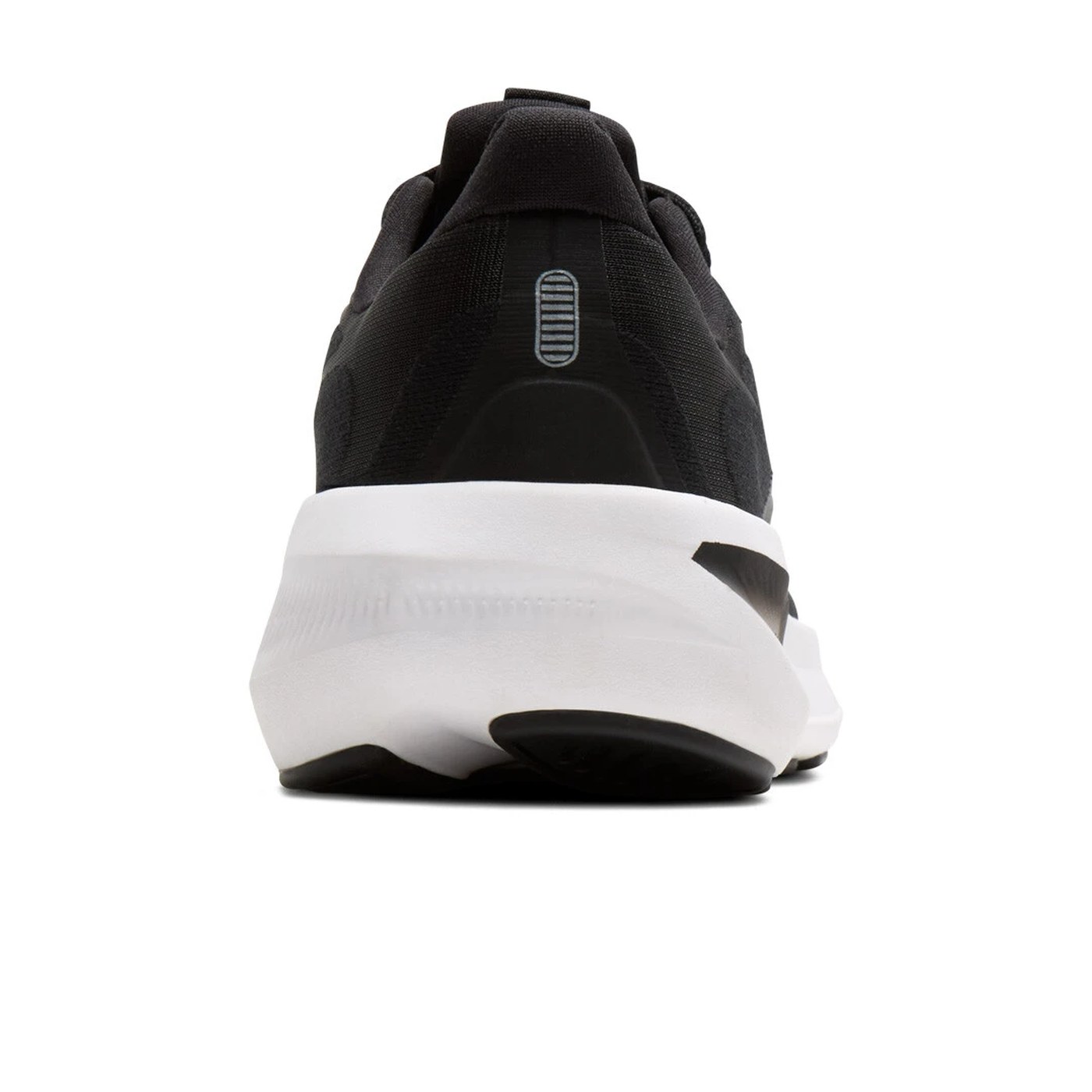
© Brooks, official photo used for editorial purposes
Durability: the real cost per kilometer
Outsole wear measured in the lab comes out at 0.5 mm for the Revel 9, against 1.1 mm on average across the market of shoes tested under this protocol, twice as slow wear. Using a conservative assumption of 500 km before replacement for a shoe in this segment, a €95 price tag works out to roughly €0.19 per kilometer. For comparison, the Kiprun Cushion 500, already reviewed by RunMorph, drops to €0.07 per kilometer thanks to its rock-bottom price, but without sole durability data at the same level of precision. In the budget segment, the Revel 9 doesn't win on purchase price, it wins on the measured lifespan of its sole.
© Brooks, official photo used for editorial purposes
How to fit the Revel 9 into your RunMorph training
The Revel 9 fits into the weeks of a RunMorph beginner plan, where the goal is to build consistency through short to moderate easy runs, not to hold a specific pace. The daily-use sub-score, the highest measured on this shoe, confirms it's built for exactly that role rather than for a 10K buildup with interval blocks.
Who it's for, concretely: if you're starting a RunMorph beginner program and run 2 to 3 times a week over distances of 3 to 8 km, the Revel 9's stability and price make it a defensible choice. If your plan already includes long runs beyond 12-15 km or interval sessions, the limited heel energy return will make itself felt.
RunMorph Coach's verdict
The Revel 9 doesn't lie about what it is: an entry-level shoe that delivers on stability and durability, without ever trying to play in the premium daily trainer league. The 35% stiffness increase over the Revel 8 is the real change in this ninth generation, more so than the DNA Loft v2 foam carried over unchanged. At RunMorph, the score reflects an honest trade-off: very good for a targeted use (easy runs, getting started, small budget), noticeably less relevant once volume or pace increases. 7.3/10, weighted by stability and durability above the average for its price category, but marked down for responsiveness and fit that lag behind.
FAQ
Is the Brooks Revel 9 suitable for a first marathon?
No. Its half/marathon sub-score, measured at 5.0 out of 10, puts it well behind daily trainers dedicated to distance, like the Brooks Ghost 18.
Should you size up half a size for the toebox?
Length is rated true to size (score 9.5/10), the toebox issue is about height (-2.3 to -3.1 mm), not length: sizing up half a size wouldn't change anything.
Is the Revel 9 more expensive than the Revel 8?
No, the price stays at $100 in the United States and €90 to €100 in France, unchanged since the previous generation.
How many kilometers does the Revel 9's sole last?
Lab-measured wear is 0.5 mm, half the market average (1.1 mm) under the same protocol, which corresponds to a lifespan above the average for its price category.