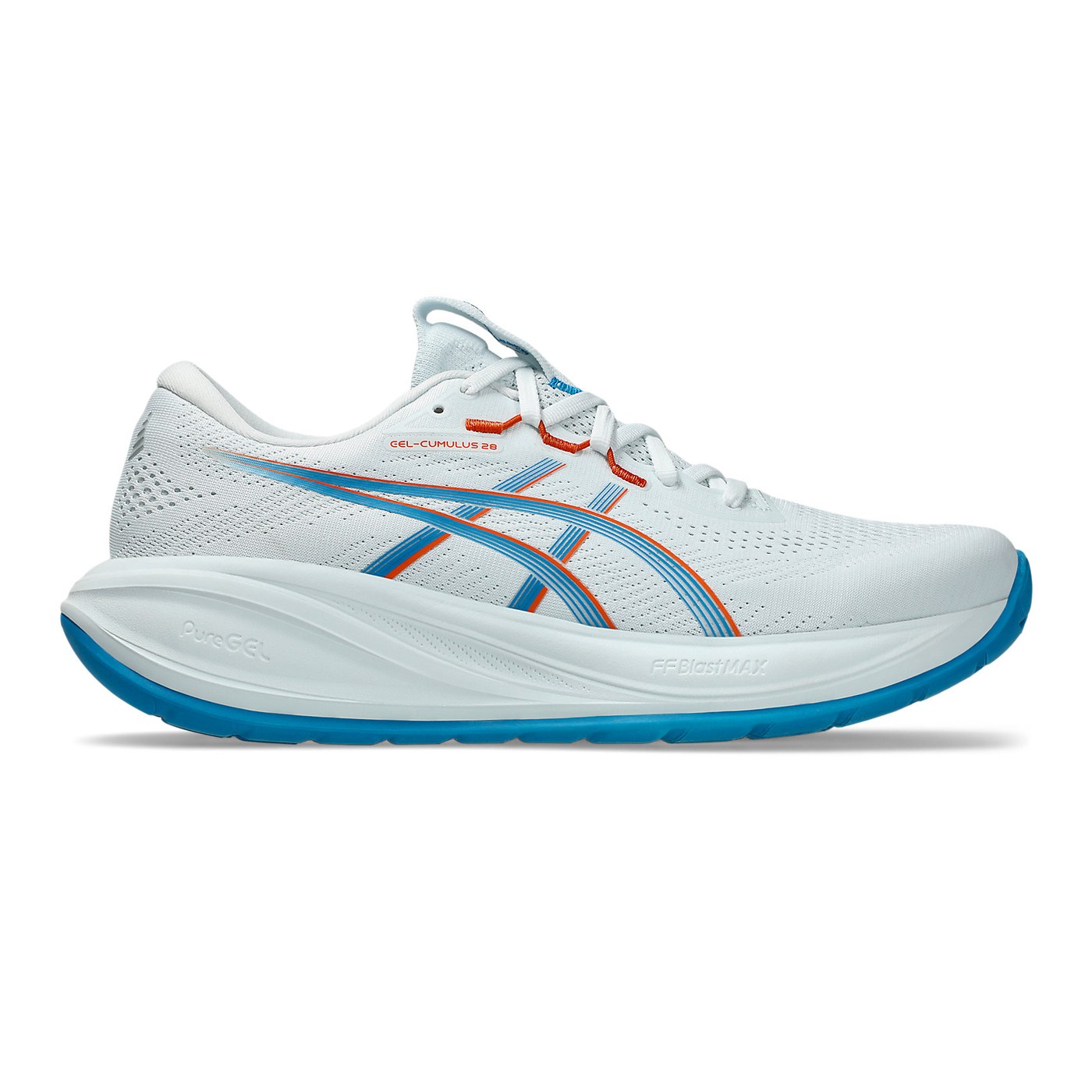
Released on February 1, 2026, the Asics Gel-Cumulus 28 takes a sharp turn: the 27's FF Blast Plus foam makes way for the livelier FF Blast Max, and the PureGEL is now visible at the heel. 259 g on the scale in size 42, 8 mm drop, €160 in stores: Asics wakes up a historic daily trainer that had been coasting for three generations. We put it under the microscope to find out who it's built for and how to fit it into your RunMorph training plan.
Asics Gel-Cumulus 28 Review: The Daily Trainer Goes FF Blast Max
8/10
Asics Gel-Cumulus 28: the daily trainer finally leaves its comfort zone
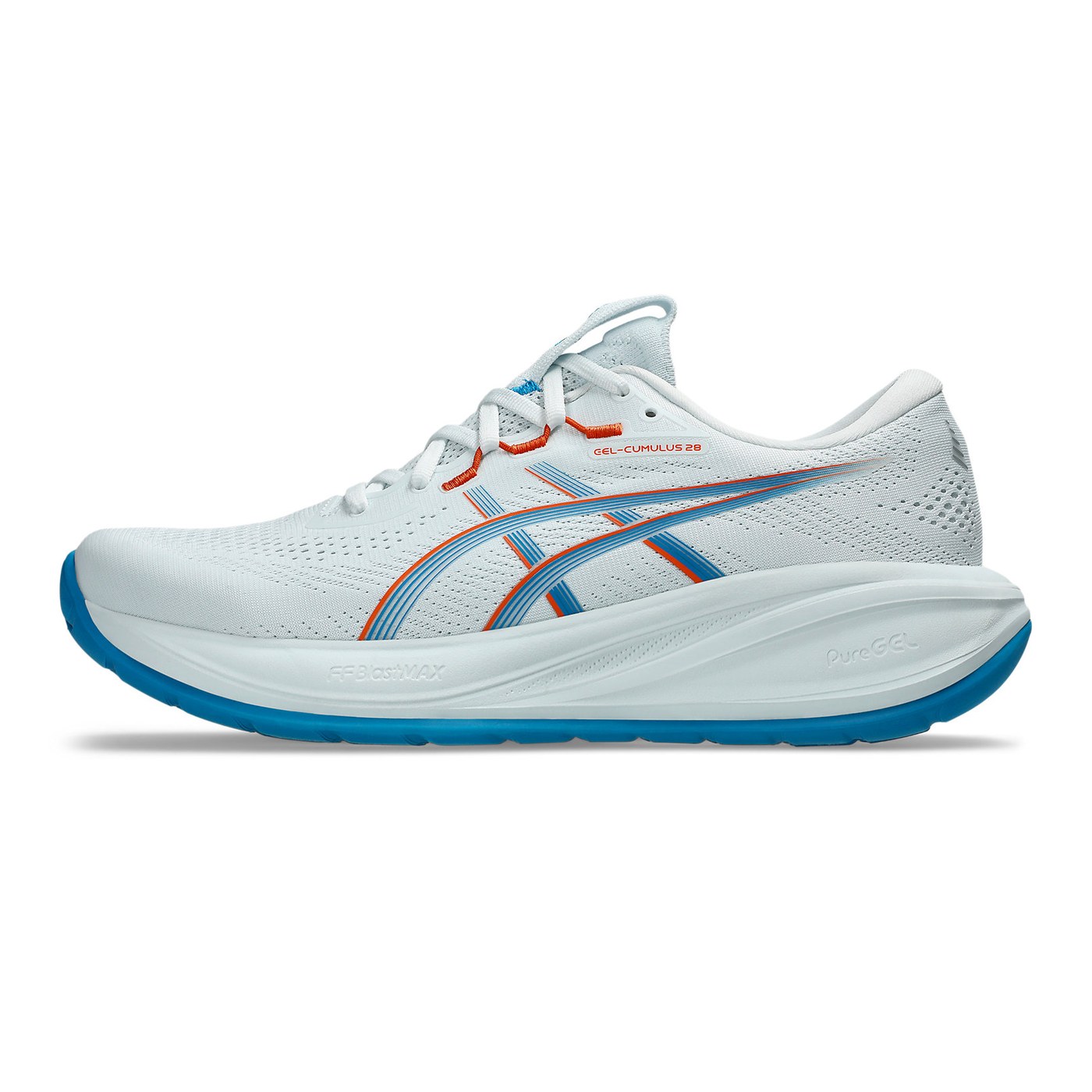
The Cumulus is Asics' best-selling shoe worldwide, just ahead of the Gel-Nimbus. A cornerstone of the accessible daily trainer category, it has still carried a reputation as a shoe that never really reinvents itself. The 28 changes that. Asics gives it the same FF Blast Max foam found in the Gel-Nimbus 28, adds clearly visible PureGEL at the heel and redesigns the FLUIDRIDE outsole. The result: a bouncier shoe, 6 g lighter, with real character underfoot at last.
As a RunMorph coach, I see a lot of runners logging 30 to 60 km a week who want a single shoe for 80% of their volume. The Cumulus 28 targets exactly that segment, at €20 less than its big sister the Nimbus 28 and €10 more than the Brooks Ghost 18. The bet is clear: become the benchmark in the €150 to €170 bracket, where competition is fiercest.
RunMorph's advice: if you're coming from a Cumulus 25, 26 or 27, get ready for a different feel. The 28 is firmer on impact, livelier through the stride and less plush on easy runs. That's not a flaw, it's a repositioning: Asics is moving the Cumulus closer to the super trainer segment so the Gel-Nimbus 28 can own max cushioning and the Superblast 3 can own performance. If you were after the pillow-soft comfort of older Cumulus models, look at the Hoka Clifton 10 instead.
© Asics, official photo used for editorial purposes
Objective technical data
| Brand | Asics |
| Model | Gel-Cumulus 28 |
| Official release | February 1, 2026 |
| Type | Neutral road daily trainer |
| Drop | 8 mm |
| Heel / forefoot stack height | 38.5 mm / 30.5 mm |
| Weight (men's EU 42) | 259 g |
| Foam | FF Blast Max (nitrogen-infused supercritical) |
| Carbon plate | No |
| Heel cushioning | Visible PureGEL (silicone insert) |
| Insole | Ortholite X-30 |
| Outsole | FLUIDRIDE + AHAR LO at the heel |
| Upper | Engineered jacquard mesh, reflective details |
| Recommended distance | 5 km to marathon |
| MSRP | €160 |
Three points deserve a closer look. First, the FF Blast Max foam: according to independent lab measurements, energy return gains several points over the Cumulus 27's FF Blast Plus, with slightly higher density. You feel the difference on impact (a bit firmer) and at toe-off (livelier). Next, the weight: 259 g in men's EU 42, or 6 g less than the 27. Not a revolution, but a step in the right direction. Finally, the drop stays at 8 mm, a figure unchanged for several versions that will reassure longtime fans of the line.
The 38.5 mm heel stack puts the Cumulus 28 at the top end of the mid-range. Not maximalist like the Gel-Nimbus 28 (41.5 mm), but not minimalist either. That balance is exactly what makes it an everyday shoe for most runners.
Who is the Gel-Cumulus 28 for?
The regular runner who wants one shoe for 80% of their sessions
You run three to five times a week, 30 to 60 km in total. You string together easy runs, a Sunday long run and maybe one interval session a week. You don't want to juggle four different pairs. The Cumulus 28 is the quintessential workhorse: versatile enough to handle your 60-minute easy runs and your 90-minute long runs alike, lively enough for moderate intervals, protective enough to keep minor aches at bay. Cumulus durability is proven at around 800 to 1000 km, which works out to an excellent cost per kilometer at €160.
The marathoner preparing a first 42.195 km in 4 hours or more
If you're aiming for a first marathon between 4 and 5 hours, the Cumulus 28 can be your only shoe. The cushioning holds up over the distance (38.5 mm of stack and the PureGEL at the heel do the work over the last 35 kilometers), the weight stays in check and lateral stability is solid. For runners aiming under 3:30, I recommend keeping it for aerobic base runs and switching to a carbon-plated super shoe on race day, like the Nike Vaporfly 4 or the Saucony Endorphin Pro 5.
The runner coming back from injury or a long break
Plantar fasciitis, shin splints, Achilles tendinopathy: if you know these classics, you know the comeback phase calls for protection without tipping into the kind of maximalism that makes you unlearn your stride. The 8 mm drop takes load off the calf, the PureGEL at the heel smooths out the pressure spike at foot strike (useful for heel strikers), and the FF Blast Max foam cushions without bottoming out. It's a very solid shoe for a gradual return, without the floaty feel of a Hoka that can throw you off after an ankle injury.
© Asics, official photo used for editorial purposes
Comfort, ride and grip
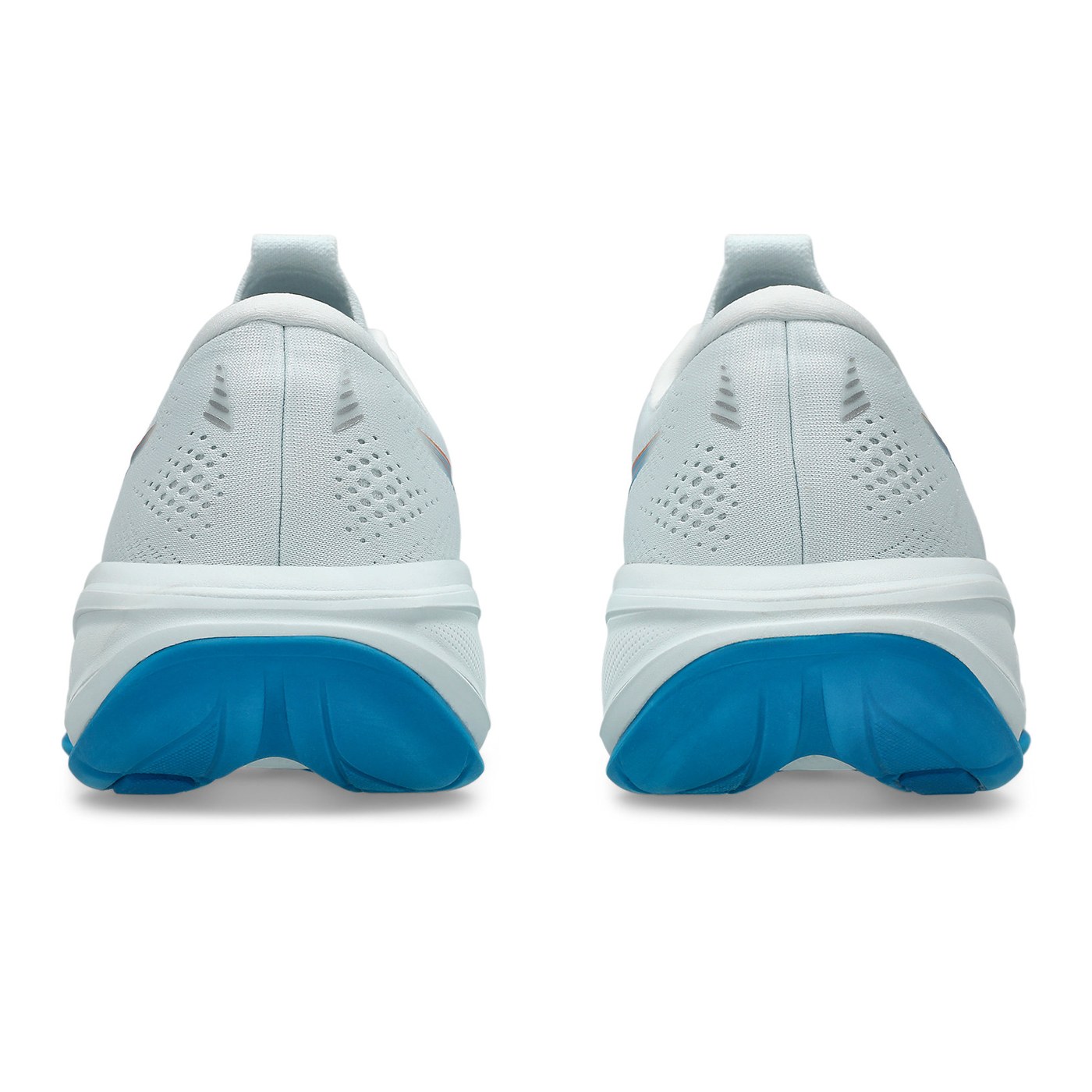
The engineered jacquard mesh upper is noticeably airier than the Cumulus 27's. The midfoot is ventilated, the eyelets are reinforced without creating pressure points, and the medium-padded tongue stays put without sliding. The heel counter is structured (sometimes a bit stiff for the first few kilometers; it breaks in within 50 km). The fit is standard width, slightly narrow in the forefoot for very wide feet. Asics offers a Wide version in some references, so check availability for your colorway.
On easy runs at 5:30 per km, the Cumulus 28 is neutral and clean. You don't think about the shoe, you think about your stride. That's the mark of a successful daily trainer. On a 90-minute long run at 5:00 per km, it stays consistent: no noticeable drop in responsiveness and no excessive foot fatigue, thanks to the PureGEL and the Ortholite X-30. This is where the 28 improves most over the 27.
When you pick it up to threshold at 4:00 per km, the Cumulus 28 shows its limits. It holds on and doesn't fall apart, but it lacks the pop of a Superblast 3 or a Hoka Mach 7. That's consistent with its positioning: daily trainer, not super trainer.
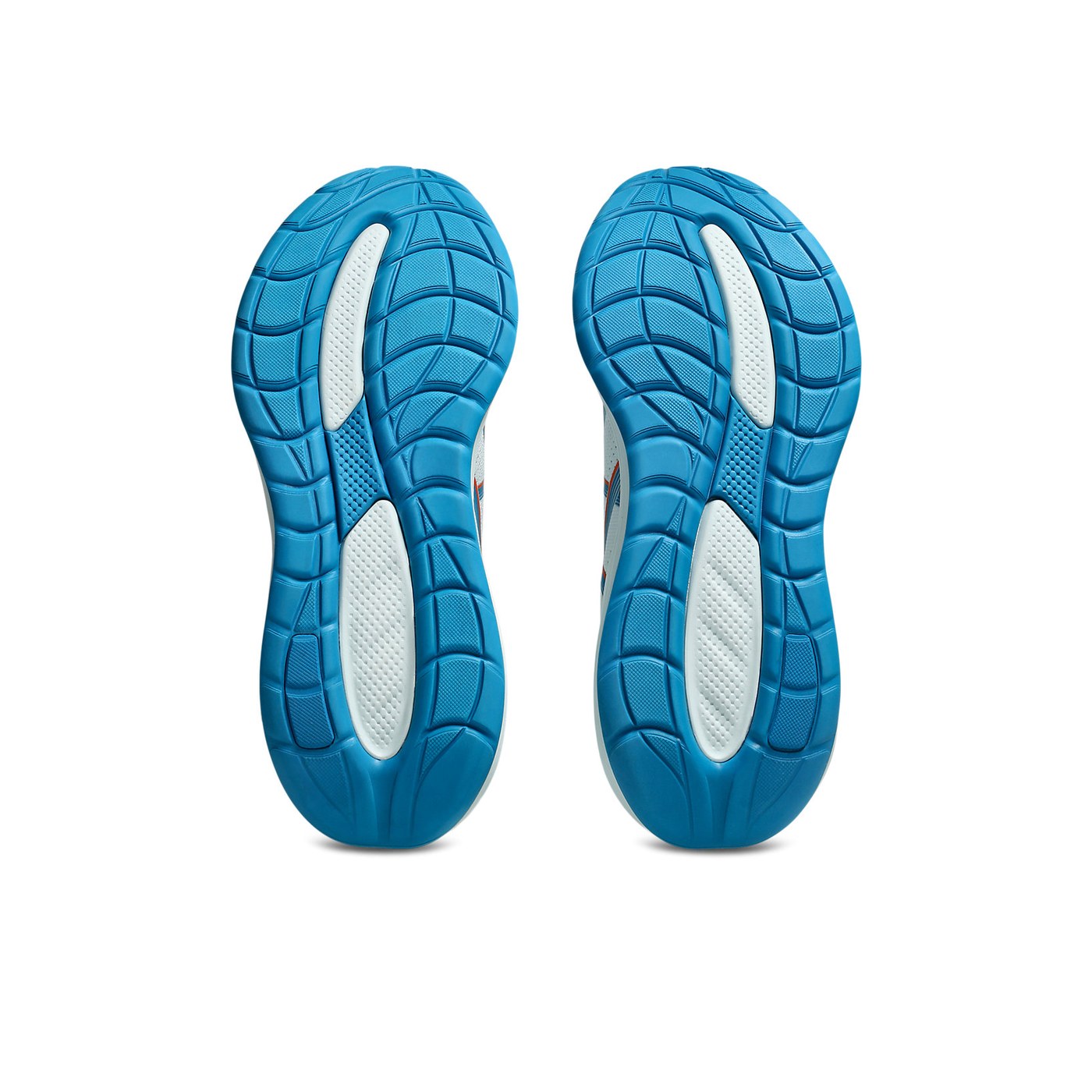
The FLUIDRIDE outsole with AHAR LO inserts at the heel gives decent grip on dry roads and acceptable grip on wet ones. The tread pattern is less aggressive than on the Nimbus 28, but rubber durability sits in the upper half of the segment. Expect 800 to 1000 km before the wear zones (outer heel for heel strikers, medial side for mild overpronators) really start to dig in.
How it stacks up against direct rivals
The Cumulus 28 enters an ultra-crowded segment: the neutral daily trainer with balanced cushioning between €150 and €170. Here's how it compares with the benchmarks reviewed on RunMorph:
Hoka Clifton 10 (€155, 248 g, 8 mm drop, 42/34 stack): lighter, softer, taller. The Clifton 10 remains the pillow-soft benchmark in this segment, with a pronounced rocker that helps your stride roll through. The Cumulus 28 is livelier through the stride and less floaty on long runs. If you like a clean ground feel, go Asics. If you like the walking-on-clouds feel, stick with Hoka.
Brooks Ghost 18 (€150, 289 g, 10 mm drop, 36/26 stack): heavier, firmer, with a steeper drop. The Ghost 18 is the no-surprises everyday shoe and comes in three widths (Standard, Wide, Extra Wide), a rare advantage. The Cumulus 28 is 30 g lighter and bouncier through the stride, but doesn't come in extended widths.
Nike Pegasus 42 (€140, 280 g, 10 mm drop, 33/23 stack): cheaper, and livelier thanks to ZoomX and the Air Zoom units in the heel. The Pegasus 42 is faster at pace; the Cumulus 28 is more protective with a higher stack. For the recreational marathoner, the Asics goes the distance better.
New Balance Fresh Foam X 1080v15 (€180, 280 g, 6 mm drop, 38/32 stack): pricier, lower drop, foam with more pronounced energy return. The 1080v15 is bouncier on long runs; the Cumulus 28 keeps a more predictable feel and a €20 price advantage.
Comparison verdict: the Cumulus 28 slots into the Ghost / Clifton / Pegasus trio as a particularly well-balanced mid-range option. Not the softest (Clifton), not the most predictable (Ghost), not the cheapest (Pegasus), but the one with the best mix of liveliness, protection and weight in the €150-170 range.
How to fit the Gel-Cumulus 28 into your RunMorph training plan
As a coach, here's how I'd slot the Cumulus 28 into the rotation of a runner training for a 10K, a half marathon or a marathon:
Easy runs and aerobic base: the Cumulus 28 is your workhorse. You can do 80% of your sessions in it. It absorbs the load without wrecking you, lets you show up fresh for quality sessions and lasts the claimed 800 to 1000 km.
Long run: yes, up to 2:30. Beyond that, if you're preparing a marathon or a road ultra, you may prefer the Gel-Nimbus 28, which offers 3 mm more stack at the heel.
Threshold sessions and short intervals: the Cumulus 28 does the job if you're running steady efforts 10-15 seconds per km slower than your goal pace. For short intervals at maximal aerobic speed or aggressive tempo sessions, switch to an Asics Magic Speed 5 or a Superblast 3.
Racing: for a comfortable 10K or a half where finishing matters more than the clock, yes. To chase a PR in the half or the marathon, go for a carbon-plated super shoe.
If you want a structured plan that makes the most of this versatility, take a look at the RunMorph training plans: they're built to adapt to your current mileage and your main shoe, and they alternate volume and quality intelligently so you improve without breaking down.
© Asics, official photo used for editorial purposes
RunMorph Coach verdict
The Asics Gel-Cumulus 28 won't make the cover of running magazines, and that's exactly why it matters. In a market saturated with promises (carbon, PEBA, supercritical foams, bounce), Asics delivers a rigorous, balanced daily trainer that pulls off the technical switch to FF Blast Max without abandoning the Cumulus DNA. On the road, that means a shoe that disappears on easy runs and carries you faithfully through your long run. That's exactly what you want from a daily trainer.
For €160, you get a predictable, lively, durable shoe (800 to 1000 km claimed) that will cover 80% of your weekly volume. It's an excellent deal if you run for consistency, and a smart pick if you're coming back from an injury or a long break.
RunMorph score: 8/10. The Cumulus 28 loses half a point for lacking pep at fast paces (super trainer territory isn't its turf) and half a point because most colorways don't come in a Wide version. It earns all its credit on reliability, durability, the technical leap in foam and cost per kilometer.
Key takeaways for your training
- Signature daily trainer: the Cumulus 28 handles your easy runs, your long run up to 2:30 and your moderate tempo work, not your fast interval sessions or your marathon PR attempt.
- FF Blast Max foam: a successful technical leap over the Cumulus 27, livelier through the stride, slightly firmer on impact.
- Stable 8 mm drop: you keep the familiar Cumulus feel, ideal if you're coming back from a calf or Achilles injury.
- Proven durability: 800 to 1000 km depending on your stride, making it one of the best costs per kilometer in the €150 to €170 segment.
- Pair it with a super shoe: for the days that count (10K race, half marathon, marathon), keep a Nike Vaporfly 4, a Saucony Endorphin Pro 5 or an Asics Magic Speed 5 in the rotation.