All reviews
October 9, 2026

Garmin Enduro 4 review: 320 hours of solar GPS and faster mapping, but almost nothing new over the Enduro 3

7.8/10
Garmin Enduro 4 review: 320 hours of solar GPS and faster mapping, but almost nothing new over the Enduro 3

Garmin launches the Enduro 4 on October 9, 2026, exactly two years after the Enduro 3. The pitch has not changed since 2021: the longest battery life on the market, built for ultra trail and multi day expeditions with no power outlet in sight. On paper, though, what is new fits in one line: more memory, faster mapping and the software from the fenix 9. RunMorph compared the Enduro 4 line by line against its predecessor, so you can decide whether this update is worth 899,99 euros, or whether the Enduro 3 still does the job just fine.

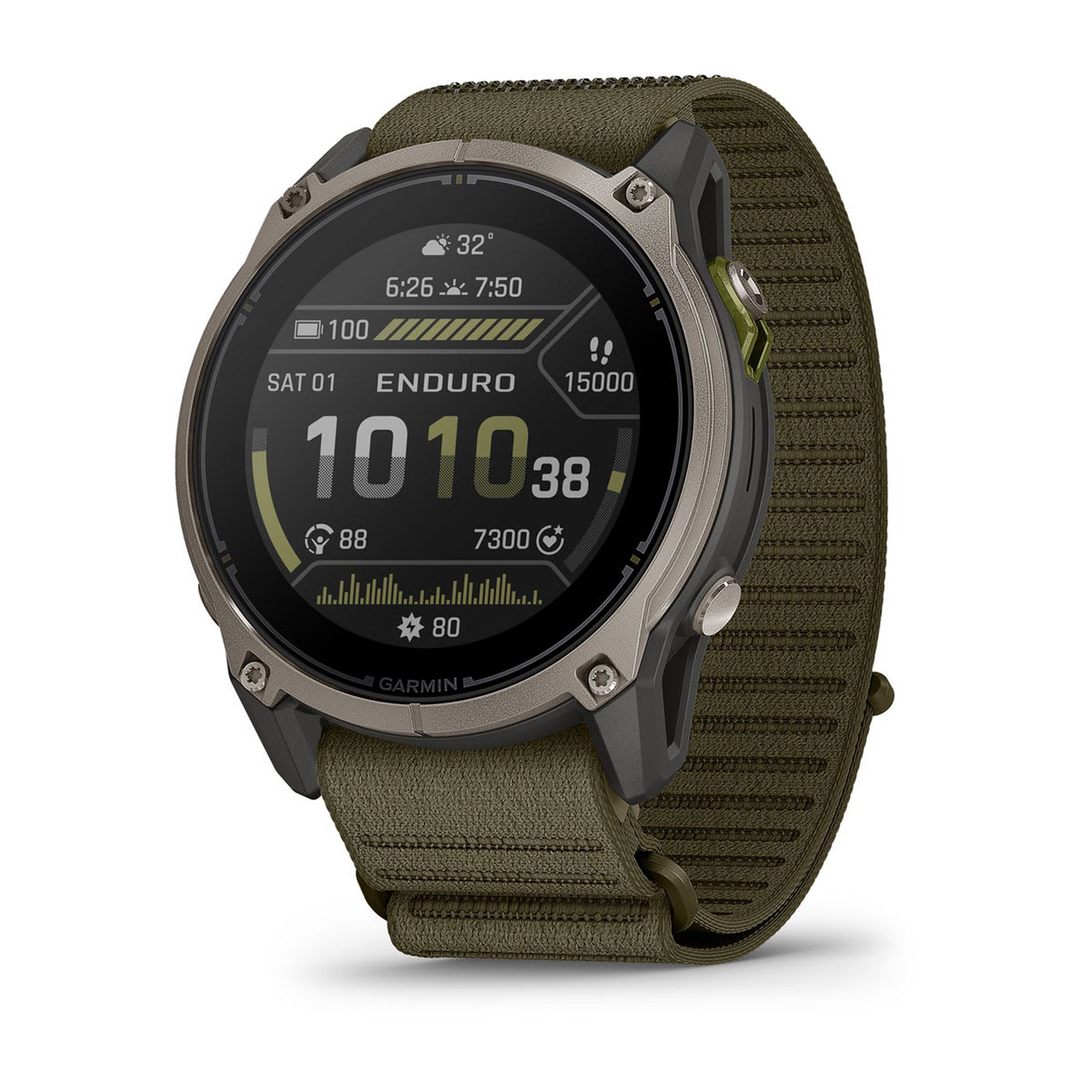
Garmin Enduro 4, main watch face with battery gauge and distance for the day

© Garmin, official photo used for editorial purposes

The essentials in 3 lines

The Enduro 4 keeps the range record battery life (up to 320 hours of GPS in solar mode) and gains a map engine with twice the memory, a faster rendering engine and the Stamina and Epic software features inherited from the fenix 9. The case, the screen and the raw battery figures barely move compared with the Enduro 3, sold at the same launch price. A watch built for ultra and long expeditions, but an update aimed mostly at anyone who does not already have an Enduro on their wrist.

7,8
/ 10 · RunMorph overall score
GPS accuracy
8,5 / 10
Battery life
9,5 / 10
Mapping
9,0 / 10
Metrics and recovery
8,5 / 10
Value for money
5,0 / 10
Who is it for?The trail runner or adventurer heading out for several days with no chance to recharge, who has never owned an Enduro or even a recent fenix.
Who should skip it?Anyone who already owns an Enduro 3: the advertised battery life does not gain a single hour, and the launch price is the same.

Garmin Enduro 4: the same battery life promise, two years on

The Enduro line exists for one reason: push back the point where a GPS watch runs out of battery before the runner does. Since the first Enduro 3, the number that sells the watch has fit in one line, 320 hours of GPS tracking in solar mode, a ceiling no direct rival gets close to in the running and trail segment. The Enduro 4 carries that same number forward unchanged. Garmin is not trying to beat it this year: the brand chose to build up the inside instead, with 50% more RAM and a mapping engine inherited from the fenix 9, rather than revisiting battery capacity itself.

The 51 mm reinforced polymer case with titanium bezel remains the only size offered, just as on the Enduro 3. Weight climbs slightly to 66 grams with the strap, up from 63 grams on the previous generation, a three gram gap you will not notice on your wrist over a multi hour outing. Storage, on the other hand, genuinely doubles: 64 GB versus 32 GB, enough to load more downloaded maps and offline music without sorting through files before an ultra.

RunMorph's advice: if you are torn between the Enduro 4 and a fenix 9 Pro Solar inReach, the question to settle first is satellite messaging. The Enduro 4 does not include it, the Pro inReach does, for 300 euros more.

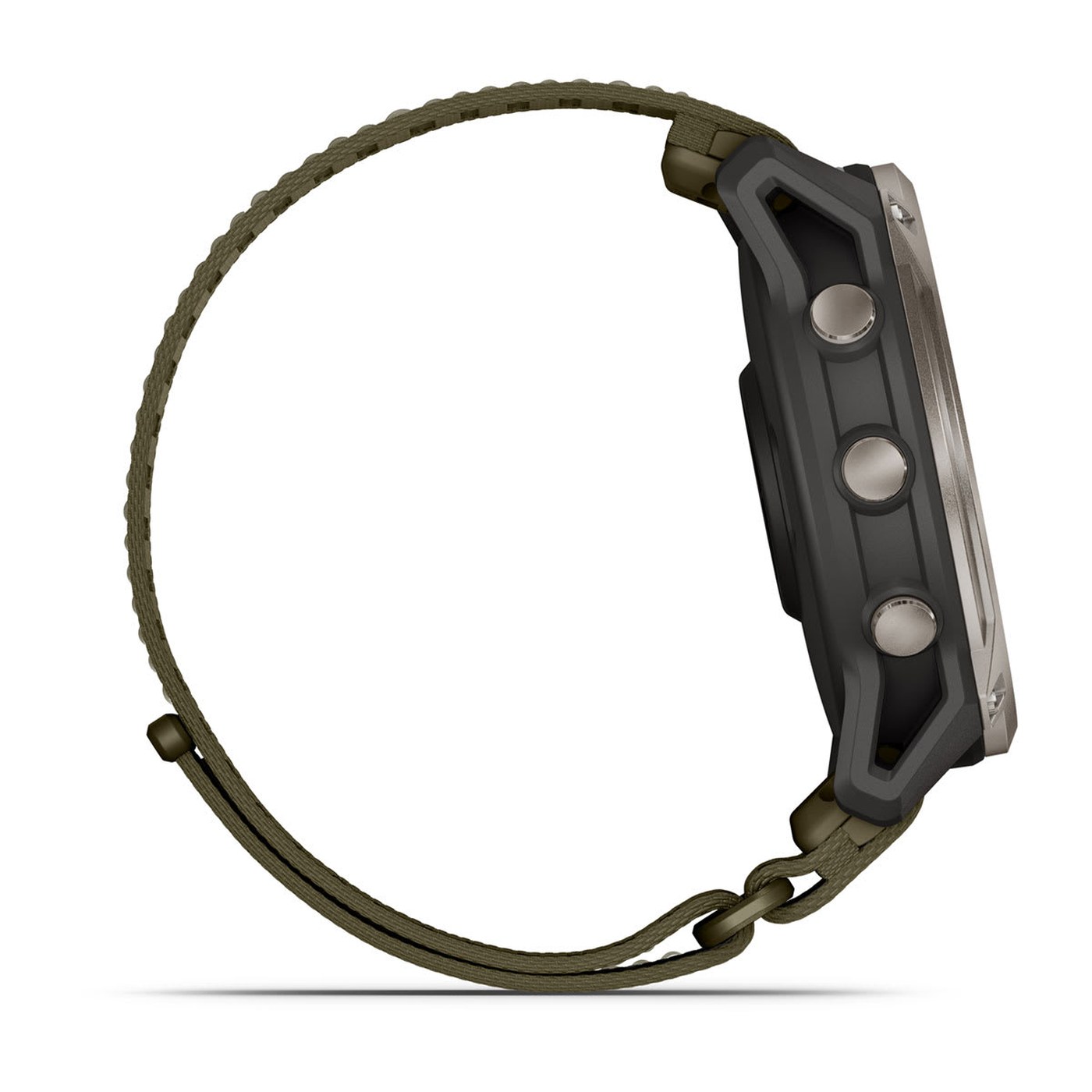
Garmin Enduro 4, side profile showing the three buttons and the titanium bezel

© Garmin, official photo used for editorial purposes

Garmin Enduro 4 spec sheet (ref. 010-04799-01)

BrandGarmin
ModelEnduro 4, 51 mm, Olive ComfortFit strap
ReleaseOctober 9, 2026
Case size51 x 51 x 15,7 mm
Weight66 g with strap (57 g without strap)
DisplayColor transflective MIP touchscreen, 1,4 in (35,5 mm), solar Power Sapphire glass
GPS battery life (no solar)80 h in normal mode, 60 h in max accuracy, 120 h in extended battery, 210 h in max battery mode
GPS battery life (with solar)Up to 320 h in GPS only mode, 144 h in normal mode, 90 h in max accuracy
Smartwatch battery life36 days (92 days in battery saver), up to 90 days with solar charging
GNSSMulti band GPS, GLONASS, Galileo, QZSS, BeiDou with SatIQ
SensorsElevate Gen 5 optical heart rate, Pulse Ox, ECG (subject to regional availability), barometric altimeter, 3 axis compass, gyroscope, thermometer, ambient light sensor, white and red LED flashlight
MappingPreloaded multi continent TopoActive maps, Course Planner, Up Ahead, NextFork, dynamic round trip routing, Perspective view
Sport profilesAround 120 profiles (running, trail, ultra, obstacle racing, cycling, swimming, multisport, rowing, strength training, skiing, hiking)
Music storageYes, 64 GB shared, compatible with Spotify, Deezer and Amazon Music
Contactless paymentYes, Garmin Pay
Water rating10 ATM
Phone connectioniPhone and Android, Bluetooth, ANT+, Wi-Fi
Price899,99 €

Who is the Garmin Enduro 4 built for?

The ultra trail runner heading out with no guarantee of a recharge

A race like the UTMB or a self sufficient multi stage event often comes down to how much battery is left at the finish rather than one percent more GPS accuracy. The Enduro 4 remains the only watch in the RunMorph catalog to pass 300 hours of GPS tracking with solar charging, far ahead of the 140 hour UltraMax mode on the COROS Vertix 2S.

The long expedition adventurer with no access to an outlet

Multi week trekking, a raid, or an off trail crossing: max battery mode pushes smartwatch battery life up to 92 days without a recharge, and uncapped with enough sunlight. The built in LED flashlight, white and red, also saves you from carrying a separate light for camp.

The triathlete or multisport athlete already in the Garmin ecosystem

Swim, bike and transition profiles stay identical to the rest of the Garmin lineup, with the full Garmin Connect ecosystem. A less natural fit for the Enduro 4 than for a Forerunner 970, which is lighter and cheaper for this use case alone.

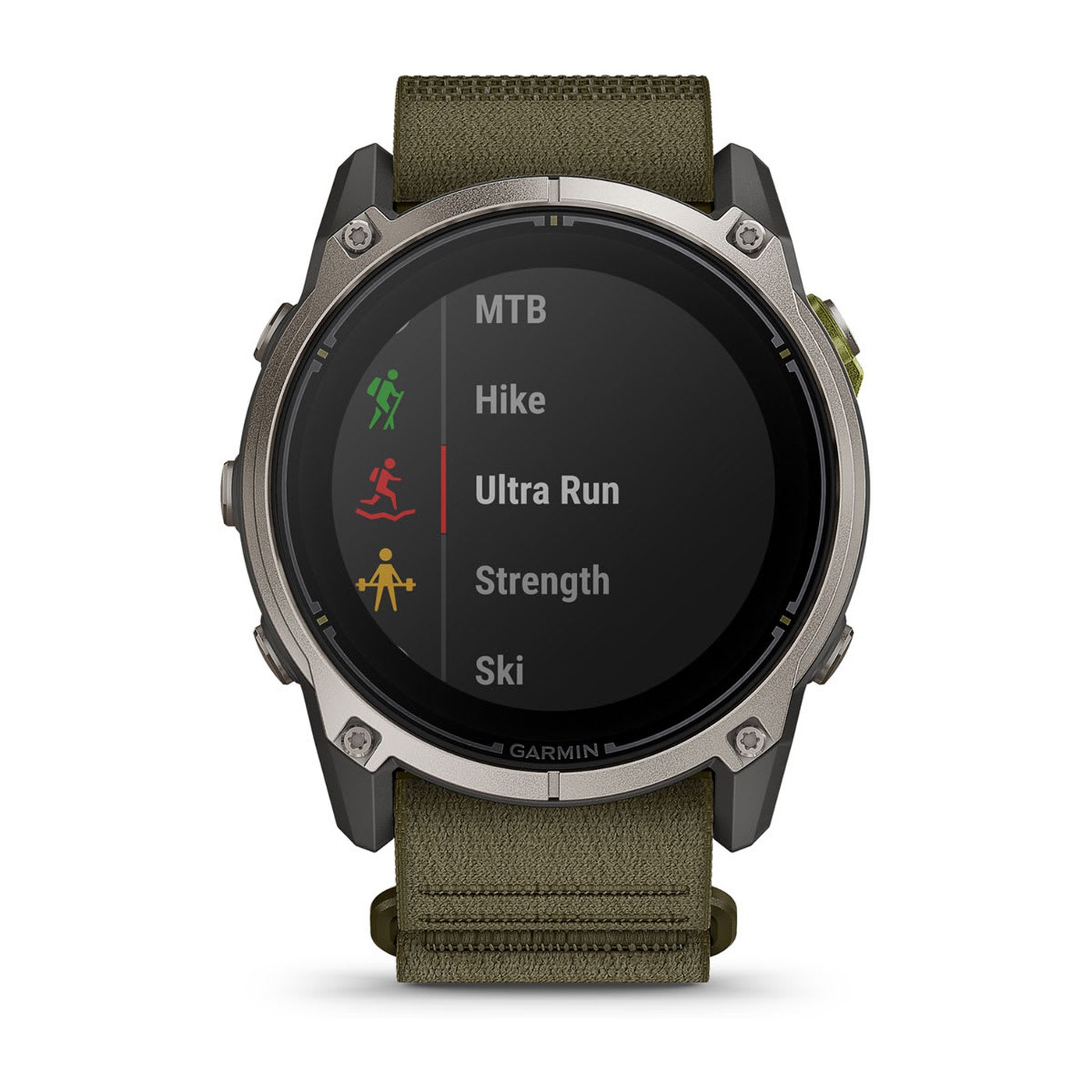
Garmin Enduro 4, list of sport profiles with Ultra Run selected

© Garmin, official photo used for editorial purposes

GPS accuracy and heart rate sensor: nothing changes, and that is not a problem

Garmin leaves the multi band GNSS and the Elevate Gen 5 sensor untouched on the Enduro 4, identical to the ones already tested by RunMorph on the fenix 9 and the Forerunner 970. SatIQ technology automatically adjusts the reception mode to the terrain, under forest cover as much as in open ground, and remains the benchmark at this price point.

No independent multi week field test exists yet for this exact model, since the watch has only been available since the day this review was written. The Enduro 3, which shares the same sensor and the same GNSS antenna, offers the best available point of comparison: a complete French test run over several weeks found heart rate accuracy judged solid by the tester, credited partly to a wide, comfortable strap that keeps the sensor pressed against the wrist, along with clean GPS tracks in forest and near tall buildings in multi band mode. Nothing suggests the Enduro 4, which carries over the same sensor, would behave any differently.

Mapping and navigation: the real step forward this generation

This is where the Enduro 4 genuinely moves ahead. Garmin announces 50% more RAM than the Enduro 3, panning up to 30% faster and quicker route calculation, all powered by the same engine as the fenix 9. The new Perspective view adds terrain relief to the screen so you can anticipate what is coming next, a real plus in mountainous terrain where guessing a descent profile in advance avoids unpleasant surprises.

A complete French test of the Enduro 3 already flagged slow map redraws and a menu system judged cluttered. If that flaw is fixed with the new engine, as Garmin claims, the gap with the Enduro 3 will come down less to map content, already complete on both with preloaded multi continent TopoActive maps, than to how smoothly you can check the map mid race.

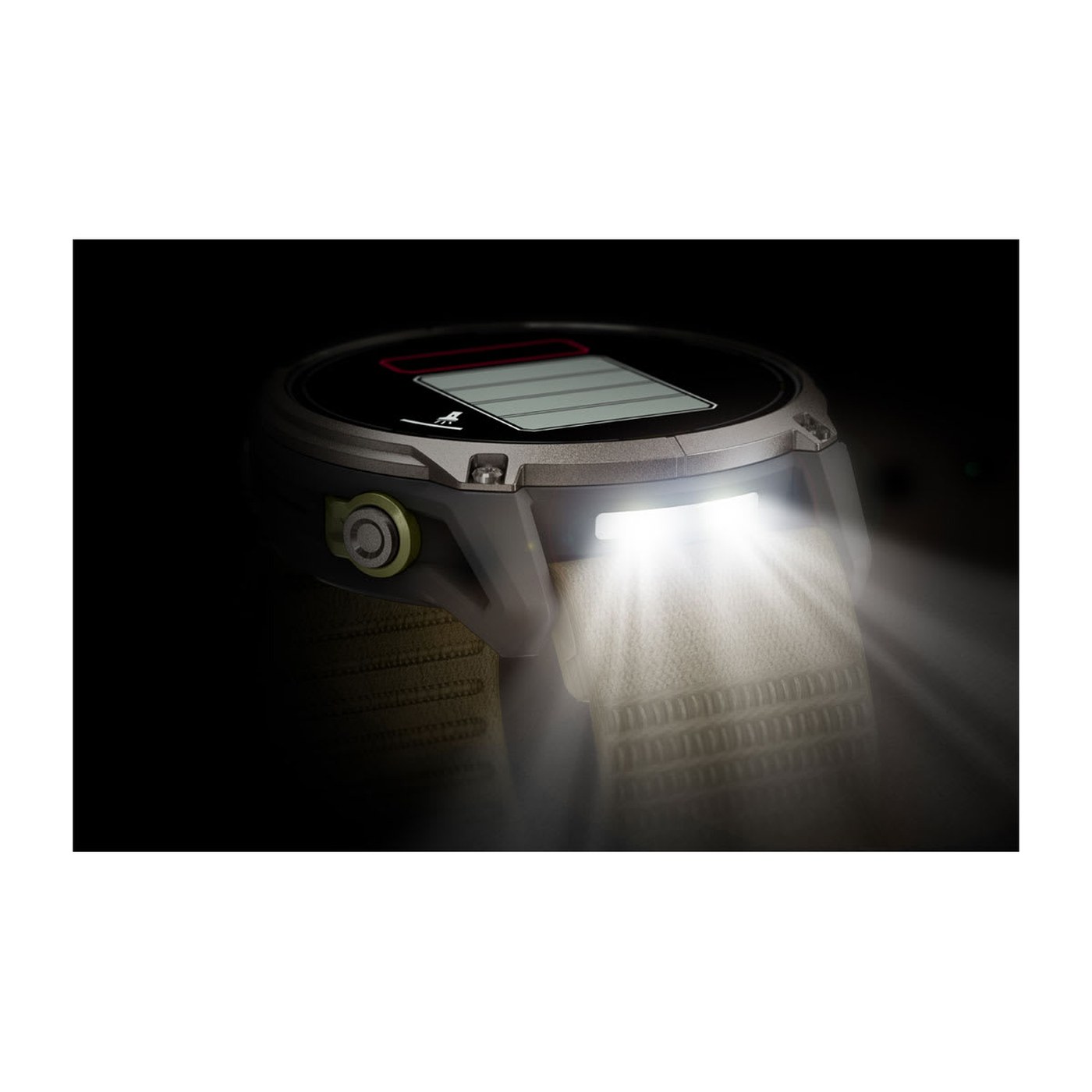
Garmin Enduro 4, LED flashlight lit at night on the wrist

© Garmin, official photo used for editorial purposes

Training and recovery metrics: the fenix 9 legacy

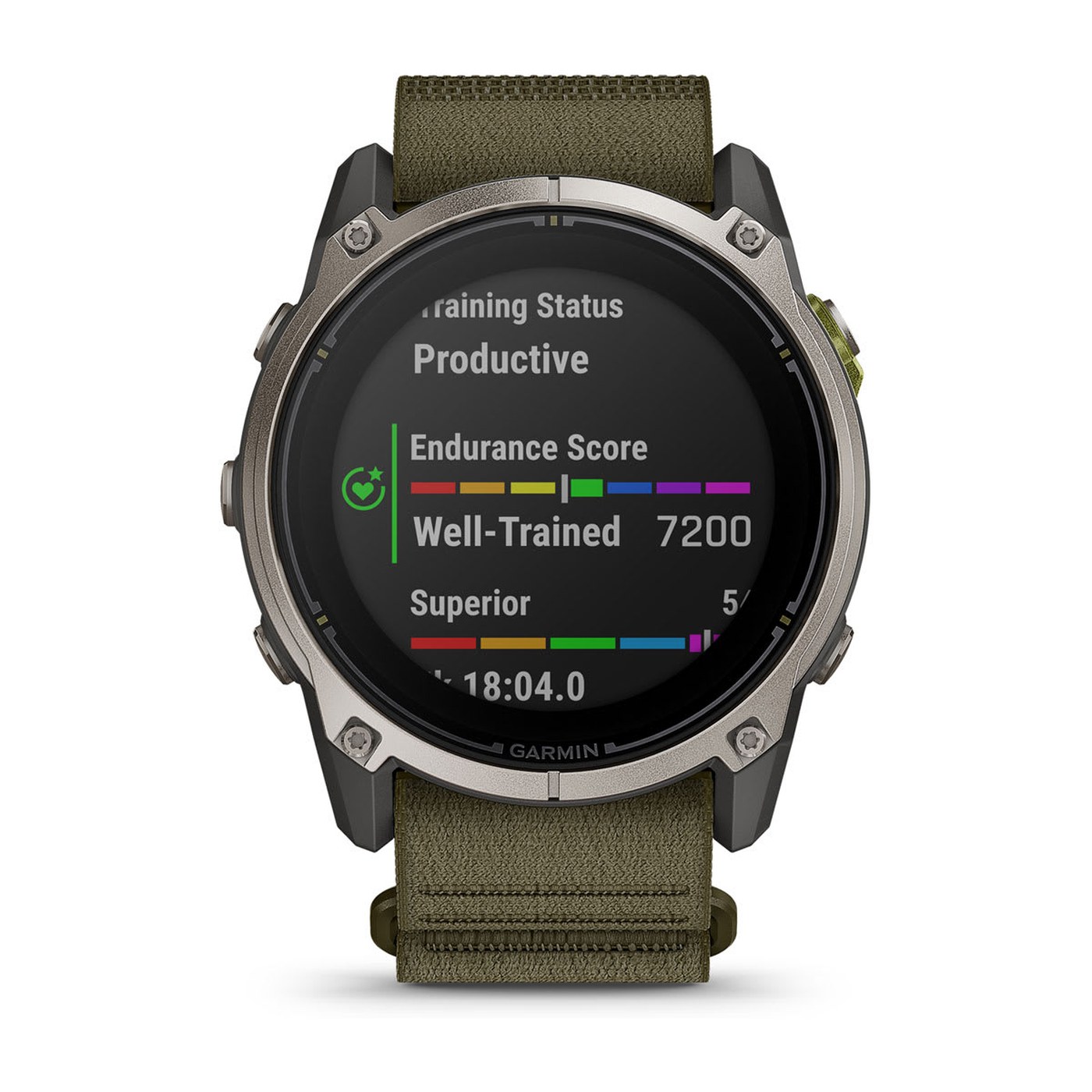
The Enduro 4 inherits two software features straight from the fenix 9: Epic, which compiles several days of activity into a story you can review on the watch without opening the app, and the new generation Stamina zones with a real time endurance curve. Both additions matter more on a multi day expedition than on a regular run, exactly the territory this watch is built for.

The rest of the Garmin suite carries over unchanged: Training Readiness, Body Battery, sleep tracking, VO2max, and an indoor rowing profile that is now complete with a power curve, a new feature shared with the fenix 9 rather than exclusive to the Enduro 4. Rucking also gets its own dedicated profile where pack weight adjusts mid activity, useful if you are prepping a loaded outing while carrying expedition gear.

Garmin Enduro 4, Training Readiness screen showing a score of 75

© Garmin, official photo used for editorial purposes

Real world battery life: the same number, and likely the same field gap

Garmin quotes figures identical to the Enduro 3: 80 hours of GPS in normal mode without solar, 210 hours in max battery mode, and up to 320 hours with solar charging in favorable conditions. A complete French test of the Enduro 3 measured a clear gap between the marketing claim and the field on that earlier model: around 70 hours with the map screen on in GPS only navigation, against 120 hours claimed, and around 50 hours in dual frequency with the map displayed, against 60 hours claimed. Nothing guarantees the Enduro 4, which carries over the same battery and the same screen, closes that gap between the marketing promise and real world navigation use.

Battery saver mode pushes smartwatch battery life up to 92 days without solar, and removes the cap entirely with enough sun exposure. On a multi week crossing, this mode remains the real selling point of the Enduro line, more than the active GPS figure, which will mostly be proven or disproven on the trail.

Enduro 4 vs Enduro 3: the comparison

Garmin Enduro 4Garmin Enduro 3
Weight66 g63 g
Map RAM+50% over the Enduro 3Baseline
Storage64 GB32 GB
Epic featureYes, on watchNo
New generation StaminaYes, with endurance curveNo
Max solar GPS battery life320 h320 h
Launch price899,99 €899 € at launch, discounted since

The reading is straightforward: battery life, the number one argument for this line, does not gain a single hour. The gain sits in memory, map speed, and two software features now shared with the fenix 9. If you already own a working Enduro 3, nothing in this sheet justifies an immediate switch. For a first purchase, though, the Enduro 4 comes in at the same price as the previous generation did at launch, for faster mapping and newer software.

Enduro 4 vs COROS Vertix 2S and Suunto Vertical 2: the comparison

Garmin Enduro 4COROS Vertix 2SSuunto Vertical 2
Max GPS battery life320 h (solar)140 h (UltraMax)65 h (dual band solar)
DisplayMIP transflective, solarAMOLED, non solarAMOLED 2000 nits, solar
MappingFull TopoActiveLandscape and offline TopoFree worldwide offline
Price899,99 €Around 700 €Around 750 €

On battery life alone, the Enduro 4 stays out of reach for both rivals, with more than double the hours claimed by the COROS Vertix 2S and nearly five times those of the Suunto Vertical 2. That number comes at a price: 150 to 200 euros more than either watch, for an MIP screen that looks less striking day to day than an AMOLED panel. The choice comes down to one priority: raw battery life for a fully self sufficient goal with the Enduro 4, or a screen that is more pleasant for daily use with one of the two rivals.

Pros
  • Up to 320 hours of GPS in solar mode, a figure no direct rival reaches
  • Storage doubled to 64 GB, with mapping and a rendering engine faster than the Enduro 3
  • Epic feature and new generation Stamina, inherited from the fenix 9
  • Built in LED flashlight, useful on expeditions or night ultras without a separate light
Cons
  • Advertised battery life strictly identical to the Enduro 3, released two years earlier
  • Launch price unchanged despite the age of the base spec sheet
  • No microphone, speaker or satellite messaging, unlike the fenix 9 Pro inReach
  • No independent multi week field feedback as of this review, since the watch has only just launched

RunMorph's recommended use: the Enduro 4 makes full sense for ultra trail prep or a long expedition where the RunMorph trail training plan includes several hours of consecutive effort. Use the Stamina zones to pace yourself over the long haul rather than by immediate speed, since the real value of this watch shows up at hour twenty rather than at kilometer five.

RunMorph Coach's verdict

The Enduro 4 does exactly what you would expect of it, lasting longer than any other GPS watch on the running and trail market, without giving up anything on mapping or training metrics. The issue is not the product, it is the timing: two years after the Enduro 3, battery life has not gained a single minute, and the launch price is the same down to the cent. The real gains, doubled memory, faster mapping, fenix 9 software, matter most if the previous generation is not already on your wrist.

7,8/10. The score rewards battery life that is still unmatched and mapping that finally lives up to the rest of the spec sheet, but it stays capped by the lack of progress on the core of the product and a value for money ratio that does not improve against an Enduro 3 soon to be discounted.

Key takeaways for your training

  • Record battery life: up to 320 hours of solar GPS, the number to remember if your goal is full self sufficiency over several days.
  • Faster mapping: quicker panning and route calculation, a real gain in mountainous terrain to anticipate a technical descent.
  • New generation Stamina: let the watch learn for several weeks before relying on it to pace an ultra.
  • Already own an Enduro 3?: nothing in this sheet justifies an immediate switch, battery life does not gain a single hour.
  • Budget to plan for: 899,99 euros at launch, the same price as the Enduro 3 when it launched two years earlier.
← Back to reviews