For ten years, Garmin's Instinct series stuck to the same formula: a monochrome MIP display you can read even through sunglasses, inside a case that is close to indestructible. In January 2025, Garmin broke with that philosophy and launched the Instinct 3 AMOLED. The result: a €449 outdoor watch that finally shows color, without giving up the reinforced aluminum bezel or the MIL-STD-810H certification. It skips maps, too. Was that the right call?
© Garmin, official photo used for editorial purposes
The Instinct 3 AMOLED, Garmin's rugged reinvention
The Instinct series was born in 2018 to meet a specific need: a military-grade GPS watch, readable in sunlight and able to last several days without charging, priced below the fenix. For seven years, Garmin built on that concept with a backlit monochrome MIP display. Tough, long-lasting and, according to some, ugly.
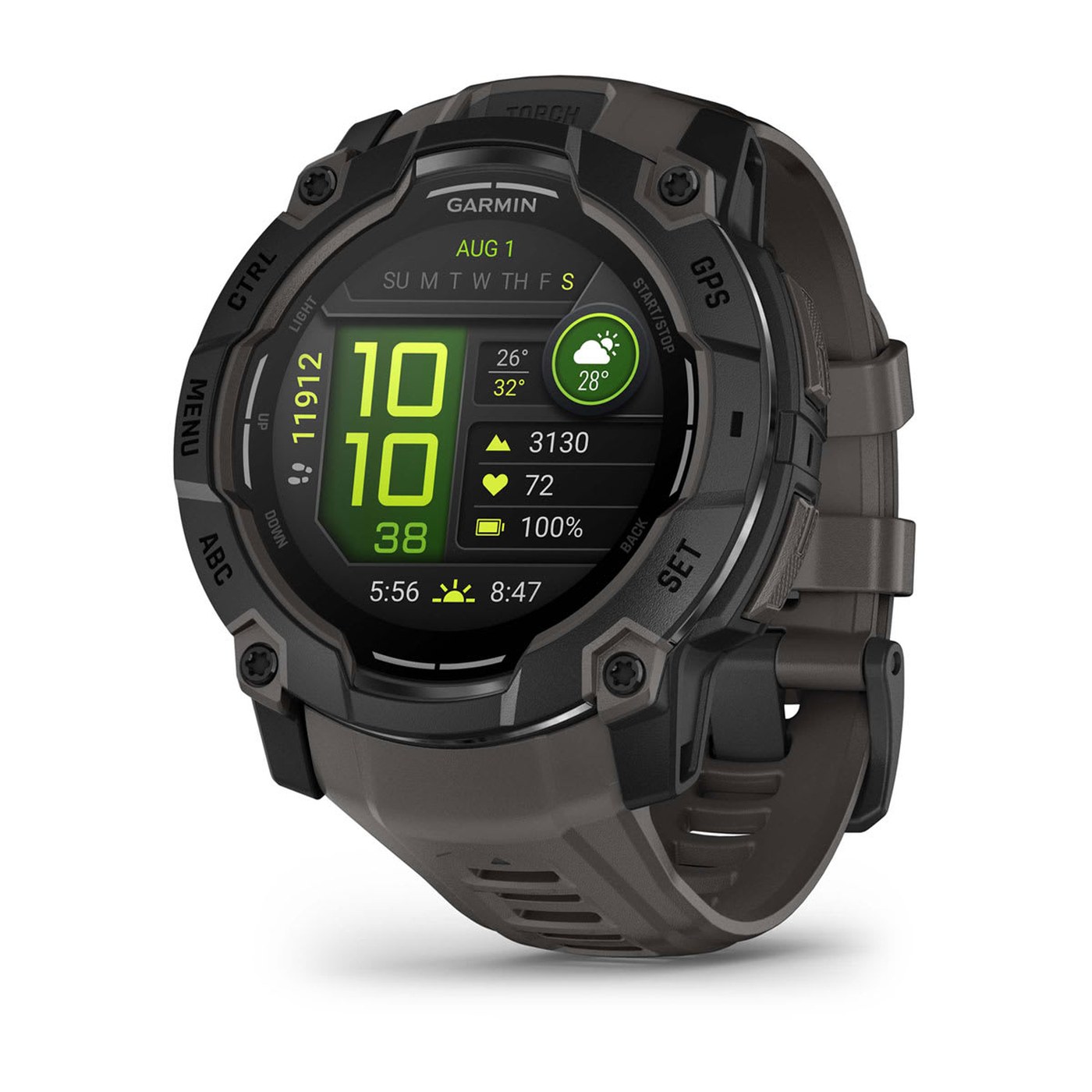
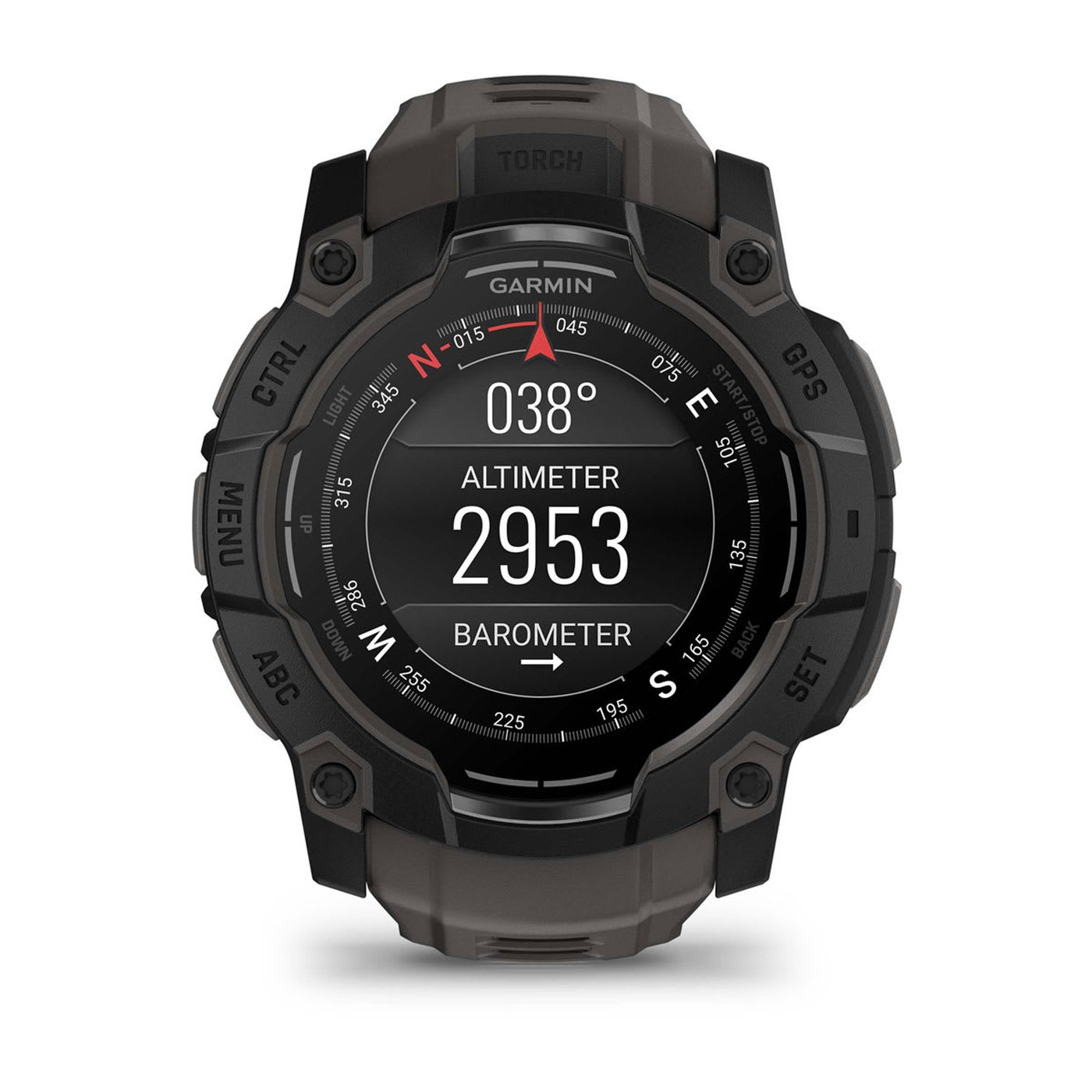
The Instinct 3 AMOLED changes the presentation. The 1.3-inch (33 mm) display shows 416 × 416 pixels in vivid color, with deep AMOLED blacks that make your training data pop like on no other Instinct. But Garmin chose not to use it to add maps. That decision splits opinion: some appreciate the consistent pricing (€449), others think the competition does better at this price. So this watch raises two questions: is it worth its positioning, and who is it for?
At RunMorph, we see that the mid-range outdoor watch market has become far more crowded in 2025-2026. The Amazfit T-Rex Ultra 2 offers global maps and a flashlight for €549, and the COROS APEX 4 delivers 65 h of multi-band GPS with maps for €499. Against these rivals, the Instinct 3 AMOLED has to justify its existence with more than the color of its display.
RunMorph tip: The Instinct 3 AMOLED is a perfect fit if you do several outdoor sports (running, hiking, skiing, triathlon) and do not need onboard maps: you know your trails, you load your GPX files, you enjoy the toughness. If you run unfamiliar routes in the mountains, though, look at the COROS APEX 4 or the Amazfit T-Rex Ultra 2, which have native maps.
© Garmin, official photo used for editorial purposes
AMOLED on a MIL-STD-810 chassis: what changes?
Everyone had the same question before the Instinct 3 launch: would Garmin sacrifice sunlight readability by switching to AMOLED? An AMOLED display, even a very bright one, suffers more from direct sun glare than a MIP display, which creates its own opacity. The practical answer is nuanced: in normal ambient light and in the shade, the display on the Instinct 3 AMOLED is simply in a different visual class. Colored watch faces, metric bars and heart rate zone alerts show up with a sharpness the Solar models cannot match.
In bright mountain sun, readability stays acceptable but not optimal: you have to tilt your wrist slightly to get rid of the glare. Instinct Solar owners will probably be less impressed by the upgrade. For urban runners and athletes who train early in the morning or indoors, though, AMOLED is a real step forward over previous Instinct generations.
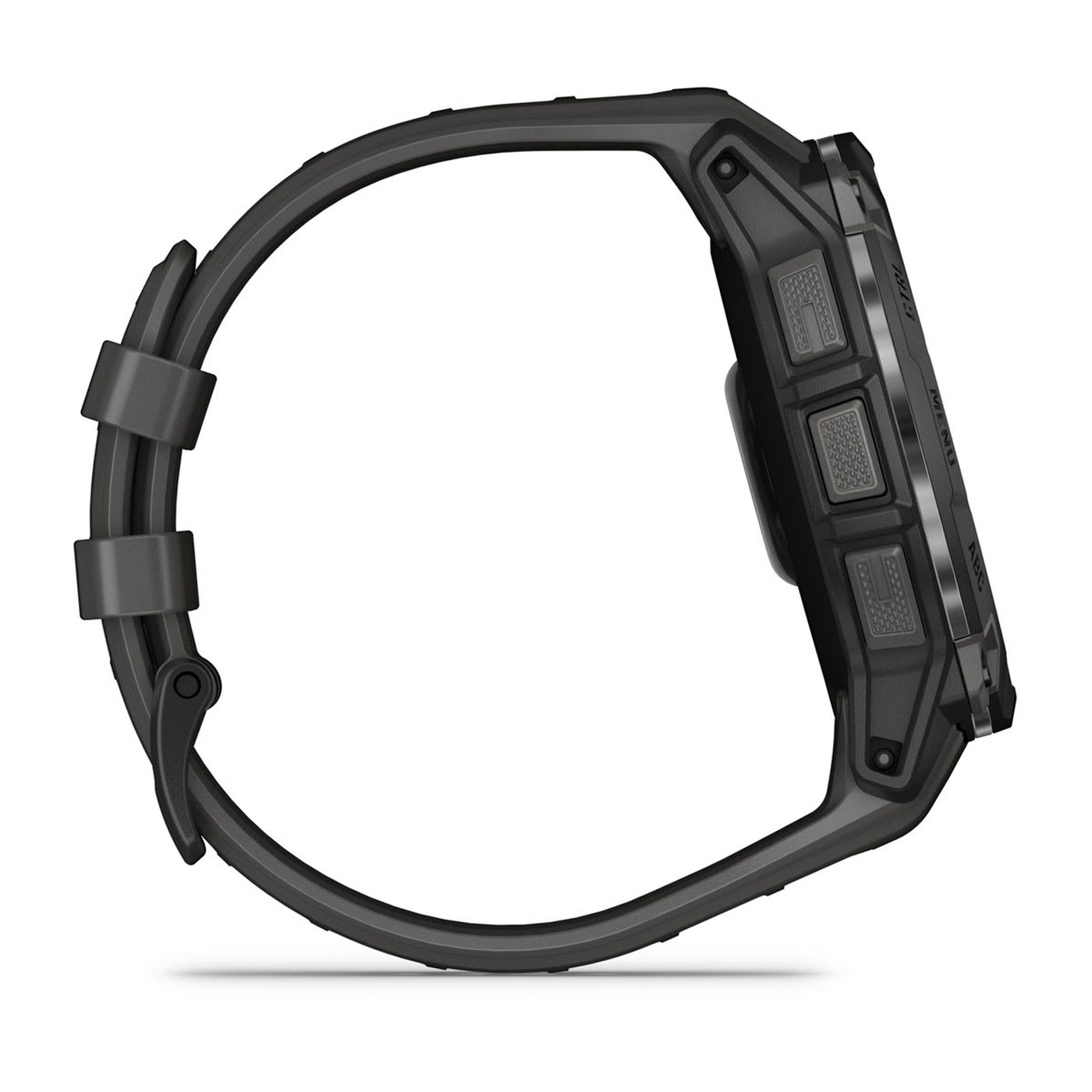
On toughness, no visible compromise. The reinforced aluminum bezel frames the display with the same protective profile as previous Instincts. The MIL-STD-810H certification (resistance to shock, dust, humidity and extreme temperatures) and the 10 ATM (100 m) water rating remain. Independent measurements confirm that the watch withstands the same mechanical stress as the Instinct 2 and 2X. Moving to AMOLED did not weaken the concept.
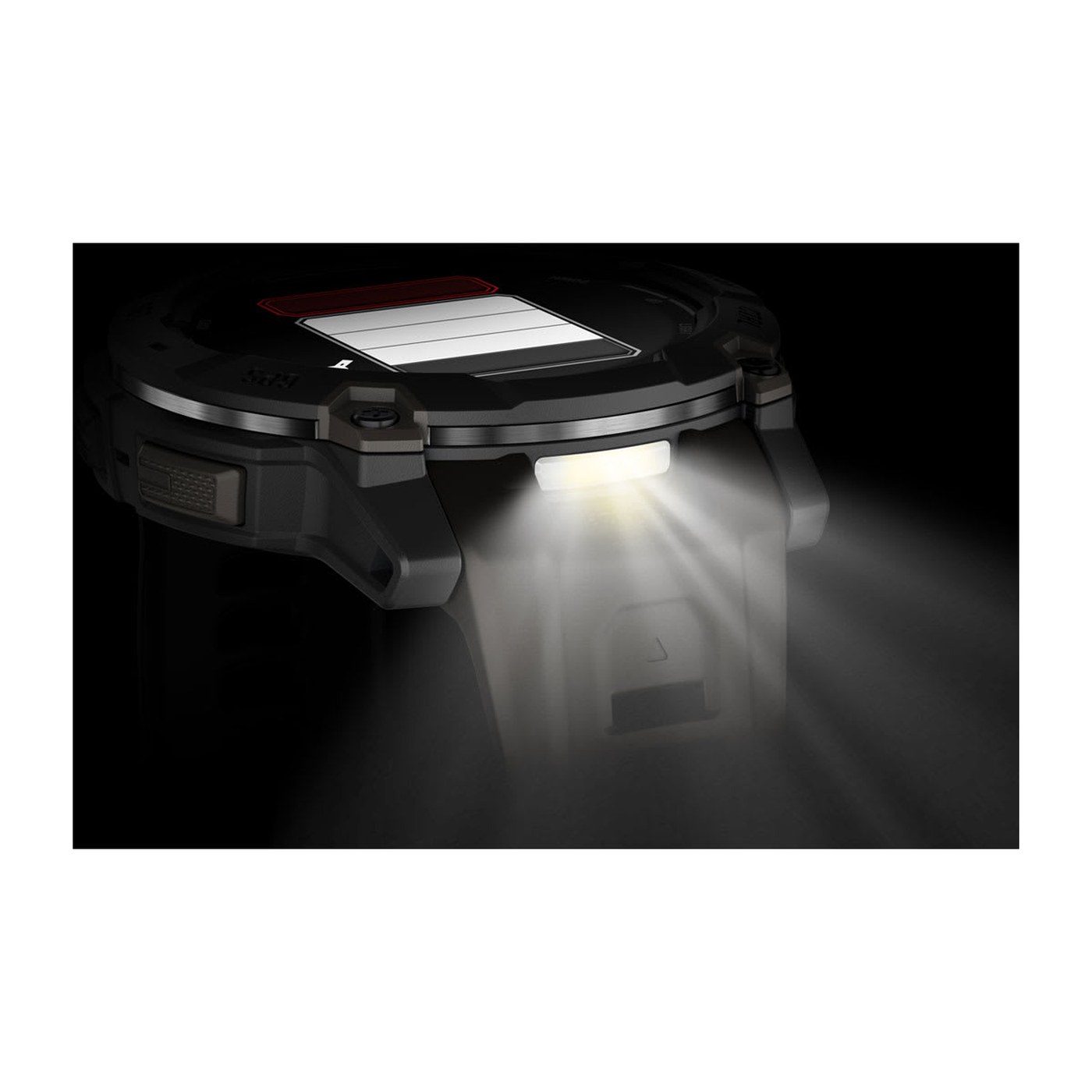
The LED flashlight deserves a special mention: it is one of the most useful features day to day. On every Instinct 3 model (AMOLED and Solar alike), the front LED can emit steady white light, red light to preserve your night vision, or a strobe. It is discreet, always there, and handles plenty of emergencies or night trail runs without digging out a headlamp.
© Garmin, official photo used for editorial purposes
GPS accuracy, heart rate sensor and real-world battery life
L1+L5 dual-frequency multi-band GPS with adaptive SatIQ is one of the biggest strengths of the Instinct 3 AMOLED. Garmin extended this mode (reserved for the Instinct 2X in the previous generation) to every Instinct 3 model. In practice, distance readings over 10 km in dense urban areas show a cumulative deviation of around 0.5 to 1% against reference measurements, which is excellent for a watch at this price. In forests and under tree cover, multi-band GPS stays far more accurate than single-frequency watches and cuts down the track drift typical of shaded areas.
SatIQ automatically switches between single-frequency and multi-band GPS depending on conditions (open sky vs. cover), so you save battery life without a noticeable loss of accuracy. This feature makes a real difference on long runs lasting several hours.
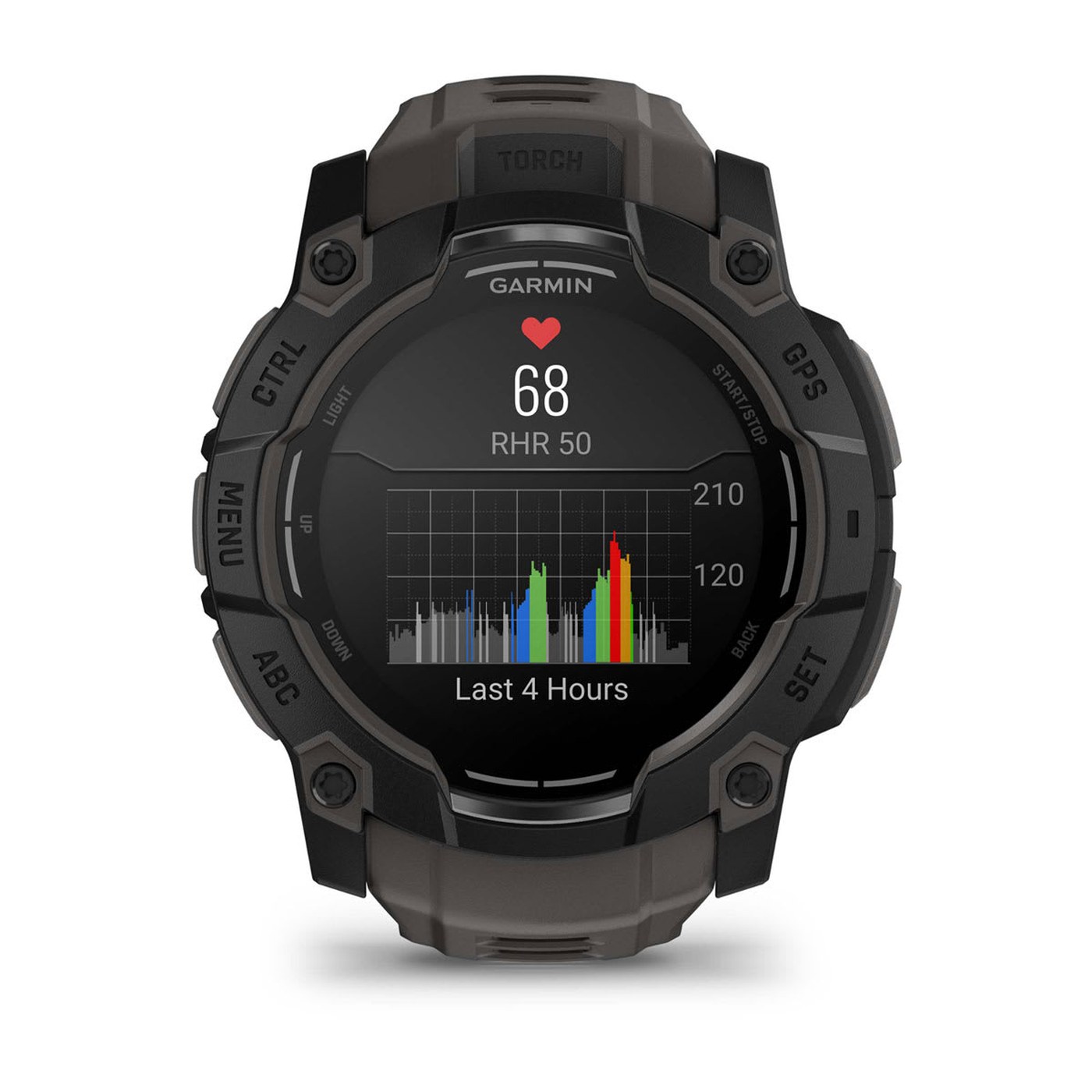
The Elevate optical heart rate sensor (Garmin's recent generations) is reasonably accurate in endurance zones, with a typical bias of ±3 to 6 bpm compared with a reference chest strap like the Garmin HRM 600 or the COROS HR Monitor. During hard intervals and in cold conditions, the drift is more pronounced: the sensor tends to smooth out heart rate peaks, which can skew your training zone analysis. For serious running with interval work, pairing the watch with a chest strap is still the way to go.
On battery life, Garmin claims 24 days in smartwatch mode and 40 hours in All-Systems multi-band GPS for the 50 mm AMOLED model. With mixed use (2 runs of 1 h per week in multi-band GPS, smartwatch mode the rest of the time), you easily get 10 to 12 days between charges. That is less than the Solar models, which can run almost indefinitely with enough sun exposure, but very decent for an AMOLED watch this tough.
The lack of onboard music, on the other hand, is hard to justify when you look at the 4 GB of internal storage. Garmin reserved that space for Connect IQ apps and tracking data, not MP3 tracks. It is a limitation that stands out next to the Garmin Forerunner 570 (same price range with 8 GB for music) or the Suunto Run (€249 with local music).
© Garmin, official photo used for editorial purposes
Physiological suite and training metrics
The Instinct 3 AMOLED packs the full Garmin Connect physiological suite: Training Readiness, Training Status, HRV Status, Body Battery, Advanced Sleep Monitoring with sleep stages, Daily Suggested Workouts and wrist-based Running Dynamics (cadence, stride length, vertical oscillation, Ground Contact Time). VO2max and race time predictions are available in the running profiles.
The notable software addition over the Instinct 2 is advanced training load data (acute load and load ratio), more detailed than plain Total Load. The sleep coach and nap tracking round out the package. On AMOLED models, you also get strength workout visuals (body diagrams showing the targeted muscles, as seen in the official photo), which sets the AMOLED versions apart from the more basic Solar models on this point.
Without maps, navigation is limited to following a GPX track via a colored breadcrumb trail, Back to Start and off-course alerts. For marked trails you know, that is enough. To explore new mountain routes or follow a self-supported 100 km loop, it clearly falls short of the competition with maps.
Garmin Instinct 3 AMOLED vs COROS APEX 4 and Amazfit T-Rex Ultra 2: the comparison
| Criteria | Instinct 3 AMOLED 50mm (€449) | COROS APEX 4 (€499) | Amazfit T-Rex Ultra 2 (€549) |
|---|
| Display | AMOLED 1.3" 416x416 px | Transflective MIP 1.3" | AMOLED 1.5" 480x480 px |
| Weight | 59 g | 52 g (without band) | 86 g |
| Multi-band GPS | Yes (SatIQ L1+L5) | Yes (L1+L5) | Yes (6 constellations) |
| Maps | No (breadcrumb trail) | Yes (global offline topo) | Yes (global offline color) |
| LED flashlight | Yes (white+red+strobe) | No | Yes (white+green) |
| Toughness | MIL-STD-810H, 10 ATM | 5 ATM | MIL-STD-810H, 10 ATM |
| GPS battery life | 40 h (multi-band) | 41 h (dual-freq) | 50 h (dual-band) |
| Music | No | Yes (MP3) | No |
| ECG | No | No | No |
| Payments | Yes (Garmin Pay) | No | Yes (NFC) |
| Ecosystem | Garmin Connect (very mature) | COROS (mature) | Zepp (still developing) |
The table speaks for itself: the Instinct 3 AMOLED is the only one of the three with the Garmin Connect ecosystem, by far the most mature and the best integrated with personalized coaching and third-party platforms (Strava, TrainingPeaks). It is also the lightest at 59 g. On maps, though, the competition is ruthless: at €499 for the COROS APEX 4 and €549 for the Amazfit T-Rex Ultra 2, you get offline topographic maps that fundamentally change how you use a watch in the mountains.
Compared with the Garmin Forerunner 570 (€549, full triathlon profiles, microphone, 8 GB for music), the Instinct 3 AMOLED wins on toughness and the LED flashlight but loses on advanced triathlon features and music. These are two different philosophies: the FR570 is a watch built for competition, the Instinct 3 AMOLED is a watch built for outdoor life.
© Garmin, official photo used for editorial purposes
Who is the Garmin Instinct 3 AMOLED for?
The Instinct 3 AMOLED 50 mm is a watch for runners who move between several outdoor disciplines and value the Garmin ecosystem above all. It suits you if you go from a trail run to a pool swim, from a bike ride to a strength session, without ever worrying whether your watch can handle knocks and water.
It also works if you train on routes you know well and do not need onboard maps. GPX import and the breadcrumb trail are enough for your usual loops. If you regularly head out to explore new ranges or unfamiliar alpine routes, though, the limitation will be real and frustrating.
The ideal RunMorph profile: a runner logging 30 to 60 km/week who mixes road, moderate trail and outdoor activities, wants one watch for everything (sport + daily life + contactless payments), and would rather invest in the Garmin ecosystem than in onboard maps.
To get the most out of your Instinct 3 AMOLED, structure your weeks with a plan that makes use of Garmin's Training Status and Daily Suggested Workouts.
Explore RunMorph training plans, built to adapt to your actual load and recovery, whatever watch you wear.
The RunMorph coach's verdict
The Garmin Instinct 3 AMOLED 50 mm is a good watch, no more, no less. It delivers on toughness, GPS accuracy and multisport versatility. AMOLED brings real viewing comfort in 90% of everyday situations. The LED flashlight and Garmin Pay are small extras you end up not wanting to live without.
But at €449, the 2025-2026 outdoor market is fierce. The COROS APEX 4 gives you maps for under €500. The Amazfit T-Rex Ultra 2 has maps too and adds comparable toughness for €549. Garmin could have included maps at this price without giving up the Instinct DNA. Deliberately choosing not to creates a commercial blind spot that is hard to ignore.
So who should pick the Instinct 3 AMOLED anyway? Anyone already in the Garmin ecosystem who does not need maps and wants the toughest AMOLED watch in Garmin's lineup under €500. For everyone else, the comparison with rivals that offer maps deserves real thought before buying.
RunMorph score: 7.5/10