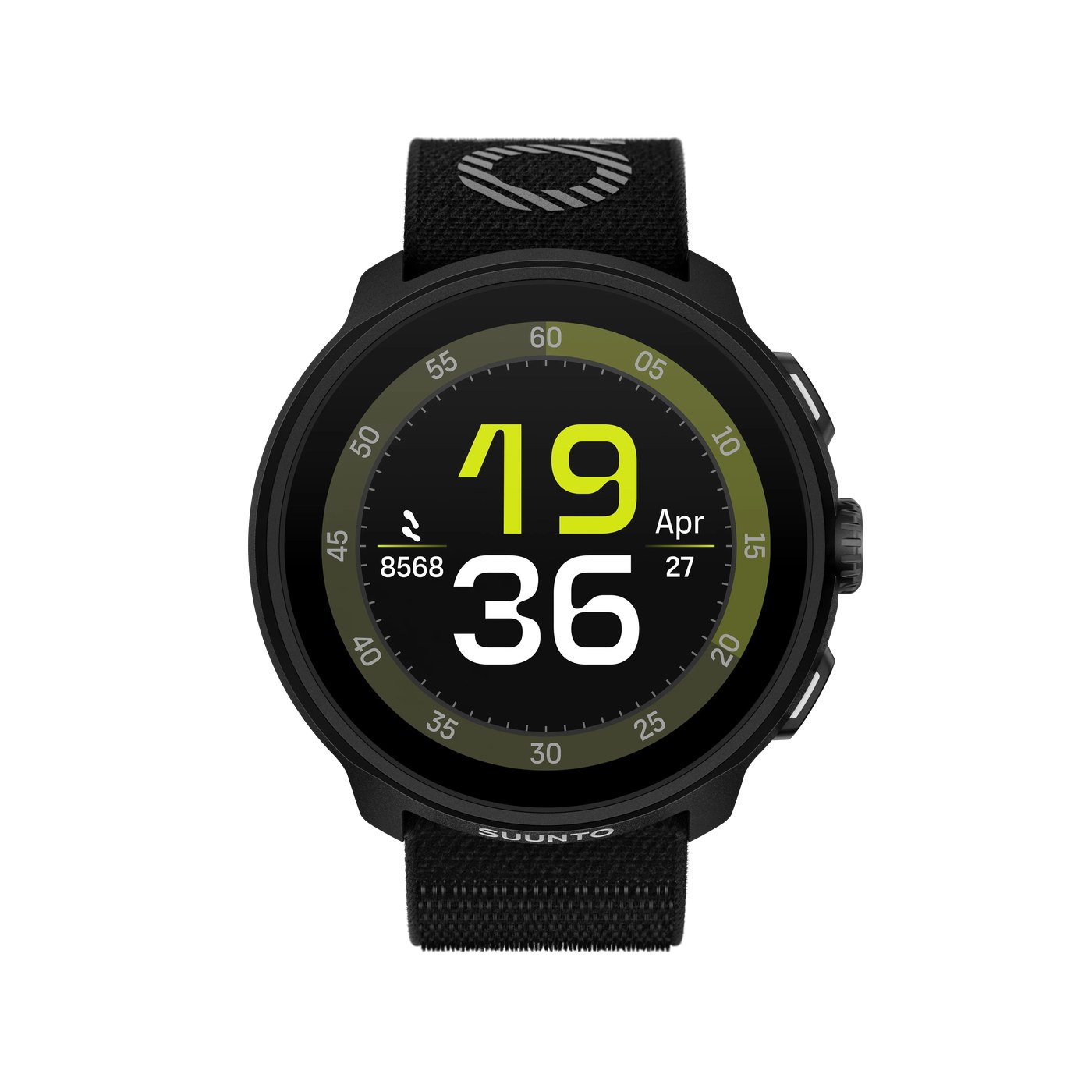
For years, Suunto equipped its mountain ambassadors with watches built for multisport and expeditions. The Run goes after a completely different target: 36 g on the scale, a 1.32-inch AMOLED, dual-frequency L1+L5 GPS and a €249 price tag, all dedicated to a single job: running. It's the first Suunto made for neither the ultra trail runner nor the diver, but for the road runner who wants a minimalist, accurate watch with nothing superfluous.
Suunto Run Review: 36 g, AMOLED and Dual-Band GPS for €249
8.5/10
Suunto Run: the Finnish brand finally commits to pure running
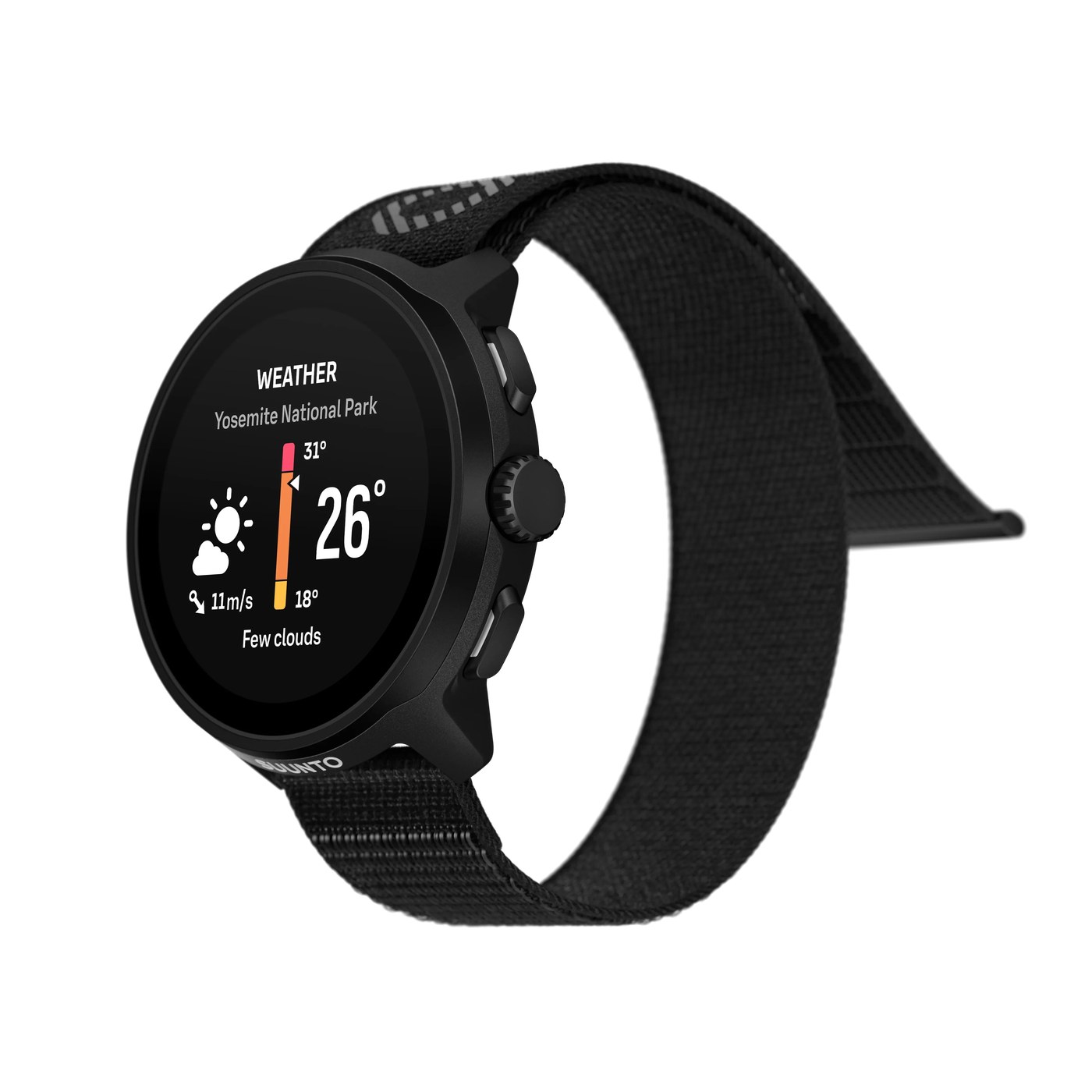
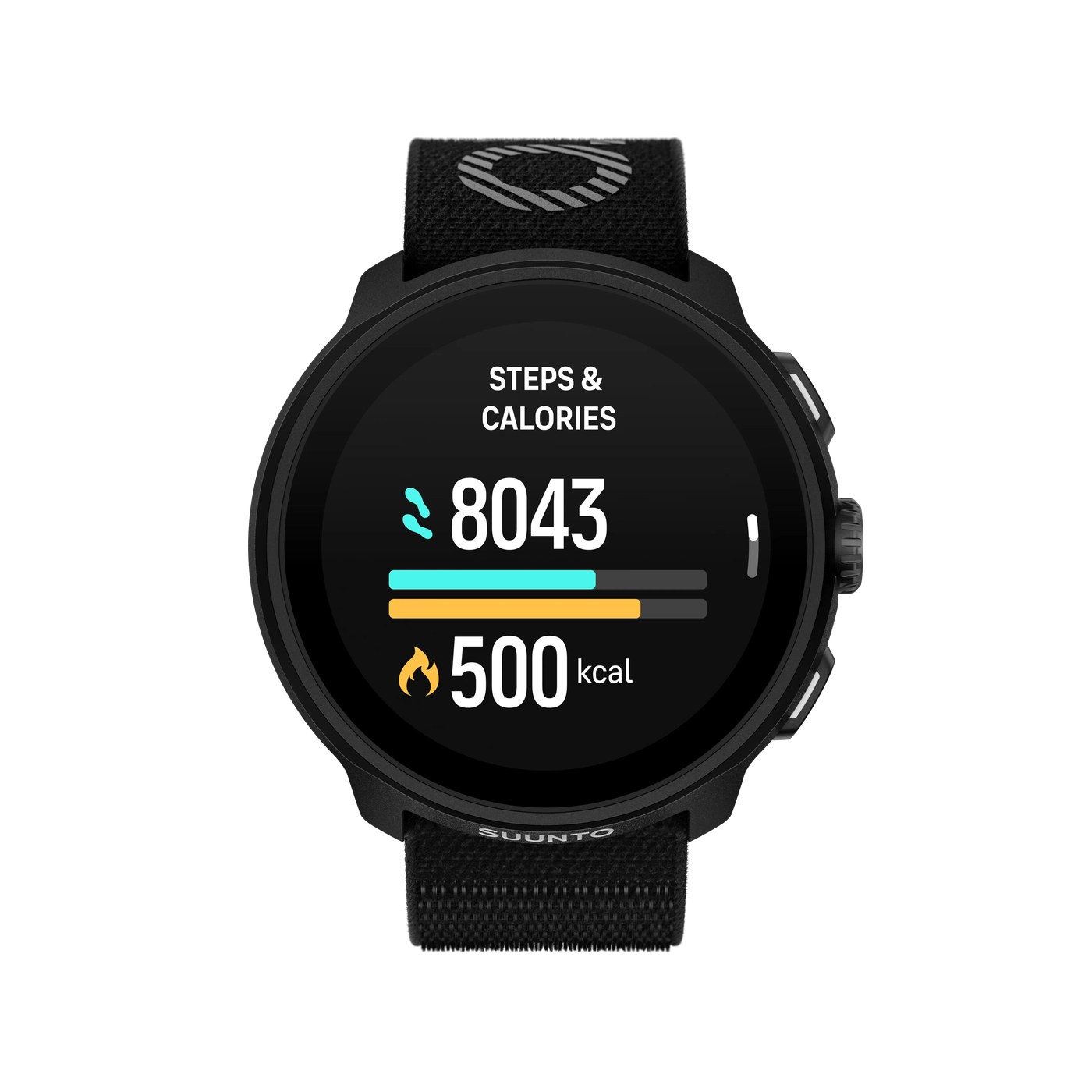
While Garmin rolled out Forerunners by the dozen and COROS built an entire lineup around the Pace, Suunto stayed true to its multisport and trail DNA. With the Run, on sale since June 3, 2025 and still current in spring 2026, the brand launches its first watch designed for runners and runners only. The 46 mm polymer case weighs 36 g with its textile strap, the 1.32-inch AMOLED display runs at 466 x 466 pixels, and the GPS uses both the L1 and L5 frequencies for accuracy in the city and under tree cover.
The price shakes up the market. At €249, the Run goes head to head with the COROS Pace 4 (€269) and the Garmin Forerunner 70 (€249.99), while stacking up hardware that neither of them offers at this price: native dual-frequency GPS, a rotating digital crown and 4 GB of onboard music storage.
RunMorph tip: if you mostly run on roads, in town or along the edge of the woods, and you want a watch you forget on your wrist that still delivers a clean GPS track, the Suunto Run deserves a spot on your shortlist. But if you're targeting ultras or need offline maps, look at the Suunto Vertical 2 or the COROS APEX 4 instead.
© Suunto, official photo used for editorial purposes
Technical specifications
| Feature | Suunto Run All Black |
|---|---|
| Brand | Suunto |
| Model | Run |
| Official release | June 3, 2025 (Europe) |
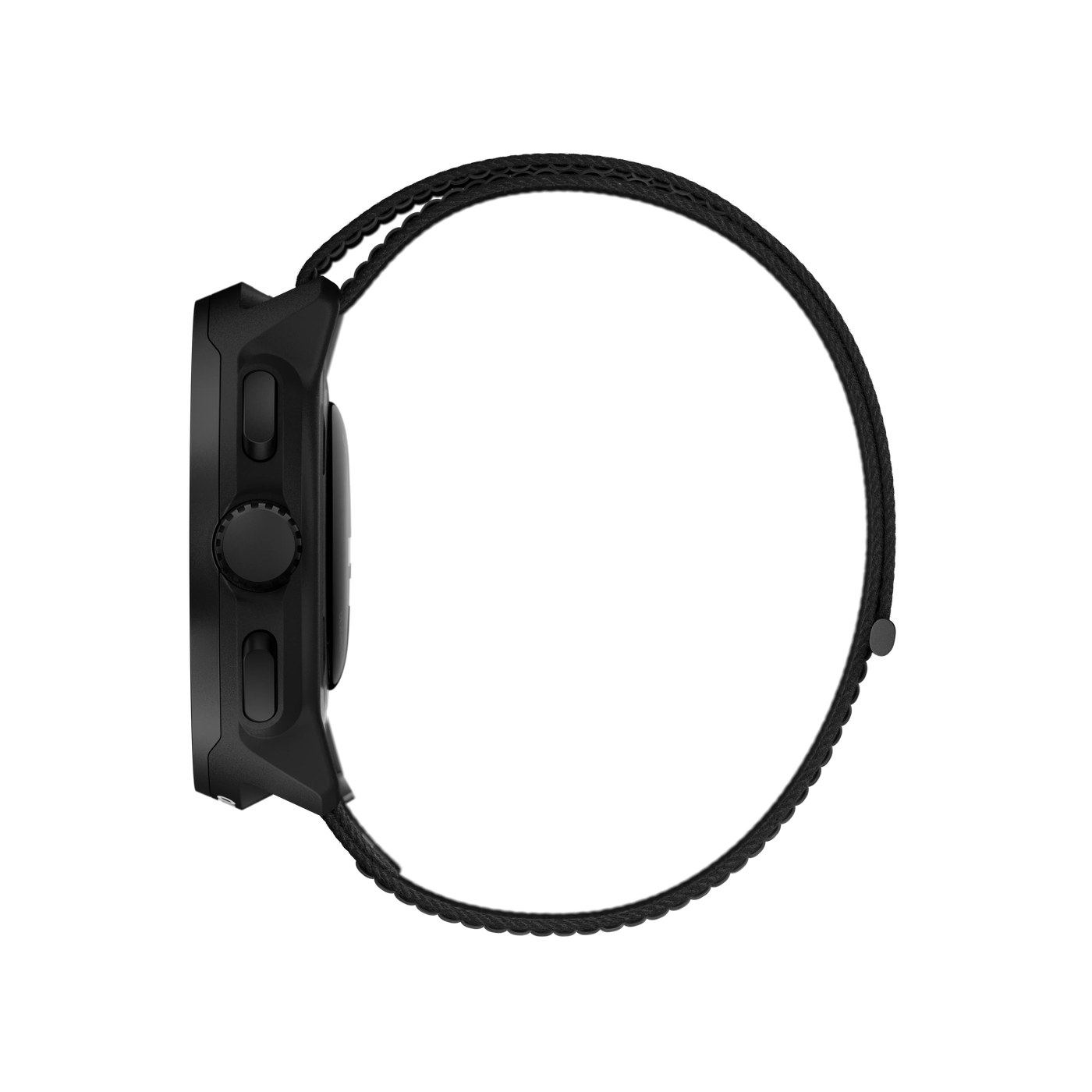
| Case size | 46 x 46 x 11.5 mm, fiber-reinforced polymer |
| Weight | 36 g (textile strap) / 49 g (silicone strap) |
| Display | 1.32" (33.5 mm) AMOLED touchscreen, 466 x 466 px, reinforced mineral glass |
| Crown | Rotating digital crown + 1 physical button |
| Smartwatch battery life | Up to 12 days (all-day heart rate on, raise to wake) |
| GPS Performance battery life (L1+L5) | Up to 20 h |
| GPS Economy battery life | Up to 40 h |
| GNSS | Dual-frequency L1+L5, multi-constellation (GPS, GLONASS, Galileo, BeiDou, QZSS) |
| Sensors | Next-generation optical heart rate sensor, SpO2, accelerometer, gyroscope, barometric altimeter |
| Mapping | No worldwide offline maps, navigation via GPX routes imported through the Suunto app, breadcrumb trail |
| Sport profiles | 34 modes (running, marathon, track, treadmill, trail, hiking, cycling, swimming, strength, yoga, tennis, boxing, etc.) |
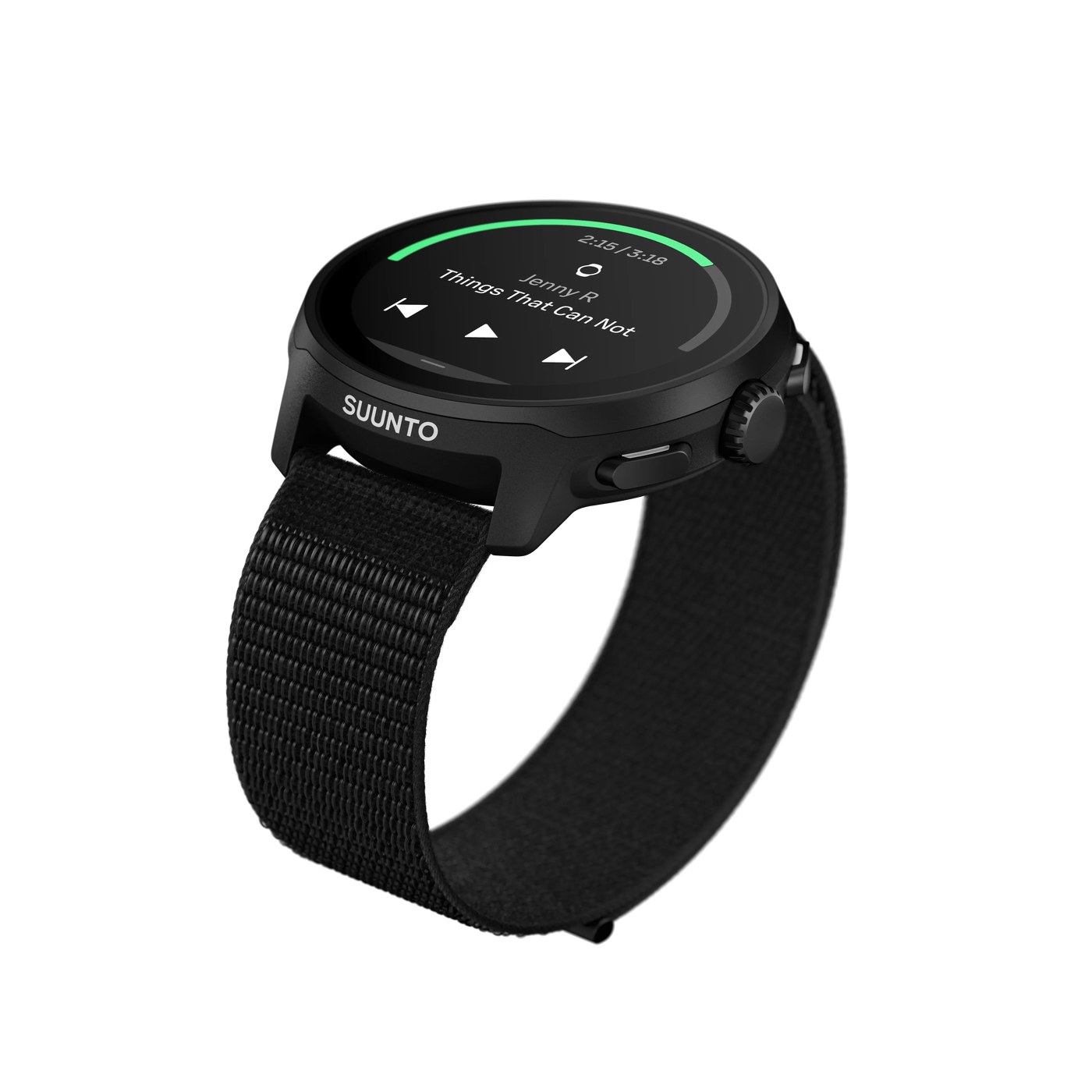
| Music storage | 4 GB MP3/FLAC/WAV/AAC, playback via Bluetooth headphones (no Spotify or Deezer) |
| Contactless payments | No |
| Water resistance | 5 ATM (50 m) |
| Smartphone connection | Bluetooth 5.x, iOS 14+ and Android 8+, Suunto app |
| Official price in France | €249 |
Who is the Suunto Run for?
The road runner who's had enough of bloated watches
The Run squarely targets the runner who logs 4 to 6 runs a week, from an early-morning 5 km to a Sunday half marathon, and has zero interest in scrolling through twelve menus before starting a session. The digital crown cycles through profiles in two clicks, the physical button starts recording, and the 36 g case disappears under a puffer jacket sleeve just as well as under a summer tank top. For pure everyday road running, this is the minimalist promise the Suunto lineup was missing.
The occasional trail runner on runnable trails
Suunto slipped a Trail Running profile into its 34 sport modes, with a barometric altimeter and breadcrumb navigation on preloaded GPX routes. For Sunday runs in the hills, marked loops and familiar trails, that's more than enough. On the other hand, the lack of worldwide offline maps rules out technical ultras and self-supported exploration: for that runner, the Suunto Vertical 2 remains the right answer in the Suunto lineup.
The new runner who wants a watch with a "pro finish"
For a first-time buyer still torn between the Garmin Forerunner 70, the COROS Pace 4 and a cheaper model, the Run brings three decisive advantages: a 1.32-inch AMOLED screen that outclasses the 1.2-inch displays of its direct rivals, native dual-frequency GPS that the Forerunner 70 doesn't have (single-band multi-GNSS only), and a featherweight 36 g that's rare at this price.
GPS accuracy and heart rate sensor
On the Suunto Run, dual-frequency L1+L5 is on by default in Performance mode, and that's exactly where the watch delivers. Independent tests on dense urban routes (urban canyons, bridge crossings) and under forest cover all reach the same conclusion: the track sticks to the actual route, without the pace spikes that plague single-band GPS in these environments. Cumulative error over a 10 km city loop ranges from 0.5 to 1.5%, in the upper bracket of premium watches.
The built-in optical heart rate sensor is a new in-house generation that fixes Suunto's long-standing weaknesses. On steady endurance or threshold sessions, the reading follows your heart rate without noticeable dropouts, within ± 3 to 5 bpm of a Garmin HRM 600 or COROS HR Monitor chest strap. On short interval sessions (30/30s, sprints), the sensor struggles like most wrist-based heart rate sensors on the market: response lag on fast spikes peaks at 8-10 seconds. The fix is well known: pair a Bluetooth chest strap for max-speed intervals and very short sessions.
Mapping and navigation: what's missing, what's enough
Let's be clear: the Suunto Run does NOT have worldwide offline topographic maps. That's the deliberate trade-off that keeps the price at €249. Navigation is limited to GPX routes imported through the Suunto app, which then appear as a colored breadcrumb trail on the AMOLED screen, with off-route alerts and a Back to Start function.
For most road runners, this limitation has no practical impact. For the trail runner who wants to explore a new area without knowing it beforehand, it's a deal-breaker: you'll need to switch to the Suunto Race 2, which offers free worldwide offline maps at €599, or to the COROS Pace Pro at €349, which includes topographic maps at no extra cost.
Training and recovery metrics
Suunto made a radical choice with the Run: the watch runs on a firmware platform separate from the Race 2 and Vertical 2. The direct consequence: neither Suunto Coach (the brand's AI-driven adaptive plan) nor third-party SuuntoPlus apps are available. Instead, the Run offers a coherent, easy-to-read trio: Training Stress Score (TSS) to quantify the load of each session, post-exercise heart rate tracking to gauge how fast you recover, and weekly training load progression visible right on your wrist.
Sleep tracking records the stages (light, deep, REM) with decent consistency on total duration, plus a daily, runner-focused recovery score. No Garmin-style Body Battery or Polar-style Nightly Recharge, but enough insight to adjust your pace for the day. Runners already on TrainingPeaks, Strava or Intervals.icu get their sessions synced through the Suunto app with no extra steps.
Real-world battery life: it delivers
The official figures list 12 days of daily use with continuous heart rate tracking and raise-to-wake display, 20 hours in dual-frequency GPS Performance mode and 40 hours in GPS Economy mode. Field reports point to real-world battery life of 9 to 11 days in daily use with 3 to 4 one-hour runs per week in GPS Performance. That's consistent and comfortable for a regular runner: one USB-C charge a week, period.
For a 4 h marathon in Performance mode, you still have plenty of battery left for the day. For an 8 to 10 h ultra in Economy mode, the Run handles it without flinching. Beyond that, step up to the Suunto Vertical 2 (110 h Ultra) or the Amazfit Cheetah 2 Ultra (80 h endurance).
© Suunto, official photo used for editorial purposes
How it stacks up against the competition
At €249, the Suunto Run sits in a tight triangle with the COROS Pace 4 (€269) and the Garmin Forerunner 70 (€249.99). Three watches at the same price, three opposite philosophies.
The COROS Pace 4 also has multi-band L1+L5 GPS, offers the full EvoLab suite (Race Predictor, personalized marathon plans, built-in microphone) and drops to 32 g with the nylon strap. Its 1.2-inch, 390 x 390 px AMOLED screen sits a notch below the Run on resolution, but the EvoLab ecosystem is more mature for performance analysis.
The Garmin Forerunner 70 brings Garmin's AMOLED and its premium physiological suite (Training Readiness, HRV Status, Body Battery, adaptive Garmin Running Coach plans) down to €249.99. The sting in the tail: single-frequency multi-GNSS GPS, without the dual-band L1+L5 found on the Run and the Pace 4. In the suburbs or in the mountains, accuracy takes a hit.
The Suunto Run outflanks both rivals on three concrete points: a larger, sharper 1.32-inch AMOLED screen, a rotating digital crown that changes the ergonomics, and Suunto build quality (reinforced mineral glass, titanium-like treated chassis) that makes the watch look far more expensive than it is. For pure runners who use neither maps nor adaptive AI plans, it's the best hardware package in the €249 segment as of June 2026.
How to fit it into your RunMorph training plan
The Suunto Run slots seamlessly into a RunMorph plan. Once you create the session in the RunMorph Plans app, the Strava or TrainingPeaks export automatically pushes the intervals, target pace and heart rate zone to the Suunto app, then to your wrist via Bluetooth sync. The digital crown lets you switch between the pace, heart rate and distance screens with a single move, without breaking your focus on your stride.
The built-in Treadmill profile captures cadence and heart rate for indoor winter sessions, and the Track profile calibrates the GPS track to the 400 m oval for clean max-speed intervals. For Sunday long runs, Economy mode pushes battery life to 40 hours, a full week for a runner who trains 4 times.
© Suunto, official photo used for editorial purposes
RunMorph verdict
The Suunto Run does exactly what it promises: be the first Suunto designed for road runners, nothing more, nothing less. Its 36 g weight, 1.32-inch AMOLED, digital crown and dual-frequency GPS at €249 add up to a hardware package that beats its direct rivals, the COROS Pace 4 and the Garmin Forerunner 70, on three key criteria: screen size, navigation ergonomics and native GPS accuracy.
The deliberate trade-offs (no offline maps, no Suunto Coach AI, no third-party SuuntoPlus platform) fit the target audience and the price. A pure running watch that doesn't oversell its ambitions and delivers premium-level GPS accuracy for an entry-level price. 8.5/10.
Key takeaways for your training
- 36 g and a 1.32-inch AMOLED: you forget the watch on your wrist, yet it stays readable in full sun and in the shade.
- Dual-frequency L1+L5 GPS, on by default, holds a clean track in the city and under dense forest cover, with 0.5-1.5% cumulative error over 10 km.
- Paired with a Bluetooth chest strap for max-speed intervals and short interval sessions, the Run becomes a true workout watch, with a wrist sensor you can trust on endurance runs.
- The Treadmill and Track profiles calibrate the track correctly for structured indoor sessions and 400 m track workouts.
- Real-world battery life of 9-11 days with regular use of 3-4 runs/week: one USB-C charge a week and zero battery anxiety on race day.
© Suunto, official photo used for editorial purposes