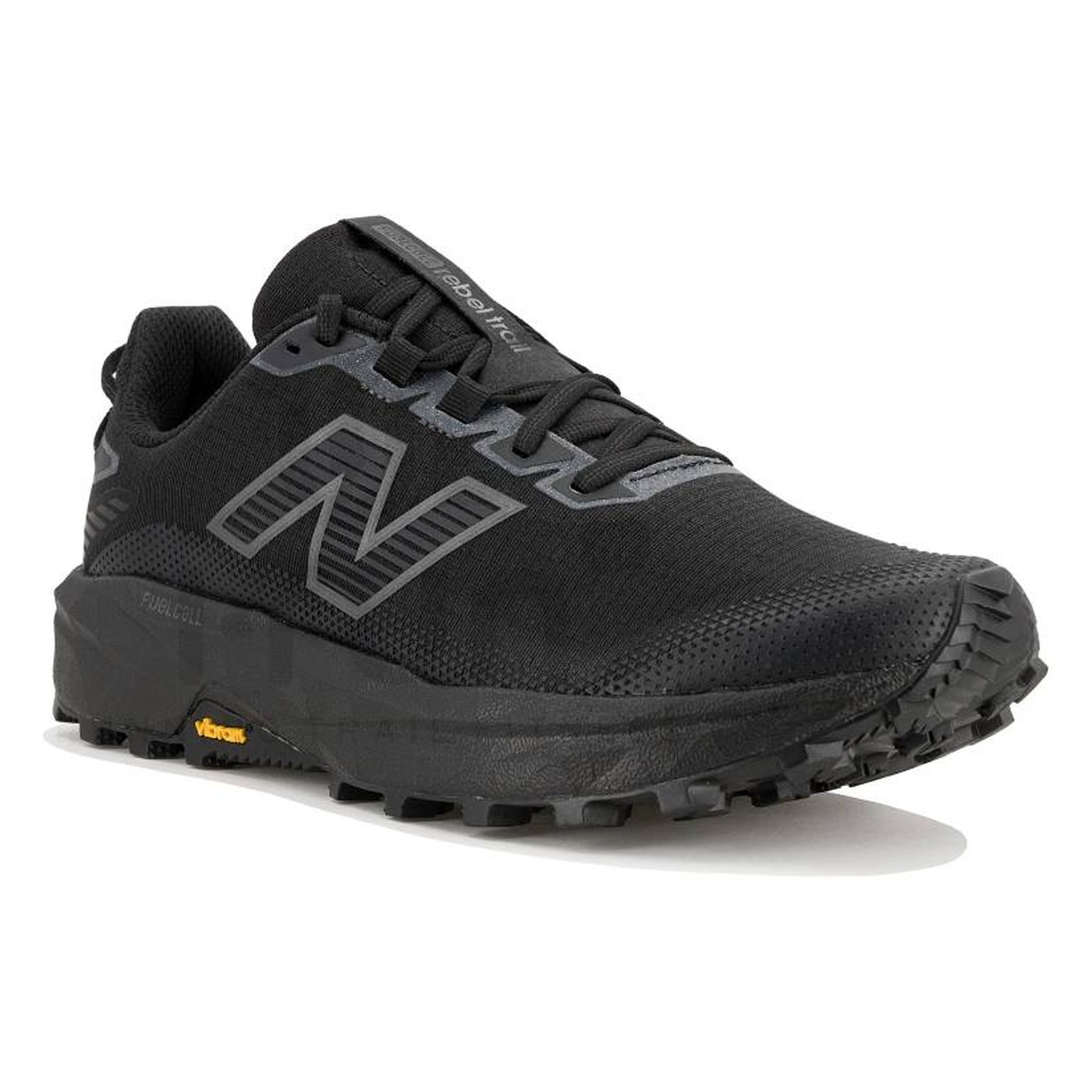
The name promises the road Rebel, the bouncy one, moved onto the trails. That is not what New Balance delivered. The FuelCell Rebel Trail is a firm, low, very grippy trail shoe built for technical paths. If you can get past that initial misunderstanding, it has serious arguments, especially at the price it sells for right now.
© New Balance, official photo used for editorial purposes
New Balance FuelCell Rebel Trail: a Rebel in name only
New Balance launched the Rebel Trail in April 2026, so about seven months ago. The brand slots it between the Fresh Foam X Hierro v9, its workhorse for long days, and the minimalist models in its trail range. The stated idea? Give road runners a way onto the trails without stepping into a heavy shoe.
The problem is the name. The FuelCell Rebel v5 is a light, soft, playful road shoe. The trail version keeps the FuelCell foam but makes it denser and more stable. A lab rates it "firm" on the durometer, and most testers say the same thing in their own words. Put simply, don't buy it to get your Rebel back on the trails.
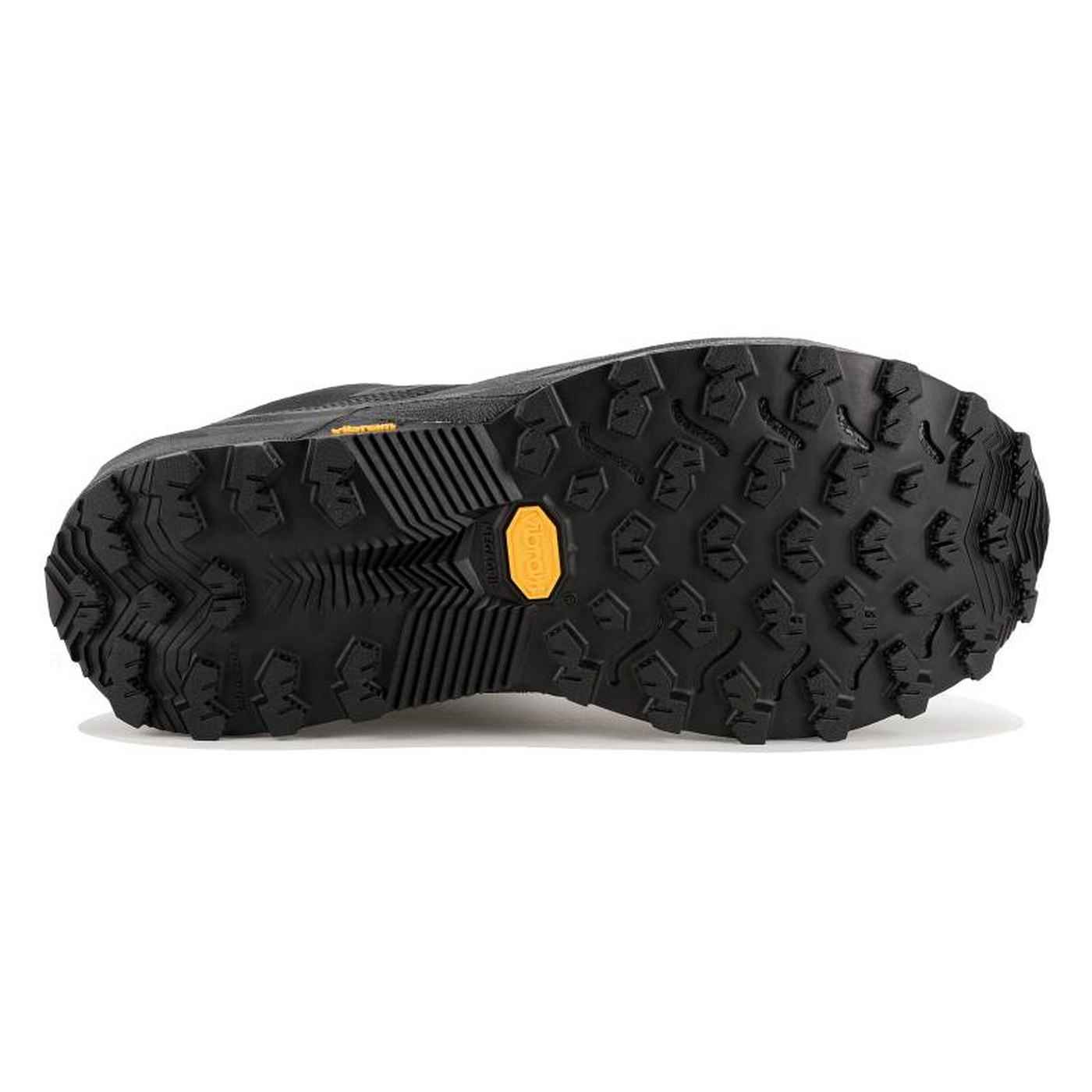
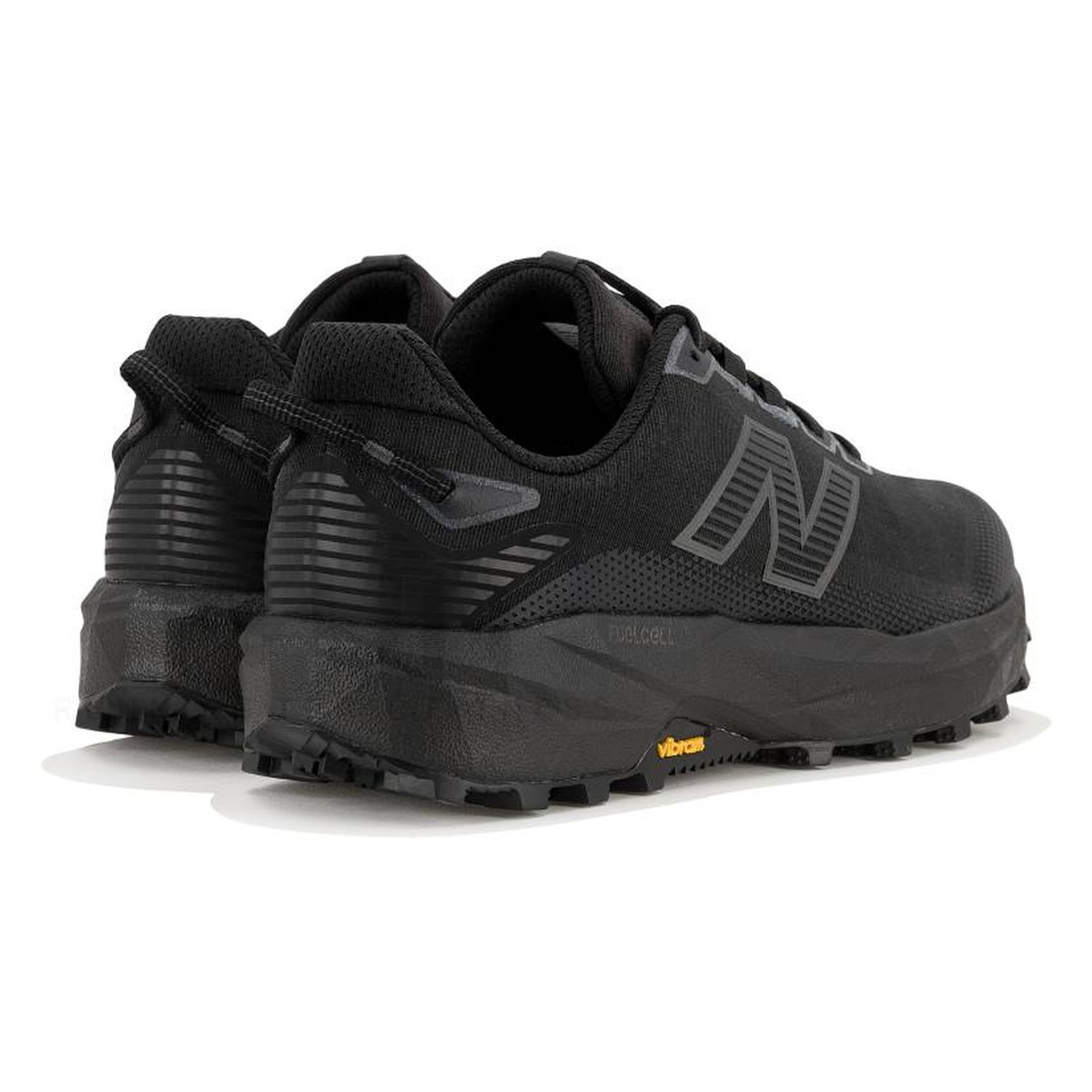
What it gives you instead: a full-length Vibram Megagrip outsole, Traction Lug lugs, a mesh upper with 3D-printed overlays, a gusseted tongue and a toe bumper. This is a real trail shoe, not a road shoe in disguise.
RunMorph's advice: if you want plush cushioning for long mountain runs, look at the Hoka Speedgoat 7 instead. If you want a precise, grippy shoe for technical terrain at a steady pace, the Rebel Trail is one of the best picks under €120 right now.
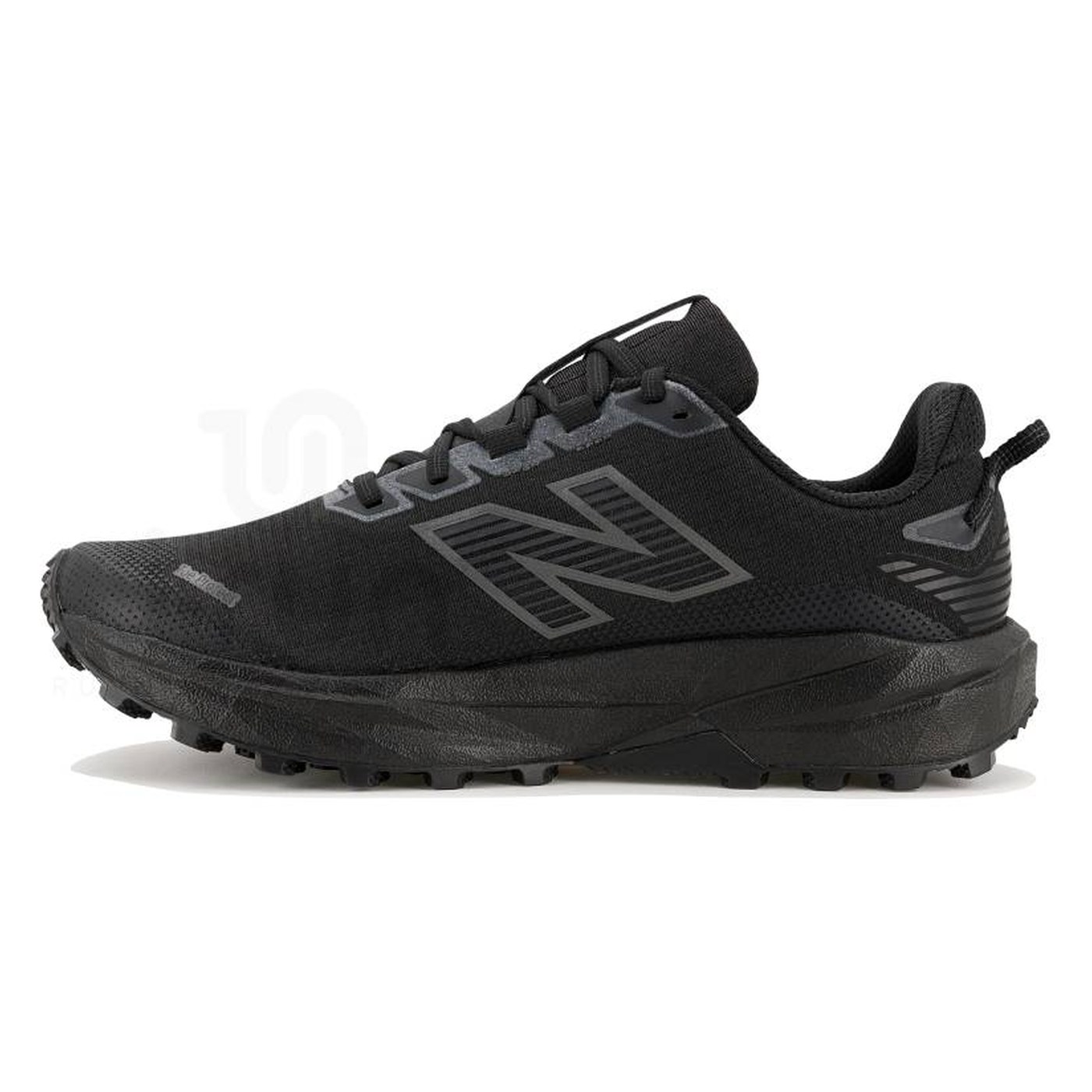
The lab finds 2,4 mm less at the heel than claimed. The lugs lose 1 mm. Nothing serious, but it confirms the shoe's character: lower and closer to the ground than the spec sheet suggests. Weight, on the other hand, matches the claim. 289 g is heavy for a shoe of this height, and a lab lists it among the downsides.
© New Balance, official photo used for editorial purposes
Who is the Rebel Trail for?
Trail runners who like technical terrain
This is its main target. The lab gives it 86/100 for versatile use and 72/100 on technical terrain, but only 65/100 on fast gravel. The French tester at Pacing Trail took it onto the rocky trails of Provence and out in the rain: he gives it top marks for grip.
Midfoot or forefoot strikers
The lab says it plainly: it suits runners who land flat or on the forefoot better than heel strikers. The heel is narrower than average, and the firm foam does nothing to soften a heavy heel strike.
Road runners new to trail, on one condition
New Balance sells it as an entry point. That holds for a runner who is already fit and light. For a true beginner, the Pacing Trail test and a French buying guide both advise against it: too firm, too demanding. A Hoka Torrent 5 will be more forgiving.
On the trail: what five real tests say
At RunMorph, we have not run in the Rebel Trail. This review combines a full lab report, a French test over several demanding outings (Pacing Trail), an American field test on technical trails, the verdict of a specialist running shop in Arizona and feedback from 36 buyers on a major US retail site.
On grip, everyone agrees. The lab rates traction as high. The French test describes it as excellent on wet rock, muddy roots and loose dirt, and reassuring when braking on steep slopes. The American tester confirms it on slick wet rock, deep mud and scree descents. Buyers name it as their number one reason to be happy with the shoe.
On stability, the field testers are also very positive. They describe a planted shoe, predictable on off-camber ground and fast descents. The lab adds nuance: narrow heel, moderate torsional rigidity. Both observations meet on one point. The stability comes from the firm foam and an upper that locks the midfoot down well, not from a wide base.
Comfort is where things go wrong past the two-hour mark. The French test puts the limit at around 25 to 30 km. The American tester talks about legs working harder and feet feeling "beaten up" on hard-packed fire roads.
© New Balance, official photo used for editorial purposes
Cushioning and responsiveness: bouncy or flat?
This is where the sources contradict each other. The French test praises good energy return. The Arizona shop finds the foam soft and bouncy. The lab, though, puts the bounce among the downsides: less than you'd expect, with cushioning and energy return both rated moderate.
Who's right? It depends on what you compare it to and how much you weigh. Next to the road Rebel v5, it feels flat, no question. Next to a typical trail shoe of the same height, it stays lively. The French test also points out that it suits heavier runners less well. A light runner barely compresses a firm foam and gets its responsiveness. A heavy runner bottoms it out faster.
The sole is also flexible: the lab puts it among the flexible models. On a steep climb where you mix running and hiking, that's a real plus. On a long runnable false flat, it tires the foot more.
Major flaw #1: an upper that wears fast at the front
The outsole holds up well. The lab records low rubber wear, and the French test confirms it held up well after several outings on abrasive ground. The heel padding also scores well.
The toe box mesh, however, gets the worst rating in the abrasion test. On a shoe built for scree, that matters. The toe bumper protects the tip, but the front sides stay exposed. Expect the upper to give out before the outsole if you run on rocks a lot.
Major flaw #2: a short, narrow fit for some
Opinions differ, and the shape of your foot decides. The lab measures an average width and a rather low toe box. The French test calls the fit standard, with a moderate forefoot. The Arizona shop finds it a little short and suggests going up half a size. Several American buyers complain about a tight midfoot.
In short, if your foot is narrow, take your usual New Balance size. If you are between sizes, or run a lot of downhill, go up half a size to keep 0,5 to 1 cm in front of your toes. Wide feet or thick orthotics: try it on in a store, because the thin insole and low toe box leave little room.
© New Balance, official photo used for editorial purposes
Breathability, rain and cost per kilometre
The upper is not waterproof. It lets water in but dries quickly, according to the French test. The lab rates its breathability as average, and its list of pros recommends it for warm trails.
Our estimate, to be taken as such: 600 to 800 km of lifespan, with the front of the upper setting the limit more than the outsole. At €150, that works out to €0,19 to €0,25 per kilometre. At the November 2026 street price of around €100, you drop to €0,13 to €0,17. At that price, it becomes one of the best-value trail shoes of the moment.
Rebel Trail vs Saucony Peregrine 16: the comparison
Three of our five sources compare it to the Peregrine without being asked. Same starting price, same target: versatile trail running at a steady pace.
| Criterion | Rebel Trail | Peregrine 16 |
|---|
| RRP | €150 | €145 |
| Measured drop | 5,3 mm | About 4 mm |
| Outsole | Vibram Megagrip | PWRTRAC |
| Character | Firm, locked-in, protective | Lower, more flexible, more agile |
| Strength | Grip and control on descents | Liveliness on runnable trails and climbs |
| Best use | Technical terrain, mud, wet rock | Short, fast trail runs, varied terrain |
The American tester finds the Peregrine lighter and more playful, and the Rebel Trail more protective with better hold. The French test points the same way: the Peregrine is faster, the Rebel Trail more controlled downhill. If your runs are mostly technical and wet, take the Rebel Trail. If you mostly run dry, flowing trails, the Peregrine is still more fun.
Rebel Trail vs the competition
Against the Hierro v9, its big sister, the Rebel Trail gives up comfort but gains precision. For a four-hour run, choose the Hierro. For a punishing 20 km trail, the Rebel.
The Asics Trabuco 14, which the lab lists in the same segment, gets a higher overall score and offers more cushioning for a similar price. The Hoka Speedgoat 7 remains the benchmark if you want plush cushioning over long distances, at the cost of a less precise ride. And if you come from the road and mostly want easy trails, the Brooks Catamount 4 will feel nicer on runnable ground.
Pros and cons of the Rebel Trail
Pros
- Full-length Vibram Megagrip, grip praised by every source
- Very reassuring on wet rock and steep descents
- Well locked-down midfoot, predictable ride
- Flexible sole, handy when you mix running and hiking
- Low rubber wear
- Often sold around €100 instead of €150
Cons
- Firm foam, far from the Rebel v5's bounce
- Comfort drops beyond 25 to 30 km
- Front mesh fragile in the abrasion test
- 289 g, heavy for its stack height
- Slightly short fit, low toe box
- No rock plate
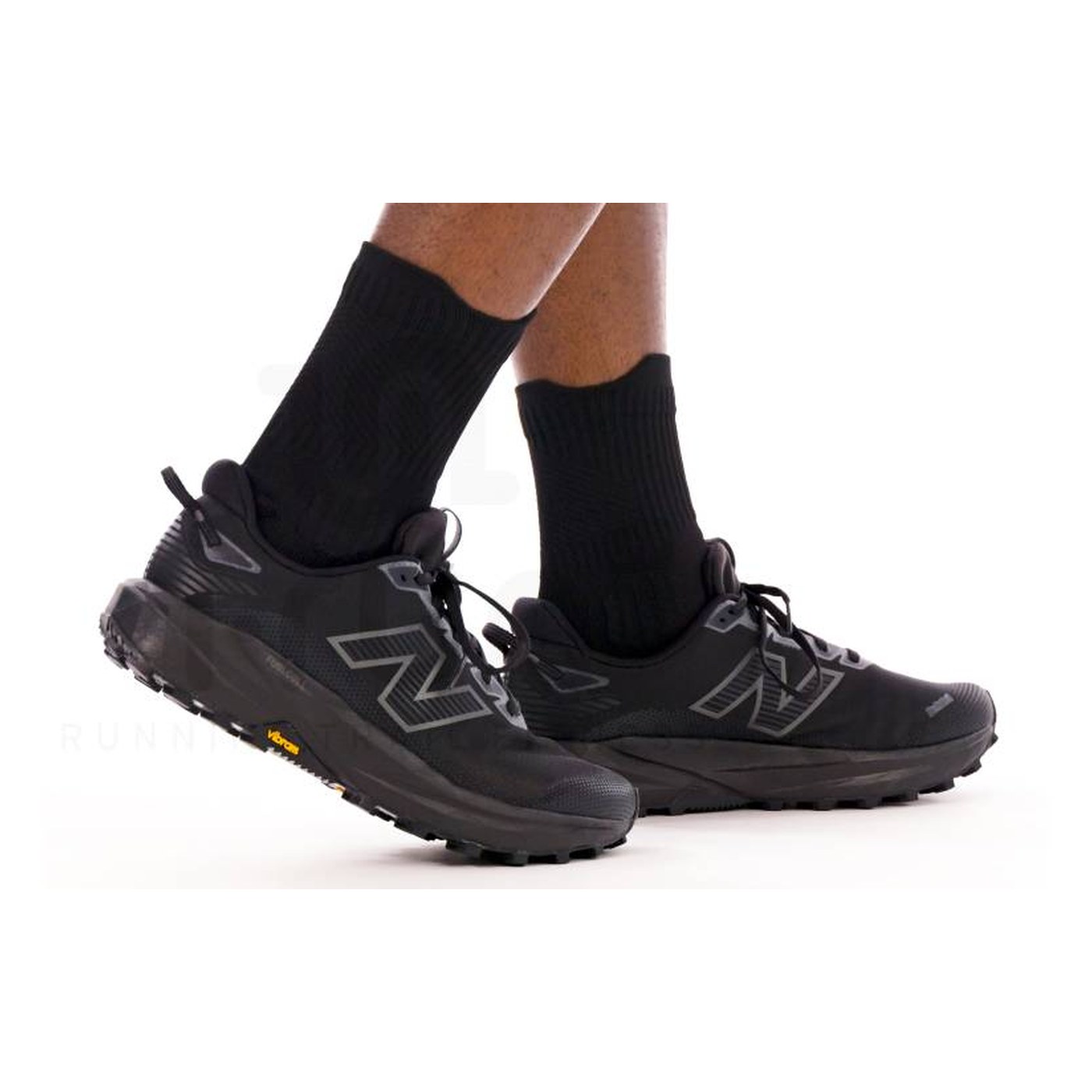
© New Balance, official photo used for editorial purposes
How to fit the Rebel Trail into your RunMorph training plan
Give it the sessions where your foot needs to be precise. Technical runs of 1 to 2 hours with elevation gain, downhill work, hill repeats on trail, runs in the rain. That's where it pays for itself.
For long runs over two and a half hours, keep a more cushioned shoe. And if you are moving from road to trail, start with one or two 45-minute runs a week: the firm, low sole needs time for your ankles and calves to adapt.
Training for a short trail race or your first 20 to 30 km trail? The RunMorph trail plan balances elevation gain, descents and long runs to your level, so your Rebel Trail gets used for the right sessions.
The RunMorph Coach's verdict
The Rebel Trail is a good technical trail shoe with a bad name. It grips everywhere, holds your foot and stays in control on descents. It is neither bouncy nor plush.
Buy it if you are on the light side, mostly run technical terrain up to 25 km and can find it for around €100. Skip it if you're looking for a trail version of the Rebel v5, training for an ultra or just starting out. In that case, the Speedgoat 7 or the Trabuco 14 will serve you better.
RunMorph score: 8,4/10.