Twenty-four generations of a shoe that refuses to die. The Brooks Adrenaline GTS 24 arrived in 2024 with the same mantra as its predecessors: natural support without forced correction, through GuideRails that only step in when your knee or hip drifts too far. With a 12 mm drop and BioMoGo DNA foam, it targets a specific, loyal crowd that running media often ignore while they chase the latest carbon shoe.
Brooks Adrenaline GTS 24 Review: GuideRails Stability for €128
8.5/10
The essentials in 3 sentences
The Brooks Adrenaline GTS 24 is a light-stability road running shoe that uses GuideRails (side guides) instead of a traditional medial post, giving you support on demand without stiffening your stride. Its adaptive BioMoGo DNA foam and 12 mm drop make it the ideal shoe for heel strikers who want comfort over middle and long distances. At €128 in 2026, it's one of the best deals in road stability.
8.5
/ 10 · RunMorph overall score
Who it is forHeel strikers, neutral or mild overpronators, who want discreet support from 10 km to the marathon
Who it is not forForefoot sprinters, ultra trail runners and anyone looking for a speed shoe
Brooks Adrenaline GTS 24: the classic that quietly reinvented itself
The Adrenaline GTS's great strength is its ability to evolve without ever losing its identity. The GTS 24 refines the formula inherited from the GTS 22 and 23: better-calibrated GuideRails, slightly reformulated BioMoGo DNA foam and a 3D Fit Print upper that wraps the forefoot more closely. From a distance it looks identical, but on foot it's noticeably better, especially in the heel-to-midfoot transition.
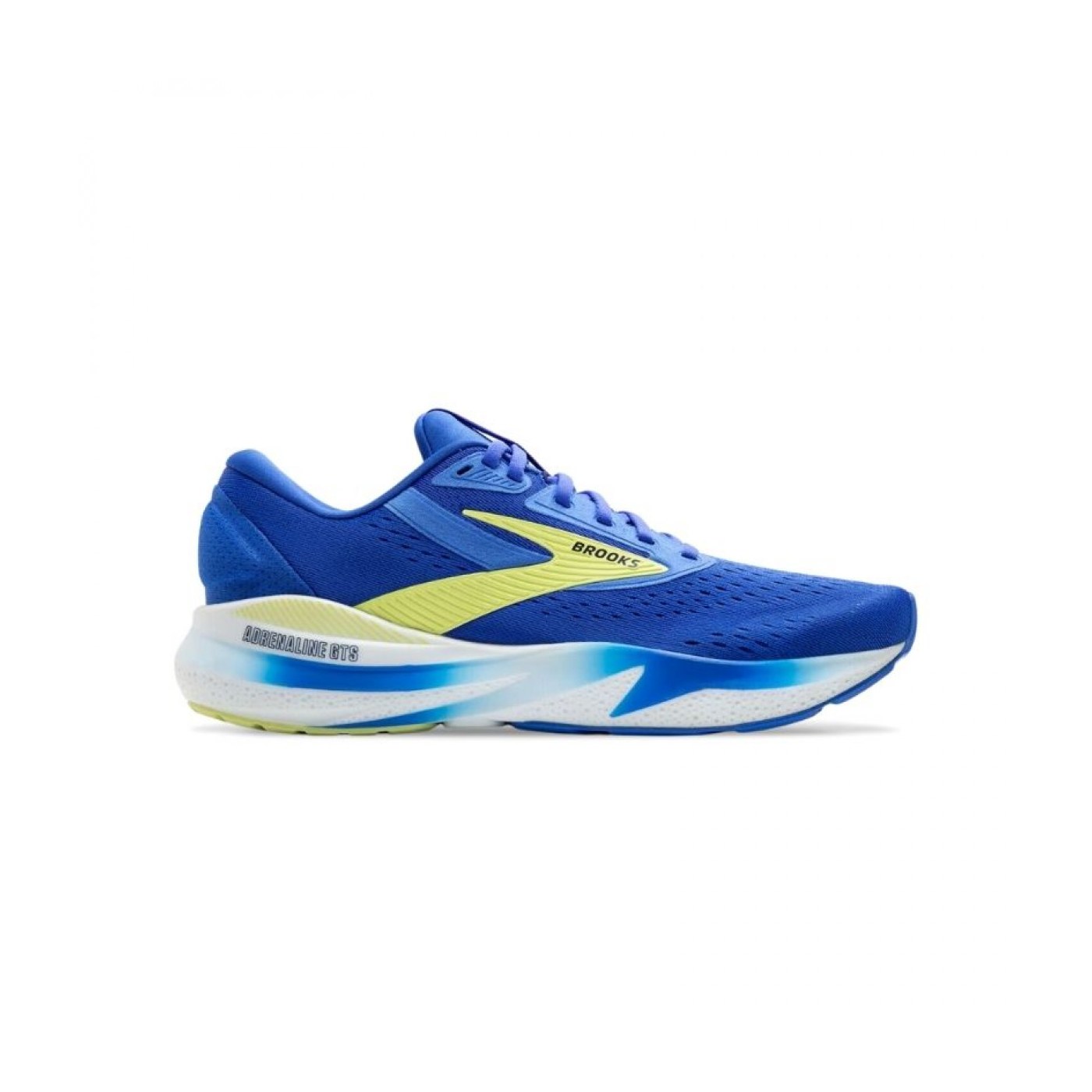
© Brooks Running, official photo used for editorial purposes
RunMorph tip: if you want a Brooks stability shoe but your foot is fairly neutral, go for the Brooks Ghost 18 (DNA Loft v3, neutral) or the Brooks Glycerin 23 (DNA TUNED dual-cell, neutral max cushion). The Adrenaline GTS 24 is built specifically for runners whose knee or hip drifts inward during stance and who need discreet guidance.
Technical specs
| Feature | Value |
|---|---|
| Brand | Brooks |
| Model | Adrenaline GTS 24 |
| Release | 2024 |
| Type | Light-stability road shoe |
| Drop | 12 mm |
| Estimated stack height | ~36 / 24 mm (heel/forefoot) |
| Weight | ~262 g (men's size 42) |
| Foam | BioMoGo DNA + DNA LOFT (heel) |
| Carbon plate | No |
| Outsole | Blown rubber + HPR Plus (heel) |
| Upper | Engineered 3D Fit Print mesh |
| Stability | GuideRails (holistic support) |
| Recommended distances | 10 km, half marathon, marathon |
| MSRP | €128 (2026) |
Who is the Brooks Adrenaline GTS 24 for?
Heel strikers looking for natural support
If you land heel first and your ankle or knee tends to roll inward during stance (moderate overpronation), the Adrenaline GTS 24 was designed for you. The GuideRails sit on the inner and outer edges of the sole to limit excessive knee and hip movement, without constraining a naturally neutral stride. That's what sets Brooks apart from the traditional stability-shoe approach built on a rigid medial post.
Beginners and returning runners
The 12 mm drop and generous BioMoGo DNA cushioning make it an ideal shoe if you're coming back to running, just starting out or recovering from an Achilles tendon injury. The well-padded heel absorbs the first impacts without demanding any particular biomechanical adaptation. For RunMorph beginner training plans (5 km to 10 km), the Adrenaline GTS 24 is our stability shoe pick.
High-mileage half marathon and marathon runners
With estimated durability of 700 to 900 km, thanks to the biodegradable BioMoGo DNA foam and the HPR Plus rubber at the heel, the Adrenaline GTS 24 is a mileage shoe par excellence. Use it for your long runs (16 to 30 km) and your easy recovery runs. At €128, it's a reasonable investment for two seasons of half marathon or marathon training.
© Brooks Running, official photo used for editorial purposes
Comfort, GuideRails stability and on-the-run behavior
Step in and the Adrenaline GTS 24 impresses with its plush heel. The DNA LOFT zone works like an extra cushion, without the instability some max-cushion shoes create. On a heel strike, the transition to the forefoot is smooth thanks to the Omega Flex Grooves (omega-shaped grooves under the outsole) that make the shoe more flexible with every toe-off.
On a neutral stride, you forget the GuideRails are there: that's exactly what you want from a good light-stability shoe. Tested on a runner with mild overpronation (knee caving slightly inward on landing), they effectively limit the drift without blocking natural movement. Compared with a classic medial-post shoe, it feels much less restrictive while protecting you just as well over long distances.
At paces of 5:30 to 6:30 min/km, the Adrenaline GTS 24 is in its comfort zone. Go faster than 5 min/km and the foam's lack of bounce holds you back: for quality sessions, keep a more responsive shoe such as the Saucony Endorphin Speed 5.
Road stability comparison: Adrenaline GTS 24 vs the competition
| Criteria | Brooks Adrenaline GTS 24 | Saucony Guide 19 | Asics Gel-Kayano 33 | Mizuno Wave Horizon 9 |
|---|---|---|---|---|
| Price | €128 | ~€145 | ~€160 | ~€150 |
| Weight (men's) | ~262 g | ~265 g | ~310 g | ~300 g |
| Drop | 12 mm | 8 mm | 10 mm | 12 mm |
| Stability | GuideRails | CenterPath | FluidSupport | Wave plate |
| Foam | BioMoGo DNA | PWRRUN | FF Blast Max | Enerzy NXT |
| Runner profile | Moderate heel striker | Mixed forefoot/heel | Heavier runners | High mileage + road |
| RunMorph score | 8.5 / 10 | 8 / 10 | 8.5 / 10 | 8 / 10 |
Against the Saucony Guide 19, the Adrenaline GTS 24 is more affordable (€128 vs €145) and better suited to heel strikers with its 12 mm drop, while the Guide 19 suits runners who prefer a mid-range drop. The Asics Gel-Kayano 33 remains the better choice for heavier runners, but its price and weight make it a shoe for those who truly need its higher level of support. Mizuno's Wave Horizon 9 is stiffer and better suited to high mileage, but it lacks flexibility on downhills.
© Brooks Running, official photo used for editorial purposes
Brooks Adrenaline GTS 24 pros and cons
Pros
- GuideRails: natural support without a rigid medial post
- Generous BioMoGo DNA cushioning, ideal for heel strikers
- 12 mm drop: perfect for returning runners and tendon injuries
- 700 to 900 km durability: excellent return on investment
- €128 in 2026: one of the best deals in the stability market
- Available in half sizes and wide widths (D, 2E)
Cons
- Not very responsive at high speed (not a tempo shoe)
- The 12 mm drop can unsettle runners used to low drops
- BioMoGo DNA is still less energetic than PWRRUN PB or FF Turbo
- Decent but unexceptional weight for the daily trainer category
How to fit the Brooks Adrenaline GTS 24 into your RunMorph plan
In a RunMorph half marathon or marathon plan, the Adrenaline GTS 24 is your go-to shoe for easy runs (5:30 to 6:30 min/km pace) and long runs (beyond 18 km). Its generous cushioning reduces muscle fatigue on runs over 90 minutes, and its GuideRails support protects your knees as fatigue sets in at the end of a long run, when your form starts to break down.
For intervals or tempo sessions, it's the wrong shoe. Pick the Saucony Endorphin Speed 5 or the Asics Magic Speed 5 for your fastest interval paces. The Adrenaline GTS 24 belongs in a rotation: shoe A for quality, Adrenaline GTS 24 for volume. Check the RunMorph training plans to see which rotation fits your level and goal.
© Brooks Running, official photo used for editorial purposes
The RunMorph Coach verdict
The Brooks Adrenaline GTS 24 is the ultimate anti-hype shoe. While the market goes wild for PEBA and carbon plates, it quietly keeps doing what it has always done: discreet support, generous cushioning and proven durability at a reasonable price. For the recreational heel striker training for a 10 km or a half marathon, it's hard to do better at this price. RunMorph score: 8.5/10.
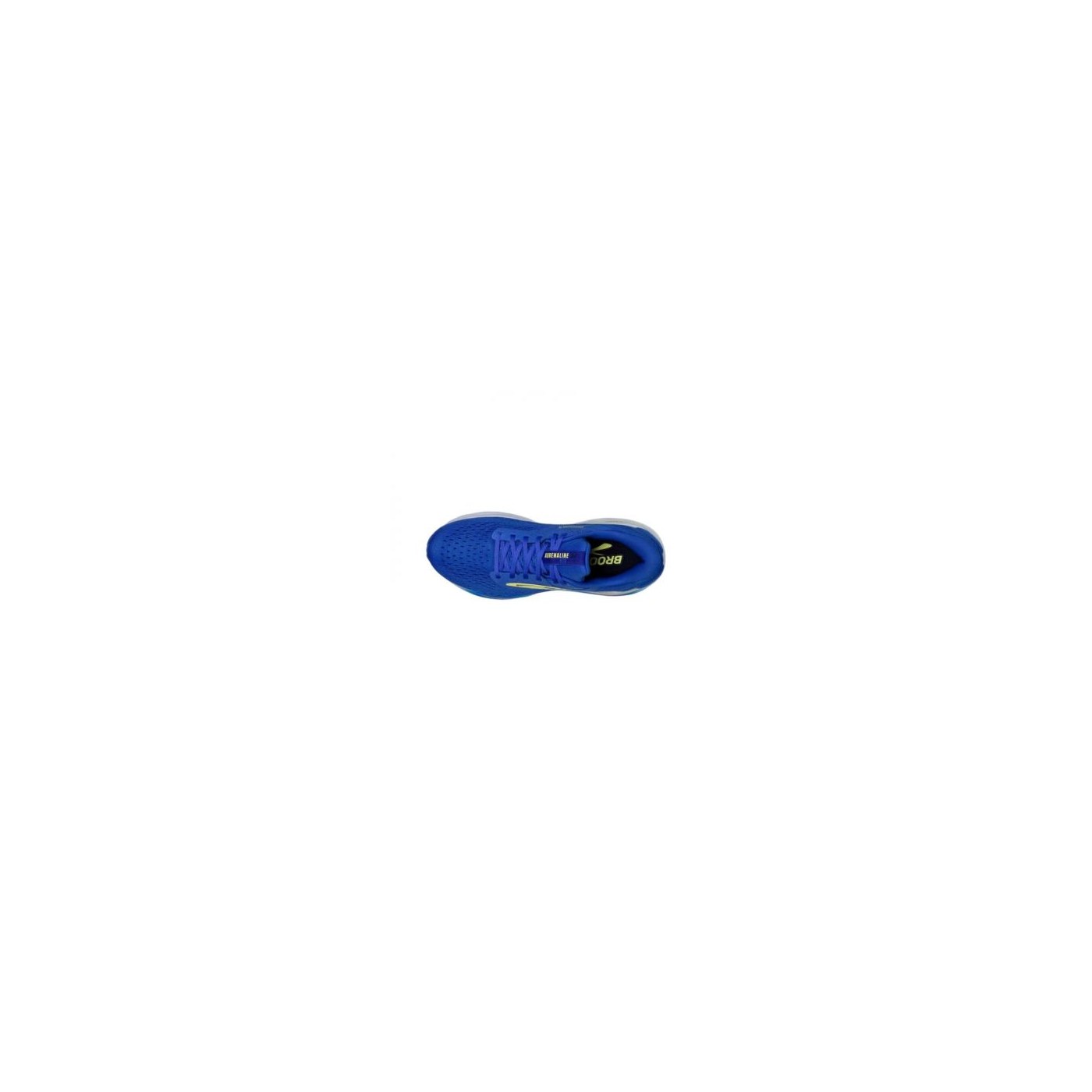
© Brooks Running, official photo used for editorial purposes
Key takeaways for your training
- GuideRails, not a medial post: the Brooks support system only steps in when your knee or hip drifts, without blocking a naturally neutral stride. It's more comfortable and more natural than a classic EVA post.
- 12 mm drop: ideal for heel strikers, returning runners and runners with a history of Achilles tendinitis. If you usually run in less than 8 mm, make the transition gradually.
- BioMoGo DNA = durability: this adaptive foam is built to last (700 to 900 km) without packing out. That's its big advantage over PEBA foams, which are more propulsive but less durable.
- Available in widths: Brooks offers B (standard), D (wide) and 2E (extra wide). For wide feet, the Adrenaline GTS 24 is one of the few stability daily trainers to offer this choice in France.
- €128 in 2026: with the GTS 25 now on the market, the GTS 24 is discounted at many retailers. Now is the best time to buy if you want a reliable stability shoe.