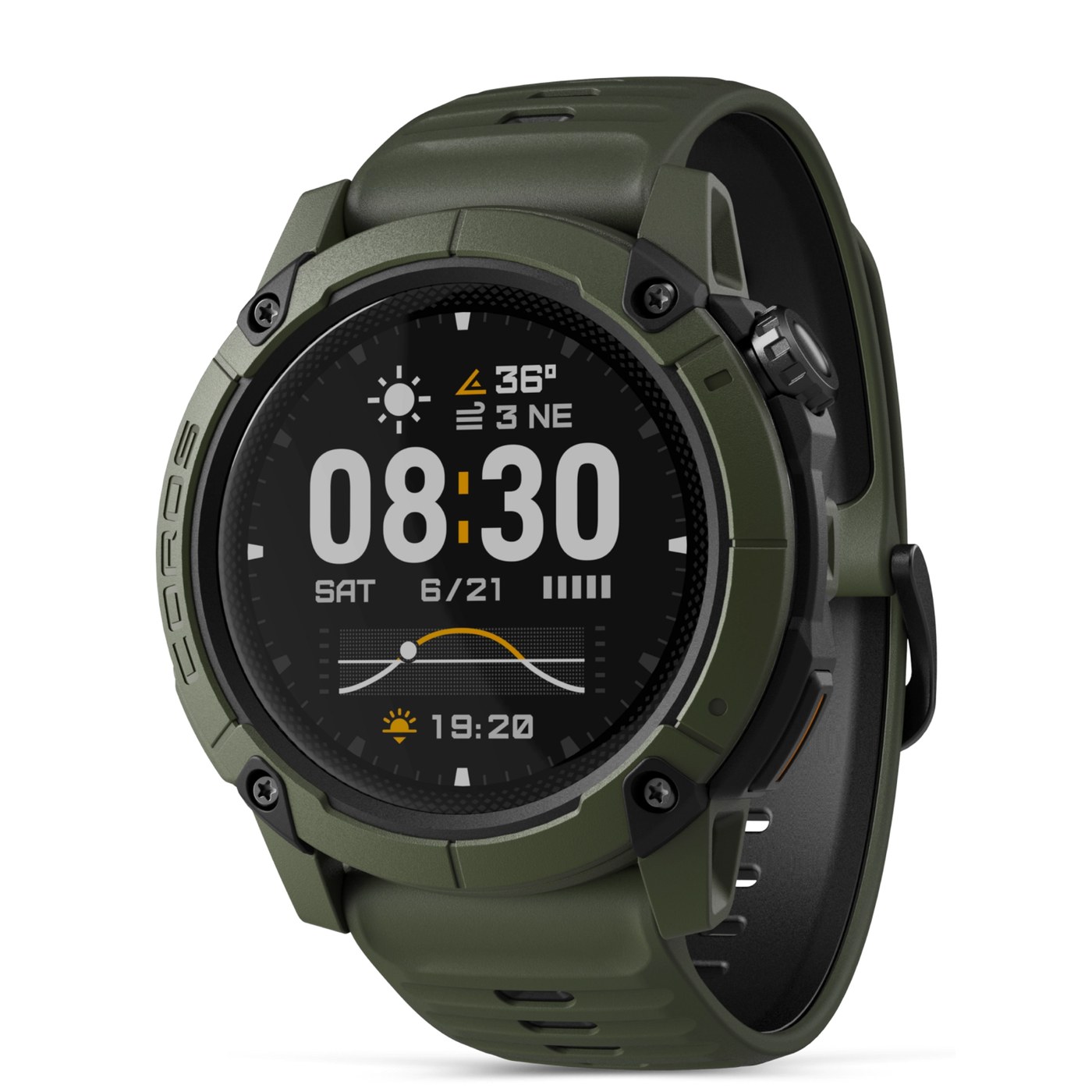
Released in France on August 19, 2025, the COROS Nomad opens a new segment for the Chinese brand: the affordable adventure watch. A 47.8 mm case in fiber-reinforced polymer with an aluminum bezel, a 1.3-inch MIP touchscreen with a rotating crown, dual-frequency multi-constellation GNSS, 30-second ECG, free worldwide color topographic offline maps and geotagged voice notes… all for €369. The question is whether this middle ground between the road-focused Pace Pro and the titanium APEX 4 earns a place in your RunMorph training plan.
COROS Nomad Review: 22-Day Battery, Wrist ECG, Color Offline Maps
8.5/10
COROS Nomad: the brand's first adventure watch, without the titanium premium
The Nomad looks like no other COROS. Until now, the lineup was split between the Pace 4 (road running, €269), the Pace Pro AMOLED (premium road, €349), the APEX 4 (titanium ultra trail, €499.99) and the Vertix 2S (high-end expedition). The new model fills the "accessible outdoor" gap: long battery life, color offline maps, safety and navigation features, but without the bill for Grade 5 titanium and sapphire glass.
RunMorph's advice. The Nomad is built for the runner-hiker who mixes trail running, long hikes, bikepacking and "24/7" days on the wrist. If you mostly do road intervals and want a flattering display, look at the COROS Pace Pro instead. If your playground is technical ultra trail or mountaineering, the COROS APEX 4 will be more durable and more accurate on GPS. But for 70% of versatile runners, the Nomad opens the door to COROS mapping for €130 less than the APEX 4.
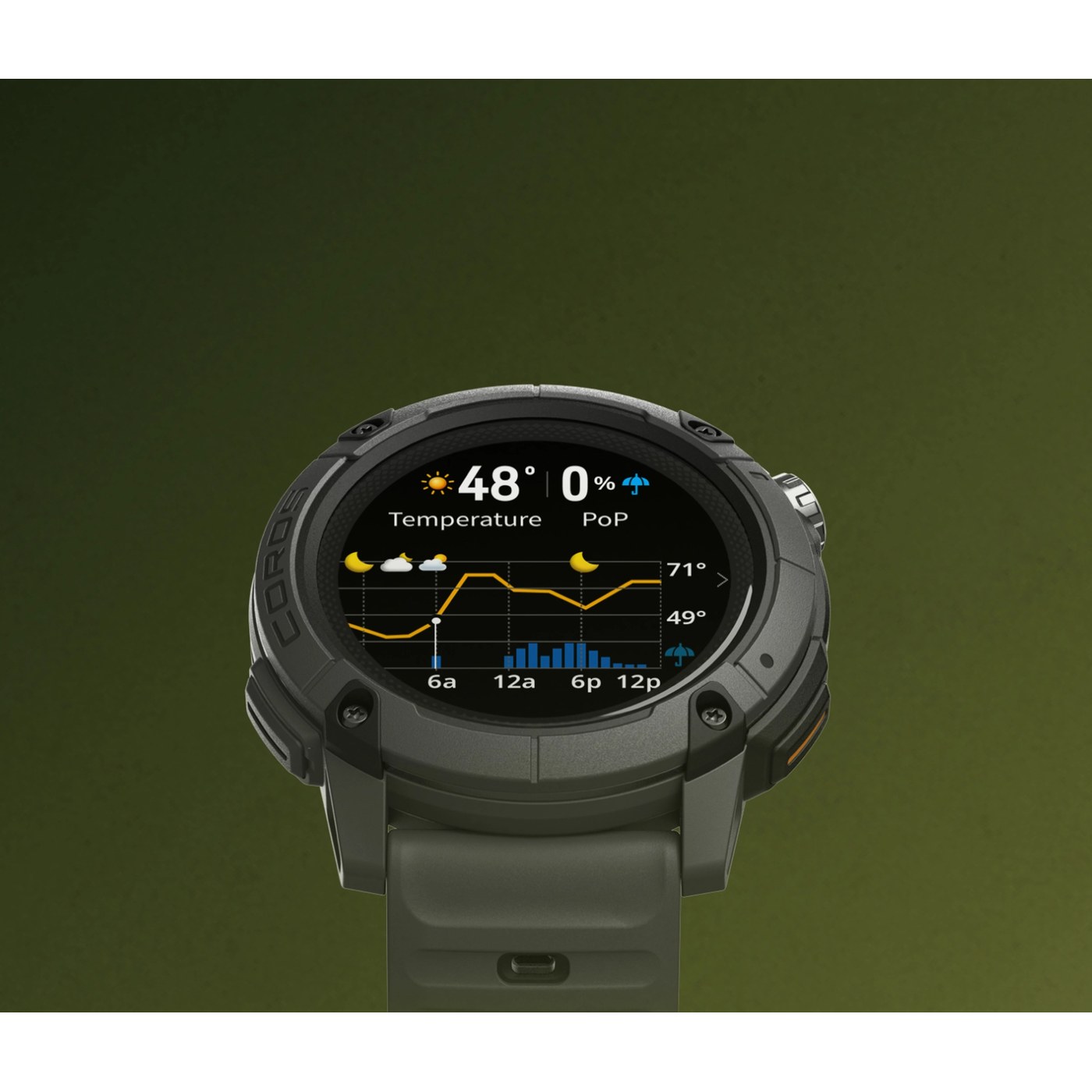
© COROS, official photo used for editorial purposes
Objective specs
| Brand | COROS |
| Model | Nomad |
| Official release | August 19, 2025 (France) |
| Case size | 47.8 x 47.8 x 14.8 mm |
| Weight | 61 g (silicone strap) / 49 g (nylon strap) |
| Display | 3rd-generation MIP touchscreen, 1.3 inch, 260 x 260 px, Always-On, night mode |
| Glass | Reinforced tempered mineral glass |
| Bezel / case | Fiber-reinforced polymer + aluminum alloy, steel dial |
| Strap | Silicone or nylon, 24 mm wide, quick release |
| Smartwatch battery life | Up to 22 days (daily use with sleep and stress tracking) |
| GPS battery life | 50 h GPS All Systems, 34 h dual-frequency GNSS, 15 h All Systems + music, 14 h dual-band + music |
| GNSS | Dual-frequency L1+L5 multi-constellation: GPS, GLONASS, Galileo, BeiDou, QZSS |
| Sensors | Optical heart rate, 30 s ECG (non-medical), SpO2, HRV, barometric altimeter, accelerometer, gyroscope, 3D compass, thermometer |
| Microphone | Dual mic with noise reduction (Voice Pins voice notes, audio controls) |
| Mapping | Free worldwide color offline maps + regional topo maps + street names + POI + turn-by-turn + Back to Start |
| Sport profiles | 40+ (running, trail running, cycling, swimming, skiing, hiking, fishing, mountaineering) |
| Music storage | 32 GB of offline MP3 via Bluetooth headphones (no native Spotify/Deezer) |
| Contactless payments | No |
| Water resistance | 5 ATM (50 m, surface water activities) |
| Smartphone connection | Bluetooth + 2.4 GHz Wi-Fi for syncing and map downloads |
| Processor | AMBIQ Apollo 510 (the fastest ever fitted to a COROS) |
| Charging | USB-C, under 2 h for 0-100%, cable not included |
| Colors | Forest Green, Tan, Dark Gray |
| Official price | €369 |
Who is the COROS Nomad for?
The runner-hiker who mixes several outdoor sports
This is target profile number one. Your weeks stack up 3 trail runs, 2 easy runs on the road, a long hike on Sunday and a bikepacking trip every month. You want a watch that never runs out of battery on you, pulls up a color map when the signal disappears and tracks your daily life without a charge every three days. The Nomad ticks every box. The 22 days in connected mode cut the charging hassle of rival AMOLED watches by a factor of ten, and the 50 hours of GPS All Systems cover 4 to 5 ultras without plugging in.
The mid-distance trail runner looking for real maps
Color topographic offline mapping is the core argument. You are preparing a 50 km mountain race, you follow a GPX imported from Komoot, and you want the watch to show streets, trails and points of interest without relying on your phone. The Nomad does it for €369, where the COROS APEX 4 or the Garmin Forerunner 970 cost €130 to €380 more. The rotating crown adds real comfort when you zoom the map with gloves on or wet hands.
The ultrarunner who wants serious physiological tracking without paying for titanium
You run long distances and want to understand your training load, fitness, recovery, sleep stages and HRV. The COROS EvoLab suite gives you all of it: Training Load, Base Fitness over 42 days, Training Status, Recovery Timer, Wellness Check. The 30-second wrist ECG, until now reserved for the Polar Vantage V3 and the Apple Watch Ultra 3, completes the picture. If you accept an MIP display instead of a flashy AMOLED, the feature-to-price ratio is unbeatable.
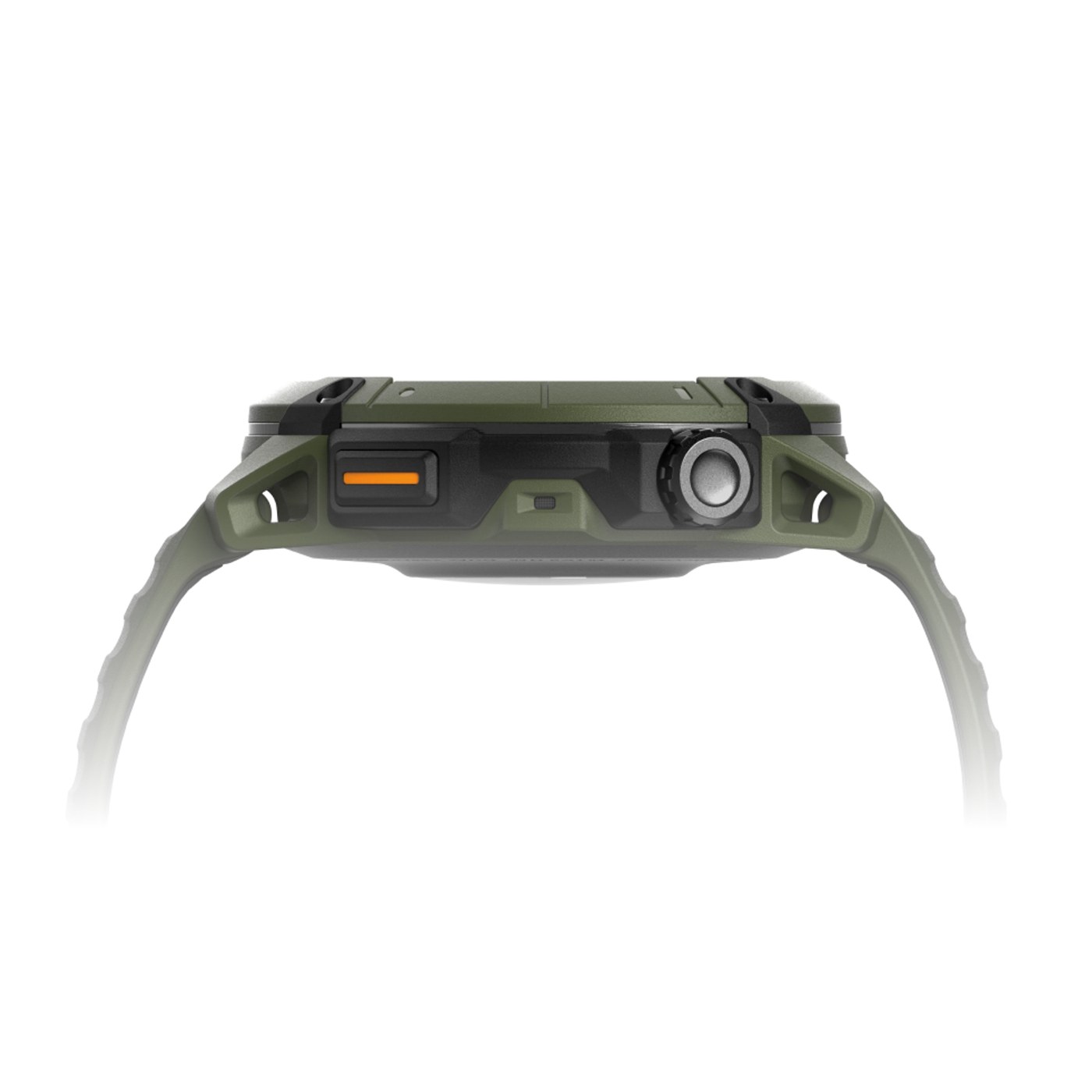
© COROS, official photo used for editorial purposes
GPS accuracy and heart rate sensor
The COROS Nomad carries the same dual-frequency L1+L5 GNSS module as the APEX 4 and the Pace Pro, across five constellations (GPS, GLONASS, Galileo, BeiDou, QZSS). Out on the trail, this level of accuracy shows mostly in tricky settings: trails in dense forest, canyons, tight turns along the coast, city streets hemmed in by tall buildings. Dual-frequency mode limits signal bounce and keeps the track clean, at the cost of battery life cut to 34 h. In standard All Systems mode (50 h), accuracy stays very solid for 95% of runs.
The optical heart rate sensor gets a mixed verdict. At a steady pace (easy run, long run, hike), readings are reliable and consistent. In short intervals with fast intensity changes, you may notice a slight lag before it locks on, a flaw shared by most optical sensors. For pure max-effort interval sessions, the COROS HR Monitor (€89) or the Garmin HRM 600 paired over Bluetooth remain the benchmark. The 30-second wrist ECG, for its part, handles morning HRV and daily stress tracking: useful for understanding recovery, not designed for medical use.
Maps and navigation: the Nomad's real pivot
This is the core differentiator against the rest of the entry-level and mid-range COROS lineup. Over Wi-Fi, the Nomad downloads free worldwide color maps with street names and points of interest, plus detailed regional topographic maps (contour lines, trails, peaks, water points). The AMBIQ Apollo 510 processor makes real-time zooming and panning smooth, which was not the case on previous generations.
Three navigation features really matter day to day. Back to Start retraces your exact route without a preloaded course, perfect when fog rolls in or when you leave an area you thought you knew. Off-course alert warns you as soon as you leave the GPX, and checkpoints give you a quick read of the distances between waypoints. The rotating crown lets you zoom and scroll the map without touching the screen, a clear advantage once you wear gloves, sweat or it rains.
Training and recovery metrics
COROS charges no subscription for its physiological suite, and that is a key point against the competition. The Nomad carries the whole of EvoLab: daily and weekly Training Load, Base Fitness calculated over 42 days with extra weight on recent activities, Training Status (short-term and long-term impact), Recovery Timer with "rest / progressive / push" recommendations, and Wellness Check, which pulls HRV, SpO2, respiratory rate and stress into a single morning view.
For running, you get estimated VO2max, Race Predictor over 5 benchmark distances, Virtual Pacer, virtual racing and a running form test (requires the POD 2). Day to day, the watch tracks sleep by stage (light, deep, REM), with a quality score, overnight SpO2 and waking HRV. The readout is more educational than with some rivals: the watch tells you why it puts your recovery at 18 hours, not just the number.
Real-world battery life
On paper, COROS claims 22 days in connected mode with sleep tracking, 50 h GPS All Systems, 34 h in dual-frequency, 15 h All Systems with Bluetooth music, and 14 h dual-band with music. In practice, count on 16 to 18 days of real use with the always-on display, notifications on and 4 GPS sessions a week.
On a typical 4 h run in GPS All Systems + music, the battery drops about 25%. On a 12 h ultra in dual-band without music, you finish with around 30% left. A full charge takes under 2 h via USB-C, and this is where we flag the only real misstep in the box: the cable is not included. If you don't already own a COROS charger, budget €15 more or a compatible proprietary cable.
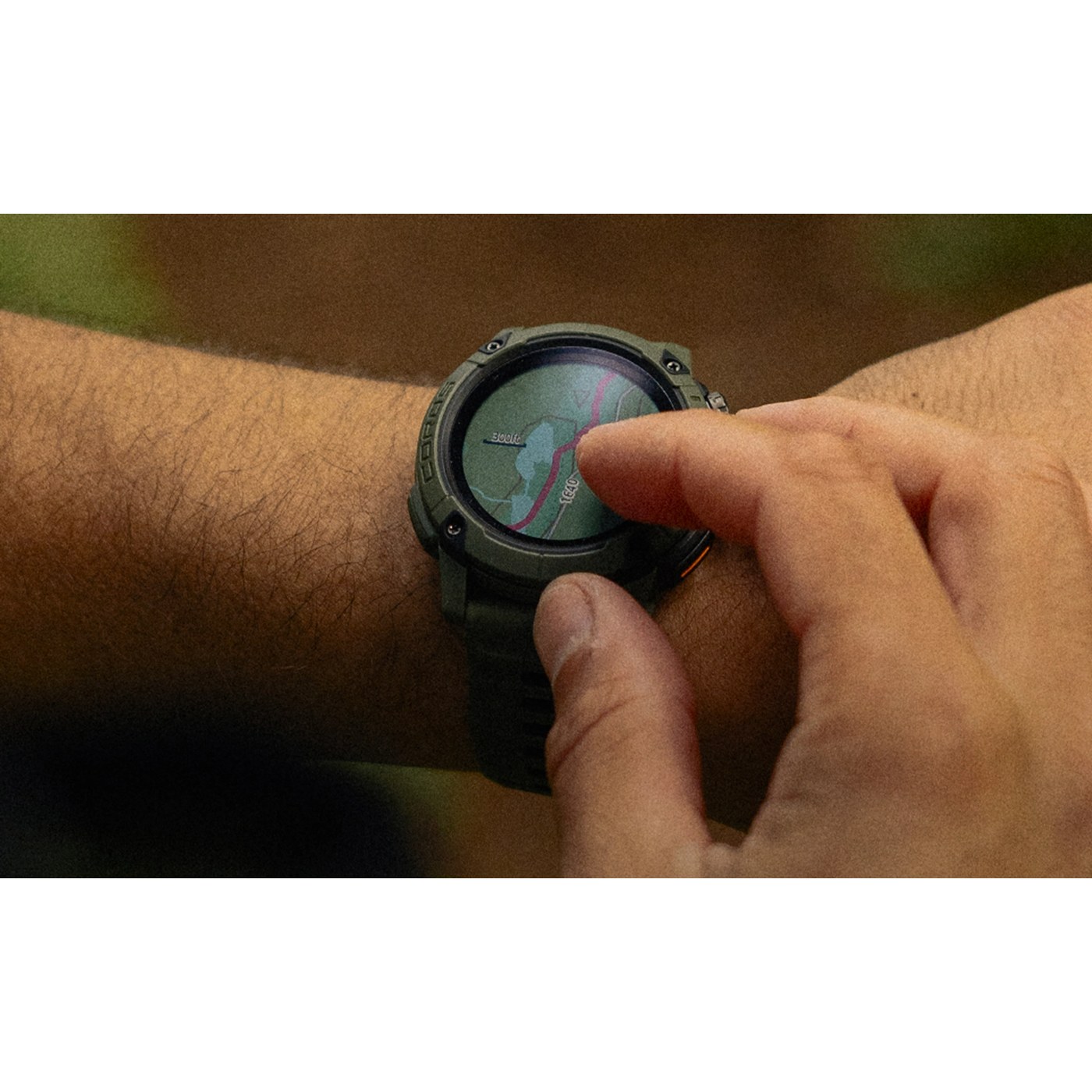
© COROS, official photo used for editorial purposes
How it stacks up against the competition
Against the COROS Pace Pro (€349, 1.3-inch AMOLED, 38 h GPS All Systems, worldwide offline maps), the Nomad gains 12 h of GPS battery life, the ECG sensor, geotagged voice notes and the rotating crown, but gives up the AMOLED display and weighs 12 g more. Choose the Pace Pro if you mostly do road intervals, the Nomad if your playground spills over into trails and hiking.
Against the COROS APEX 4 (€499.99 in 46 mm, 1.3-inch transflective MIP touchscreen, 65 h GPS All Systems, Grade 5 titanium, sapphire, ClimbTracker), the APEX gains 15 h of GPS battery life, a more durable titanium case and scratch-resistant sapphire glass. The Nomad is €130 cheaper and 9 g lighter, and adds the ECG and the Adventure Journal ecosystem. If you head out on abrasive winter runs or ultras beyond 50 h, the APEX 4 is the safer bet.
Against the Suunto Vertical 2 (€599 in steel, 1.5-inch 2000-nit LTPO AMOLED, 65 h multi-band GPS, 110 h Ultra, LED flashlight, 10 ATM water resistance, depth gauge), the Vertical 2 outclasses the Nomad in display brightness, ultra battery life and toughness (sapphire glass, 10 ATM). The Nomad comes in €230 cheaper, adds the ECG and keeps the Adventure Journal ecosystem. For runners whose efforts stay under 12 h, the Nomad does the job; for multi-day winter expeditions, the Vertical 2 earns its premium.
How to fit it into your RunMorph training plan
The Nomad ticks the boxes for a trail-focused or mixed road-trail running plan. Start a RunMorph plan targeting a half marathon, marathon, short trail race or ultra: the watch tracks your weekly volume, calculates each session's impact on Base Fitness, fires recovery alerts if you stack up too much, and suggests the right intensity for the day through Training Status. Offline maps are a game changer for fully self-supported long runs, especially at a training camp or on a prep adventure raid.
Pairing with an external heart rate strap (Bluetooth) is still recommended for threshold and max-effort interval sessions, where accuracy matters. For everyday use, the optical reading is more than enough, and the morning Wellness Check keeps you from pushing hard on a day when your body said "no".
The RunMorph coach's verdict
Score: 8.5/10. The COROS Nomad delivers on its bet: bringing color topographic offline maps and wrist ECG down to €369 without sacrificing battery life or toughness. The deliberate trade-off of an MIP display against rival AMOLEDs holds up in the field (readable in full sun, modest power draw), even if first impressions may surprise eyes used to 2000-nit AMOLEDs. The 47.8 mm case and 61 g call for a reasonably sized wrist (over 17 cm around to stay comfortable), and leaving the USB-C cable out of the box remains a questionable call at this price.
Above all, the Nomad opens a new position for COROS: the "outdoor Swiss Army knife watch" the brand didn't have yet. For the versatile runner-hiker who wanted COROS maps without paying for titanium, it's the smartest buy in the 2026 lineup.

© COROS, official photo used for editorial purposes
Key takeaways for your training
- Battery life for heavy weeks: 22 days of daily wear and 50 h of GPS take charging stress off your plate during a training camp or an adventure raid.
- Color offline maps: street names, regional topo, turn-by-turn, Back to Start without a preloaded GPX, all free and at €369.
- 30 s ECG + morning HRV: a daily read on stress and recovery that complements the EvoLab suite.
- Rotating crown + touchscreen: you control the map with gloves on or in the rain without losing any comfort.
- MIP display trade-off: what you lose in AMOLED "wow" factor, you gain in battery life and full-sun readability. Choose based on your main use.