A 2-inch screen, a 7.9 mm case, a flashlight and routable maps: on paper, the Garmin Venu X1 ticks every box. Out on the road, four reviews read in full tell a different story. The GPS is single-band, the battery drains fast and the touch interface doesn't suit every runner. At €799.99, the question is simple: who is it for?
© Garmin, official photo used for editorial purposes
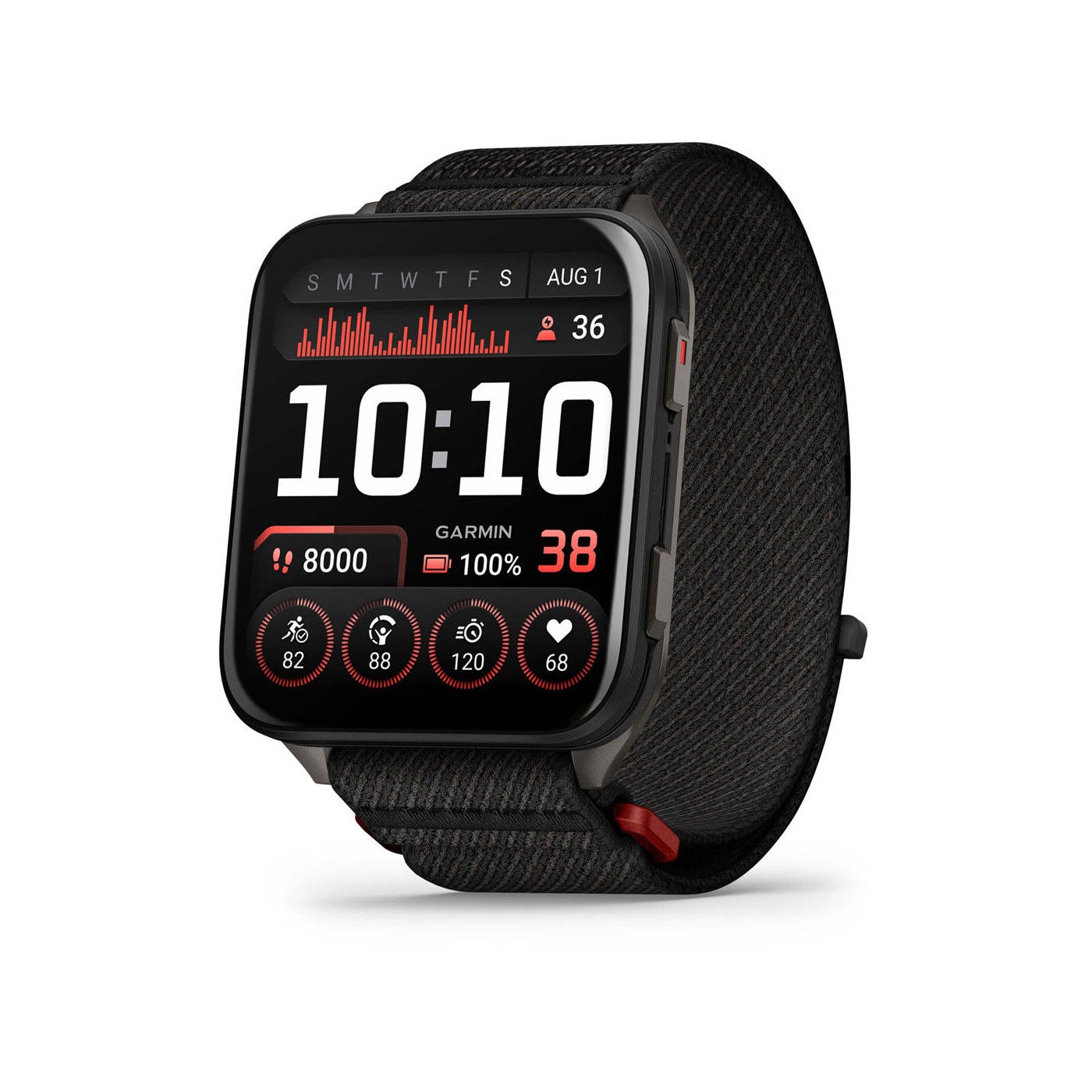
Garmin Venu X1: the lifestyle watch playing in Forerunner territory
Garmin launched the Venu X1 on June 12, 2025. That makes it 16 months old, long enough for several testers to have worn it for weeks on end. The format breaks with the rest of the lineup: a rectangular case, only two buttons, no dial. It looks like an Apple Watch, and that's no accident.
The price breaks with the lineup too. €799.99 at full price, €50 more than the Forerunner 970 (€749), which does have multi-band GPS. Retailers listed it between €569 and €699 in summer 2025, according to prices logged in a French review. Keep that in mind: on sale, the math changes.
RunMorph's advice: if running is your priority, the Forerunner 970 does better for €50 less. If you mostly want an everyday watch that runs well, the Venu 4 at €549 has the multi-band GPS the X1 lacks. The Venu X1 earns its place with its screen and slim build, not its performance.
© Garmin, official photo used for editorial purposes
Who is the Venu X1 for?
The road runner running for fitness
That's its target. Three or four runs a week, one half marathon a year, and the urge to wear the same watch into meetings. The screen reads at a glance, even while pushing a stroller, according to an American tester. The heart rate follows pace changes well.
The trail runner
Wrong pick beyond half a day out. Routable maps are a real plus, but a French review measured about 7 hours in all-systems mode. A 50K in the mountains often takes longer. And the bezel-less case worried the same tester, who says he "shook" when he knocked it.
The triathlete or racer
No. Two buttons, swiping through screens mid-effort, no multi-band: in a city 10K race, one tester saw the track leave the road and inflate the distance. For this profile, the Forerunner 570 or the Forerunner 970 are built for the job.
GPS accuracy and heart rate sensor: what the reviews say
Let's start with the sore point. The Venu X1 has no dual-frequency GPS. It listens to every constellation at once, but on a single band. A specialist French site calls that choice "hard to accept" on a premium watch in 2025. We agree.
In practice, it depends a lot on where you run. In open terrain, a French tester found the track "roughly as good" as a Coros Pace 3 in multi-band, with "excellent" total distance. In forests and cities, it's messier. The same tester saw the track drift off the route, more scattered than a Forerunner 970 in multi-band. And in a 10K run in 32:57 in London, another tester saw the Venu X1 leave the road twice, add distance and skew the displayed pace. The Forerunner 970, worn at the same time, matched the official distance more closely.
A third tester, in the US, noticed nothing of the kind: the track hugged the right side of the street and held tight turns, on par with a Forerunner 570. Bottom line: if you mostly run in the countryside or on open roads, you won't see the difference. If you run between buildings or under trees, you will.
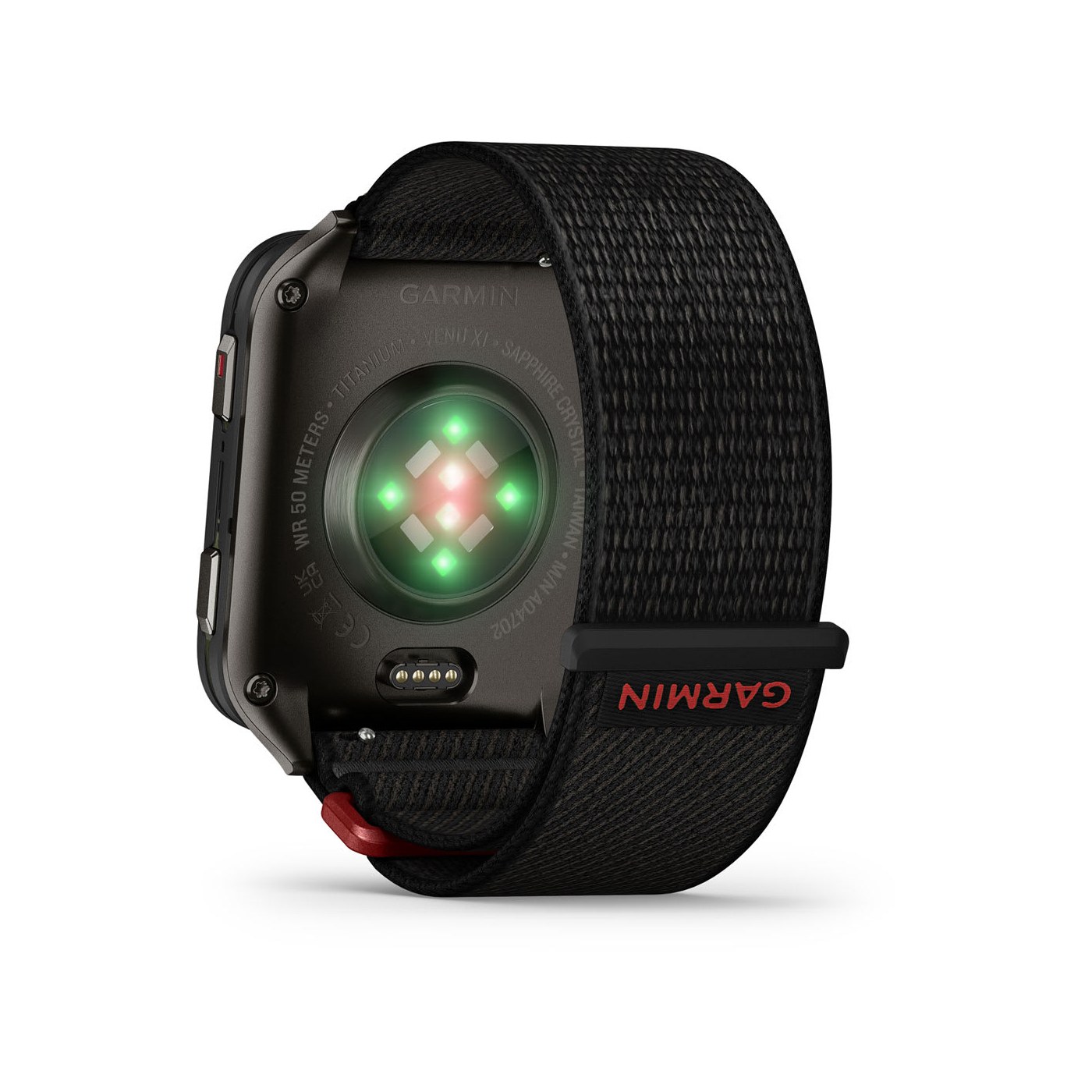
Heart rate is the watch's strongest card. Against an HRM 600 chest strap, the Elevate V5 sensor shows average and max heart rate within 0 or 1 bpm, according to the most thorough French review. The curves follow surges. Only a few spikes show up when hiking. The tester's tip, which we back: tighten the strap one or two notches for running.
The altimeter keeps up too. On a forest route, 136 m of elevation gain for the Venu X1, against 130 m for a Forerunner 970 and 136 m for a Coros Pace 3. Less than 10 m apart. Nothing to fault.
© Garmin, official photo used for editorial purposes
Maps and navigation: the big screen finally pays off
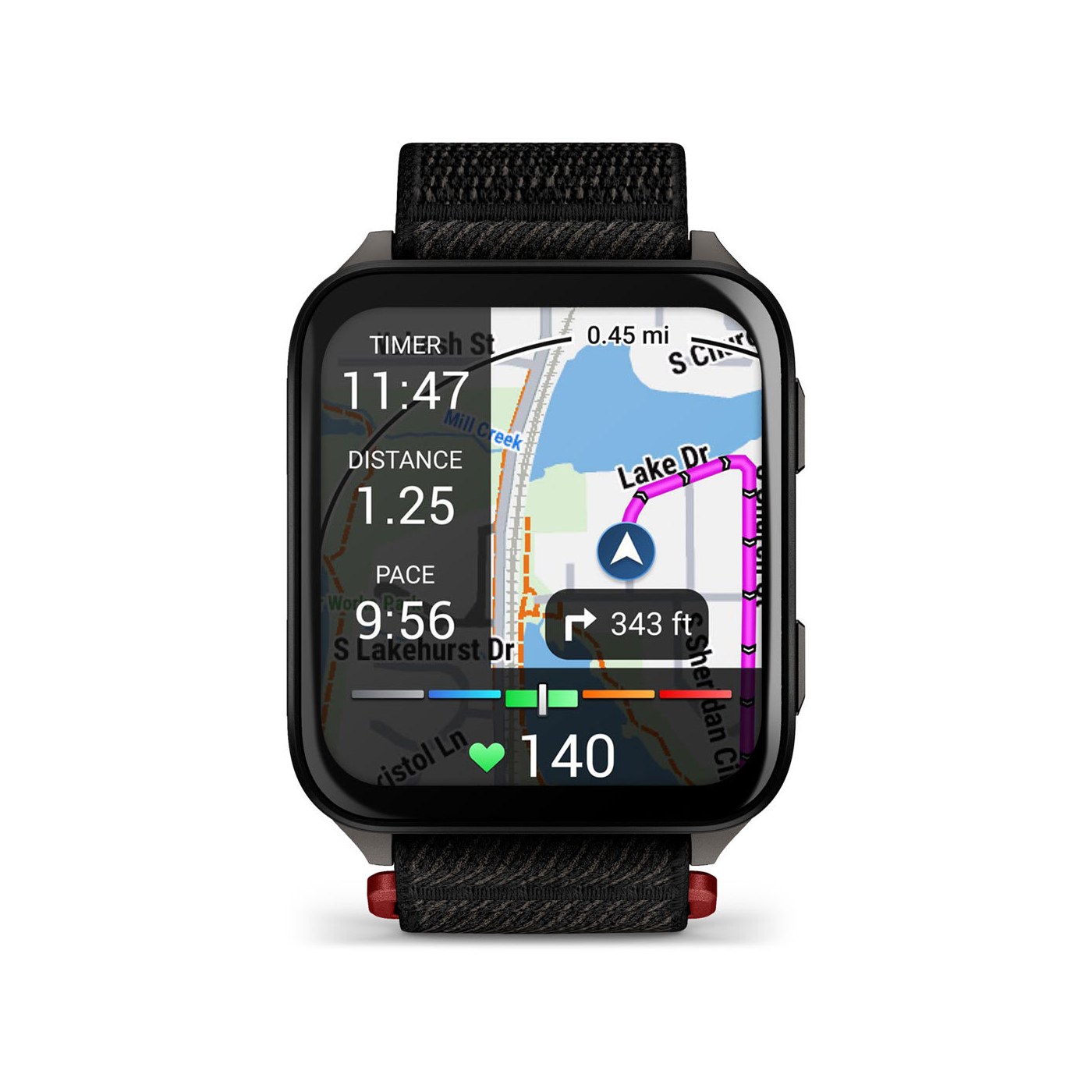
On 2 inches, a map becomes readable. The maps are routable: turn-by-turn directions, back to start, loop generator, rerouting when you take a wrong turn. You pinch to zoom, like on a phone. A French tester calls the rendering "superb".
The same tester points out a clear flaw: heavy lag when panning or zooming the map. He puts it down to the routable maps being recalculated, something rivals with simpler maps don't have to do. For following a route, it's fine. For finding a turnoff at a junction, you'll wait a second or two with every gesture.
Training and recovery metrics
You get the usual Garmin ecosystem: VO2 max, training status, training readiness, sleep tracking, heart rate variability. A French review also lists endurance and hill scores, ClimbPro, live Strava segments and Stamina. It notes that the latest additions from the Forerunner 970 are missing.
For a recreational runner, that's plenty. The morning readiness score is the most useful: it tells you whether today's hard session is a good idea or whether you should push it back.
Real-world battery life: the true cost of a slim case
Garmin claims 8 days in smartwatch mode and 16 hours in GPS-only mode. Testers measure less. With the always-on display, a French tester got 2.8 to 3 days, and an American tester charged roughly every two days with one GPS run a day.
During runs, the numbers diverge sharply. A French review measured about 7 hours in all-systems mode, half the claim. During a 10K, another tester logged 7.2% battery used per hour, roughly 14 hours in total. Why such a gap? Most likely the screen settings: on an AMOLED this big, brightness and always-on mode weigh heavily. The Forerunner 970 used 4.8% per hour in the same test.
Our take: plan on 7 hours as a safety baseline until you've checked with your own settings. For a marathon, no problem. For a 60K trail race, it's a gamble.
© Garmin, official photo used for editorial purposes
Ease of use: touchscreen or buttons, testers disagree
Two buttons, START and BACK. No dial. During a workout, you swipe through data screens with your finger. A French tester finds this navigation "intuitive and pleasant" day to day but "poorly suited to sport". In London, another tester found it harder with sweaty fingers than a five-button Forerunner.
The American tester says the opposite: the screen responds quickly and reliably, even in rain and sweat. Who's right? It depends on what you do while running. If you start your workout and don't touch anything after, the touchscreen is enough. If you switch screens on every interval, you'll miss the buttons.
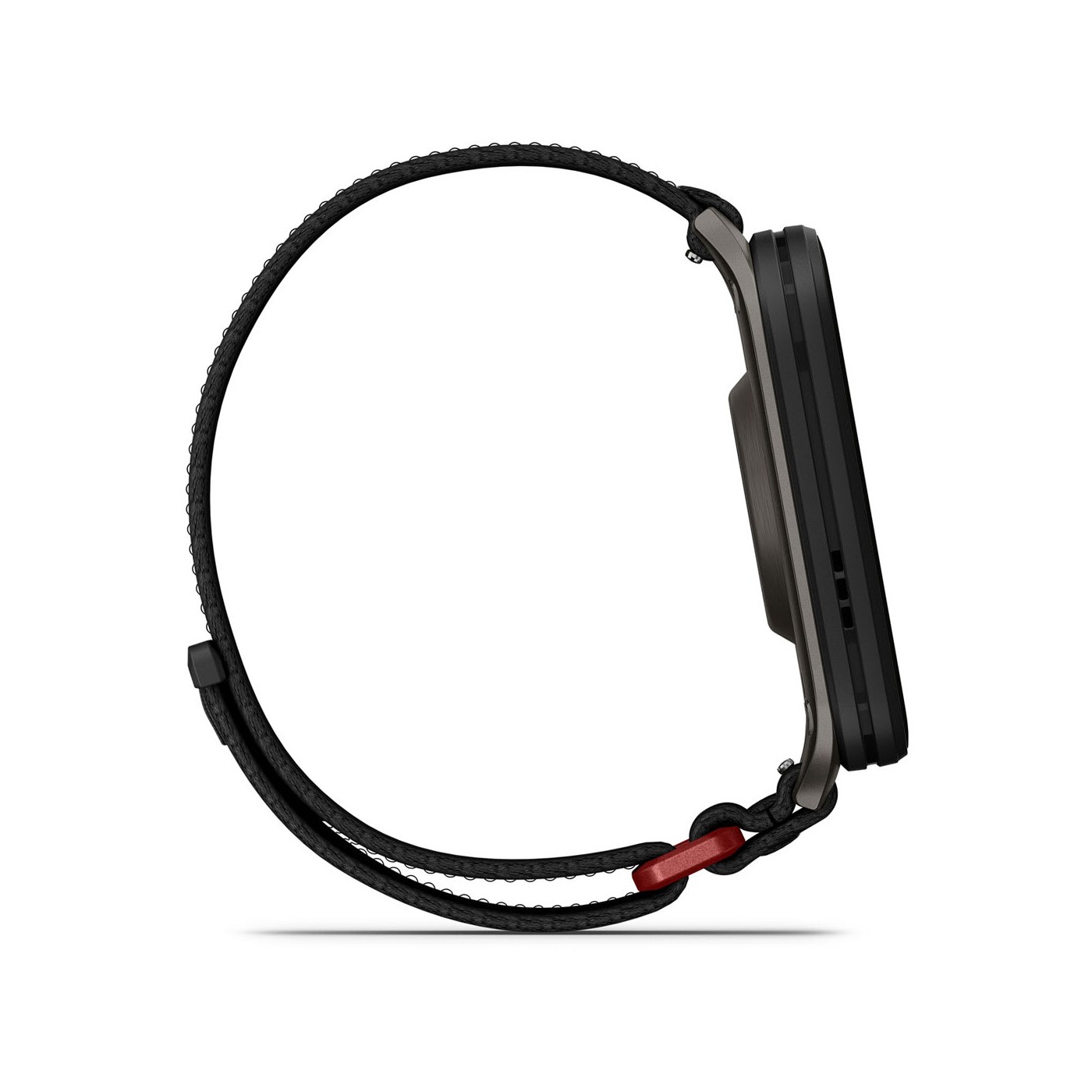
As for comfort, the 41 x 46 mm case is big. On a 15 cm wrist, a French tester finds it "a bit bulky". The nylon strap runs large and stays slightly loose even on the tightest notch, according to the American tester. The 40 g weight, though, disappears on the wrist.
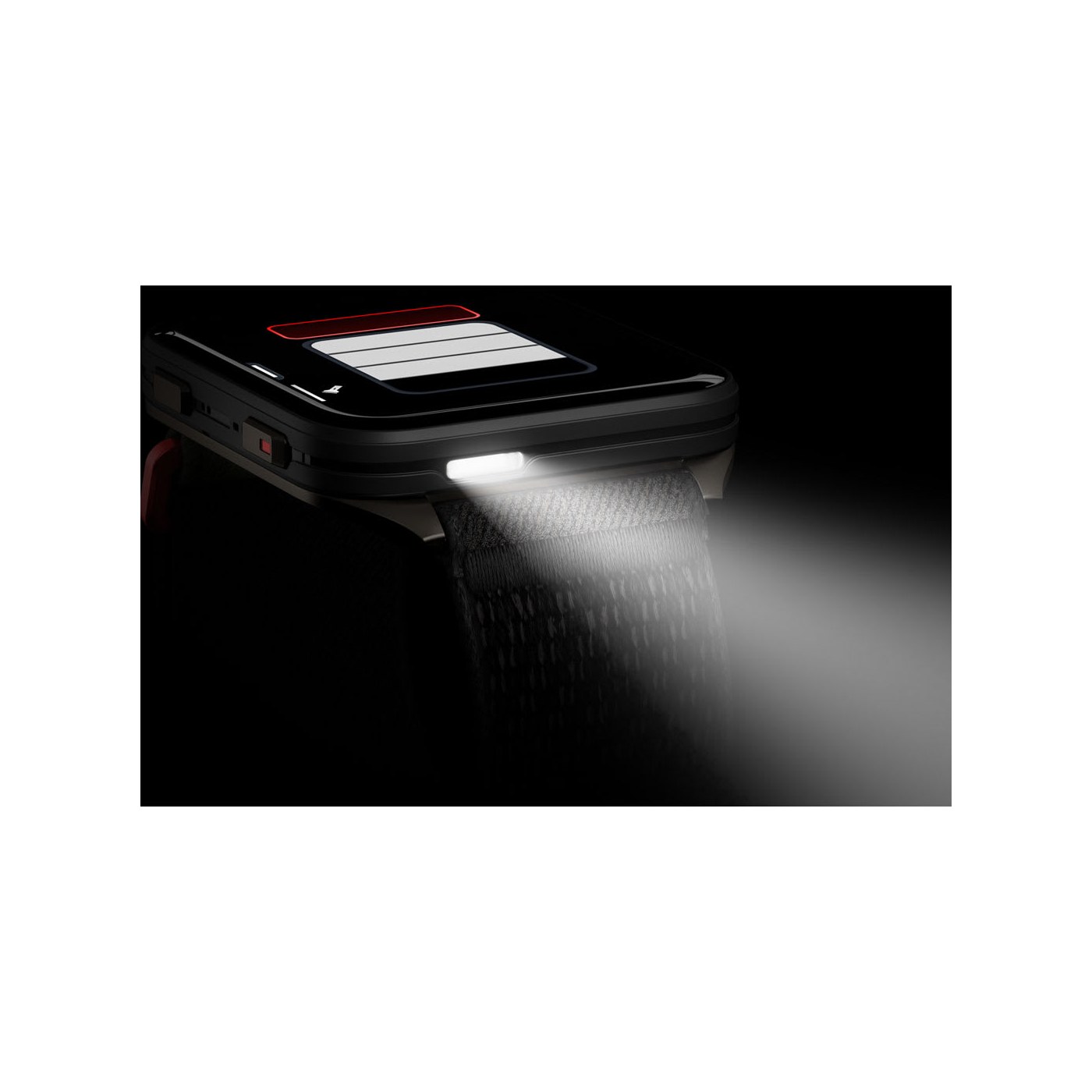
The flashlight bails you out when you forget your headlamp. It only has two LEDs, against three on the Forerunner 970 and the fenix 8, so the white light is weaker.
© Garmin, official photo used for editorial purposes
Venu X1 vs Forerunner 970 vs Venu 4: the comparison
| Criterion | Garmin Venu X1 | Forerunner 970 | Venu 4 |
|---|
| Official price | €799.99 | €749 | €549 |
| Multi-band GPS | No | Yes | Yes |
| Maps | Yes, routable | Yes, worldwide | No full mapping |
| Flashlight | Yes, 2 LEDs | Yes, white and red | Yes |
| Weight | 40 g | 56 g | Metal case |
| Claimed GPS battery | 16 h (GPS only) | 21 h (multi-band) | Rated 8,5/10 in our review |
| Buttons | 2 | 5 | Classic watch format |
The takeaway is simple. The Forerunner 970 beats the Venu X1 on everything that matters for running: multi-band, battery, buttons, and it costs less. The Venu X1 wins on thinness, weight and screen size. The Venu 4 costs €250 less and has multi-band, but no real mapping: if you follow routes, the X1 keeps the edge. Against the Apple Watch Series 11, the Venu X1 holds on to offline maps and Garmin's training ecosystem.
Pros
- Elevate V5 heart rate within 0 or 1 bpm of a chest strap on average
- 2-inch AMOLED screen readable in full sun
- 7.9 mm and 40 g: the thinnest Garmin
- Routable maps with turn-by-turn navigation
- Accurate altimeter, flashlight, mic, 32 GB of music
Cons
- No multi-band GPS at €799.99
- About 7 h measured in all-systems mode by one tester
- Map lags when zooming and panning
- Two buttons, touch navigation mid-effort
- One size only, large for slim wrists
How to fit it into your RunMorph training plan
For following a plan, the Venu X1 covers the essentials: logging your runs, measuring your heart rate, telling you whether you've recovered. Its reliable heart rate is a real asset for easy runs, where the classic mistake is running too fast.
A RunMorph 10K plan works out your target paces from your actual level and adjusts them week after week. Load them onto the watch and let it guide you. For track intervals, keep an eye on instant pace: without multi-band, it can wobble near stands or trees. Trust your lap time instead.
RunMorph Coach's verdict
RunMorph score: 7/10.
The Venu X1 is a good-looking watch that runs well. Not a running watch. Its heart rate is excellent, its screen superb, its maps useful. But at €799.99, the lack of multi-band, real-world battery around 7 hours in all-systems mode for one tester, and touch navigation mid-effort weigh heavily.
Buy it if you want one watch for everyday life and runs under 7 hours, and you find it on sale. If you run with a time goal or go long on trails, get the Forerunner 970: it does better for less.