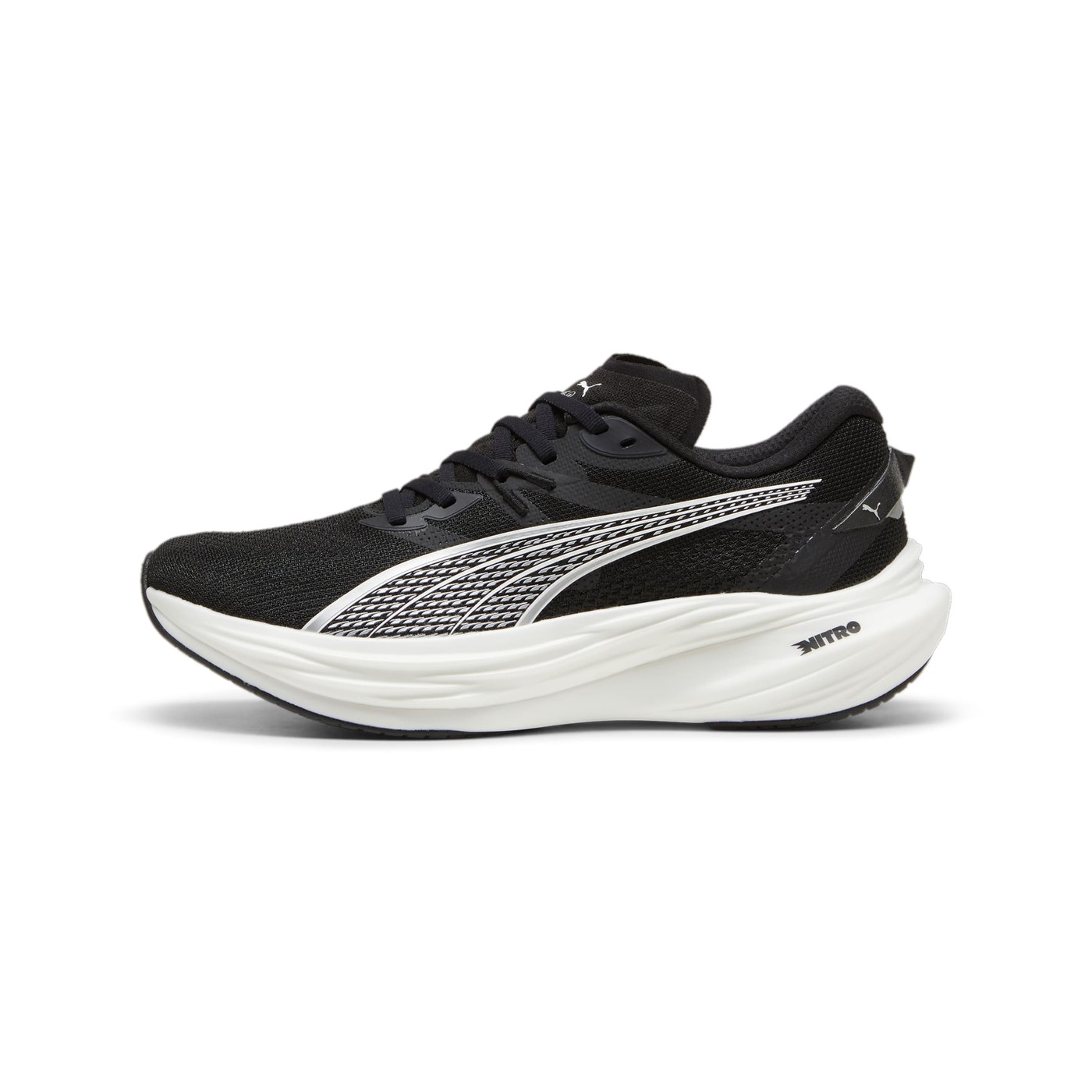
The Puma Deviate Nitro 3 is one of the very best carbon-plated daily trainers on the market. A versatile daily trainer with a full-length PWRPLATE carbon plate, nitrogen-infused NITROFOAM, a PUMAGRIP outsole with a strong reputation, 264 g and €170: sitting halfway between elite super shoes (€250-300) and conventional trainers, Puma delivers a shoe that does away with the usual trade-offs. As a coach, I've watched it go through the feet of about twenty athletes around me in 2024 and 2025: it ticks almost every box for a regular runner training for a half or a full marathon. Here's my full review, no punches pulled.
Puma Deviate Nitro 3 Review: A PWRPLATE Carbon Daily Trainer
8.5/10
Puma Deviate Nitro 3: the carbon daily trainer that changes the game
When Puma launched the third generation of its Deviate Nitro on July 1, 2024, the German brand knew exactly where it wanted to strike: the versatile carbon daily trainer segment, dominated until then by the Saucony Endorphin Speed 5, the Hoka Mach and the Asics Magic Speed. The Deviate Nitro 3 takes the DNA of the Deviate Nitro Elite 3 (Puma's race-day super shoe) and turns it into a softer version, toughened up for mileage and tuned for your everyday training. You get a full-length PWRPLATE carbon plate, a nitrogen-infused supercritical NITROFOAM, a proven PUMAGRIP outsole, and a €170 price tag that puts it up against the Asics Magic Speed 5 at €180 and the Hoka Mach 7 at €160.
RunMorph's advice. If you're looking for a single pair to cover 80% of your sessions (easy runs, goal-pace work, long runs, even races up to the half marathon), the Deviate Nitro 3 is one of the best choices on the market right now. Compare it with the Asics Magic Speed 5 and the Adidas Adizero Boston 13, its most direct rivals. If you want a true race-day super shoe, look at the Puma Fast-R Nitro Elite 3 or the Nike Vaporfly 4 instead.
© Puma, official photo used for editorial purposes.
Objective technical data
| Brand | Puma |
| Model | Deviate Nitro 3 |
| Release date | July 1, 2024 (worldwide) |
| Type | Road, versatile carbon daily trainer |
| Drop | 10 mm |
| Stack height (forefoot / heel) | 26 mm / 36 mm |
| Weight (EU size 42) | 264 g (men's), 224 g (women's) |
| Foam | NITROFOAM (nitrogen-infused TPE) |
| Carbon plate | Yes, full-length PWRPLATE |
| Outsole | PUMAGRIP |
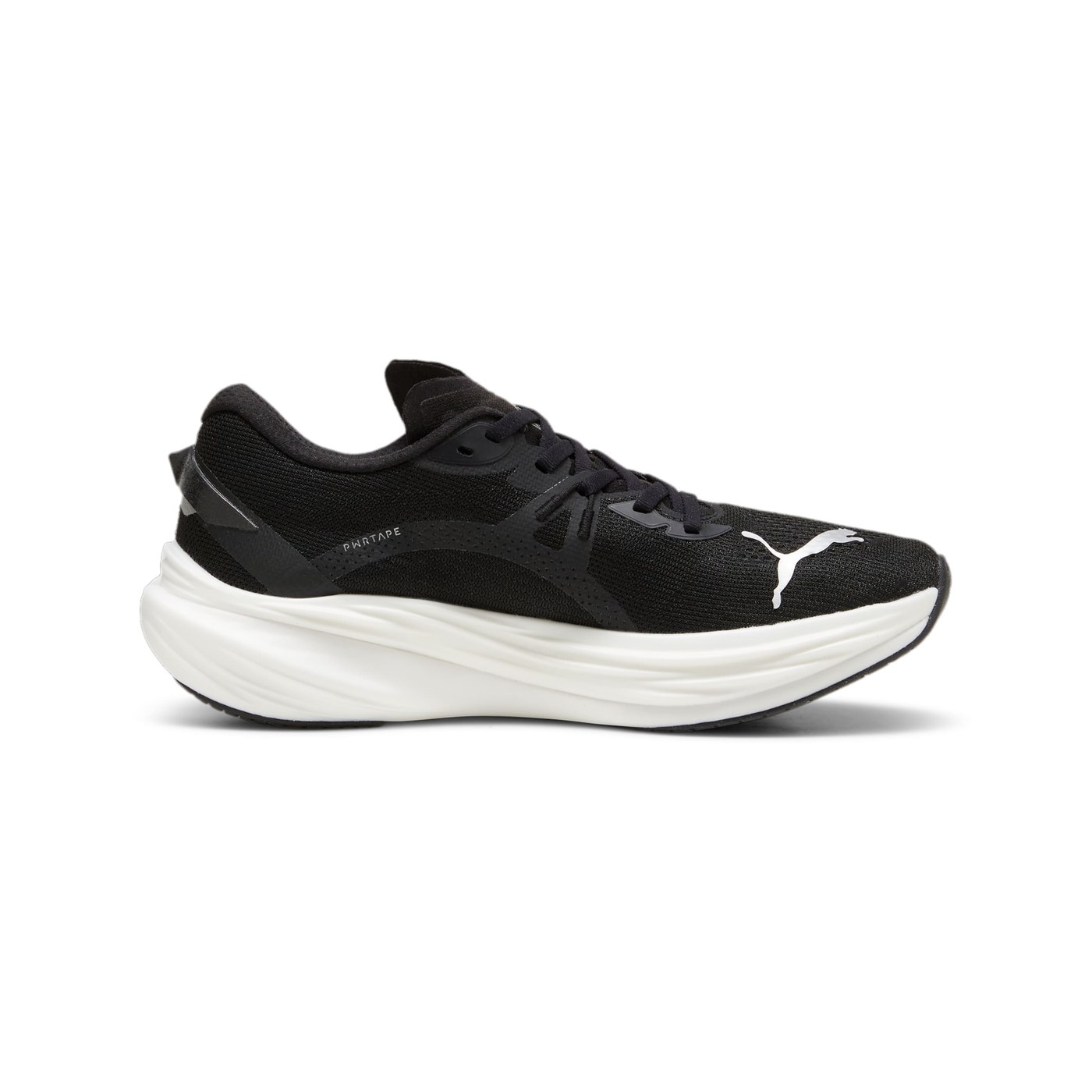
| Upper | Engineered mesh + PWRTAPE lateral reinforcement |
| Widths | Regular + Wide (women's) |
| Recommended distance | 5 km to marathon, easy runs included |
| Official price | €170 |
The verdict in 30 seconds
The Deviate Nitro 3 is a rare shoe: it solves the versatility + responsiveness + durability equation without giving up comfort. On foot, the feel is firm but welcoming, the NITROFOAM wakes up as soon as you push past 5 min/km, and the PWRPLATE does its job without forcing a set roll-through. You can run an easy 5:30/km in the morning and a threshold session at 4:00/km in the evening without switching pairs.
Its 3 strengths. First, energy return above 75% at the heel (independent lab measurements), which puts the Deviate near the top of the carbon trainer pack. Second, the PUMAGRIP, probably the best daily trainer outsole on the market for grip on wet roads. Third, the €170 price, €80 to €130 less than elite super shoes for very similar performance on easy runs and tempo work.
Its 2 weaknesses. The toe box runs narrow, which is a problem for runners with wide feet (go up half a size, or pick the Wide version when it's available). And the 10 mm drop penalizes runners used to 4-6 mm, who may feel an overly pronounced heel strike over the first few kilometers.
Who is the Deviate Nitro 3 for?
The intermediate runner who wants one pair for everything
If you run 40 to 80 km a week, you're training for a half or a full marathon, and you want to invest in a single pair that covers easy runs, threshold sessions and long runs, the Deviate Nitro 3 is made for you. The carbon plate disappears on relaxed easy runs (unlike a true race-day super shoe), then comes alive as soon as you pick up the pace. You gain a little on your intervals and a lot on freshness at the end of long runs, and durability (700 to 900 km according to cross-checked feedback) stays excellent for a carbon-plated model.
The athlete training for a first marathon
This is probably the profile where the Deviate Nitro 3 shines brightest. You don't need a €280 super shoe for your first marathon. You need a shoe that carries you on long runs at 70% of max heart rate, gives you a lift on marathon-pace blocks, and doesn't quit on you after 4 months of training. The Deviate Nitro 3 does all of that for €170. As a coach, I systematically recommend it to athletes who are torn between a Magic Speed 5 and a true super shoe: it's more durable than the former, and it beats the latter on price-to-performance.
The 60-80 kg runner with a neutral stride
The Deviate Nitro 3 is built for a neutral stride, with no pronation correction. If you weigh between 60 and 80 kg, land midfoot or lightly on the heel, and your cadence sits between 170 and 185 steps per minute, you'll find a shoe that adapts to you. Above 85 kg, the NITROFOAM still holds up, but you'll lose some energy return late in long runs. In that case, look at a Hoka Clifton 10 or a New Balance Fresh Foam X 1080v15, which offer more stack height and stability.
© Puma, official photo used for editorial purposes.
Comfort, ride and grip
Step-in feel and fit
Straight out of the box, the engineered mesh upper breathes better than the Deviate Nitro 2's, with well-placed perforations over the forefoot. The tongue is gusseted (stitched to the sides), which stops any lateral slipping. The heel counter is softer than on version 2, almost flexible when you pinch it: Puma bet on lateral support from the PWRTAPE band visible on the sides rather than from a rigid counter. The result is comfortable, but you'll want a thin technical sock to avoid irritation if your heels are sensitive.
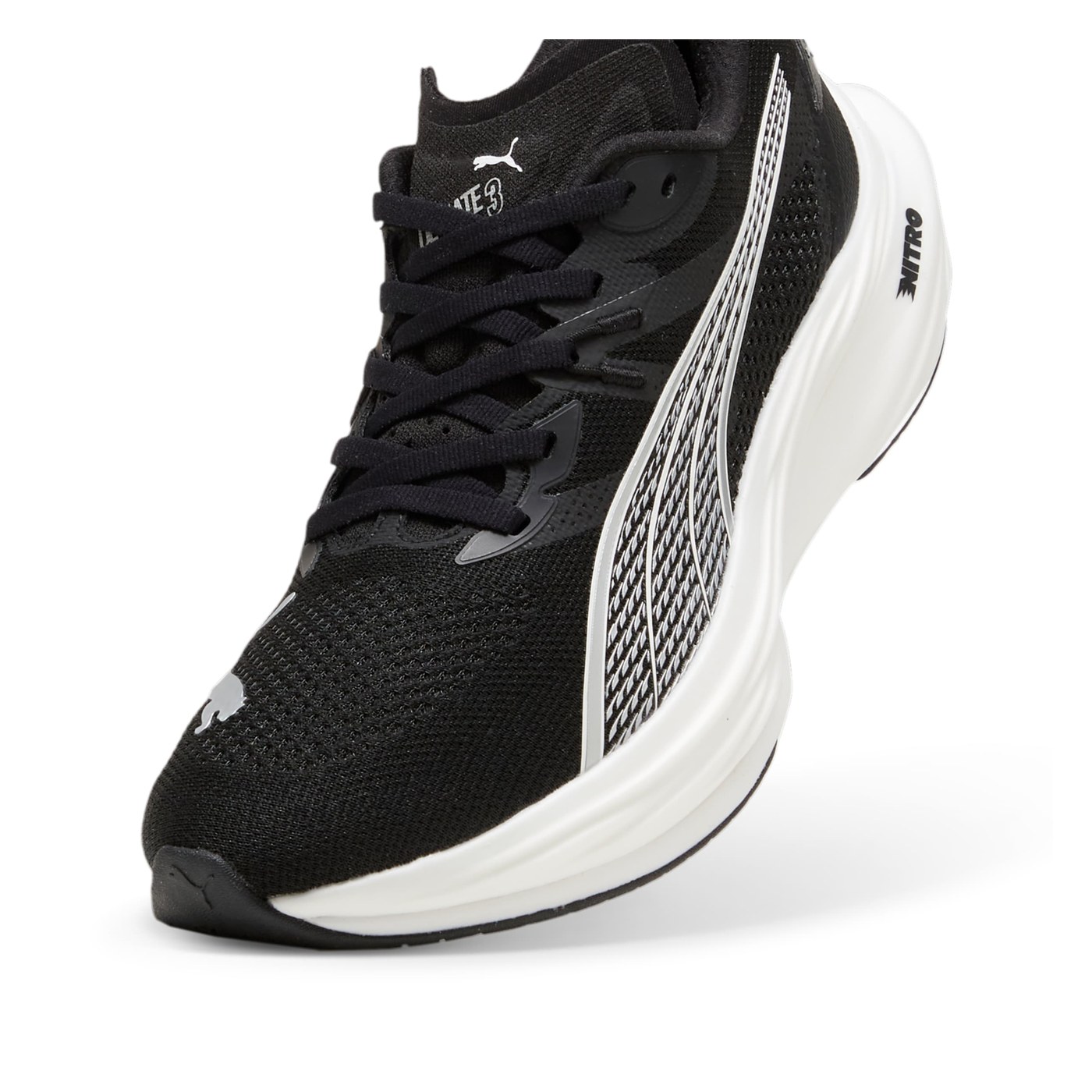
The toe box remains the main thing to watch. On a normal foot, the fit is precise without squeezing. With a wide foot or a high-volume forefoot, you will feel some pressure after 1 hour of running. Go up half a size, or choose the women's Wide version (unfortunately missing from the men's lineup in Europe).
Cushioning and ride
NITROFOAM is a nitrogen-infused supercritical TPE foam. It looks like a standard white foam, but underfoot it's livelier than traditional EVA, with energy return around 73-77% according to independent lab measurements. That's below pure PEBA (80-85% on elite super shoes), but well above standard EVA (55-65%). On easy runs at 5:30/km, you feel the cushioning and the softness. When you speed up to around 4:00/km, the PWRPLATE and the NITROFOAM sync up: the shoe pushes you forward without forcing a harsh roll-through.
Stability and support
Despite a tall foam base (36 mm at the heel), the Deviate Nitro 3 stays stable. The flared geometry and the stiffness of the full-length PWRPLATE act as a stabilizing beam. On tight turns and quick changes of direction (weaving through city streets, easy runs in the park), you never get the wobble typical of pure super shoes. It's one of the main upgrades of version 3 over version 2 (which tended to lean in tight corners).
PUMAGRIP outsole: the benchmark
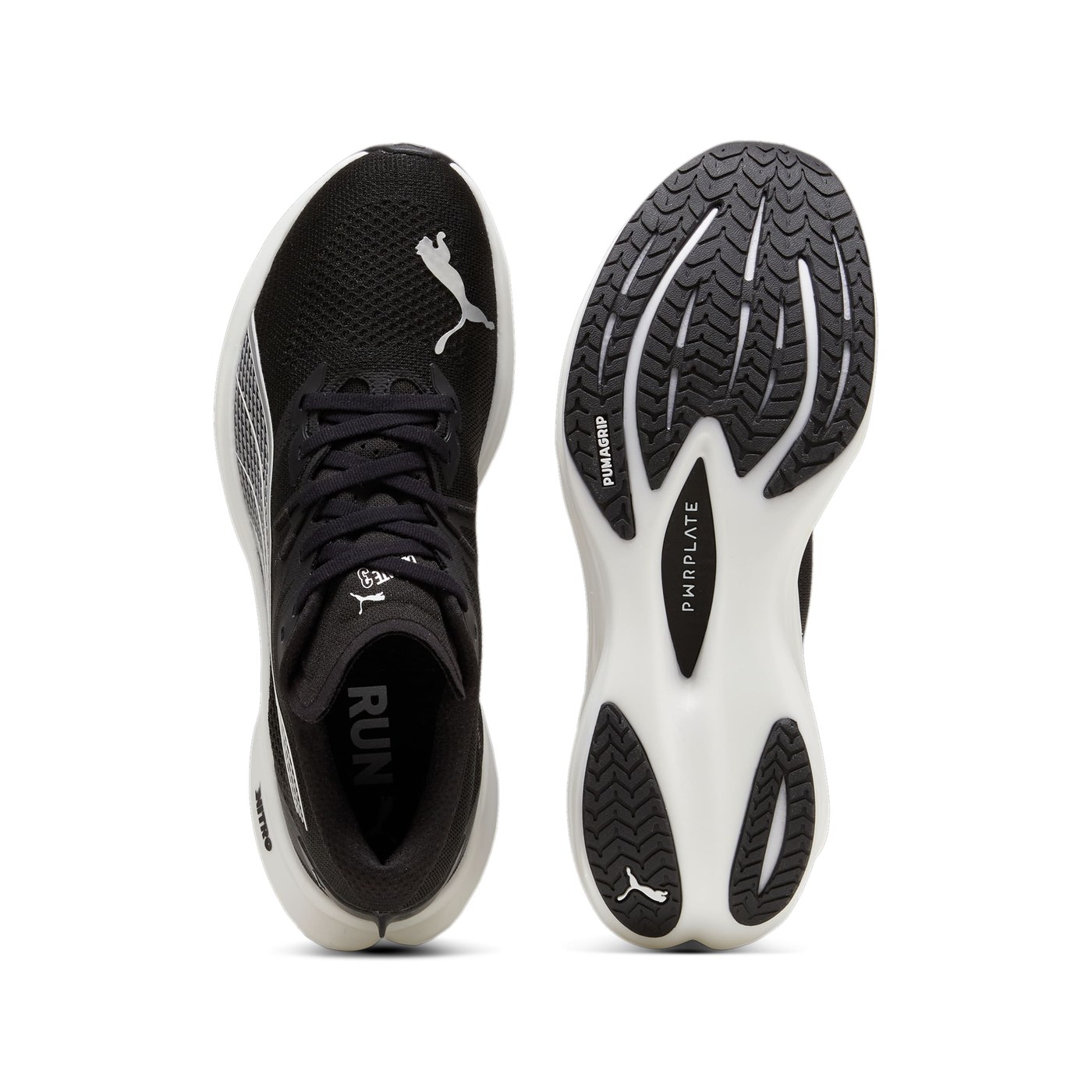
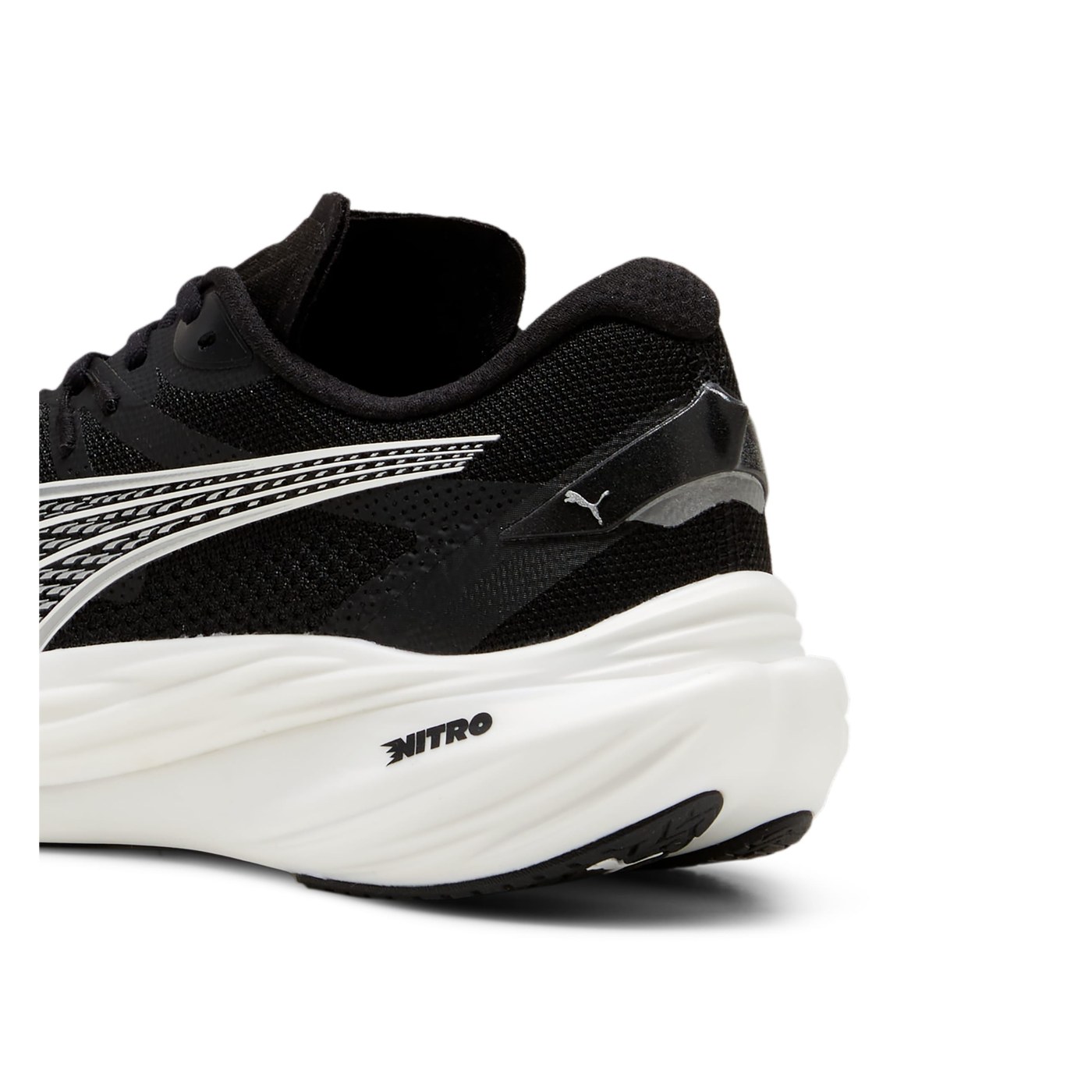
PUMAGRIP rubber is probably the best on the market for a carbon daily trainer, ahead of Adidas's Continental and Asics's AHAR. On wet ground, slippery cobblestones, or mixed road and packed-gravel surfaces, you'll lose almost no traction. The outsole pattern seen from below (as a reminder: a forefoot flex zone + an exposed PWRPLATE section in the center) optimizes lateral flex. Rubber durability is very good: count on 700 to 900 km before noticeable wear, compared with 500-600 km for most elite super shoes.
Performance by pace
Easy runs between 5:30 and 6:00/km: the shoe stays pleasant, without the heavy-legged feel you can get in an Asics Superblast 3. Tempo at 4:30-4:45: the NITROFOAM and the plate work in sync, and this is the pace where the Deviate Nitro 3 shines. Threshold at 4:00-4:15: the plate pushes, but you quickly hit its limits in responsiveness compared with a true race-day super shoe. Short, fast intervals at max aerobic speed: not the right tool, as the weight and drop hold you back a little. Marathon with a target time between 3 hours and 3:45: an excellent compromise, especially if you're not ready to spend €280 on a Saucony Endorphin Pro 5.
© Puma, official photo used for editorial purposes.
What other reviewers say and the RunMorph take
The French running press is unanimous on the Deviate Nitro 3. Run Évasion highlights "remarkable energy return and a carbon plate that never holds back your natural roll-through." Mon Coach Running stresses the value for money, calling it "excellent at €170 for performance very close to an elite super shoe." RunningXpert singles out the PUMAGRIP as the best daily trainer outsole on the market. Runninglab and 21Run agree that version 3 fixes the stability issues of version 2.
The international consensus among testers (independent lab data, long-term panels) puts the Deviate Nitro 3 in the top 3 versatile carbon daily trainers for 2024-2025, with a clear edge in foam and outsole durability.
Our RunMorph take. The Deviate Nitro 3 is neither the fastest (a true race-day super shoe is still 2-3% more economical over a marathon) nor the plushest (an Asics Gel-Nimbus 28 still feels more welcoming on long easy runs). But it's one of the most complete shoes on the market, at a price few rivals can match. If you want a pair that carries you through 800 km of every kind of session, this is it.
How it stacks up against the competition
Puma Deviate Nitro 3 vs Asics Magic Speed 5 (€180). The Magic Speed 5 leans more toward tempo work and shorter races, with a stiffer carbon plate and a more explosive FF Blast Turbo foam. The Deviate Nitro 3 is more versatile, more durable, and better on long runs. If you want one pair for all your sessions: Deviate. If you want a tempo / 10 km shoe: Magic Speed.
Puma Deviate Nitro 3 vs Adidas Adizero Boston 13 (€160). The Boston 13 and the Deviate are the two most durable carbon daily trainers over 250 g on the market. The Boston 13 is slightly more responsive at tempo (Energyrods 2.0 + Lightstrike Pro), while the Deviate is more stable and has the better outsole in the rain. It comes down to foot shape: narrow foot, Boston; medium or wide foot, Deviate half a size up.
Puma Deviate Nitro 3 vs Hoka Mach 7 (€160). The Mach 7 has no carbon plate: it's the philosophical opposite. Softer, plusher, perfect for easy runs and recovery. The Deviate is faster, more stable, and more durable for fast sessions. If you want a recovery and easy-run shoe: Mach 7. If you want one pair for all your sessions: Deviate.
Puma Deviate Nitro 3 vs Adidas Adizero EVO SL (€150). The EVO SL doesn't have a carbon plate either and plays the ultralight super trainer card (228 g). It's snappier for max aerobic speed sessions, but less cushioned on long runs. If you do a lot of short intervals: EVO SL. If you're targeting a marathon: Deviate Nitro 3.
How to fit the Deviate Nitro 3 into your RunMorph training plan
This shoe fits perfectly into a half marathon or marathon build, as well as a demanding 10 km plan. It's an "80/20" pair: you'll do 80% of your sessions in it (easy runs, tempo, goal-pace blocks, long runs) and save your true super shoes (Vaporfly 4, Endorphin Pro 5, Fast-R Nitro Elite 3) for the last big sharpening sessions before your taper and for race day.
Here's how I use it in practice in a 12-week marathon block: recovery runs at 6:00/km, progressive long runs up to 30 km, marathon-pace blocks (10 to 15 km), and a 1-hour threshold tempo. You can race in it up to the half marathon without any problem, and even run the marathon in it if you're targeting a time slower than 3:15.
Our recommendation: pair this shoe with the RunMorph marathon plan built for your goal. You'll find goal-pace blocks calibrated to your target time, recovery weeks, and the taper for the final two weeks.
© Puma, official photo used for editorial purposes.
The RunMorph coach's verdict
In 2024-2025, the Puma Deviate Nitro 3 is one of the best buys in the versatile carbon daily trainer segment. At €170, it delivers 80 to 90% of what a €280 race-day super shoe offers, with better durability and unmatched versatility. The PWRPLATE does its job without ever blocking your natural roll-through, the NITROFOAM holds up over 800 km, and the PUMAGRIP outsole has no rival on wet ground.
My only real criticisms: a 10 mm drop that feels a bit dated now that the market is moving toward 6-8 mm, and a toe box that's too narrow for wide feet. If either one applies to you, look at the Boston 13 or the Mach 7. Otherwise, it's probably the best compromise on the market today.
Final score: 8.5 / 10. A shoe that carries you through almost your entire season, at a price that stays reasonable, with above-average durability. The carbon daily trainer benchmark for 2024-2025.
Key takeaways for your training
- Maximum versatility: one pair for 80% of your sessions, from recovery runs to tempo and long runs.
- Forgiving carbon plate: the full-length PWRPLATE adds pop without forcing a set roll-through, unlike pure race-day super shoes.
- PUMAGRIP outsole: the best grip in the daily trainer segment, ideal for damp winters and early-morning runs on wet ground.
- 700 to 900 km of durability: the NITROFOAM and PUMAGRIP rubber take far more punishment than an elite super shoe, which brings the cost per kilometer down to €0.20-0.25.
- Watch the fit: go up half a size if you have a medium or wide foot, because the toe box is narrow.