April 25, 2025Puma Fast-R Nitro Elite 3 Review: Ultralight Carbon Racer
8.5/10
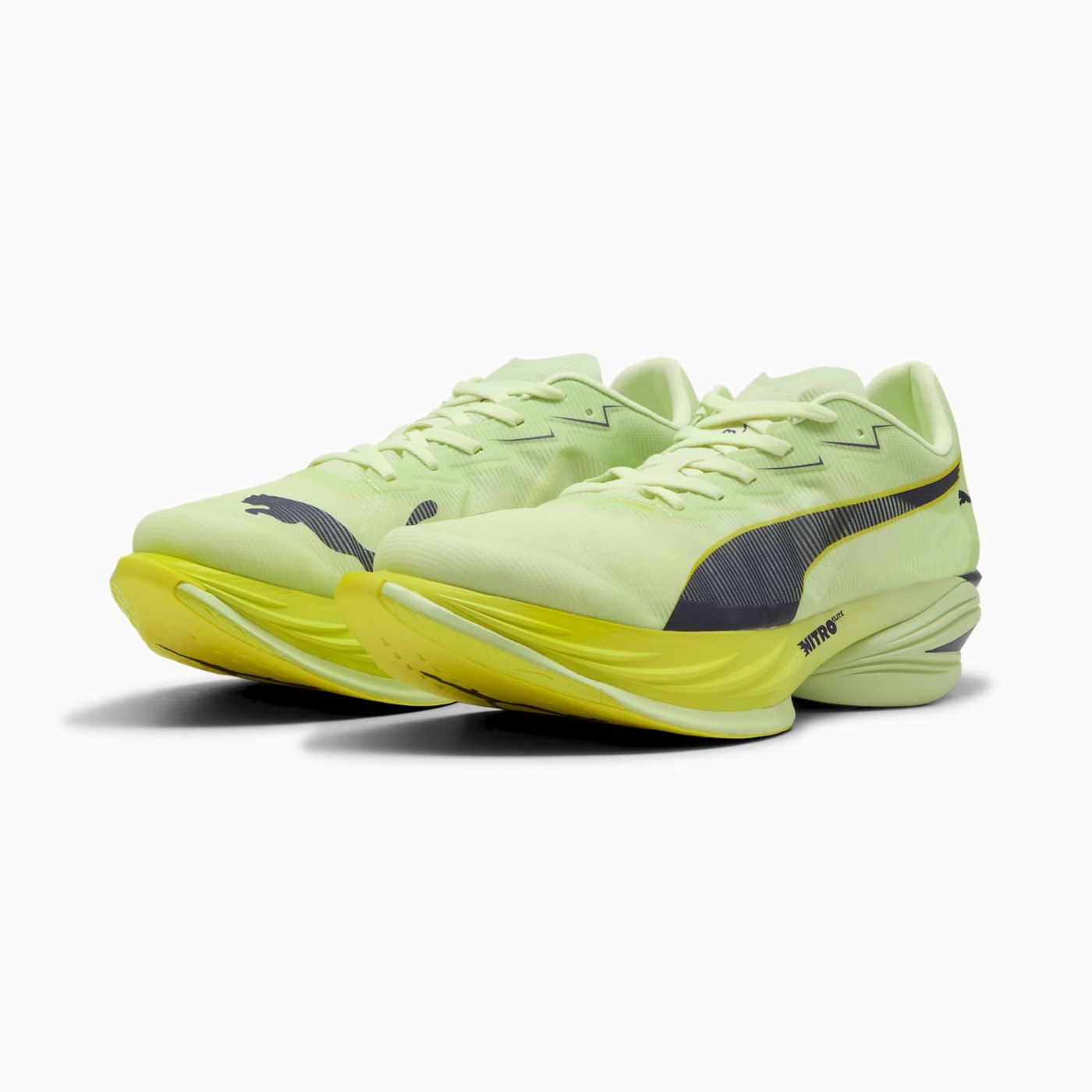
In 2025, Puma took a real swipe at the super shoe market with the Fast-R Nitro Elite 3. Ninety-five grams lighter than version 2, a reworked NITROFOAM Elite foam, a PWRPLATE carbon plate pushed further toward the toe. On paper, a serious contender for shoe of the year. As a RunMorph coach, I analyzed it through my usual lens: which runner, which training context, and which plan to pair it with.
© Puma, official photo used for editorial purposes
Puma Fast-R Nitro Elite 3: the super shoe out to dethrone the benchmarks
With the Fast-R Nitro Elite 3, Puma has a clear strategy: compete in the most demanding segment of the market, elite carbon super shoes, against models like the Nike Vaporfly 4, the Adidas Adizero Adios Pro Evo 3, the Hoka Cielo X1 3.0 and the Saucony Endorphin Pro 5. And the bet is credible. The Fast-R 3 weighs 169 g in a size 42, nearly a hundred grams less than the Fast-R 2, while delivering more energy return (up to 77% according to the brand's own lab measurements). It is one of the lightest super shoes on the market, in the same league as the Asics Metaspeed Sky Tokyo.
The RunMorph tip
A €300 super shoe is not an impulse buy. Before you spend, ask yourself honestly whether you will use what the Fast-R 3 does best: holding a hard pace from 10K to the marathon. If most of your running is easy mileage, you will get more fun per euro from a super trainer like the Asics Superblast 3 or the Adidas Adizero EVO SL.
Objective specs
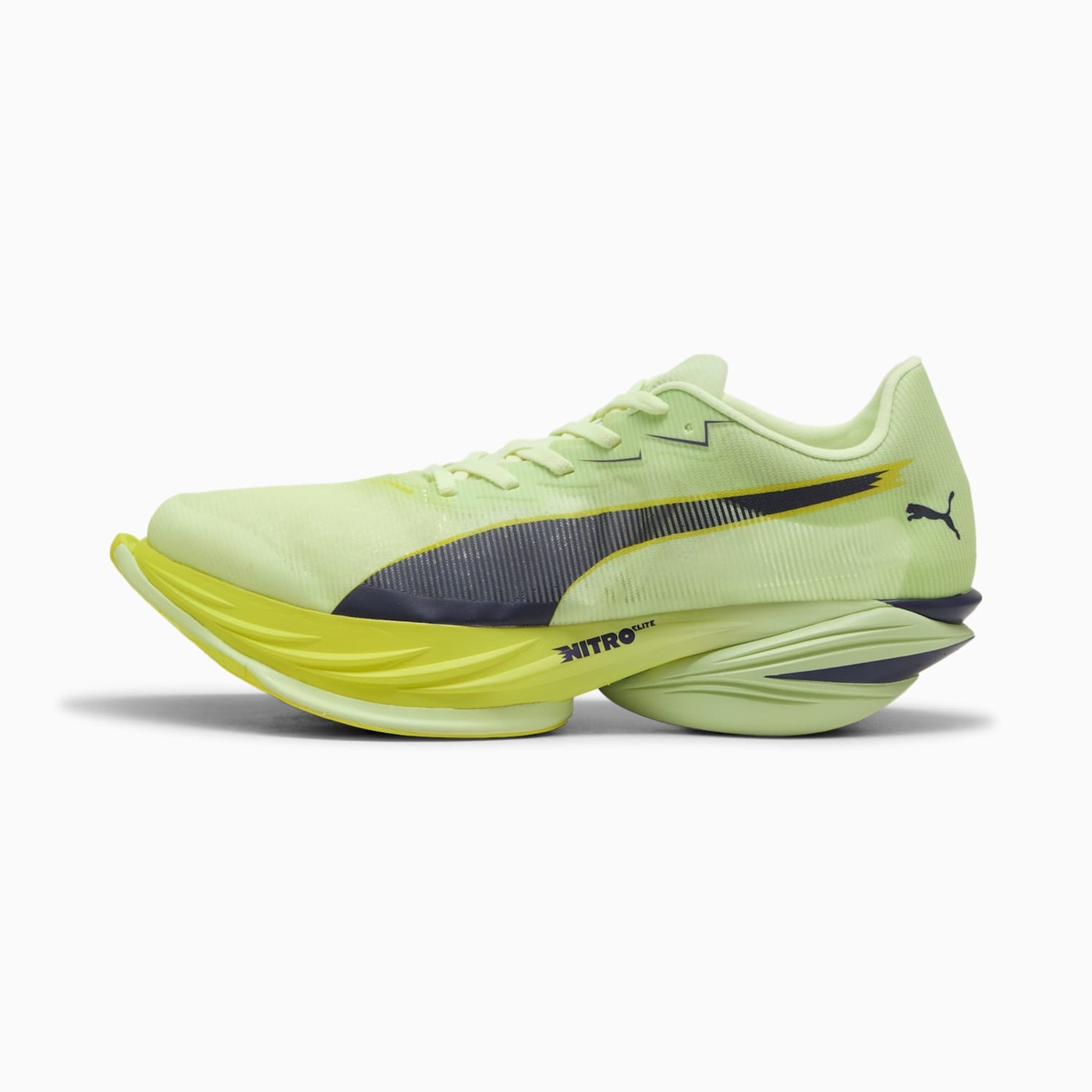
Before any opinion, let's talk numbers. The Fast-R Nitro Elite 3 spec sheet leaves no room for doubt: this is a true racing shoe.
| Brand | Puma |
| Model | Fast-R Nitro Elite 3 |
| Year | 2025 |
| Type | Road, elite carbon racing shoe |
| Drop | 8 mm |
| Stack height (forefoot / heel) | 31 mm / 39 mm |
| Weight (EU size 42) | 169 g (men's), 147 g (women's size 38) |
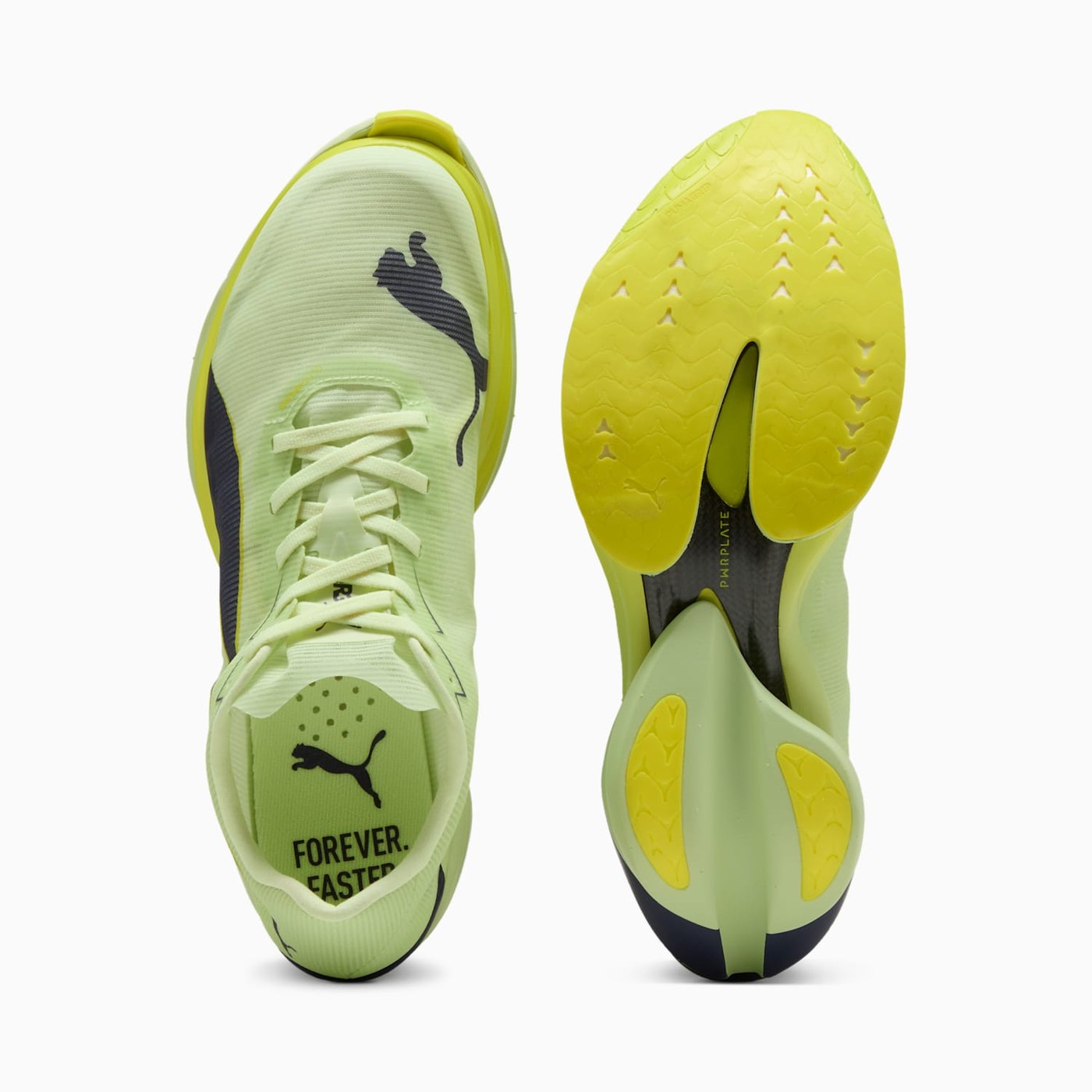
| Carbon plate | Yes: full-length PWRPLATE, extending past the forefoot |
| Foam | NITROFOAM Elite (nitrogen-infused aliphatic TPU) |
| Energy return | Up to 77% (Puma lab measurements) |
| Recommended distance | 5K to marathon |
| Official price | €300 (€250 to €280 on sale, depending on the retailer) |
© Puma, official photo used for editorial purposes
The verdict in 30 seconds
If you only have thirty seconds to understand this shoe, here is what matters.
The Fast-R Nitro Elite 3 is an ultralight super shoe built for fast running, from 5K to the marathon. Its three strengths: a featherweight build (169 g) that puts it in the top 3 of its segment, a forward-extended PWRPLATE that gives you a clear push at every footstrike, and a highly responsive NITROFOAM Elite foam that returns plenty of energy without bottoming out.
Its two limits: a minimalist build that demands good form and solid strength (zero margin for error), and a €300 price tag that reserves it for a serious goal. You will bring it out for races and key sessions, not for daily training.
Recommended for: experienced runners with clean form looking for an ultralight racer, ideal for the 10K, half marathon and marathon at a sustained pace. Not recommended for: beginners, runners with a heavy stride or marked overpronation, easy aerobic runs.
Who is this shoe for?
This is the central question. A €300 super shoe is not a purchase for everyone. Here is our profile grid, the way a coach would assess an athlete.
If you are a beginner just getting into running
Verdict: No. The Fast-R 3 needs an established stride and a clean forefoot or midfoot strike. On a stride that is still developing, the carbon plate and aggressive rocker can strain your calves and Achilles tendon. Start with a daily trainer like the Nike Pegasus 42, the Asics Gel-Nimbus 28 or the Brooks Ghost 18.
If you run 30 to 50 km a week at an easy pace
Verdict: With reservations. The Fast-R 3 is built for tempo, not easy runs. If you want one shoe that does it all, this is not it. As a second pair dedicated to fast sessions and racing, though, it makes perfect sense in a structured rotation.
If you are training for a 10K, half marathon or marathon
Verdict: Yes, absolutely. This is what it was made for. Feedback from the specialist press and the consensus among testers worldwide point the same way: it excels between 3:30/km and 4:30/km, over distances from 10 km to 42 km, as long as your form is clean.
If you weigh more than 80 kg
Verdict: With reservations. The Fast-R 3 is designed for light to mid-weight runners. Above 80 kg, the foam can pack down faster and stability gets trickier. You will get a more reassuring ride from the Hoka Cielo X1 3.0 or the Asics Metaspeed Sky Tokyo, both more stable.
If you tend to overpronate
Verdict: No. No lateral support, a narrow sole, soft foam. The Fast-R 3 is neutral and minimalist. If you overpronate, look instead at a stability daily trainer or a wider super trainer.
If you want a shoe for short intervals
Verdict: Yes, in moderation. The featherweight build and the PWRPLATE make accelerations very efficient. But the foam is tuned for sustained tempo rather than pure sprinting. For 200 m to 1000 m repeats it works well, as long as you don't wear it every day (limited durability).
In-depth review: what the Fast-R 3 does well, and what it doesn't
Comfort and step-in feel
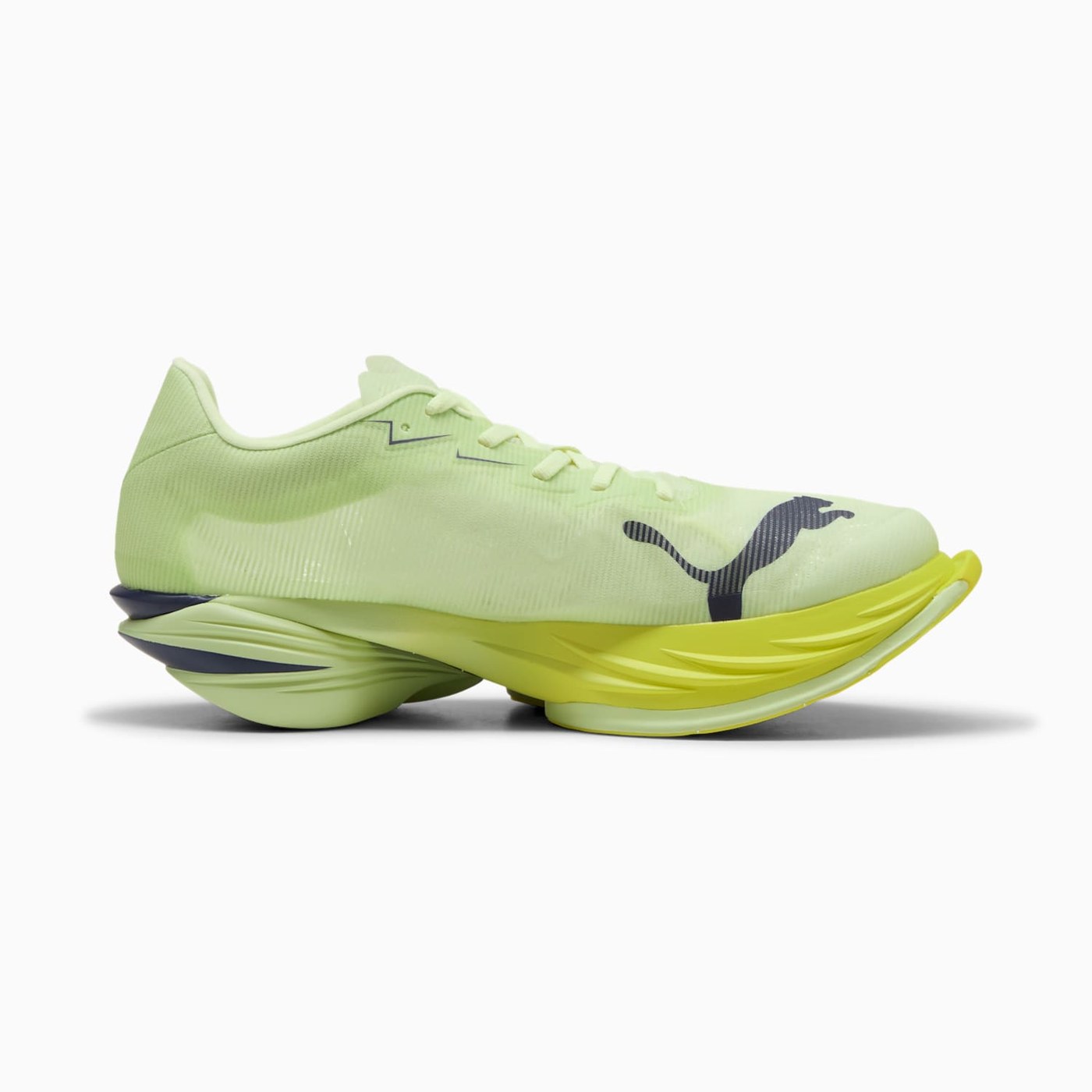
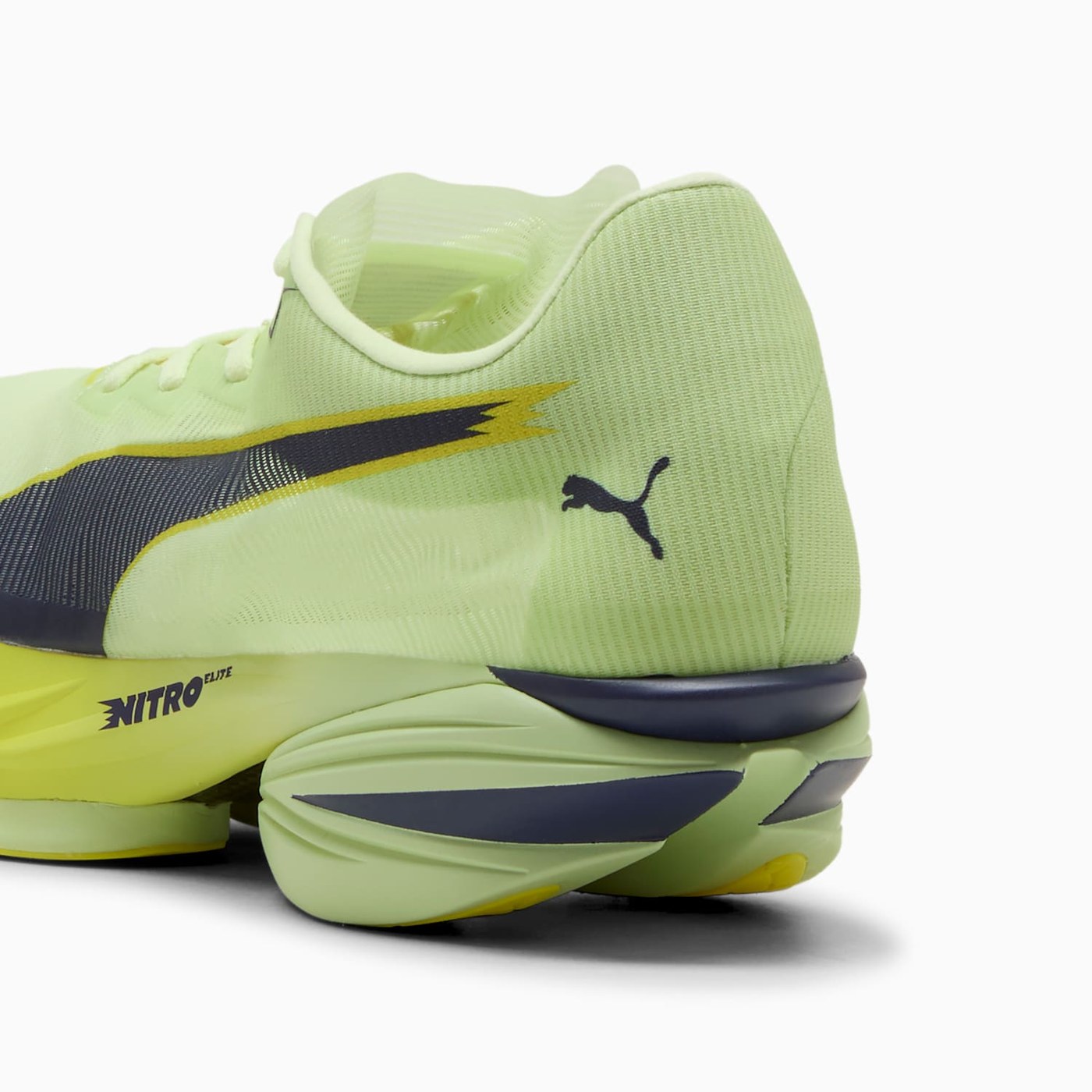
The ULTRAWEAVE Pro upper is extremely thin, almost see-through. The technical mesh breathes very well, perfect for summer races but vulnerable in wet conditions. The fit is precise and slightly narrow in the forefoot, which runners with efficient form will like but wide feet may not. The tongue is minimal, with no padding. The heel counter is stiff to lock your heel in place. Verdict: race comfort, not strolling comfort.
© Puma, official photo used for editorial purposes
Cushioning and ride
This is its biggest strength. NITROFOAM Elite, a nitrogen-infused aliphatic TPU, fills the entire midsole. It feels firm when you stand still but comes alive as soon as your cadence picks up. A study by a US university biomechanics lab, cited by Puma, measured a 3.15% improvement in running economy compared with a standard shoe. In practice, the shoe feels like it is pushing you forward, with a pronounced rocker that smooths the heel-to-toe transition.
Stability and support
This is the deliberate trade-off of a minimalist super shoe. The base is narrow, the foam tall (39 mm at the heel), the upper thin. If your form is clean and neutral, you will have no problems. If you fade late in a marathon or tend to roll inward, you will feel the instability. That is the flip side of 169 g.
Outsole and grip
The PUMAGRIP LITE outsole covers the main pressure zones with an aggressive pattern and cutouts to save weight. On dry roads, grip is excellent. On wet roads, it stays decent but nothing more, like most super shoes. Rubber coverage is deliberately minimal to save weight, which means reduced durability: expect visible wear from 200 km of tempo work.
Performance by pace
Here is how the Fast-R 3 behaves depending on the effort.
- Easy aerobic runs (slower than 5:30/km): the foam feels unresponsive at this pace, a little flat. Not its terrain.
- Steady aerobic running (4:45 to 5:15/km): it starts to come alive, but other shoes do better at this price.
- Tempo and threshold (3:50 to 4:30/km): its comfort zone, where it excels. This is where the PWRPLATE and the NITROFOAM Elite foam give their best.
- Marathon pace (3:30 to 4:00/km): excellent, provided you have the engine and the form to keep up.
- Fast intervals (200 m to 1000 m): very good, but use it sparingly to preserve the foam.
Durability
Like every carbon super shoe, the Fast-R 3 is not built to last. NITROFOAM Elite is a performance foam, not a high-mileage one. Count on 300 to 400 useful km before the feel goes dull, which is two to three marathon cycles. That is in line with its direct rivals (Vaporfly 4, Adios Pro Evo 3), but factor it into your cost per kilometer.
How it stacks up against the competition
To place the Fast-R 3 in the 2025-2026 landscape, here is how it compares with the direct benchmarks in its segment.
Against the Nike Vaporfly 4, the Fast-R 3 is lighter (169 g versus about 195 g) and livelier off the forefoot. The Vaporfly 4 is still more versatile and more tolerant of different strides. Verdict: the Fast-R 3 rewards efficient form, the Vaporfly 4 forgives more.
Against the Adidas Adizero Adios Pro Evo 3, the Fast-R 3 is far easier to get hold of (the Adios Pro Evo 3 remains a very limited 97 g edition built for elite athletes). At €300, the Fast-R 3 is demanding but repeatable: you can order a fresh pair when the old one wears out.
Against the Hoka Cielo X1 3.0, the Fast-R 3 is noticeably lighter and more direct. The Cielo X1 3.0 stays more stable, more reassuring late in a marathon, and more forgiving for heavier runners.
Against the Saucony Endorphin Pro 5 and the Asics Metaspeed Sky Tokyo, the Fast-R 3 plays in the same league: ultralight super shoes, full-length carbon plates, foams with very high energy return. The choice comes down to how each one feels when you try it on and how well it matches your foot shape.
© Puma, official photo used for editorial purposes
How to fit it into your RunMorph training plan
A €300 super shoe is only worth it if it slots intelligently into your training cycle. Here is how I would use it as a coach.
The Fast-R Nitro Elite 3 delivers its full value in a 10K, half marathon or marathon build, over the final twelve weeks before your goal race. Keep it for two uses:
- Key sessions: long tempo runs (45 to 75 minutes at half marathon pace), long intervals at maximal aerobic speed (1000 m, 2000 m), marathon-specific work (3 x 5 km at aerobic threshold).
- Racing: your goal race. Do your trial runs in it during the two weeks before race day to confirm it suits you.
For the rest of your build (easy runs, aerobic base, easy long runs), use a super trainer or a daily trainer: Asics Superblast 3, Adidas Adizero EVO SL, Hoka Mach 7 or Brooks Ghost 18. That way you extend the life of the Fast-R 3 and keep progressing without overloading specific muscles.
My advice as a coach: pair the Fast-R Nitro Elite 3 with our RunMorph marathon or half marathon training plan. The plan structures the key sessions where the shoe can show what it can do, and tells you clearly when to bring out the racer and when to stick with the daily trainer.
The RunMorph coach's verdict
The Puma Fast-R Nitro Elite 3 is a technical success. Puma cut 95 g compared with version 2 without sacrificing energy return, and refined the PWRPLATE to better suit efficient runners. It is now one of the three lightest super shoes on the market, in the same league as the elite models from Adidas, Asics and Nike.
But it is also a demanding shoe. Its minimalist build, narrow base and tall stack penalize runners whose stride is not yet established. Its €300 price confines it to a serious goal: a marathon, half marathon or 10K build with a time target. For a recreational runner looking for fun and comfort, it is the wrong tool.
On the road, the payoff is exceptional if you have the form and the engine. The pairing of NITROFOAM Elite foam and PWRPLATE delivers a clear sense of propulsion, especially between 3:50/km and 4:20/km. The transition is smooth, the rocker well judged. This shoe loves sustained tempo and gives it right back to its runner.
RunMorph score: 8.5/10 for experienced runners with a marathon or half marathon goal, 6/10 for recreational runners. The best Puma road shoe in a long time.
© Puma, official photo used for editorial purposes
Key takeaways for your training
- Target runner: experienced runner with clean form, a 10K, half marathon or marathon goal, pace between 3:30 and 4:30/km.
- How often: two key sessions a week maximum, no easy runs.
- Lifespan: 300 to 400 useful km, or two to three marathon cycles.
- Winning combo: Fast-R 3 for fast sessions + a super trainer for everyday runs (Superblast 3 or Adizero EVO SL).
- Avoid if: your stride is not established, you are significantly overweight, you overpronate heavily, or you run in prolonged wet conditions.
- Matching RunMorph plan: marathon or half marathon, bringing in the Fast-R 3 for the final twelve weeks.
FAQ
Is the Puma Fast-R Nitro Elite 3 good for beginners?
No, not as a first pair. Its carbon plate, narrow base and aggressive rocker require an established stride. If you are just starting out, go for the Nike Pegasus 42 or the Brooks Ghost 18.
How many kilometers does the Fast-R Nitro Elite 3 last?
Count on 300 to 400 useful km before the foam loses its responsiveness. That is in line with other carbon super shoes on the market. Save it for key sessions and races to get the most life out of it.
Does the Puma Fast-R Nitro Elite 3 run large or small?
The Fast-R 3 runs true to size, with a fit that is slightly narrow in the forefoot. If you have wide feet, go up half a size. The fit is precise and built for performance, not lounge comfort.
What is the difference between the Fast-R Nitro Elite 3 and the Fast-R Nitro Elite 2?
The Fast-R 3 sheds 95 g compared with the v2 (169 g vs about 264 g), gains energy return, adds a forward-extended PWRPLATE and gets a new ULTRAWEAVE Pro upper. It is a deep redesign, not a simple refresh.
Is the Puma Fast-R Nitro Elite 3 suitable for the marathon?
Yes, for an experienced runner able to hold a pace between 3:30/km and 4:30/km over 42 km with clean form. For a more relaxed marathon, the Hoka Cielo X1 3.0 or the Saucony Endorphin Pro 5 will feel more reassuring.