Amazfit sells it for €449.90 and pitches it as the marathon runner's watch. On paper, the Cheetah 2 Pro ticks almost every box: titanium, sapphire glass, dual-band GPS, offline maps, a flashlight. But a running watch is judged in use, on the GPS track, the heart rate and the software. RunMorph cross-checked six reviews published since its April 2026 launch to see where it delivers, and where it stalls.
© Amazfit, official photo used for editorial purposes
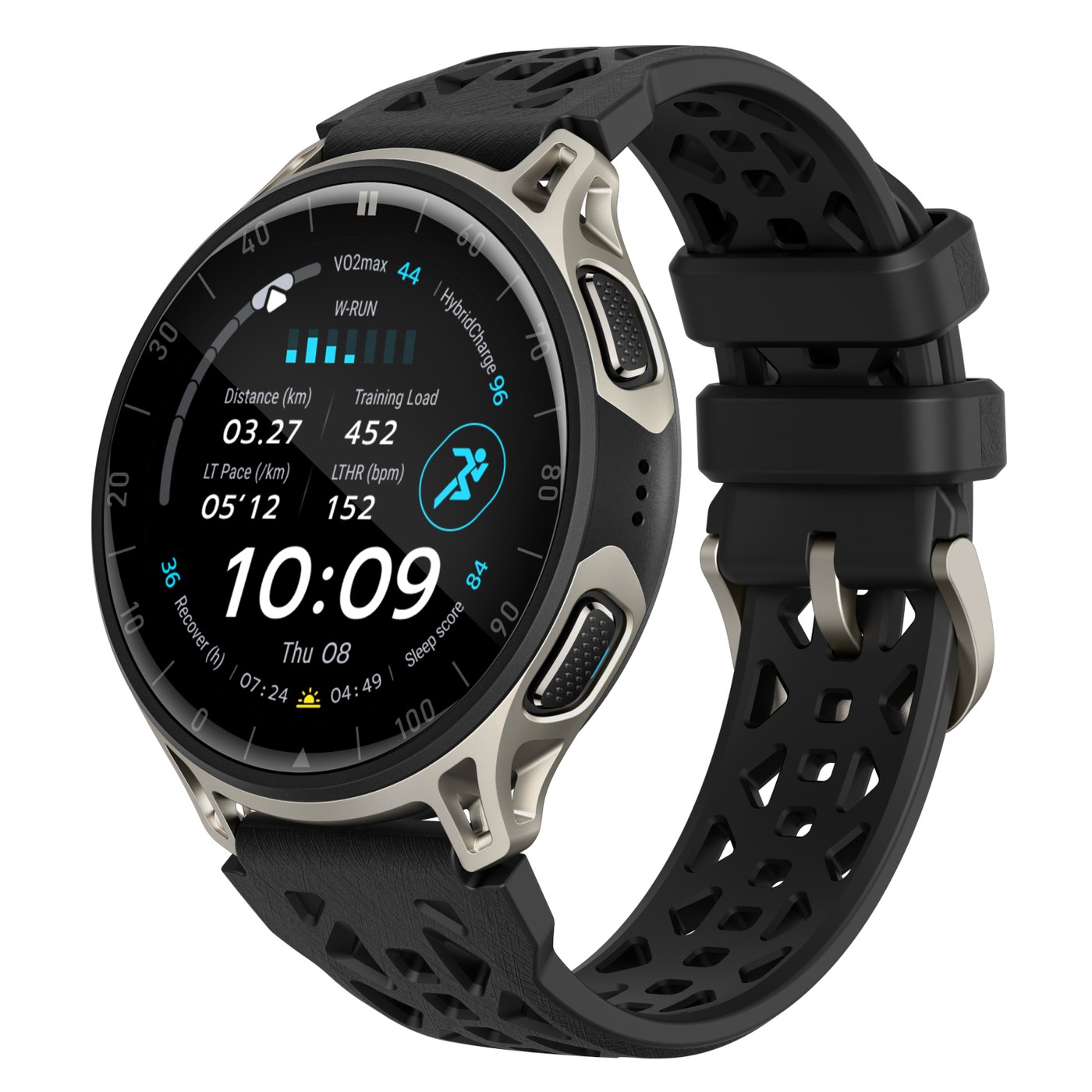
Amazfit Cheetah 2 Pro: titanium and sapphire aimed at marathon runners for €449.90
The first Cheetah Pro cost around €300 in 2023. It made Amazfit the budget alternative to Garmin. The Cheetah 2 Pro, launched on 16 April 2026, moves up a class: €449.90 on the official store, a 50% jump. Amazfit is no longer selling a price tag. It is selling a premium watch.
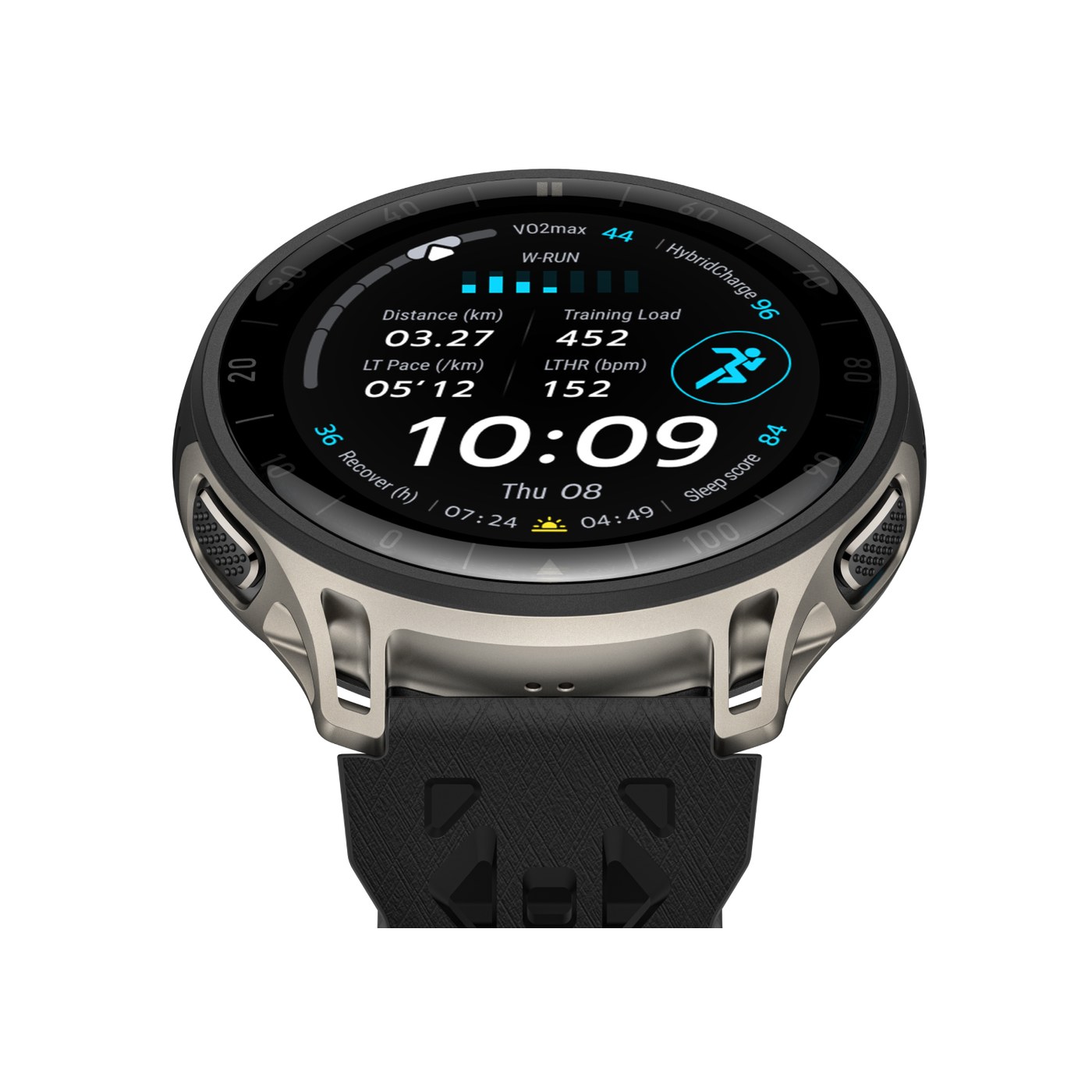
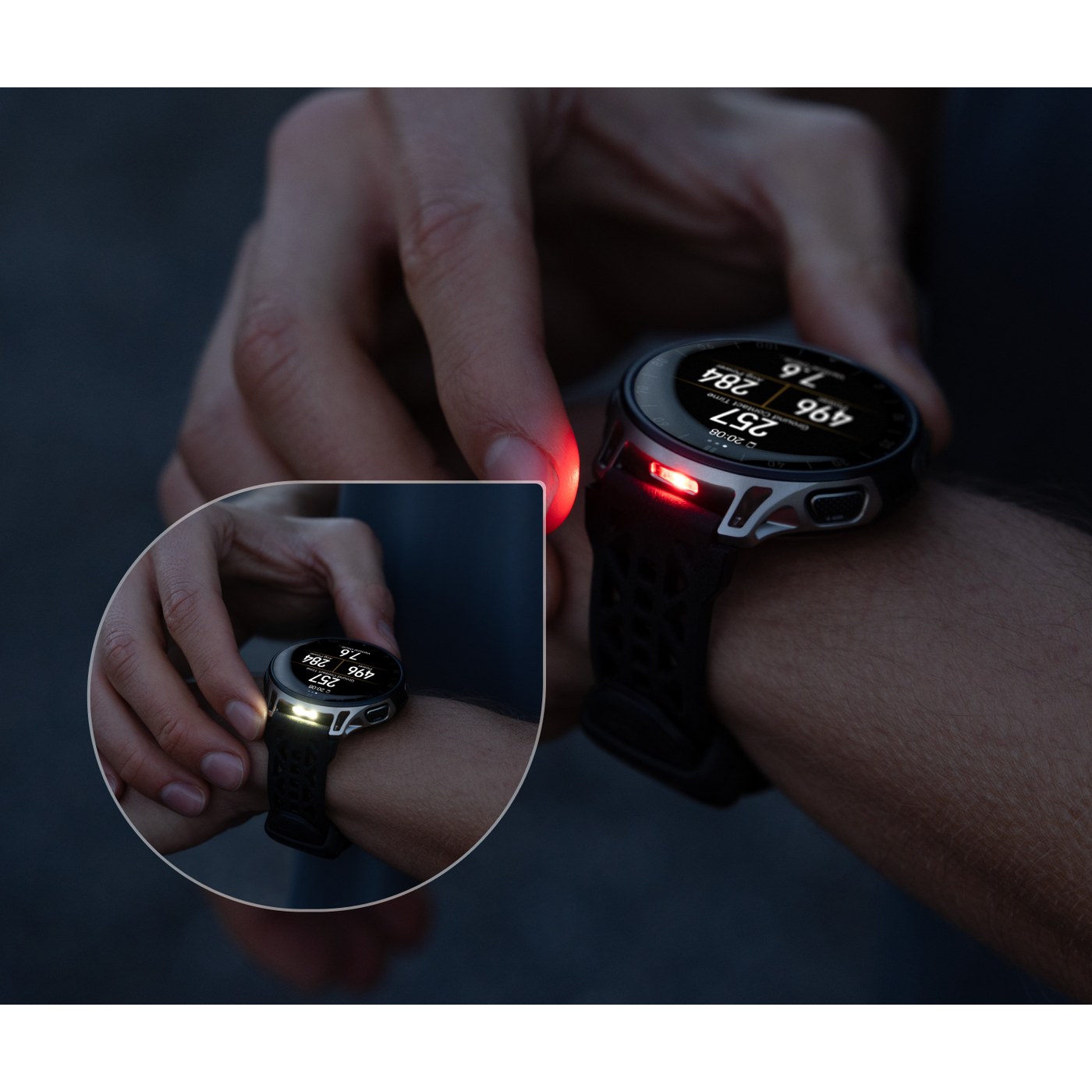
The hardware backs it up. Grade 5 titanium case, sapphire glass, a 1.32-inch AMOLED screen, dual-band GPS across six constellations, 32 GB of storage, speaker, microphone and a two-colour flashlight. Its big sister, the Cheetah 2 Ultra, targets long trail runs with a bigger screen and 80 h of GPS. The Pro is built for the road and the stopwatch. Seven months after launch, it already sells for €419.99 at Decathlon and on Amazon, according to price checks by the French site Clubic.
RunMorph's advice: before spending €450, look at the COROS Pace Pro. Same AMOLED screen, same dual-band GPS, offline maps too, for €100 less and with more mature training software. The Cheetah 2 Pro only makes sense if titanium, sapphire and the flashlight really matter to you.
© Amazfit, official photo used for editorial purposes
Who is the Cheetah 2 Pro for?
The road marathon runner
This is its target, and it serves it well. Reliable dual-band GPS, 26 h of tracking with the always-on display and accurate heart rate at steady pace: enough to cover a marathon build and race day without worry. The Zepp coach offers plans, but don't expect the detail of a plan built session by session.
The occasional trail runner
Offline maps and guidance work, and the flashlight helps on early starts. But the 1.32-inch screen is small for reading a map on the move. For regular trail running, the Cheetah 2 Ultra and its 1.5-inch screen make more sense.
The triathlete or HYROX athlete
The profiles are there and the watch is rated 5 ATM. Heart rate on the bike falls apart (see below), so a chest strap becomes essential. For this profile, a Garmin is simply easier to live with.
GPS accuracy and heart rate: what real-world tests say
RunMorph cross-checked six published reviews for this article: three French ones (Sport-Passion over two months, Clubic over several weeks, Presse-citron over one month) and three from outside France, including a side-by-side test against a Forerunner 970 paired with a foot pod.
The GPS holds up. On a 7.81 km course, that side-by-side test logged 7.80 km on the Cheetah 2 Pro. That's a 0.13% gap. Better than a Suunto Race 2 on the same route (1.41%). In town and under trees, the track follows the Forerunner 970's line. Another tester reports a 1 to 2% gap against two high-end watches. On a tougher 16 km course, the same side-by-side test notes a few errors of more than 5 m. The Huawei Watch GT Runner 2 does better on that particular route.
Sport-Passion adds the most useful nuance. Over two months, the watch tends to underestimate distance and overestimate elevation gain. The two findings don't contradict each other. On open roads, the gap is tiny. On mixed terrain with surges and tight turns, the underestimation shows. For a road runner, frankly, it changes nothing. For a trail runner counting elevation gain, keep it in mind.
The optical heart rate is good at steady effort, less so in intervals. The side-by-side test measured a bias under 1 bpm against two chest straps on steady runs. Sport-Passion rates it "reliable" against a Garmin HRM 600. But several testers saw interval peaks slightly clipped. On the bike, the bias climbs to 6 bpm on average. The two negative reports come from Clubic and Presse-citron. Clubic saw readings 10 bpm too high, actually caused by an overtightened strap: once loosened, the values lined up. Presse-citron calls the sensor "erratic", without figures. Put simply, the watch is fine for easy runs and long runs. For your threshold sessions, keep a chest strap.
Maps and navigation
The Cheetah 2 Pro loads offline OpenStreetMap maps, gives turn-by-turn guidance and can build a loop route from the watch. The foundation is solid. The details are not.
Rerouting splits the testers. Sport-Passion finds it works on an imported track but not on loops generated by the watch. An English-language review says it doesn't work at all: the off-course alert sounds at 50 m, then nothing. A German lab review, on the other hand, finds it reliable. What does it depend on? Apparently on the software version and the type of route. Add voice guidance in English only and a map that stutters when zooming. On marked routes, it's fine. For navigating unknown ground, the Cheetah 2 Ultra or a Suunto Race S is safer.
© Amazfit, official photo used for editorial purposes
Training and recovery metrics
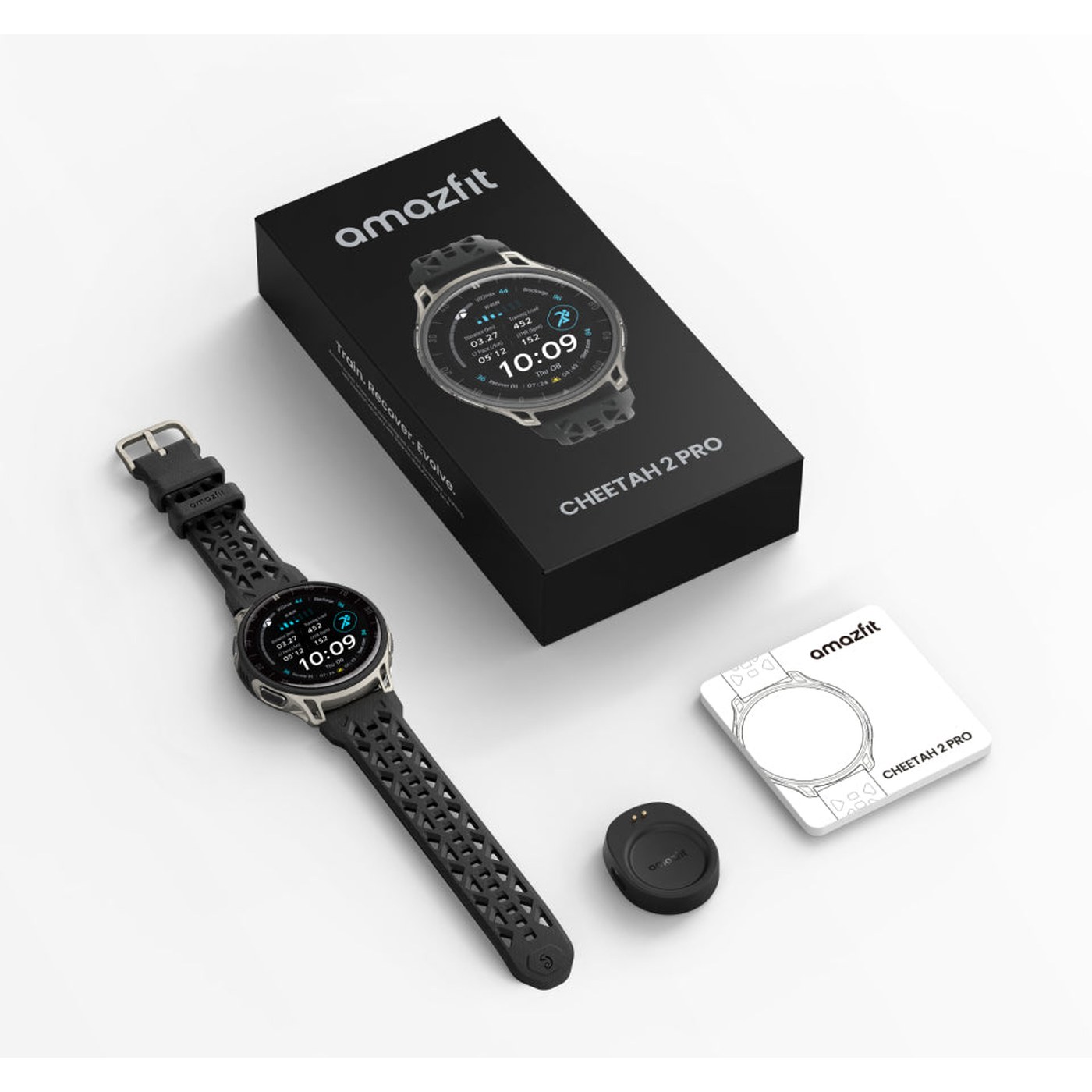
On the spec sheet, nothing is missing: estimated lactate threshold, VO2max, training load, running power, ground contact time, readiness score and HybridCharge, which replaces BioCharge. The Zepp coach builds training plans.
In practice, this is the weak link. One long-term review compared these values with a Garmin. Threshold heart rate starts at 153 bpm, against roughly 162 in reality. VO2max comes out at least 5 points too low. Race predictions are too pessimistic: 30 to 45 seconds too slow over 5 km, 90 seconds over a half marathon. The same tester calls the running power unusable. And the Zepp coach suggested a 9 km long run and a single fast session in a five-day week.
Clubic gives the software 5/10, its lowest sub-score. The interface mixes French and English, updates must be started by hand, and the Zepp app is "sometimes confusing". Sport-Passion also notes translation errors and no training by power zones. If you follow a RunMorph plan, it's not a dealbreaker: the watch exports to Strava and works as a measuring tool. If you count on it to tell you what to do, it falls short.
Real-world battery life
Amazfit claims 26 h of GPS with the always-on display. Sport-Passion measured 25 h. It's rare to be that close. The claimed 8 days with the always-on display were also confirmed by that test.
| Use | Claimed | Measured by testers |
|---|
| Dual-band GPS, always-on display | 26 h | 25 h (Sport-Passion) |
| Daily use, always-on display | 8 days | 8 days (Sport-Passion), 6 days in mixed use (lab measurement) |
| 1 to 2 h of sport per day, maximum brightness | Not stated | About 5 days (side-by-side test) |
| Typical use | 20 days | 15 days (Clubic) |
For a runner doing four hours of sport a week, Sport-Passion estimates a recharge roughly every 8 days. That beats a Forerunner 570, rated at 14 h in multi-band. A 4-hour marathon uses less than a fifth of the battery. Charging takes about 1 h 30, and one tester says no cable comes in the box: only the magnetic dock is supplied.
Screen, comfort and build
The screen is superb. A lab measurement recorded 3173 cd/m² at peak, above the claimed 3000 nits. Readable in full sun, no question. The same measurement flags 60 Hz flicker that can tire some eyes. A more annoying daily flaw: the screen takes more than a second to wake on a wrist raise. Sport-Passion lists it among its weak points.
The case weighs 45.6 g, 8 g less than a Forerunner 970 according to one tester. Titanium and sapphire give a real sense of toughness. But 15.6 mm thick with the sensor is a lot. One tester finds it uncomfortable over long days, especially on a slim wrist. The silicone strap feels cheap, and its keeper holds poorly according to Sport-Passion.
© Amazfit, official photo used for editorial purposes
How it compares with the competition
Cheetah 2 Pro vs COROS Pace Pro: the comparison
| Criterion | Amazfit Cheetah 2 Pro | COROS Pace Pro | Garmin Forerunner 570 |
|---|
| Price | €449.90 | €349 | €549 |
| Weight | 45.6 g (case) | 37 g | 50 g |
| Display | 1.32-inch AMOLED, sapphire | AMOLED | 1.4-inch AMOLED |
| GPS | Dual-band | Dual-band | Dual-band |
| Maps | Yes, offline | Yes, offline | No |
| Dual-band GPS battery life | 31 h | 31 h | 14 h |
| ECG | No | Yes | No |
| Strong point | Materials and flashlight | Price and software | Garmin ecosystem |
Against the COROS Pace Pro, the Cheetah 2 Pro charges €100 more for titanium, sapphire and a flashlight. The Pace Pro offers a more coherent training app and more credible metrics. For most runners, the Pace Pro is the one to buy.
Against the Garmin Forerunner 570, the Amazfit wins on maps and battery life, and costs €100 less. The Garmin stays ahead on everything to do with training analysis and recovery. If you live in Garmin Connect, don't leave it for the Amazfit.
In the same family, the Cheetah 2 Ultra at €599.90 brings a 1.5-inch screen, 64 GB and much longer battery life. It's worth the extra for long trail runs, not for the road. And on a tight budget, the Amazfit Active Max at €169.90 shares part of the software for a third of the price, with clearly less accurate GPS.
How to fit it into your RunMorph training plan
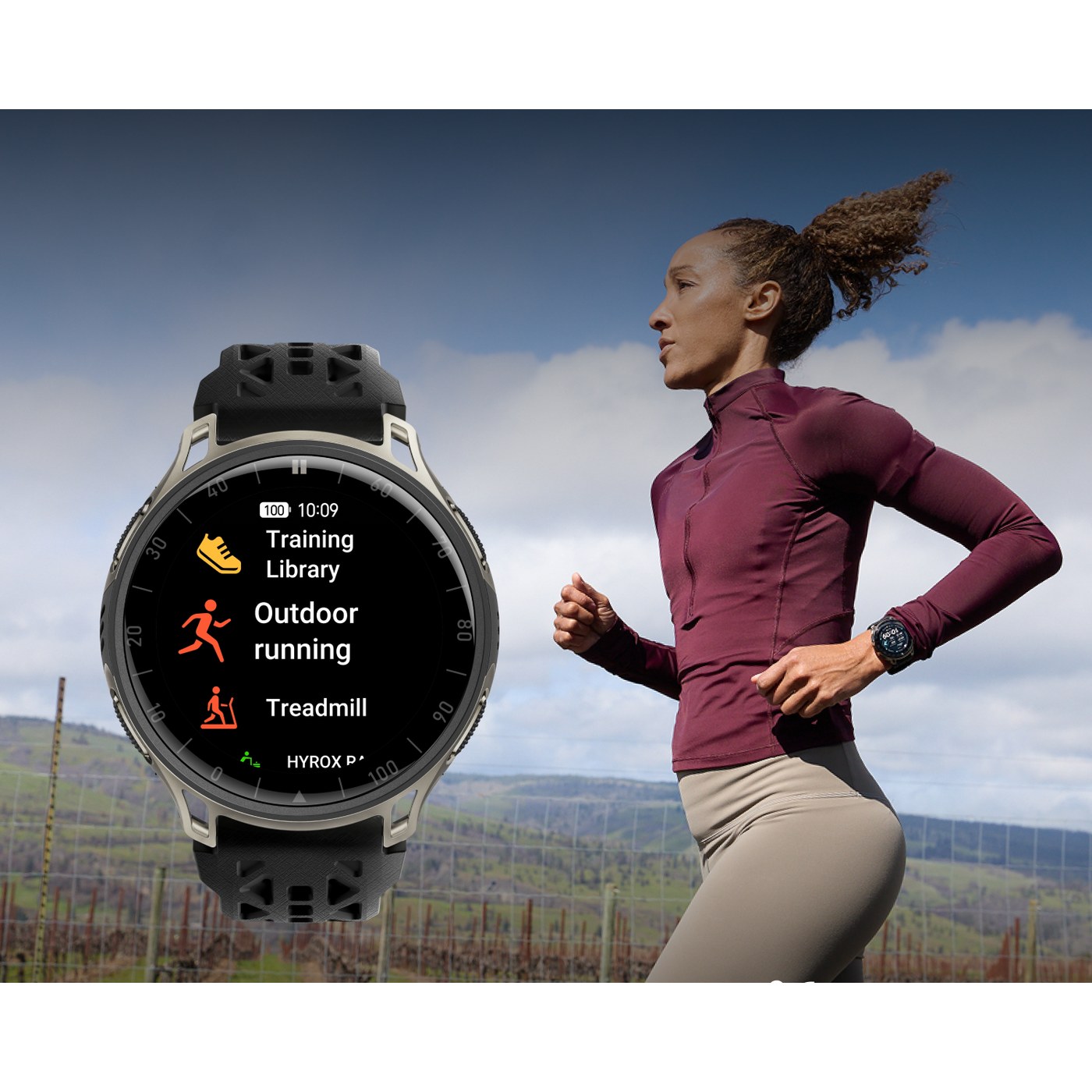
The Cheetah 2 Pro is made for the marathon: its reliable road track, battery life and accurate steady-pace heart rate cover long runs and race-pace work. Pair it with the RunMorph marathon training plan and let the plan pick your sessions rather than the Zepp coach. Set your heart rate zones by hand from day one: by default, the watch uses the 220-minus-age formula, which is too crude. For threshold sessions and short intervals, add a chest strap.
© Amazfit, official photo used for editorial purposes
The RunMorph Coach's verdict
The Cheetah 2 Pro earns 7.5/10. The hardware is faultless for the price. Accurate GPS, reliable steady-state heart rate, battery life as promised, a stunning screen. It loses points where a running watch also has to shine: the software. Metrics that miss threshold by 9 bpm, a half-translated interface and hit-or-miss rerouting are hard to forgive at €449.90.
Buy it if you want a tough, good-looking watch for road running and following an external plan. Skip it if you want a watch that analyses and guides your training: the COROS Pace Pro does better for less.