Polar launched the Grit X2 in June 2025 at €479.90. On paper, it is a shrunken Grit X2 Pro: same dual-frequency GPS chip, same sensors, same maps, in a 45 mm, 62 g case. In November 2026, Polar lists it at €359.93 on its website. RunMorph cross-checked four published reviews to see what you really give up compared with the Pro, and whether this watch holds up on a trail run lasting several hours.
© Polar, official photo used for editorial purposes
Polar Grit X2: the Grit X2 Pro in a compact format, for €200 less
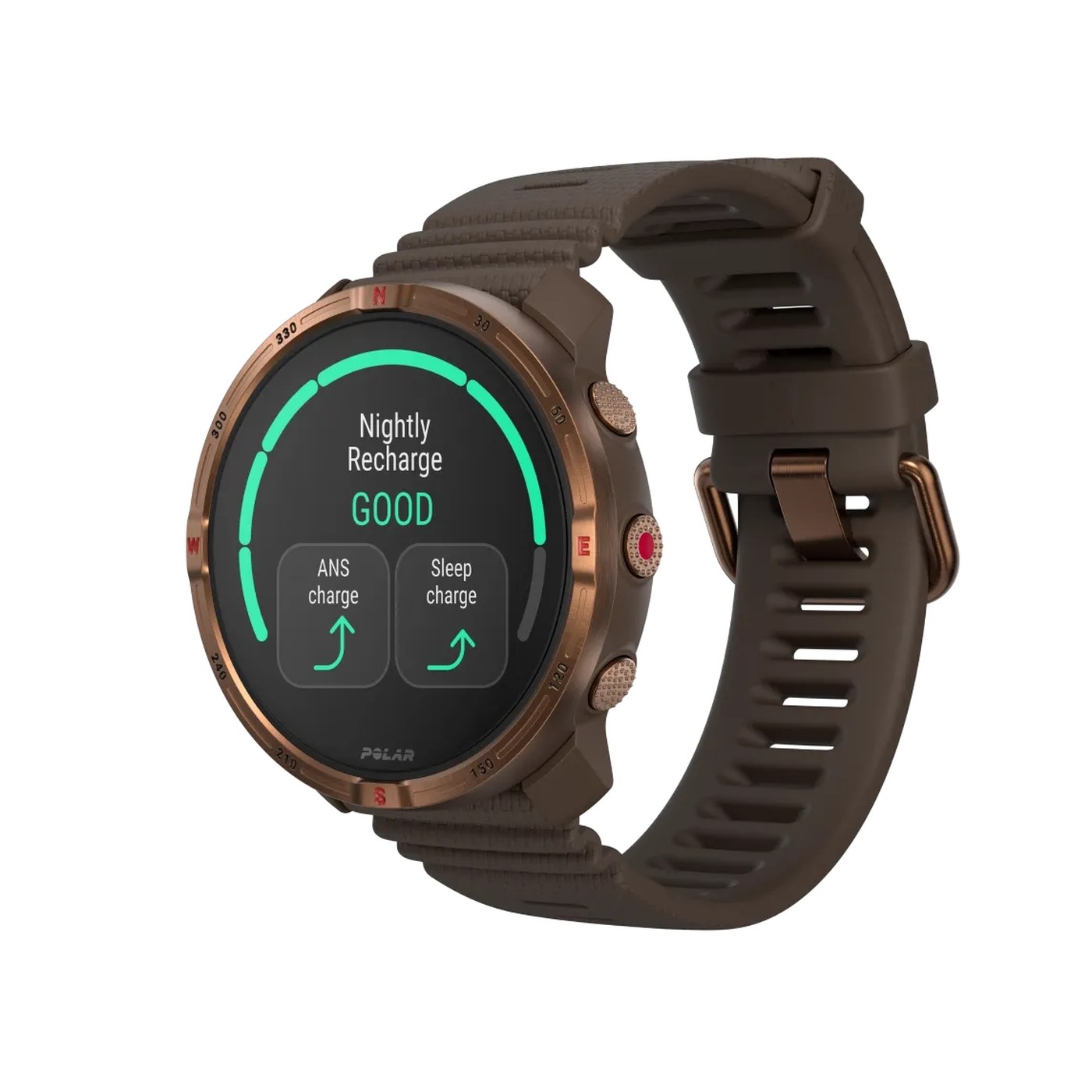
In June 2025, Polar rounded out its outdoor range with a Grit X2 without the "Pro". The idea fits in one sentence. Polar kept the brains of the Grit X2 Pro and shrank everything else. Same processor, same dual-frequency GNSS chip, same Elixir sensor platform, same 32 GB of storage for maps.
The difference shows on the wrist. The case drops from 49 to 45 mm, the thickness from 13.4 to 12.5 mm, the weight from 79 to 62 g. Montre-Cardio-GPS puts the gap at 21% less weight. On a slim wrist, that changes everything.
The price follows. At launch, the Grit X2 cost €479.90, against €749 for the Pro. On 17 November 2026, Polar's website lists €359.93 for the Grit X2 and €562.43 for the Pro, with offers running until 30 November. The gap stays at about €200. A British reviewer sums it up bluntly: the same watch as the Pro, for two thirds of the price.
What are those €200 worth? For most runners, not much. For those who string together 20-hour outings, a lot. Here is why.
RunMorph's advice: if you are torn between the Grit X2 and the Grit X2 Pro, look at your longest outing of the year. Under 20 hours of effort, take the Grit X2 and keep the €200 for a pair of shoes. Beyond that, the Pro's battery (488 mAh against 310) makes the difference. And if you hardly ever leave the tarmac, a watch without maps like the Forerunner 265 will do.
© Polar, official photo used for editorial purposes
Who is the Polar Grit X2 for?
The trail runner doing 1 hour to full-day outings
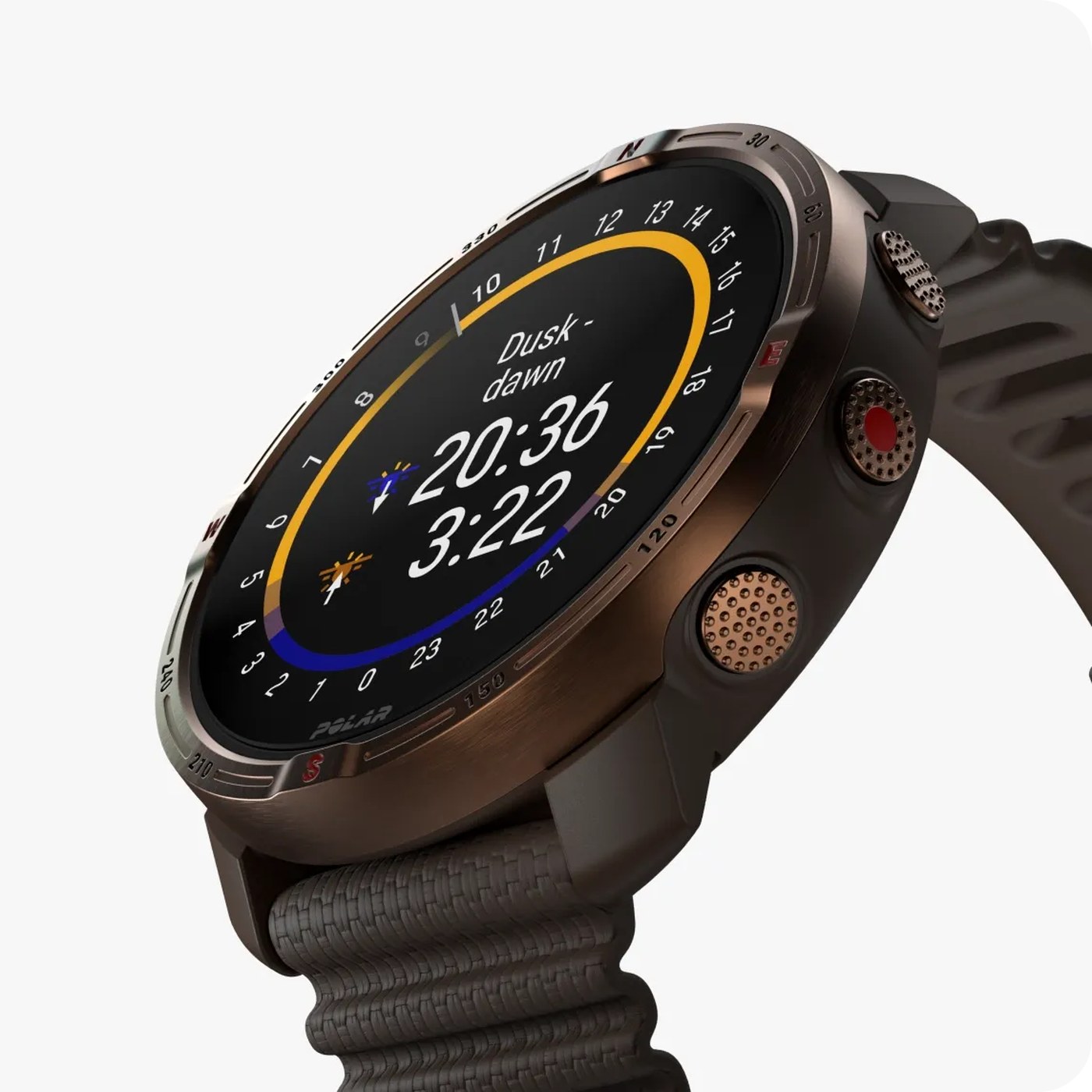
This is its target. Runpack wore it for two weeks in the mountains, on trail runs of 1 to 4 hours and hikes of 7 to 8 hours. The verdict: a good first trail watch for middle distances. At 62 g, it weighs 17 g less than the Pro. Over six hours on the trail, your wrist notices.
The road runner who also hits the trails
On tarmac, the Grit X2 ticks the boxes: pace, wrist-based power, Running Index, structured workouts. The only issue is the optical heart rate during intervals, covered below. If your training is mostly on the road, a Forerunner 265 or a Pace 4 at €269 will do the job without making you pay for maps you will never use.
The triathlete or multisport athlete
There is a triathlon profile, and open-water swimming too. The water rating drops to 50 m, against 100 m on the Pro. For sea swimming, that is enough: Montre-Cardio-GPS swam in the English Channel with it. On the other hand, the watch lacks swimrun and run-and-bike profiles. If triathlon is your main sport, the Vantage V3 is the better fit.
© Polar, official photo used for editorial purposes
GPS accuracy and heart rate sensor: solid GPS, heart rate to keep an eye on
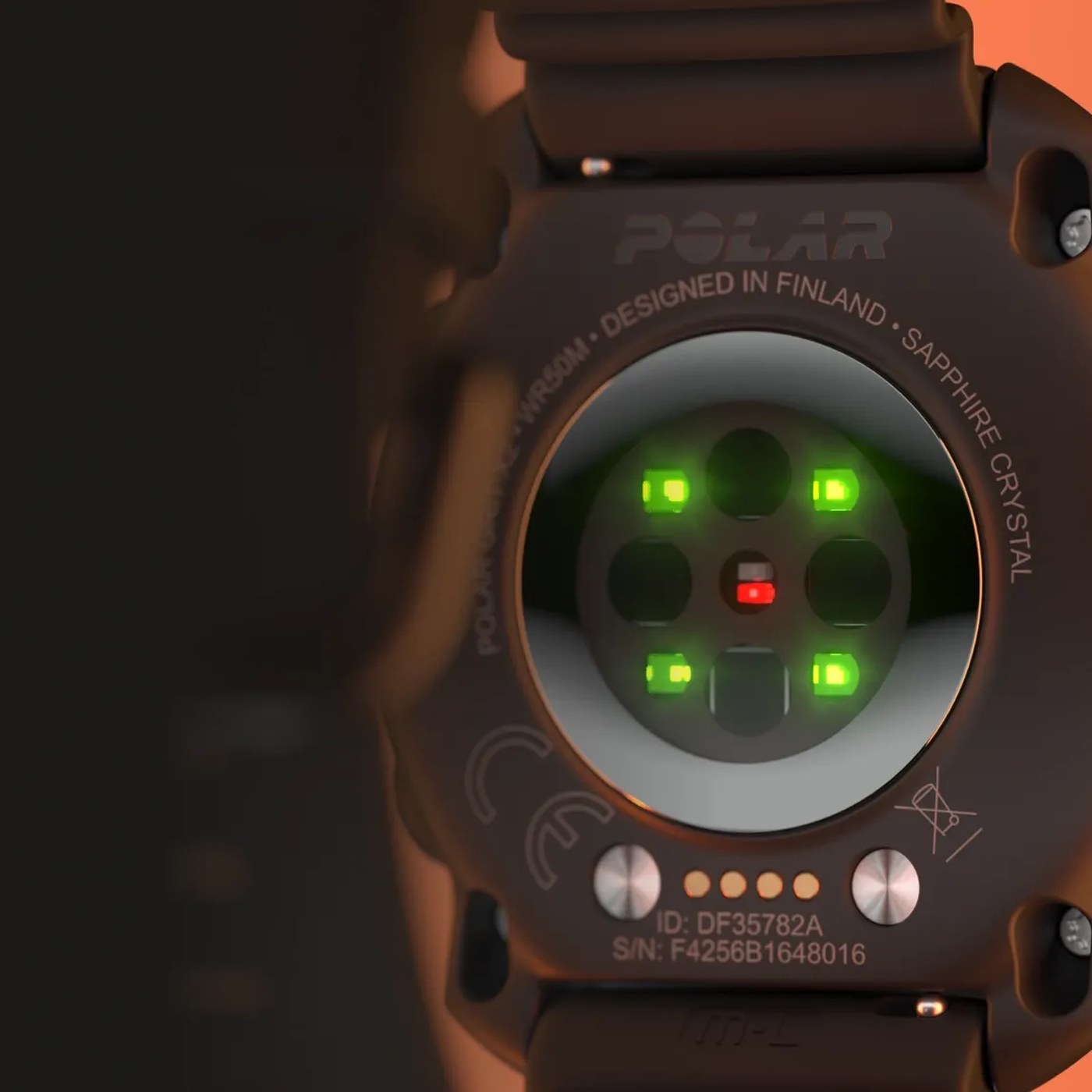
Start with the GPS, that is the good news. All four reviews point the same way. Runpack calls it "flawless", including in forests and deep gorges, where the signal usually drops. Montre-Cardio-GPS rates it good in the mountains, along cliffs and in town.
Two English-speaking reviewers ran with a Forerunner 970 on the other wrist. Both describe clean tracks that stick to the path, with no strange drift. None of the four reviews gives a measured error over a reference distance. That is the limit of this finding.
The only wrong note came in the water. Montre-Cardio-GPS describes a "slightly erratic" track in a lake. For a runner, that changes nothing.
The optical heart rate is another story.
On a steady-pace run, the readings are clean. A British reviewer found them consistent with the Forerunner 970, both running and cycling. As soon as the pace changes, things go wrong. Montre-Cardio-GPS saw a lag at the start of every session, then erratic spikes during changes of pace. A second English-speaking reviewer saw values climbing too high on hard efforts.
The direct consequence: in interval sessions, the calculated training load and VO2max can go off track. On 30 September 2026, Polar released an update (6.0.18) announcing a revised heart rate algorithm to cut inconsistent readings. No published review has measured its effect yet. Put simply, for your VO2max sessions, a chest strap is still the right call.
© Polar, official photo used for editorial purposes
Maps and navigation: complete, but not the simplest
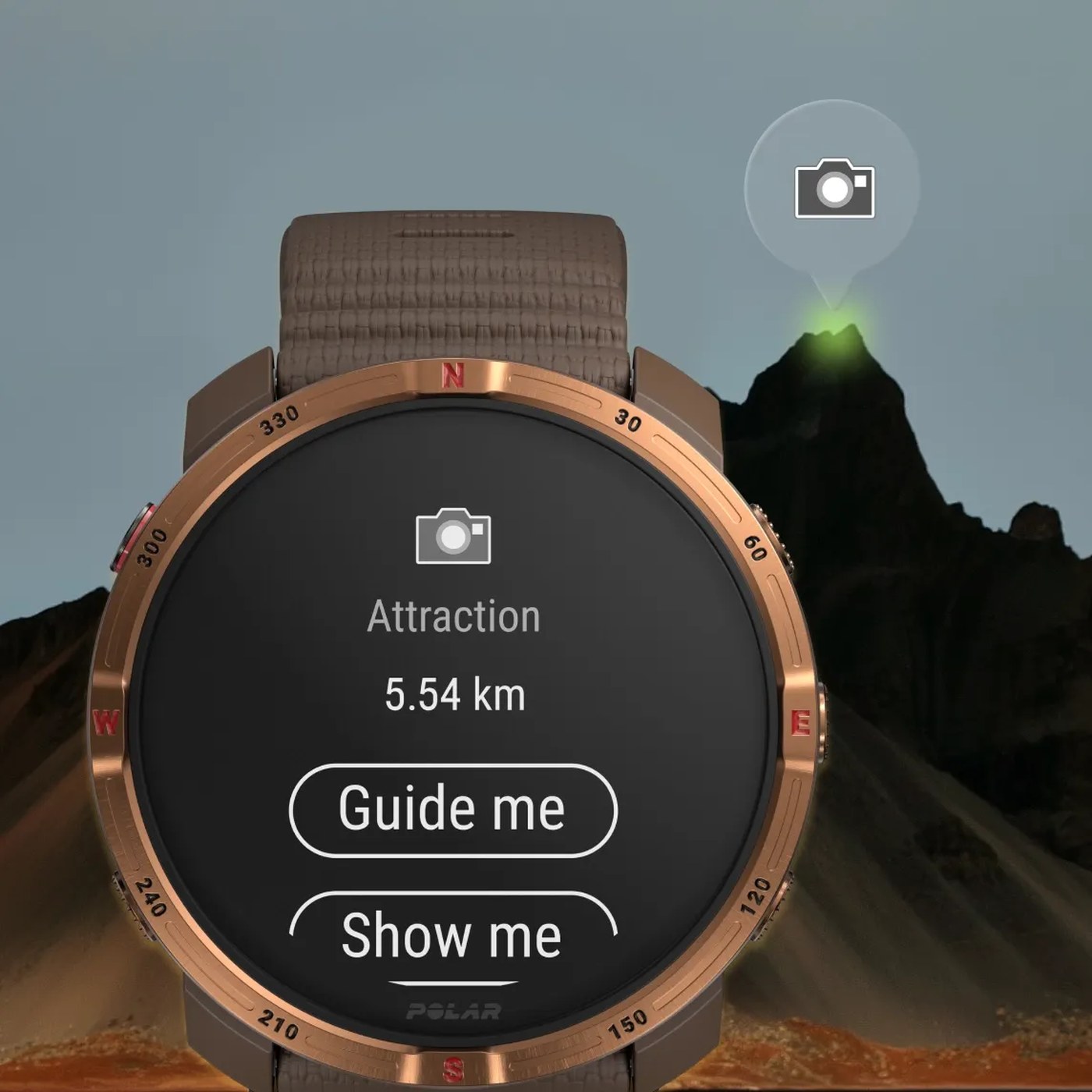
The Grit X2 packs 32 GB of storage and offline maps. The base map for Europe and North America comes preinstalled. The topographic layer, however, has to be downloaded country by country from Polar Flow on a computer, then copied to the watch. Montre-Cardio-GPS lists this computer step among the flaws.
Once the route is loaded, navigation is pleasant. Runpack likes the real-time elevation profile, with the remaining kilometres, ascent and descent. Turn-by-turn guidance works with every route, not just Komoot ones. One trap to know: it is off by default and has to be switched on after the activity starts.
Two limits. The map is not routable: if you leave the route, the watch does not recalculate. Back-to-start works as the crow flies or by retracing your track. For imports, Komoot and Strava sync, but Strava needs a paid subscription. A British reviewer finds the whole thing fiddly to set up.
The flashlight uses the AMOLED screen in full white. There is no dedicated LED like on the Instinct 3 AMOLED. To find a head torch at the bottom of your pack, it helps. To light a trail, it does not.
Training and recovery metrics
No difference from the Pro here. You get Training Load Pro (cardio, muscle and perceived load), Recovery Pro, the orthostatic test, Nightly Recharge and a four-level training status. That status compares your load over the last 7 days with the last 28.
For trail running, two tools really earn their place. Hill Splitter automatically splits your climbs and descents. FuelWise reminds you to drink and eat. Runpack likes these reminders, while Montre-Cardio-GPS finds the vibration too weak to feel them every time.
Update 6.0.18 added 7-day trend graphs (sleep, HRV, running index) and an 80% charge limit to protect the battery. The software keeps moving.
Where it falls short is usability. Montre-Cardio-GPS finds the menus unfriendly, and widgets cannot be reordered. Runpack and a British reviewer find the Polar Flow app behind the competition. Perceived effort (RPE) can only be entered in the app, not on the watch.
Real-world battery life: decent, not built for ultras
Polar claims 7 days in watch mode, 30 hours of dual-frequency GPS, 40 hours in single frequency and up to 90 hours in eco mode. That last mode spaces GPS points so far apart that Montre-Cardio-GPS considers it useless for running.
Field measurements come in lower. Montre-Cardio-GPS recorded 25 to 35 hours of GPS depending on the mode, with the screen asleep. With the always-on display, the watch drops to 10 to 16 hours. The watch's own battery manager puts that extra cost at 30%.
Runpack concludes that endurance is not on par with the best in class and doubts the watch for ultra-trail. That is the price of 62 g: 310 mAh against 488 on the Pro. For an 80 km race finished in 12 hours, no problem. For a 100-miler, look elsewhere.
Three good points to finish. The watch can charge during an activity. A full charge takes about 2 hours. And Polar service replaces the battery for €39.90, plus service and shipping fees. On a watch you keep for five years, that matters.
Polar Grit X2 vs Grit X2 Pro: the comparison
| Criterion | Grit X2 | Grit X2 Pro |
|---|
| Case | 45 mm, 12.5 mm thick | 49 mm, 13.4 mm thick |
| Weight with strap | 62 g | 79 g |
| Display | 1.28-inch AMOLED, 416 x 416 | 1.39-inch AMOLED, 454 x 454 |
| Water rating | 50 m | 100 m |
| Battery | 310 mAh | 488 mAh |
| GPS, sensors, maps, metrics | Identical | Identical |
| Launch price | €479.90 | €749 |
| Price on Polar's website on 17 November 2026 | €359.93 | €562.43 |
Everything else is strictly identical: processor, GNSS chip, sensors, maps, training suite and software. The Pro is worth it for three reasons only. Battery life, 100 m water rating and a bigger screen. If none of those matter to you, the Grit X2 is the better buy of the two.
How it compares with the competition
The Suunto Race S, reviewed at €449, plays in the same format, with 45 mm and 60 g. It stores your music on 32 GB, while the Grit X2 plays none. The Polar answers with ECG and sapphire glass.
The Garmin fenix E, found at €369 at i-Run in mid-November, costs almost the same. It brings the Garmin ecosystem and contactless payment, but its GPS stays single-frequency. If you often run in dense forest, the Grit X2 keeps the edge.
If battery life comes first, the COROS Apex 4 claims 65 hours of multi-band GPS, more than double. It costs €499.99, so €140 more. For ultras, it is the logical choice.
How to fit it into your RunMorph training plan
The Grit X2 shines on long runs in nature. In a RunMorph trail plan, use it without hesitation for long runs, hill sessions and course reconnaissance. Hill Splitter gives you the detail of every climb, and FuelWise reminds you to eat before you hit the wall.
For interval sessions, pair a Bluetooth chest strap. The watch does not support ANT+, so check your strap is compatible before buying. And log your perceived effort in Polar Flow after the session, since the watch cannot do it.
Training for a trail race this season? The
RunMorph trail plan builds your long runs, hill sessions and recovery around your race goal. Your Grit X2 just has to record.
© Polar, official photo used for editorial purposes
RunMorph Coach verdict
The Grit X2 is the best deal in Polar's range right now. For €359.93, you get dual-frequency GPS that every reviewer rates as reliable, maps with guidance and the Pro's full training suite. All in 62 g.
It has two real flaws. The optical heart rate falls apart in intervals, and measured battery life tops out between 25 and 35 hours. The first is fixed with a chest strap. The second depends on how you run: under 20 hours of effort, it will never get in your way.
Buy it if you run trails from 1 hour to a full day and want a light watch. Skip it if you are aiming for 100 miles, and take the COROS Apex 4 instead. If you never leave the tarmac, the Forerunner 265 will do.
RunMorph score: 7,8/10