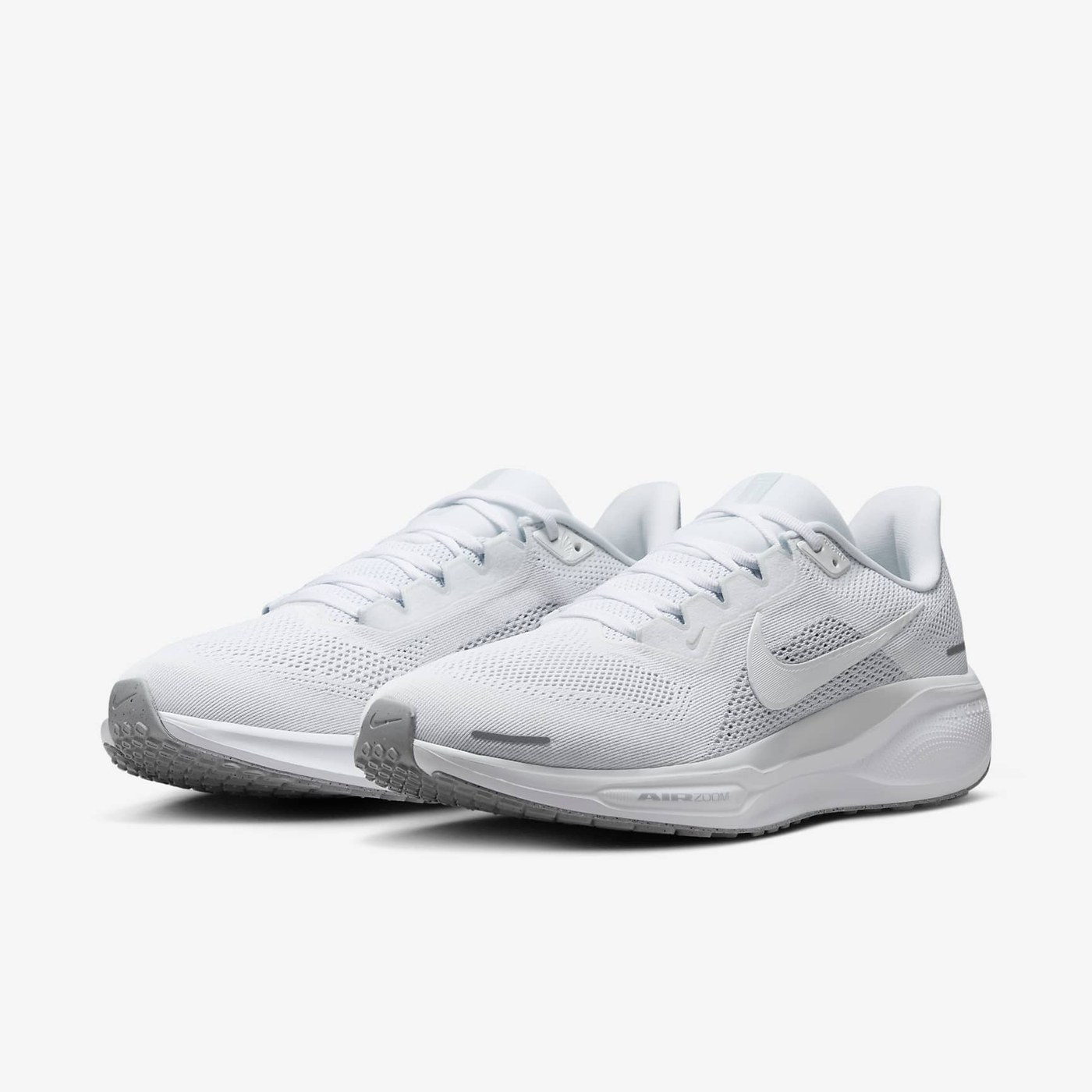
With more than forty editions since 1983, the Nike Pegasus is one of the best-selling running shoes on the planet. The Pegasus 41, launched in June 2024, marks a real turning point with its new ReactX foam and two Air Zoom units. At RunMorph, we put it through more than 100 kilometres of running: here is what it is really worth on the road, which runner it suits, and how it stacks up against the Pegasus 42 and the other daily training benchmarks.
Nike Pegasus 41: the full RunMorph review
8.5/10
- Genuine versatility: from easy runs to long runs, all the way to the marathon as a one-shoe quiver
- Excellent durability, 600 to 800 kilometres or even more
- Reassuring stability, geometry well thought out for heel strikers
The essentials in 3 sentences
The Nike Pegasus 41 is THE do-it-all running shoe: balanced cushioning, reliable lockdown and durability in the 600 to 800 kilometre range. Its ReactX foam and its two Air Zoom units (heel and forefoot) deliver decent energy return, nothing revolutionary, in a fairly classic fit. Verdict: 8.5/10, a very safe pick for heel strikers and beginners who want one pair to do everything.
8.5
/ 10 · RunMorph overall score
Who is it for?Beginners, heel strikers and anyone looking for a single reliable, durable pair for everyday training.
Who should skip it?Forefoot strikers and fans of very light shoes, who will be better off with an Asics Novablast 6 or a New Balance FuelCell Rebel v5.
Nike Pegasus 41: the world's most famous daily trainer switches to ReactX
Forty-one generations. Very few running shoes can claim that kind of longevity, and even fewer have stayed so central to runners' kit. The Pegasus has never been the fastest, the softest or the lightest. It is simply the one you recommend when you don't know what to recommend: the pair that does it all, without hurting your feet or your wallet.
With the 41, Nike makes its biggest change in years: React foam is out, replaced by ReactX, paired with two Air Zoom units (heel and forefoot). The official promise is 13 % more energy return and a 43 % smaller carbon footprint for the midsole. Marketing talk or genuine upgrade? Independent lab measurements are mixed: measured energy return reaches 55.5 % at the heel and 61.4 % at the forefoot, slightly below the average of tested models (58.7 %), even if the forefoot Air Zoom unit adds some pop. Bottom line: the Pegasus 41 is still a classic training shoe, not a super trainer in disguise.
RunMorph's advice: if you are torn between this and the next version, read our Nike Pegasus 42 review first. And if you need arch support rather than a neutral ride, the Nike Structure 26 remains the stability benchmark in Nike's lineup.
© Nike, official photo used for editorial purposes
Objective technical data
| Brand | Nike |
|---|---|
| Model | Air Zoom Pegasus 41 |
| Release | June 2024 |
| Type | Road, neutral, daily trainer |
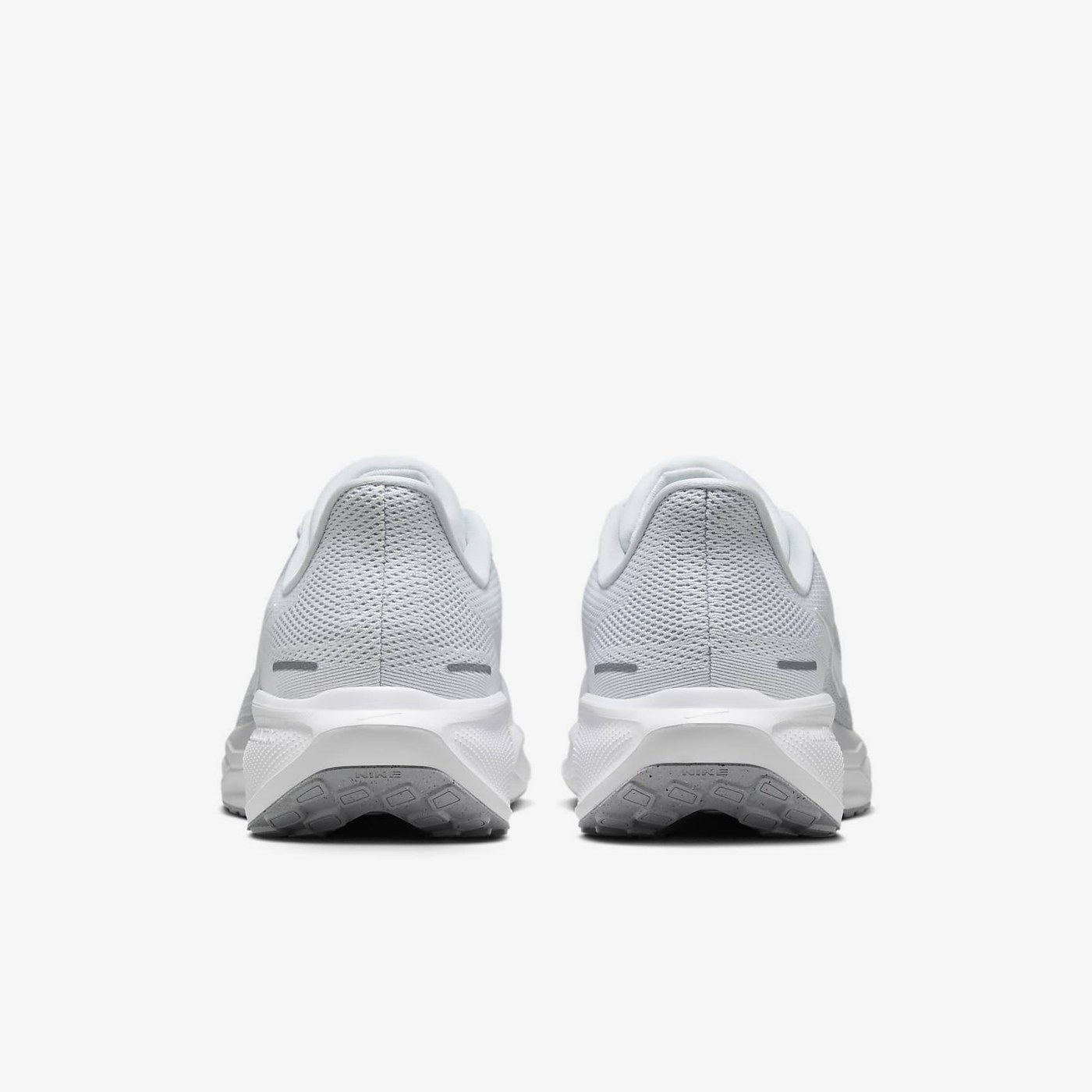
| Weight | 297 g men's (size 42.5), 251 g women's (manufacturer figures) |
| Drop | 10 mm claimed, 11.9 mm measured in an independent lab |
| Stack | 37/27 mm claimed, heel measured at 33.6 mm |
| Foam | ReactX, injection moulded |
| Plate | None, two Air Zoom units (heel and forefoot) |
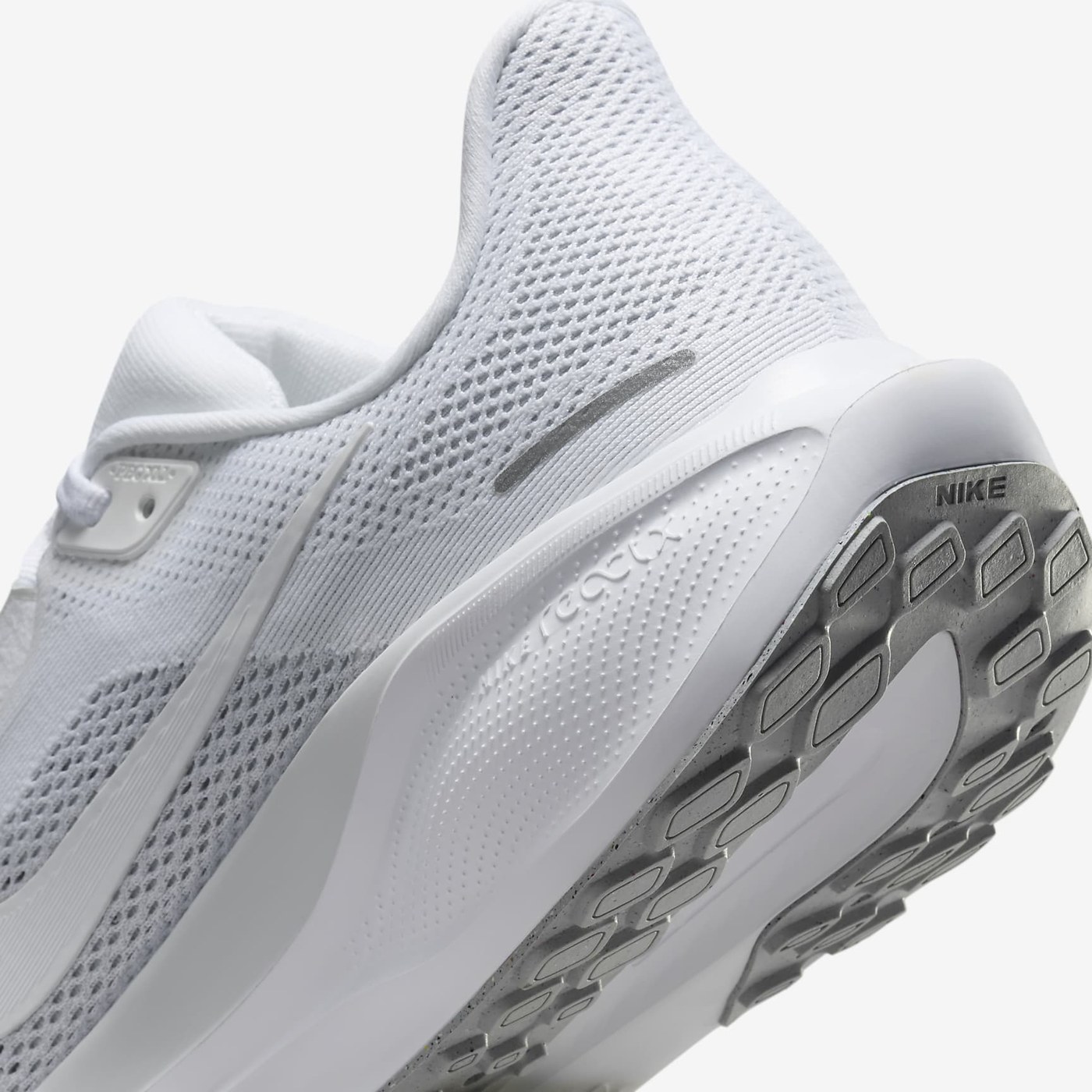
| Outsole | Waffle-inspired rubber |
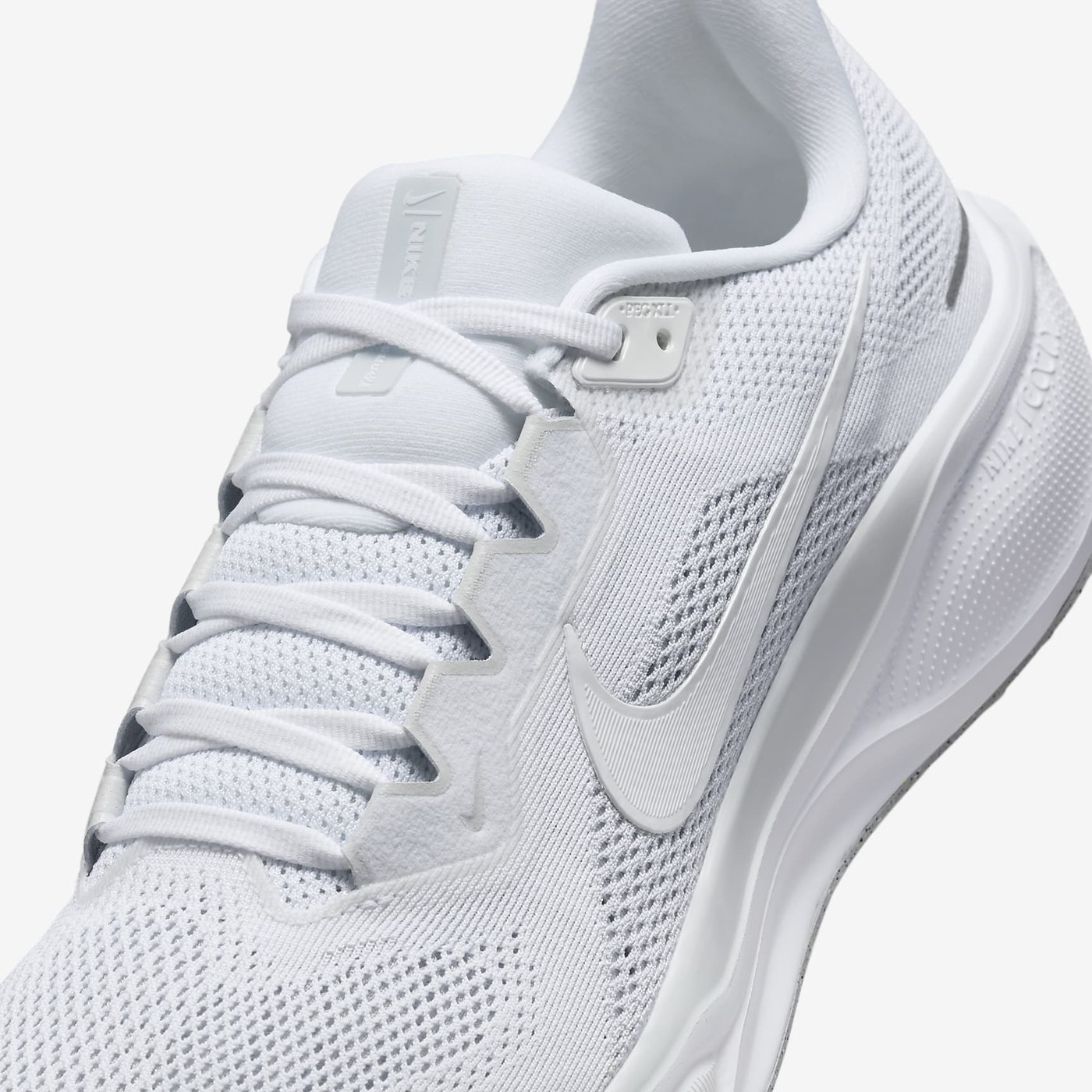
| Upper | Engineered mesh with Dynamic Fit lacing |
| Recommended distance | 5K to marathon |
| Price | €139.99 at launch, regularly around €85 to €110 today |
One point deserves attention: the gap between the claimed drop (10 mm) and the measured drop (11.9 mm). That is no detail. A drop this pronounced naturally shifts your centre of gravity backwards, which makes the Pegasus 41 a particularly good fit for heel strikers, but a less obvious one for runners who land hard on the forefoot.
Who is the Nike Pegasus 41 for?
The beginner who wants one pair
New to running and don't want to get it wrong? The Pegasus 41 is the default choice that practically picks itself. It handles slow easy runs, slightly longer outings and a few pickups. Its stability is reassuring, its cushioning protective without disconnecting you from the ground, and its toughness forgives care mistakes.
The regular heel striker
Between 4'30 and 5'45 per kilometre, on easy aerobic runs or sensible threshold sessions, the Pegasus 41 gets the job done seriously. Independent measurements confirm average heel cushioning (125 SA against an average of 131 SA across nearly 400 tested models) and a foam of balanced density (36.2 HC, very close to average). This heel-striker profile is exactly what Nike is targeting with this geometry, and it is where the shoe feels most at home.
The budget-minded runner who logs big mileage
With an observed lifespan of 600 to 800 kilometres, sometimes more according to users, and a price now well below the €139.99 launch tag, the Pegasus 41 offers one of the best costs per kilometre on the market. If you run a lot and want a training pair that lasts without breaking the bank, it deserves its spot in your rotation.
© Nike, official photo used for editorial purposes
Field test: comfort, ride and grip
At RunMorph, the Pegasus 41 was tested over more than 100 cumulative kilometres: 45-minute easy runs at a free pace (5'30 to 6'15/km), long runs of 1 h 30 to 2 h, threshold sessions around 4'20/km and easy recovery runs after races. That versatility is exactly what we expected from it, and it delivers.
Comfort and fit
The step-in feel is convincing: padded collar, generous tongue, soft engineered mesh. The Dynamic Fit lacing wraps the midfoot well without excessive pressure. The toe box is fairly classic, even slightly snug: wide feet will probably need to go up half a size. Over long runs, we found no notable hot spots, even with thin socks.
Ride
The ride is that of a classic, honest daily trainer: ReactX is softer than the old React, transitions stay smooth thanks to a slightly rockered geometry, and the forefoot Air Zoom unit makes itself felt as soon as you pick up the pace. On the other hand, at a sustained pace over time, you quickly hit the limits of its energy return: for regular speed work, a Nike Streakfly 2 or an Asics Magic Speed 5 will do a much better job.
Grip and durability
The waffle-pattern rubber outsole offers perfectly decent grip on dry and slightly wet roads, and its measured stiffness (12.6 N in the 30-degree flex test) leaves the arch plenty of freedom of movement. As for durability, the rubber covers the wear zones generously: consistent with the range's reputation as a tank.
Pros and cons
Strengths
- Genuine versatility: from easy runs to long runs, all the way to the marathon as a one-shoe quiver
- Excellent durability, 600 to 800 kilometres or even more
- Reassuring stability, geometry well thought out for heel strikers
- Very competitive price today, often under €110
- Better energy return than the Pegasus 40
Weaknesses
- Forefoot cushioning on the thin side, measured at just 92 SA
- 297 g, far from the lightest shoes in the category
- Drop measured at 11.9 mm, a poor match for aggressive forefoot strikers
- Average energy return compared with recent super trainers
- Rather snug toe box, check the fit if you have wide feet
Nike Pegasus 41 vs Pegasus 42: head to head
This is the question everyone is asking: should you grab the 41 on sale or pay full price for the 42? The short answer: it depends on your budget. The long answer is in the table.
| Model | Guide price | Key differences | Who is it for? |
|---|---|---|---|
| Nike Pegasus 41 | €139.99 at launch, often under €110 | ReactX, two Air Zoom units (heel and forefoot), drop measured at 11.9 mm | Runners who want the best deal and a pronounced rearfoot cushion |
| Nike Pegasus 42 | €140 | Redesigned, more comfortable upper, full-length Air Zoom, improved grip | Runners who want the most refined version, especially for long runs |
Both models share the same philosophy: a reliable, neutral daily trainer built for high mileage. The 42 mainly fixes upper comfort and evens out the cushioning thanks to its full-length Air Zoom. If you find the 41 under €100, the price gap more than makes up for the technical gap. Get all the details in our full Nike Pegasus 42 review.
How it compares with the competition
| Model | Guide price | Positioning | Main strengths |
|---|---|---|---|
| Nike Pegasus 41 | €139.99 (often around €85 to €110) | Versatile neutral daily trainer | Durability, heel stability, falling price |
| Asics Gel-Cumulus 28 | €160 | Neutral daily, more cushioning | Comfort and breathable mesh, softer feel |
| Brooks Ghost 18 | €150 | Neutral daily, benchmark comfort | Instant comfort, forgiving fit |
| Mizuno Wave Rider 30 | €150 | Neutral daily, classic responsiveness | Wave plate, precise response, toughness |
| Saucony Ride 19 | €140 | Lighter neutral daily | Liveliness, low weight, versatility |
Against these four benchmarks, the Pegasus 41 makes its case above all on durability and its real-world shelf price. For pure liveliness, the Ride 19 does better. For softness, the Ghost 18 and the Cumulus 28 come out ahead. The Pegasus remains the balanced choice, especially for heel strikers.
How to fit the Pegasus 41 into your RunMorph training plan
In a RunMorph plan, the Pegasus 41 naturally slots in as your everyday training shoe: easy aerobic runs, long runs at endurance pace and moderate threshold sessions. For VO2max intervals and races, use dedicated models: the Streakfly 2 for the track and the 10K, the Vaporfly 4 or the Alphafly 3 for race day. This rotation is exactly what our coaches recommend to improve without getting injured.
Build your personalised RunMorph training plan and let your goal dictate your runs, not your shoes.
© Nike, official photo used for editorial purposes
The RunMorph Coach's verdict
The Nike Pegasus 41 doesn't reinvent anything, but it refines a recipe that has worked for forty years. ReactX brings improved comfort, independent measurements confirm honest cushioning and solid stability, and durability remains a heavyweight argument. Its limits are well known: thin forefoot cushioning, a hefty weight and a high drop that clearly favours heel strikers. For a beginner or a regular runner who wants one tough pair, often under €110, it is one of the best value-for-money options on the market.
RunMorph verdict: 8.5/10
Key takeaways for your training
- Unapologetically versatile: from easy sessions to long runs, the Pegasus 41 covers 90 % of a regular runner's needs.
- Heel-striker profile: drop measured at 11.9 mm and average heel cushioning, best kept for rearfoot landings.
- Record durability: 600 to 800 kilometres, one of the best costs per kilometre in the category.
- Falling price: launched at €139.99, it regularly sells for around €85 to €110.
- Pair it up for speed: for VO2max work and racing, add a dedicated model such as the Streakfly 2 or the Vaporfly 4.
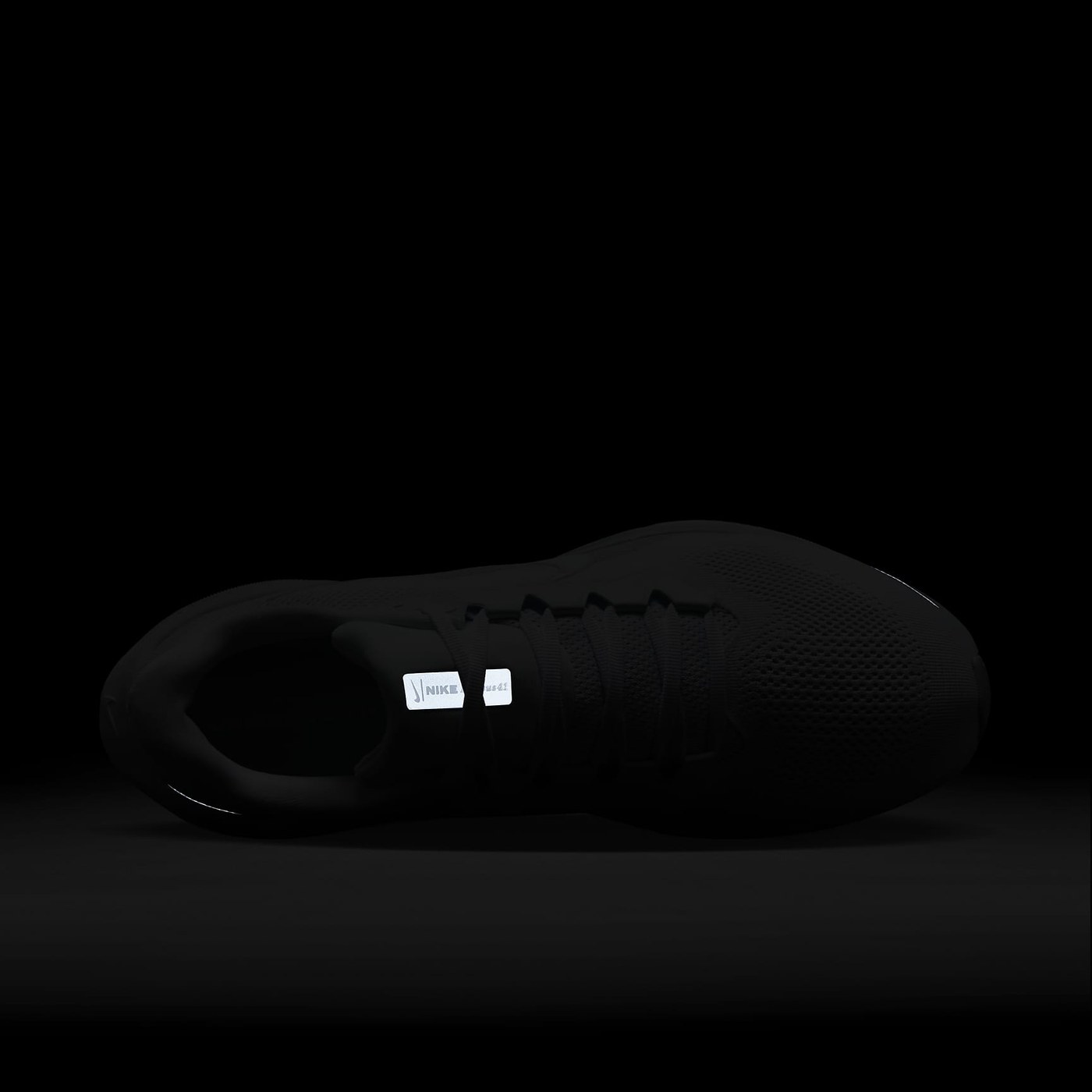
© Nike, official photo used for editorial purposes