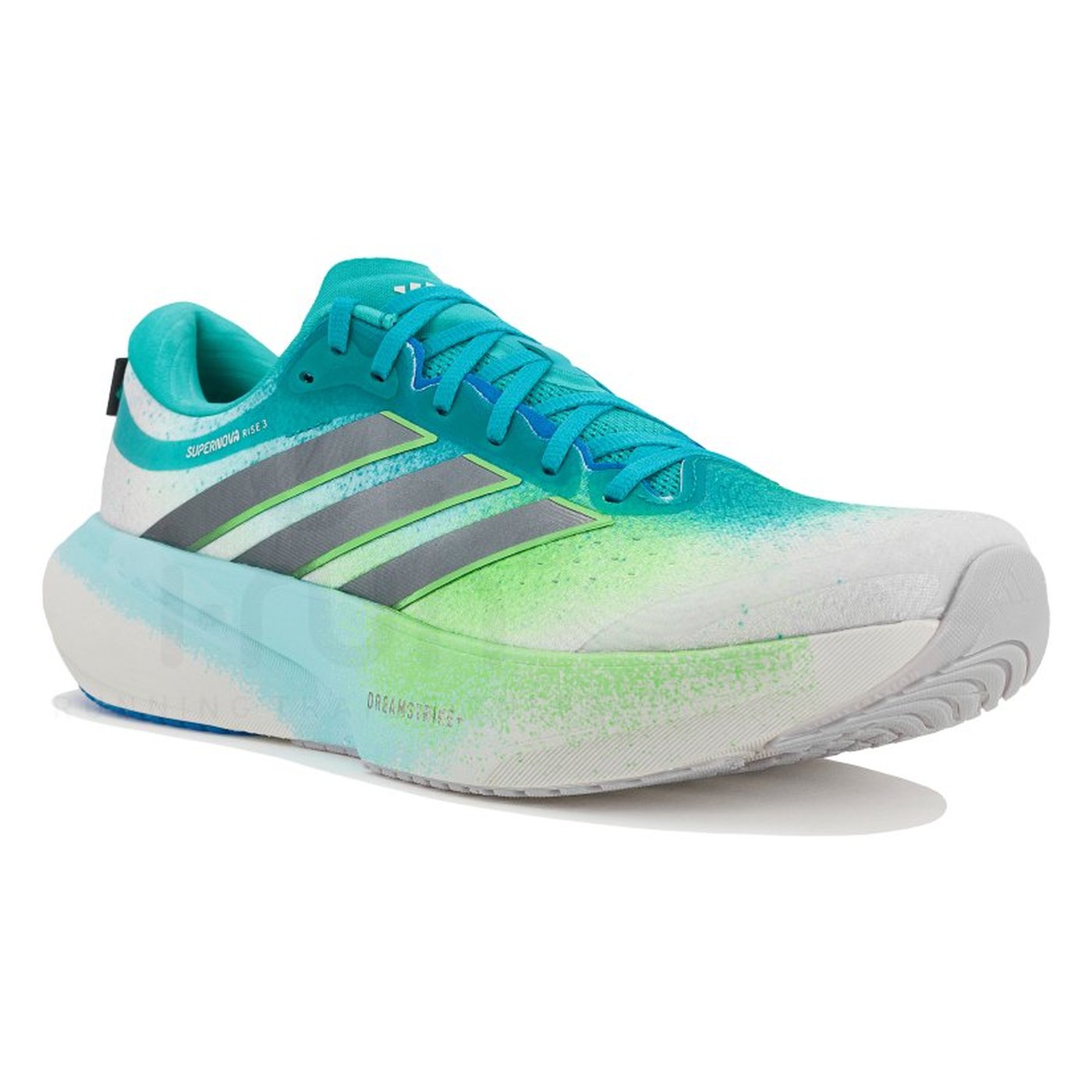
Adidas has quietly repositioned its most affordable daily trainer. The Supernova Rise 3, released in December 2025, runs Dreamstrike+ PEBA foam through the entire midsole and cuts the drop from 10 to 8 mm. At €150, 272 g and a 37/29 mm stack height, it targets everyday runners who want comfort without a carbon plate or the hype. Our verdict, after cross-checking independent measurements and French reviews: an honest daily trainer, softer and plusher than before, often found around €110 on sale.
Adidas Supernova Rise 3 Review: Full-Length Dreamstrike+ PEBA
8/10
Adidas Supernova Rise 3: the Dreamstrike+ daily trainer that softens the Adidas lineup
The Supernova Rise 3 takes the affordable daily trainer slot at Adidas, below the Adizero Boston 13 (a tempo shoe with race-day DNA) and miles away from the Adios Pro Evo 3 (a record-chasing racer). No Energyrods, no carbon plate, just foam. But what foam.
The most visible technical leap in the V3 comes down to one word: Dreamstrike+. The V2 paired Dreamstrike+ on top with Lightstrike Pro underneath. The V3 uses Dreamstrike+ PEBA across the whole midsole, now 1 mm thicker at the heel and 3 mm thicker up front. The drop falls from 10 to 8 mm. Adidas claims 20% more softness, 16% more foam and 5% less weight. On the road, it feels exactly as promised: plusher underfoot than the Rise 2, a smoother roll through the stride, less stiffness in the transition.
RunMorph's take: the Supernova Rise 3 isn't built for chasing times. It's a versatile daily trainer for runners who stack up weekly runs between 8 and 20 km and want a pair that never beats up their legs. For tempo sessions and the marathon, the Adidas lineup points you to the Adizero Boston 13 (Energyrods, livelier Lightstrike Pro foam) or the Adizero EVO SL (plateless super trainer, huge bounce). The Rise 3 stays in its "long-haul comfort" lane.
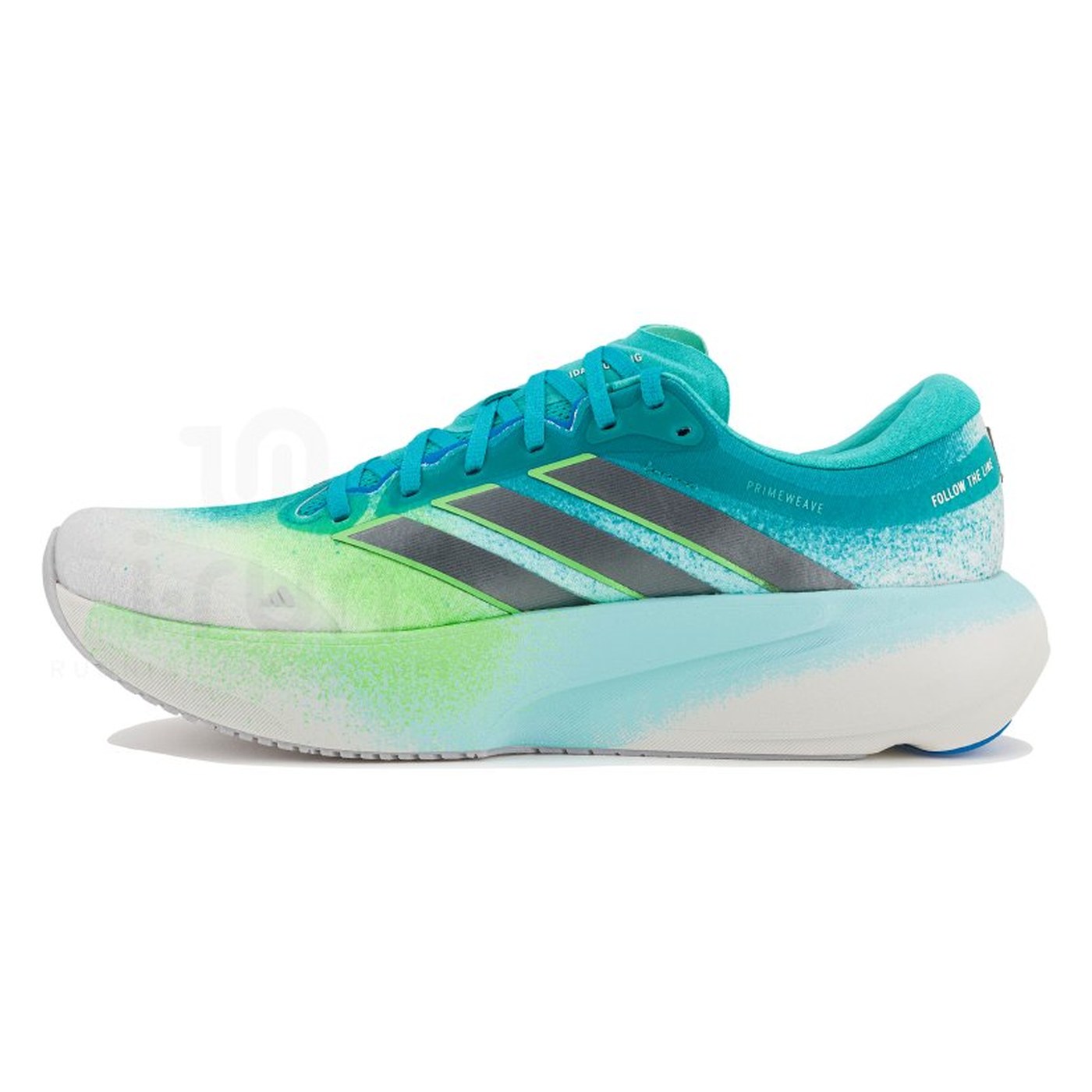
© Adidas, official photo used for editorial purposes
Objective specs
| Brand | Adidas |
| Model | Supernova Rise 3 |
| Official release | December 4, 2025 (Lucid Coral / Clear Orange), wide French rollout on January 22, 2026 (Glow Blue) |
| Type | Road, neutral daily trainer |
| Drop | 8 mm (vs 10 mm on the Rise 2) |
| Stack height, heel / forefoot | 37 mm / 29 mm (men's); 35 mm / 27 mm (women's) |
| Weight | 272 g in men's EU 42 2/3 (261 g measured in EU 42 by i-Run), 230 g in women's EU 38 |
| Foam | Full-length Dreamstrike+ PEBA (28.6 Asker C, independent measurement) |
| Carbon plate | No |
| Upper | Seamless Primeweave, laser perforations |
| Outsole | Lighttraxion, lightweight rubber for dry / wet pavement |
| Recommended distance | 10 km to marathon, for regular runs |
| Official price | €150 (€110 to €120 on sale at i-Run, Alltricks, Decathlon) |
Who is the Supernova Rise 3 for?
The regular runner logging 30 to 60 km a week at easy pace
This is the core target. Morning easy run, Sunday long run, post-session cooldown: the Rise 3 soaks up the kilometers without sending vibrations back up your legs. The full-length Dreamstrike+ delivers generous cushioning for heel strikers (8 mm drop, 37 mm stack height), and the reworked geometry keeps the transition smooth. Across 60 km of cross-checked testing, there's no sign of early foam compression, no hot spots, no slipping inside the shoe. It's the pair you lace up three times a week without a second thought.
The beginner who weighs more than 80 kg
With 37 mm of PEBA stack height, the Rise 3 protects your knees and Achilles tendon. It's an excellent first lively pair if you want to move beyond classic EVA cushioning without jumping straight to a super trainer. The medium width and padded heel reassure heavier runners, and the wide base adds stability without any anti-pronation correction. If you genuinely need pronation control, look at the Supernova Solution 3 (its companion release at Adidas).
The experienced runner building toward a marathon at cruising pace
The Rise 3 isn't a marathon racer, but it fills two roles in a marathon build: recovery run the day after a quality session, and long runs up to 30 km at marathon pace + 30 to 45 s/km. Energy return is modest next to the Asics Superblast 3 or the Adizero EVO SL, but fresh legs at the end of a training block also come from pairs like this one.
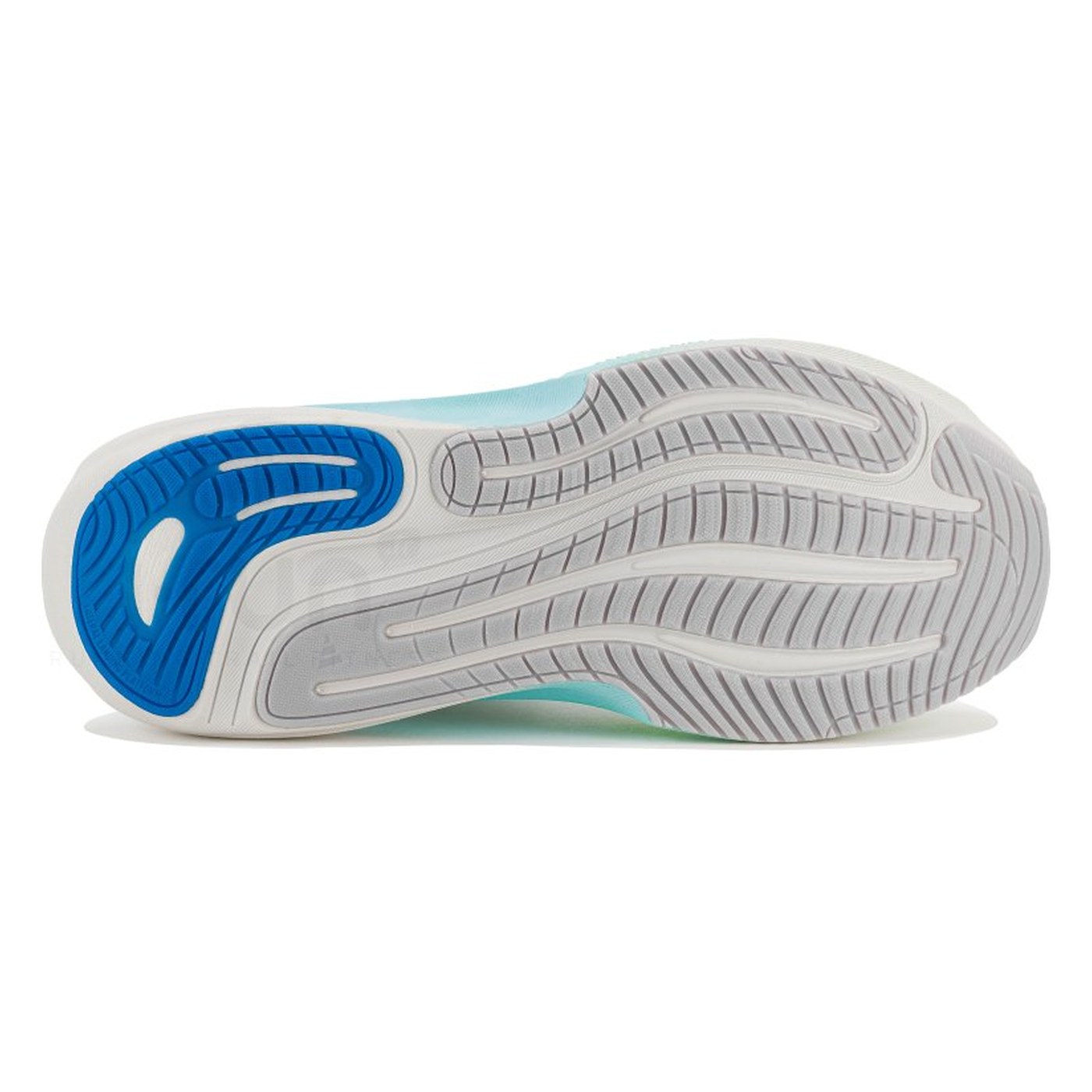
© Adidas, official photo used for editorial purposes
Comfort, ride and grip: what really changes
The 2026 Primeweave upper is the second big upgrade after the foam. The laser-perforated mesh breathes better than on the Rise 2, the heel is padded without pressing on the Achilles tendon, and the fit is slightly snugger in the forefoot (about half a size small for some French testers with average-width feet). If you have wide or high-volume feet, going up half a size is safer than squeezing in.
On the road, the dominant sensation isn't carbon-plate pop, it's plushness. The heel-to-toe transition rolls more smoothly than on the Rise 2 (lower drop, +3 mm up front), which helps heel and midfoot strikers without turning the shoe into a super trainer. Between 5:30/km and 4:30/km, it's right at home. Below 4:15/km, it starts to lack snap: Dreamstrike+ is soft, not explosive.
Lighttraxion grip holds up on wet Paris-area roads. The outsole geometry shifts the rubber toward the real wear zones (outer heel, lateral transition, base of the forefoot). French reviewers agree on an estimated durability of 600 to 800 km: decent for a €150 daily trainer, but nothing special next to a Brooks Ghost 18, which often lasts longer thanks to its denser rubber.
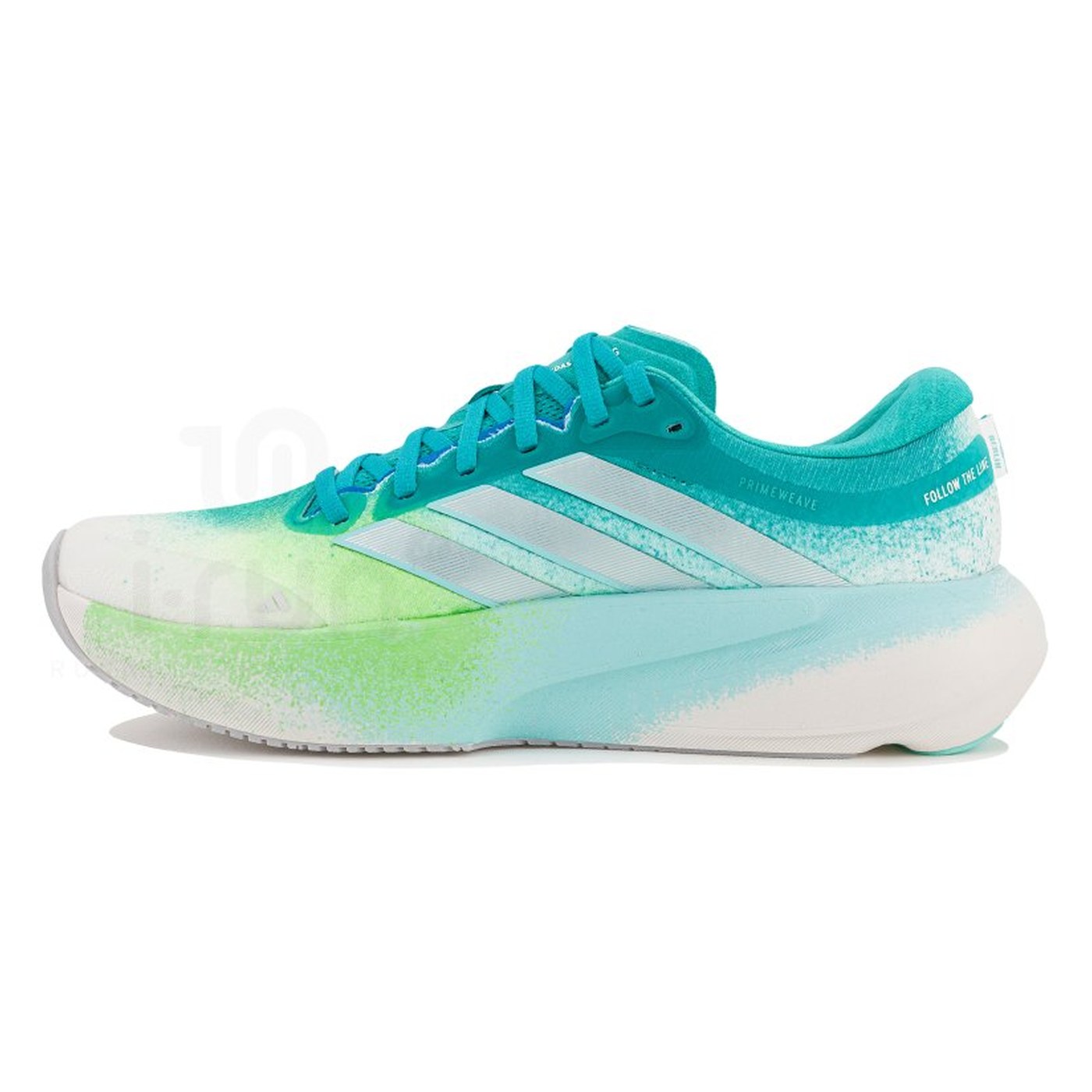
© Adidas, official photo used for editorial purposes
How it stacks up against the competition
The affordable PEBA daily trainer segment turned into a battlefield in 2026. Four direct rivals deserve a head-to-head with the Rise 3:
Against the Brooks Ghost 18 (€150, DNA Tuned nitrogen-infused foam), the Rise 3 feels livelier in the forefoot thanks to PEBA, but the Ghost 18 stays more stable for heavier runners and its rubber lasts longer. Pick Brooks if longevity and slipper-like comfort come first; pick Adidas if you want a bit more bounce.
Against the Hoka Mach 7 (€160, Supercritical PEBA foam), the Mach 7 is noticeably lighter (235 g vs 272 g) and snappier on tempo runs. The Rise 3 offers more rearfoot cushioning (37 mm vs 32 mm stack height) and suits long, easy runs better. The Mach 7 remains the benchmark if you want a daily trainer that can also pick up the pace.
Against the New Balance Rebel v5 (€160, FuelCell PEBA/EVA + nylon plate), the Rebel v5 is much faster (223 g, winged nylon plate) but less protective over long distances. The Rise 3 is the exact opposite: less urge to push, fresher legs at the end of a long run. Two complementary profiles for the same shoe rack.
Against the Asics Gel-Cumulus 28 (€160, FF Blast Max + PureGEL in the heel), the Cumulus 28 feels more traditional (a high-performance EVA blend + visible gel), while the Rise 3 is far plusher thanks to full-length PEBA. The Cumulus better suits mild overpronators and runners who like a firm ride; the Rise 3 wins over those who want to feel the foam working.
How to fit it into your RunMorph training plan
The Supernova Rise 3 fits into a RunMorph training plan for three specific uses:
Conversational-pace easy runs (2 to 3 times a week, 8 to 14 km): this is its main job. The Rise 3 protects your legs the day after a quality session and lets you hold your weekly volume without breaking down.
Long runs up to 30 km in a half marathon or marathon build, at marathon pace + 30 to 45 s/km. The 37 mm stack height and PEBA foam hold off muscle fatigue late in the run, especially beyond 90 minutes.
Active recovery after a session or a cooldown after intervals. The plush landing and 8 mm drop go easy on your Achilles tendon and calves.
For threshold sessions, long intervals and timed races, though, switch to a livelier pair: the Adizero EVO SL for tempo / fartlek, the Adizero Boston 13 for marathon-specific sessions, the Adios Pro Evo 3 or Nike Vaporfly 4 for race day.
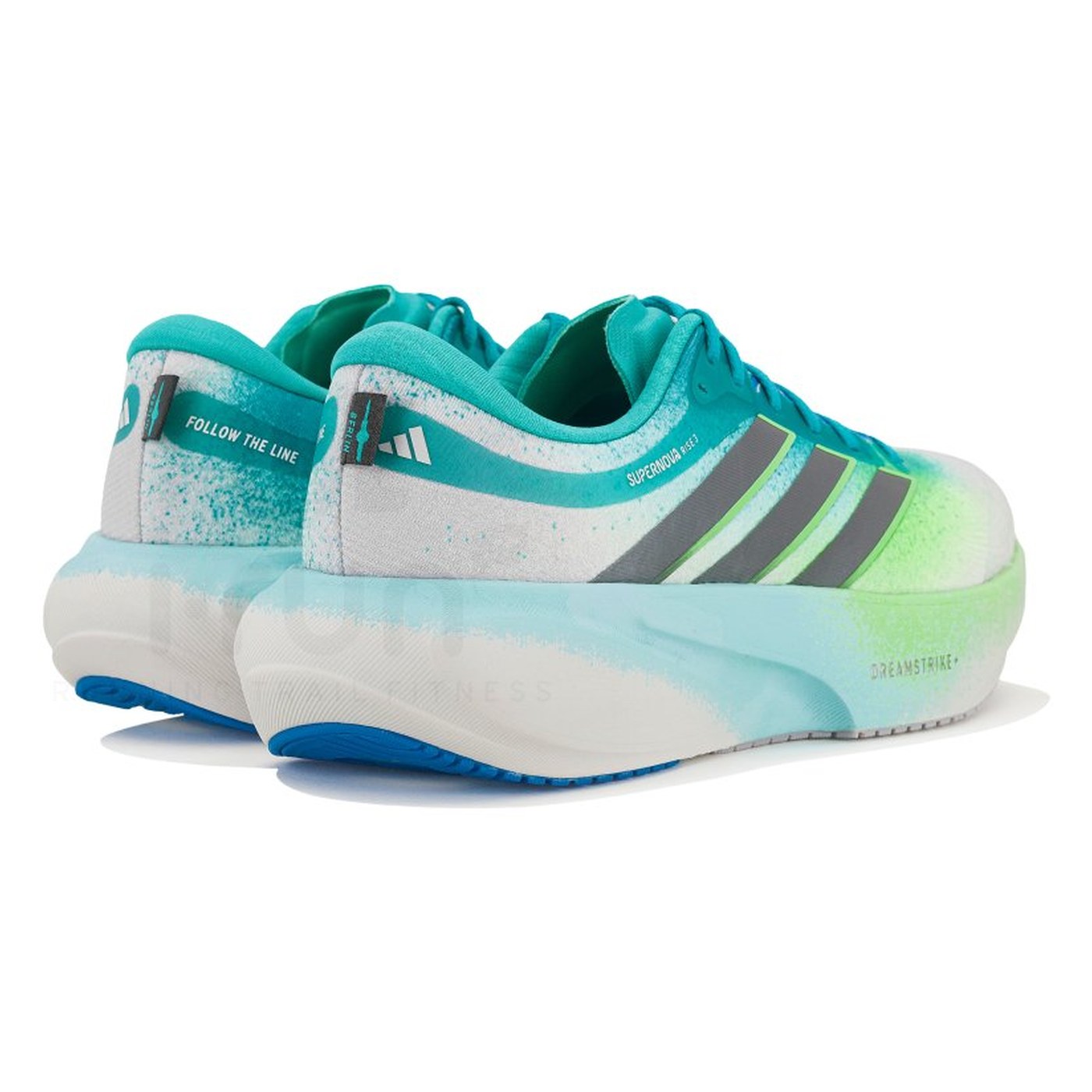
© Adidas, official photo used for editorial purposes
RunMorph Coach verdict
The Supernova Rise 3 is an excellent affordable daily trainer. Not revolutionary, but seriously improved over the Rise 2: full-length Dreamstrike+ brings the plushness that was missing, the drop cut to 8 mm fixes the slightly stiff feel of the V2, and the Primeweave upper breathes better. At €150 (and often €110 on sale), it's one of the most balanced options on the market in 2026 among plateless PEBA daily trainers.
Its only real flaw: it isn't explosive. If you like to throw tempo efforts into your daily runs, the Hoka Mach 7, the New Balance Rebel v5 or the Asics Superblast 3 are more playful. If you want a pair to rack up kilometers safely, it's a perfect choice.
RunMorph score: 8/10
Key takeaways for your training
- Affordable PEBA daily trainer: full-length Dreamstrike+ replaces the V2 blend (Dreamstrike+ on top, Lightstrike Pro below) and changes the feel, plusher and smoother-rolling.
- 8 mm drop, 37/29 mm stack height, 272 g: a high-cushion daily profile that stops short of max cushion. An ideal compromise for easy runs and long runs.
- Primary use: easy runs 3 times a week, marathon long runs, active recovery.
- Secondary use: heavier runners or beginners who want to try PEBA without a plate.
- Wrong choice for: fast tempo sessions, timed races, short intervals. Keep a dedicated pair for those.